Meta Title: Islamic Education for Babies: Nurturing Your Child’s Fitrah
Your baby’s spiritual identity is being written right now in the quiet rhythms of naptime and nursing. While we often wait for the first day of school to begin Islamic education for babies, these early years are actually the most vital for preserving their Fitrah. This natural disposition toward Allah deserves protection long before they ever step into a classroom.
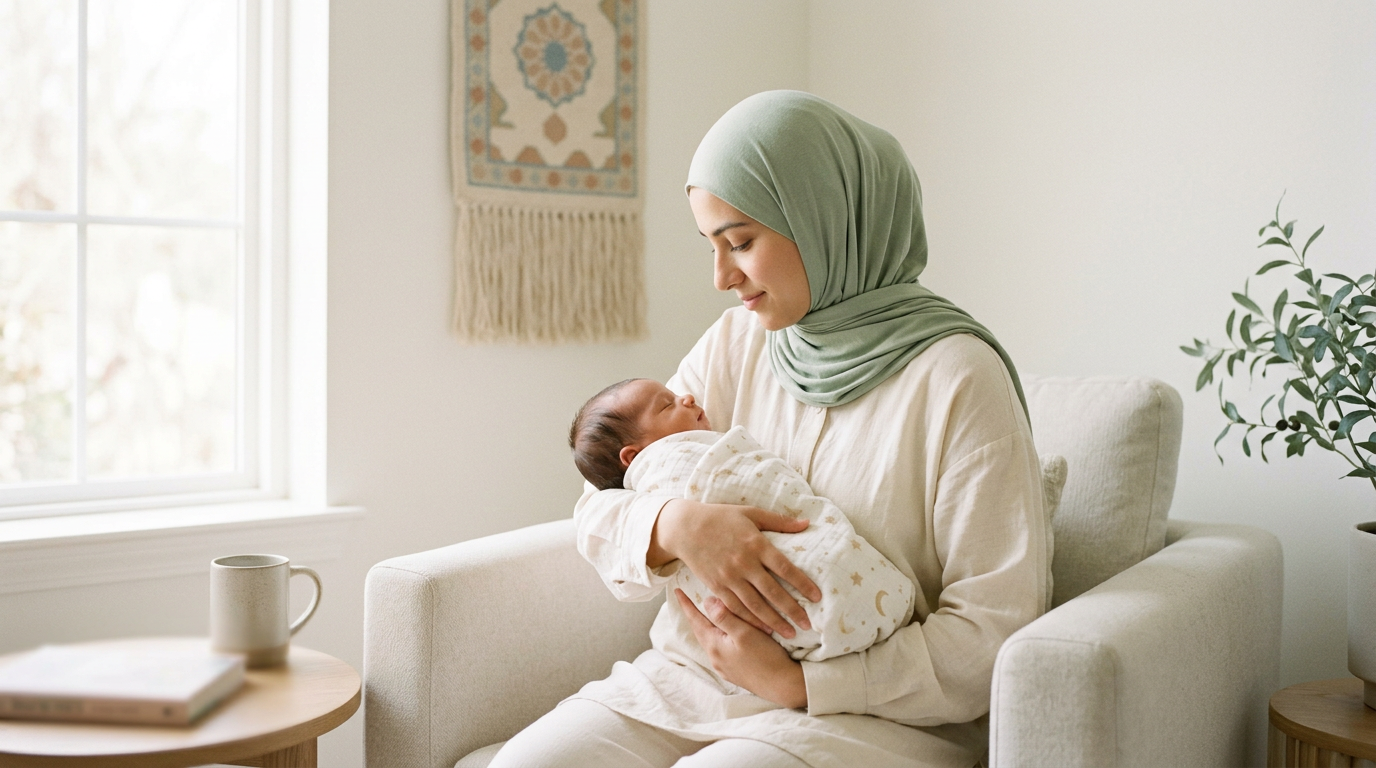
Nurturing Through The First Madrasah
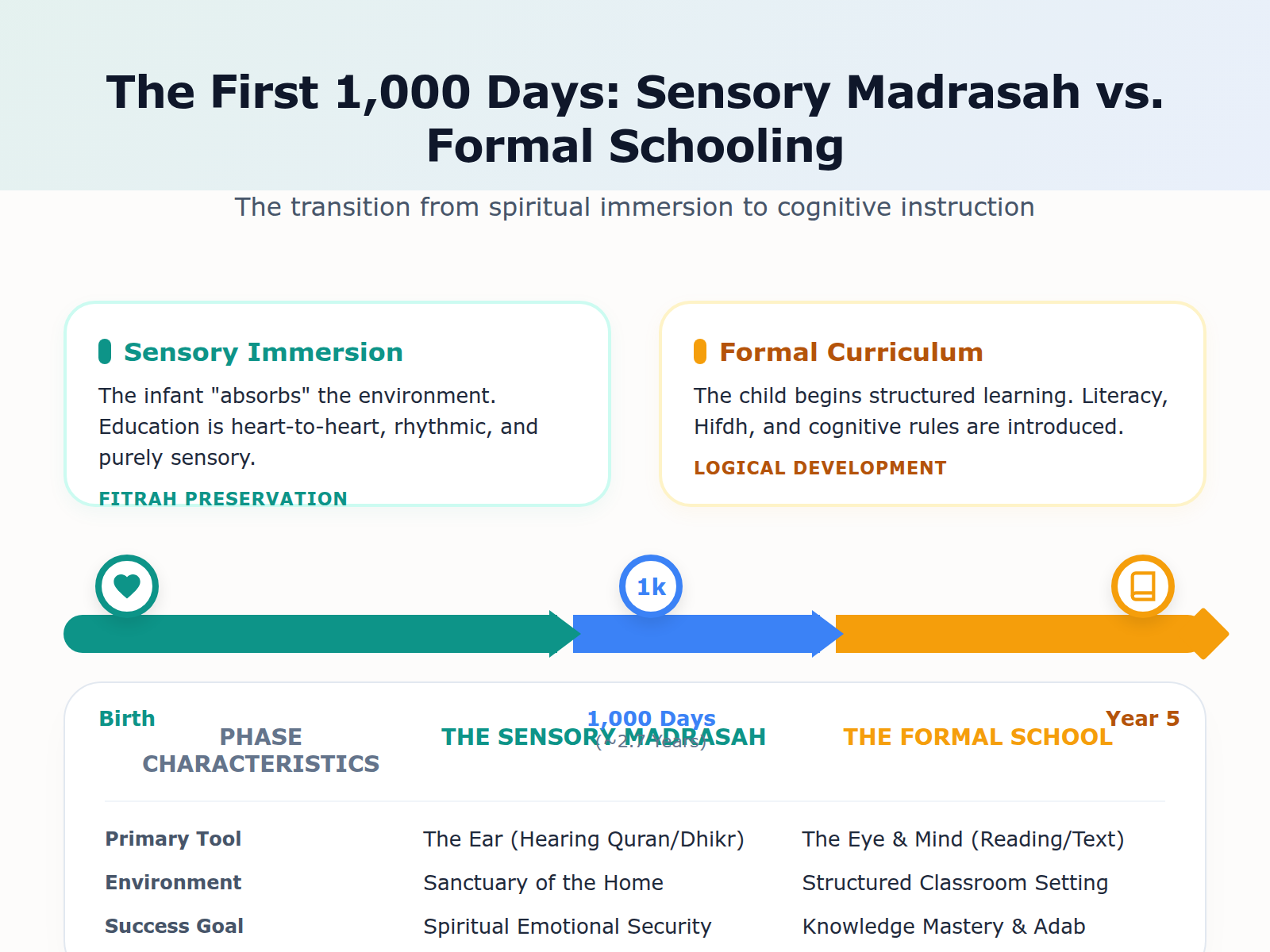
The first 1,000 days are a window of sensory immersion where rhythmic Quranic exposure builds a subconscious foundation for faith. Your home is your child’s first Madrasah, where Tarbiyah happens through the gentle osmosis of daily life. By curating a spiritual sanctuary today, you move from the pressure of teaching facts to the joy of nurturing a soul.
Creating a Digital Sanctuary
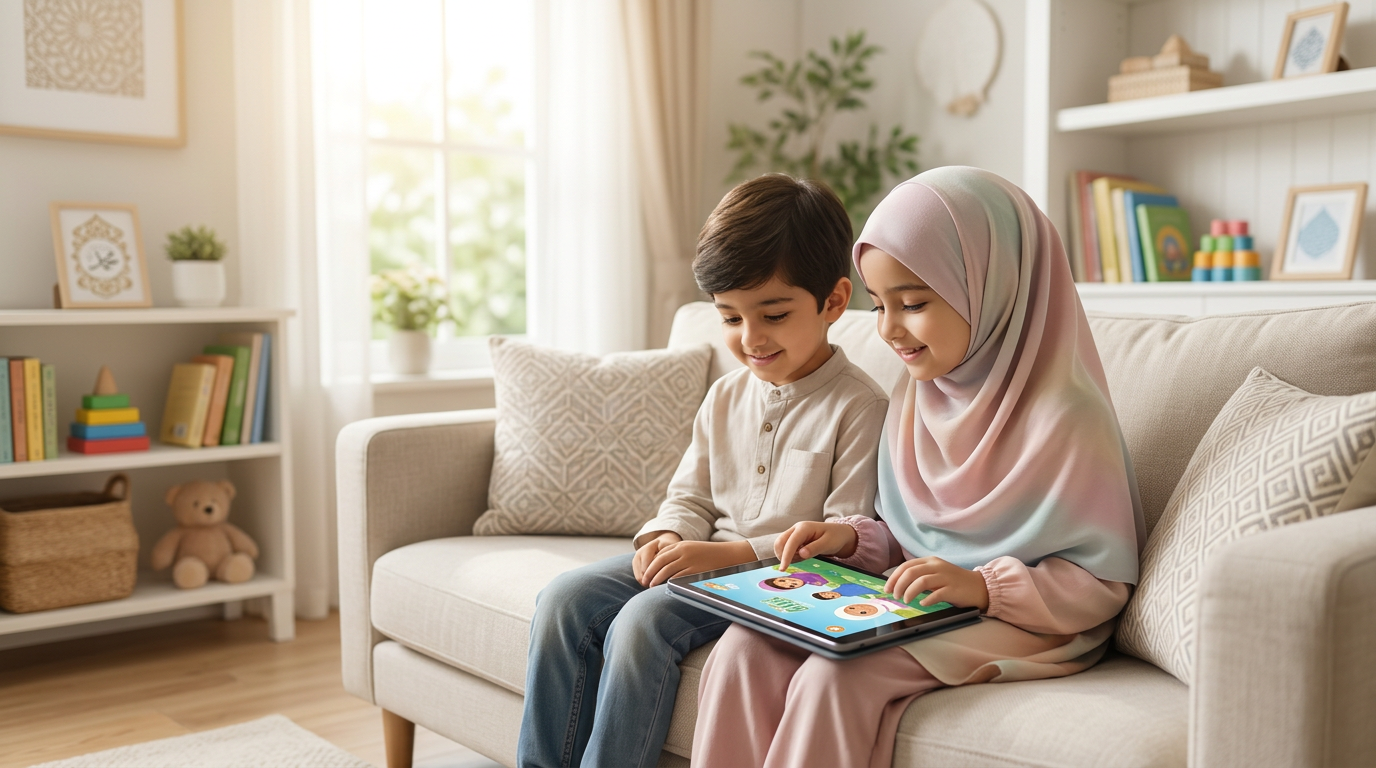
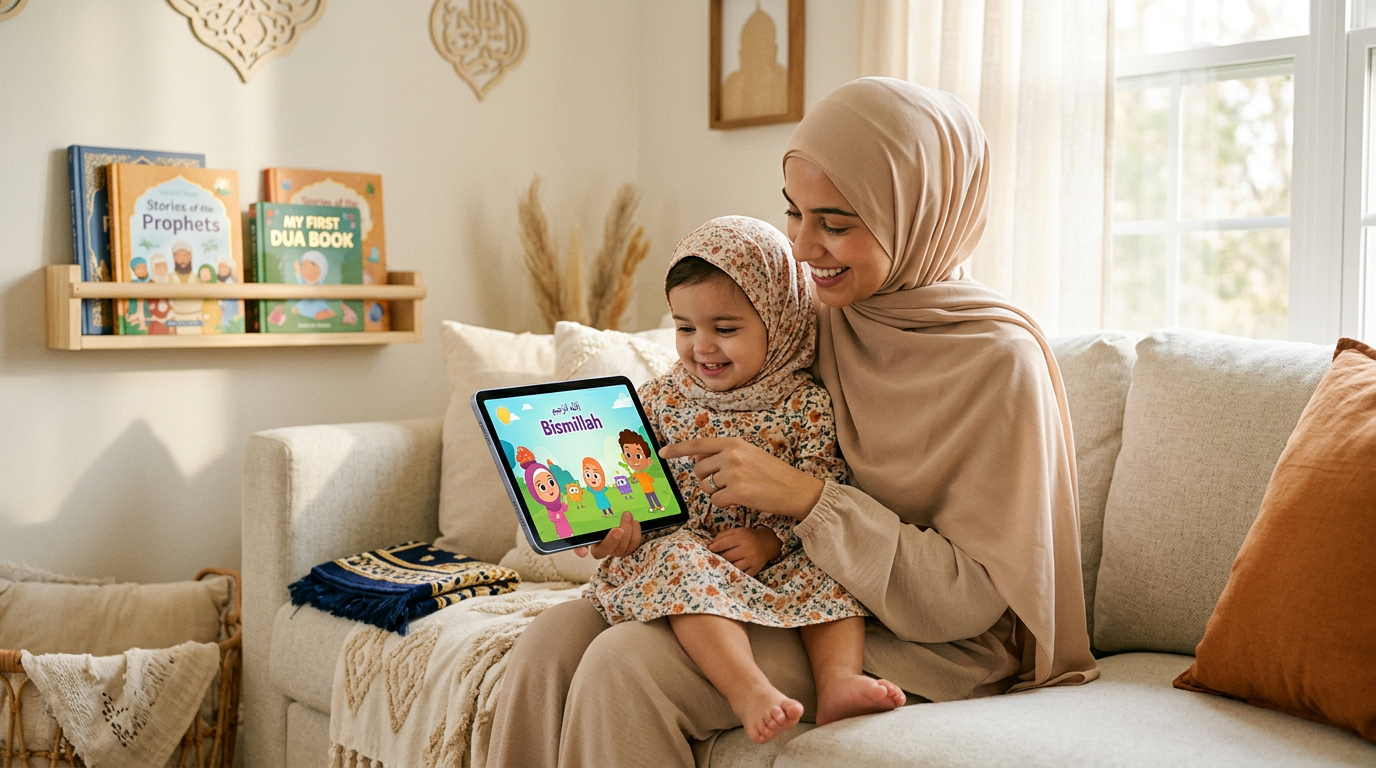
Modern digital tools shouldn't be a source of guilt, but a 'Digital Hima' (sanctuary) for the youngest members of our Ummah. By choosing AI-guarded platforms like Babymode, you can replace overstimulating distractions with intentional, halal sensory experiences. We’re here to help you transform screen time into a purposeful tool that makes the remembrance of Allah your child’s first language.
The Fitrah-First Philosophy: Why Islamic Education Starts at Day One
If the family is the first Madrasah, then the Fitrah is the foundation for every lesson. We don't just "teach" infants; we preserve their innate connection to Allah. As the Prophet (ﷺ) taught, “Every child is born upon the Fitrah”, making Islamic education for babies a mission of shielding a flame that is already lit.
Guarding the Soul’s Natural Compass
Your baby enters the Ummah with a pure disposition toward the Oneness of God. Parents act as "sanctuary curators," using a Digital Hima (sanctuary) to protect this internal compass from modern overstimulation. This intentionality surrounds the soul with the peace of the Sunnah, filtering out spiritually void influences from the very start.
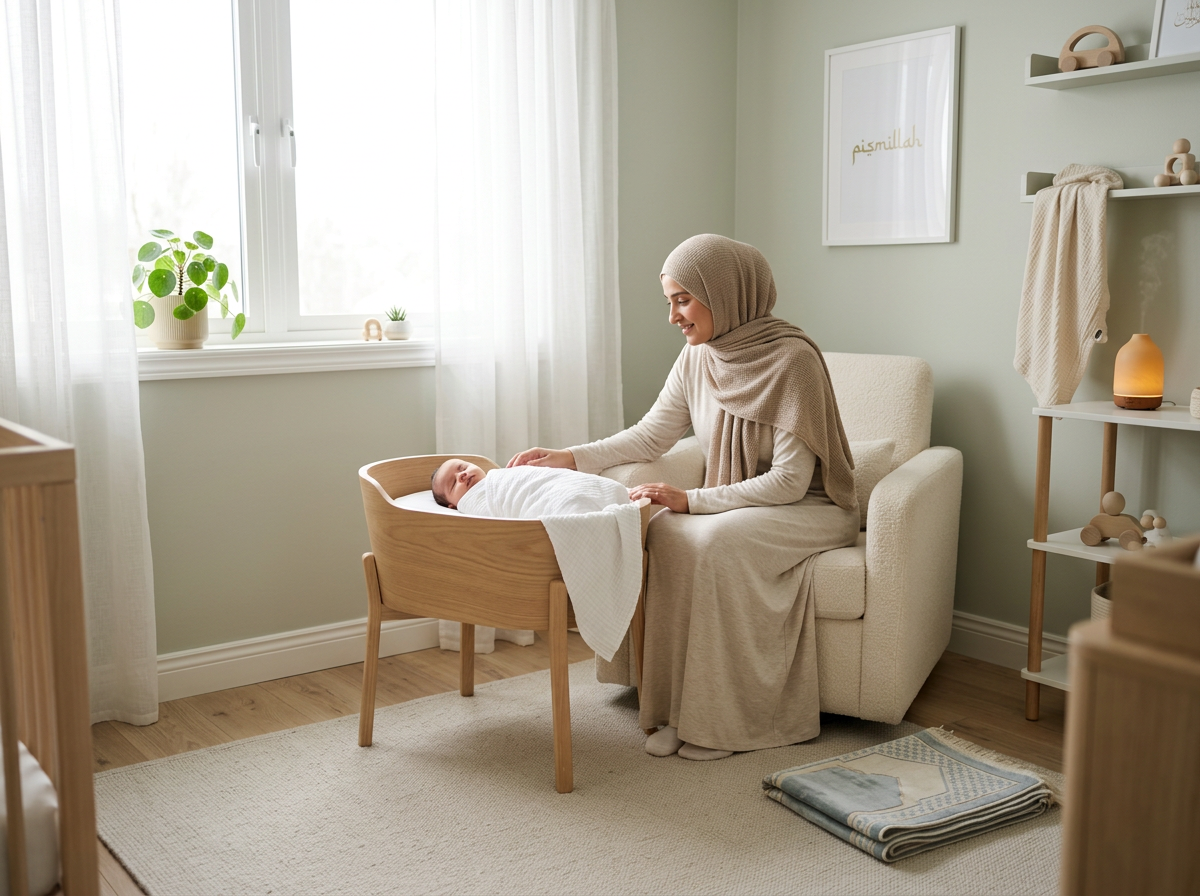
The Sacred 1,000-Day Amanah
The first 1,000 days represent a unique window of neurological development where a baby’s brain maps the emotional language of their world. This stage is the ideal time to normalize faith; by providing a faith-filled atmosphere, the infant's brain associates the sounds of the Quran with safety and warmth, creating the subconscious scaffolding for future learning.
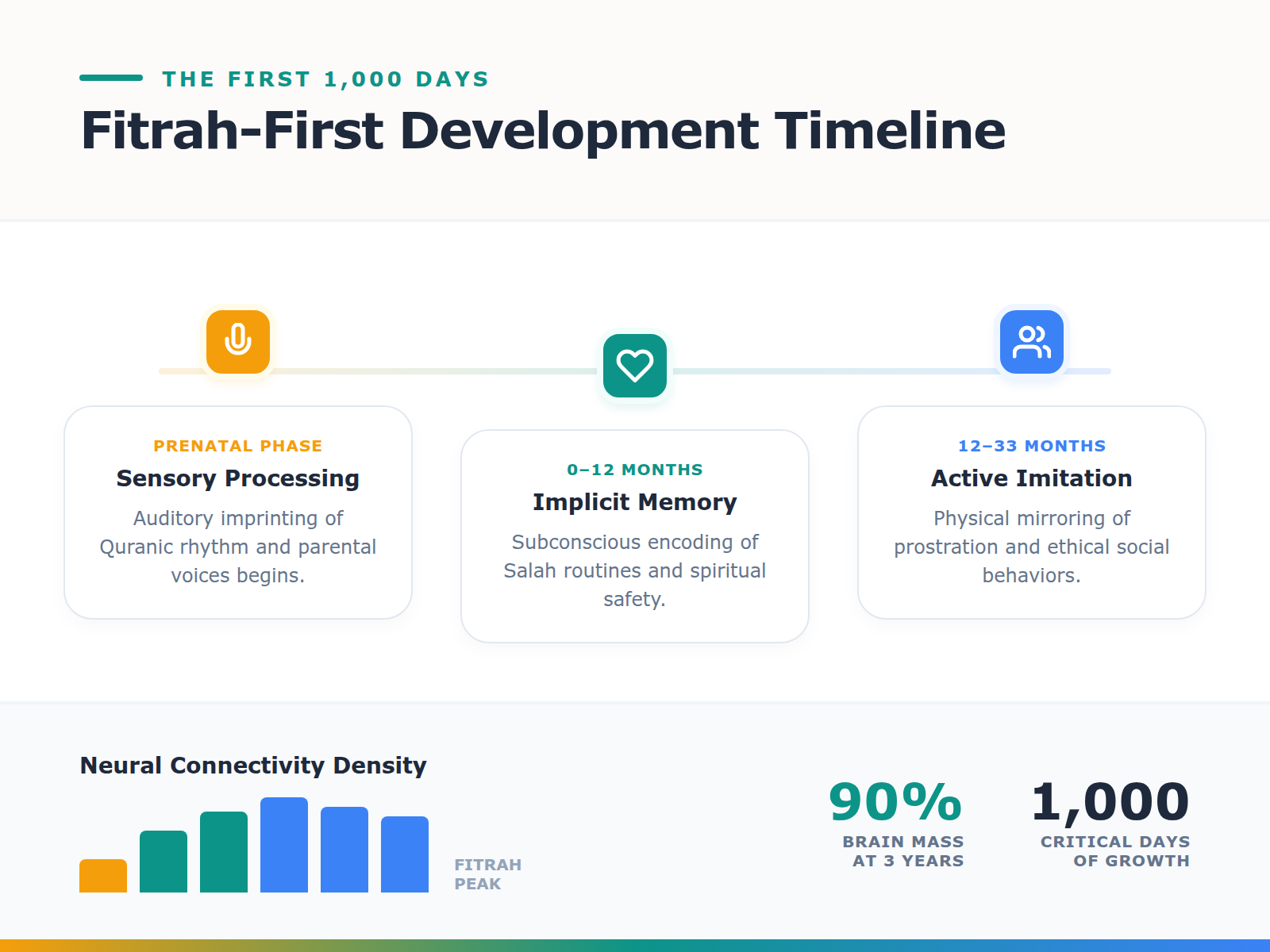
Nurturing Through Halal Sensory Exposure
At this stage, education focuses on rhythmic, intentional exposure rather than rigid curriculums. We prioritize "implicit memory," making the Dhikr of Allah a natural part of the child's environment. Our AI-guarded safe space turns screen time into a restorative experience using slow-paced content. As your child grows, you can bridge this sensory foundation into active engagement through 10 creative Islamic preschool activities that use a "Mirror and Move" approach to link digital anchors with tactile, real-world play.
Moving Beyond the "Waiting Room"
Tarbiyah begins the moment a child arrives. Treating the infant years as a developmental "waiting room" leaves the Fitrah vulnerable. By choosing tools that align with Islamic values, you shift from survival mode to a pioneering role, building a home where the first sights and sounds your child encounters lead them back to their Creator.
The Audial Sanctuary: Quranic Exposure for Newborns and Infants
Heading: The Audial Sanctuary: Quranic Exposure for Newborns and Infants
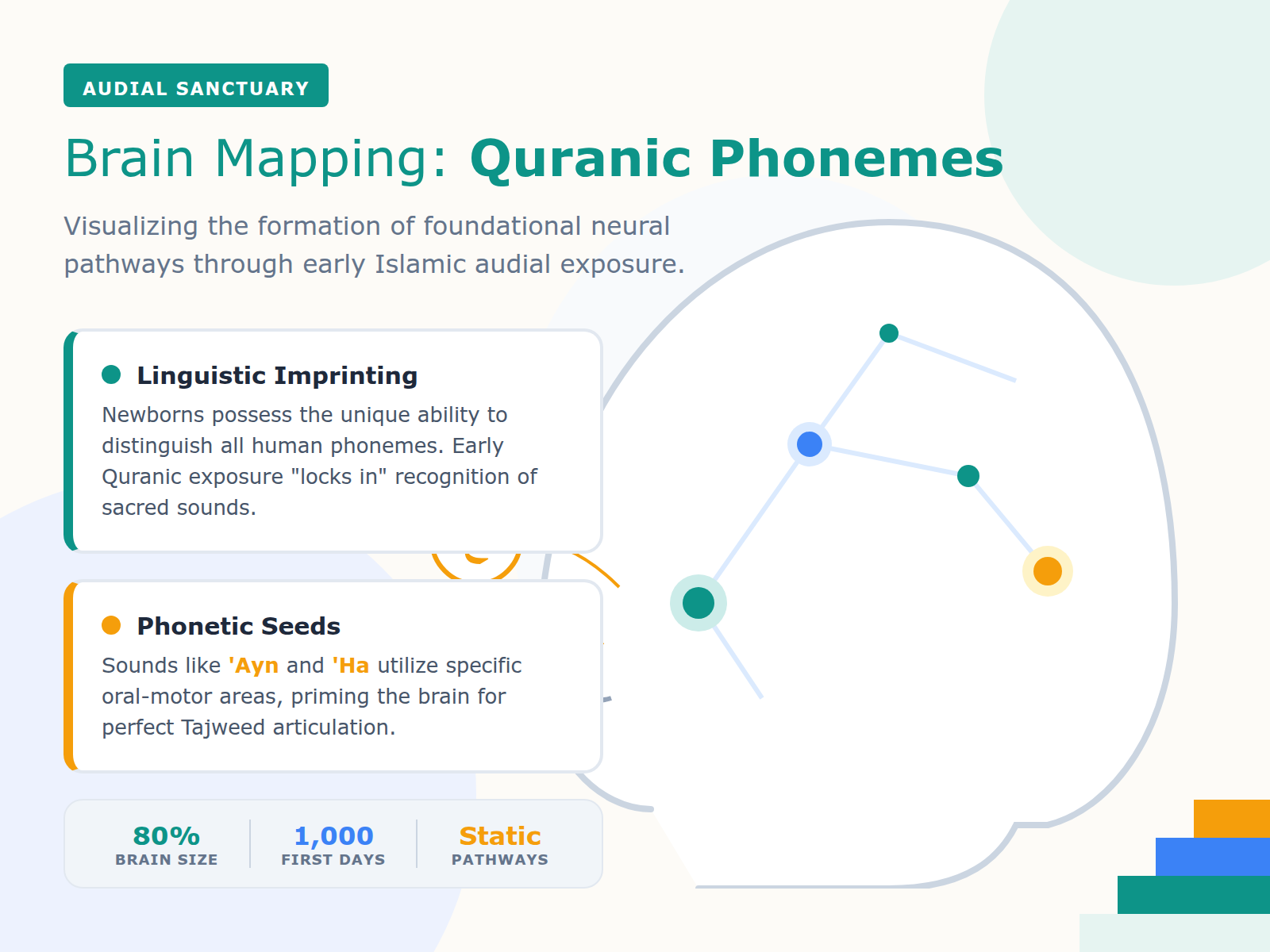
From the 24th week in the womb, your baby’s hearing serves as a spiritual "acoustic umbilicus," connecting their developing soul to the rhythms of the Revelation. For the faith-conscious parent, quranic exposure for newborns is a foundational act of Tarbiyah, protecting their innate Fitrah by creating a Digital Hima (sanctuary) against the chaotic sounds of the modern world.
Planting the Seeds of Arabic Fluency
Early immersion in the rhythmic precision of Tajweed serves as a sophisticated primer for your child's developing ears. This auditory exposure creates a subconscious blueprint, making it significantly easier for them to eventually master the language of the Quran.
Establishing a Sacred Daily Rhythm
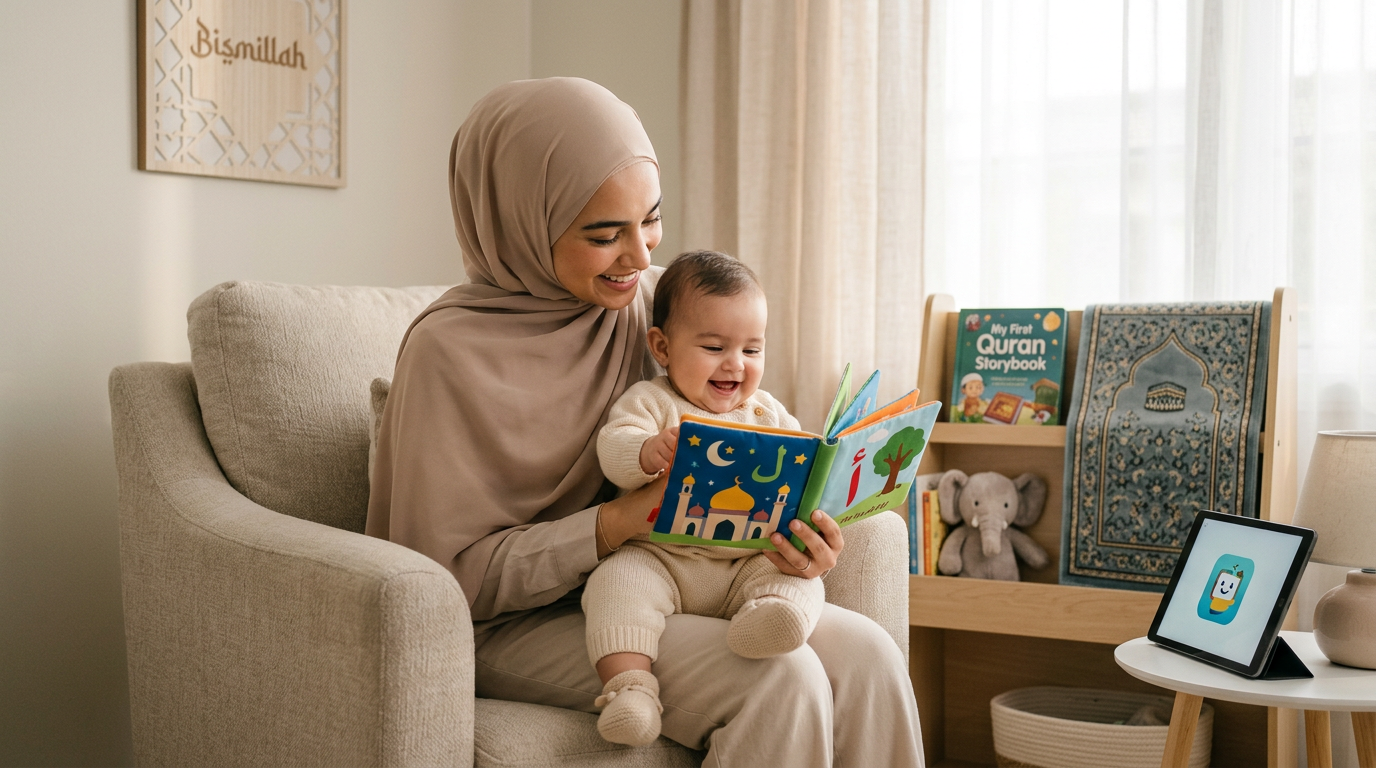
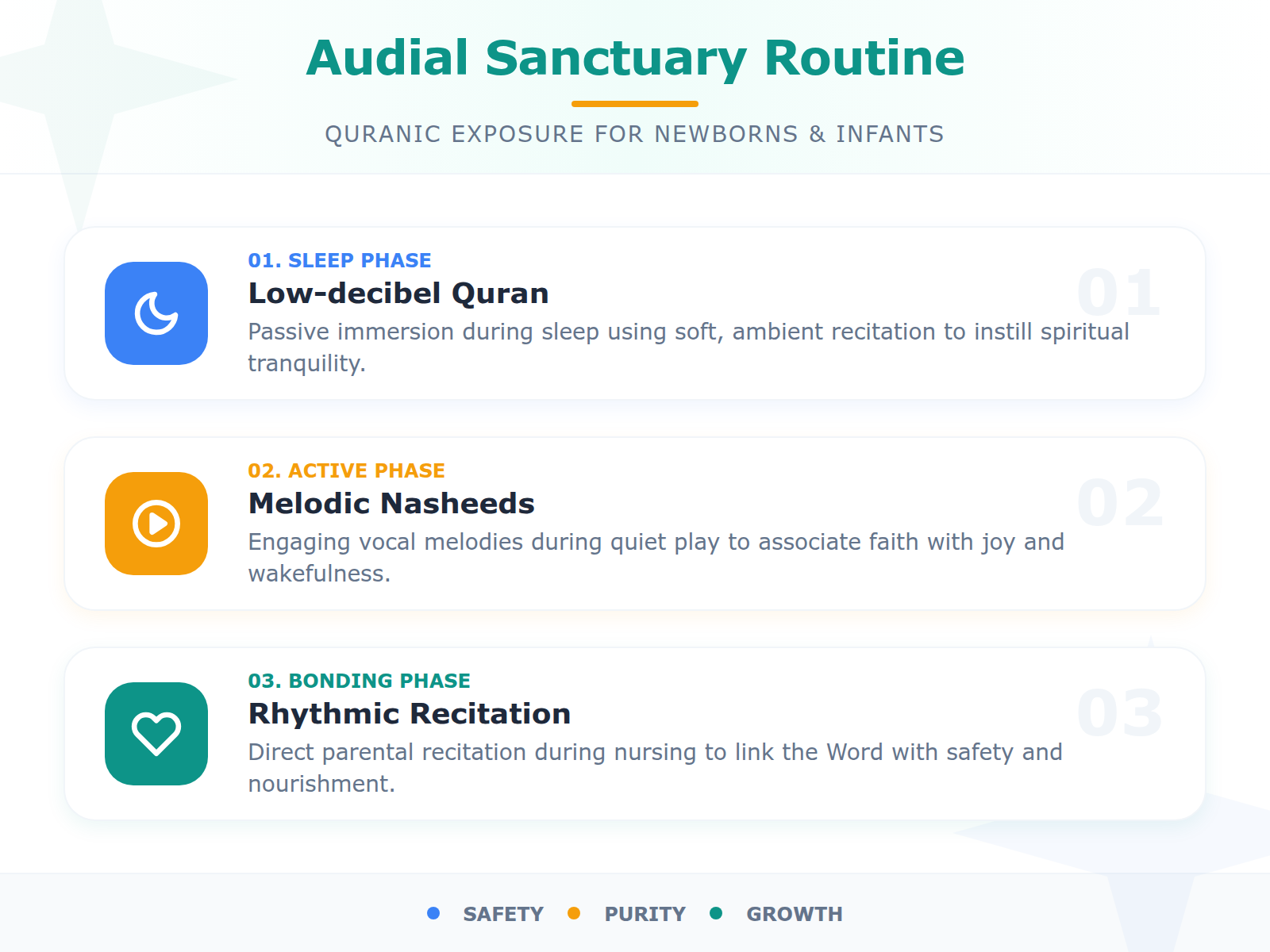
By integrating soft Quranic recitations into nursing, quiet play, and sleep, you build a lifelong association between the Word of Allah and the physical sensation of safety. This passive audial environment sets the stage for more active engagement as your child grows.
As your infant transitions into the toddler years, you can build upon this foundation using a "Micro-Dua Framework." This method prioritizes emotional association and physical gestures over rote memorization, allowing toddlers to participate in the Sunnah before they can even speak. Learn more about Essential Daily Duas for Muslim Toddlers to see how these small rituals turn everyday transitions into spiritual milestones.
The Warmth of the Human Voice
While digital tools provide access to beautiful recitations from across the Ummah, your own voice remains the most comforting sound. Integrating "halal lullabies" or using "vocal mirroring"—responding to your baby’s coos with a soft SubhanAllah—nurtures their soul and ensures the first language they recognize is one of devotion.

Daily Rituals and Sensory Milestones: Faith in Motion (6-18 Months)
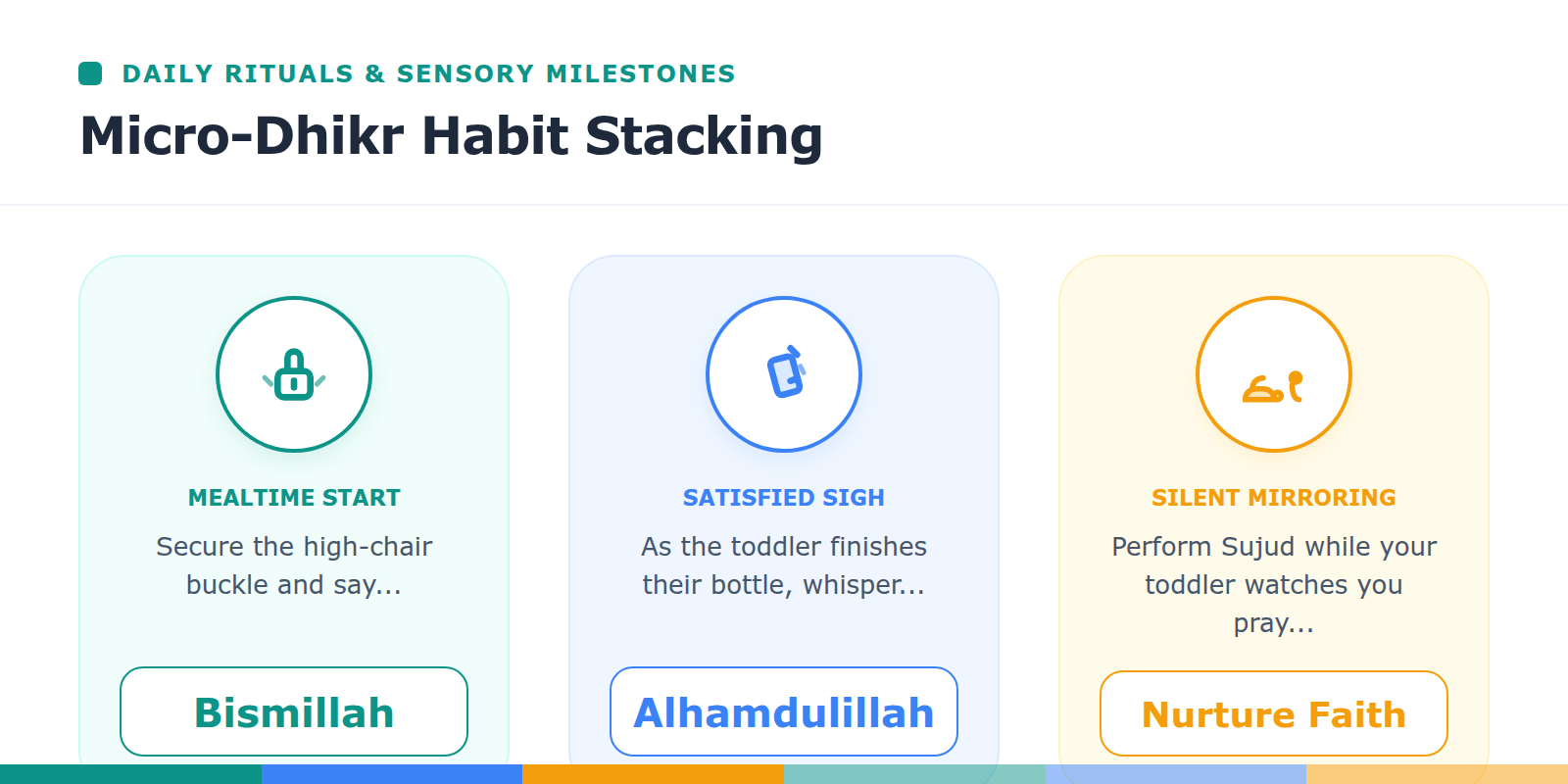
Between 6 and 18 months, your baby enters the "Mirroring Phase," where they begin to mimic your physical actions. This stage is the perfect time to transition toward Sensory Adab—the practice of associating faith with warmth, touch, and rhythmic routines. By integrating short phrases like "Bismillah" into daily tasks, you anchor the remembrance of Allah to physical sensations through "Micro-Dhikr habit stacking."
This tactile exploration should extend to your child's digital environment. To protect their developing fitra, it is essential to choose a Muslim toddler learning platform that acts as a "digital sanctuary." These specialized platforms prioritize low-stimulation, AI-curated content over the jarring, high-energy animations found on mainstream apps, ensuring your child’s spiritual and neurological health remains balanced during screen time.
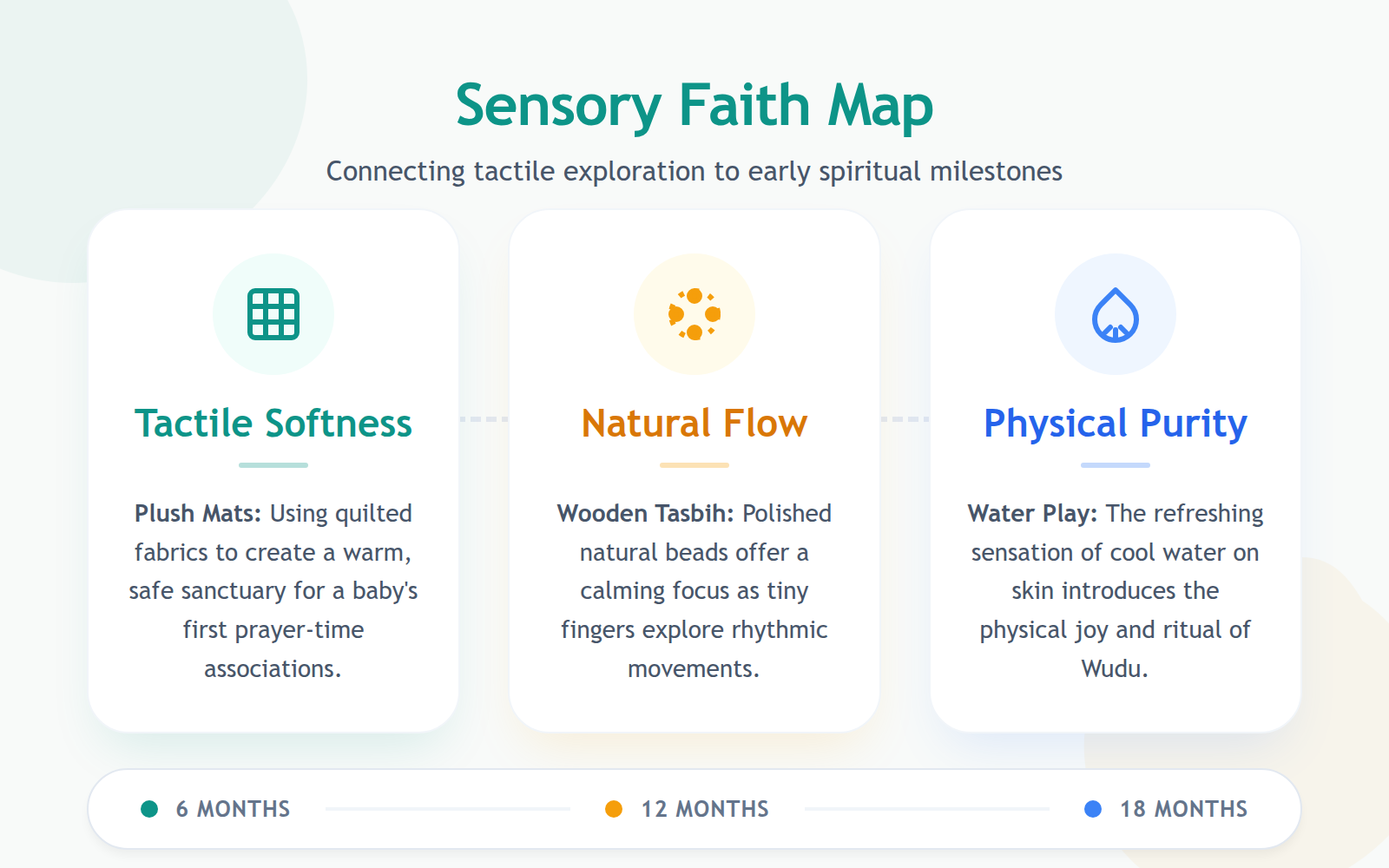
By merging physical milestones with a serene digital environment, you build the muscle memory of the soul. This foundation ensures that the remembrance of Allah becomes an intuitive habit, grounded in the Prophetic model of Rahma (mercy) and emotional security.
The Bilingual Brain: Introducing the Arabic Alphabet through Sound and Play
Building on the auditory foundation established during the newborn stage, a toddler’s brain remains a linguistic miracle tuned to every phonetic nuance. By introducing the emphatic sounds of Qaf, Dad, and Ayn early, you protect these neural pathways before neural pruning begins, aligning their development with their innate Fitra.
At this stage, learning is about absorbing the acoustic architecture of the Ummah through rhythmic cadence and melodic flow. To bridge abstract symbols to the physical world, parents can adopt a "low-stim, high-touch" approach that prioritizes digital hygiene and sensory engagement. By using tactile tools like sensory bins and gross-motor "air writing," you can make the alphabet a tangible part of their environment. For a practical roadmap, explore our guide on Arabic alphabet learning for toddlers: 7 fun and interactive ways to start today, which details how to combine AI-guarded digital spaces with purposeful, physical play.
Integrating these "words of light" through "Linguistic Mirroring" and "Parentese" ensures that your child's first utterances are rooted in Tarbiyah. This holistic approach transforms language acquisition into a continuous act of worship, ensuring that as their bilingual brain grows, their heart remains firmly connected to their Creator.
Spiritual Reminder
Every letter of the Arabic alphabet is a gate to understanding the Quran. When you introduce these sounds with love and play, you aren’t just teaching a language—you’re handing your child the keys to their spiritual heritage.
Reclaiming Screen Time: The Case for a Guarded Digital Sanctuary
Heading: Reclaiming Screen Time: The Case for a Guarded Digital Sanctuary
Mainstream platforms thrive on dopamine loops that can overstimulate a toddler’s nervous system and disrupt their innate sense of Sakinah. We believe your home should be a sanctuary where technology respects the natural, slow-paced rhythm of a child’s development through intentional, high-quality media rooted in the Sunnah.
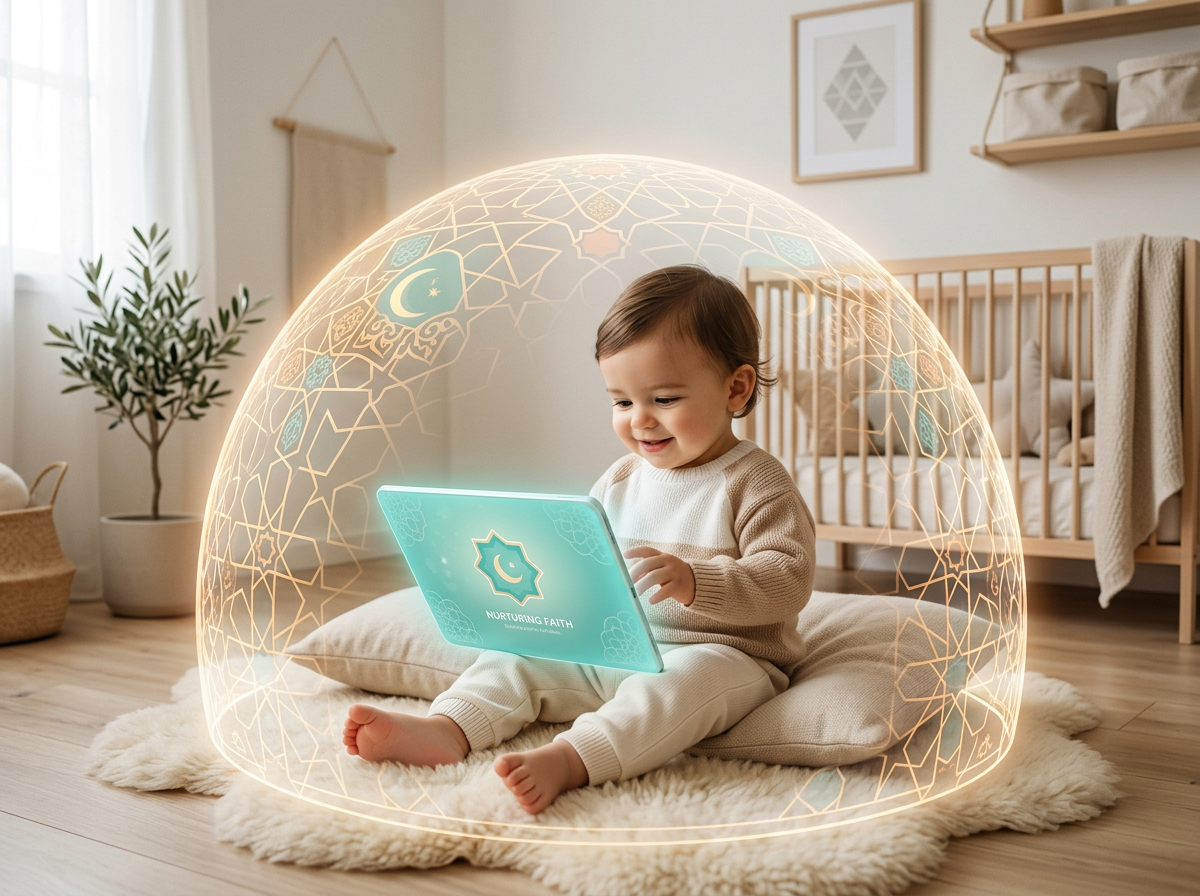
The Digital Muhafiz: A Shield for Fitra
To bridge the gap between modern tech and traditional values, we utilize a "Digital Muhafiz" (Protector) approach. By using AI-guarded safe spaces, we ensure that digital exploration—from Arabic phonology to prophetic tales—remains spiritually secure and free from commercial distractions. Our cluster article on Digital Tarbiyah for Kids highlights that effective digital guidance is about more than just blocking content; it is the proactive cultivation of a child’s fitra by moving from a "digital babysitter" model toward purposeful spiritual mentorship.
Practical Steps for Digital Tarbiyah
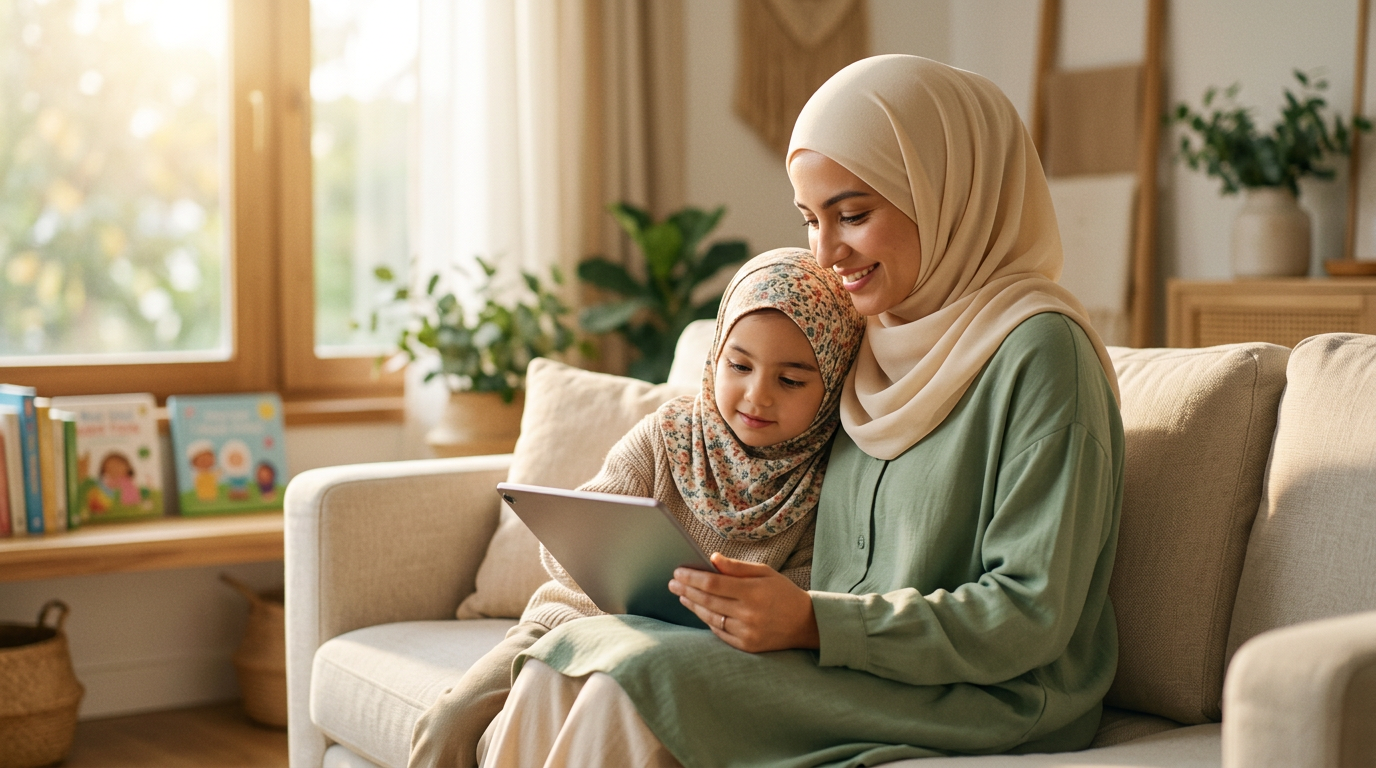
Setting firm digital boundaries is an essential part of nurturing your child's Fitra. We suggest viewing screen time as a "co-navigation" experience, where you sit with your child to mirror Arabic sounds and discuss lessons. This transforms a potentially isolating activity into a moment of deep connection.
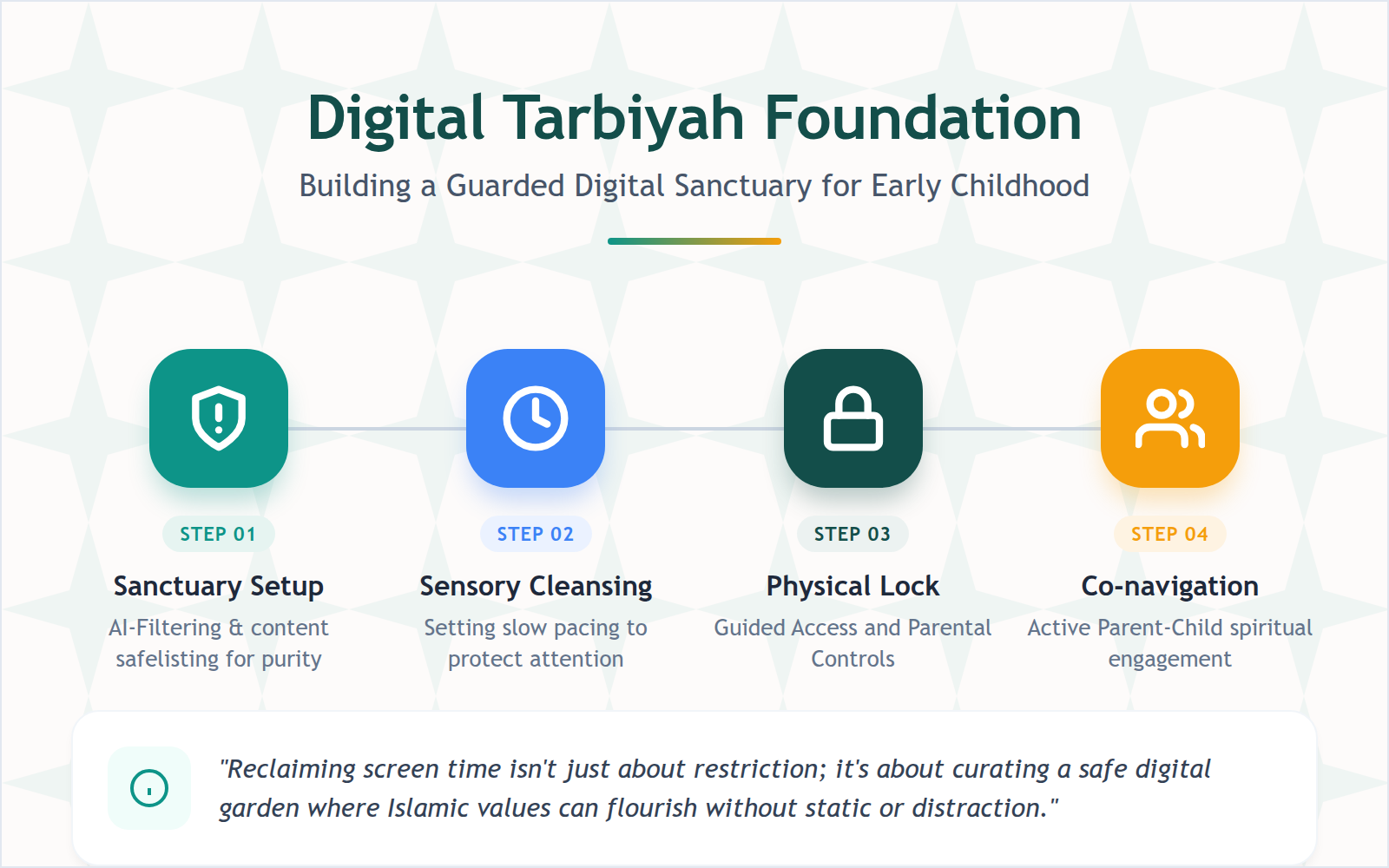
Parenting Tip
Try limiting digital sessions to 15-minute blocks. This helps your toddler transition back to physical play without the "digital tantrum" often triggered by the high-stimulation cycles of mainstream platforms.
By approaching the digital world with intentionality, you ensure technology becomes a tool for Tarbiyah rather than a source of anxiety, building a foundation of faith that serves your child for a lifetime.
Digital Tarbiyah: Using AI to Nurture Character and Manners
In this pivotal stage of development, digital tarbiyah for kids shifts from being a protective shield to a proactive tool for building Akhlaq (character). While mainstream media often prioritizes loud, chaotic entertainment, we use AI to distill complex spiritual concepts into "Scenario-Based Akhlaq." By using curated stories, you can show your toddler exactly how to navigate their world through the lens of the Sunnah.
Modeling Sunnah through Visual Adab
Toddlers are natural mimics, and AI-driven content leverages this by providing "Visual Adab." We've found that children are significantly more likely to repeat a behavior—like saying "Bismillah" before a snack—when they see a relatable character consistently doing the same. These digital stories act as a mirror, reflecting the beautiful manners of the Prophet (peace be upon him) in a format a two-year-old can digest.
This method moves beyond teaching "about" Islam and starts teaching how to "be" Muslim. Whether it's a story about sharing a toy or performing Wudu, the goal is to provide a "Neural Anchor." Through calm repetition and consistent visual cues, these daily routines become deeply embedded in your child's subconscious Fitra.
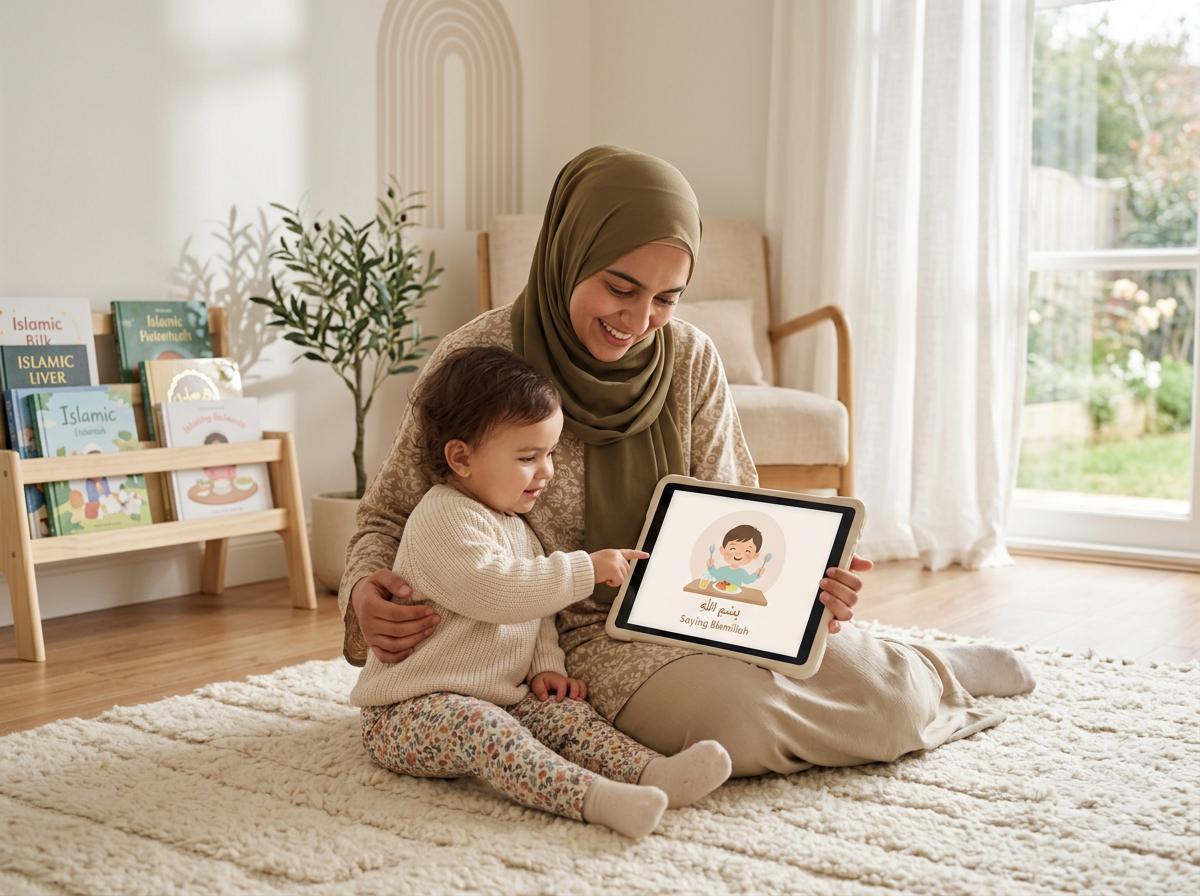
Bridging the Screen to the Soul
The most effective digital tarbiyah for kids happens when you move from a passive observer to an active co-navigator. We believe technology should never replace the parent; instead, it should serve as a catalyst for soulful conversation. By using AI-curated stories as a starting point, you can transition a digital lesson into a real-world act of worship.
Parenting Tip: After your child watches a story about kindness, try to "catch them being kind" later that day. Use the same vocabulary from the video to reinforce the connection between the screen and their real-life Akhlaq.
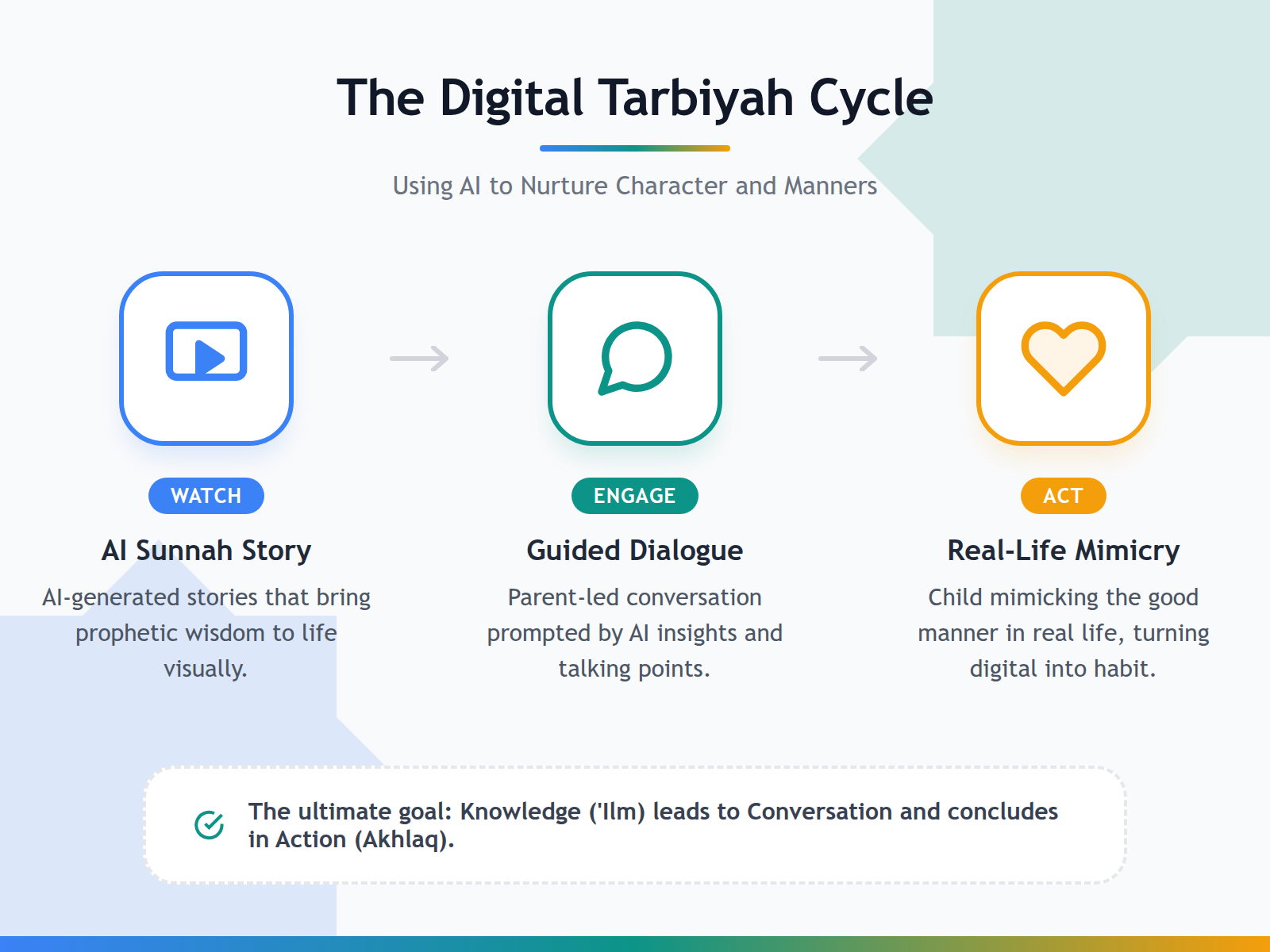
We call this the "Digital Tarbiyah Cycle." It begins with your child watching a slow-paced story focused on a specific virtue, like Sabr (patience). Next, you engage your little one with simple prompts provided by our platform. Finally, your child is encouraged to act out that virtue in their daily play, turning a pixelated lesson into a lived experience of Ihsan.
Tracking Virtues for Qualitative Growth
One of the most innovative aspects of modern Tarbiyah is the ability to track "virtue exposure." Instead of merely counting minutes of screen time, you can now monitor which character traits your child is engaging with most frequently. This shift from quantitative tracking to qualitative nurturing helps you align your child's digital diet with their specific developmental needs.
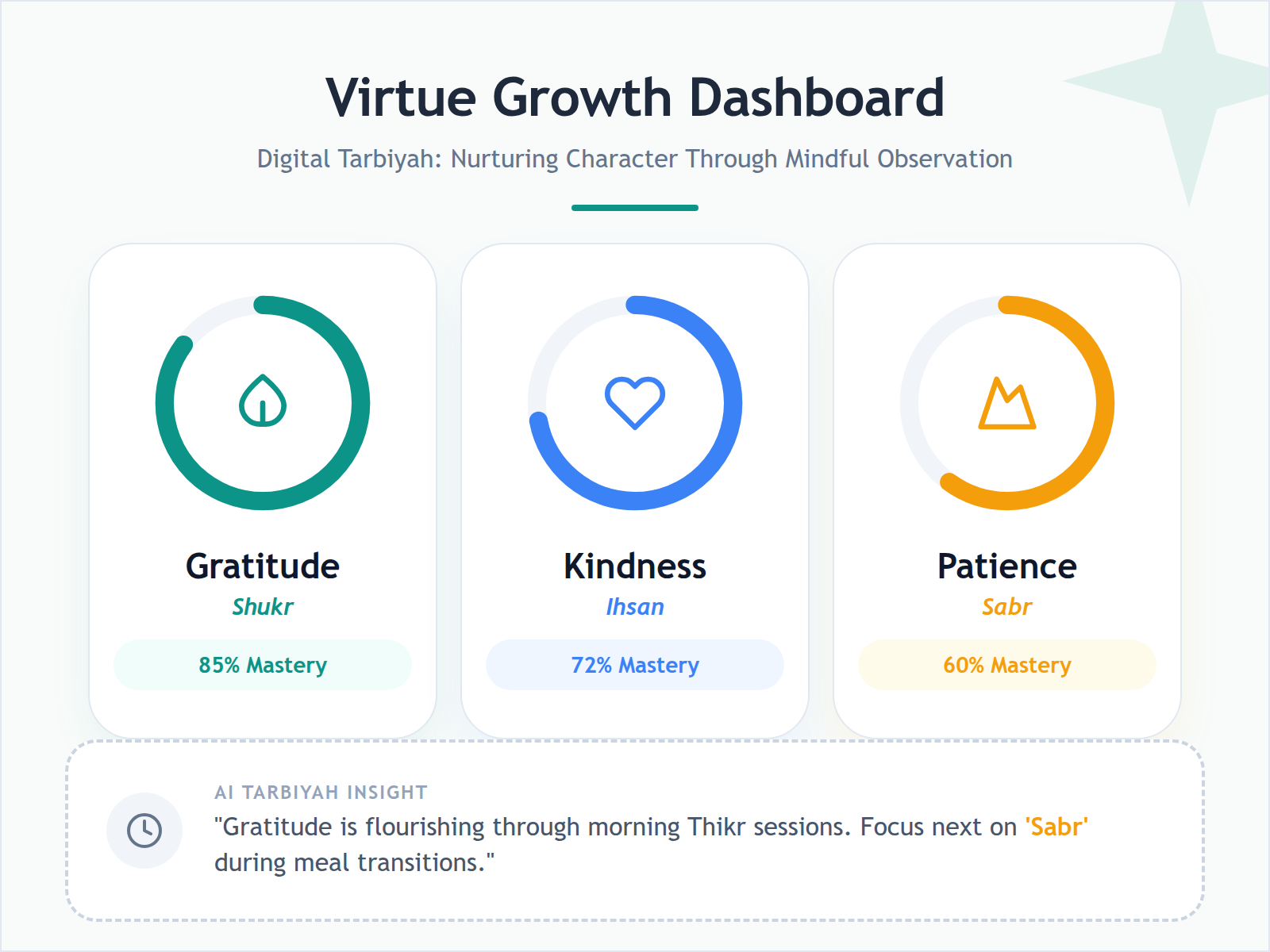
By reviewing a "Virtue Growth Dashboard," you can see if your child has spent more time learning about Shukr (gratitude) or Sidq (truthfulness) this week. This insight allows you to reinforce those specific lessons during non-screen hours. It ensures that your efforts in digital tarbiyah for kids are intentional, measurable, and deeply rooted in the lifelong journey of building a sound Islamic identity.
The 'Spiritual Routine' Blueprint: A Day in the Life
Transforming your home into a spiritual sanctuary doesn't require a rigid, military-style schedule. Instead, we advocate for the "Prophetic Flow"—a rhythmic approach to Tarbiyah using the five daily Salah times as natural anchors. By aligning your toddler’s sensory experiences with the prayer cycle, the remembrance of Allah becomes as natural as breathing.
Winning the Morning: From Dhikr to Active Learning
The first moments after waking set a tone of Sakinah. We recommend "Micro-Dhikr" transition cues, such as melodic morning songs or a gentle "Bismillah" during breakfast. This low-stimulation start protects your child’s Fitra from early-morning digital overwhelm.
As your toddler reaches their mid-morning energy peak, introduce high-quality, slow-paced educational videos. This is the ideal window for Arabic phonics or Quranic stories that encourage movement and vocal participation.
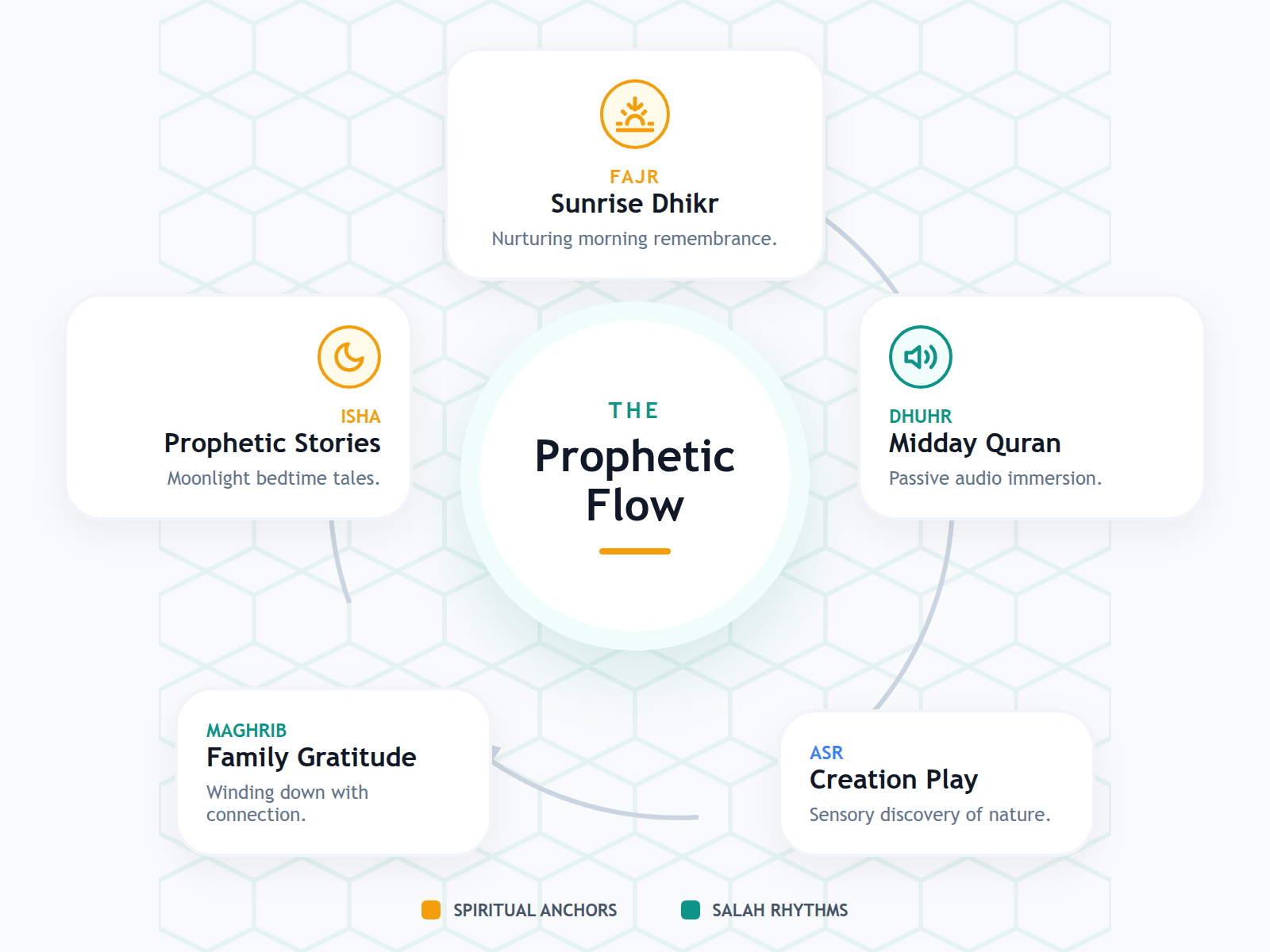
Active engagement, like mimicking the shapes of the Arabic alphabet, channels their physical energy into spiritual growth. This islamic parenting toddler guide is designed to flow with your child’s natural rhythm, ensuring they stay engaged without becoming over-stimulated.
The Midday Pivot: Managing the Sensory Curve
To prevent toddler meltdowns, we utilize a "Low-High-Low" sensory curve. Midday—aligned with Dhuhr—should transition back to a low-stimulation state. Use soft Quranic audio during lunch or naptime to provide a subconscious spiritual comfort zone.
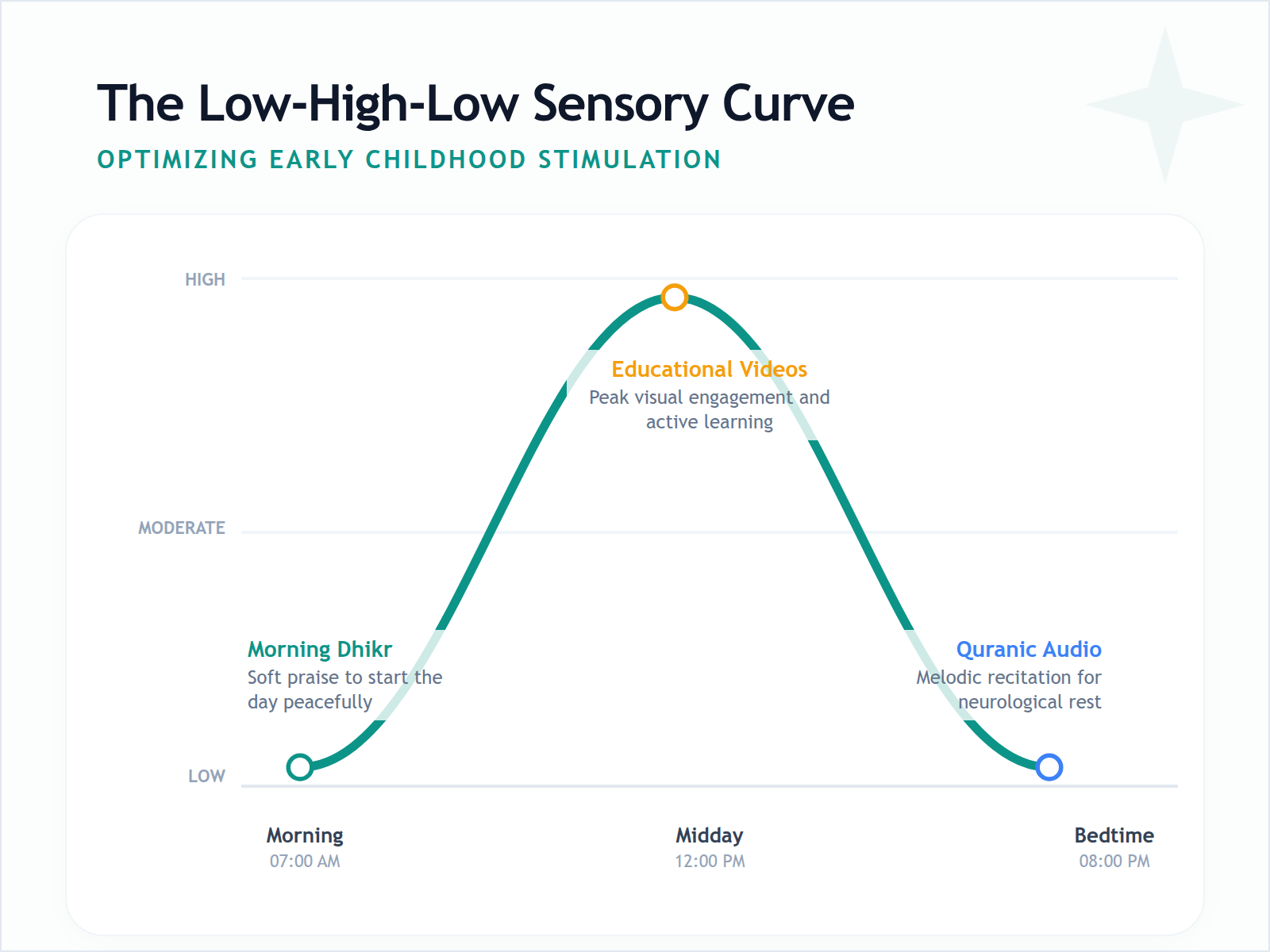
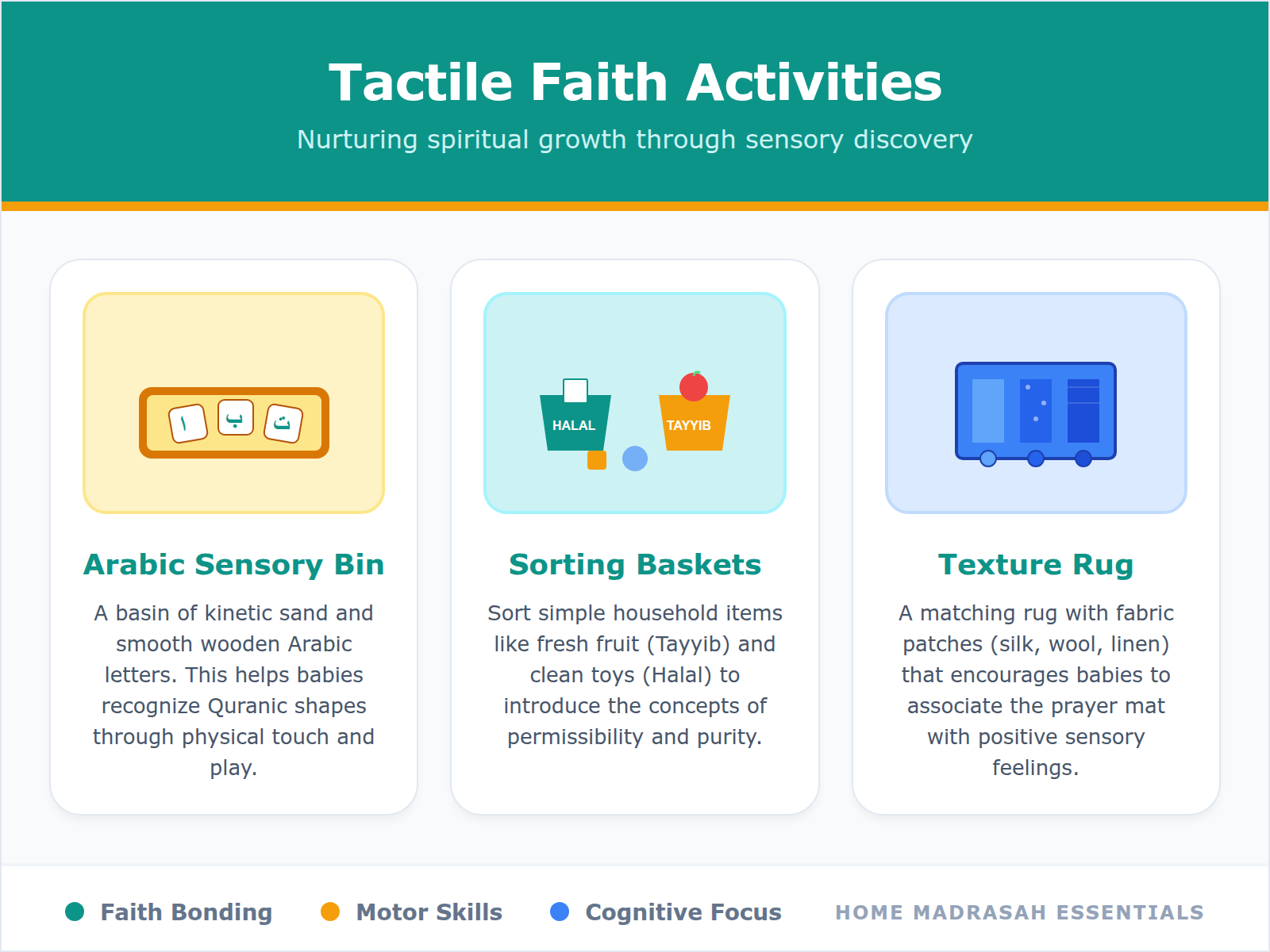
In the late afternoon, tactile "Faith Play" becomes your most effective tool. Use bilingual digital flashcards or physical wooden blocks featuring Arabic letters to keep learning interactive. By keeping screen time purposeful and time-boxed, you ensure digital tools remain a guarded sanctuary for the Ummah.
Protecting the Night: Prophetic Sleep Hygiene
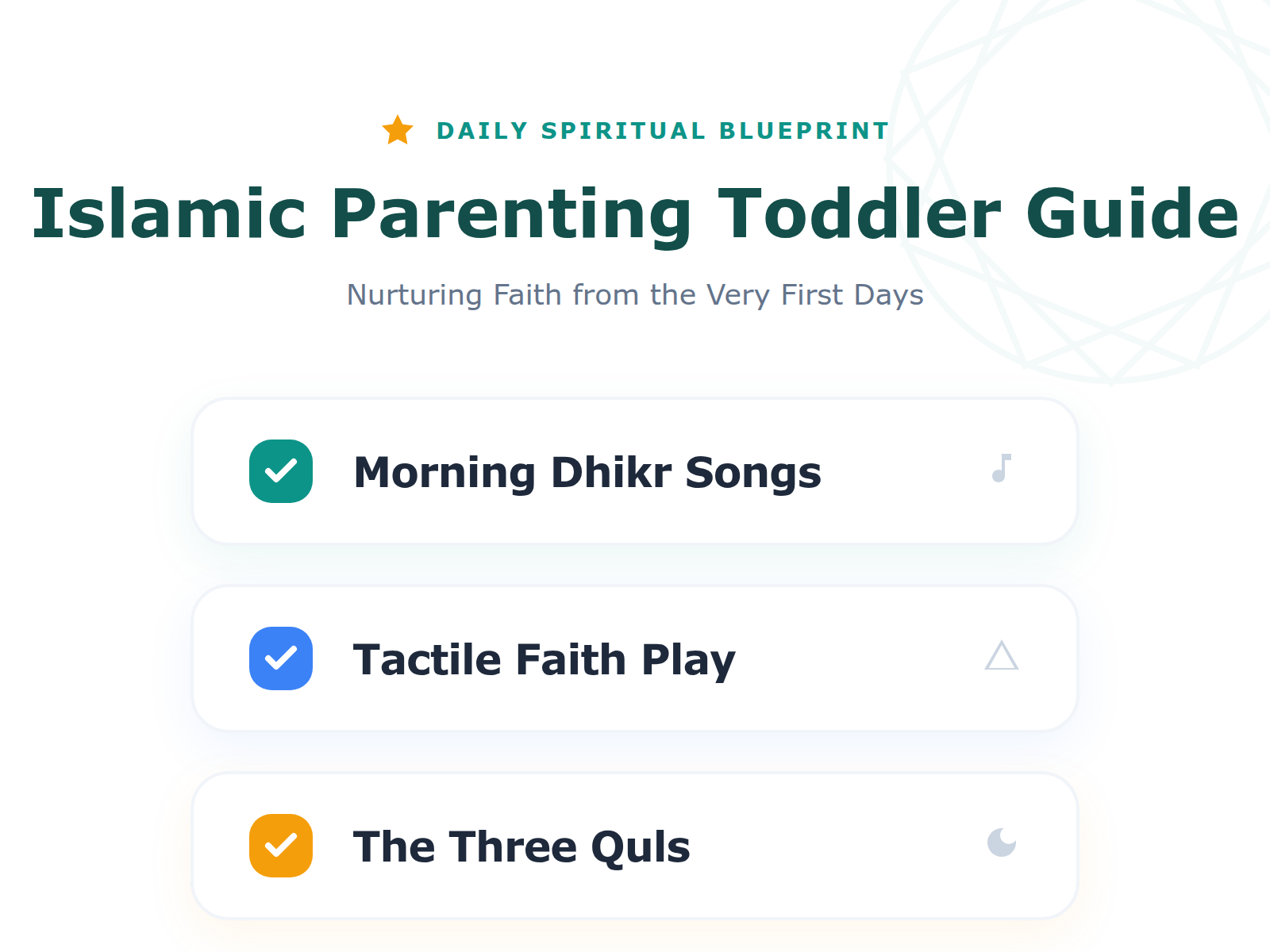
As the family gathers for Maghrib, the home should shift into a "Digital-Free Zone." Replace blue-light exposure with tactile activities like felt mosques or prophetic bedtime stories. This transition supports Prophetic Sleep Hygiene, helping your toddler’s nervous system wind down.
The final ritual centers on the Sunnah of the "Three Quls" while tucking them in. Reciting these Surahs together creates a powerful neural anchor of safety and divine protection. This approach replaces digital guilt with spiritual intention, turning every mundane moment into a sacred milestone.
The Home Madrasah: Creating a Physical Environment for Faith
While digital tools provide a guarded sanctuary, the physical architecture of your home serves as the primary "textbook" for your child’s soul. By intentionally designing a Home Madrasah, you transform your living space into a serene landscape where Islamic values are physically reachable and constant.
The Musallah: Designing a Sanctuary at Eye Level
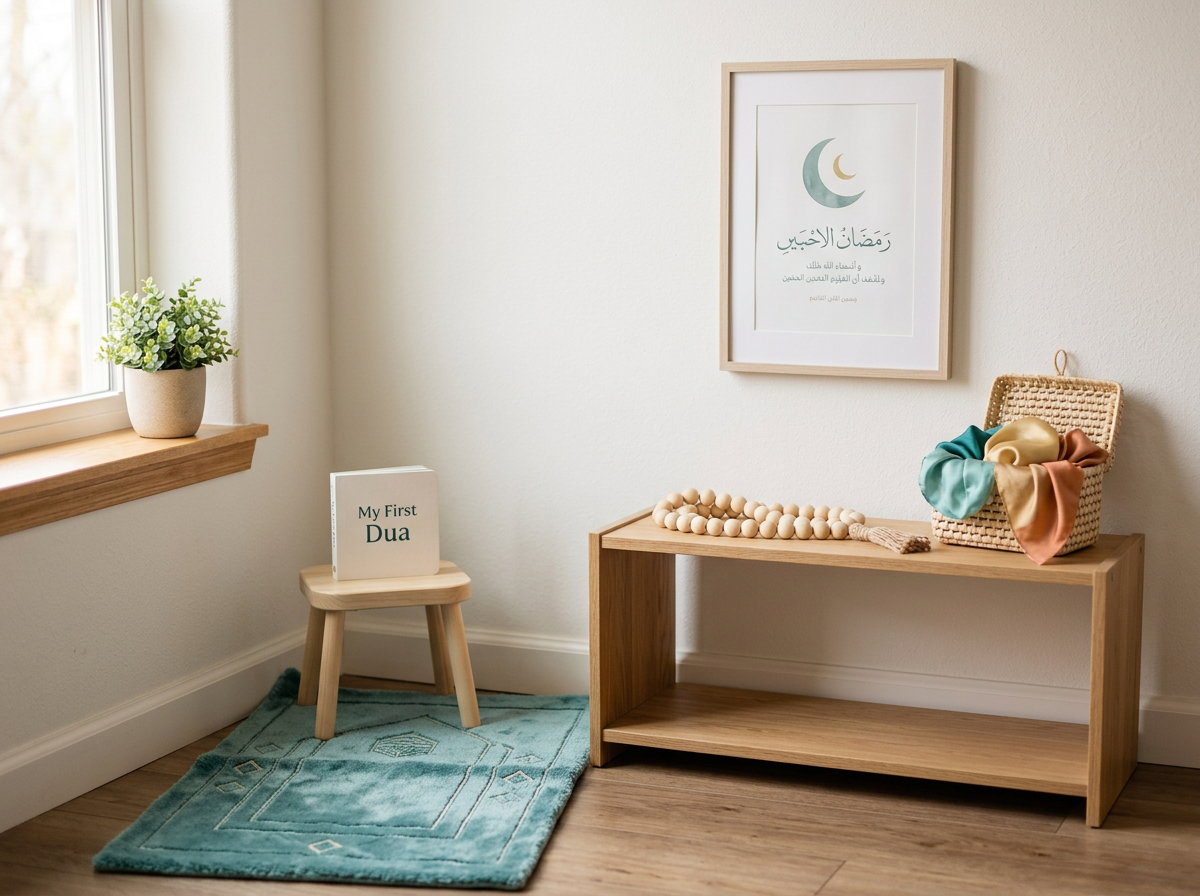
To foster a sense of ownership over their spiritual identity, we recommend establishing a permanent Musallah specifically at your child’s eye level—typically two feet off the ground. This dedicated space should be an inviting sanctuary, featuring a plush prayer rug and a small, low-profile chest for their first wooden prayer beads.
By grounding this space in comfort and beauty, you allow your toddler to associate the act of worship with safety and Sakinah. This physical anchor for their Fitra ensures that the remembrance of Allah is integrated into their most basic environmental exploration.
Environmental Design for Early Learning
Curating effective islamic preschool learning activities begins with how you organize your child's surroundings to encourage independent exploration of faith. Rather than hiding items in toy boxes, utilize low, open shelving that displays Arabic alphabet blocks and board books about the Prophets as permanent features of the room's architecture.
- Visual Cues: Place simple Arabic calligraphy or the names of Allah at the child's height to normalize the beauty of the sacred script.
- Defined Spaces: Use a specific, quiet area for reflection to teach the Adab (etiquette) of the Masjid within the home environment.
- Accessibility: Ensure small prayer garments or hijabs are kept in a reachable basket, encouraging self-initiated mimicry of the Sunnah.
These environmental choices bridge the gap between abstract belief and the physical reality of a toddler’s world. By making the Tarbiyah of the home visible and accessible, you teach your child that Islam is a beautiful and natural way of interacting with the world.
Spiritual Reminder
A home filled with the remembrance of Allah attracts the angels. Keep your Home Madrasah clean, scented, and well-lit to reflect the light of the faith you are planting in your child's heart.
The Parent as a Living Mirror
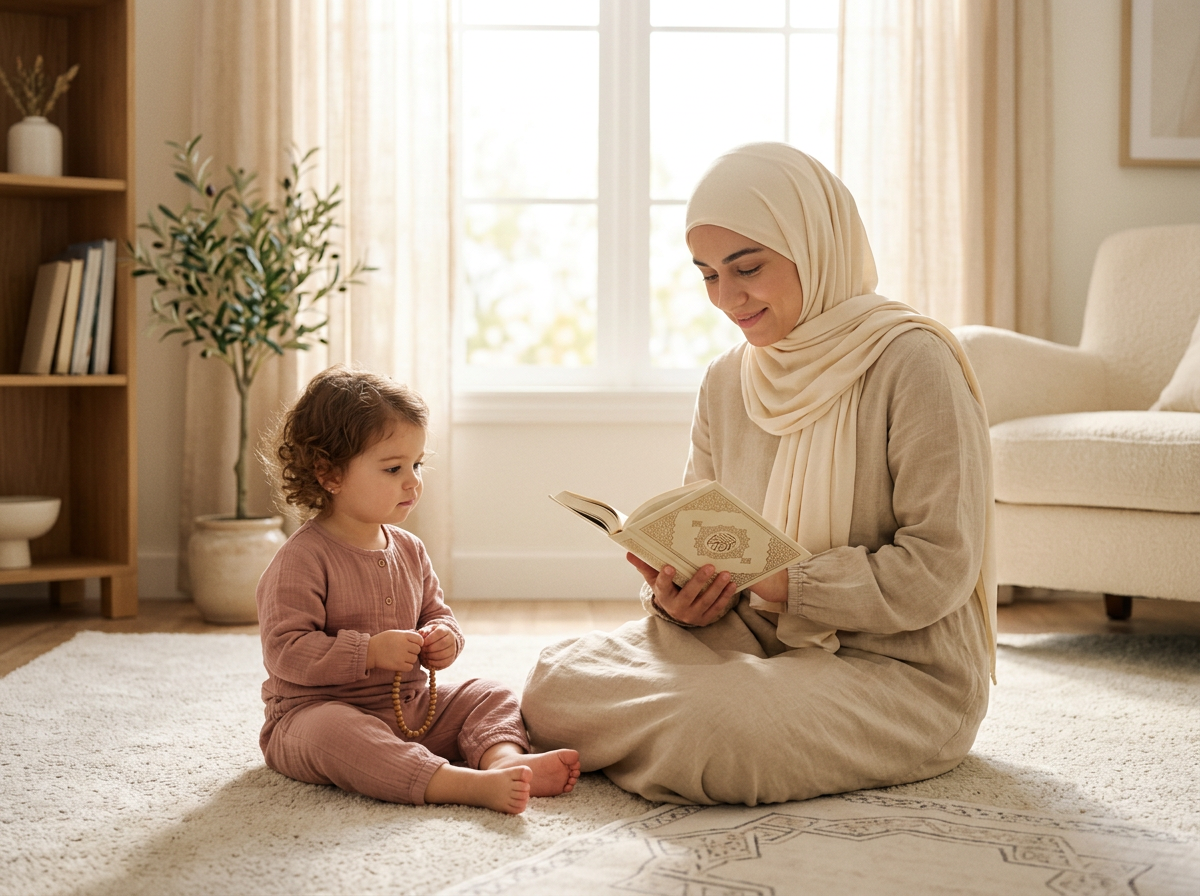
In this formative stage, your toddler functions as a biological sponge, absorbing the spiritual atmosphere of the home more than verbal instructions. We often say the parent is a "Mirror"; if you inhabit your Home Madrasah with tranquility and joy, your child will reflect that same reverence.
When your little one sees you consistently engaging with the Word of Allah in these dedicated spaces, they begin to view the Quran as a source of comfort. This positive religious association is the most critical foundation for their lifelong journey within the Ummah, ensuring their heart is already full of love for their Creator.

Conclusion
Nurturing your child’s innate connection to Allah is a marathon of small, rhythmic acts rather than a sprint toward academic milestones. The Fitrah-First framework reminds us that islamic education for babies is primarily about curating a sensory sanctuary where faith is caught through spiritual osmosis. You don’t need to be a scholar to be an effective teacher; your consistency in daily Dhikr and the intentional environment you build are the most powerful lessons your child will ever receive.
By embracing this framework, you protect the Amanah (trust) of your child’s soul while reclaiming your own peace of mind. Your next step is to transition from digital overwhelm to a guarded sanctuary. We invite you to audit your current media habits and replace passive distractions with purposeful, faith-aligned content that respects your toddler's developmental pace.
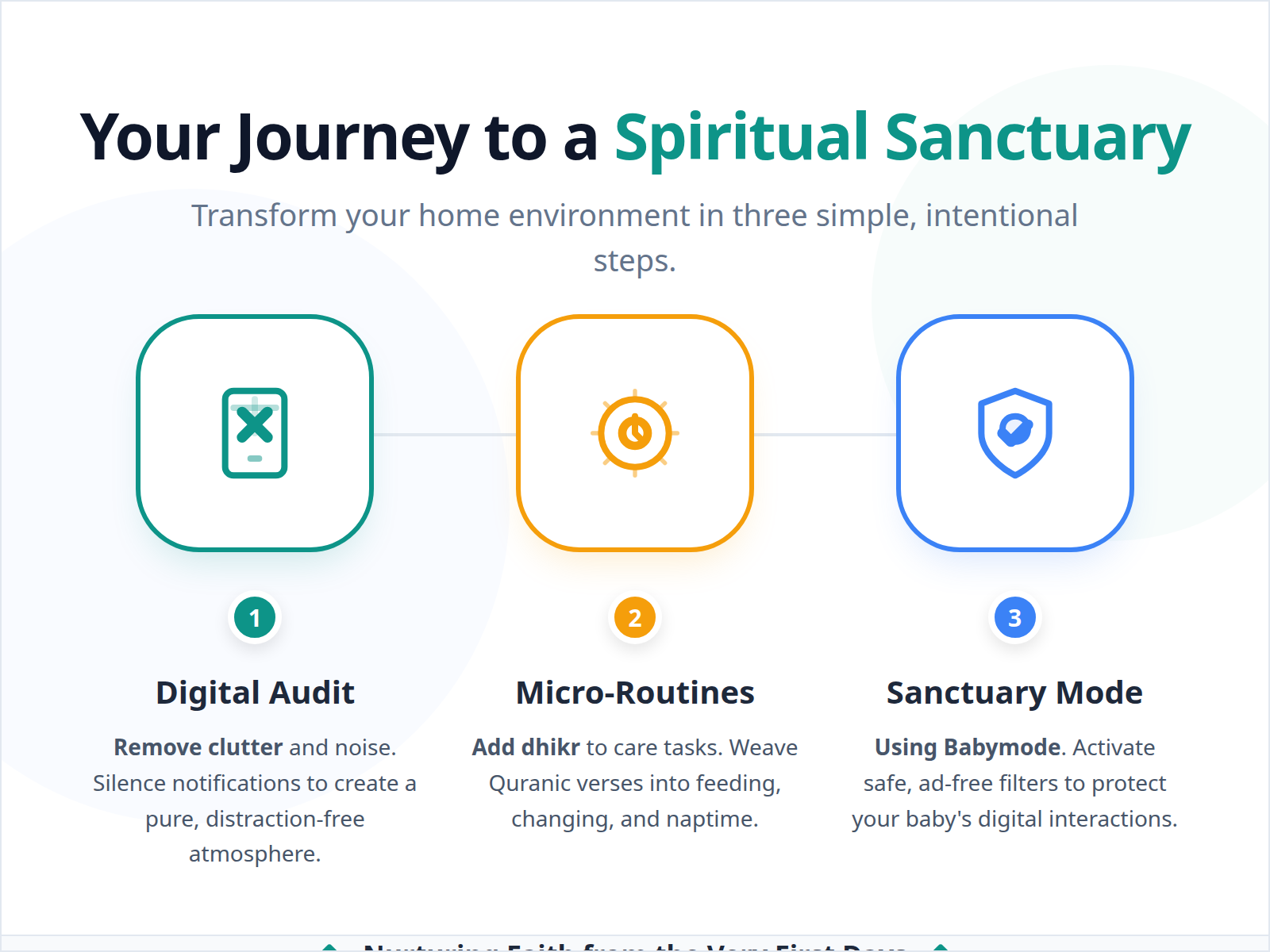
Explore Babymode’s AI-curated platform to simplify islamic education for babies and turn screen time into a sacred milestone. Together, we can build a home where the remembrance of Allah is your child’s first and most natural language, ensuring their fitra remains protected in a modern world.
Frequently Asked Questions
Common Concerns
Navigating Islamic education for babies in a digital world can feel overwhelming for many families. We’ve compiled these answers to help you nurture your child’s Fitra with confidence and Sakinah.
At what age should I start Quranic exposure?
Spiritual education begins at birth through audial immersion rather than formal curriculum. Surrounding your infant with rhythmic Quranic sounds familiarizes their Fitra with the language of Revelation long before they begin formal speech.
Is it safe to play Quran recitations during sleep?
Yes, this "Passive Tarbiyah" reinforces phonetic familiarity and cultivates a tranquil environment within the nursery. Always keep volumes at a gentle decibel to protect their sensitive hearing and ensure restorative rest.
How do I introduce Islam to a newborn?
Focus on sensory association by linking faith milestones to physical comfort. Use melodic Dhikr during nursing or rocking to build a subconscious connection between Islam and feelings of safety.
What defines a 'halal' video platform for toddlers?
A truly halal platform utilizes "Guarded" technology to exclude aggressive ads and overstimulating algorithms. It offers slow-paced, scholar-reviewed content that protects your child’s nervous system and spiritual well-being.
Should I choose digital or tactile learning resources?
A balanced Home Madrasah needs both. Tactile resources are essential for motor development, while "Guarded" digital tools provide the rhythmic repetition necessary for early Arabic language acquisition.