You aren’t just surviving the toddler years; you’re guarding a sacred Fitra window. In our tradition, children are a precious Amanah (sacred trust), and these formative moments are the most critical for building a lasting spiritual foundation.

For little ones, Islamic education is less about a formal curriculum and more about Sensory Adab. This framework ensures your child associates the mention of Allah with warmth and security, focusing on the felt experience of faith during their most receptive years.

This guide bridges the gap between secular "gentle parenting" and traditional Tarbiyah. We’ve identified 25 specific daily habits, from simple dhikr to basic etiquette, to create a manageable framework for your child’s upbringing. By focusing on intentional modeling and a curated digital sanctuary, you can move from reactive parenting to true spiritual peace.
The Sunnah of Gentleness: Why Gentle Parenting is the Original Path
Gentle parenting isn’t a modern invention; it’s a beautiful reclamation of the Prophetic model. At its heart lies Rahma (mercy), the primary lens through which we nurture our little ones' souls during these tender years.
We find this profound tenderness in how the Prophet (SAW) interacted with his grandchildren, Hasan and Husayn. Whether he was lengthening his Sujud as they climbed his back or showing them public affection, he signaled that a child’s emotional security is a pillar of Tarbiyah.
Any effective islamic parenting toddler guide starts with our own self-regulation. When we meet a toddler's big emotions with Hilm (forbearance) rather than frustration, we’re teaching them how to govern their own Nafs through our example.
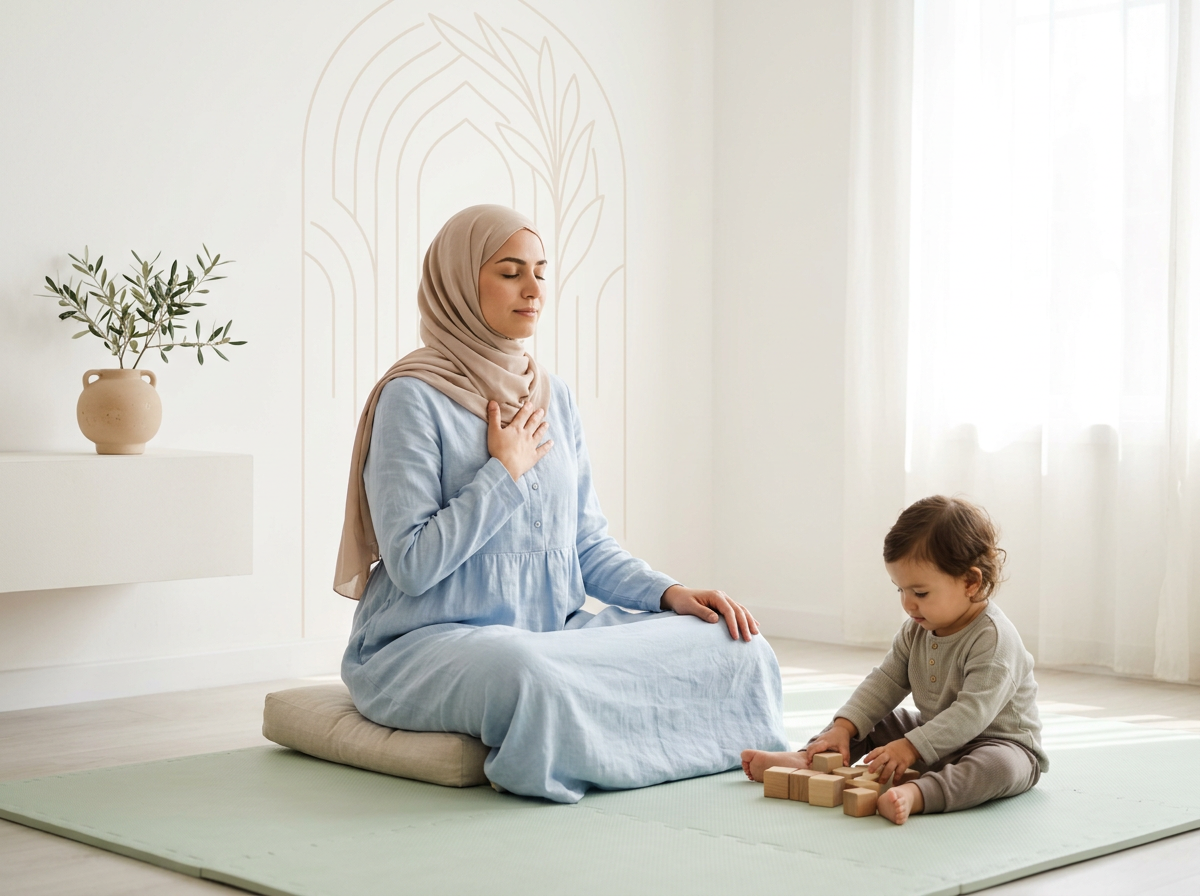
Modern science confirms that toddlers learn through emotional association rather than complex logic. When your child feels safe and loved during Dua or prayer, their brain forms a lasting, positive bond between faith and comfort.
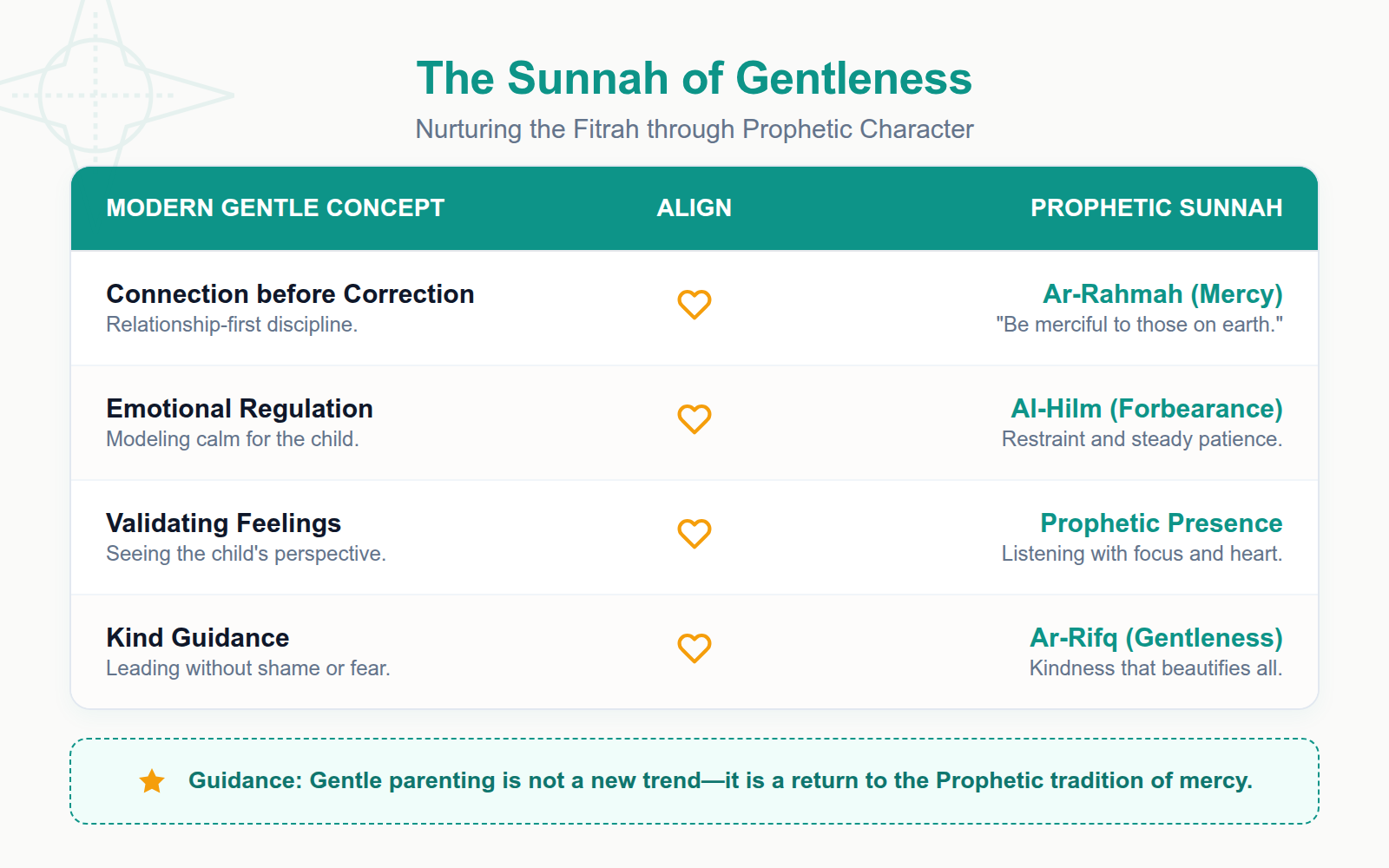
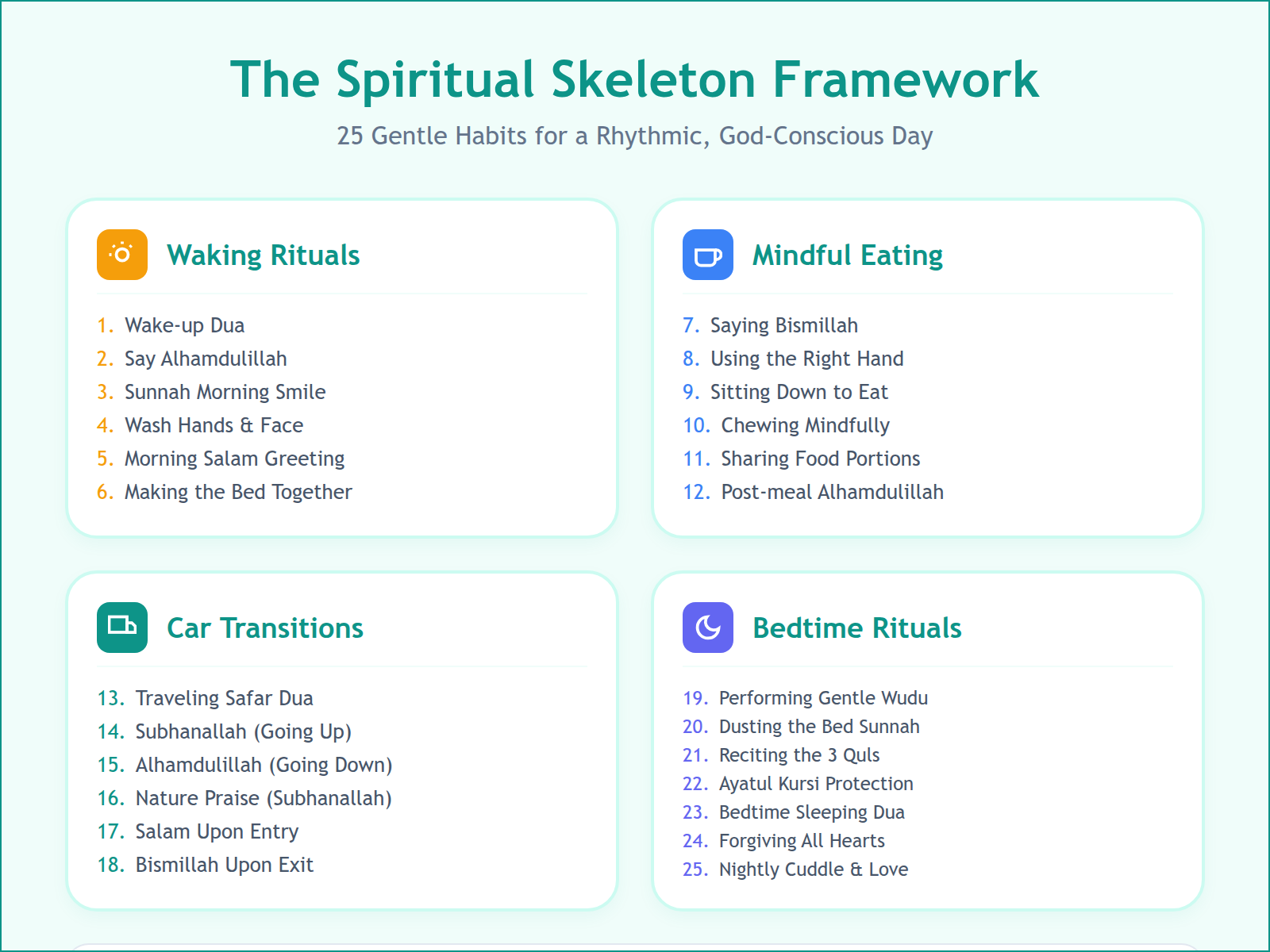
This spiritual atmosphere is best built through consistent, small actions that turn abstract mercy into a lived reality. To help you weave this into your routine, we’ve adopted a framework of 25 specific daily habits—ranging from morning Dhikr to simple etiquette—that make the Sunnah the very air your child breathes.
These manageable steps ensure that Adab is "caught" through love, rather than "taught" through lectures. By focusing on these rhythmic habits, you provide the steady, gentle structure your toddler needs to flourish.
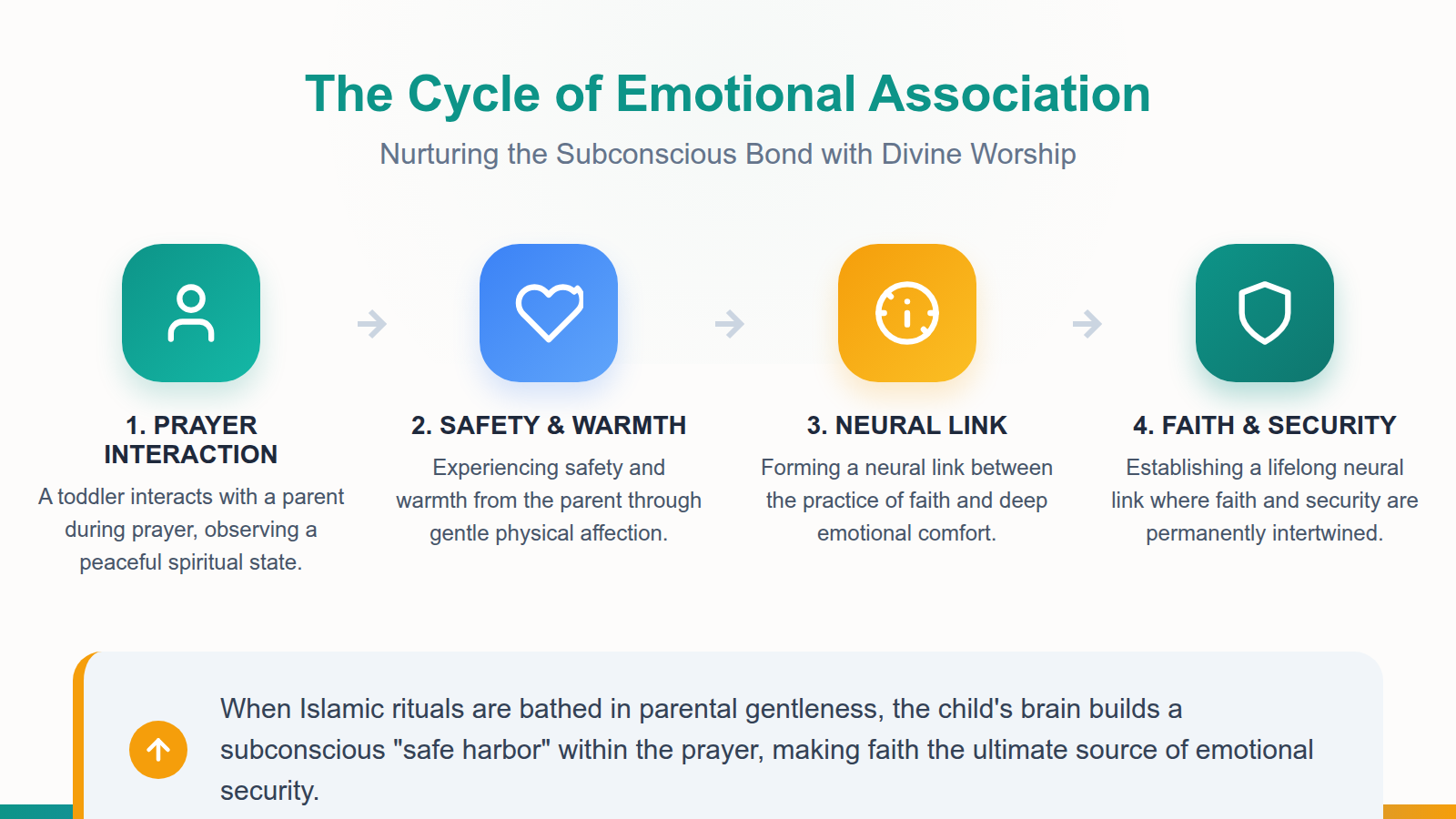
Practical Adab for Little Hands: The 'Sensory Adab' Framework
Toddlers don’t learn through logic; they experience the world through feeling. Our "Sensory Adab" framework transforms the Sunnah into a physical experience, weaving character into your child’s daily rhythms. By grounding faith in touch and sound, we protect their Fitra and make Tarbiyah a natural, joyful bond.
Cultivating Faith Through Daily Habits
We focus on 25 specific daily habits—from the cool splash of Wudu water to the gentle scent of a prayer rug—to make adab for toddlers tangible. These sensory anchors help your little one associate the remembrance of Allah with safety, warmth, and Ihsan (excellence).
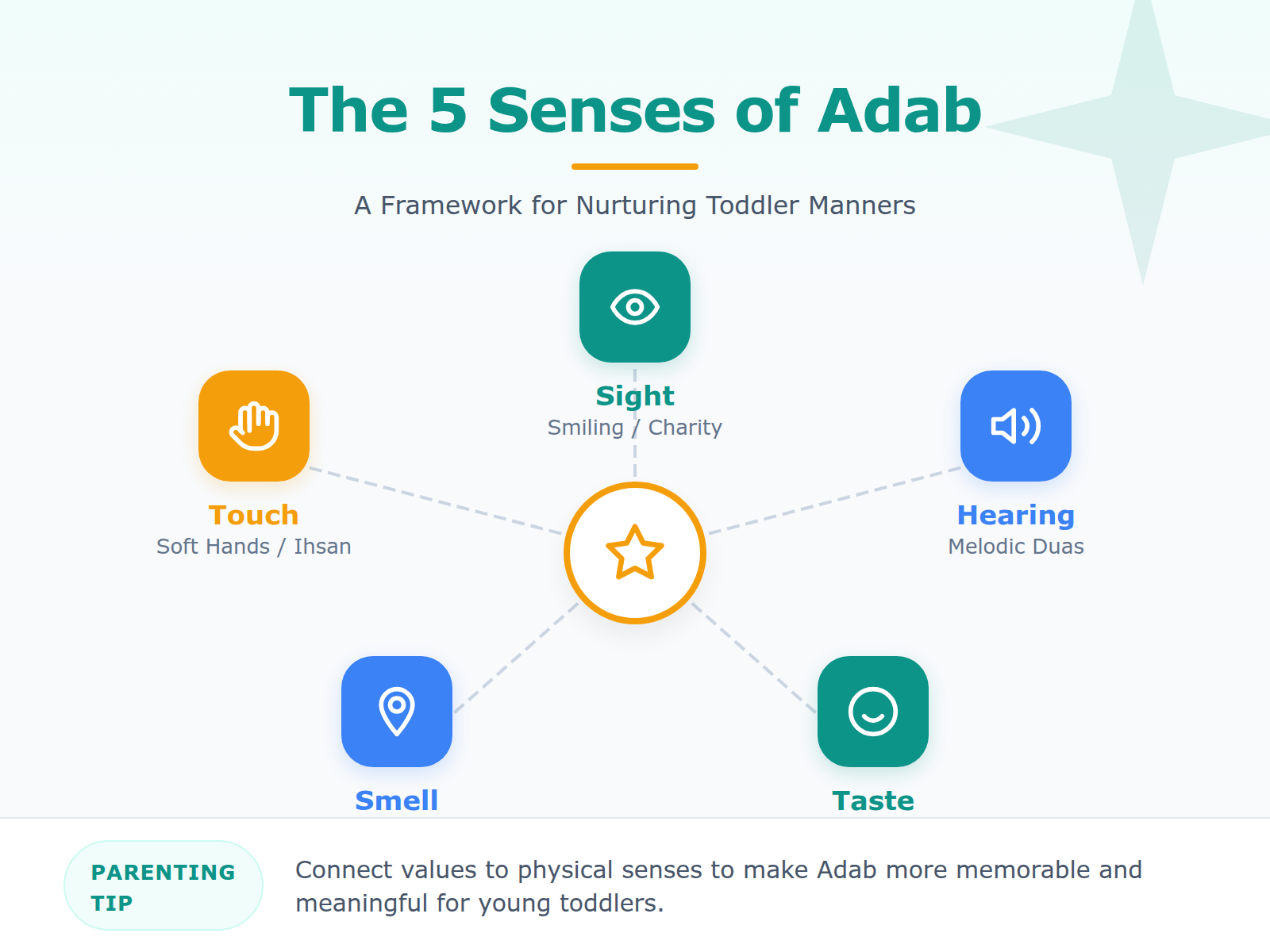
Your child is a mirror reflecting your every gesture and tone. Modeling is your most powerful tool, providing a living masterclass in Tarbiyah through your own intentional actions. When you greet others with a genuine smile, you show your child how a believer carries themselves with grace.
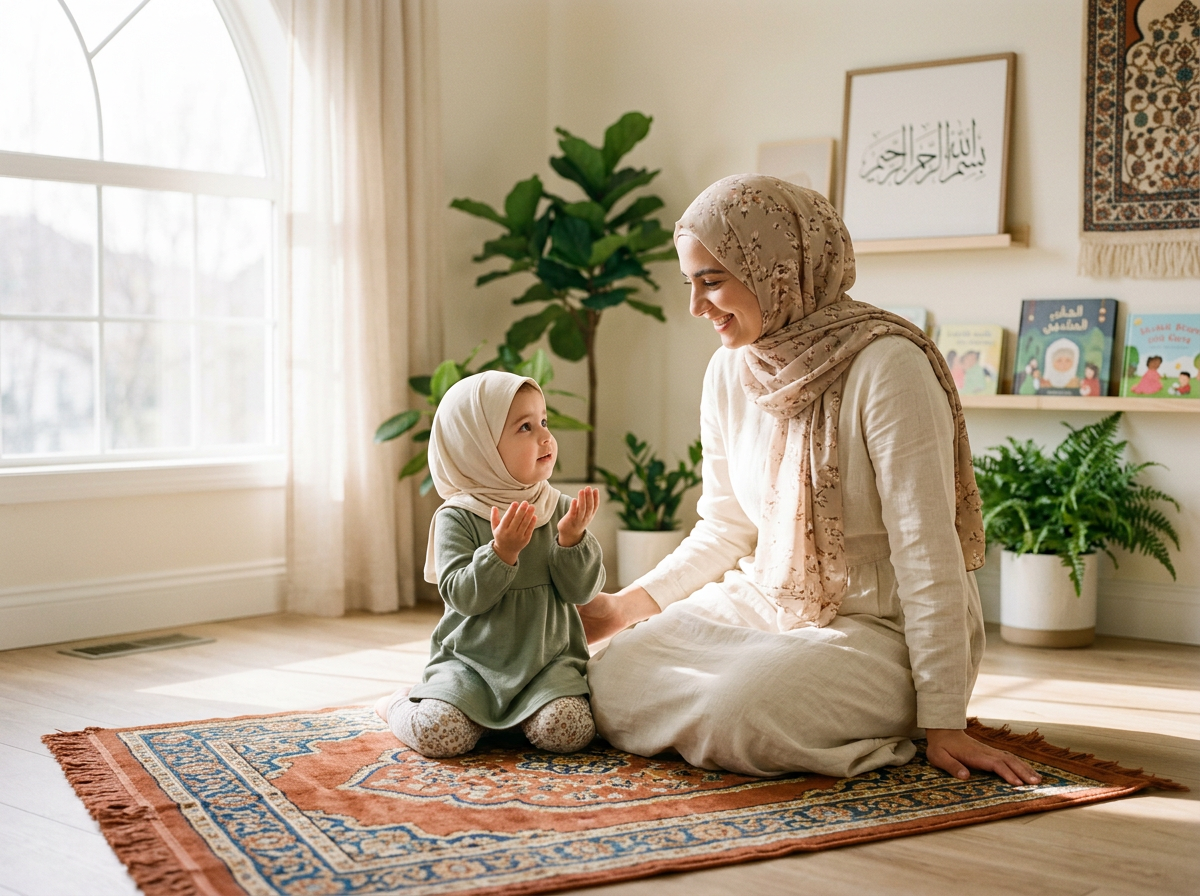
Using Gentle Scripts for Big Moments
Use "Adab scripts" to guide your child’s physical movements toward kindness during high-energy moments. When a toddler reaches impulsively for a toy, gently guide their hand while using the 'Soft Hands' script. By saying, "We use soft hands to show love," you turn a physical impulse into an intentional act of mercy.
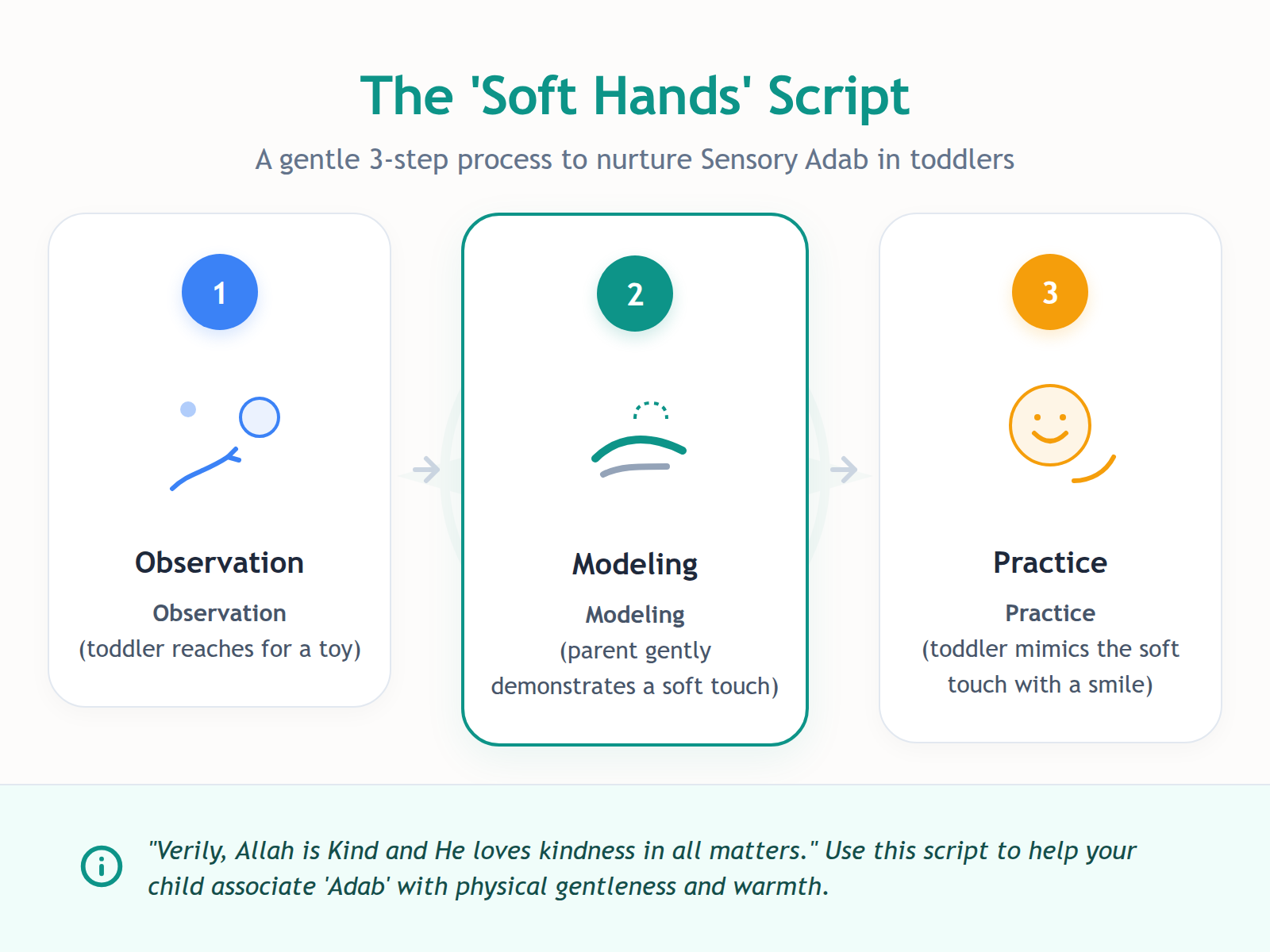
This approach shifts your focus from correcting behavior to nurturing heart-centered generosity. By layering these rhythmic scripts into your daily routine, you help your child see themselves as a gentle, valued member of the global Ummah from their very first steps.
Parenting Tip: The 'Bismillah' Pause
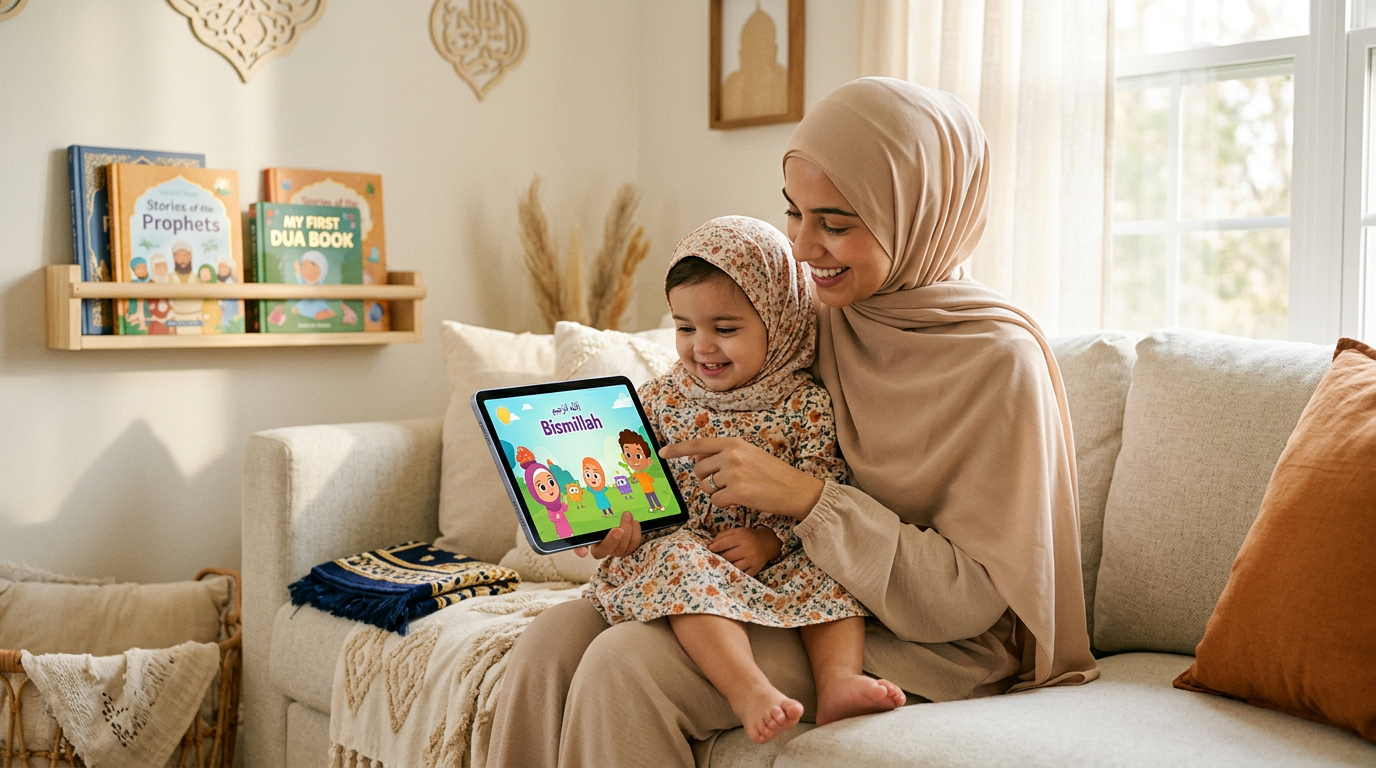
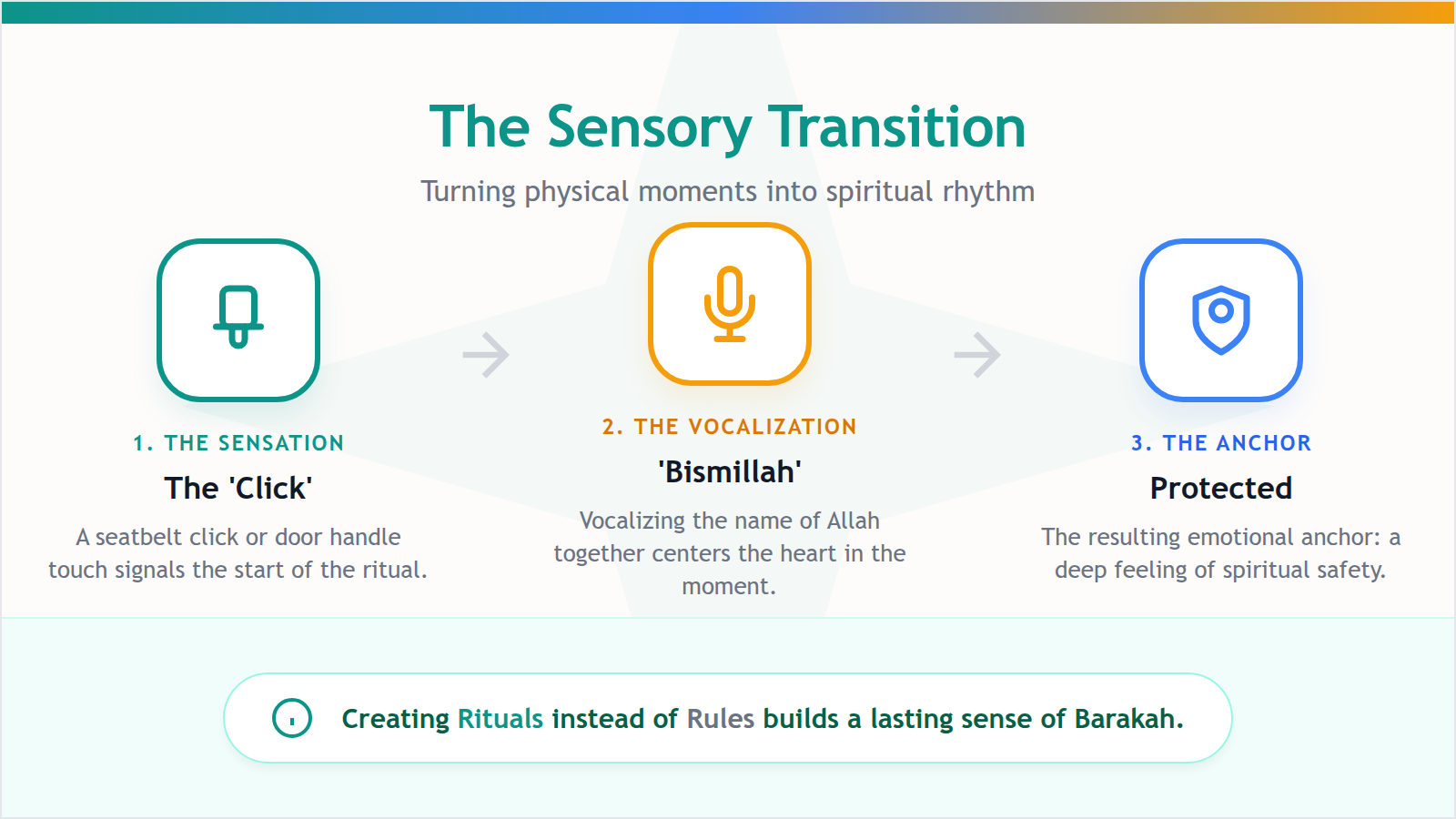
Before starting a meal or activity, take a serene breath and say Bismillah out loud with a warm smile. This small action teaches your toddler that every beautiful moment begins with Allah, building a lifelong habit of mindfulness.
Building a Digital Sanctuary: The Role of Halal AI in Tarbiyah
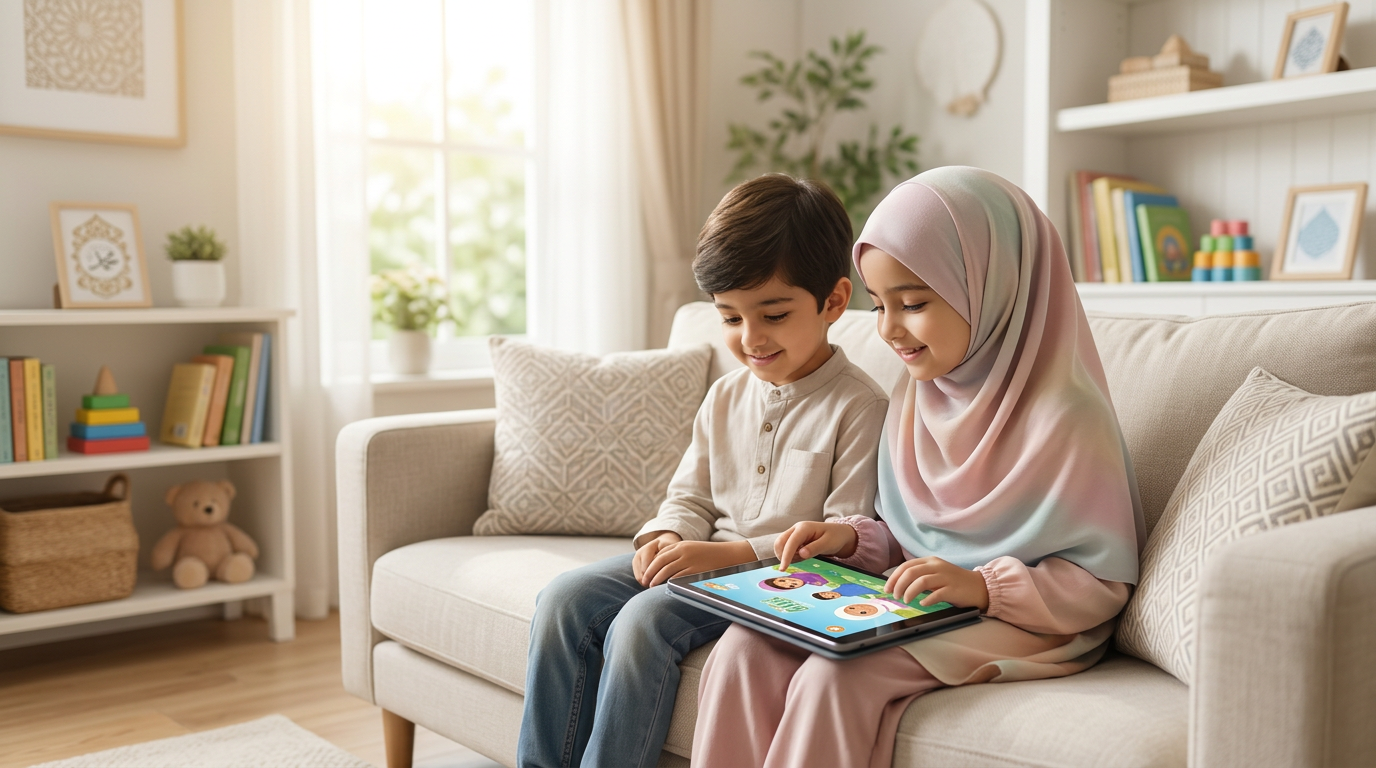
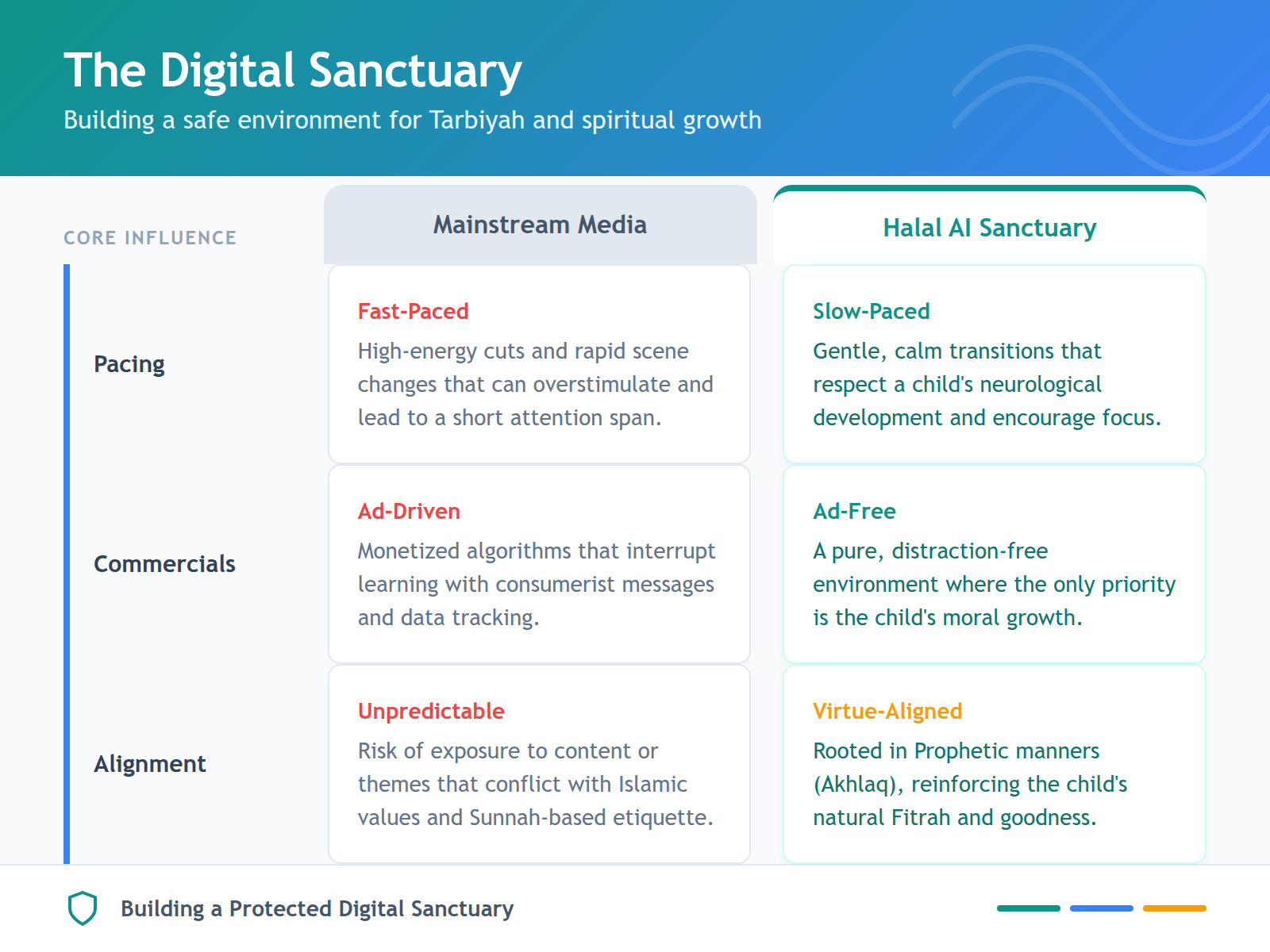
Mainstream platforms often rely on overstimulating algorithms that can disrupt the serene environment your toddler needs. By choosing halal screen time for kids, you move away from unpredictable distractions toward an intentional tool designed for Tarbiyah. This shift ensures technology serves as a bridge, reinforcing the spiritual rhythms that frame your child’s daily routine.
Protecting the Fitra Online
True halal screen time for kids is about more than avoiding harm; it actively nurtures your child’s Fitra. We prioritize slow-paced visuals and an ad-free experience that respects a toddler’s sensitive nervous system. Our AI-guarded safe space creates a digital sanctuary, ensuring every video aligns with your family’s values and maintains a restorative atmosphere.
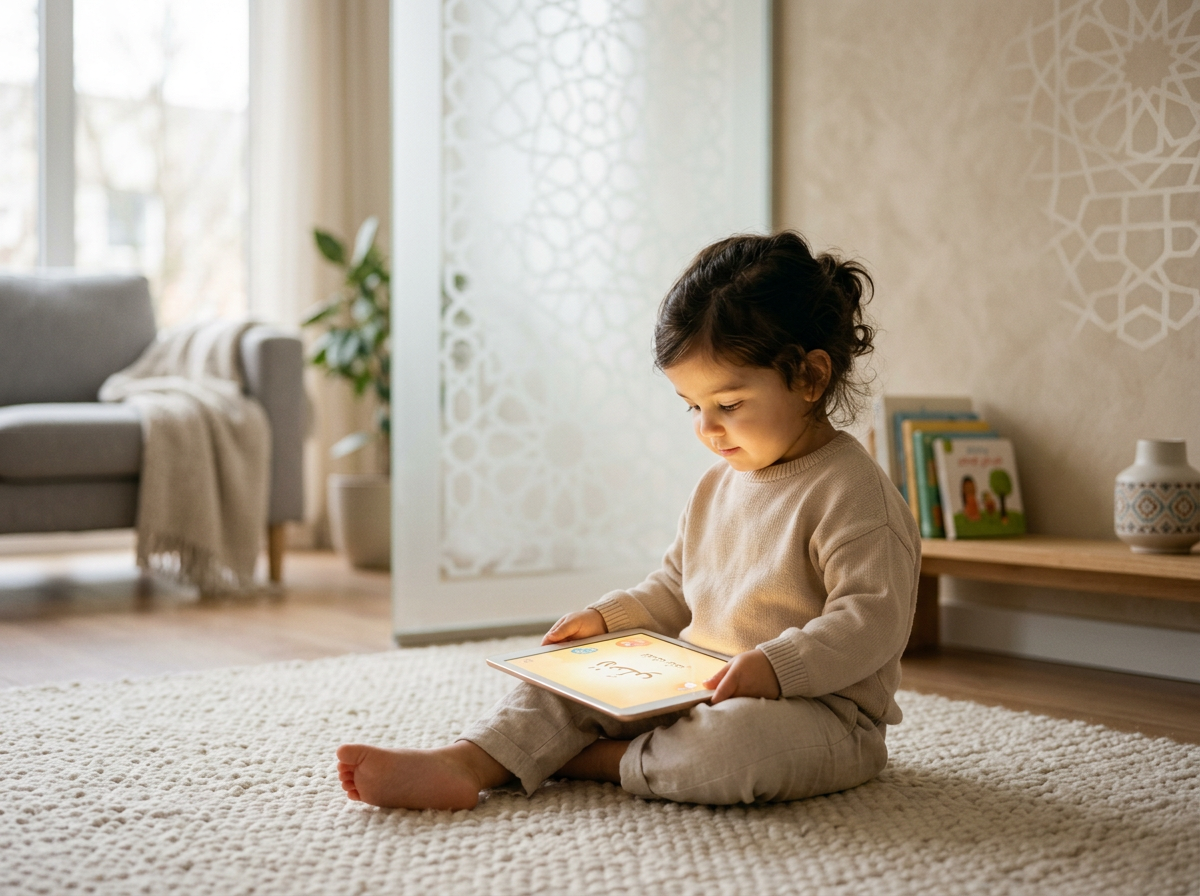
While mainstream apps focus on retention, we offer "Pure Screen Time" to avoid the addictive "rabbit hole" of human-uploaded content. This creates a calm transition between digital learning and physical play, preserving the peace in your home.
Technology as a Nurturing Companion
Technology becomes a steadfast partner when it mirrors the Sunnah and the gentle manners you model at home. Our platform provides a digital reflection of essential Islamic values through:
- Slow-paced storytelling that prevents sensory overload.
- Bilingual animations that introduce Quranic vocabulary naturally.
- Value-based characters who model gentle Adab in every interaction.
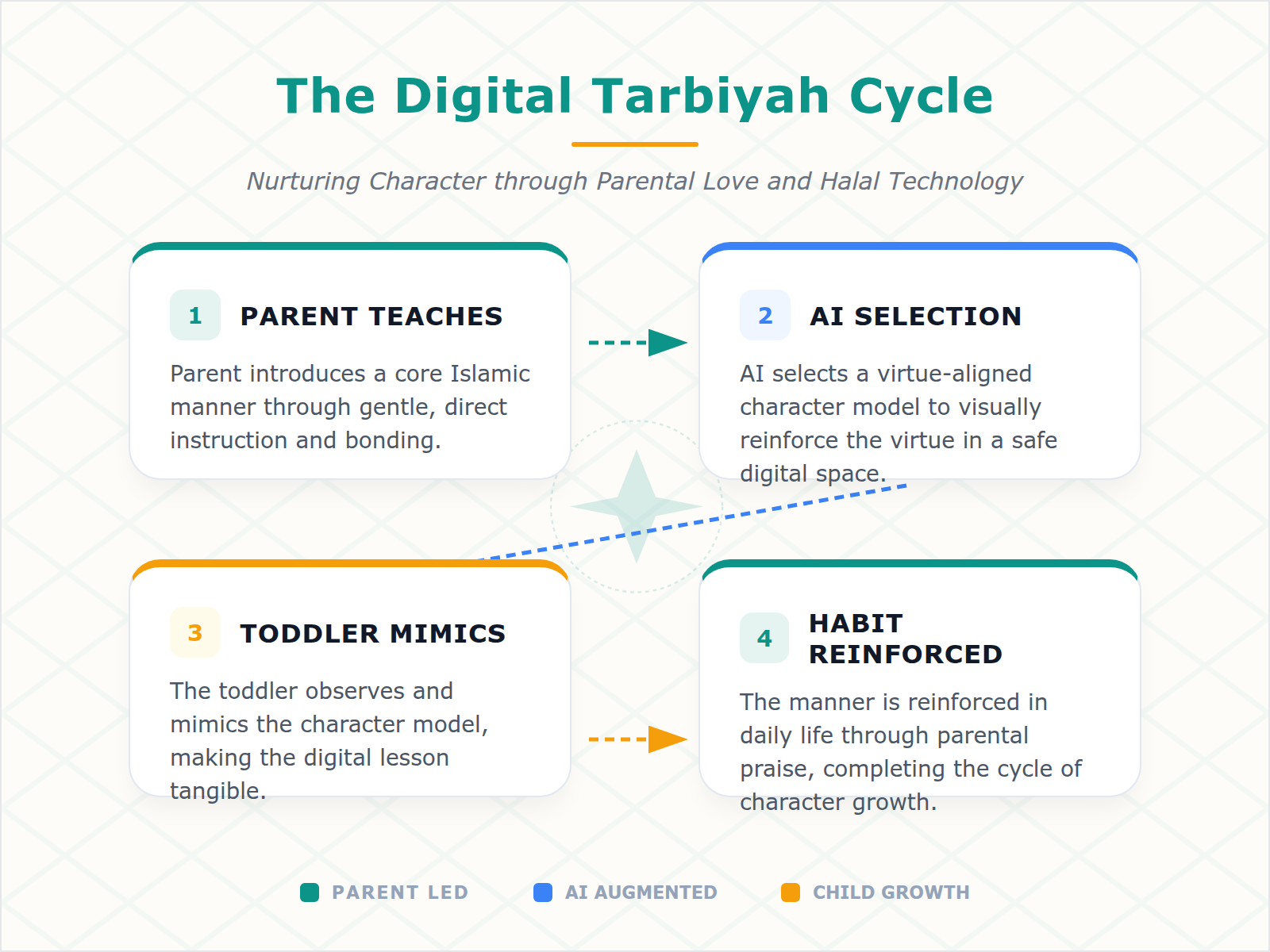
When your toddler watches characters perform rhythmic acts of worship, it validates the sacred habits you are planting in their hearts. This creates a "Digital Tarbiyah Cycle" where the virtues observed in our safe space are naturally mirrored in real-world actions. By integrating these tools, you help your little one grow as a confident, grounded member of the global Ummah.
Spiritual Reminder: Guarding the Gates
Our scholars remind us that the eyes and ears are the gates to the heart. In a world of digital noise, creating a guarded space for your child's senses is a modern act of Ihsan, ensuring their first digital steps are paved with light and Barakah.
Raising a Bilingual Heart: Introducing Arabic through Play
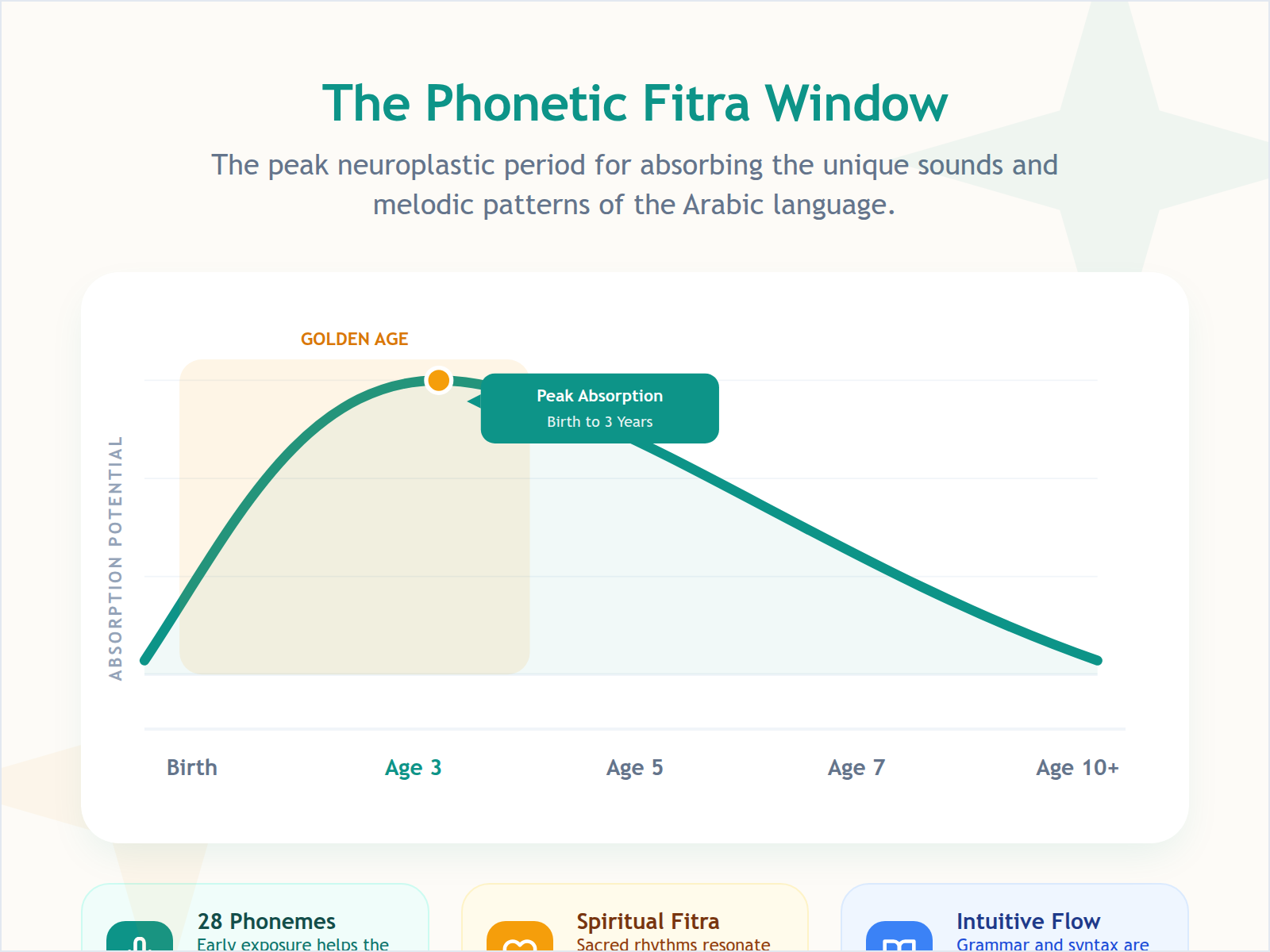
Between birth and age three, your child’s brain acts as a linguistic sponge, uniquely wired to absorb the complex phonemes of the Arabic language. We call this the 'Phonetic Fitra' window—a sacred time when toddlers naturally replicate deep gutturals and rhythmic sounds that often challenge adults. By teaching toddlers Arabic during this stage, you're anchoring their hearts to the language of the Revelation.
Capturing the Phonetic Fitra Window
Research suggests that early exposure to these liturgical sounds builds a lifelong emotional resonance with the language of our Ummah. We favor situational association over formal translation, allowing Arabic to become a natural label for their everyday environment. This nurturing approach ensures their spiritual identity is formed during the brain's most plastic and receptive stage.
From Academic Rote to Rhythmic Play
We advocate for a "joy-first" philosophy, replacing rigid academic rote with instrument-free Nasheeds and sensory play. These rhythmic melodies utilize a powerful "ear-to-heart" connection, helping your little one internalize grammar patterns subconsciously through the beauty of song. It’s about making the Sunnah feel like the warm, familiar soundtrack of your home life.
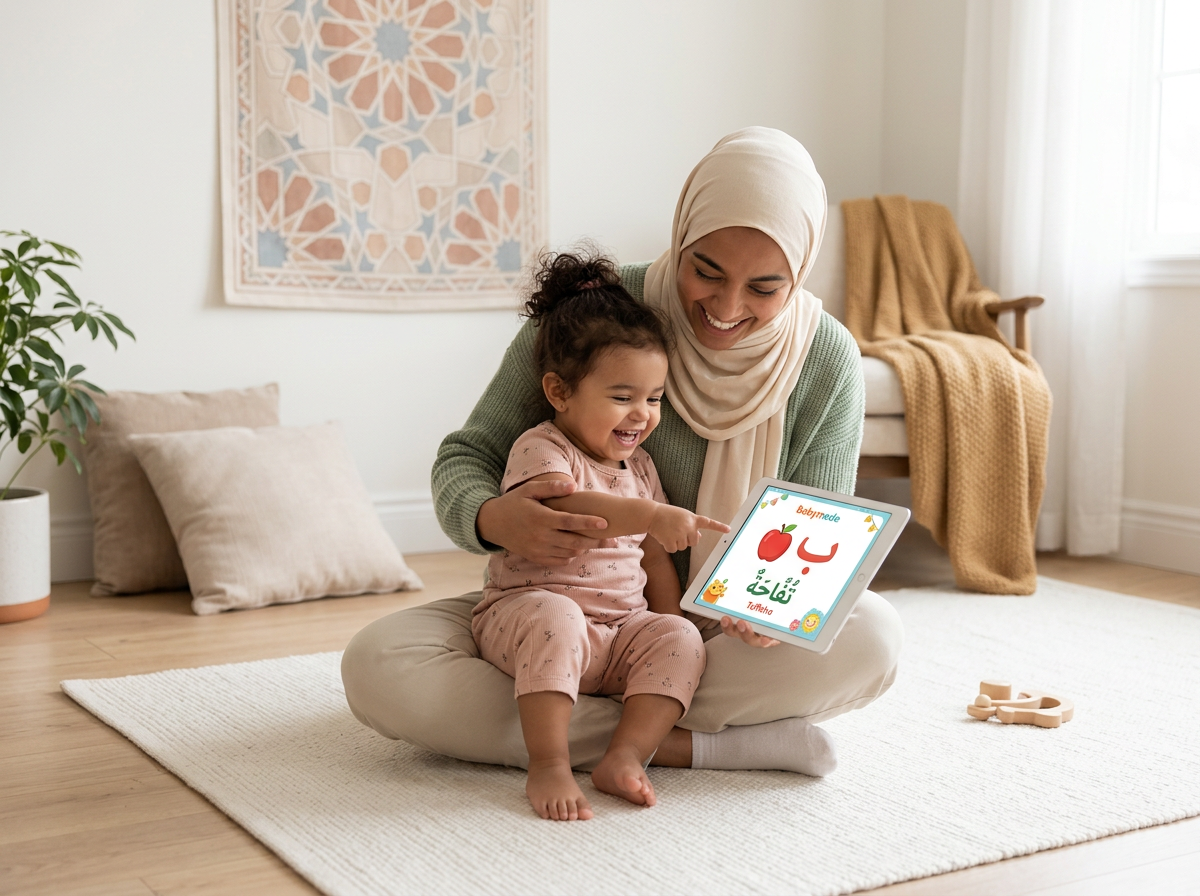
Our bilingual digital flashcards and curated Arabic content allow you to model correct pronunciation with total confidence. This high-tech, high-touch approach ensures teaching toddlers Arabic remains a gentle and restorative part of your daily bonding. You’re not just teaching words; you’re providing the keys to a lifelong spiritual sanctuary.
Rituals, Not Rules: Creating a Spiritual Rhythm with Daily Duas
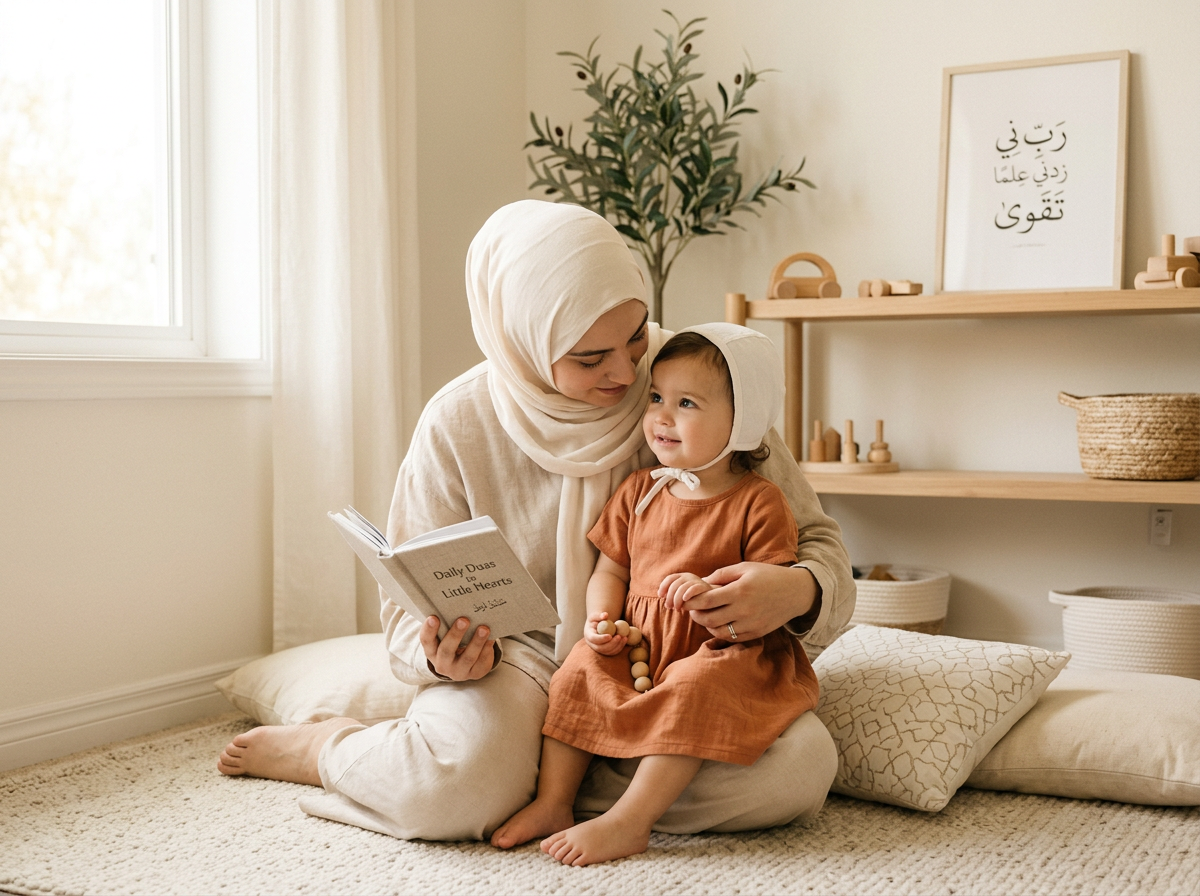
For your toddler, a Dua is more than memorization; it’s a profound sense of safety and divine connection. We use "emotional anchoring" to link daily duas for muslim toddlers to your warm presence and nurturing touch. When they wake, whispering Alhamdulillah together frames the new day as a gift, weaving the remembrance of Allah into the fabric of their sensory world.
Anchoring Faith in Sensory Transitions
Ordinary routines become "sensory transitions" that trigger Dhikr as a natural, effortless reflex. Physical sensations—like the cool splash of Wudu water—anchor the heart in Taqwa long before a child understands formal logic. These rhythmic habits shield their Fitra, ensuring that turning toward their Creator becomes a first instinct.
Establishing a Spiritual Skeleton
Consistency is the secret to making these spiritual rhythms feel like "second nature" rather than rules. We recommend adopting a curated set of 25 essential spiritual routines that cover everything from waking and sleeping to eating, drinking, and bathroom adab. You can also guide them through greeting others with Salam or saying Allahumma barik when they spot a colorful flower or the bright moon.
Modeling these daily duas for muslim toddlers creates a restorative home environment where the mention of Allah provides constant Sakina. This consistent Tarbiyah transforms daily chores into sacred milestones, making faith a seamless part of your child's growth. From morning gratitude to bedtime supplications, this structured framework ensures your little one feels anchored in their Creator’s love.
Connection Before Correction: Handling Tantrums with Islamic 'Time-Ins'
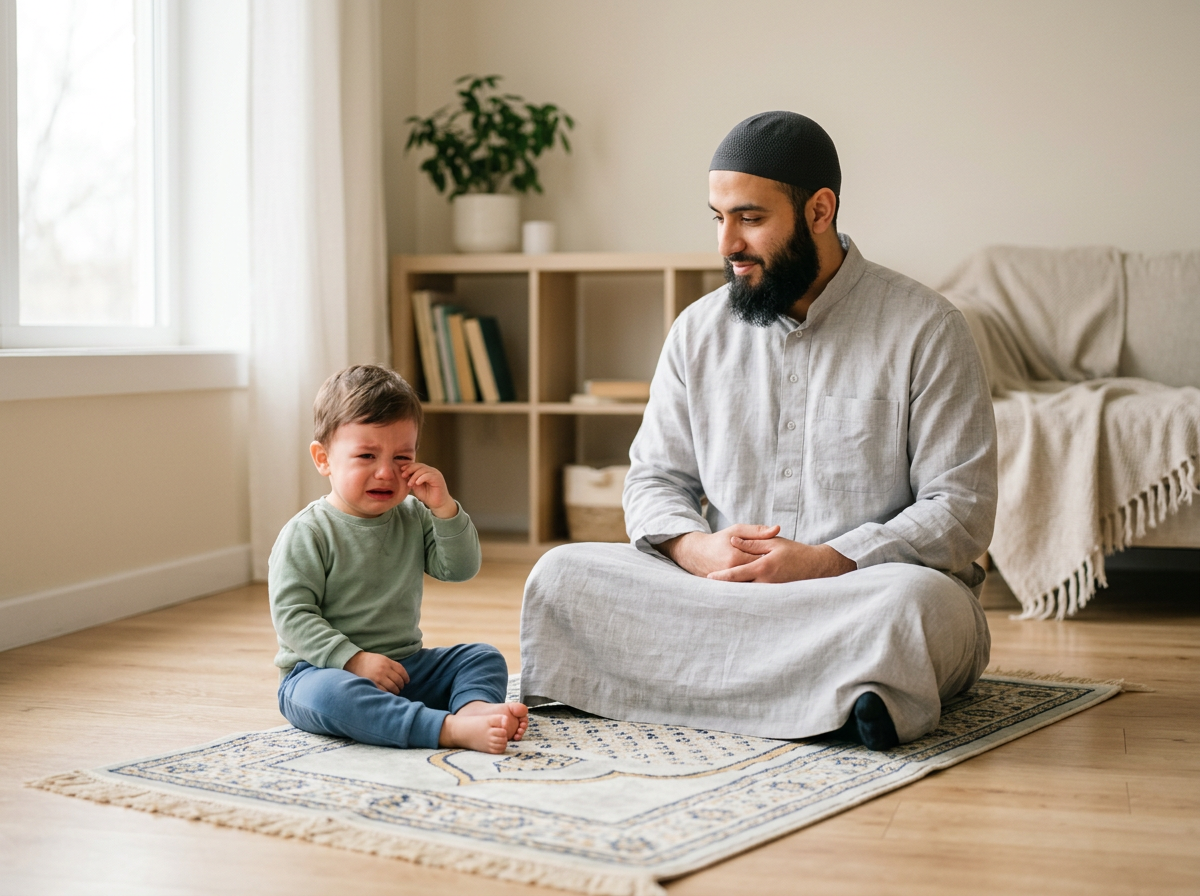
Tantrums aren’t a sign of rebellion; they’re a toddler’s way of seeking connection while their brain navigates overwhelming emotions. In gentle parenting islam, we view these outbursts as a sacred window to model Adab rather than a breach of it. By staying present, you protect their Fitra and transform a stressful moment into a vital opportunity for Tarbiyah.
Instead of the isolation of a traditional "time-out," we practice the Islamic "Time-In." This method prioritizes proximity over punishment, ensuring your little one experiences the mercy of the Prophetic model. It creates a "calm harbor" where big emotions can be anchored safely without fear of abandonment.
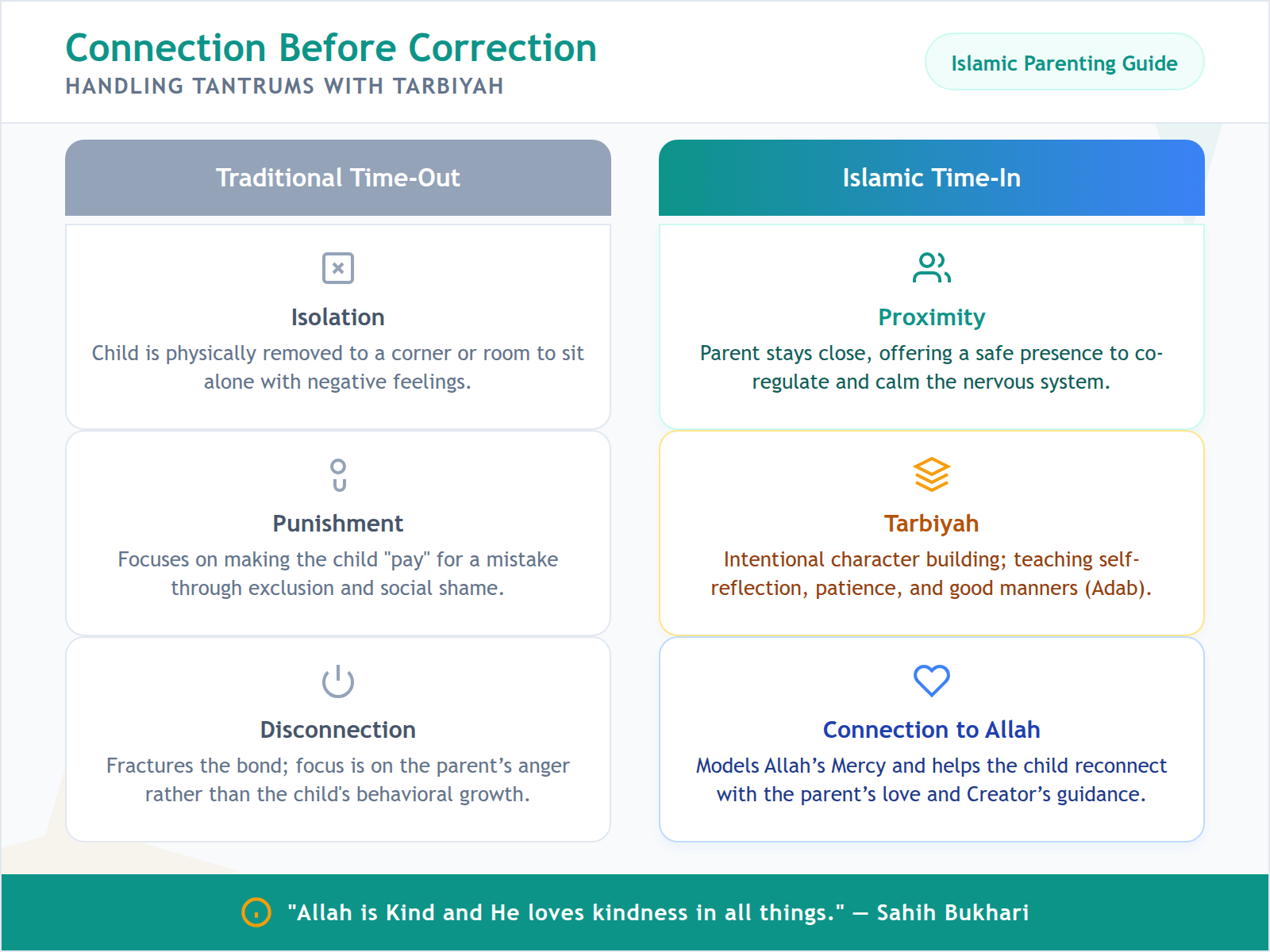
When an emotional storm hits, embody Sabr by lowering your voice and softening your gaze to invite Sakina into the room. Your physical presence demonstrates that your love is an Amanah, constant and unconditional. This steadfastness helps reinforce the Prophetic character and essential behavioral foundations that ground a child’s heart.
Once the peak passes, use Adab scripts to bridge the gap between big feelings and better character. You might say, "I see your heart is frustrated; let’s breathe together and ask Al-Latif for a soft heart." Linking their recovery to the Names of Allah helps them build a spiritual vocabulary from their earliest years.
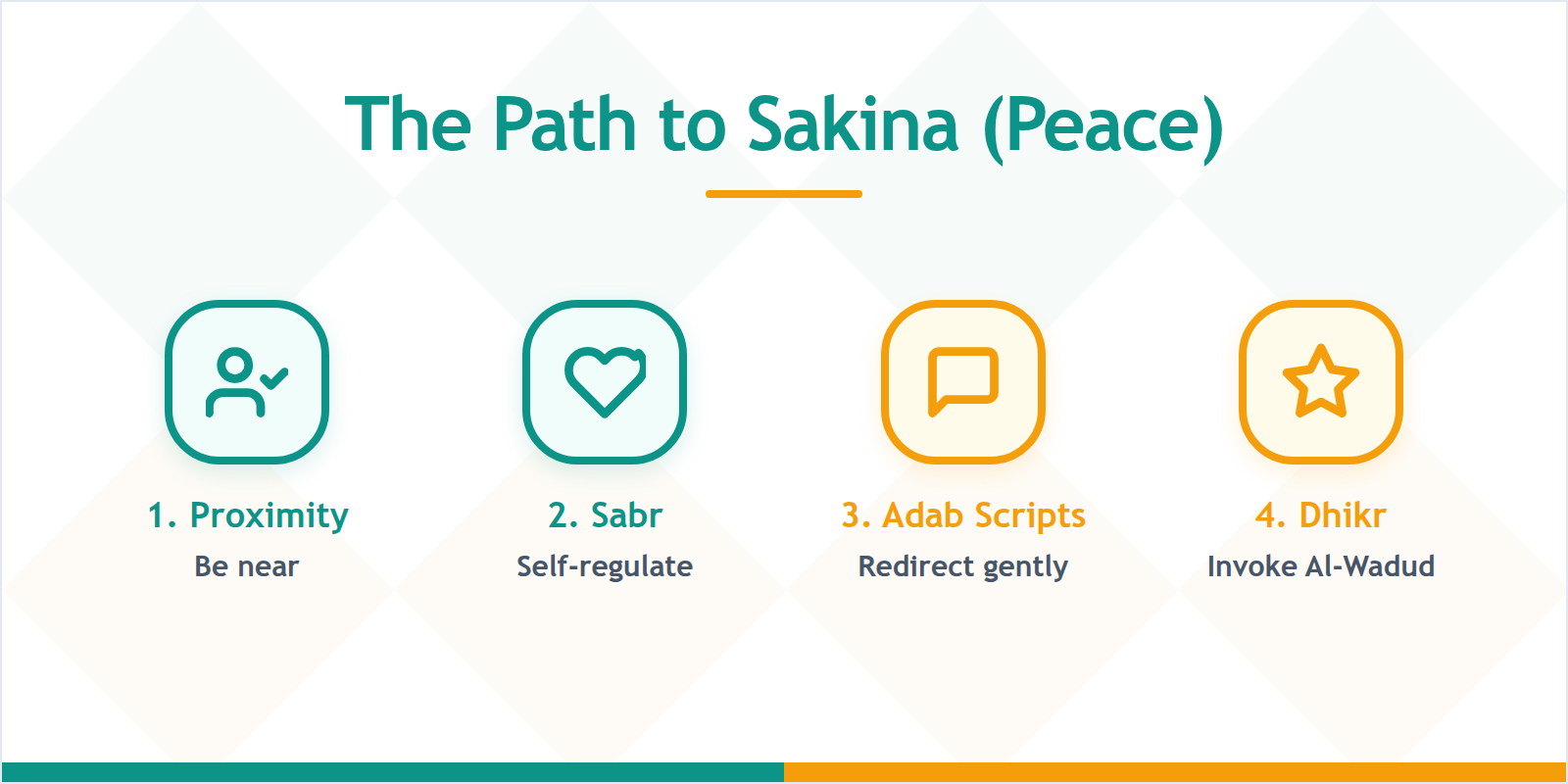
Consistency in these "Time-Ins" ensures that turning toward Allah becomes a first instinct during life's many challenges. By focusing on connection before correction, you transform daily discipline into a restorative journey of faith. This gentle guidance helps your child grow as a confident, emotionally secure member of the Ummah.
Conclusion
The "Sensory Adab" approach proves that effective islamic parenting toddler guide principles are best taught through a loving, consistent presence. By guarding your child's fitra through Rahma and a curated digital sanctuary, every interaction becomes a sacred spiritual milestone. You are planting seeds of Prophetic character today for a resilient tomorrow.
Next Steps:
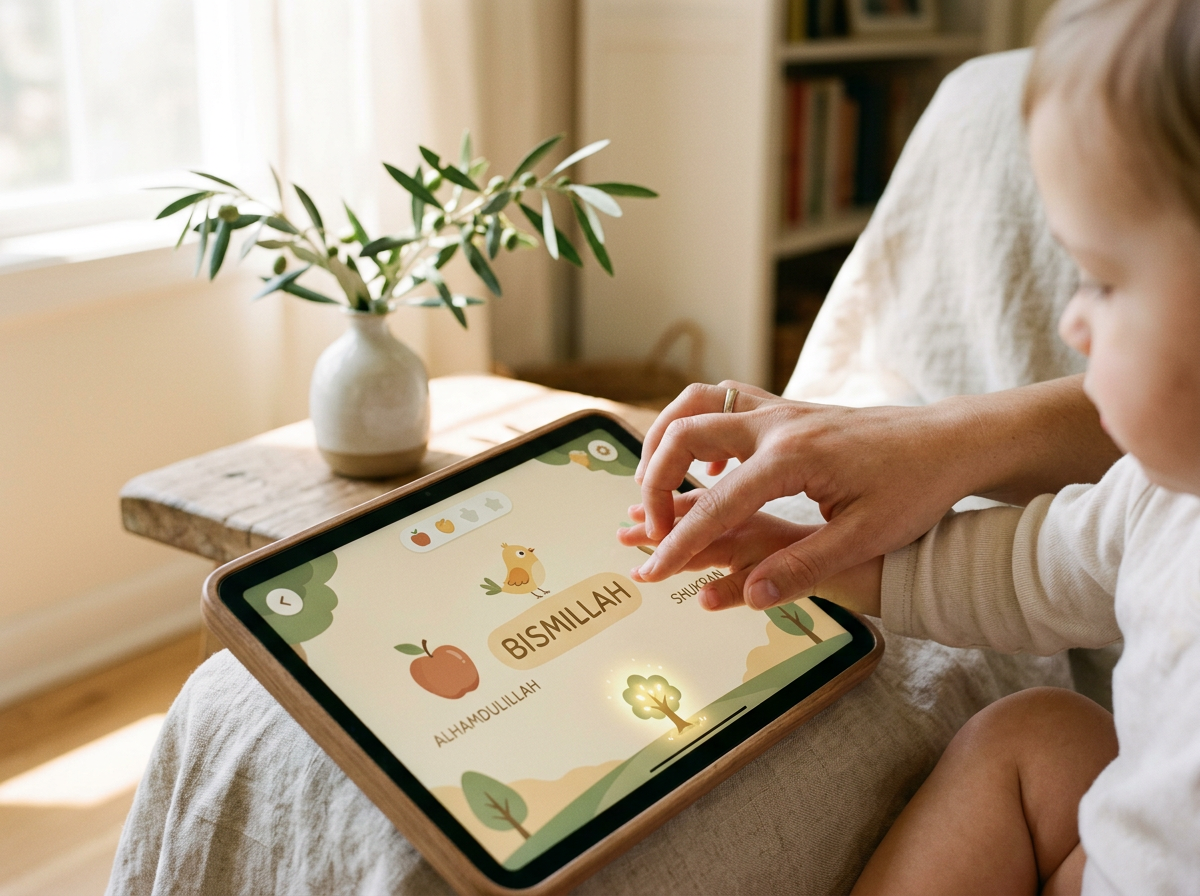
* Choose a halal digital platform like Babymode for ad-free, faith-aligned screen time.
* Pick one daily dua to anchor your toddler's morning or evening routine.
* Practice one "Adab script" this week to handle a tantrum with gentle patience.
Frequently Asked Questions
How do I start teaching Adab?
It’s best to model the 25 essential spiritual routines through natural mimicry. Verbalizing Bismillah helps your child internalize faith during their critical Fitra window.
How do I handle tantrums with Prophetic Rahma?
Use an Islamic "Time-In" to provide Sakina through your calm presence. This prioritizes connection, turning emotional storms into gentle moments of Tarbiyah.
Are there safe, ad-free alternatives to YouTube?
Babymode offers an AI-guarded safe space for the Ummah. Our platform reinforces faith-centered milestones through curated, ad-free content.