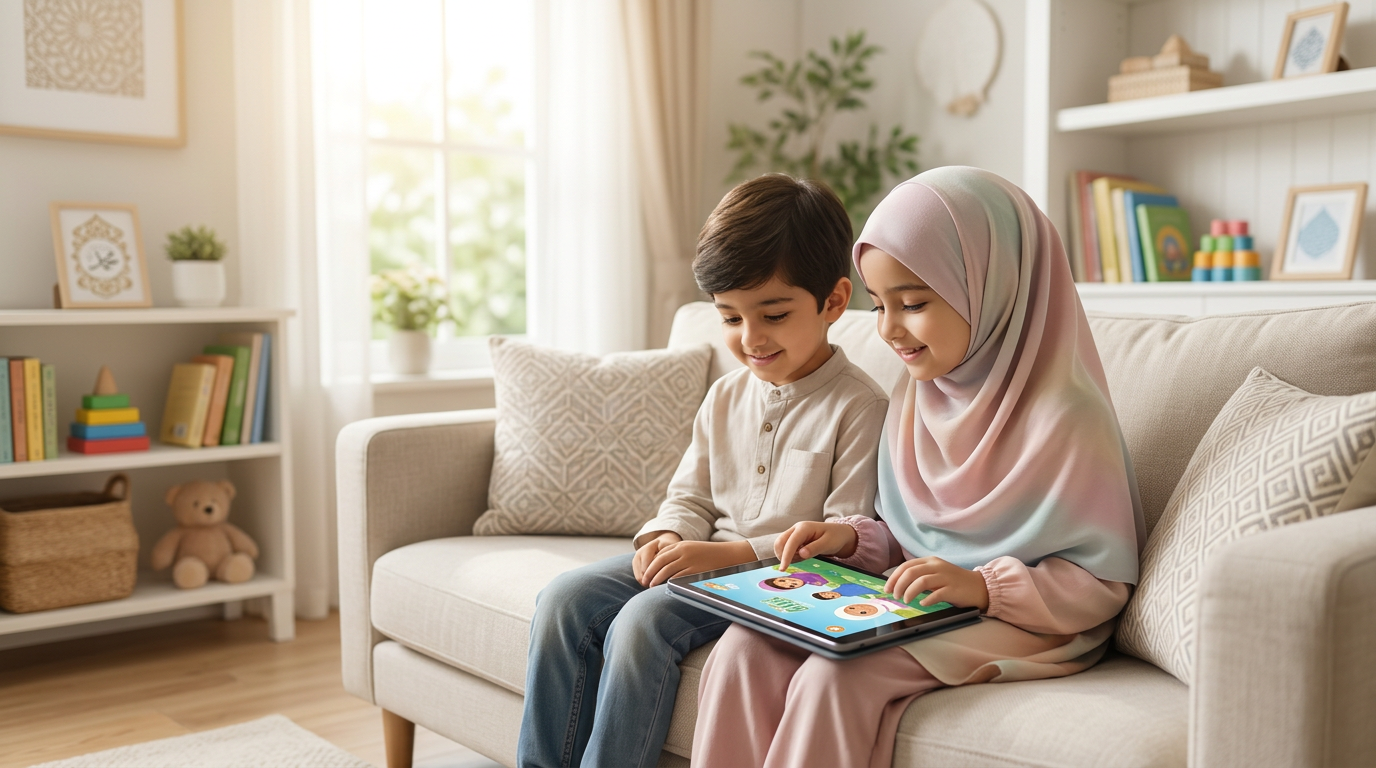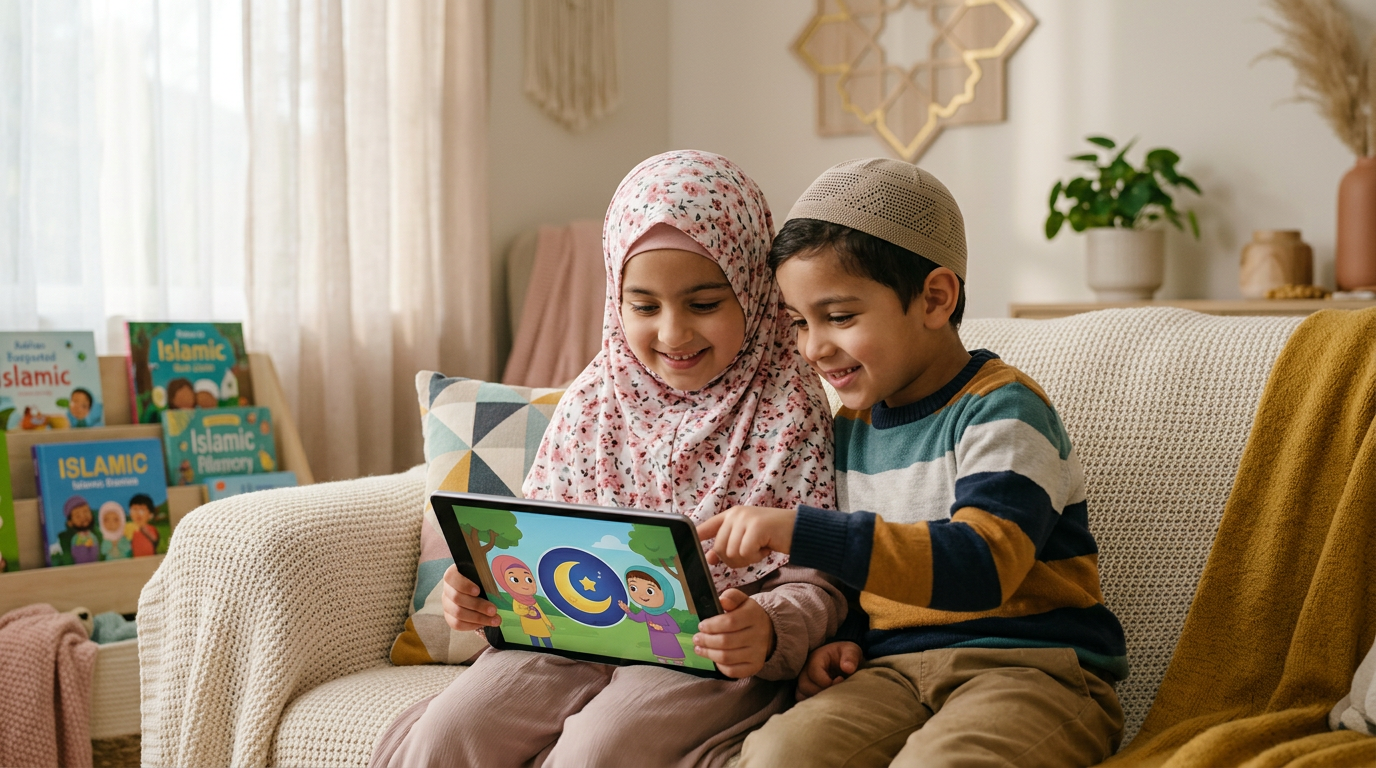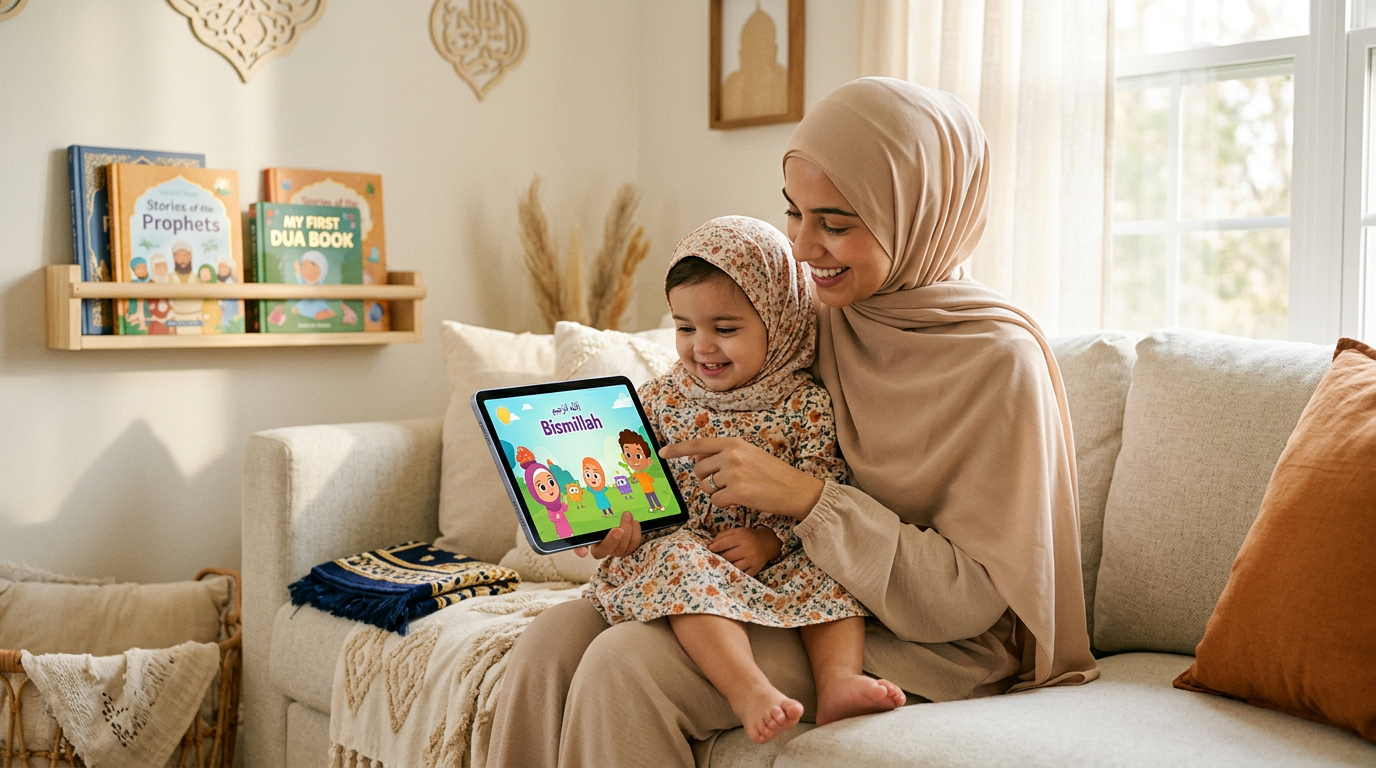
Meta Description: Protect your toddler’s Fitra with safe screen time. Learn to avoid the "Halal Halo" trap and build a guarded digital sanctuary for your child.
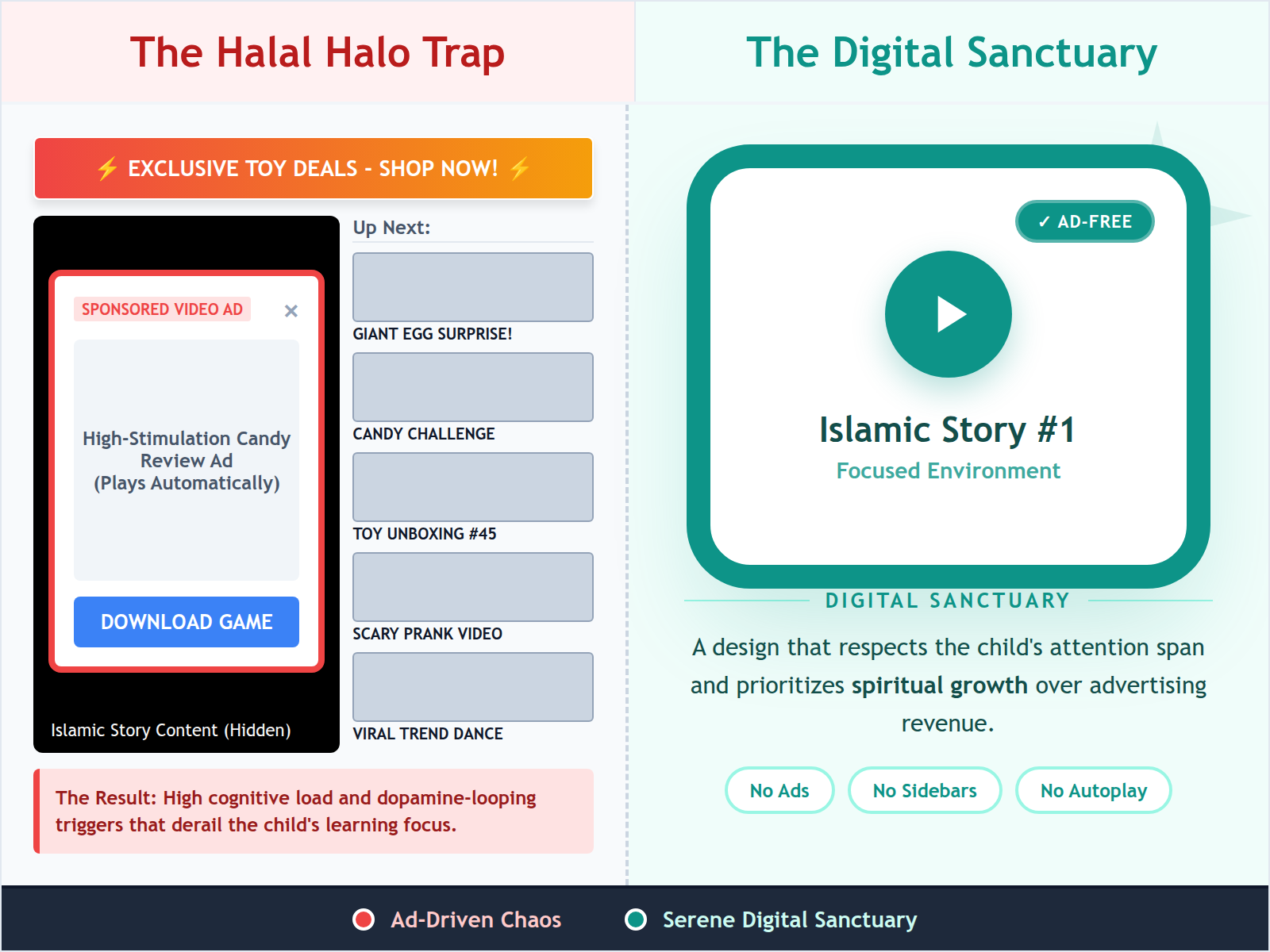
You start a Quran video for your toddler, hoping for a quiet moment for your Sunnah prayer. Suddenly, a loud, inappropriate advertisement shatters the peaceful atmosphere. It’s a jarring reminder that for Muslim toddler screen time safety, choosing "halal" content isn't enough to protect your child’s Fitra.
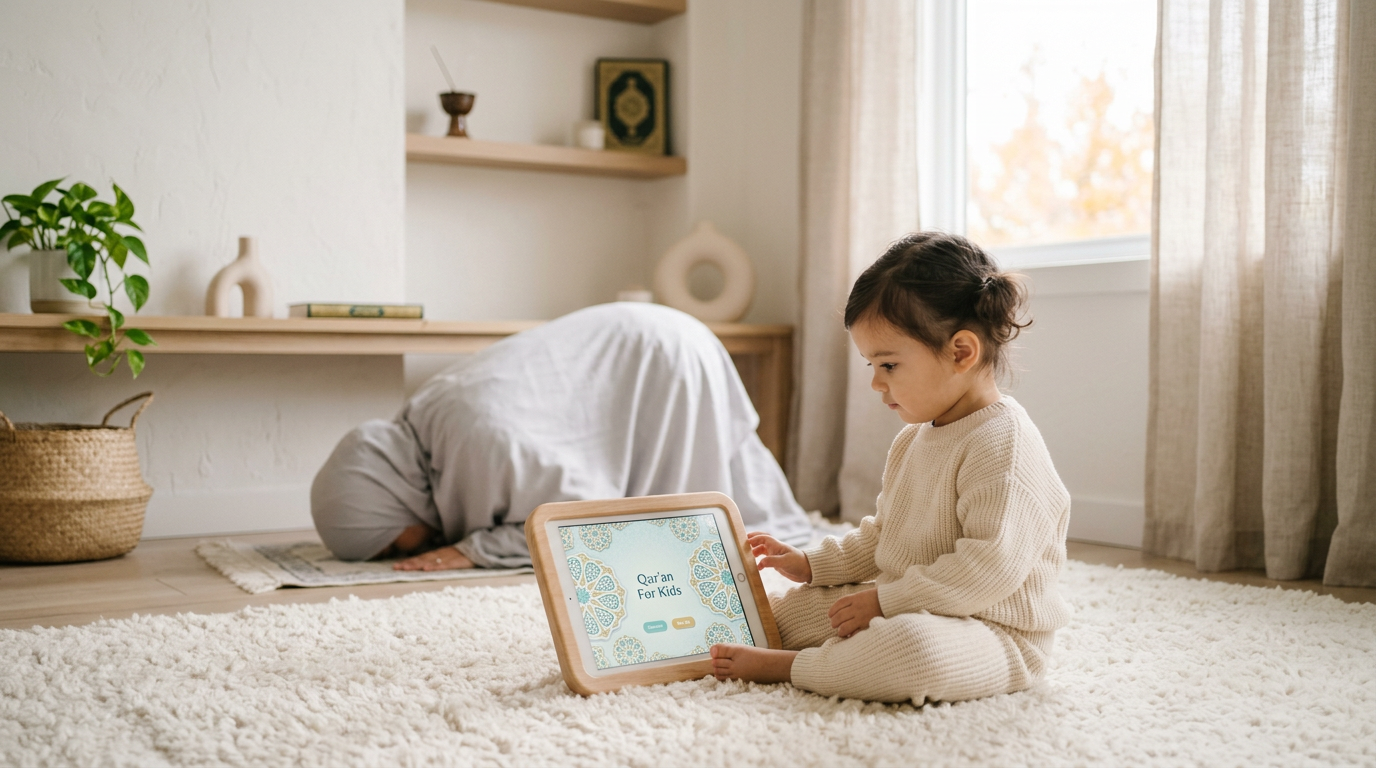
Screens often help parents balance their daily Amanah, but we must avoid the "Halal Halo" trap. Believing a religious title guarantees safety is risky when mainstream platforms use predatory ads and addictive algorithms. These elements can harm a child’s natural disposition as much as the content itself.
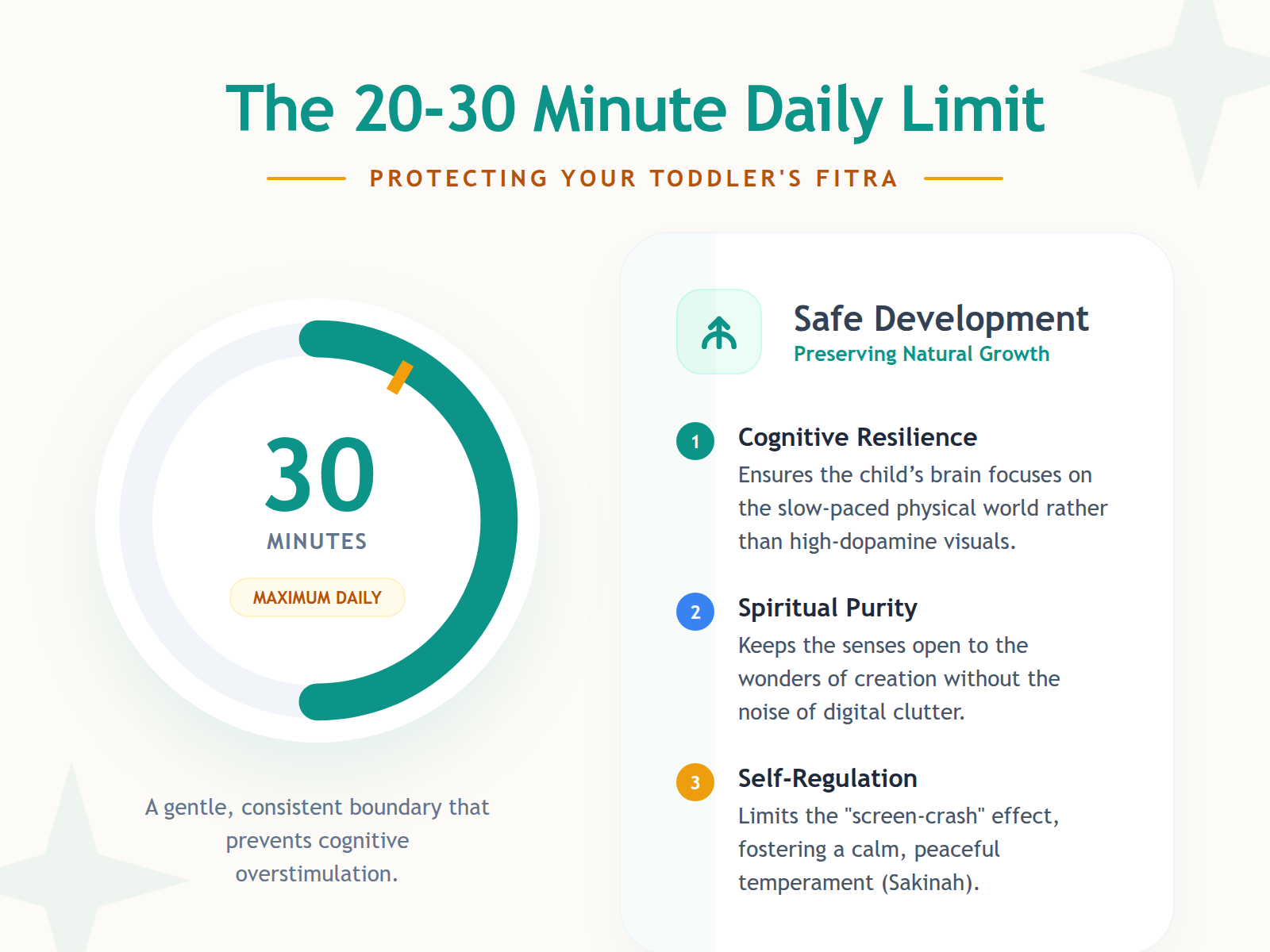
Experts advise limiting toddler digital engagement to 20 to 30 minutes daily. Within this window, the delivery method is just as vital as the message for healthy Tarbiyah. We’re here to help you move beyond basic filters to create a guarded digital sanctuary.
Let’s transition from "digital babysitting" to intentional, faith-aligned guardianship for the youngest members of our Ummah. Together, we can ensure their digital experiences remain pure, restorative, and safe.
The Amanah of the Digital Age: Protecting Your Toddler's Fitra
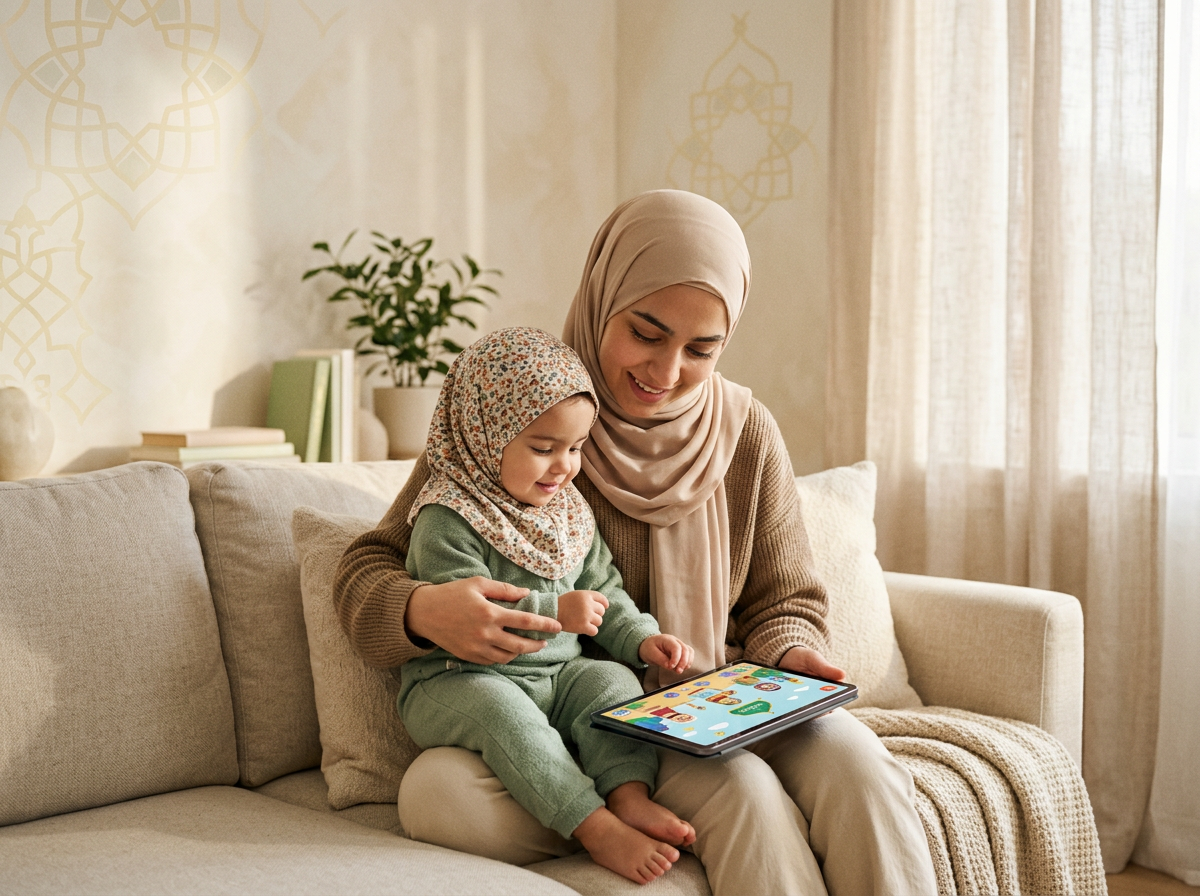
Every child is born with Fitra, an innate and pure natural disposition toward the Divine. As parents, we carry the Amanah (sacred trust) of guarding this development during their most formative years. By carefully curating their digital environment, we ensure these early sensory seeds blossom into a guarded sanctuary rather than a "digital babysitter".
True muslim toddler screen time safety requires digital Tarbiyah that looks past the "Halal Halo" of video titles. Mainstream platforms often use predatory algorithms and overstimulating ads that can disrupt your child's inner peace and focus. We must choose tools that serve as a guarded sanctuary rather than a "digital babysitter" for our little ones.
Practicing Ihsan (excellence) means following expert guidance to protect your child’s wellbeing and developmental pace. Research suggests limiting screen time for Muslim toddlers to 20–30 minutes daily to prevent overstimulation and maintain healthy digital hygiene. This intentional approach to muslim toddler screen time safety ensures technology remains a beneficial, faith-aligned extension of your home.
Mistake 1: Falling for the ‘Halal Halo’ (The Religious Babysitter Trap)
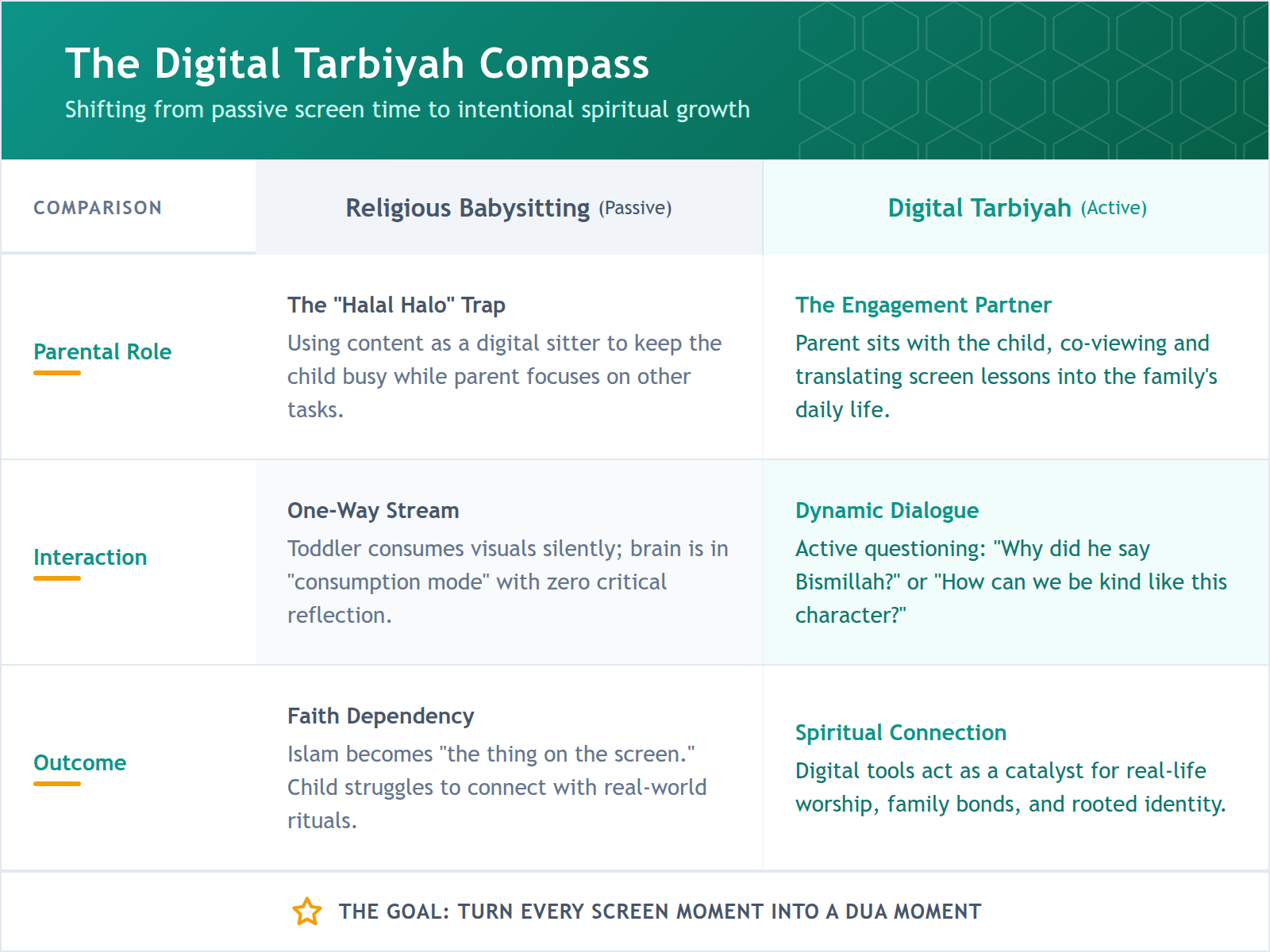
It’s natural to feel a sense of relief when finding halal baby videos titled after the Prophets or the Sunnah. However, we shouldn’t let a religious label blind us to the addictive architecture and predatory ads of mainstream platforms. To protect your toddler's Fitra, the delivery mechanism must be as pure and restorative as the message itself.
The Trap of Passive Consumption
Relying on screens as a "religious babysitter" encourages passive consumption that often misses the heart of Tarbiyah. We want digital content to serve as a bridge for connection between you and your child, rather than just a silent distraction. Try using these videos as interactive conversation starters to spark your little one's curiosity about the Deen.
Spiritual Reminder
To protect your child’s natural development and focus, experts advise limiting daily screen time for toddlers to a maximum of 20 to 30 minutes.
Reclaiming Your Digital Sanctuary
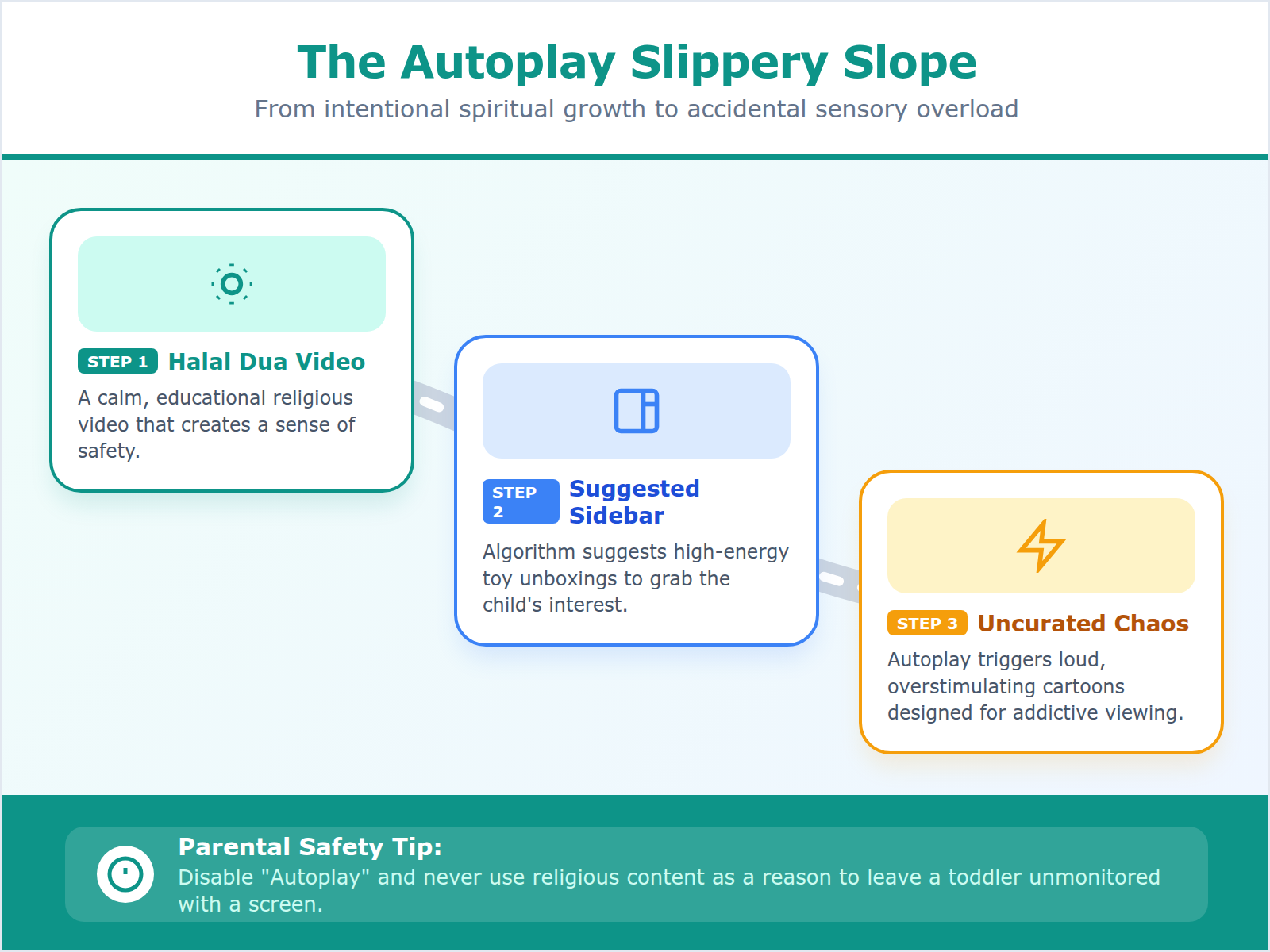
Mainstream "halal" content is often surrounded by high-energy ads and noisy transitions that can shatter your home's serene atmosphere. Autoplay features are specifically designed to keep eyes glued to the screen, leading to a cycle of overstimulation and digital fatigue.
By choosing an AI-guarded safe space, you ensure your family isn't exposed to the "wild west" of human-uploaded content. This intentional choice helps you fulfill your Amanah and build a steady foundation for their growing Islamic identity.
Mistake 2: Leaving the Algorithm in Charge
When you press play on a mainstream platform, a silent battle for your toddler’s attention begins. While you may start with a beautiful Quranic recitation, the "up next" feature is built for one thing: keeping eyes on the screen. It effectively replaces your role as a Muhafiz (protector) with an automated system designed to maximize watch time at any cost.
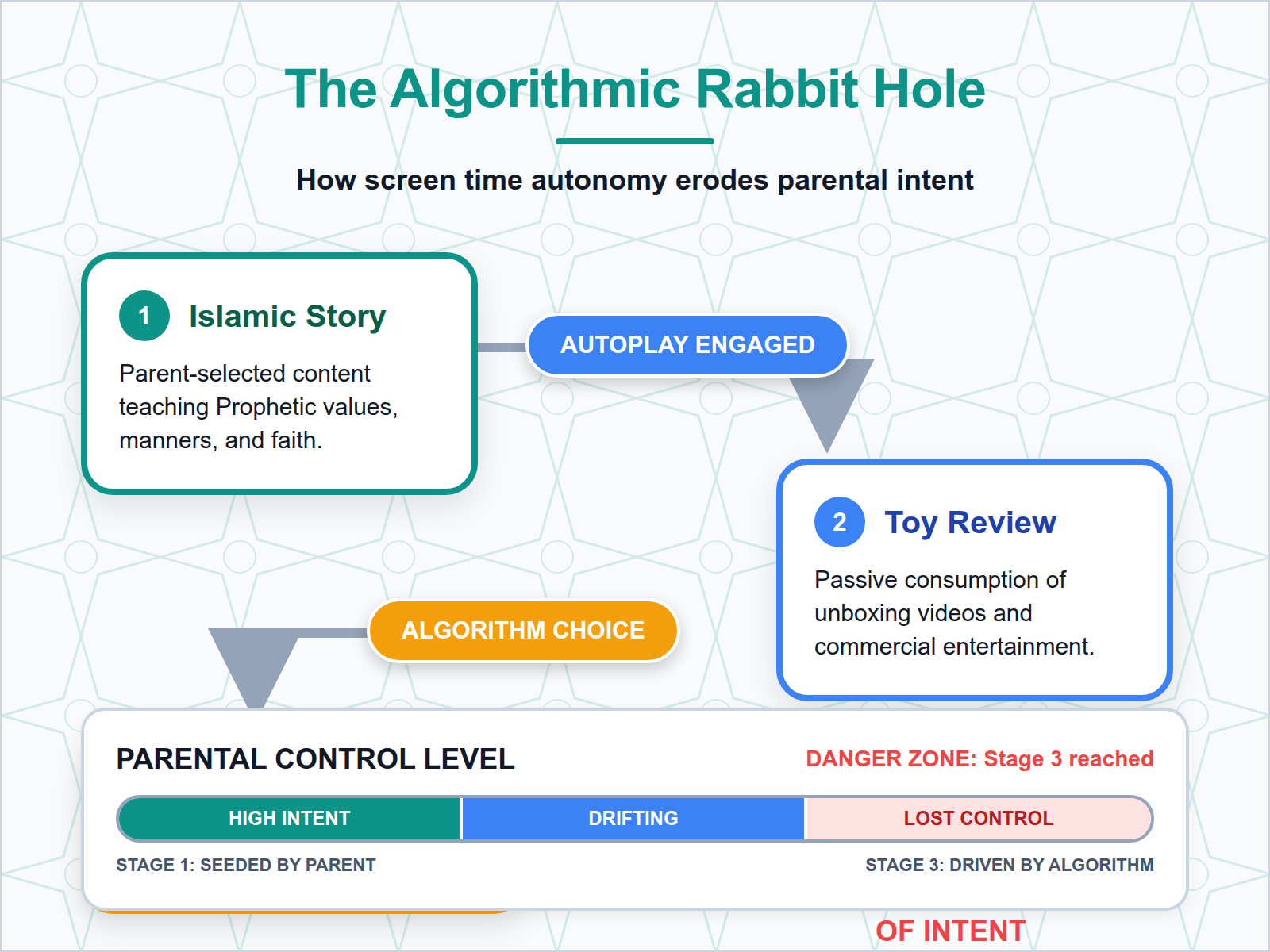
In our faith, every action begins with Niyyah (intention). Algorithms don't have intentions; they simply chase clicks, often leading your toddler into an "algorithmic rabbit hole" of high-energy content that disrupts their Fitra. This chaotic pacing can quickly overwhelm a young child’s developing mind and spiritual focus.
Choosing safe youtube alternatives for muslim kids is a vital step in maintaining a peaceful home. These dedicated platforms remove the predatory ads and "discovery" AI that often insert worldly distractions into a lesson on Akhlaq. By curating what they see, you ensure their digital environment remains a "guarded" sanctuary for the youngest members of our Ummah.
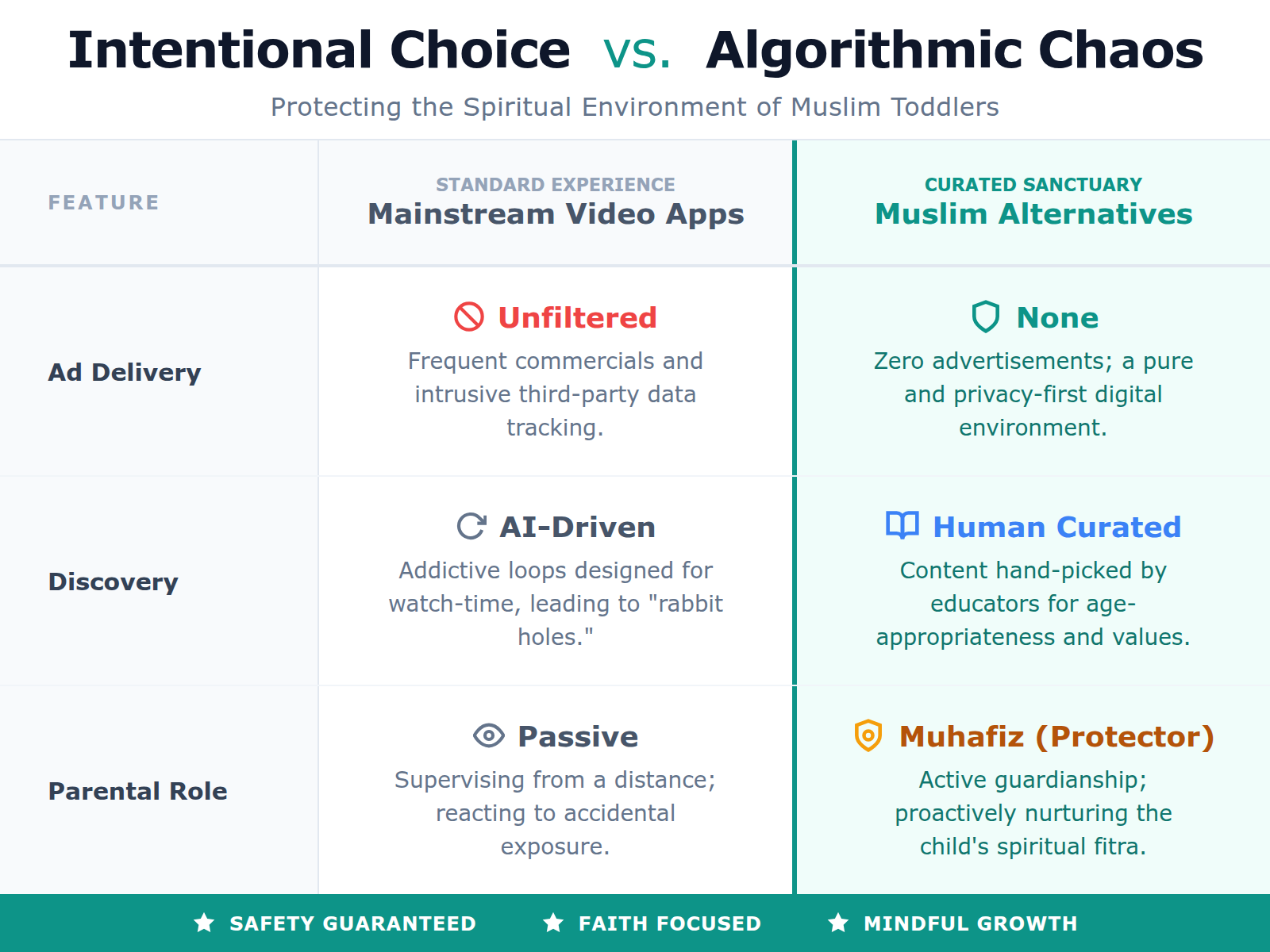
True digital Tarbiyah replaces the "wild west" of human-uploaded content with a library where every video is an intentional, faith-aligned choice. This focus on "Pure Screen Time" protects your child from attention-economy models that prioritize profit over spiritual growth.
Parenting Tip
Reclaim your digital sanctuary by disabling autoplay on all devices. To protect your toddler's natural development and prevent overstimulation, experts recommend limiting screen time to a maximum of 20 to 30 minutes daily.
We’re here to help you bridge the gap between modern tech and traditional values. By choosing a platform built specifically for Muslim families, you transform screen time from an "algorithmic hijack" into a restorative, restorative experience for the whole family.

Mistake 3: Prioritizing Entertainment Over Pacing (Dopamine vs. Sabr)
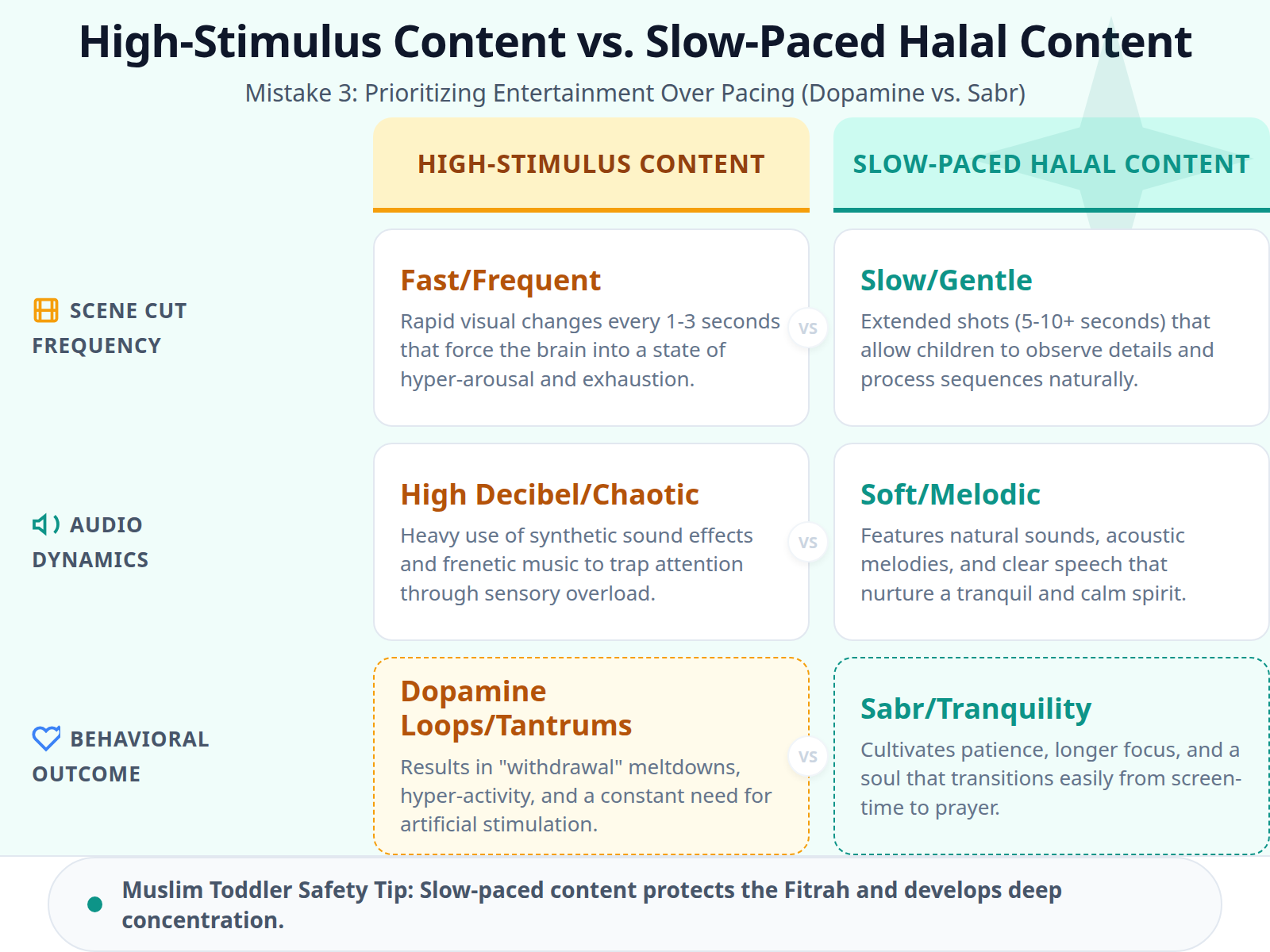
While the content of a video is important, the speed of delivery is just as vital for your child’s Akhlaq (character). Many mainstream cartoons use rapid cuts and loud audio to trigger dopamine loops, keeping toddlers glued through constant novelty. This artificial intensity works against the development of Sabr (patience), often leading to sensory dysregulation and post-screen meltdowns.
Cultivating Sakina Through Slow Media
True halal screen time for toddlers should reflect the Sakina (tranquility) we strive to cultivate in our homes. Expert research suggests limiting screen use to a maximum of 20 to 30 minutes daily to protect the Fitra from digital sensory overload. High-speed imagery can raise cortisol levels, making it difficult for your little one to transition back to the quiet rhythm of prayer or play.
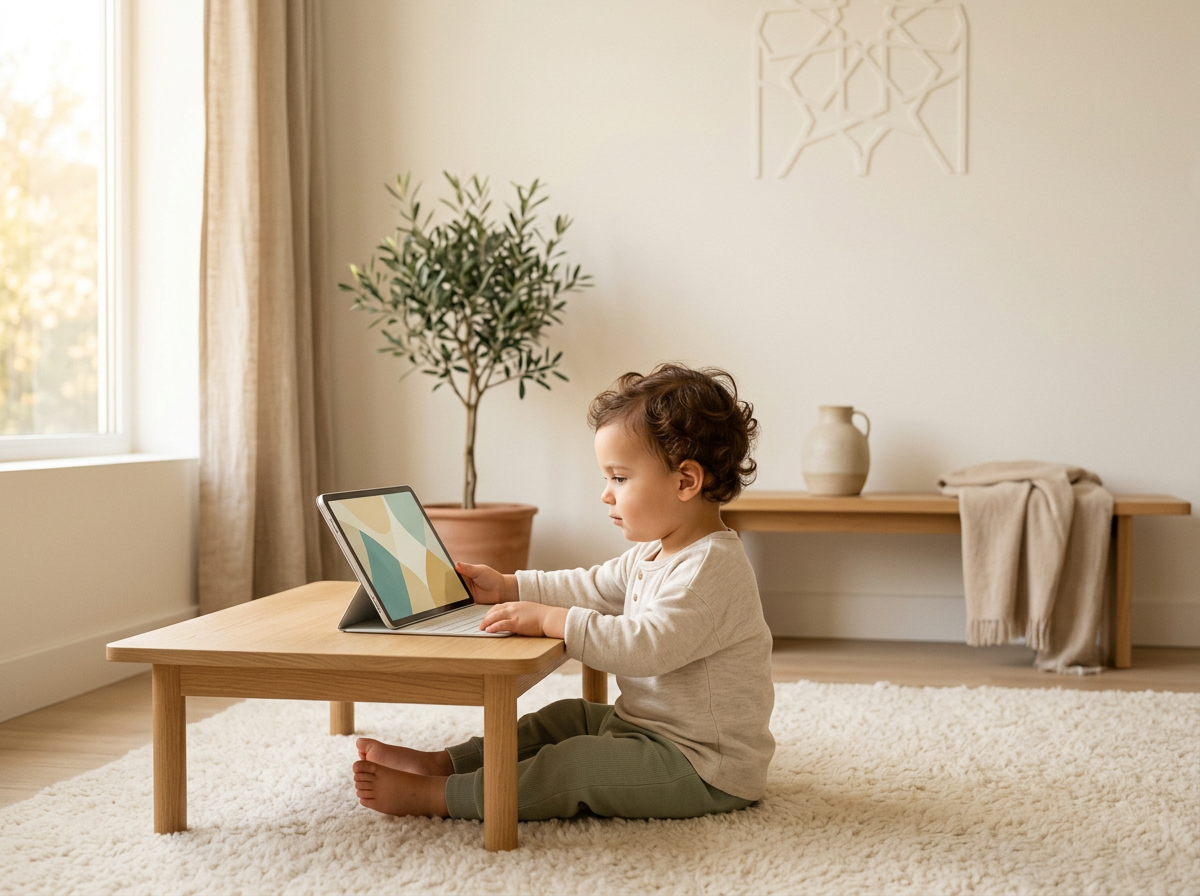
We’re committed to low-attentional demand aesthetics to guard the youngest members of the Ummah from overstimulation. By choosing softer color palettes and slow transitions, we ensure digital engagement remains a gentle tool for Tarbiyah. This intentional design helps prevent the addictive neurochemistry and "attention-hijacking" common on mainstream platforms.
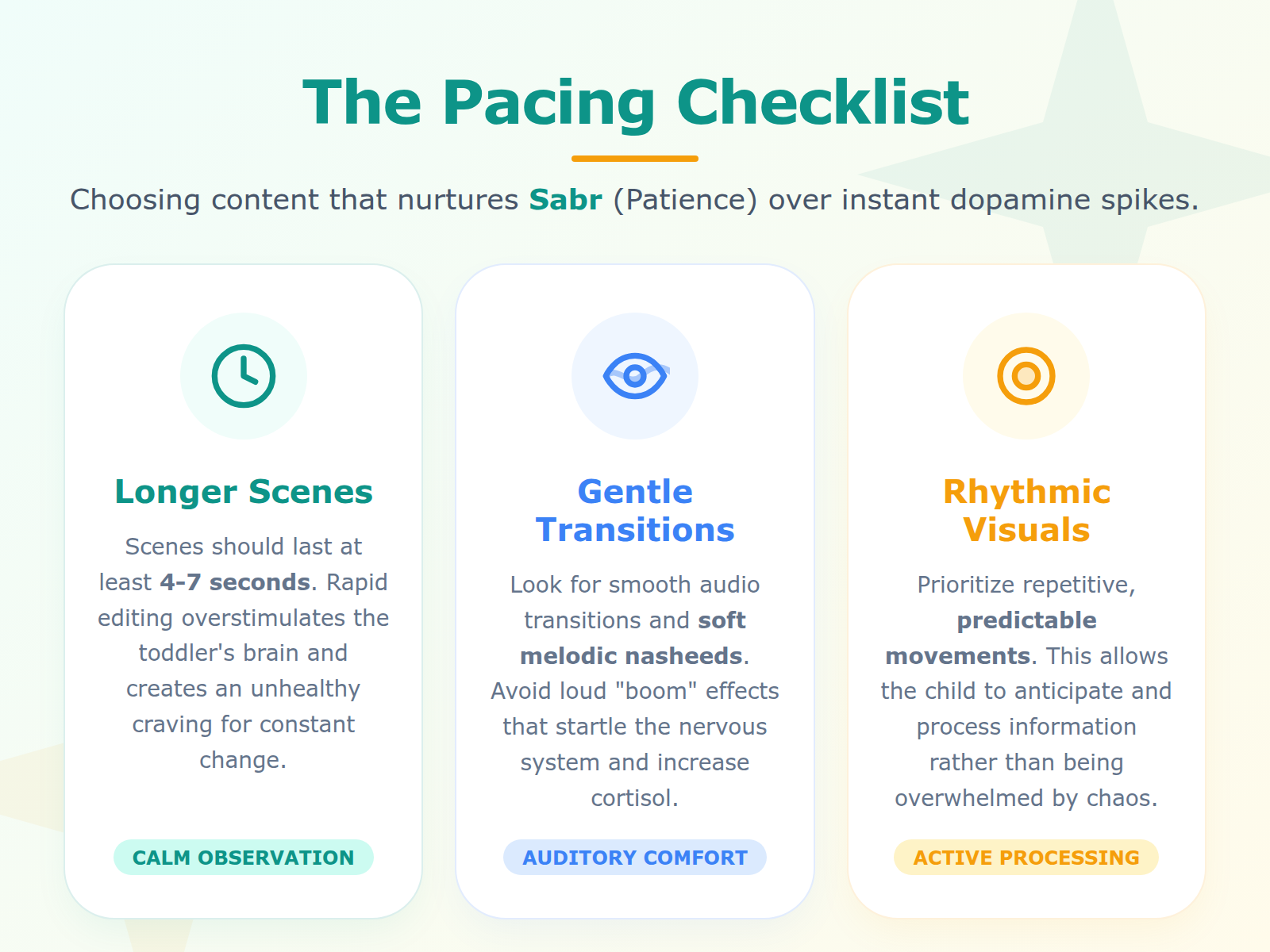
The Pacing Checklist for Parents
To safeguard developmental milestones, prioritize content that values repetition and rhythmic pacing. This repetition provides a neurological "safety net" that mirrors the meditative and restorative nature of Dhikr.
When selecting halal screen time for toddlers, look for media that invites reflection rather than rushing to the next segment. This patient approach helps your child remain calm, focused, and deeply connected to their environment and faith.
Parenting Tip
To help your toddler develop Sabr, choose content with a scene length of at least 5–10 seconds. This slower rhythm respects their developing nervous system and prevents "high-energy" burnout.
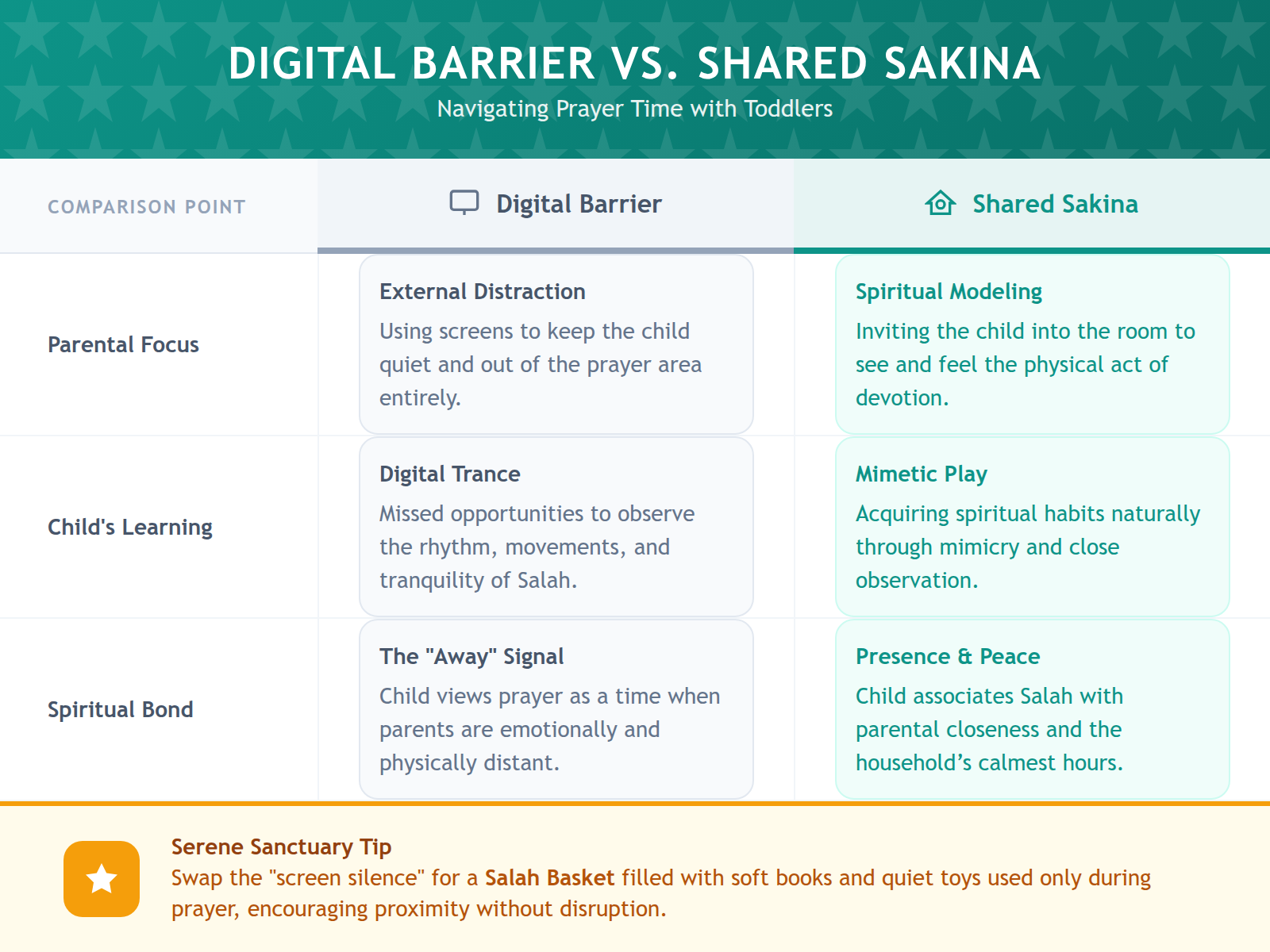
Mistake 4: Using Screens as a Substitute for Shared Ibadah
We’ve all reached for a tablet to secure a quiet Salah, but using a digital pacifier" can create an unintentional barrier to your child’s spiritual growth. When we isolate a child with a device to keep them away from the prayer mat, we inadvertently signal that Ibadah is a space where they aren’t included.
Nurturing Presence Over Digital Isolation
Try using your islamic parenting app as a mindful ritual tool to transition your toddler into a state of Sakina. Play a gentle Nasheed or a short story of the Prophets to calm their energy, then mindfully put the device away before your Takbir.
Embracing the ‘Sujud Shadow’
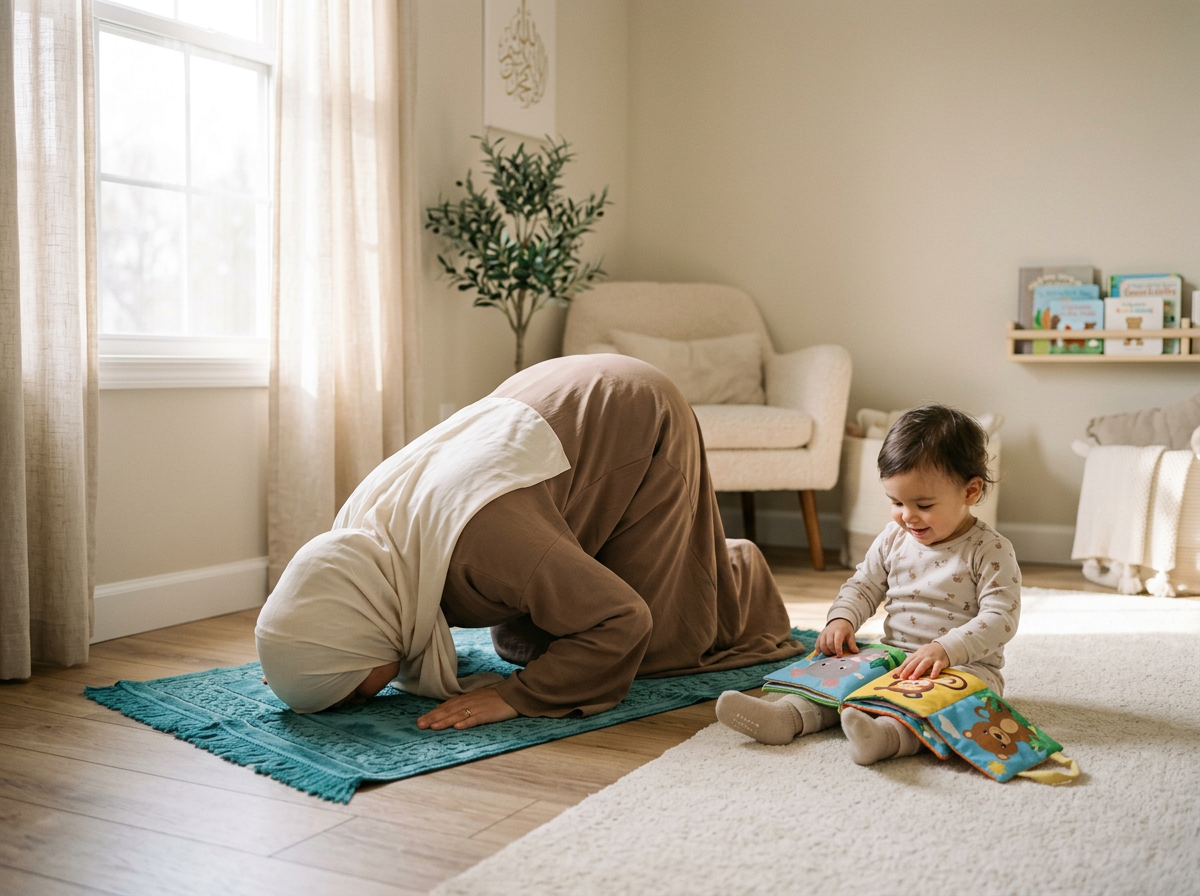
True Tarbiyah flourishes through mimetic learning as your child observes the physical rhythms of your Ruku and Sujud. Encourage "prayer-adjacent" play by placing their own tiny prayer mat within your "Sujud shadow," allowing them to build a natural sense of belonging within the Ummah.
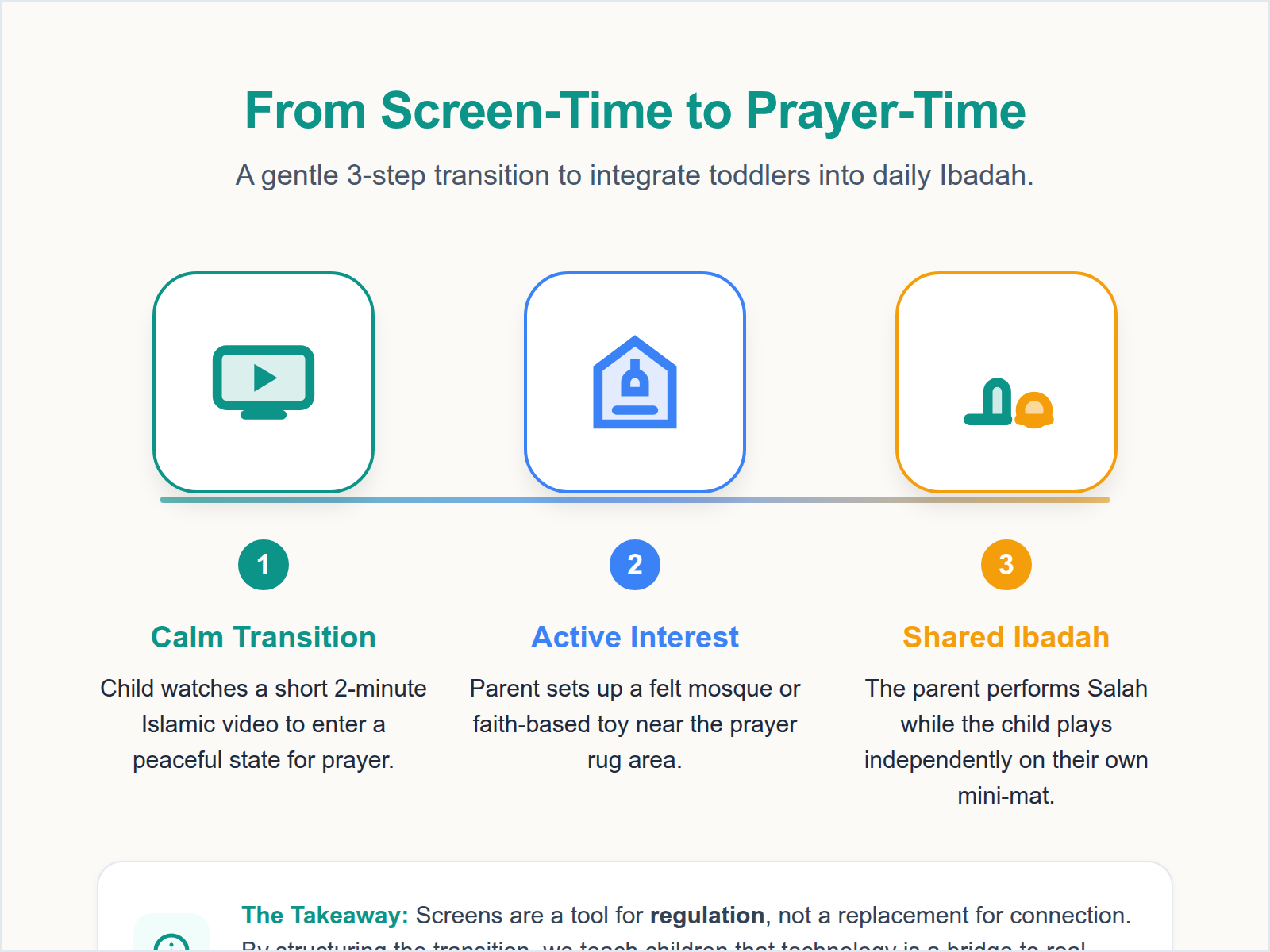
A toddler climbing on your back during prayer isn't a distraction; it’s a beautiful milestone of their growing connection to the Sunnah. To protect their developmental focus, experts recommend limiting daily screen time to a maximum of 20 to 30 minutes. This ensures technology remains a gentle tool for growth rather than a substitute for shared faith.
Mistake 5: Ignoring the ‘Digital Hijab’ Before Bedtime
We often think a quiet video helps a toddler wind down, but the "Digital Hijab" for the senses is most critical as the day ends. The blue light emitted by devices suppresses melatonin, the hormone responsible for your child’s natural sleep-wake cycle, or Fitra. This biological disruption prevents the Sakina (tranquility) needed for the restorative rest that supports healthy brain development.
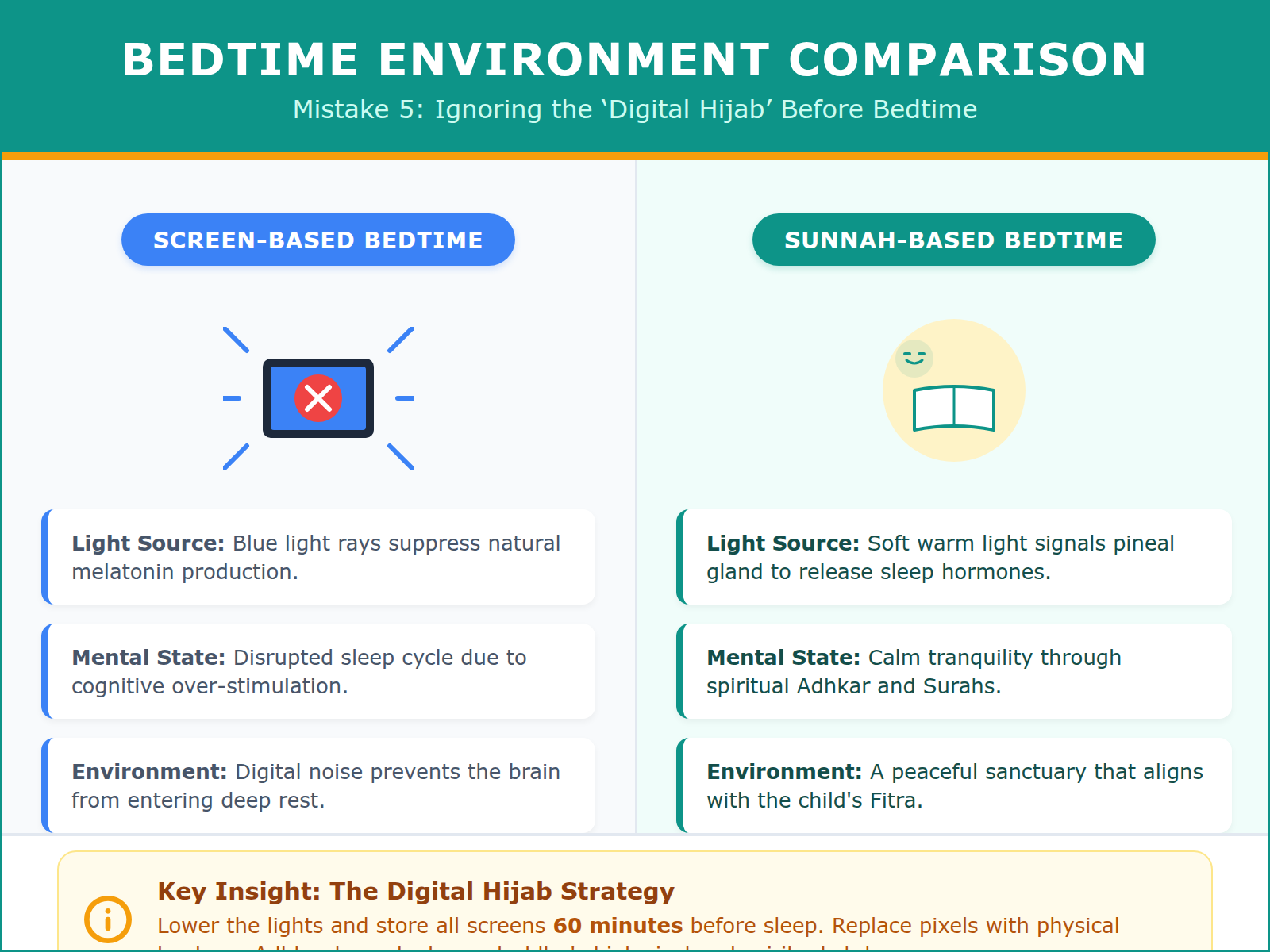
Establishing a Digital Sunset
To guard your child's sleep, we recommend a "digital sunset" starting at least 60 minutes before bed. While islamic educational videos for kids are excellent tools for mid-day engagement, they should never serve as a digital pacifier at night. Using these resources during high-alert morning hours ensures your toddler actually retains the Arabic or Quranic concepts without compromising their nighttime recovery.
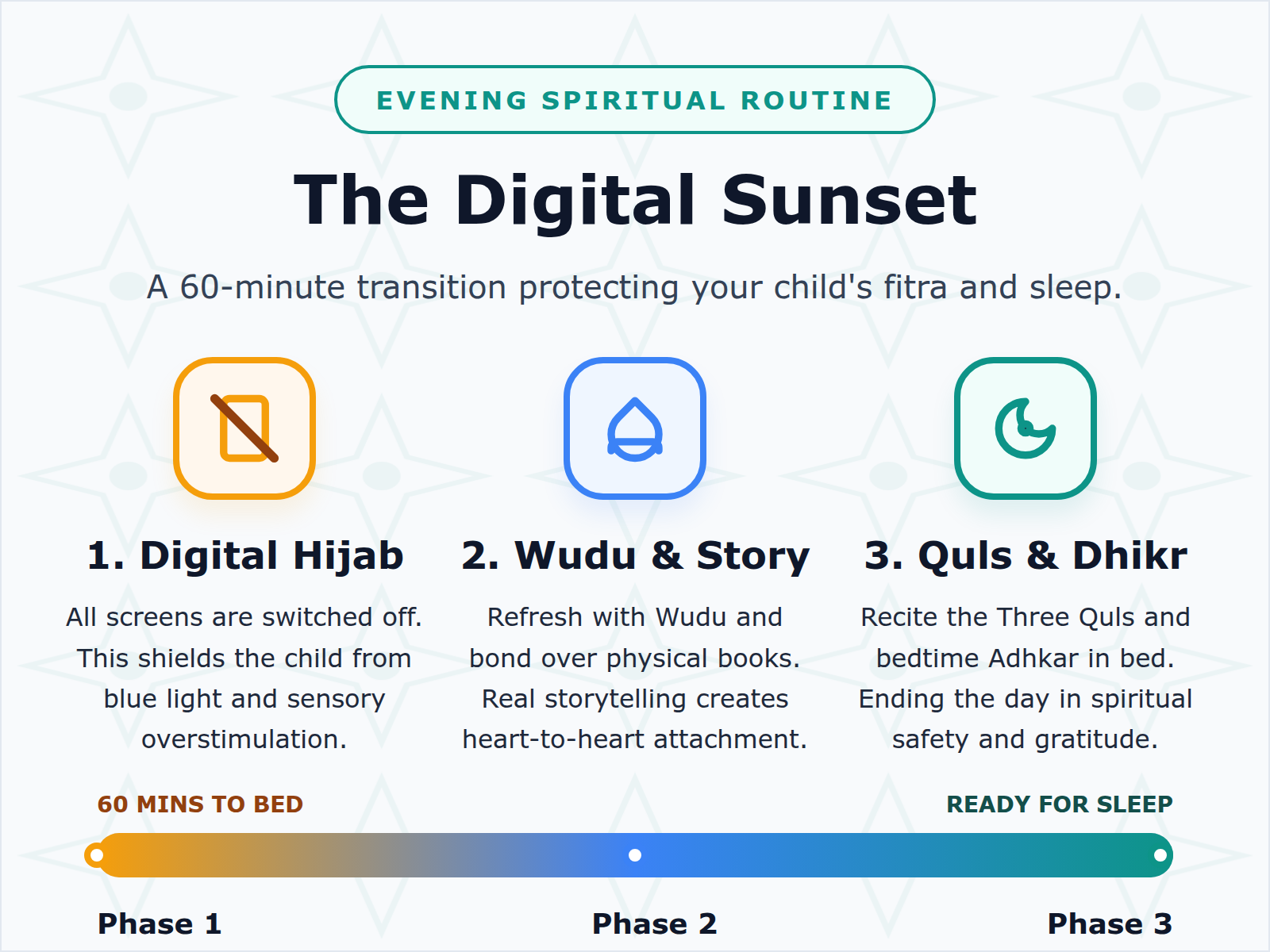
Returning to the Bedtime Sunnah
The final hour before sleep is a sacred window for Tarbiyah that no app can replicate. Replace the screen with physical bedtime Sunnahs: performing Wudu together, sharing hand-illustrated books, and reciting the Three Quls into their small hands. These tactile rituals provide the emotional grounding your toddler needs to feel safe and connected to the Ummah before drifting off into the "minor death" of sleep.
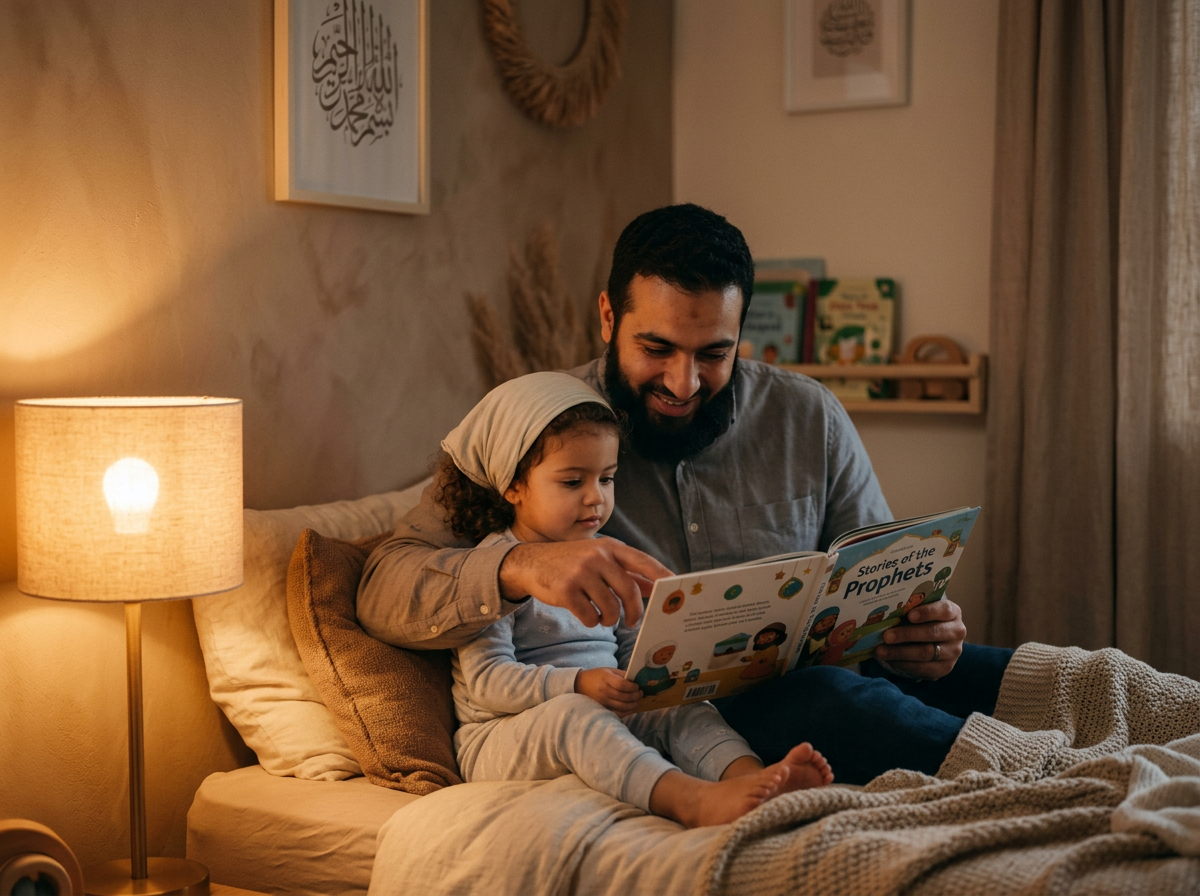
Actionable Solutions: Building a Nurturing Digital Sanctuary
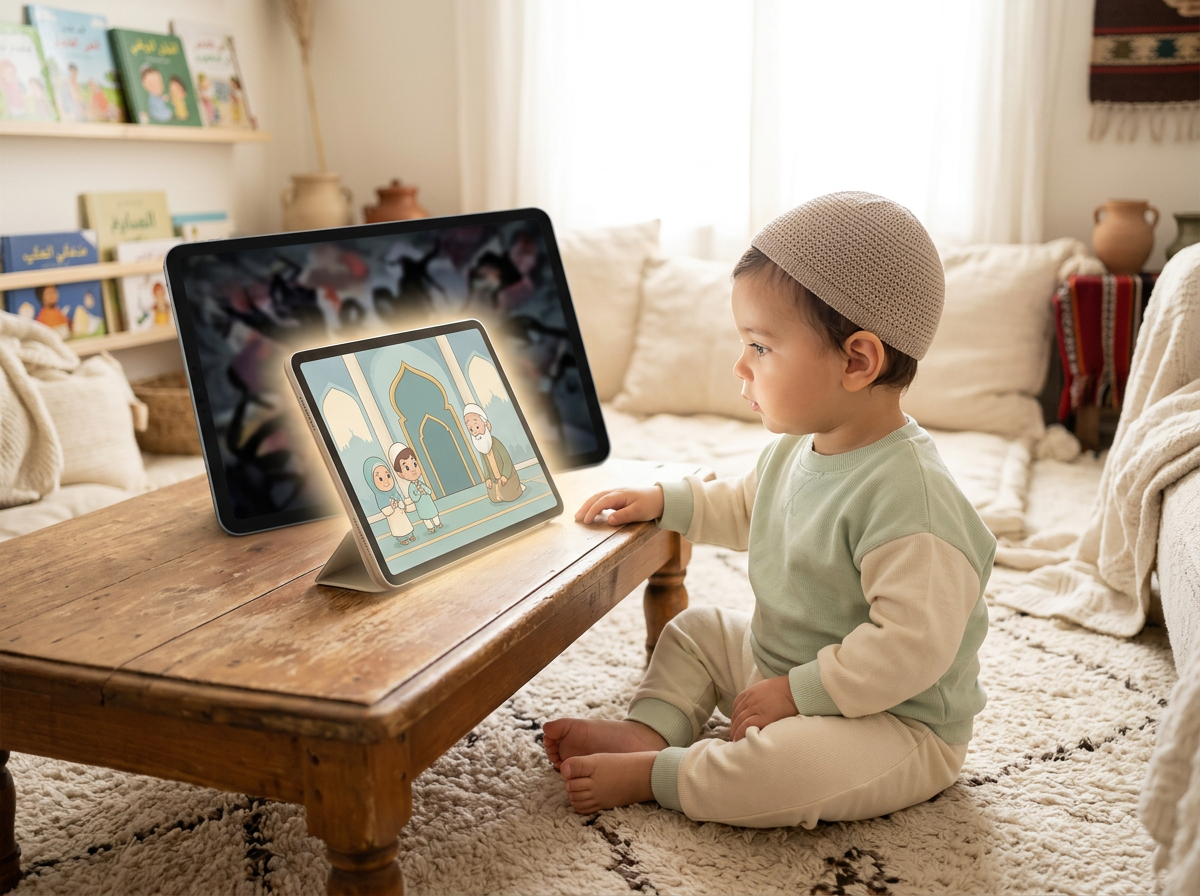
Your child’s digital world should be as serene as the home you’ve built. By choosing ad-free halal cartoons on a platform designed as a Hima (guarded pasture), you're shifting from managing distractions to proactively shaping their Tarbiyah.
Nurturing the Heart’s Compass
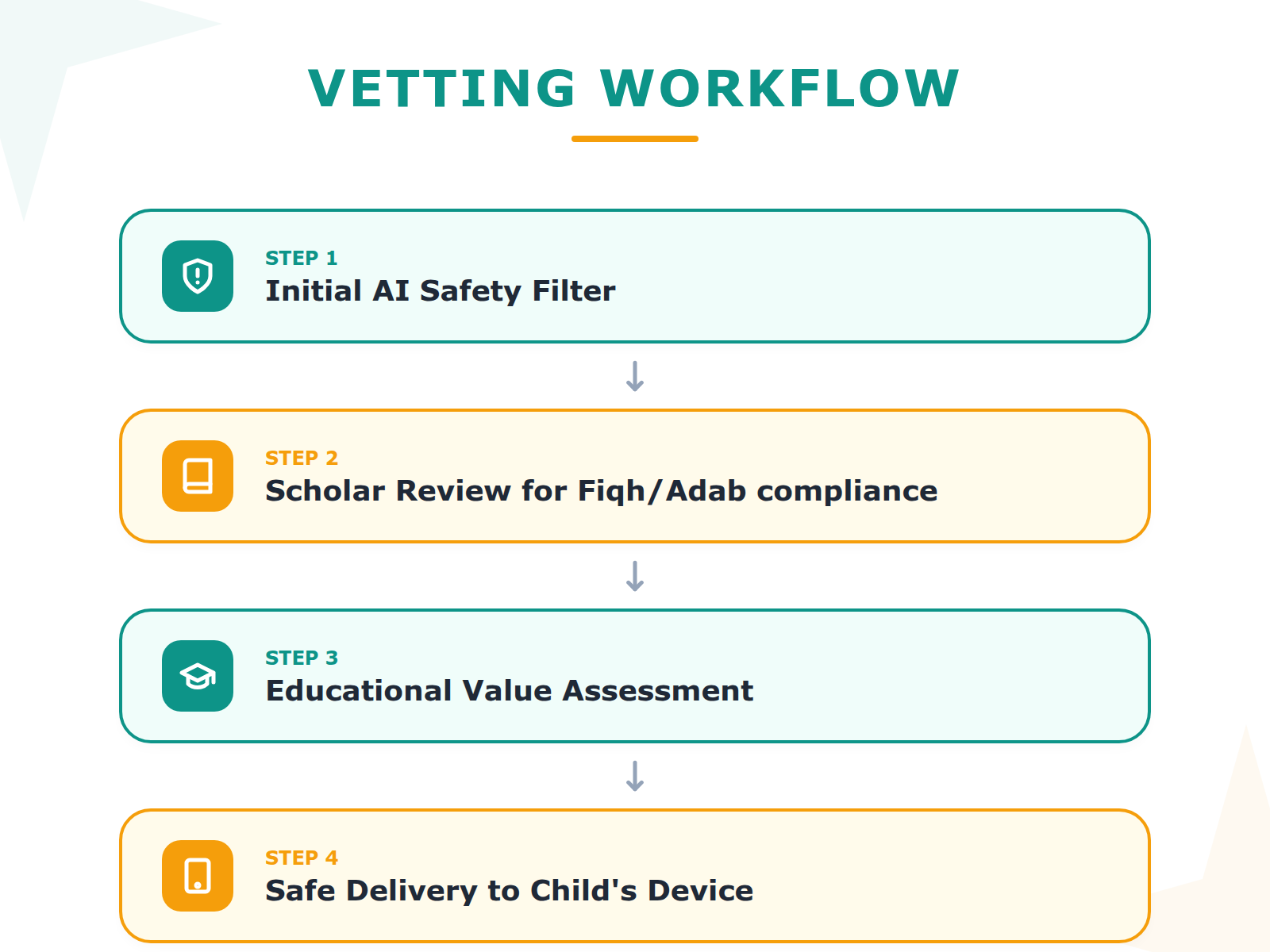
Our vetting process respects your toddler’s Fitra, ensuring every story is a seed of goodness. We encourage staying within the recommended 20 to 30 minutes daily to keep their senses sharp and hearts tranquil. This ensures digital time remains a high-impact milestone, free from the jarring audio that often agitates a young soul.

Simplifying Your Amanah
We’ve made digital stewardship, or Amanah, simpler for your busy day. Our AI-guarded safe space uses content-aware filtering as an invisible shield against unpredictable uploads and predatory ads. This allows you to step away from being a "Screen Sentinel" and return to being a supportive guide.
- Scholar-vetted videos prioritizing theological safety.
- Zero-ad environment protecting against consumerist indoctrination.
- Bilingual content weaving Arabic naturally into daily play.
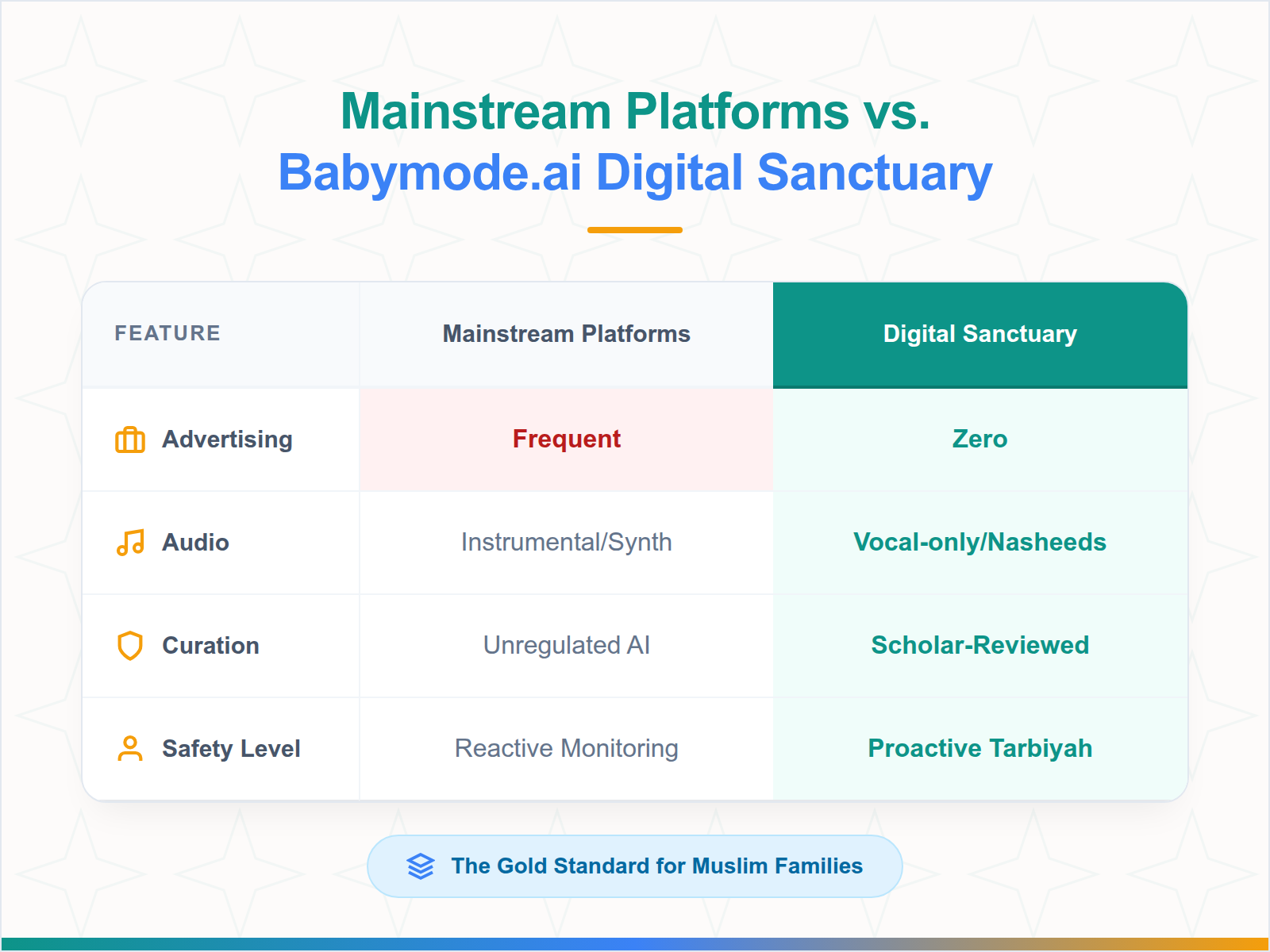
Reclaiming your peace of mind starts with an environment that honors your family's values. We invite you to explore a space where technology serves the Ummah, helping your little ones grow in the shade of the Sunnah.
Conclusion
Achieving true muslim toddler screen time safety requires a vital shift from simple content filtering to intentional, platform-aware guardianship. Protecting your child’s digital environment is a profound act of Tarbiyah that preserves their Fitra and the Sakina of your home. By reclaiming your household's atmosphere from predatory algorithms, you gain the peace of mind to focus on your family's spiritual journey.

For more insights on nurturing your little one’s early years, explore our Ultimate Guide to Islamic Parenting.
Frequently Asked Questions
How much screen time is safe?
Limit use to 20–30 minutes daily (Muslimi.com) to protect your toddler’s Fitra. This brief window ensures they stay focused on intentional, faith-based learning.
What are the risks of YouTube?
Engagement-driven systems prioritize watch-time over purity, often leading toddlers to values-conflicting content. This "drift" makes it difficult to guard your child’s heart.
How do I block ads?
Choose an ad-free sanctuary to maintain Sakina and avoid predatory marketing. This is essential for protecting the Amanah of your home environment.
What is the '3-6-9-12' rule?
It's a guideline suggesting no screens before age 3, supporting gradual Tarbiyah. This approach prioritizes healthy sensory development and spiritual grounding.
How do screens teach Arabic?
Co-view instrument-free content to reinforce vocabulary and bridge digital lessons with real-world faith. Your active participation turns screen time into a shared spiritual milestone.