You’re changing a diaper for the tenth time today, dodging a stray foot, and wondering how you’ll ever find time to teach your toddler about Allah when you can barely find their matching socks. In the whirlwind of the "0-3 years," many parents feel a quiet guilt, fearing they are missing the window for spiritual Tarbiyah while simply trying to survive.
We often treat daily duas for muslim toddlers as an academic hurdle, waiting for them to speak full sentences before introducing the Sunnah. However, the secret to a strong spiritual foundation isn't a formal lesson—it’s the "Micro-Dua Framework" woven directly into the beautiful chaos of your routine.
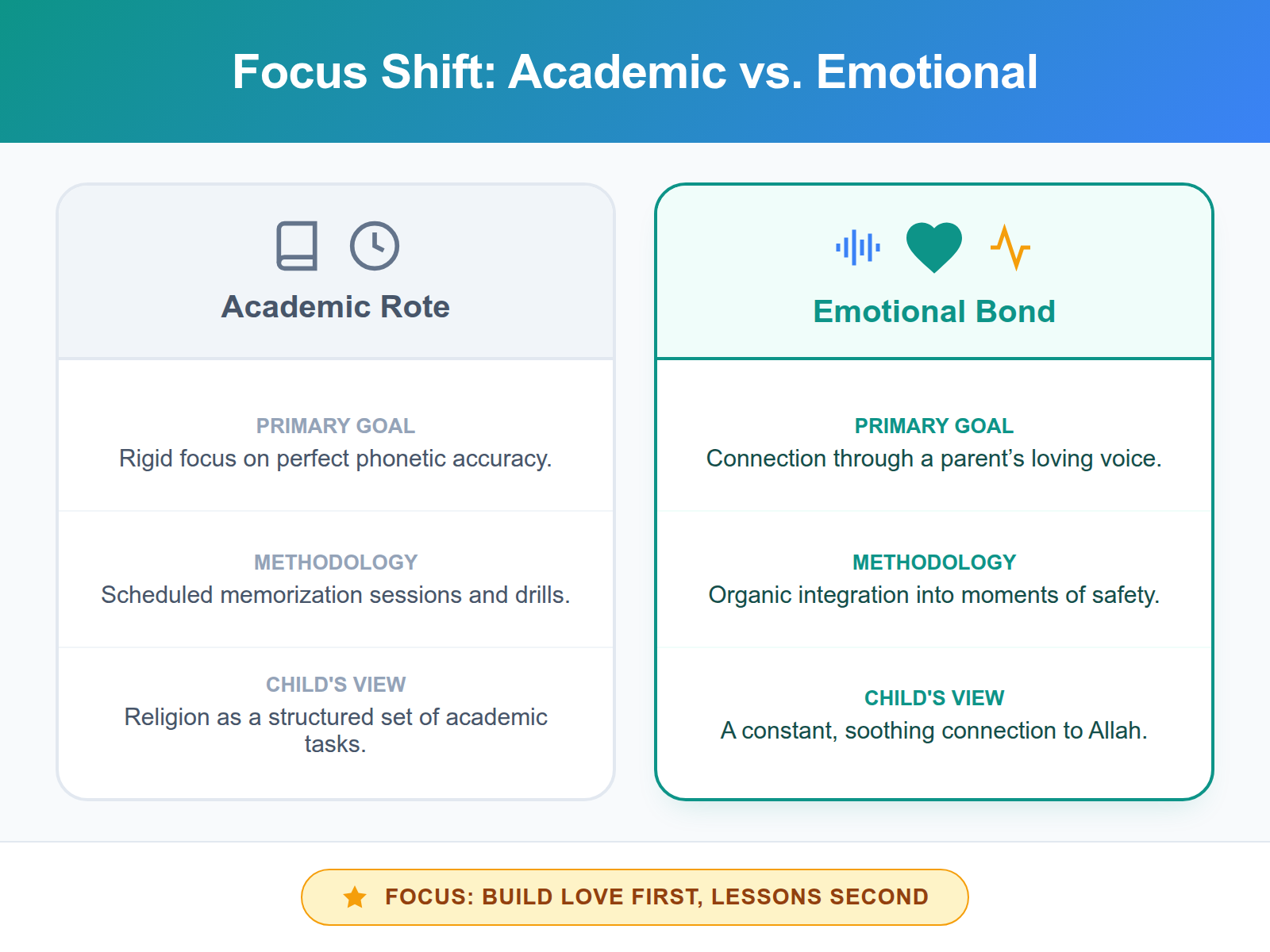
This approach shifts our focus from rote memorization to emotional association. By prioritizing ritual rhythm over perfect recitation, we help even a non-verbal child build a lifelong bond with their Creator while preserving their natural fitra.
In this guide, we’ll explore how ultra-shortened phrases and physical gestures turn everyday transitions into powerful spiritual milestones. You will discover that teaching faith isn't about adding more to your plate; it’s about sanctifying the survival moments you’re already living.
The Philosophy of Micro-Duas: Why the Toddler Years Are Different
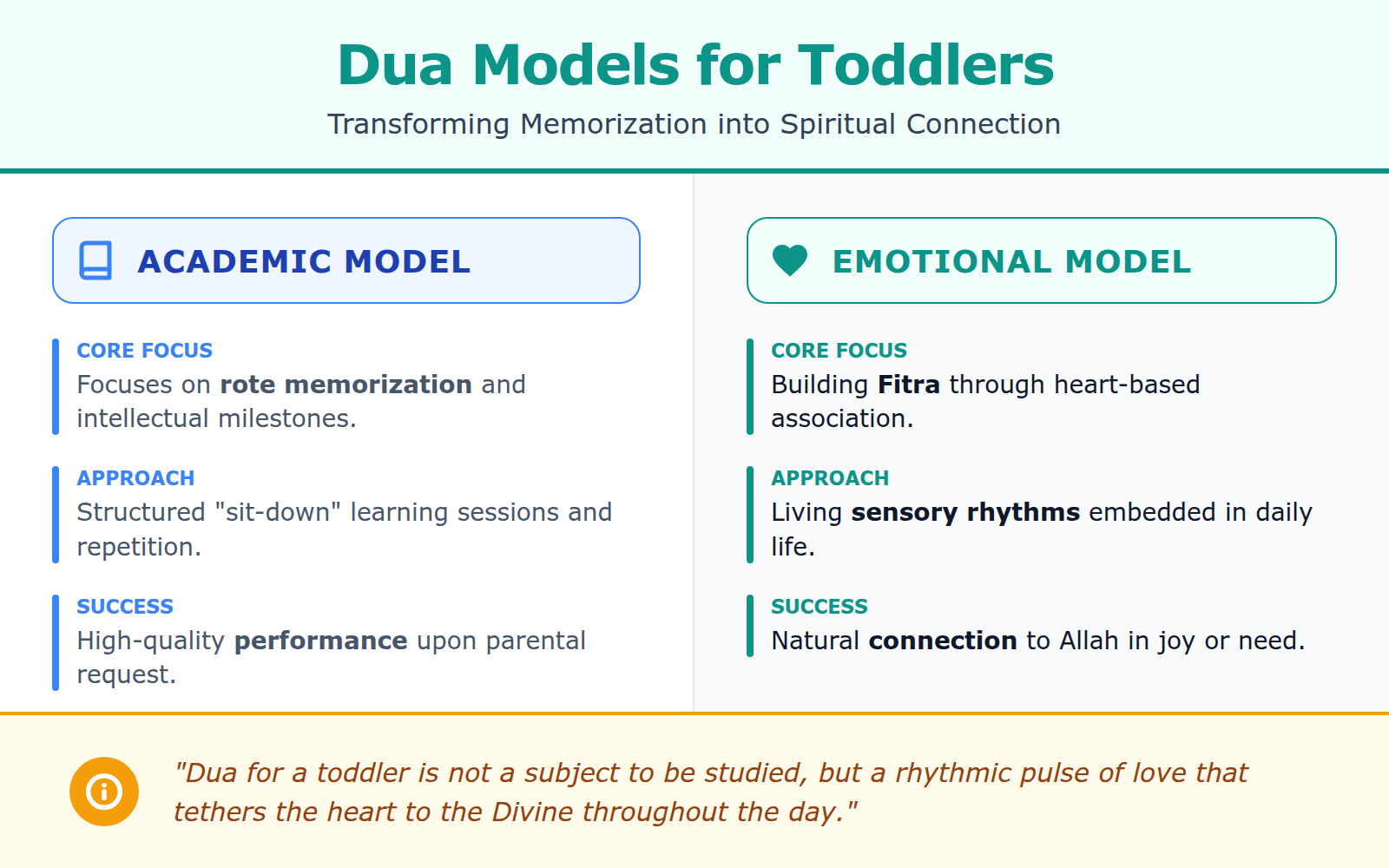
The first three years are a "window of the heart," where your toddler absorbs emotional atmosphere rather than academic facts. We nurture their Fitra through sensory rhythm, ensuring faith is felt deeply long before they speak their first words. This "emotional model" prioritizes connection, making spiritual growth a natural and comforting part of your daily life.
Heart-Centered Association
In this stage of Tarbiyah, our goal isn’t perfect pronunciation; it’s building a warm, safe association with the name of Allah. We encourage you to focus on the "heart" first, turning every prayer into a moment of gentle security. By treating your child’s soul as an Amanah (sacred trust), you become a spiritual mirror reflecting their innate love for the Creator.
Habits Before Words
"Micro-Duas" use ultra-short phrases paired with physical actions to build a spiritual muscle memory that precedes speech. While resources like iman-school.com highlight ten essential authenticated supplications for the Ummah's youngest members, the real magic happens when these are woven into your unique routine. These curated prayers turn tiny gestures into meaningful milestones, grounding your toddler in the Sunnah from the start.

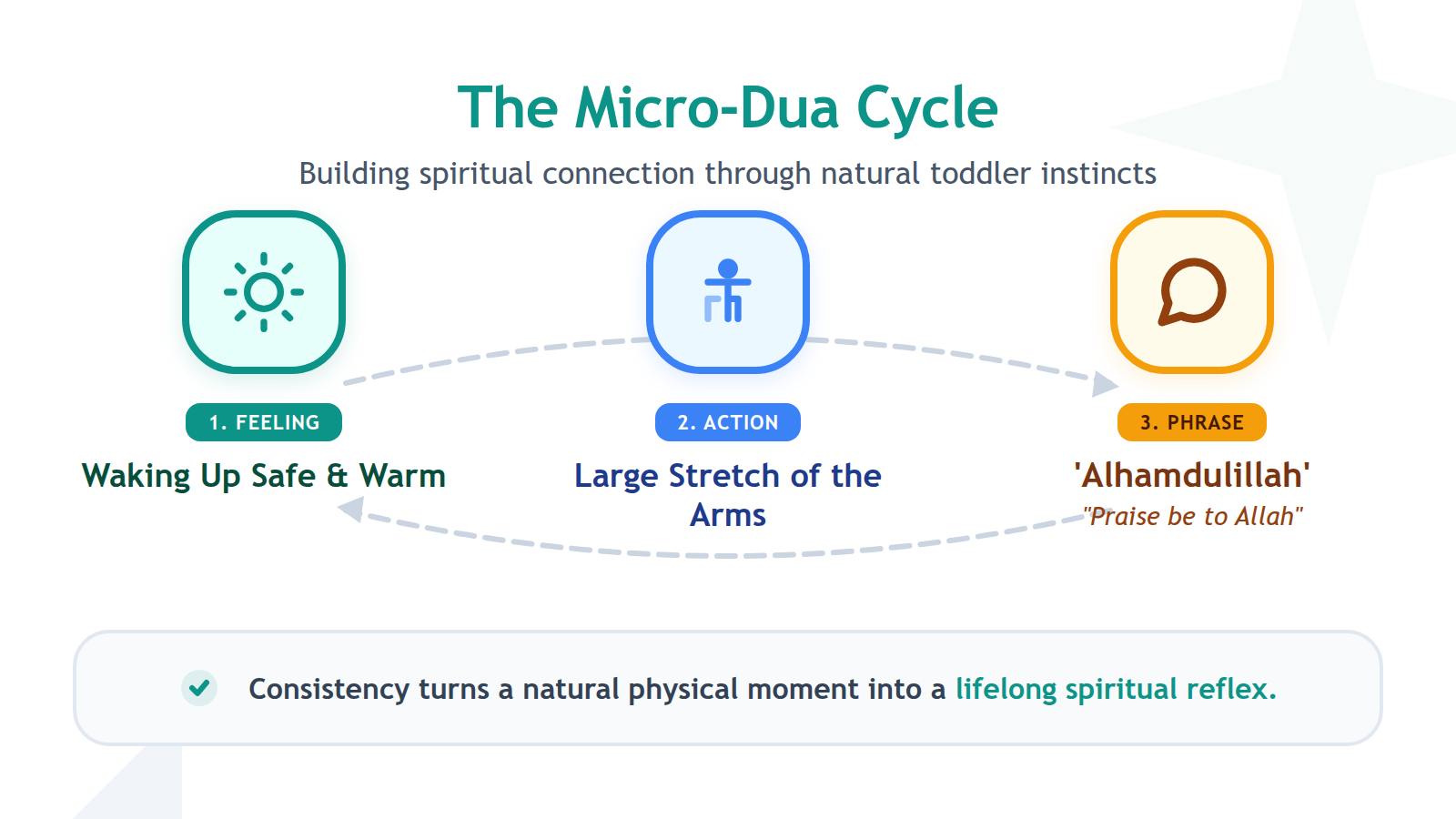
This intentional rhythm turns messy transitions like mealtimes into calm, spiritual moments. By repeating a consistent cycle of feeling and action, your toddler internalizes faith through a beautiful process of spiritual osmosis. Soon, the love of Allah becomes as natural, effortless, and nourishing as breathing.
Sunrise and Soft Starts: Morning Rituals for the 0-3 Crowd
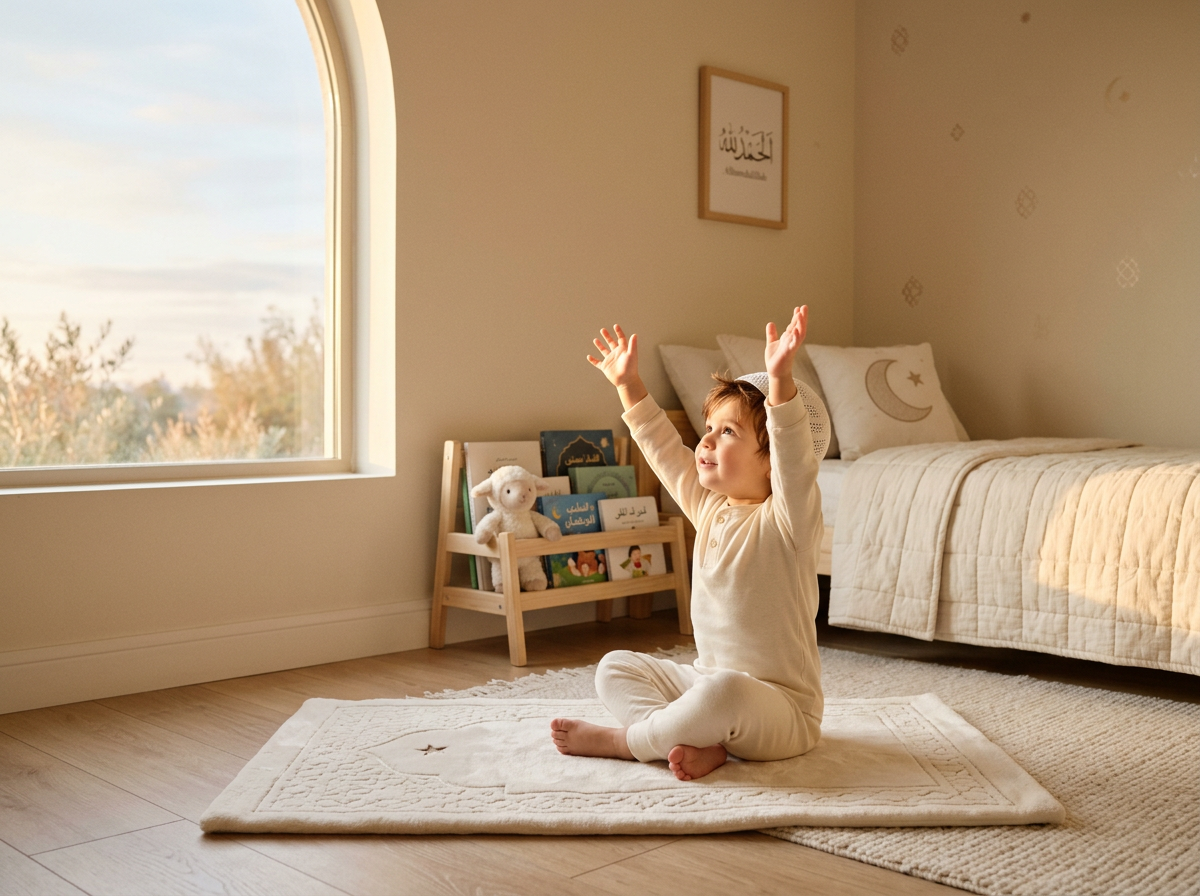
Morning transitions set the spiritual frequency for your child's entire day. Instead of a rushed wake-up call, start your islamic routine for 2 year old with a tactile "Waking Up" Micro-Dua. As your little one stirs, encourage a wide "Morning Stretch" while whispering Alhamdulillah. This simple physical expansion helps even the youngest toddlers associate the feeling of vitality with a deep sense of gratitude to Allah.
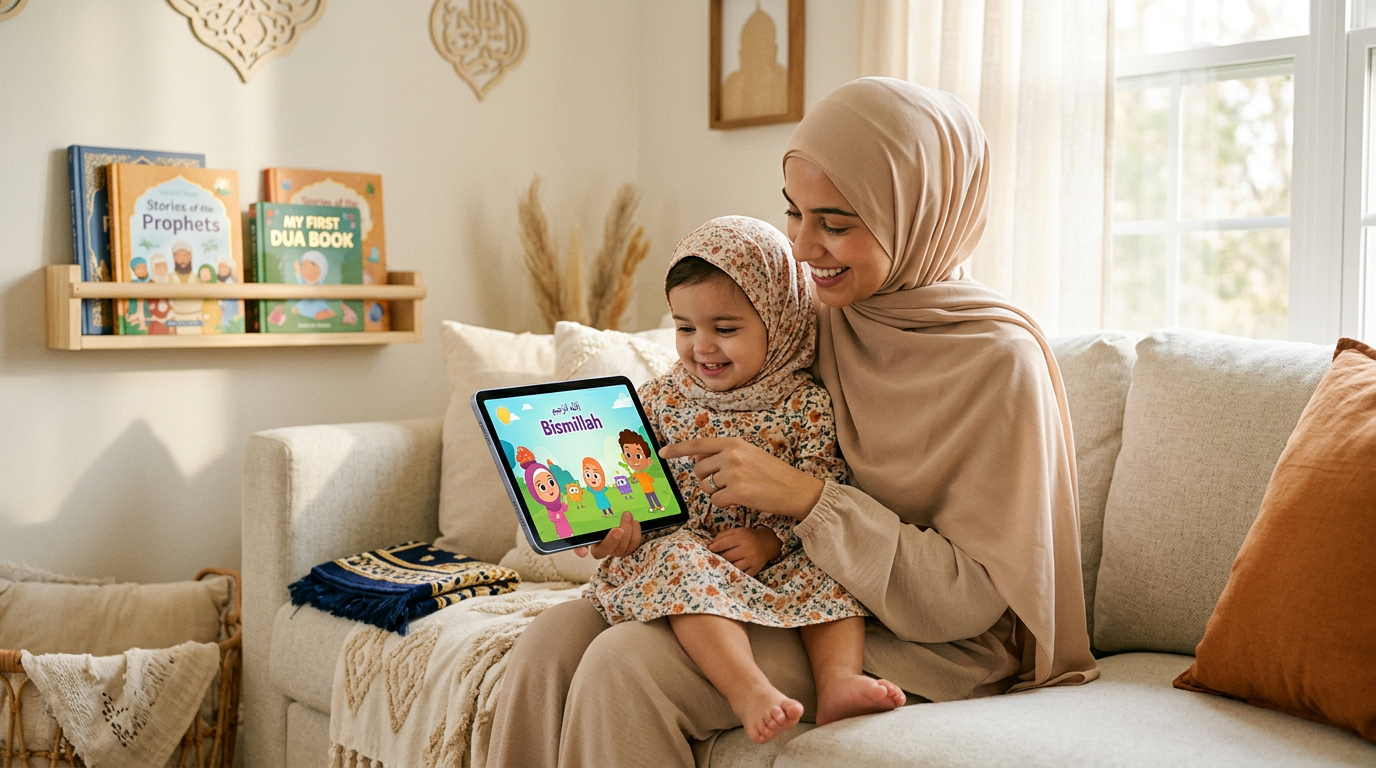
Hygiene transitions, such as diaper changes or washing up, offer a perfect window for building a "Protective Shield" ritual. By chanting a soft, rhythmic Bismillah before you begin, you frame cleanliness as a sacred act of care rather than a chore. Keeping your tone melodic and steady reduces transition anxiety, which is a cornerstone of a calm and successful islamic routine for 2 year old.
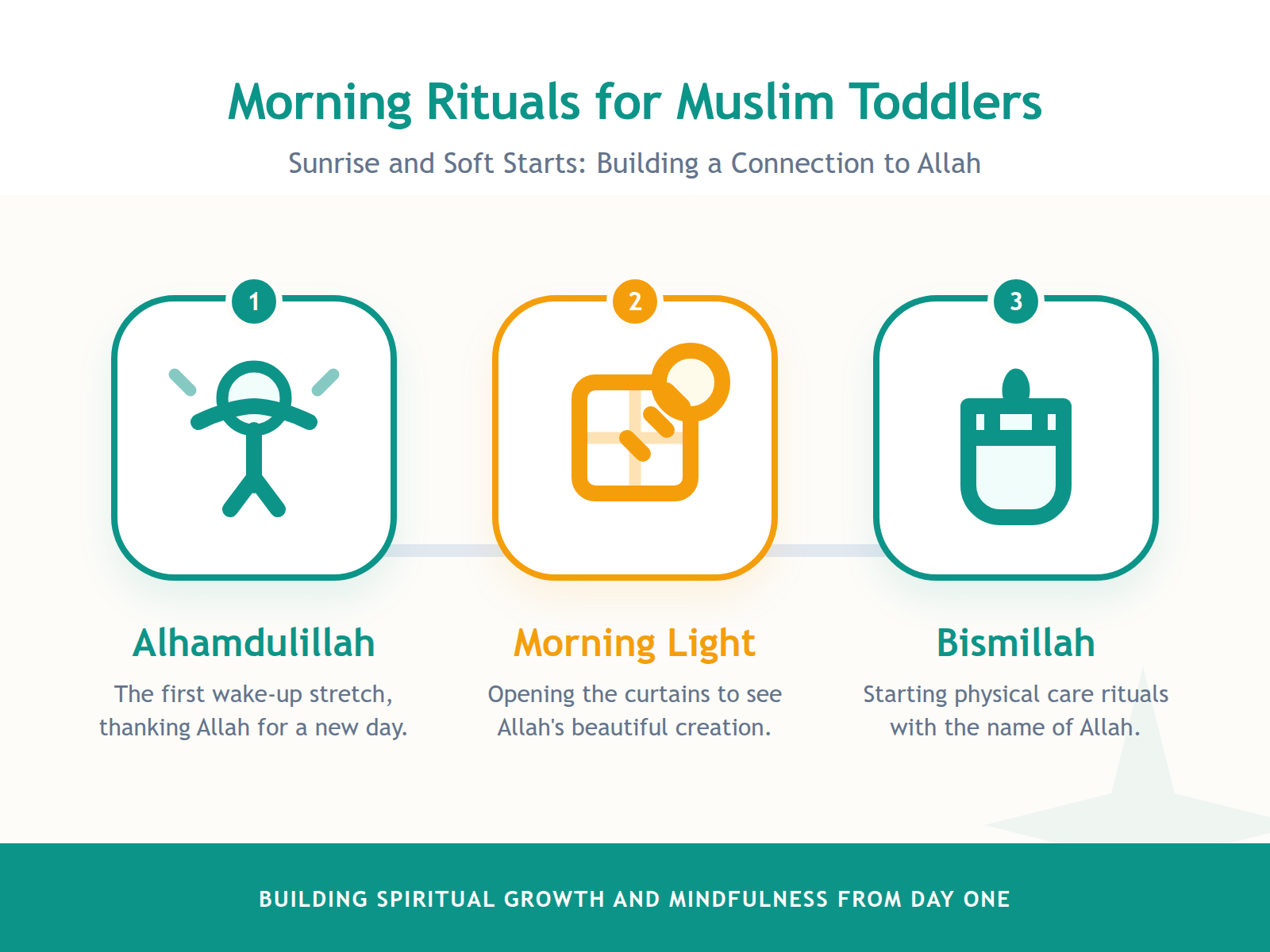
To deepen this connection, use sensory cues like drawing back the curtains to welcome the Noor (divine light) of a new day. You can also play a gentle, instrument-free nasheed as an auditory anchor to signal that a fresh start has begun. By focusing on these sensory "Spiritual Gates," you ensure your toddler absorbs the peace of faith through their Fitra long before they can recite full sentences.
Parenting Tip: Try to keep your own voice low and serene during these first fifteen minutes. Your calm presence is the strongest evidence of Allah’s peace that your toddler will experience today.
Bismillah at the High Chair: Building Gratitude Through Nutrition
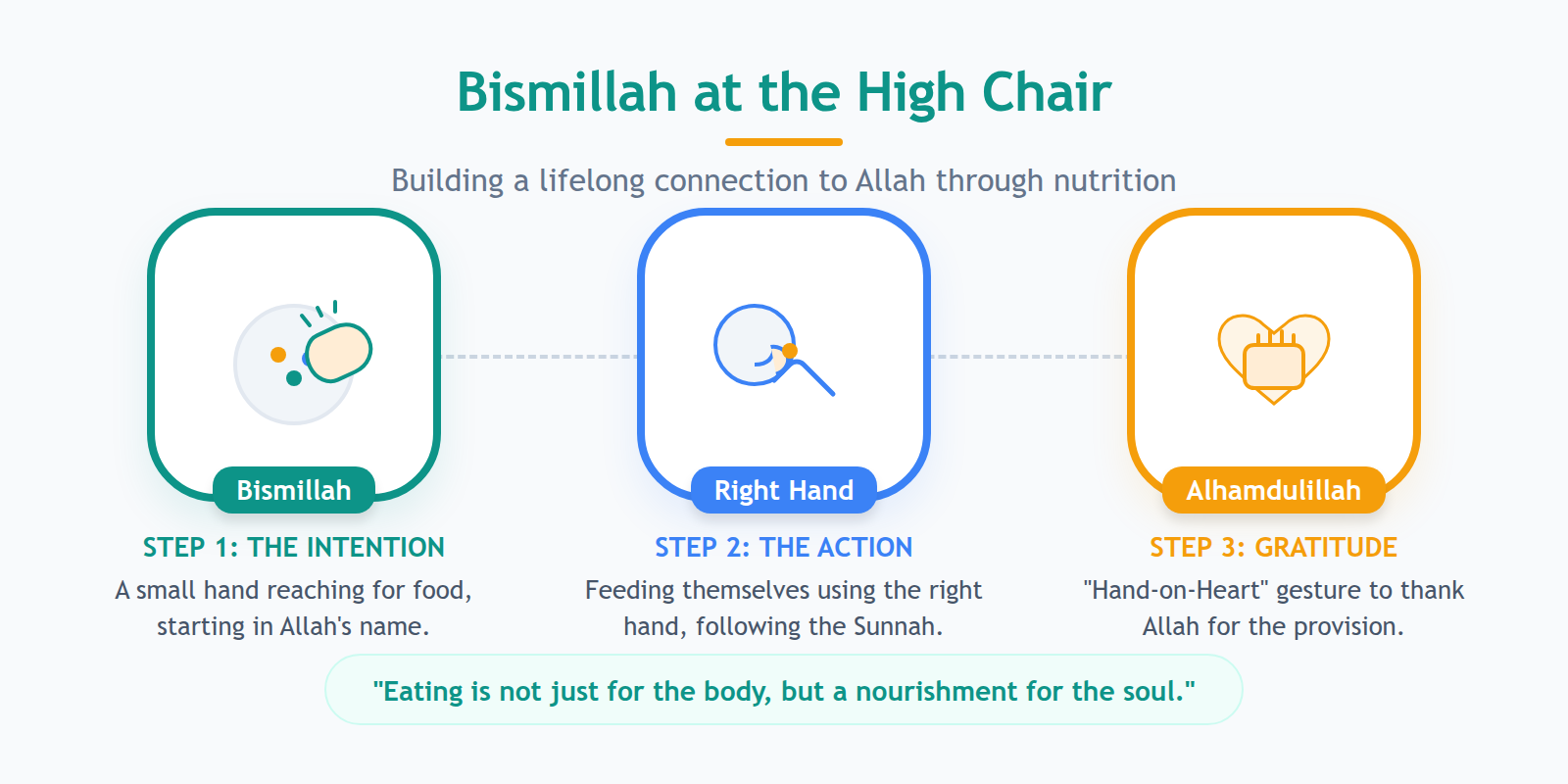
Mealtimes are more than just physical nutrition; they are a sensory laboratory for Tarbiyah. We view the high chair as a sacred space where the chaotic rhythm of the day finally slows down to a manageable pace. Teaching bismillah to babies is remarkably effective during these moments because the three-syllable rhythm often mirrors a toddler’s natural babbling patterns, making it an ideal "functional first word" that signals the transition from play to nourishment.
Anchoring Gratitude with Physical Gestures
Before the first bite, we suggest gently guiding your toddler's right hand toward their tray as you model the opening Dua. If you are navigating a "picky eater" phase, use this time to model emotional regulation by softly chanting SubhanAllah when food is refused. This practice helps co-regulate your own frustration and the child's sensory overwhelm, transforming a potential struggle into a shared moment of quiet patience.
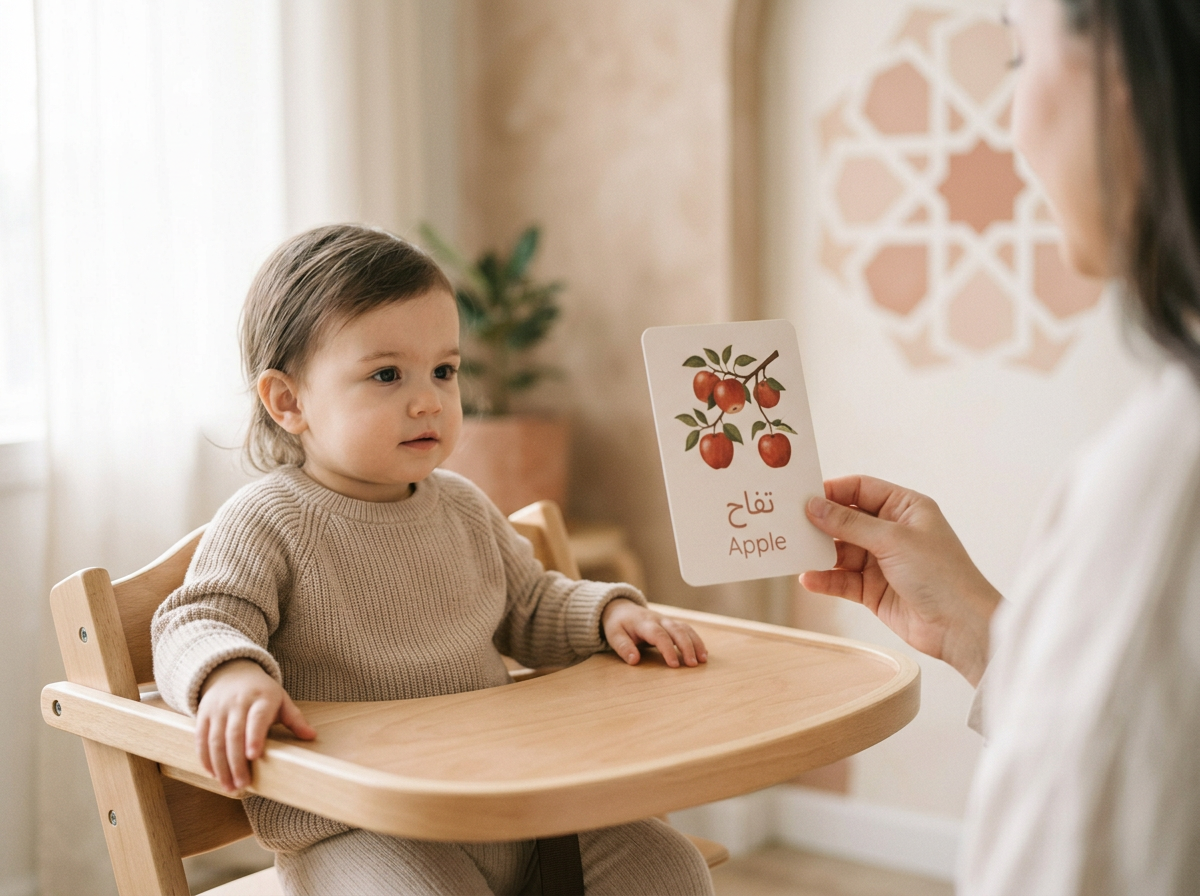
To bridge the gap between digital learning and real-world textures, try showing a Babymode digital flashcard for a specific fruit—like "Tuffah" (apple)—just before serving the real thing. This visual priming builds their Arabic vocabulary while keeping their Fitra engaged with the wonders of creation. Once the meal concludes, we introduce the "Hand-on-Heart" gesture. By physically touching their chest while whispering Alhamdulillah, your toddler anchors the physical feeling of a full stomach to a deep, lasting sense of spiritual contentment.
Tantrums and Toys: Duas for Emotional Regulation and Kindness
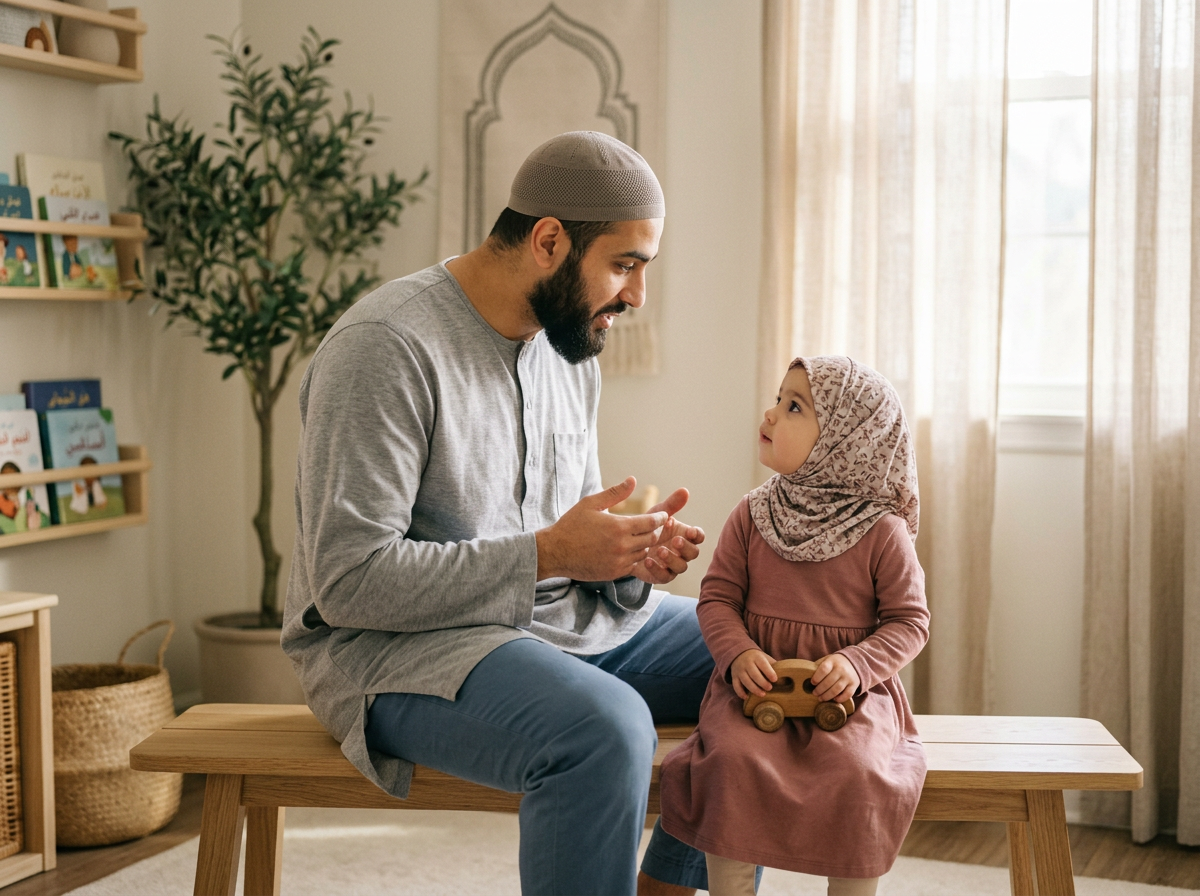
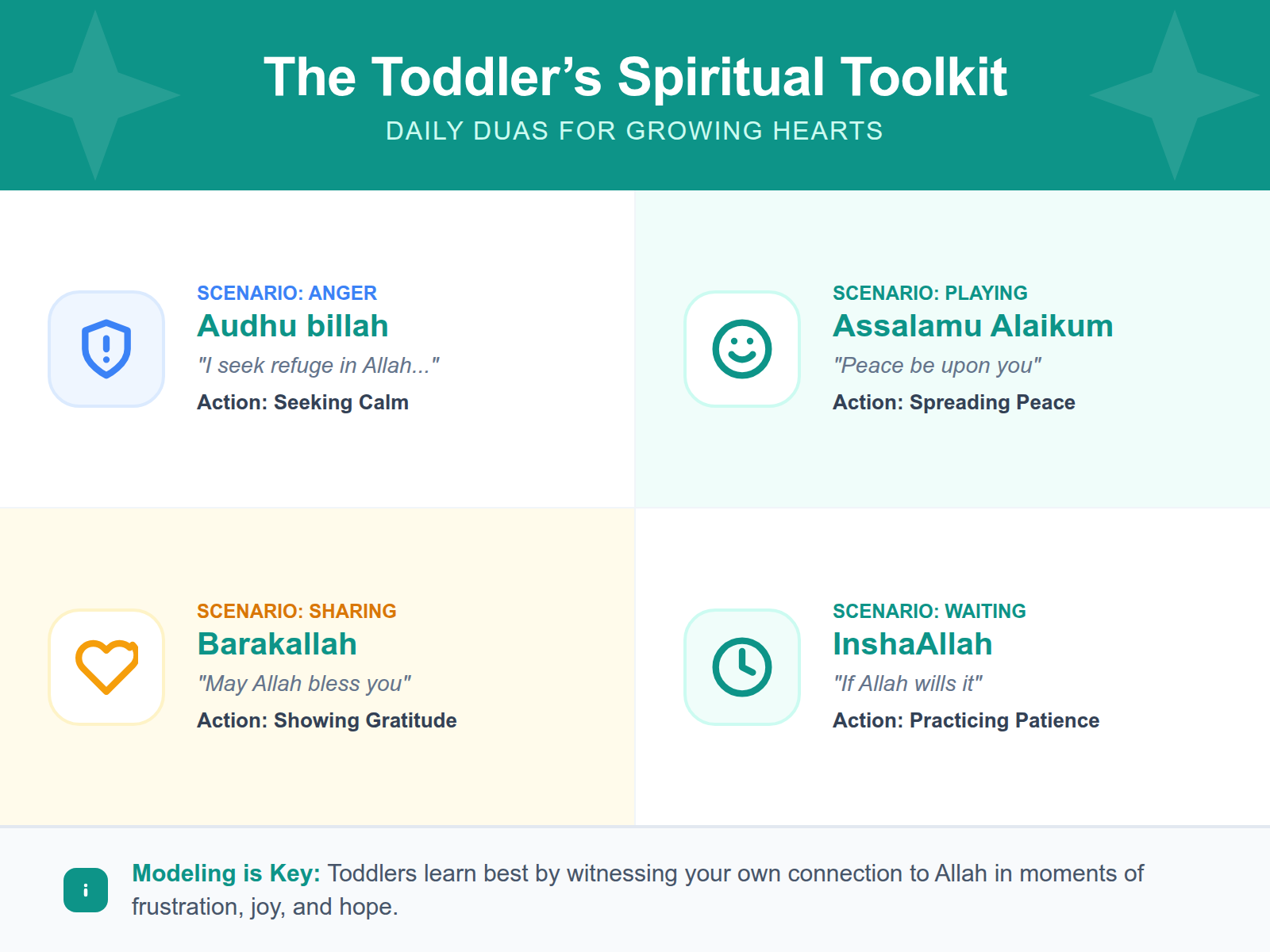
Big feelings can be overwhelming for both you and your little one. We see these "meltdowns" as sacred opportunities for Tarbiyah rather than just a struggle. By introducing a dua for toddler tantrums, you help your child navigate intense emotions through the light of faith.
The ‘Deep Breath’ Ritual
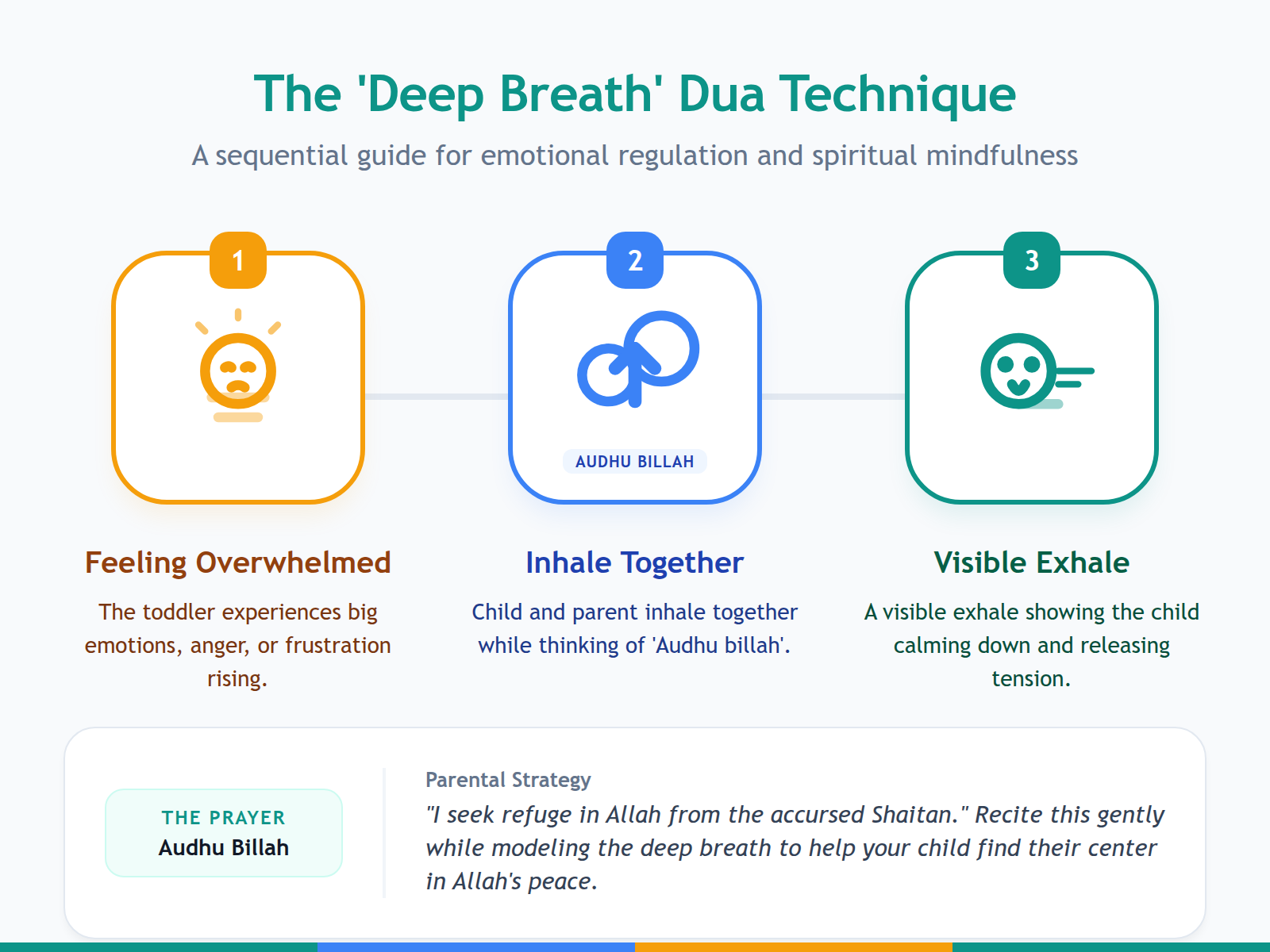
When a storm brews, use a shortened A’udhu billah as a "Cool Down Phrase." Pairing this refuge-seeking with a slow, visible exhale models how to return to the Fitra (natural state of peace). It helps reset your toddler's nervous system by simply mirroring your own calm, grounded presence.
Harmony in the Playroom
Transform the playroom by using the Salam as a "Peace-Making Tool" during toy disputes. Instead of a simple greeting, use it as a rhythmic wish for harmony when tensions rise between peers. If your child shares, reinforce the moment with a cheerful Barakallah to link generosity to the beauty of the Sunnah.
The Patience Bridge
Toddlers often struggle with "wait," so we use InshaAllah as a "Patience Bridge" to help manage their expectations. This specific phrase helps your child move from the frustration of a "no" toward a sense of divine trust. Over time, it anchors their patience in Allah’s timing, fostering a more content and peaceful heart.
Spiritual Reminder: Your patience during a tantrum is a profound act of Ibadah (worship). By staying steady, you mirror Allah’s Rahma (mercy) to your child when they are most vulnerable.
The Digital Sanctuary: Reinforcing Duas with Halal Screen Time
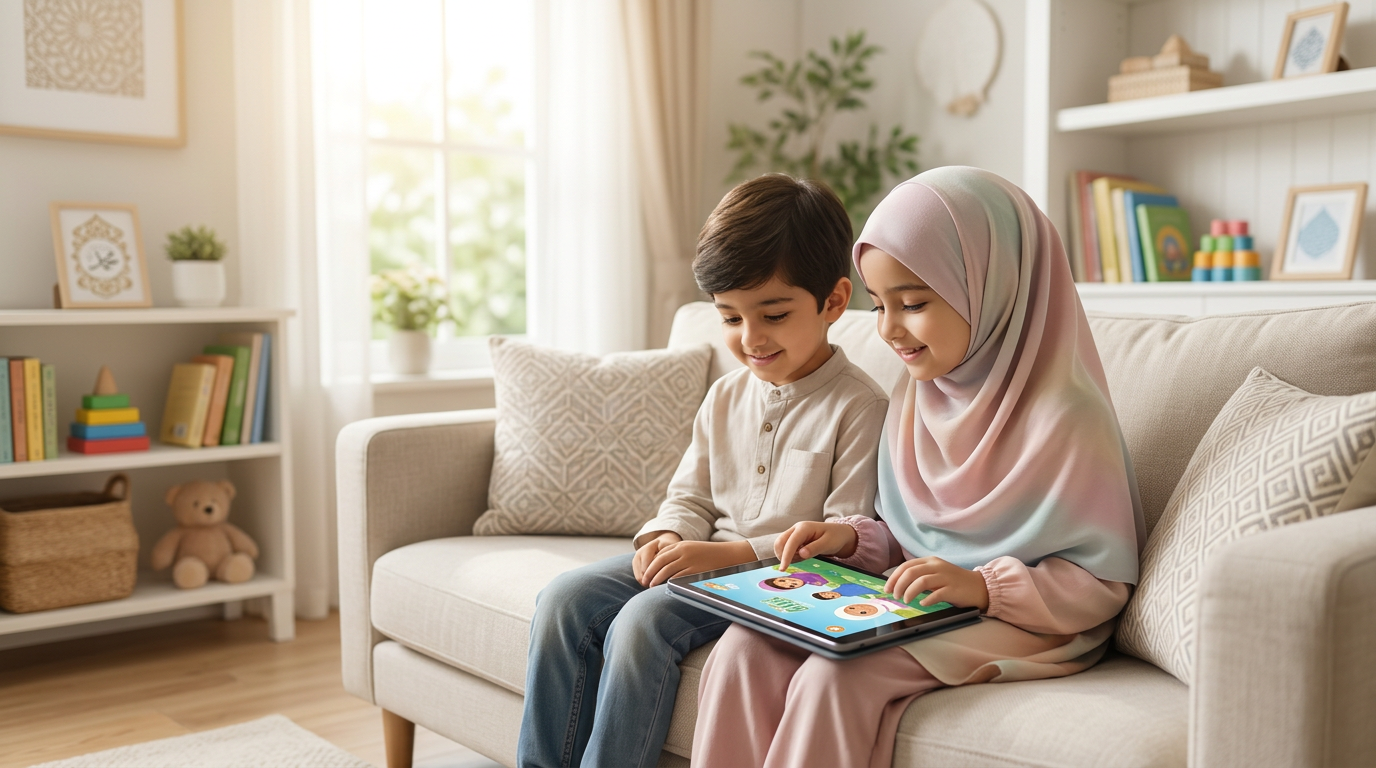
Digital tools shouldn't be a source of parental guilt. Instead, they serve as a "curated mirror for your child’s blossoming faith." Choosing halal screen time for toddlers creates a digital sanctuary that reflects the spiritual rhythms of our Ummah.
Faith Through Visual Mimicry
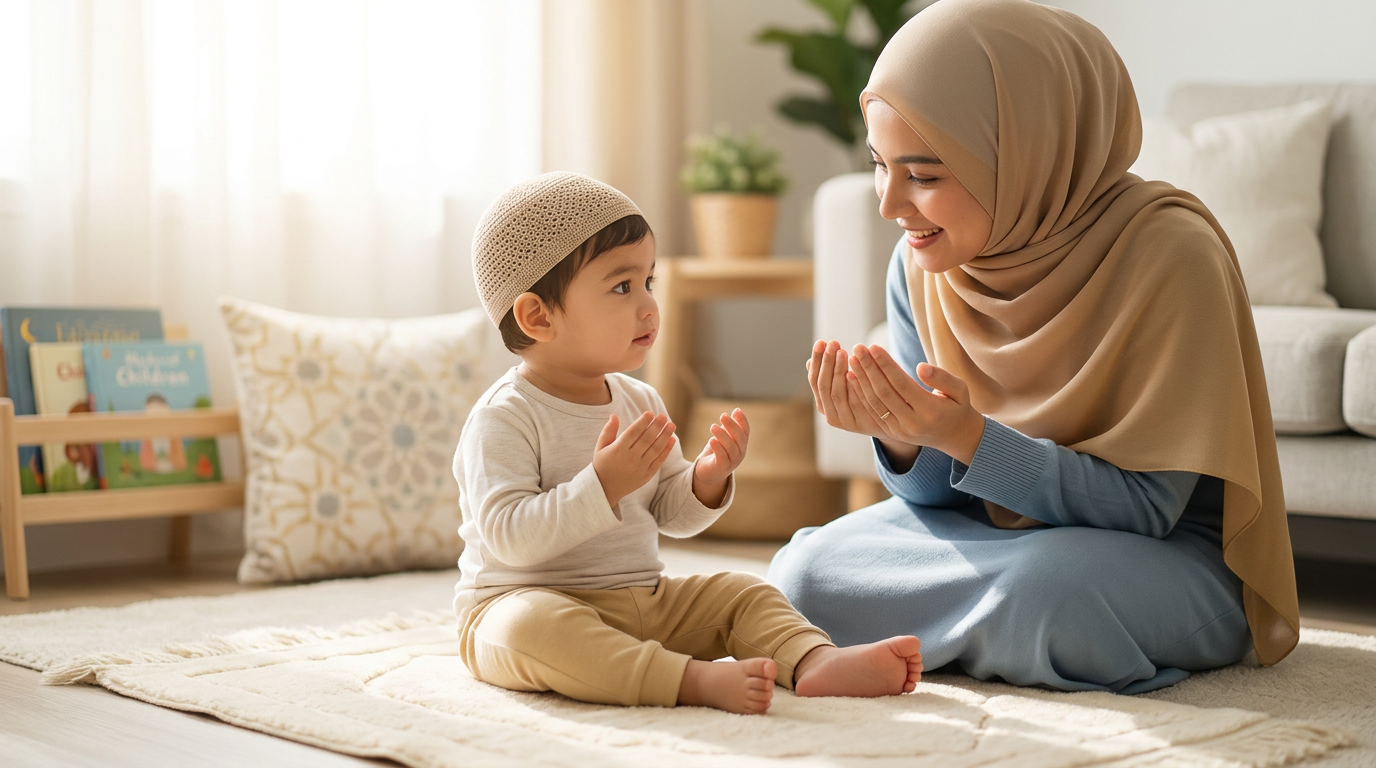
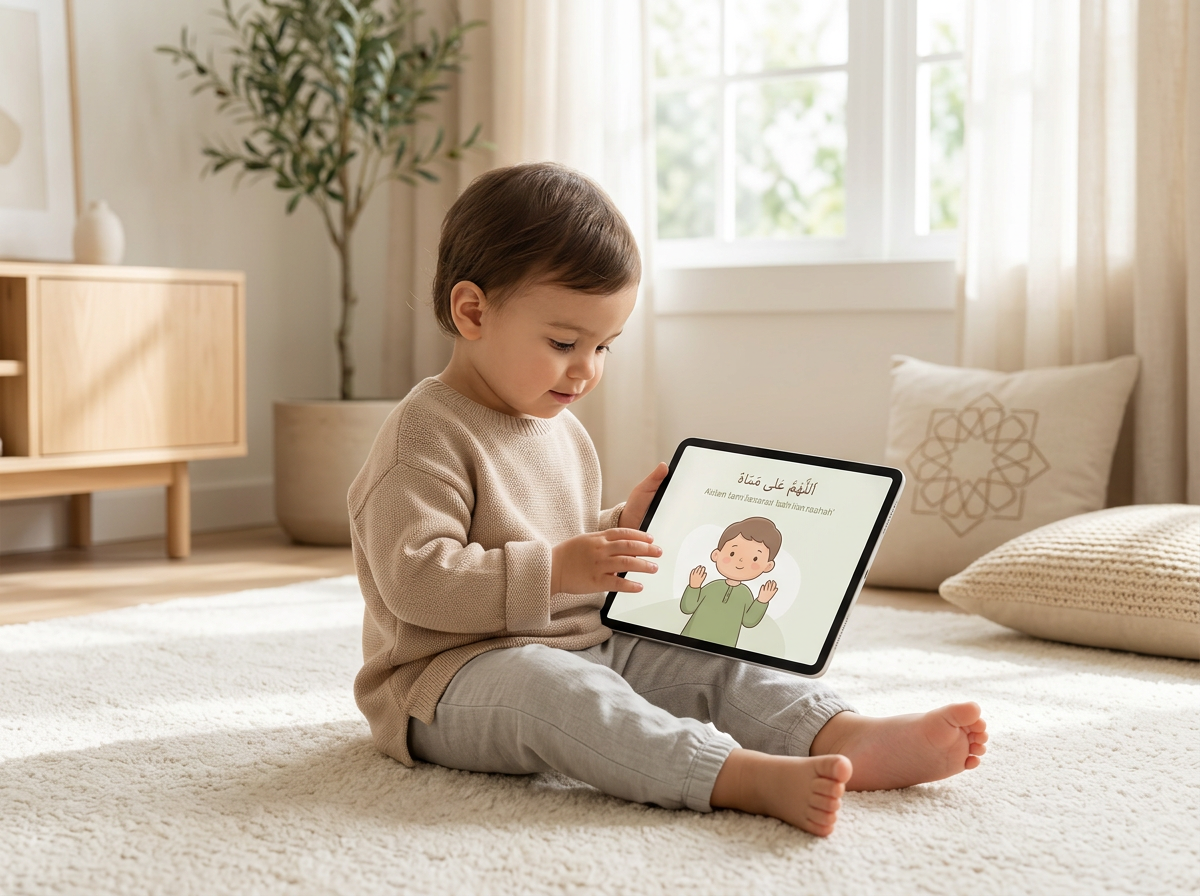
Toddlers are natural mimics who learn by observing. Through "Visual Dhikr," your little one watches AI-guarded characters perform the same rituals you teach, like raising tiny hands for prayer. To support this, we recommend using reputable resources like Primary Ilm’s Daily Dua Tracker to celebrate their early spiritual milestones.
Guarding the Fitra
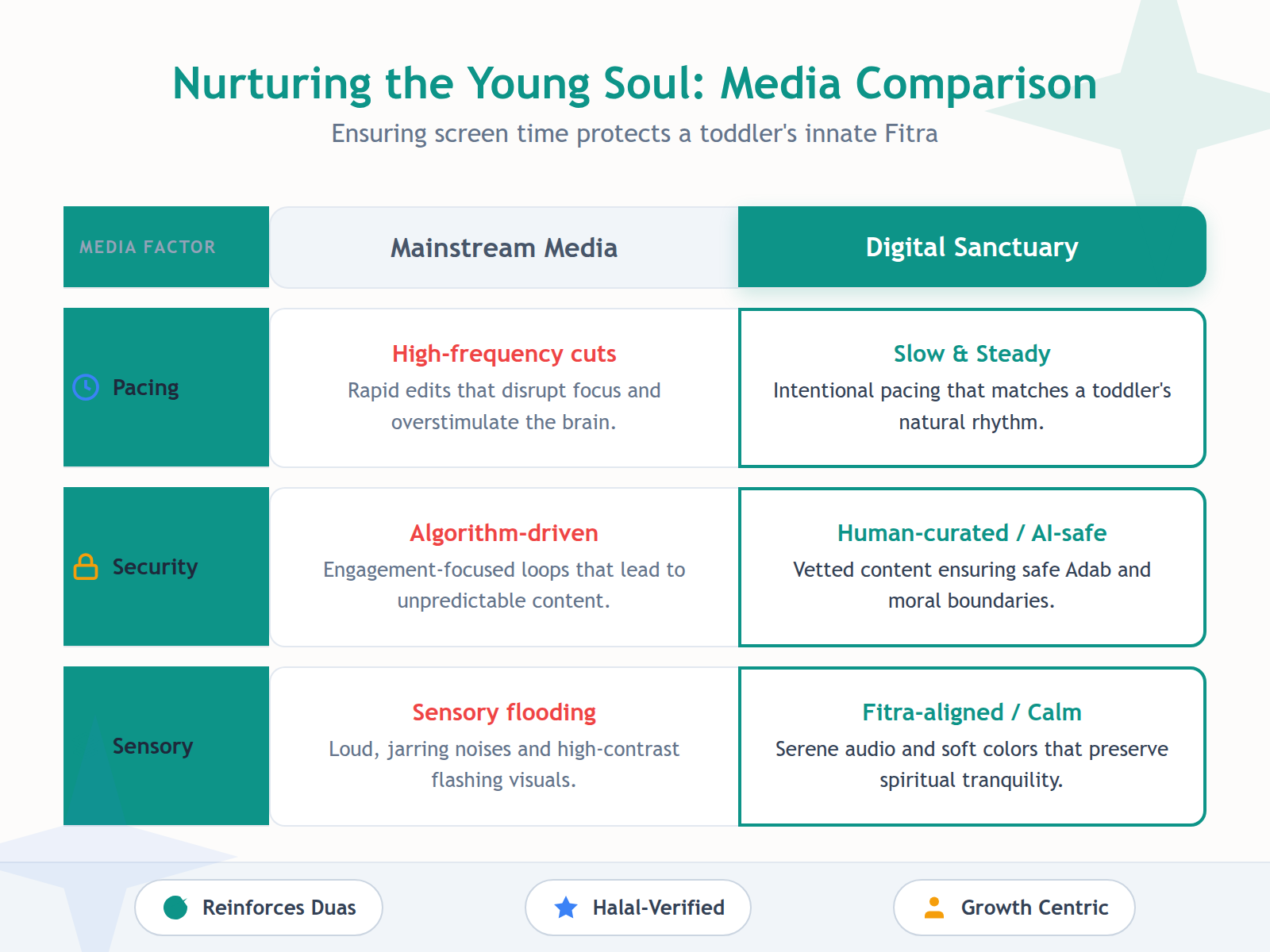
Mainstream platforms often rely on aggressive algorithms that cause sensory flooding. We advocate for a "guarded garden" approach to ensure your child’s Fitra remains unpolluted by intrusive ads. This AI-guarded safe space prioritizes slow pacing to match the 0-3 cognitive window, fostering a serene environment for your little one.
Precision in Sacred Speech
Early childhood is the prime window for mastering Arabic pronunciation (Makhraj). Our platform uses content-aware filtering to provide clear phonetics, helping your toddler mimic the sounds of the Quran accurately. This auditory precision ensures their tongues grow accustomed to sacred speech, while offline access keeps their Tarbiyah consistent during travel.
Parenting Tip: Watch a Dua video together and mimic the character's gestures. This turns digital learning into a shared, heart-to-heart bonding moment.
Moonlight Protection: A Bedtime Checklist for Tiny Muslims
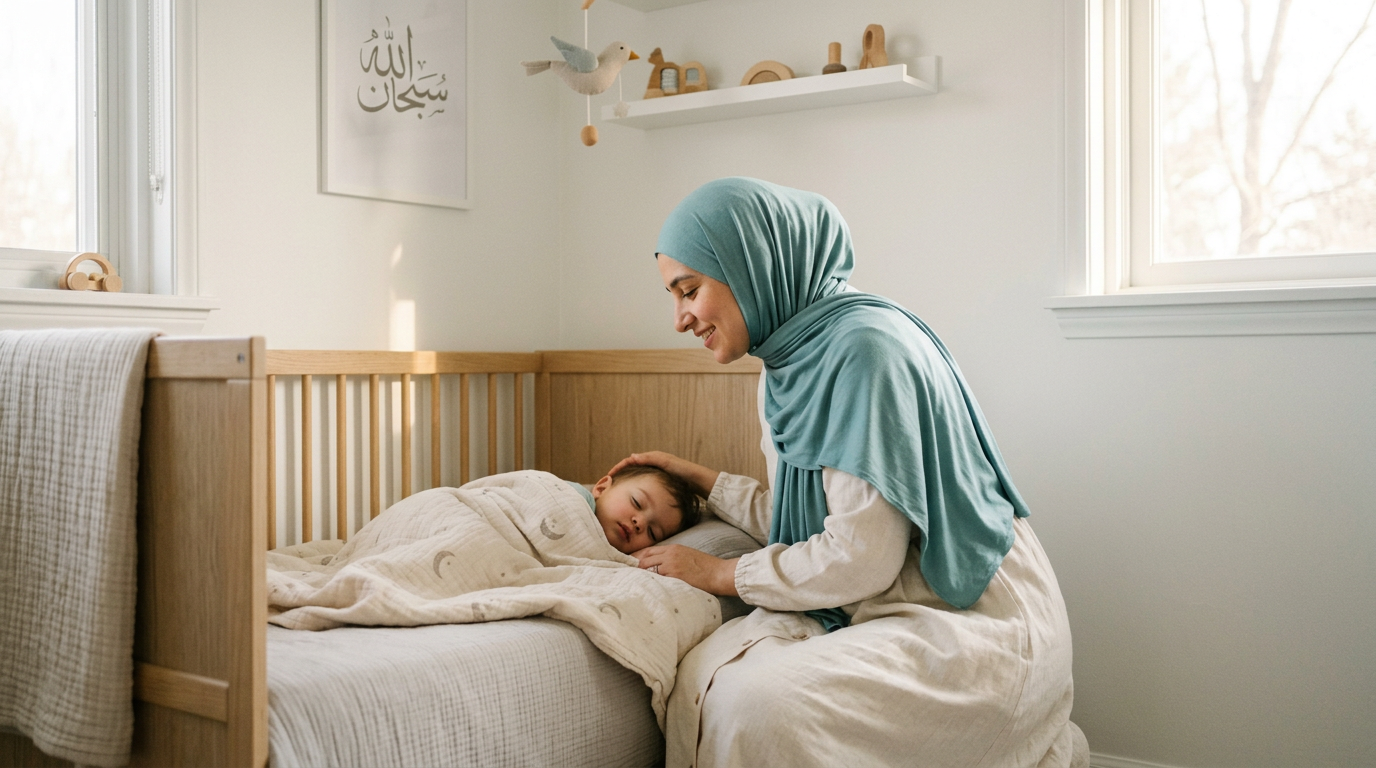
Bedtime isn't just a physical necessity; it's a transition into Sakinah (divine tranquility). We focus on closing the "gates" of your child's heart with a sense of total security. Start by simplifying the sleep supplication to a single, powerful word: "Bismika" (In Your Name).
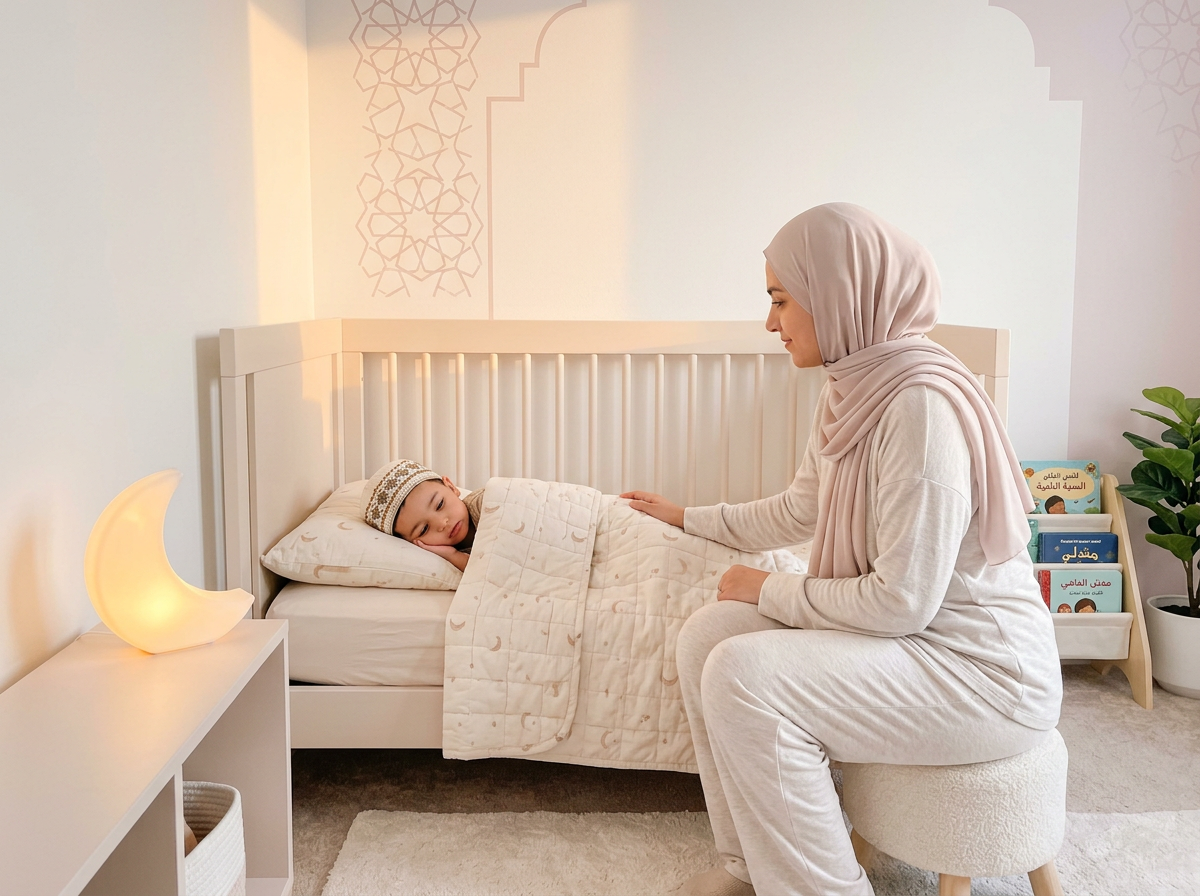
Tangible Sunnah for Little Hands
Guide your toddler to cup their small hands together like a bowl while you softly recite the final three Surahs. This tactile ritual helps even the youngest members of the Ummah feel the physical presence of faith.
Once complete, show them how to wipe their hands over their face to manifest Hifz (divine protection). Integrating these habits into a broader set of daily routine supplications helps families build a lasting spiritual bond.
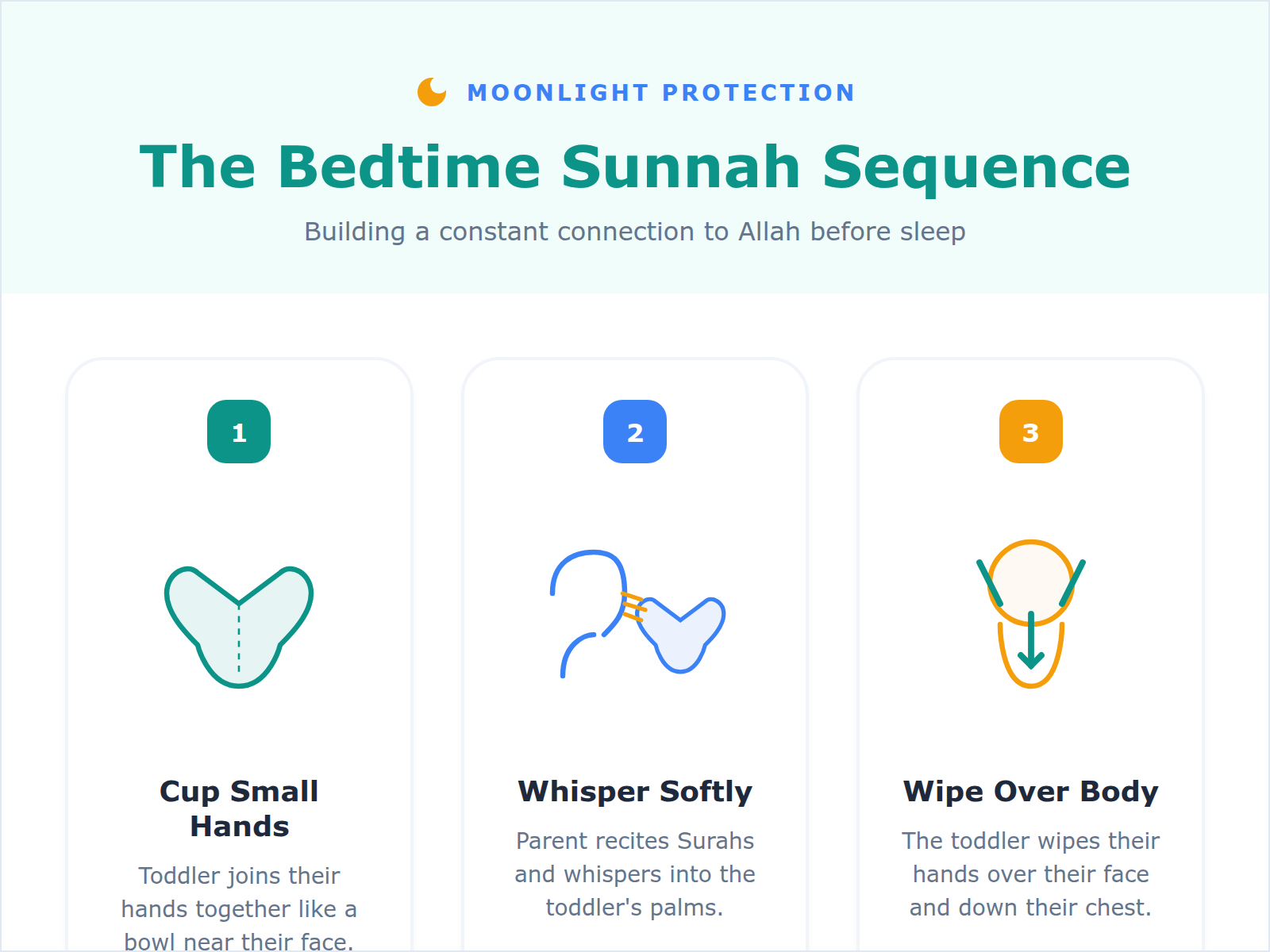
Heartfelt Reflections
End the night with a "Gratitude Recap" by finding one "Alhamdulillah moment" from your day together. This simple practice anchors your child’s Fitra to positivity before they drift off. It's a gentle way to ensure their heart is full of light before sleep.
Layering these daily duas for muslim toddlers with soft Quranic recitation transforms the bedroom into a peaceful sanctuary. This ensures their final thoughts are rooted deeply in the love of Allah and the comfort of your presence.
Conclusion
The Micro-Dua Framework shifts the focus from academic perfection to the gentle, consistent rhythm of love and faith. By weaving daily duas for muslim toddlers into your shared routine, you are planting seeds in their Fitra that will bloom for a lifetime.
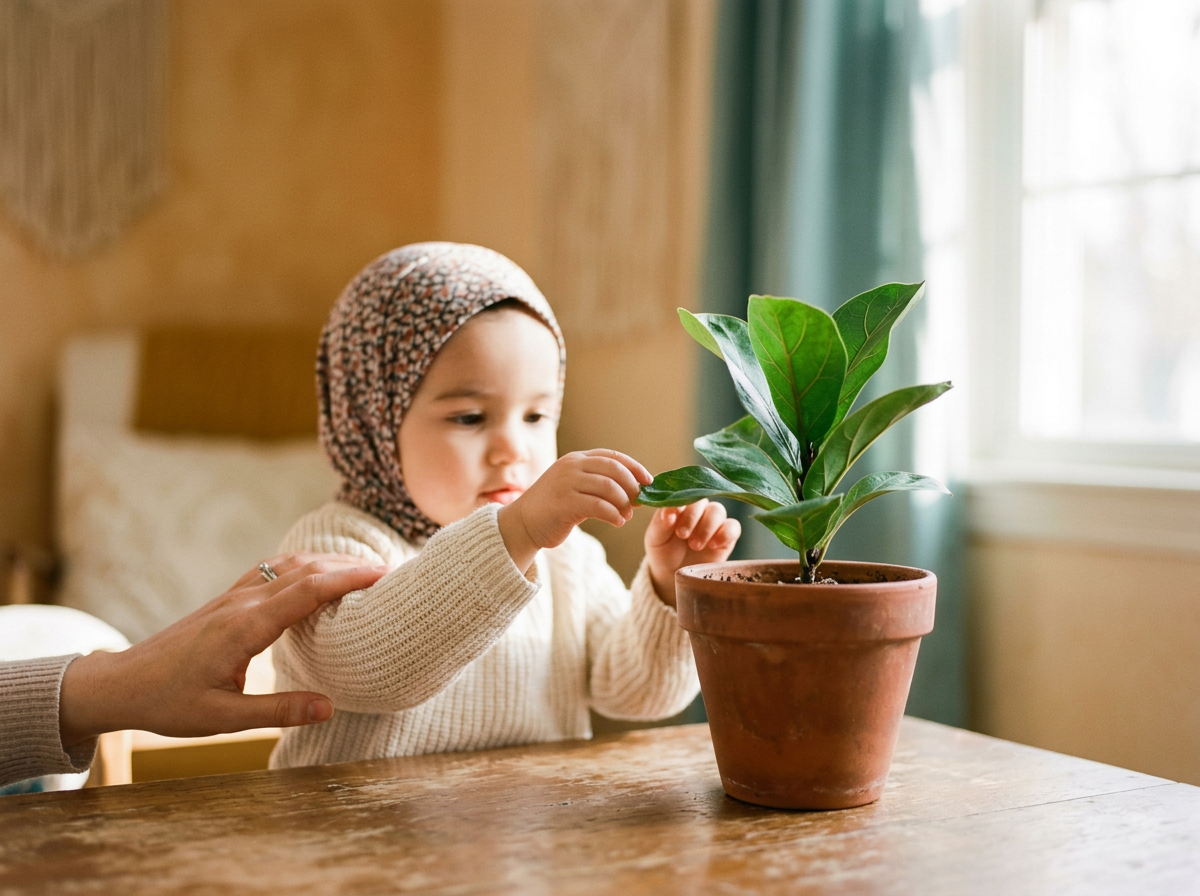
Trust the process—consistency matters more than accuracy. To support your journey, explore Babymode’s library for halal screen time for toddlers or download our Daily Dua Tracker today.
Frequently Asked Questions
What if my toddler is non-verbal?
They learn through listening! Use gestures like "Dua Hands" to engage their receptive language skills and build a spiritual soundscape.
How do I keep them still?
Don't! Pair short sunnah duas for kids with active play or gross motor movements to build joyful, high-energy associations with dhikr.
Arabic or English first?
Prioritize Arabic for foundational Makhraj, but use English keywords to anchor the emotional meaning in their Fitra.
Duas for teething?
Use "Tactile Ruqyah"—pair your soothing touch with simple phrases seeking Allah’s protection and comfort during physical distress.
How many repetitions?
Reinforce daily via your islamic routine for 2 year old and halal screen time for toddlers to move from passive recognition to active recall.