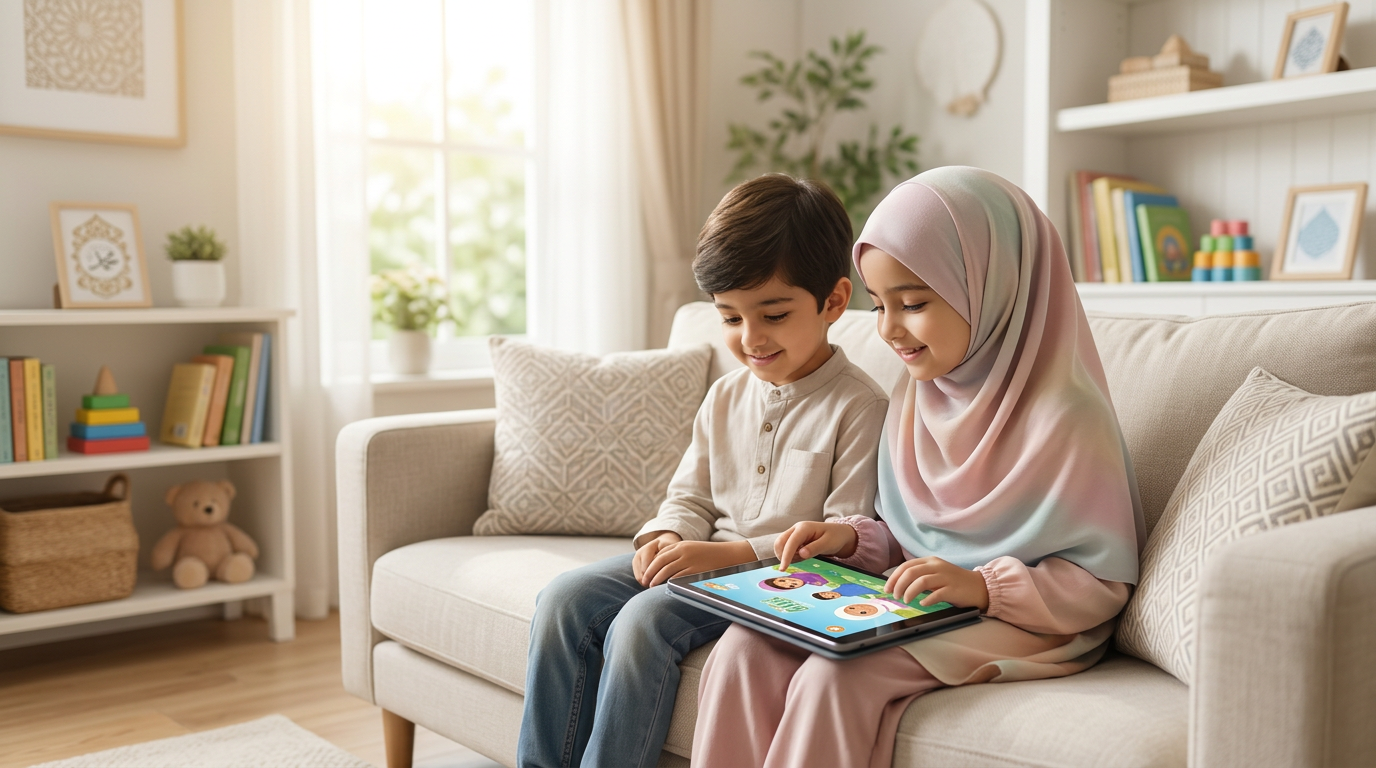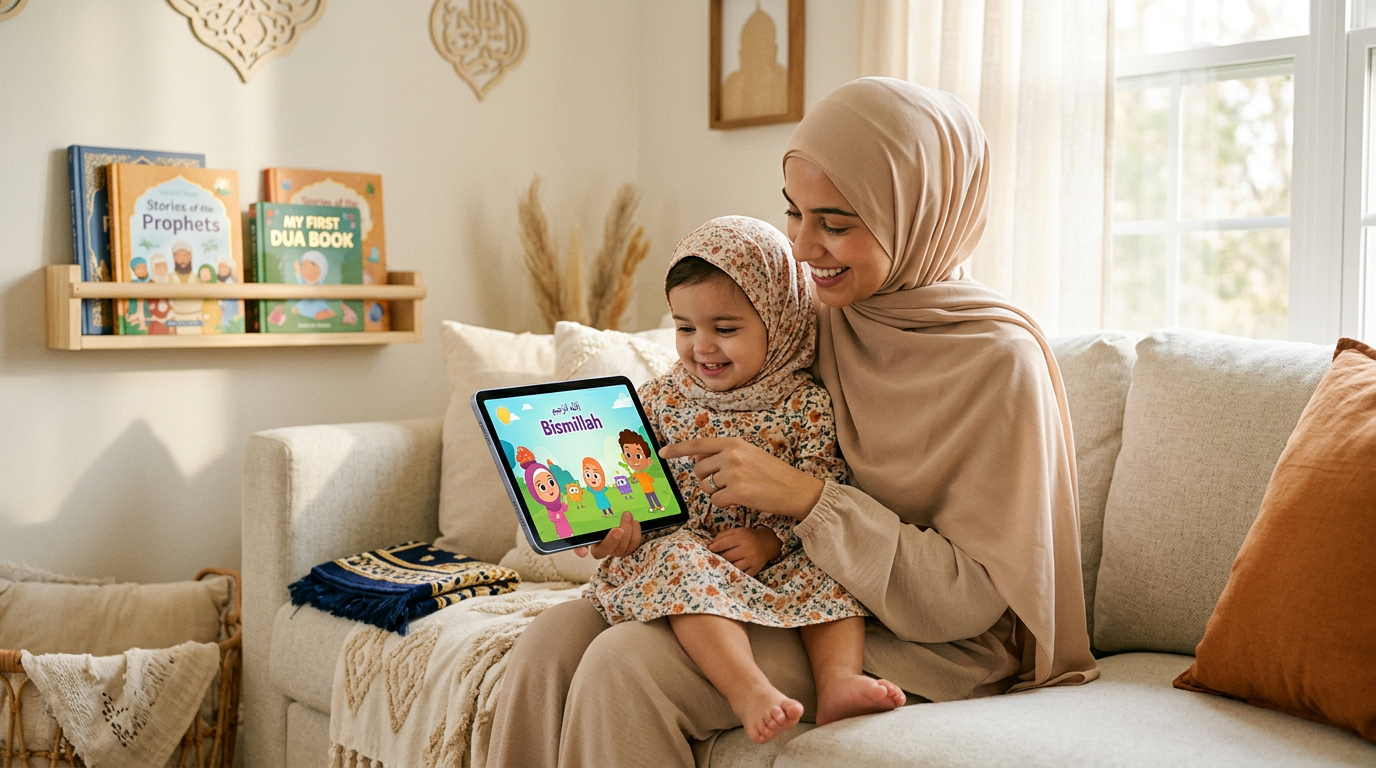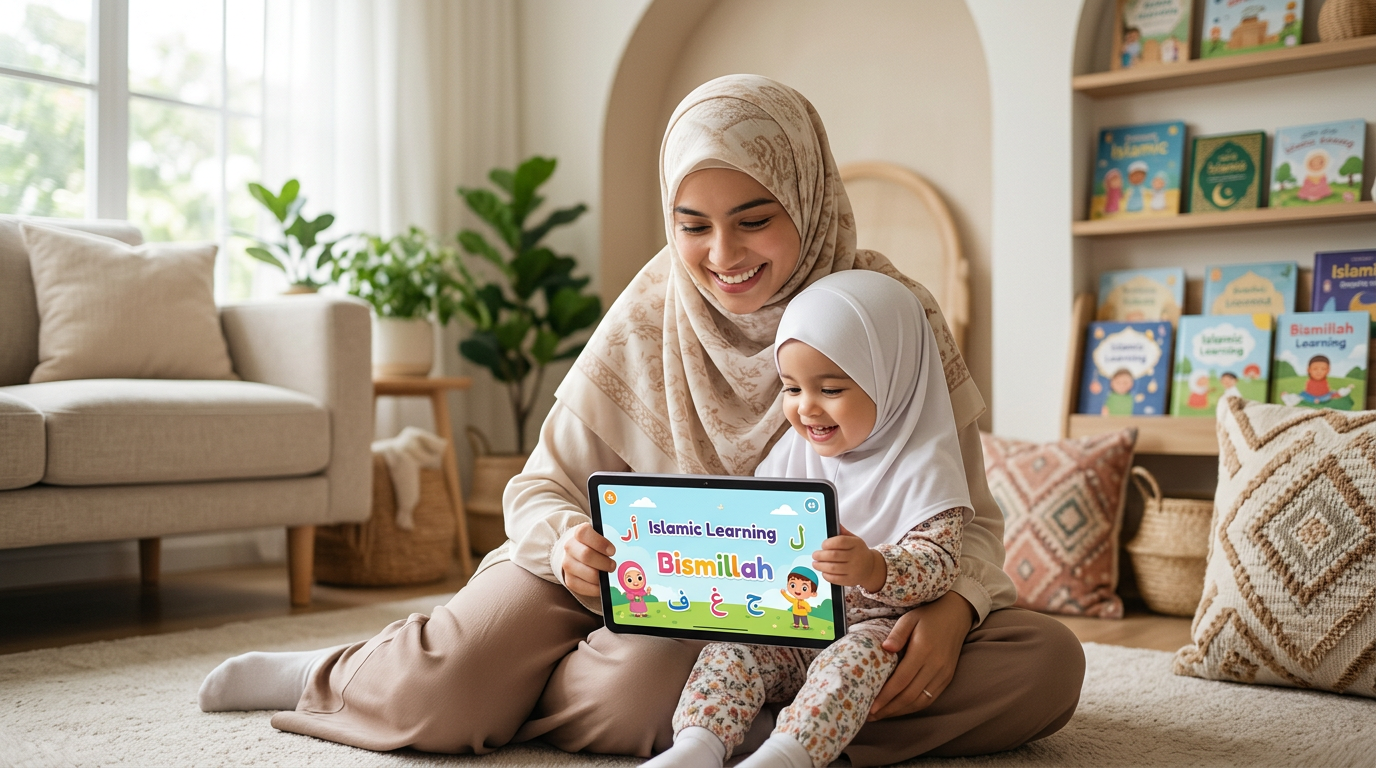
You hear your toddler’s sweet voice reciting "Bismillah" along with a video, a moment of pure parenting pride—until a jarring, high-energy ad or an unpredictable "recommended" clip makes you scramble for the remote in a panic. For the mindful Muslim parent, the search for a truly safe digital space isn't just about entertainment; it's about protecting a child's fitra during their most formative years.
Most Islamic educational platforms treat a two-year-old like a miniature seven-year-old, offering high-energy animations that trigger sensory overload. This creates the "Digital Babysitter" trap—the exhaustion of hovering over a screen to filter out jarring transitions or inappropriate human-uploaded content. Finding a reliable muslim toddler learning platform is difficult because the "0–3 gap" is often ignored in favor of school-age curriculum.
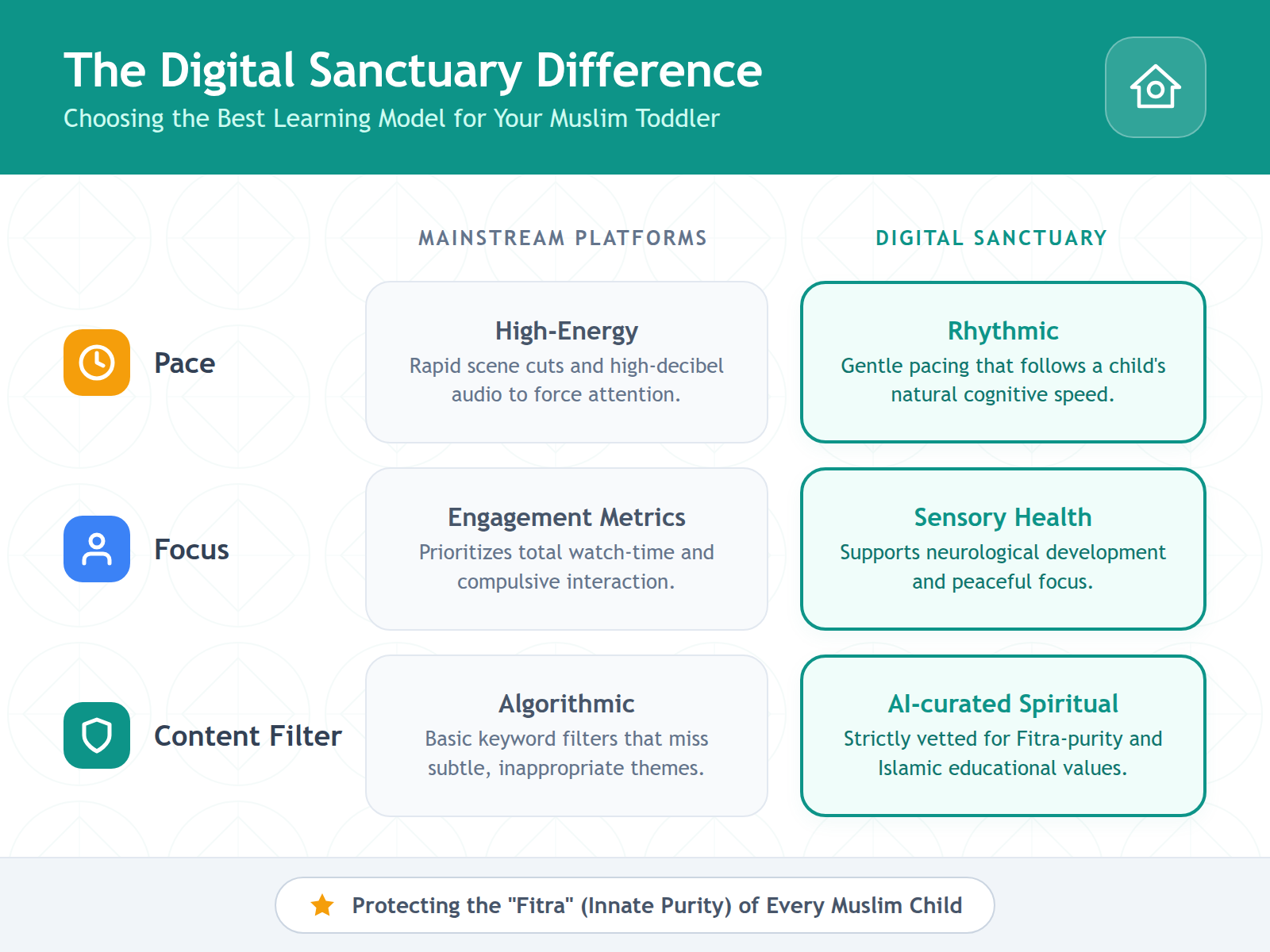
Ultimately, toddlers need a "digital sanctuary"—a low-stimulation, AI-curated environment that prioritizes sensory health over gamified metrics. In the following sections, we will explore why standard kids' filters fail this age group and how a dedicated muslim toddler learning platform can protect your child's Tarbiyah. By shifting from algorithmic chaos toward a serene digital environment, you can ensure technology respects your toddler's natural disposition.
Beyond the 'Kids' Filter: Why Most Islamic Platforms Fail Toddlers
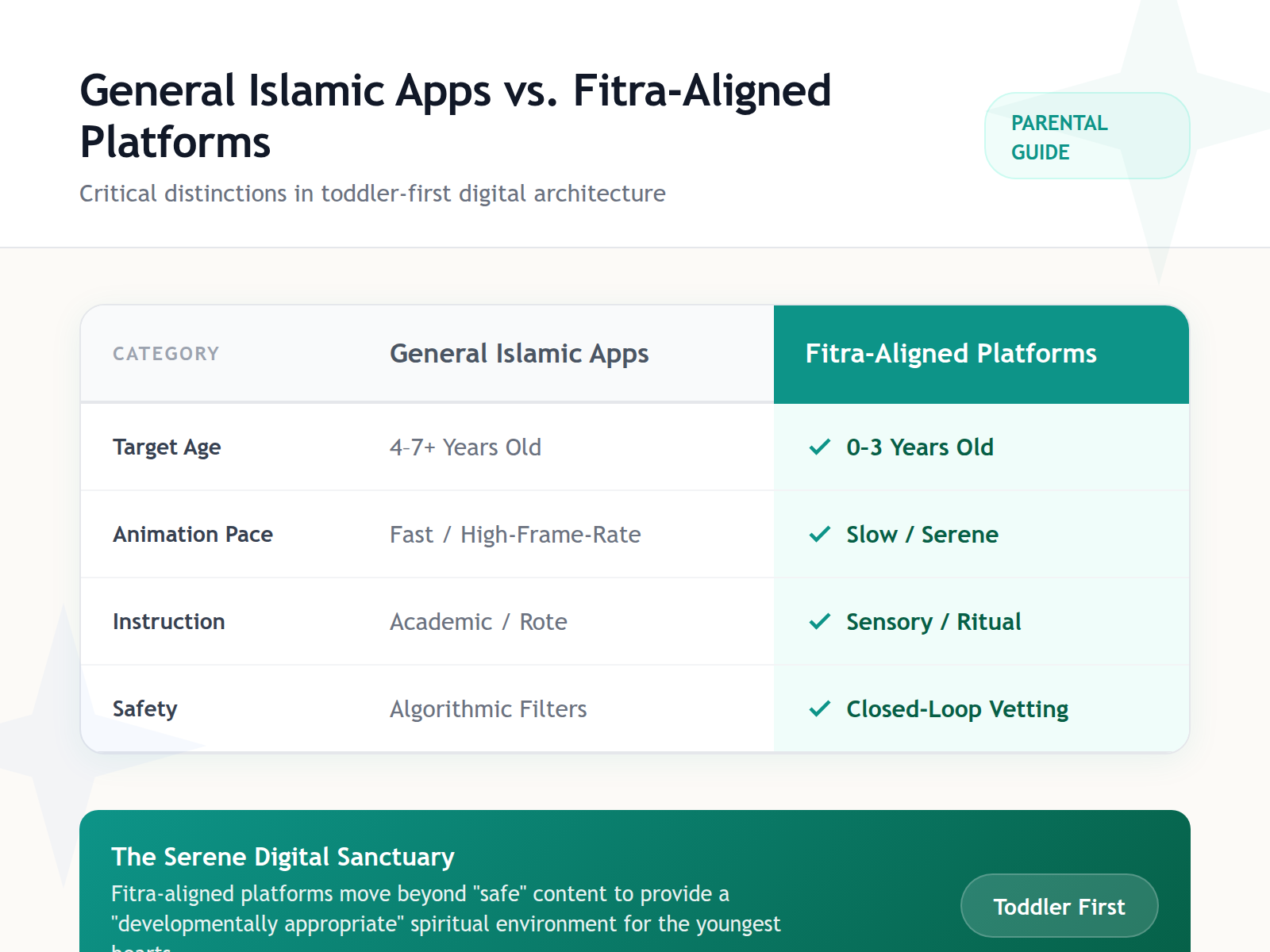
Many well-meaning Islamic educational apps fall into the "Miniature Seven-Year-Old" fallacy. They assume that if a video is good for a primary school student, it simply needs to be "simpler" for a toddler.
In reality, the neurological needs of a child under three are fundamentally different. While older children can process complex narratives and fast-paced humor, toddlers require a sensory-friendly environment that protects their Fitra (natural disposition).
The Fallacy of the Miniature Seven-Year-Old
Most general "kids' apps" rely on high-frame-rate animations and loud, sudden sound effects to keep a child’s attention. In our testing, we’ve found that these "Digital Stadiums" often lead to sensory overload, triggering cortisol spikes and irritability rather than peaceful learning.
A true muslim toddler learning platform must prioritize calm aesthetics over constant stimulation. For the 0-3 age group, the focus should be on gentle repetition and high-contrast visuals that mirror a toddler’s natural pace of discovery.

Escaping the Trap of Unpredictable Algorithms
Even when you find a "halal" playlist on mainstream platforms like YouTube Kids, you are still at the mercy of an unpredictable algorithm. These systems are designed to maximize watch time, often serving up "Recommended" videos that are developmentally inappropriate or feature jarring advertisements.
We believe that Tarbiyah (spiritual upbringing should be proactive), not reactive. Relying on automated filters means you are always one "Up Next" click away from content that clashes with your family's values. A specialized digital sanctuary eliminates this anxiety by using a closed-loop system where every frame is pre-vetted for both Islamic alignment and neurological safety.
Moving Toward a Digital Tarbiyah Framework
True foundational education for a Muslim toddler isn't about rote memorization or academic performance metrics. It is about creating a positive, joyful association with the sounds of the Quran, the rhythm of daily Duas, and the beauty of the Sunnah.
When we developed our approach, we focused on "Ritual Association." This means connecting screen time to real-world habits, like saying "Bismillah" before eating or "Alhamdulillah" when finished. By choosing a platform built specifically for the 0-3 age group, you replace screen-time guilt with a sense of spiritual partnership.
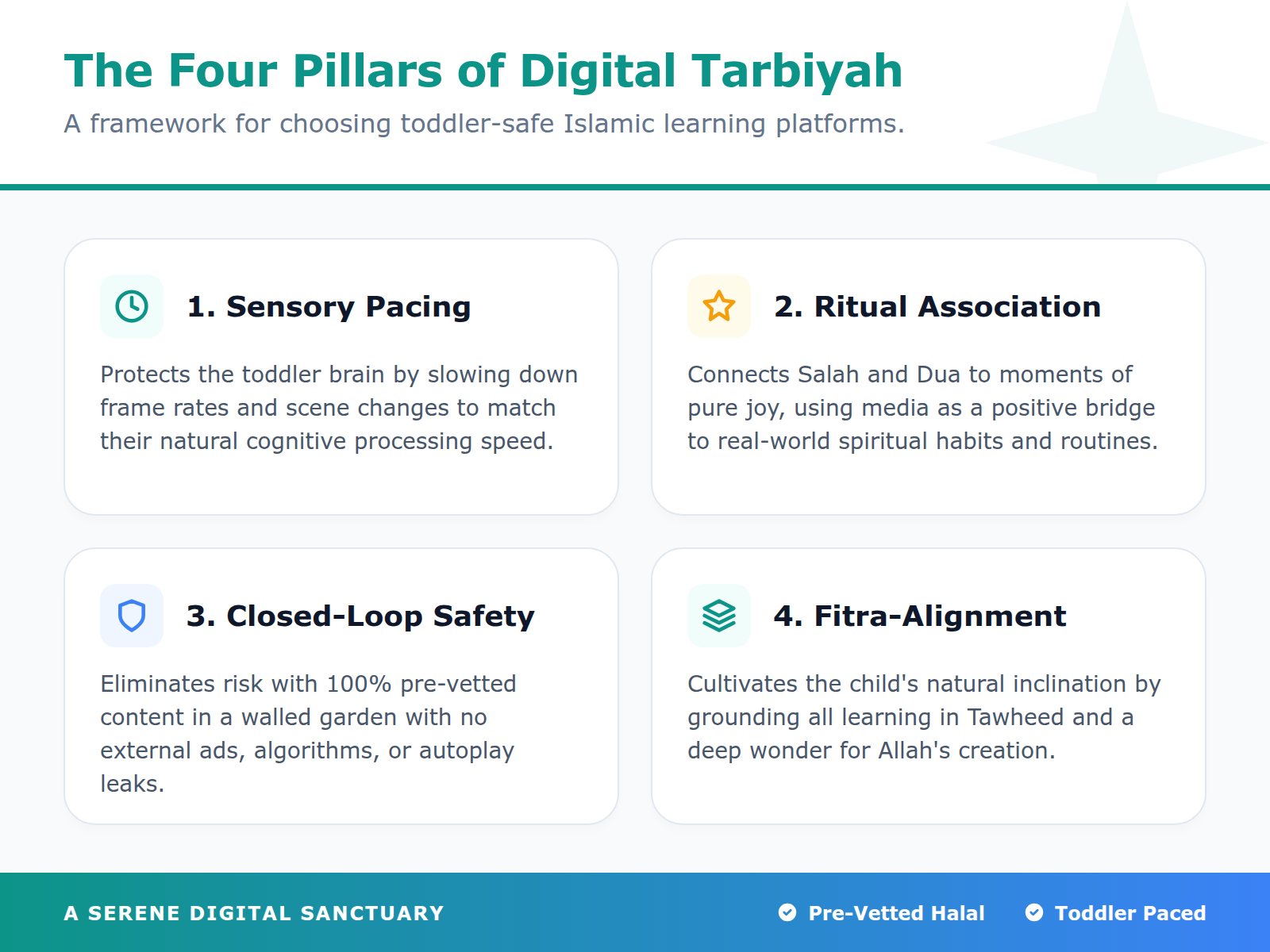
The 5 Pillars of a Halal Digital Sanctuary for Ages 0-3
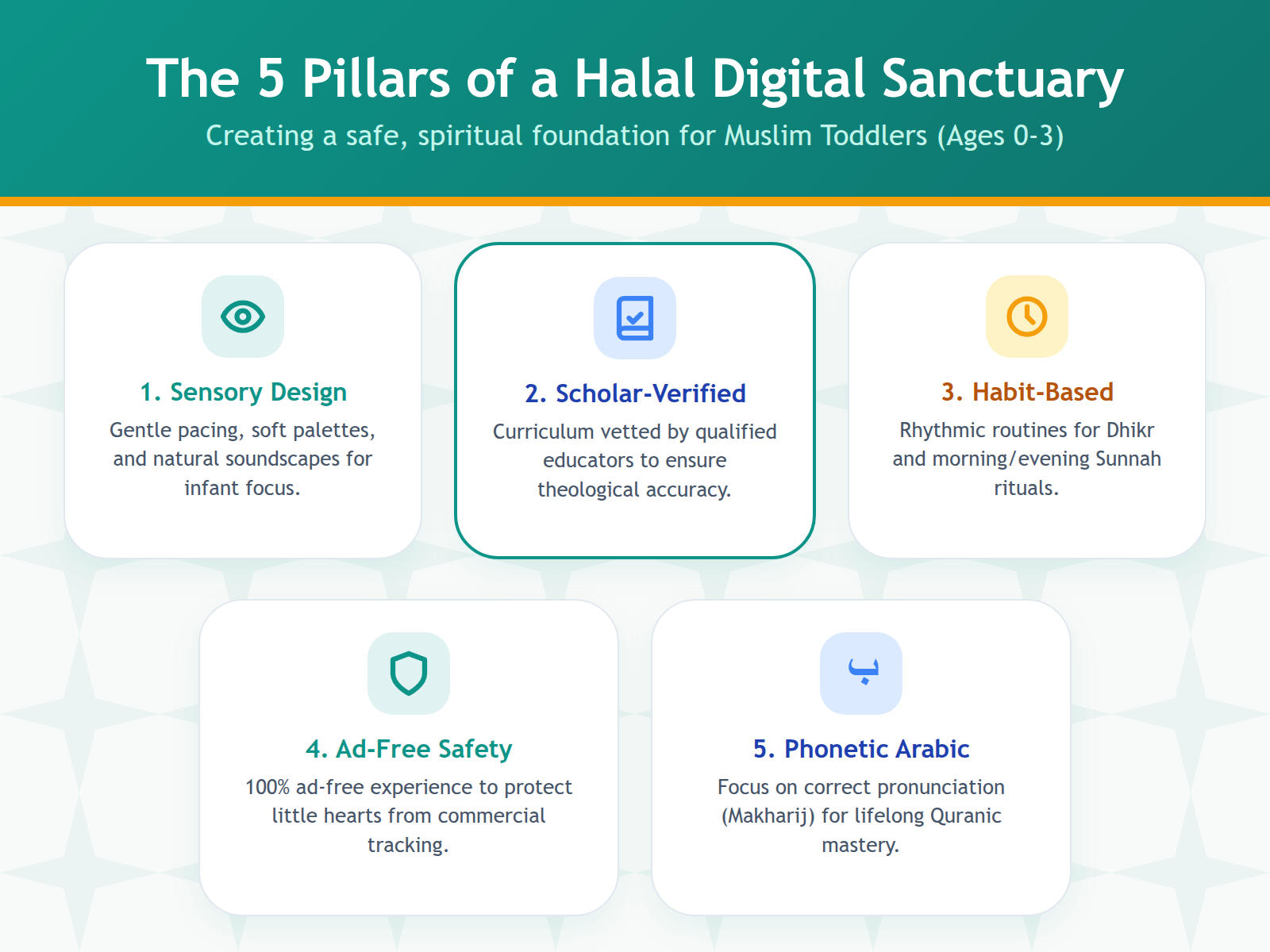
A digital sanctuary is more than just a collection of "halal" videos; it’s a commitment to your toddler's neurological and spiritual health. We've designed this space to be a serene extension of your home’s atmosphere, replacing digital chaos with a peaceful environment.
Sensory-Friendly Pacing
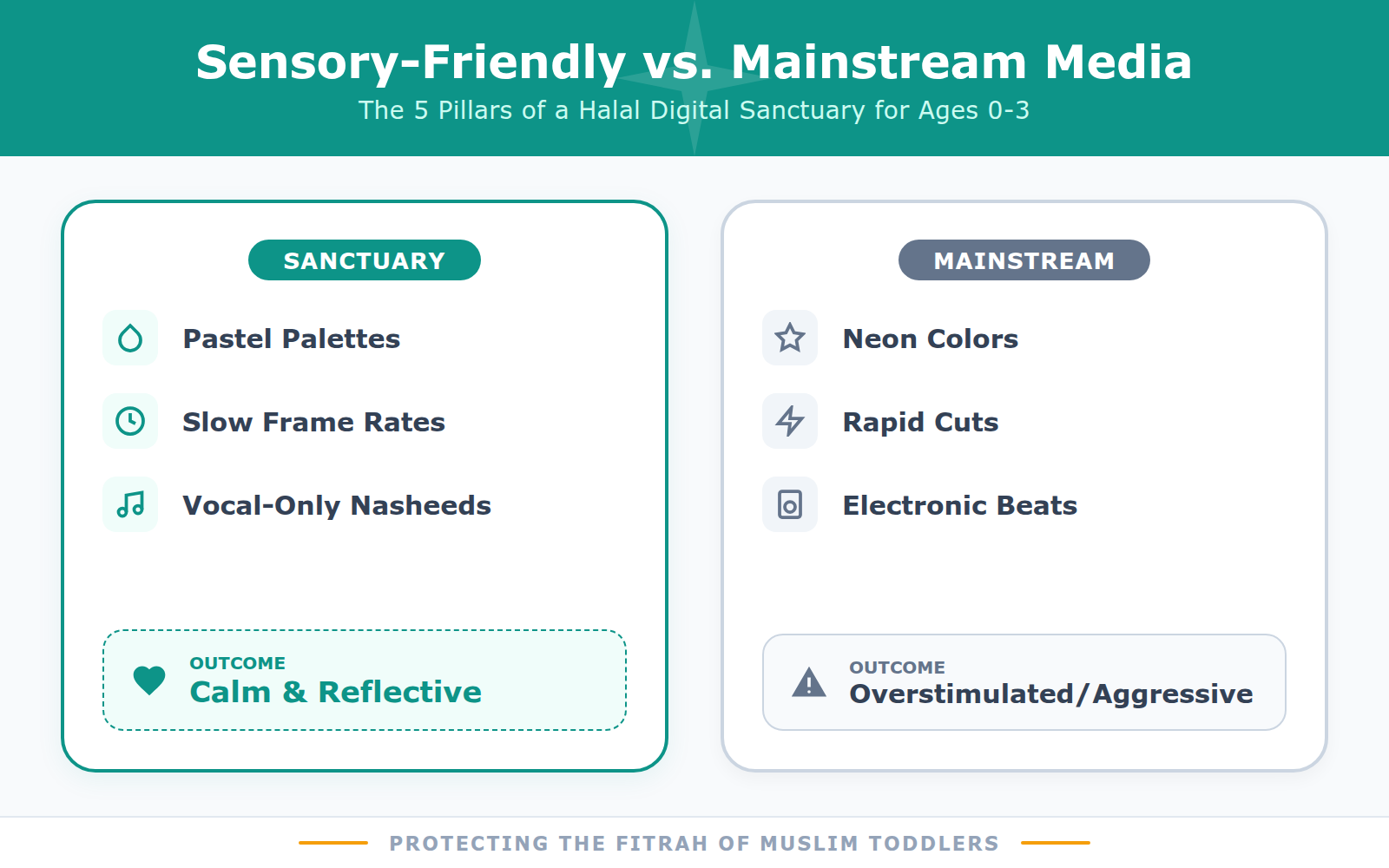
The most vital pillar is the use of low stimulation Muslim kids content. While mainstream platforms use rapid frame rates to hijack attention, we prioritize pastel palettes and slower transitions. This keeps your toddler in a calm, reflective state, preventing the sensory overload that often leads to post-screen irritability.
Protecting the Fitra
At this tender age, every story and sound shapes your child's Fitra (natural disposition). We ensure all content—from Quranic stories to vocal-only Nasheeds—is scholar-verified for theological accuracy. This removes the "wait and see" anxiety, guarding your child’s Amanah with pre-vetted, authentic material.
Ritual and Habit Mirroring
For children aged 0-3, the focus should be "Habit over Knowledge." Instead of pushing complex concepts, we emphasize daily duas for toddlers, such as saying "Bismillah" before play. Through gentle behavioral mirroring, your child begins to weave the beauty of the Sunnah into their own daily life naturally.
A Guarded "Walled Garden"
A true sanctuary must be 100% ad-free and free from unpredictable human-uploaded content. Mainstream apps rely on reactive filters that only catch issues after they've been flagged by others. Our AI-guarded space proactively eliminates "Up Next" risks, giving you total peace of mind while you attend to your home.
Phonetic Arabic Foundations
When approaching Arabic learning for 2 year olds, we prioritize phonetic familiarity over vocabulary lists. By introducing the specific rhythms and Makharij (articulation points) of the Quran early, we build a foundation for effortless Tajweed. This turns language learning into a rhythmic, joyful part of their spiritual development.
Comparing the Landscape: Video Streamers vs. Interactive Learning Apps
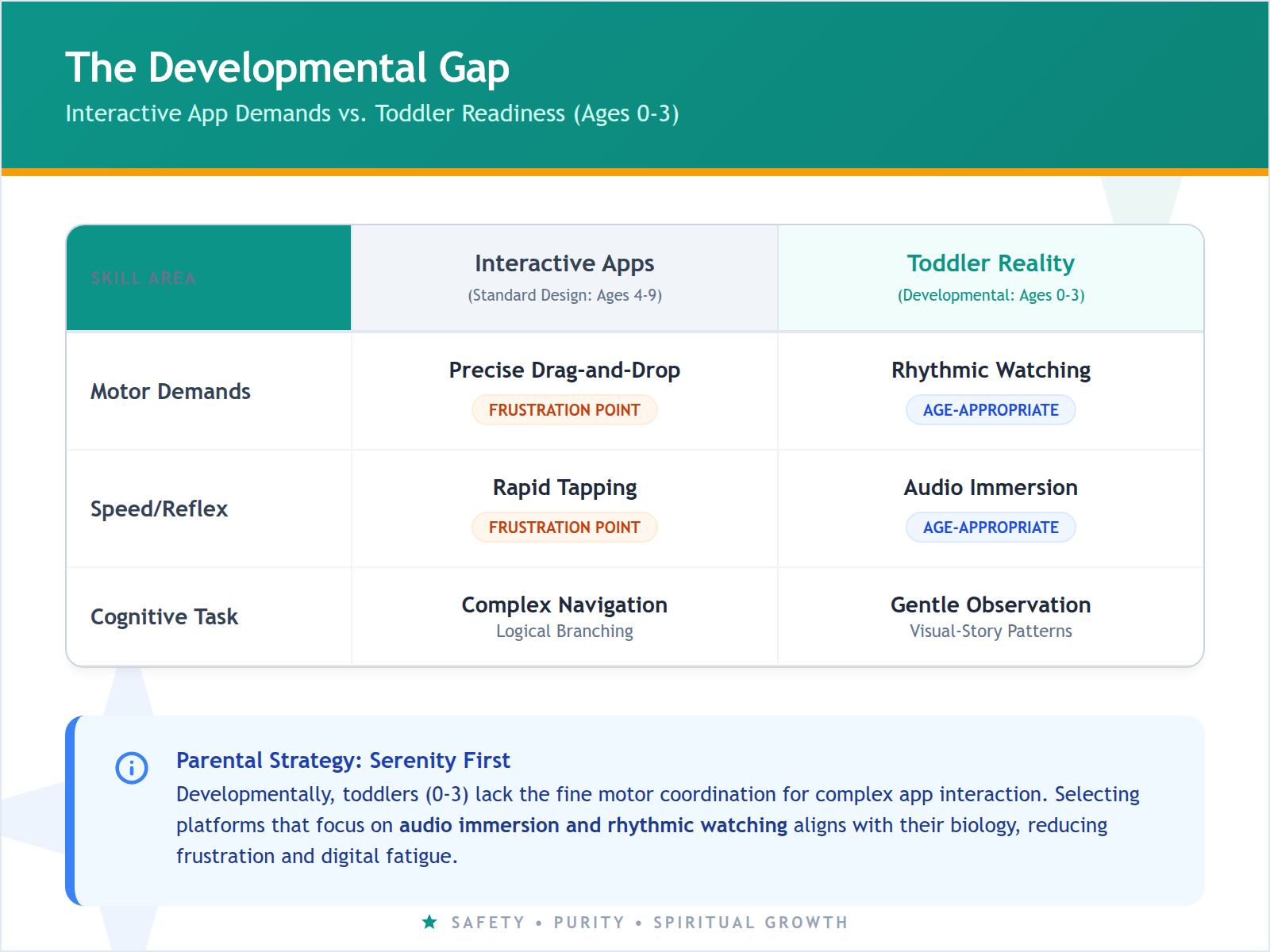
Many excellent platforms serve the global Ummah, but most are built for school-aged children. Apps like Deenee or Muslim Kids TV offer fantastic experiences for the 4–9 age bracket, but for a toddler, these "Learning Apps" often become "Frustration Engines." At this stage, your child is still refining motor skills, and complex "drag-and-drop" mechanics can lead to "tech-tantrums" instead of peaceful Tarbiyah.
Passive Immersion vs. Active Learning
We view islamic education for babies as a journey of environment, not a checklist of tasks. For the 0–3 demographic, learning is about absorption through rhythmic audio and gentle visuals. While "Live Classes" work wonders for older kids, toddlers benefit most from short, repetitive segments that emphasize the Makharij (phonetics) of Arabic through song.
This passive approach builds a phonetic foundation for the Quran long before a child is ready for formal literacy. By focusing on immersion, we respect the toddler's natural pace and protect their developing minds from cognitive strain.
Parenting Tip: Look for content that mirrors your child's physical rhythm. If an app requires precise tapping or fast reflexes, it is likely better suited for their older siblings.
Silencing the "UI Noise"
A significant challenge for parents is the "Age Gap" found in platforms catering to a broad 2–12 range. When a platform serves both a toddler and a pre-teen, the interface becomes cluttered with "UI Noise"—complex menus, reward badges, and high-energy animations. This clutter is neurologically overwhelming for a child in their first thousand days.
- Sensory Health: Overstimulating interfaces can lead to early desensitization and irritability.
- Spiritual Focus: A minimalist design keeps the heart focused on the beauty of the Sunnah.
- Ease of Use: A simplified "Walled Garden" allows your child to explore without the risk of accidental clicks.
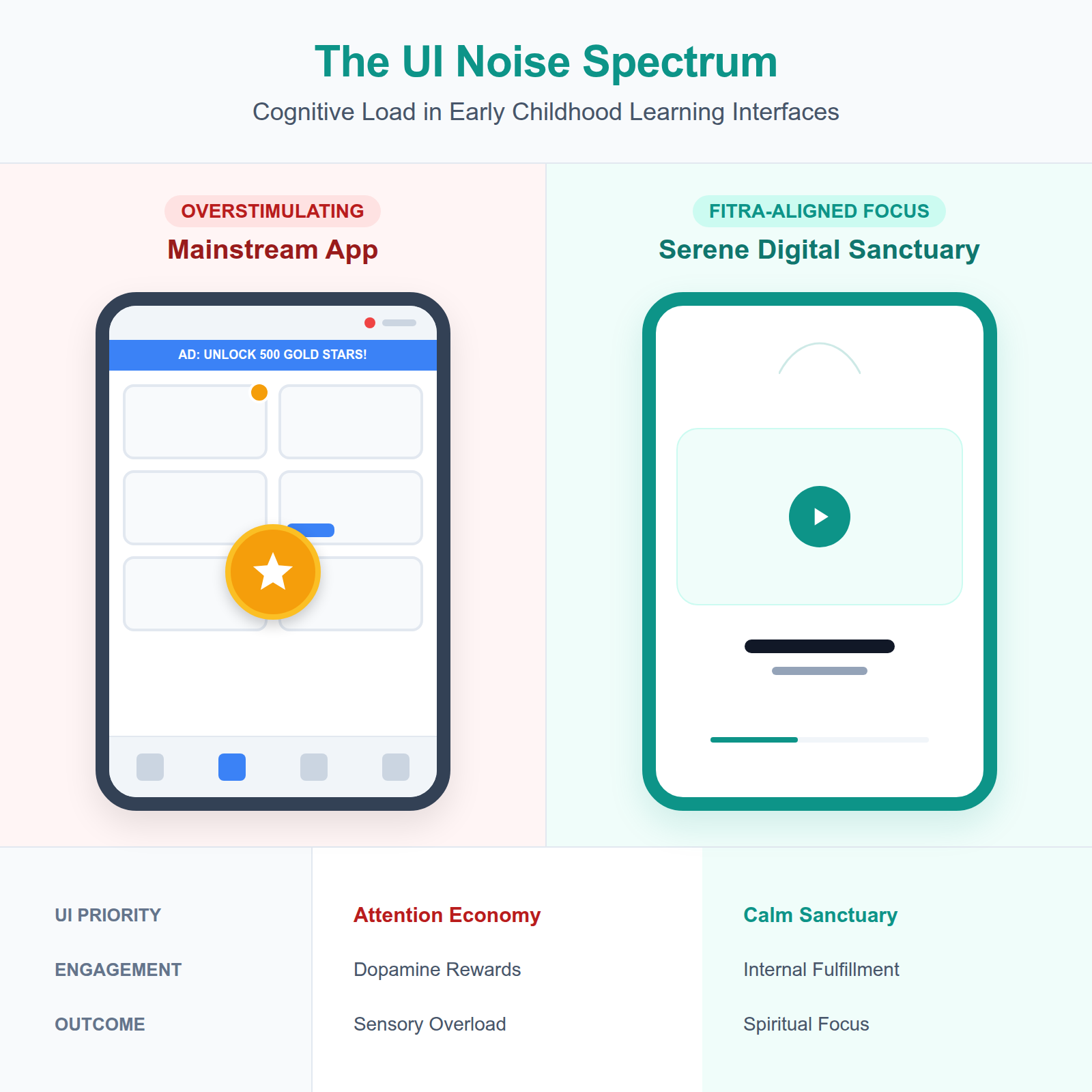
By moving away from multi-age "Digital Stadiums" toward a focused "Digital Sanctuary," you protect your child's Fitra. We aim to ensure their earliest digital memories are rooted in the serenity and beauty of their faith, providing you with true peace of mind.
The AI Advantage: Why Curation is the Ultimate Shield for Your Child's Fitra
While many platforms try to filter out the "bad," a true digital sanctuary is built on proactive protection. Instead of waiting for a "report" button to catch an error, an AI-guarded safe space ensures every second of footage honors your child’s Fitra from the very beginning.
Beyond the Stress of 'Wait and See'
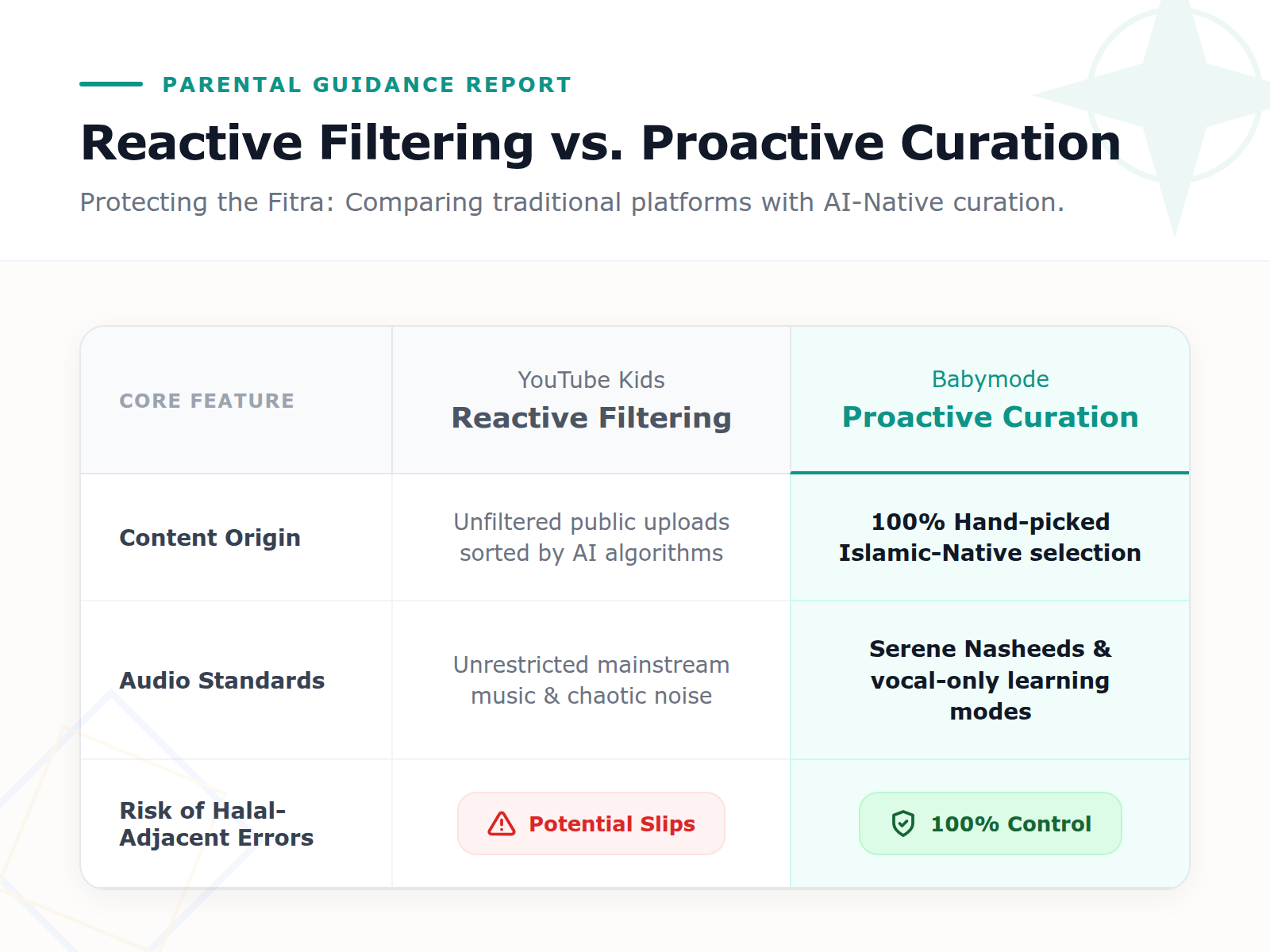
Most platforms rely on "reactive filtering," a system where content is only removed after it has already been flagged as harmful by other users. For a parent seeking halal screen time, this means your toddler is essentially a test subject for an algorithm's latest mistake.
By hosting only pre-vetted content, we shift the burden of safety from your shoulders to our platform’s architecture. This eliminates the risk of "human-upload errors," ensuring your child never encounters a jarring advertisement or a "recommended" video that contradicts your family's values.
Guarding Against 'Halal-Adjacent' Risks
Mainstream content often carries "halal-adjacent" risks—videos that seem safe but contain background music or subtle cues that clash with the Sunnah. Our curated approach ensures that every Nasheed is strictly vocal-only and every character's behavior aligns with Islamic Adab.
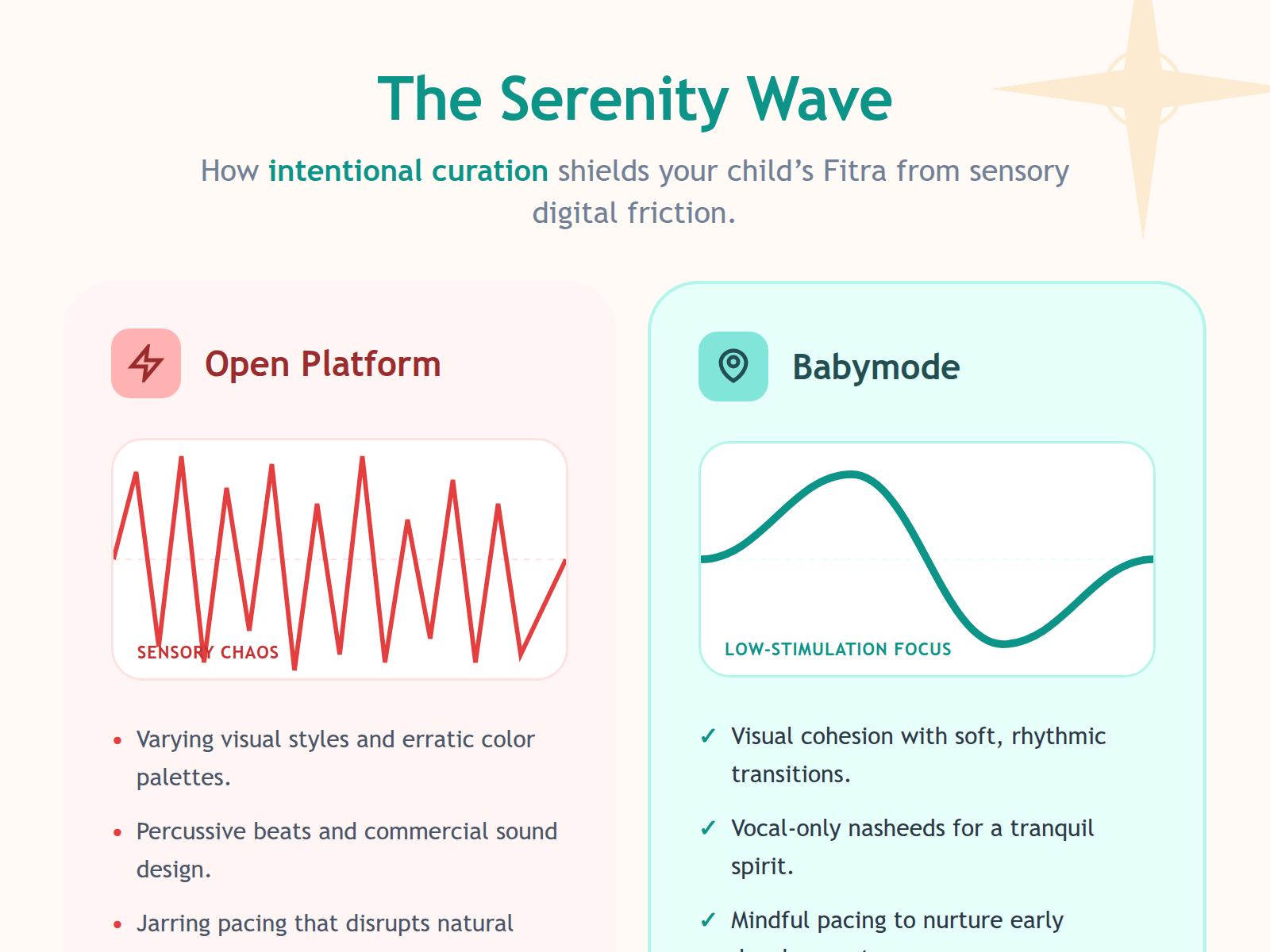
This precision also maintains a "Serene Aesthetic" that prevents sensory jarring for little ones. While open platforms feature wildly varying visual styles, our guarded environment provides a rhythmic, low-stimulation experience. This helps your toddler stay calm and focused on their digital Tarbiyah without the irritability of overstimulation.
Healing the 'Remote-Panic' Reflex
Every mindful parent knows the "remote-panic"—that sudden, anxious reflex to grab the device the moment a suspicious sound or fast-paced cut plays. This constant vigilance creates a "cognitive tax" that makes screen time more stressful than restorative for the caregiver.
An AI-guarded space acts as a digital Wali (guardian), removing the possibility of harmful content before it ever reaches the screen. This gives you the genuine peace of mind to step away, knowing your child is in a sanctuary that respects their developmental needs and their spiritual foundation.
From Screen to Soul: Integrating Digital Tools into Daily Tarbiyah
We believe a digital sanctuary is most effective when it serves as a "spiritual prompt" for your home. By bridging the gap between the screen and your daily life, you can transform passive viewing into active Tarbiyah.
Bridging the Gap with the Hybrid Tarbiyah Loop
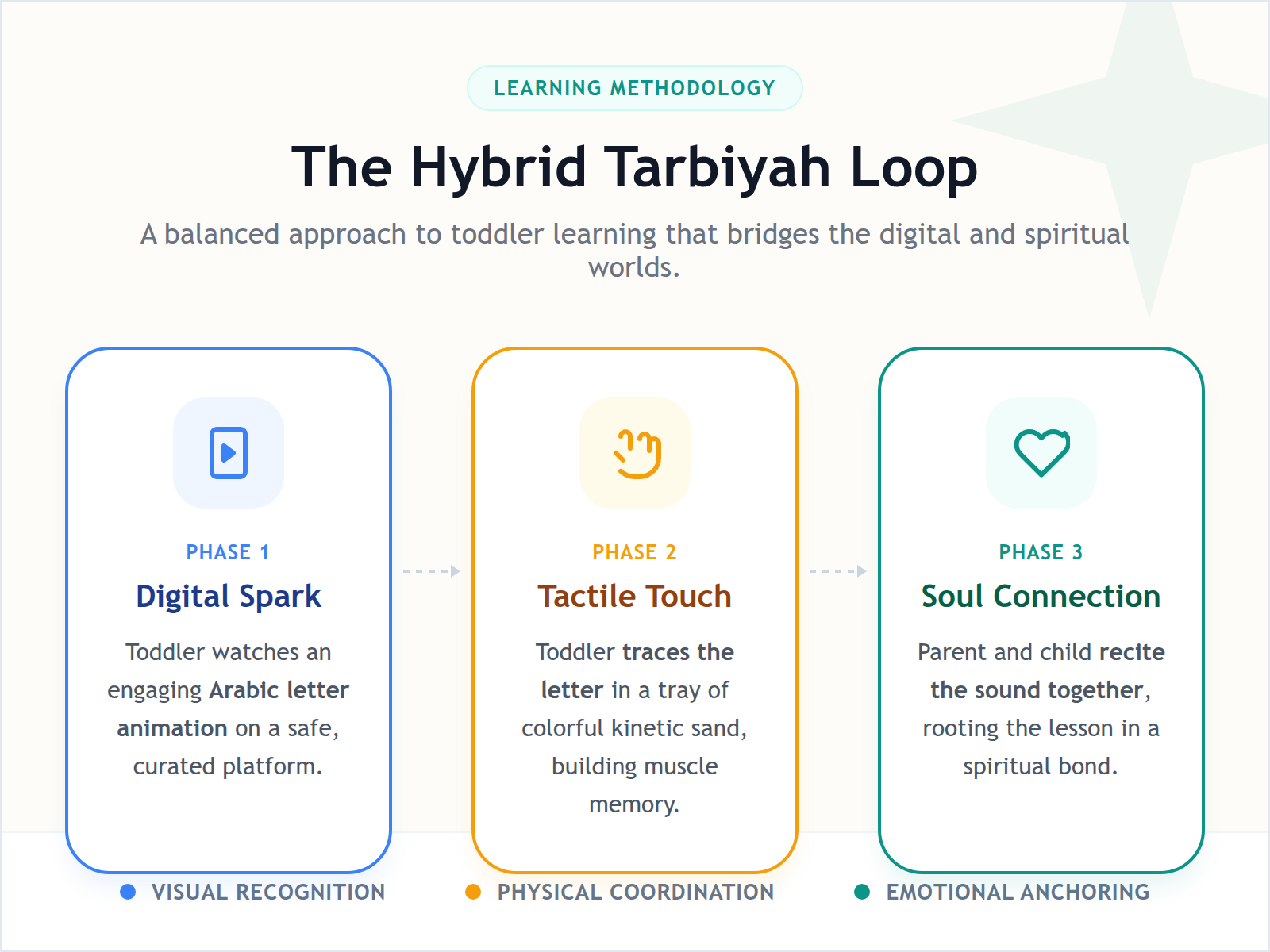
We call this the Hybrid Tarbiyah Loop: a simple way to bring screen lessons into the physical world. When your little one watches an animation of the letter 'Alif', bring out a tray of sand or play-dough to trace the shape together.
This multimodal play reinforces their phonetic retention and connects digital moments to their natural Fitra. You can even use physical Arabic flashcards to play a "matching game" with the characters on the screen, making the search for knowledge a joyful, tactile experience.
Anchoring Routines with Daily Duas
Integrating daily duas for muslim toddlers into your family rhythm helps minimize "tech-tantrums" during transitions. A gentle video featuring a mealtime dua can be the perfect cue to wash hands and gather at the table.
These daily duas for muslim toddlers become spiritual anchors that weave the beauty of the Sunnah into their morning and evening habits. By using these rhythmic reminders, you help your child associate faith with the comfort and security of their home routine.
Maintaining Your Halal Bubble on the Go
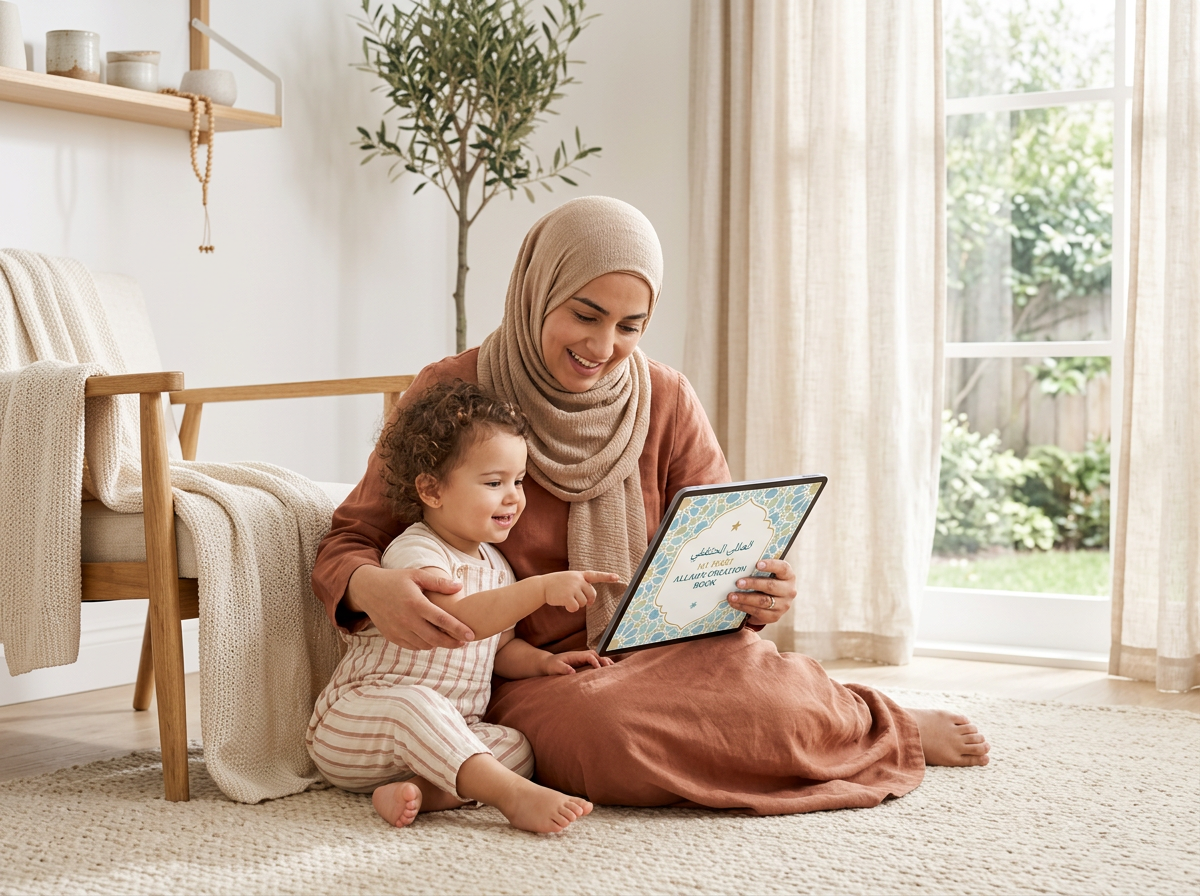
Consistency is the heartbeat of effective parenting, but travel often disrupts our carefully constructed environments. Offline viewing allows you to maintain your "halal bubble" in cars or waiting rooms without relying on high-energy, unfiltered clips.
By downloading scholar-verified content, you protect your child’s Fitra from sensory overload during high-stress moments. Your digital sanctuary travels with you, ensuring their environment remains serene and values-aligned wherever the journey takes the Ummah.
An Amanah: Your Digital Evaluation Checklist
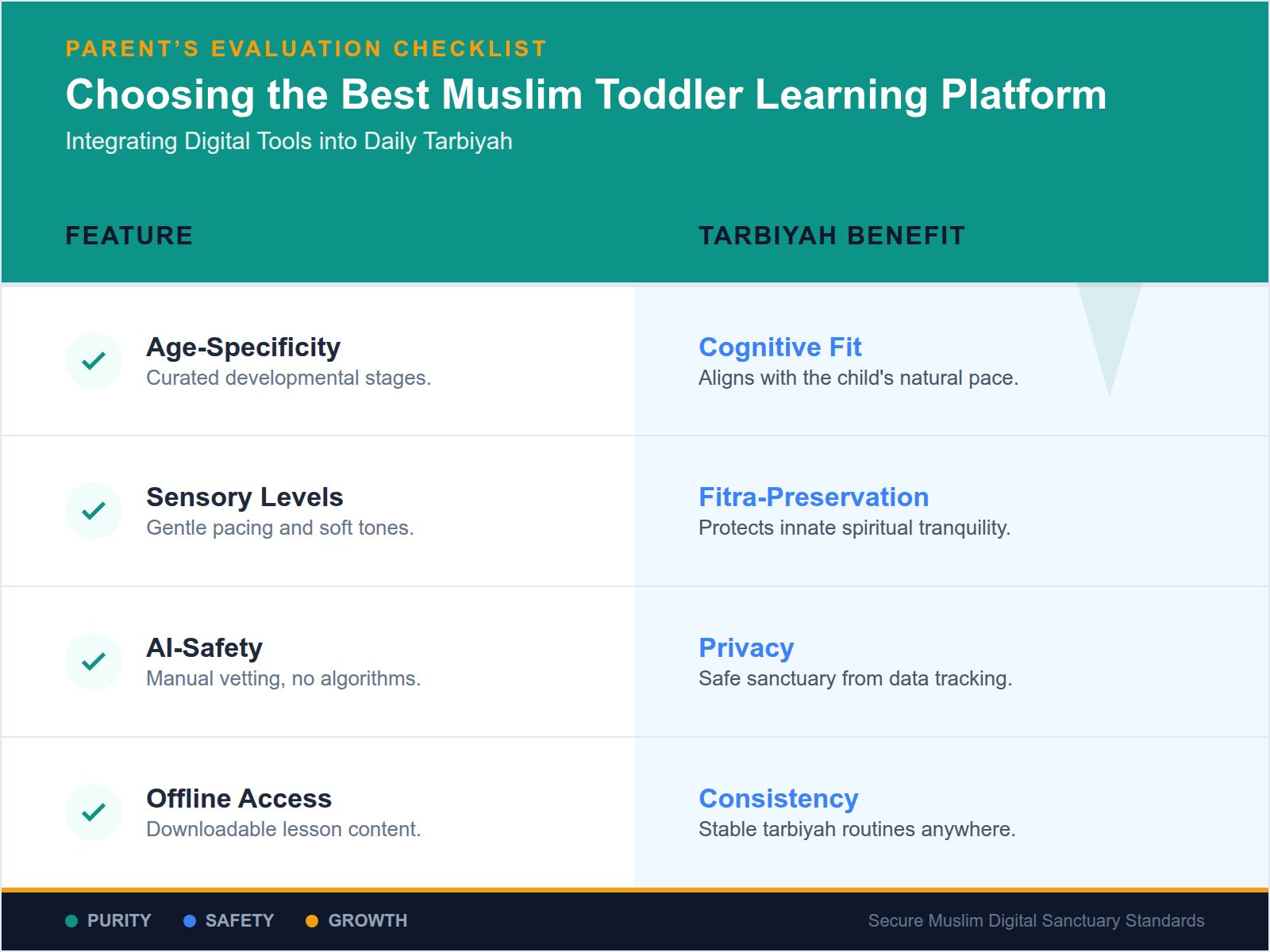
Choosing the right digital tool is an Amanah that requires a parent's discernment. Many apps are too complex for a two-year-old’s motor skills, leading to frustration rather than learning.
Use this checklist to ensure your chosen platform respects your child’s neurological needs and spiritual growth. Focus on tools that offer a minimalist, calm interface where the beauty of Islam remains the primary focus.
Conclusion
Choosing the right muslim toddler learning platform is more than a convenience; it is a sacred act of amanah. By shifting from the overstimulating chaos of mainstream media to a serene digital sanctuary, you replace screen-time anxiety with spiritual peace of mind.
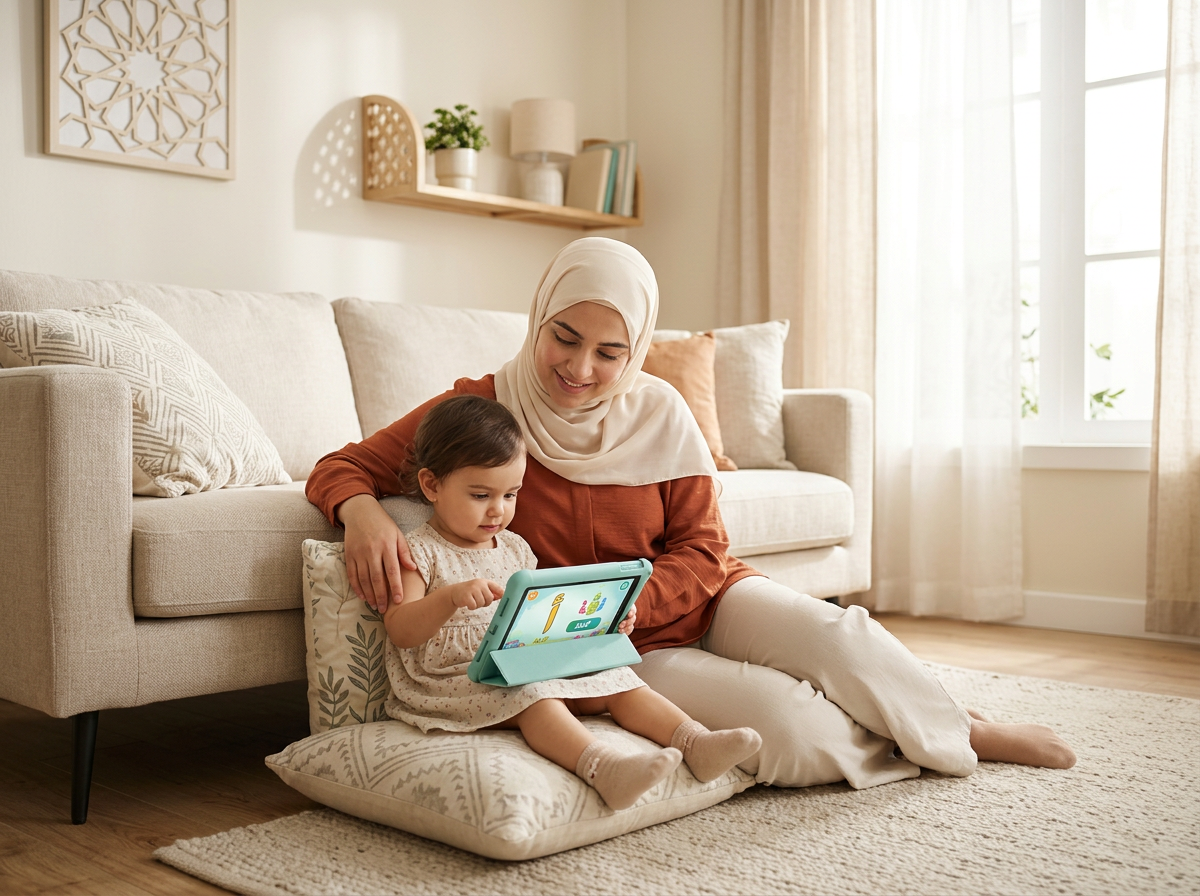
Our toddlers deserve a guarded environment that honors their fitra and respects their delicate sensory needs. As you navigate this digital journey, prioritize quality over quantity. Seek out a sanctuary that aligns with the Sunnah, ensuring your child’s screen time remains a tranquil, faith-filled extension of your home.
Frequently Asked Questions
What is the recommended screen time for a 2-year-old?
Limit high-quality content to one hour daily. Short, purposeful sessions on a muslim toddler learning platform reinforce Sunnah habits and daily duas without overstimulating your child’s developing mind.
Is AI safer than YouTube Kids?
Yes. Mainstream filters are reactive, but AI curation is proactive. It mathematically eliminates inappropriate human uploads and jarring advertisements, shielding your child’s fitra from the "halal-adjacent" risks common in open algorithms.
Can I use this platform offline for travel?
Yes. Offline downloads allow you to preserve your child’s spiritual routine and "Digital Sanctuary" during the chaos of travel, ensuring they remain calm and centered anywhere.
Why is low stimulation vital for Islamic education?
Toddlers have delicate nervous systems. Low-stimulation content prevents the irritability caused by fast-paced media, allowing them to absorb Arabic phonetics and Tarbiyah in a peaceful, focused state.
What if I don't speak Arabic?
You don’t need to be fluent! Our muslim toddler learning platform uses phonetic repetition and gentle Nasheeds, making Arabic acquisition a natural, shared journey for the whole family.