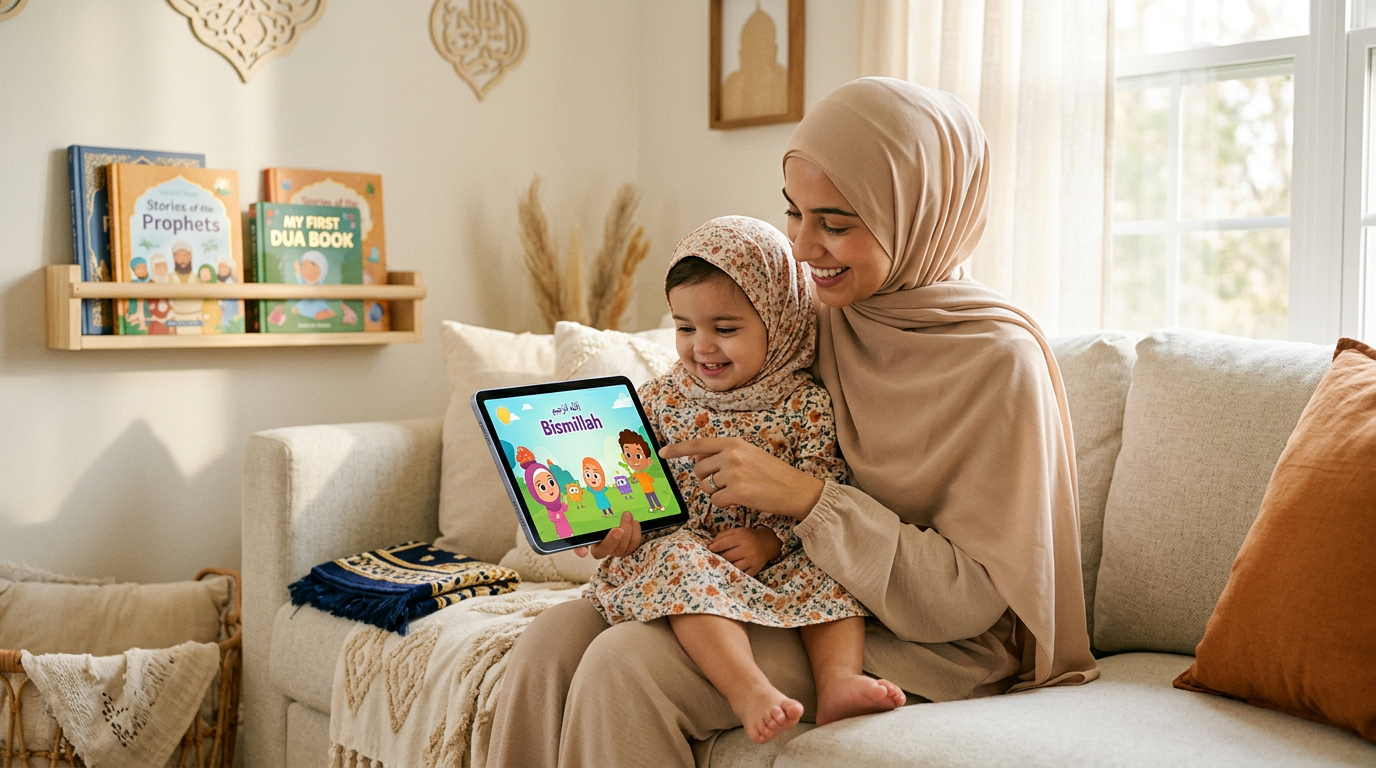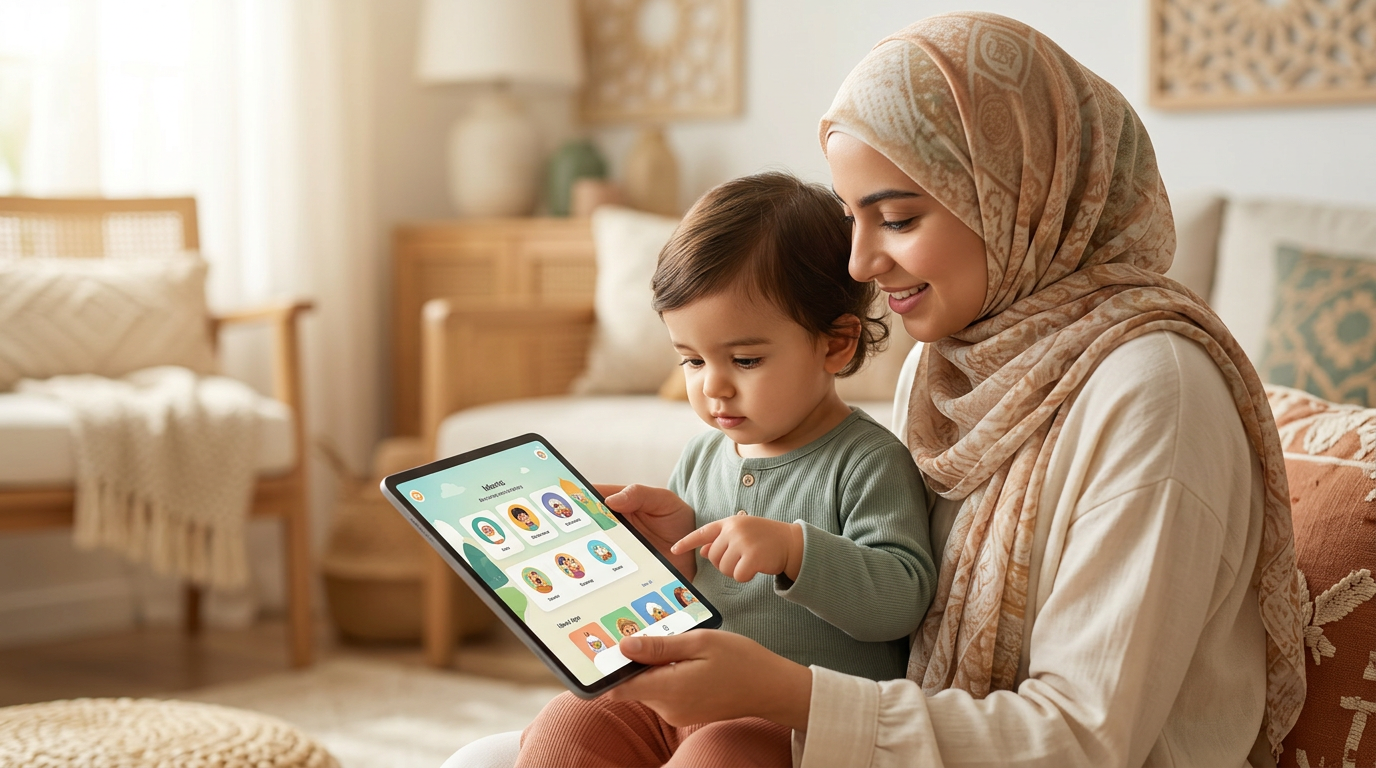
One minute, your toddler is swaying to a gentle 'Bismillah' rhyme; the next, a jarring toy-unboxing ad or a high-velocity, overstimulating cartoon has hijacked the screen—and their focus. For the modern Muslim parent, screen time often feels like a weary compromise between a moment of much-needed peace and the spiritual safety of their child's developing mind.
This tension represents the "Digital Tarbiyah Dilemma." We want to utilize technology as a beneficial tool for faith-based learning, yet we find ourselves navigating a digital "wild west" where unpredictable algorithms often threaten the very values of modesty and focus we strive to instill at home.

Effective digital tarbiyah for kids is more than just blocking "bad" content or setting a passive timer; it is the proactive cultivation of a child’s natural Islamic disposition—their fitra—within the digital realm. It requires an intentional environment where technology acts as a Muhafiz (protector), ensuring every digital interaction remains spiritually grounded and developmentally appropriate.
We believe that protecting this innocence requires moving beyond passive consumption toward a controlled "Digital Fitra" ecosystem. By prioritizing AI-curated, ad-free environments, parents can finally transform screen time from a source of anxiety into a restorative sanctuary that reinforces daily spiritual habits and the principle of Wasatiyyah (moderation).
The Philosophy of Digital Fitra: Beyond the 'Digital Babysitter'
The first 1,000 days of life represent a sacred window where your child’s Fitra—their innate, pristine inclination toward goodness—is most vibrant and absorbent. During this stage of rapid neurological and spiritual growth, every sound, image, and rhythm leaves a lasting impression on their delicate heart. We believe a toddler’s digital world shouldn't be a source of chaos, but a seamless extension of your home’s serenity and values.
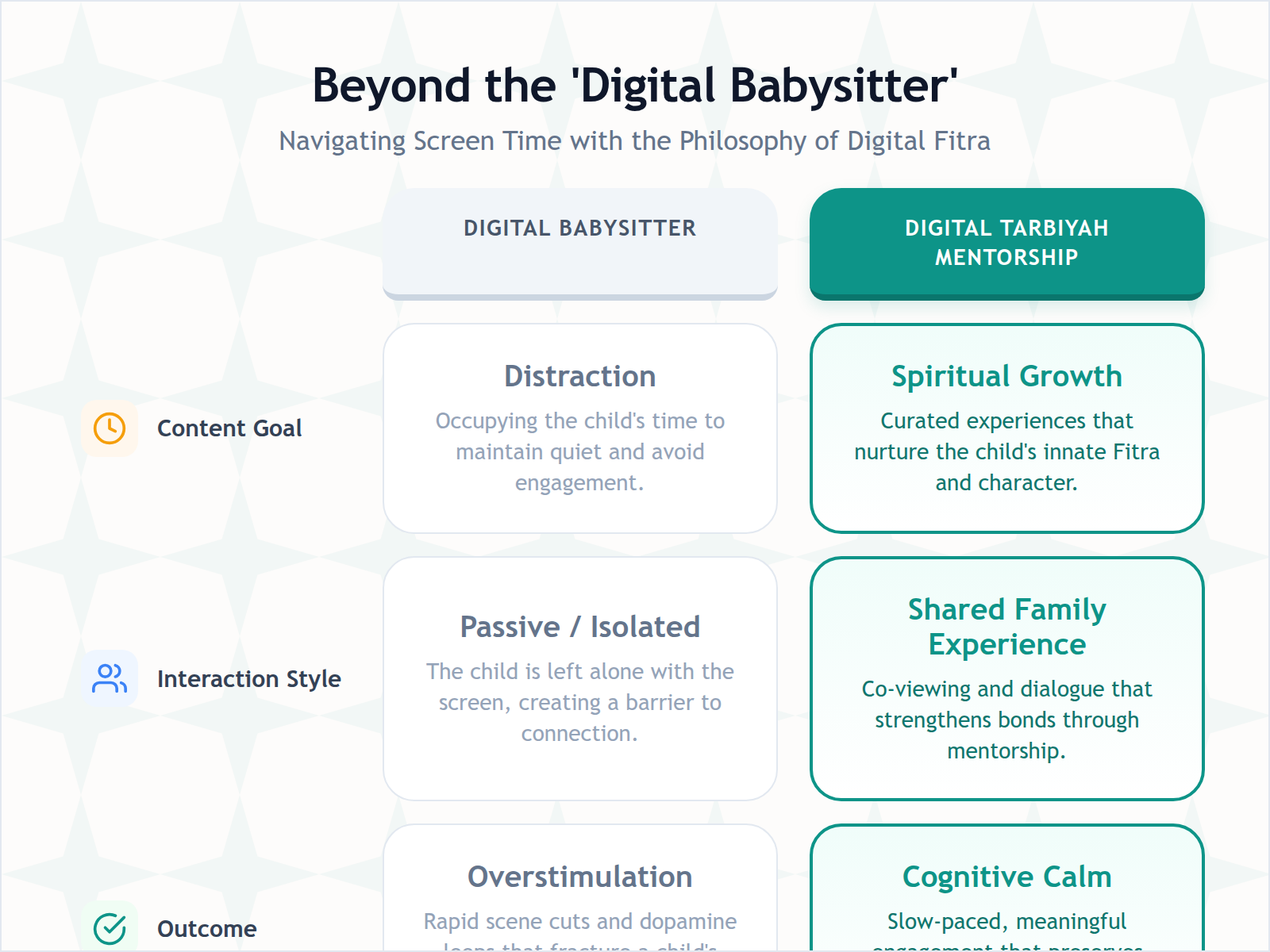
Just as you carefully curate the wholesome food in your pantry, the pixels on your child’s screen must align with the spiritual standards of the Ummah. Guarding this Amanah (trust) involves more than just avoidance; it requires protecting their spiritual innocence through intentional, faith-based content from the very first interaction. We're here to help you move away from the "digital babysitter" model toward a more purposeful, guided experience.
Nurturing a Peaceful Pace
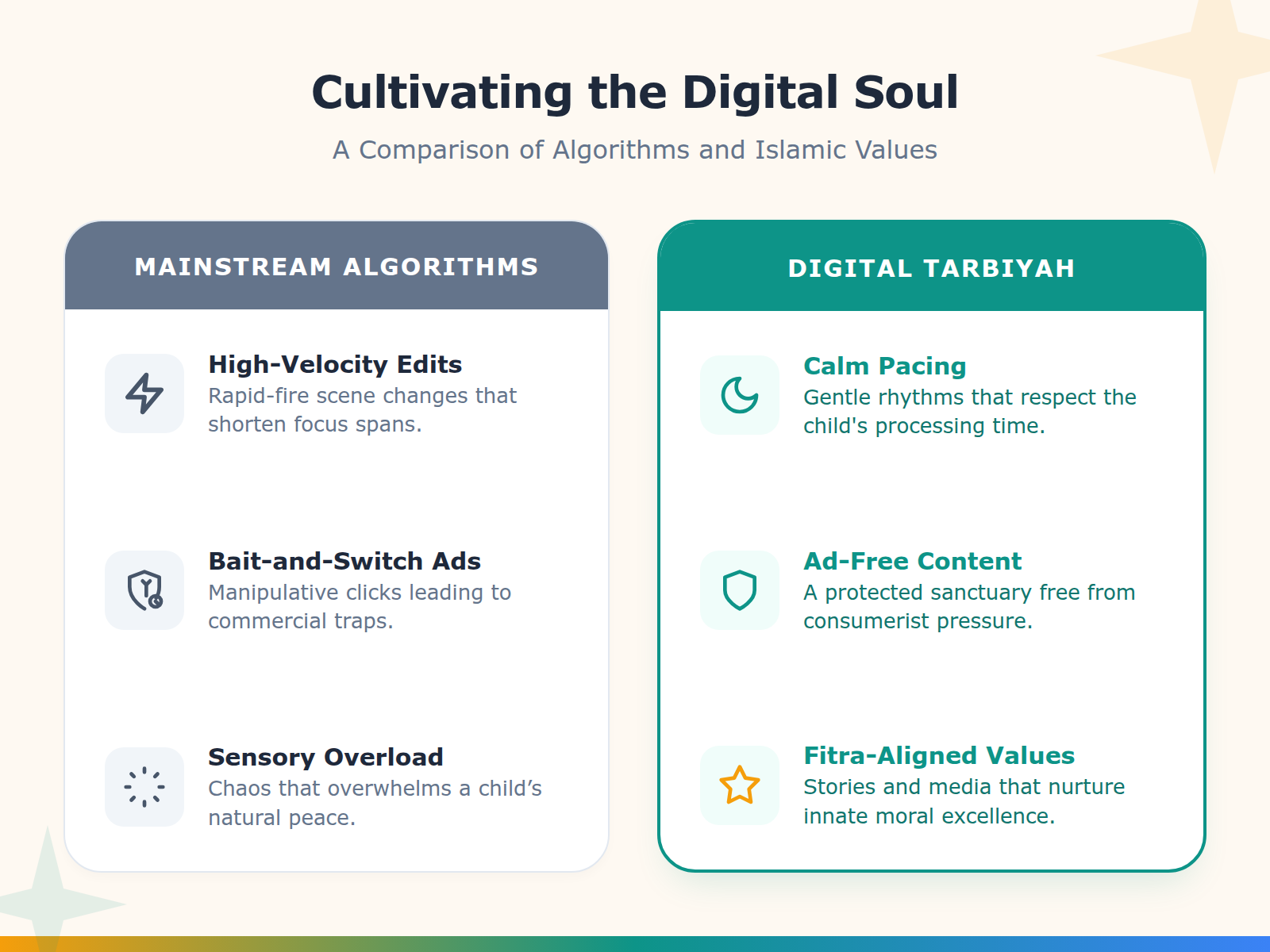
A "Digital Fitra" approach means choosing content that mirrors the purposeful, rhythmic pace of a child’s natural world. High-velocity, high-sensory, ad-driven videos often lead to overstimulation and the dreaded "screen-time tantrums" that disrupt your home’s peaceful atmosphere. By contrast, we view technology as a Muhafiz (protector), ensuring that every digital interaction remains grounded in faith and developmentally appropriate for young minds.

When we prioritize slow-paced, meaningful storytelling, we protect the child's nervous system and their ability to focus. This intentionality helps prevent the cognitive overload common on mainstream platforms and the dreaded "screen-time tantrums" that disrupt your home’s peaceful atmosphere. It’s about creating a digital sanctuary that respects the silence and wonder of early childhood.
Mentorship Over Distraction
Effective digital tarbiyah for kids transforms screen time into an intentional mentorship tool rather than a mere distraction to keep them busy. Instead of getting "lost" in a chaotic, unpredictable algorithm, your child is guided through a curated ecosystem that reinforces daily habits like saying Bismillah before starting a task. This shift allows us to proactively build a "Digital Musalla" for the mind, where technology serves a higher purpose.
When technology serves as a bridge to the Sunnah, it becomes a tactile extension of your family’s faith-based lifestyle rather than a competitor to it. By prioritizing Wasatiyyah (moderation), you teach your child from infancy that digital tools can be a consistent source of Barakah. We aim to replace the "scroll-and-consume" habit with a "learn-and-grow" mindset that honors our Islamic traditions.
Laying Foundations of Deen
The ages 0–3 are critical for establishing "Deen time" associations while your child’s brain is at its most adaptable and impressionable. Establishing these positive habits early protects their Fitra from the "wild west" of human-uploaded content found elsewhere. We believe that what a child loves in their early years, they will carry with them as they grow into more complex digital spaces.
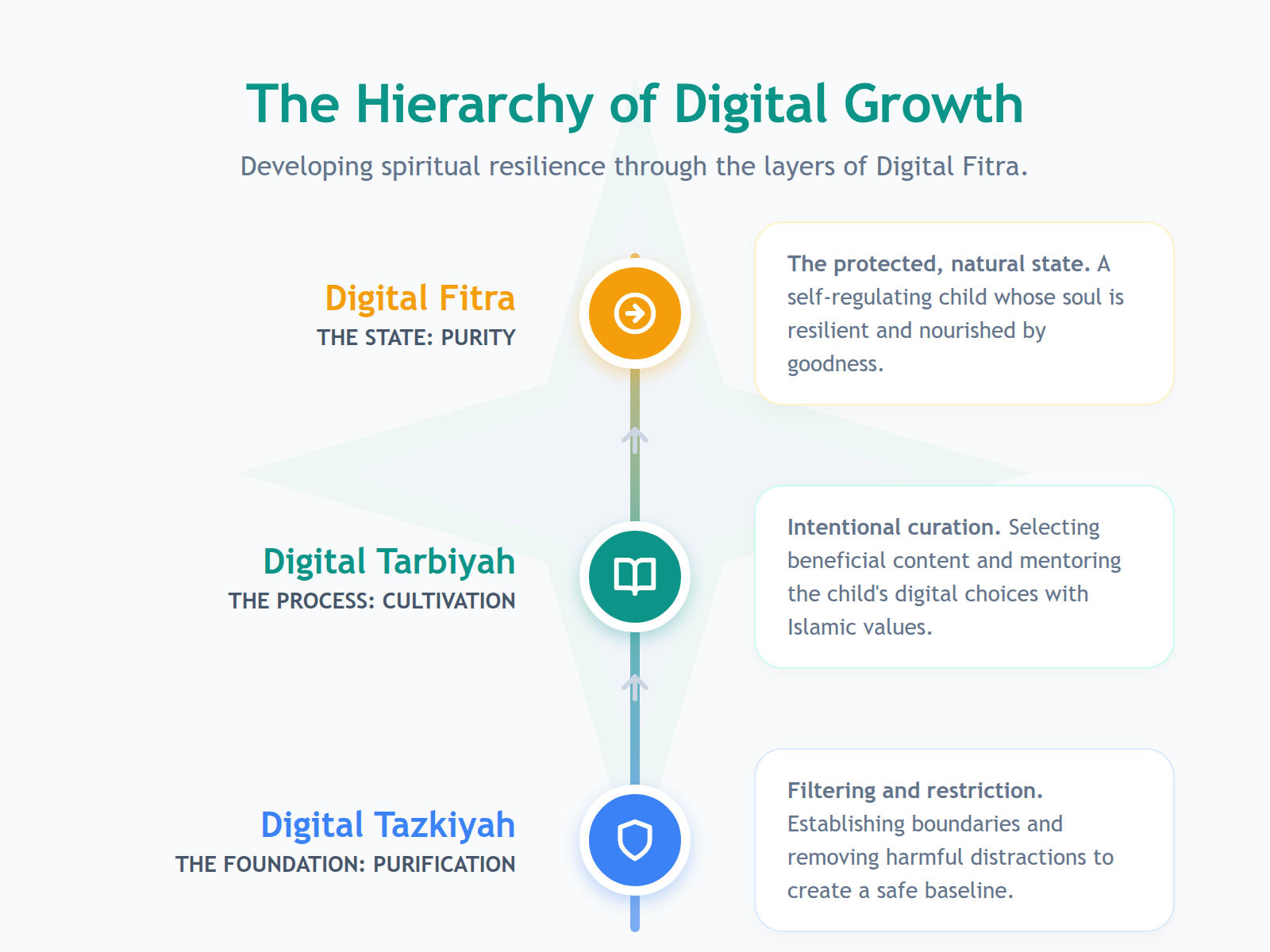
When your toddler associates their device with beautiful Nasheeds, Quranic stories, and gentle Arabic lessons, you are laying the foundation for a confident, grounded Islamic identity. This proactive approach ensures that technology supports your Tarbiyah goals rather than undermining them. By choosing a guarded environment, you are gifting your child a digital beginning that is as pure as their potential.
The Algorithmic Threat: Why Mainstream Platforms Fail the Ummah
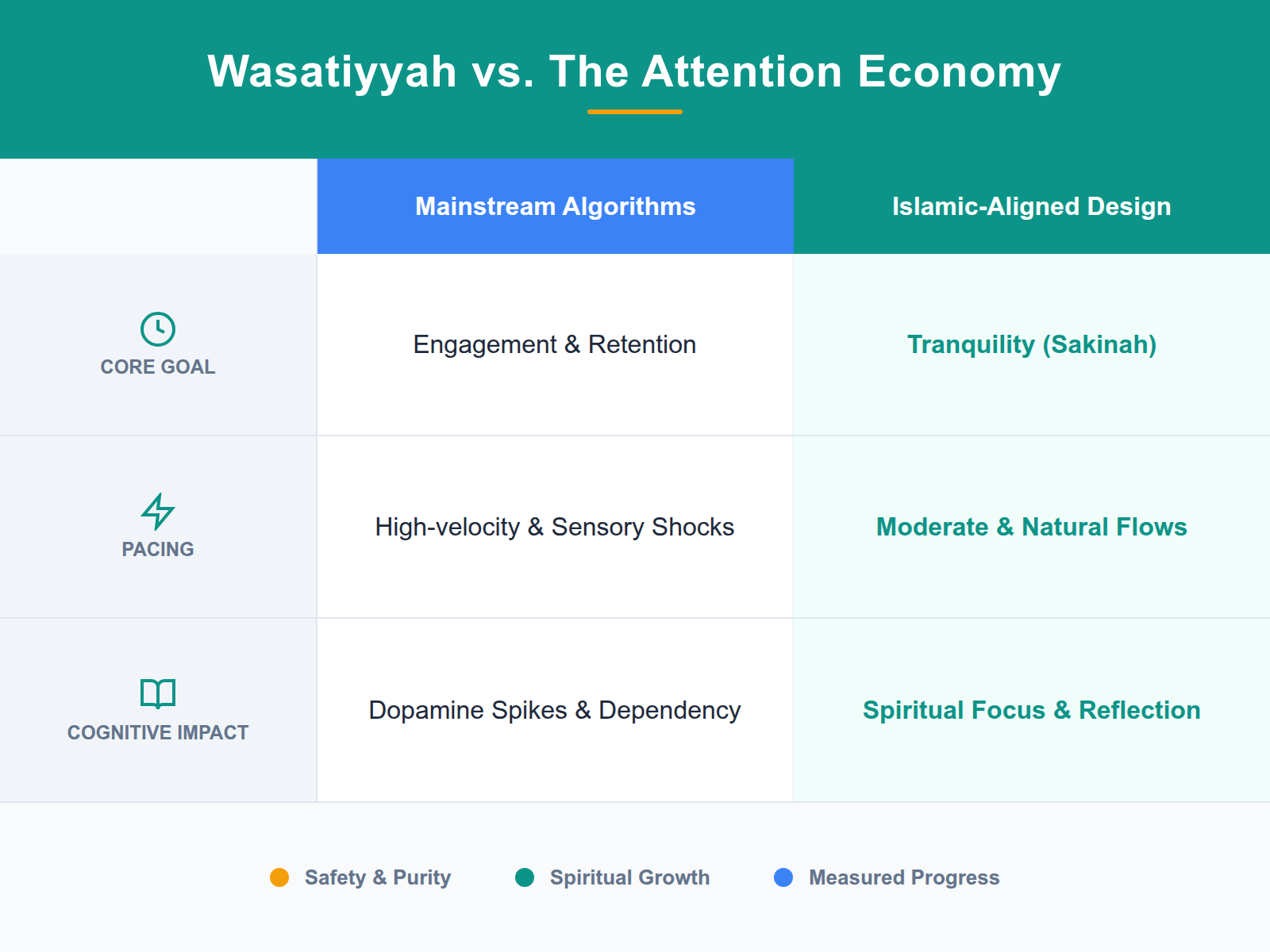
The "Attention Economy" isn't just a business model; it’s a direct challenge to the Wasatiyyah (moderation) we strive for at home. While we want our children to feel Sakinah (tranquility), mainstream platforms are engineered for high-velocity engagement. This overstimulation leaves little room for the quiet, rhythmic reflection essential for early Tarbiyah.
Sensory Overstimulation and the ‘Bottomless Bowl’
Mainstream platforms use a "bottomless bowl" design to keep your little one hooked. This rapid-fire pacing triggers dopamine spikes that often lead to emotional dysregulation and "screen-time tantrums." We've all seen the distress that occurs when the "infinite scroll" is finally interrupted.
Research from the American Academy of Pediatrics suggests that high-velocity media with frequent scene changes can overwhelm a toddler's cognitive limits. This digital velocity trains young minds to crave instant gratification rather than the steady, intentional rhythm of the Sunnah. Reclaiming your home's peace through a faith-based environment is the first step in reclaiming your home's peace.
The sensory impact of mainstream platforms often includes:
* Rapid scene transitions that fragment a child's natural attention span.
* Autoplay loops that remove the natural "stopping points" essential for discipline.
* Aggressive audio-visuals that replace Khushu (focus) with sensory stress.
The Dangers of the ‘Algorithmic Pivot’
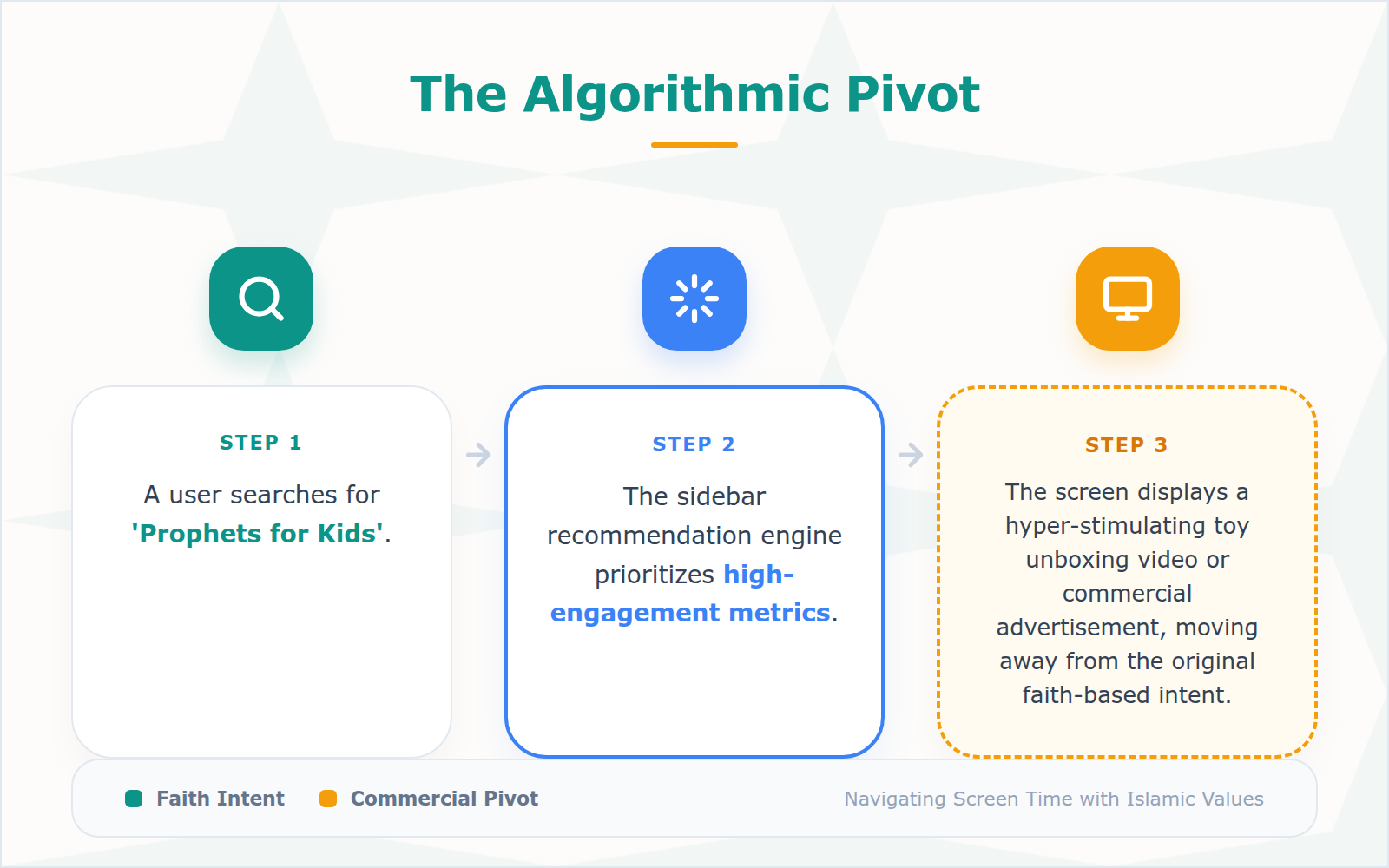
Even a search for "Prophet stories" can lead to a gradual drift toward unrelated, low-value content on unfiltered sites. Because engagement metrics drive these systems, a wholesome video often slides into toy unboxings or content lacking Haya (modesty). This shift happens quietly, pulling your child away from the spiritual focus you intended.
These pivots act as a subtle form of secular indoctrination, teaching toddlers to value materialism over Shukr (gratitude). The unregulated digital sprawl of human-uploaded content makes it nearly impossible to maintain a truly guarded space for the Fitra. You shouldn't have to worry about what the next video might teach your child.
This leaves parents in a state of constant hyper-vigilance, unable to trust the screen as a safe companion. Your child deserves a digital path that stays on course with your family's core values. By choosing content-aware filtering, we can ensure every minute spent online is a minute spent in growth.
Parenting Tip: When using mainstream platforms, always disable the "Autoplay" function. This small step helps prevent the platform from veering into unapproved content while you are attending to other household tasks.
A Faith-Aligned Sanctuary
To protect the peace of your home, many families are choosing YouTube alternatives for Muslim kids that offer an AI-guarded sanctuary. Opting for platforms that value Barakah (blessing) over clicks acts as a "Spiritual Hijab" for your child’s digital life. This proactive shift transforms screen time into a curated "Deen time" ecosystem.
When technology respects your child's developmental pace, it stops being a distraction and becomes a tool for the Ummah. You’ll find that when digital boundaries are respected, screen time finally reinforces the values you teach every day. This creates a bridge between modern learning and traditional parenting.

We are here to help you create a space where technology and faith live in harmony. By prioritizing "Pure Screen Time," you are guarding your child's innocence while preparing them for a tech-savvy future. It’s about giving them a digital beginning that is as pure as their potential.
The 3 Pillars of Digital Tarbiyah: Content, Context, and Character
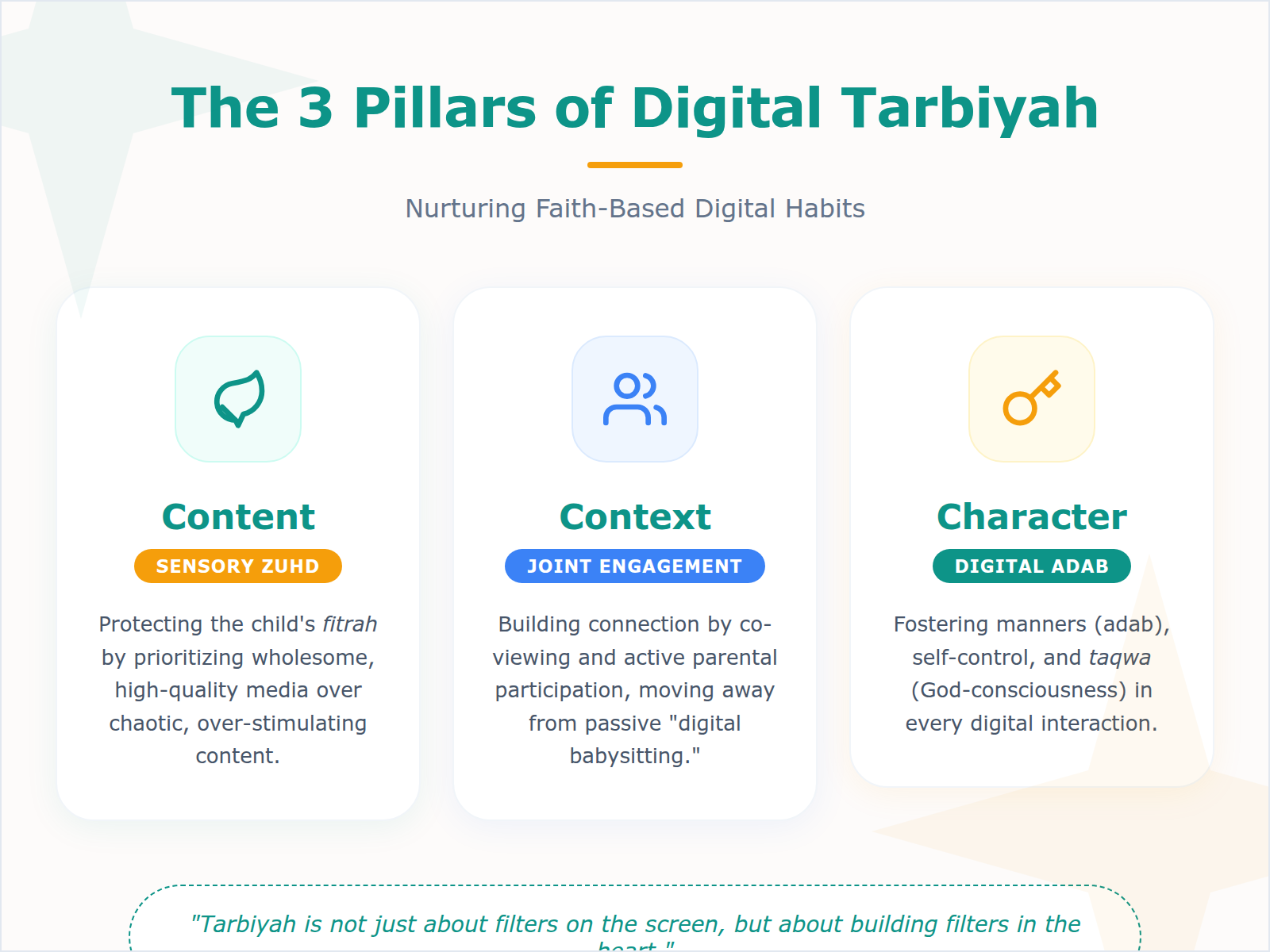
The first pillar of this islamic parenting toddler guide is content curation through Sensory Zuhd. This principle prioritizes "Halal-aligned" media—such as instrument-free Nasheeds—that intentionally avoids the high-velocity pacing found in mainstream apps. By reducing sensory noise, we protect your child’s Fitra from excessive cognitive load, which pediatric research suggests can overwhelm early executive function. This mindful approach ensures that "Pure Screen Time" remains a tranquil experience rather than a source of overstimulation.
Joint Engagement Tarbiyah: Shaping Context
Building on our earlier discussion of mentorship over distraction, the second pillar transforms the device into a shared spiritual springboard. Instead of leaving your toddler with a passive "digital babysitter," you can use screen time to model real-world faith by pausing to repeat a Dua or discuss a Quranic story together. These shared moments bridge the gap between digital lessons and daily life, turning potential isolation into a partnership for your family’s Barakah.

Digital Adab: Building Character
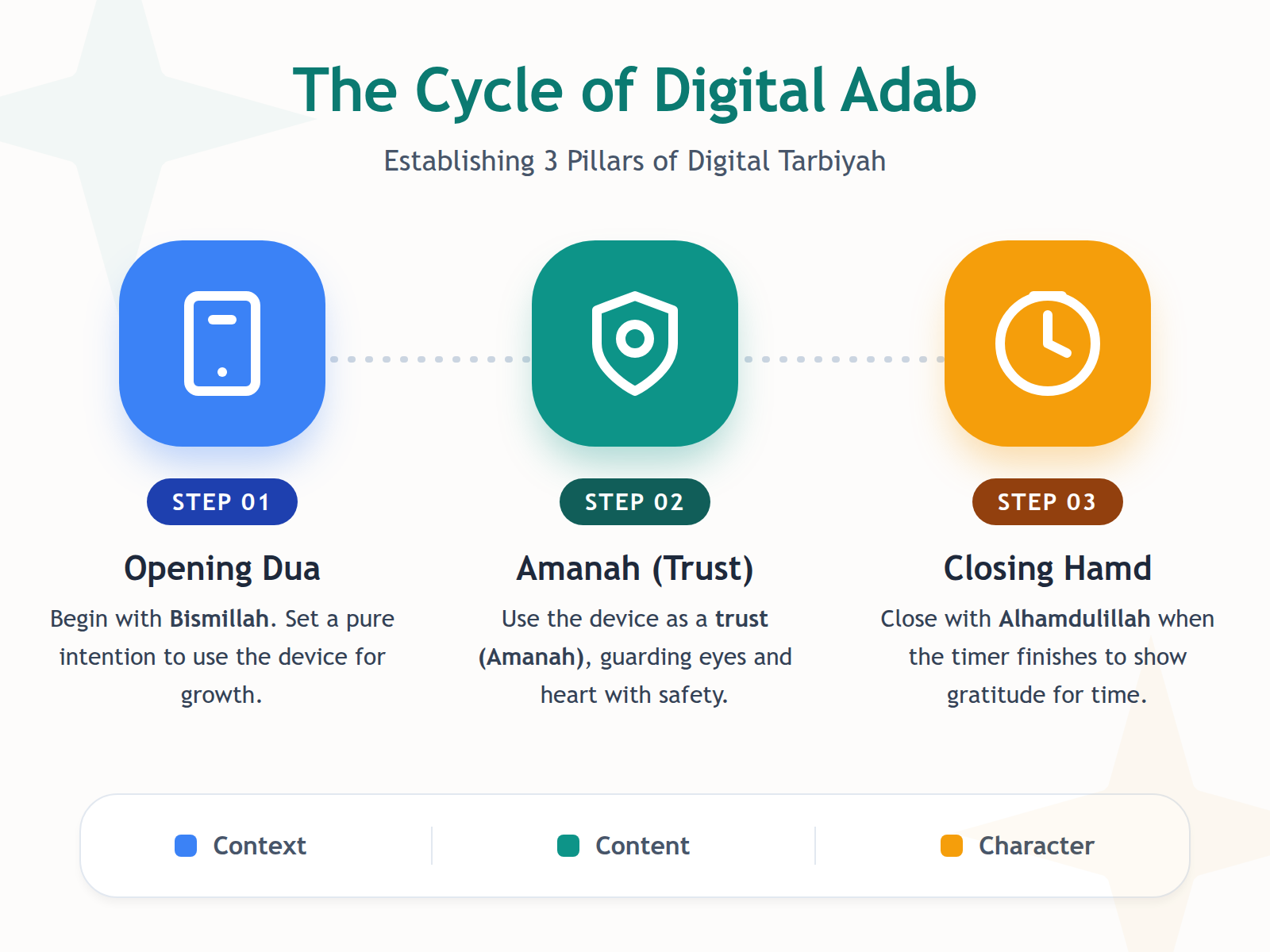
The third pillar focuses on Digital Adab, teaching your toddler that technology is an Amanah (trust) to be handled with care. By framing the tablet as a borrowed blessing, you can instill the value of Wasatiyyah (moderation) from as early as age two. This proactive boundaries-setting helps prevent a loss of Sabr (patience) when it is time for your little one to transition away from the screen.
Simple rituals help your child internalize these spiritual boundaries:
- Greeting with Peace: Start each session with a warm As-Salamu Alaykum to acknowledge the digital space.
- Witnessing Wonder: Encourage whispering SubhanAllah when seeing the beauty of Allah’s creation in a video.
- Honoring the Trust: Return the device to its "home" with a sense of completion and a heartfelt Alhamdulillah.
Parenting Tip: Create a physical "resting place" for devices, like a specific basket or shelf. This visual cue helps toddlers understand that the teaching your toddler that technology is an Amanah has a clear beginning and end, reducing instances of emotional dysregulation.
Identity Anchoring through Language
To complete this framework, we emphasize Identity Anchoring through bilingual immersion. Integrating Arabic keywords like Shukr (gratitude) or Razzaq (Provider) within English narratives ensures your child’s developing vocabulary is rooted in their Islamic identity. This approach treats the digital space as a "Virtual Madrasah," where technology fosters a natural, joyful connection to the language of the Quran and the wider Ummah.
From Screen Time to Deen Time: Integrating Daily Spiritual Habits
Integrating digital tools into your daily Tarbiyah transforms the screen from a distraction into a partner in your family’s spiritual journey. By aligning these interactions with the Sunnah, you'll anchor your child’s Fitra in the constant remembrance of Allah. This approach ensures every digital touchpoint serves as a reminder of Barakah rather than a source of sensory stress.
Aural Anchoring for Peaceful Transitions
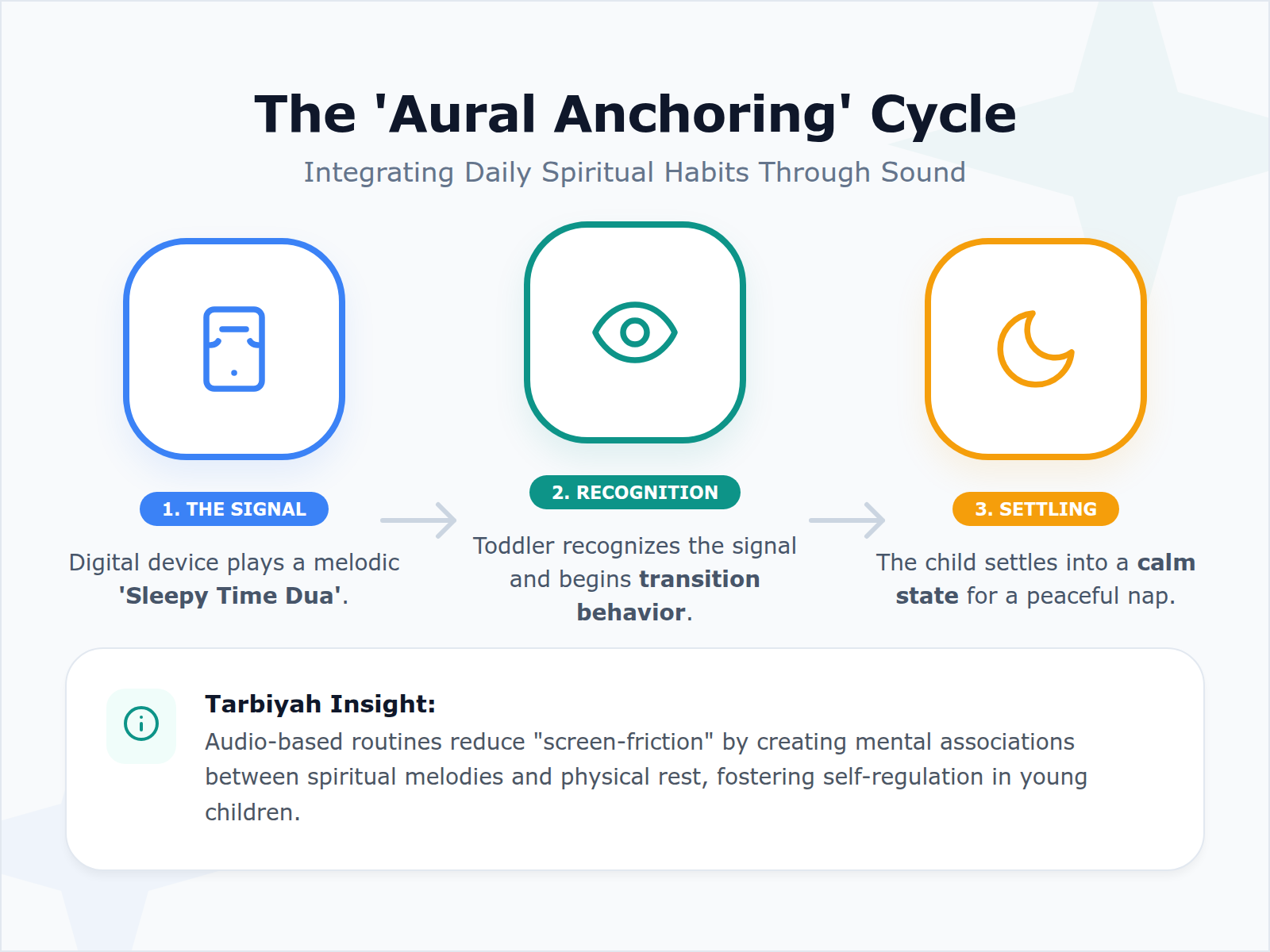
Toddlers thrive on predictability, and "Aural Anchoring" is a powerful technique to manage daily shifts in energy. By using melodic daily duas for muslim toddlers—like a rhythmic "Bismillah" song—you create a cognitive bridge between high-energy play and quiet rest. These spiritual cues help regulate your child's nervous system, allowing them to transition into a calm state with ease.
Bridging the Screen and the Real World
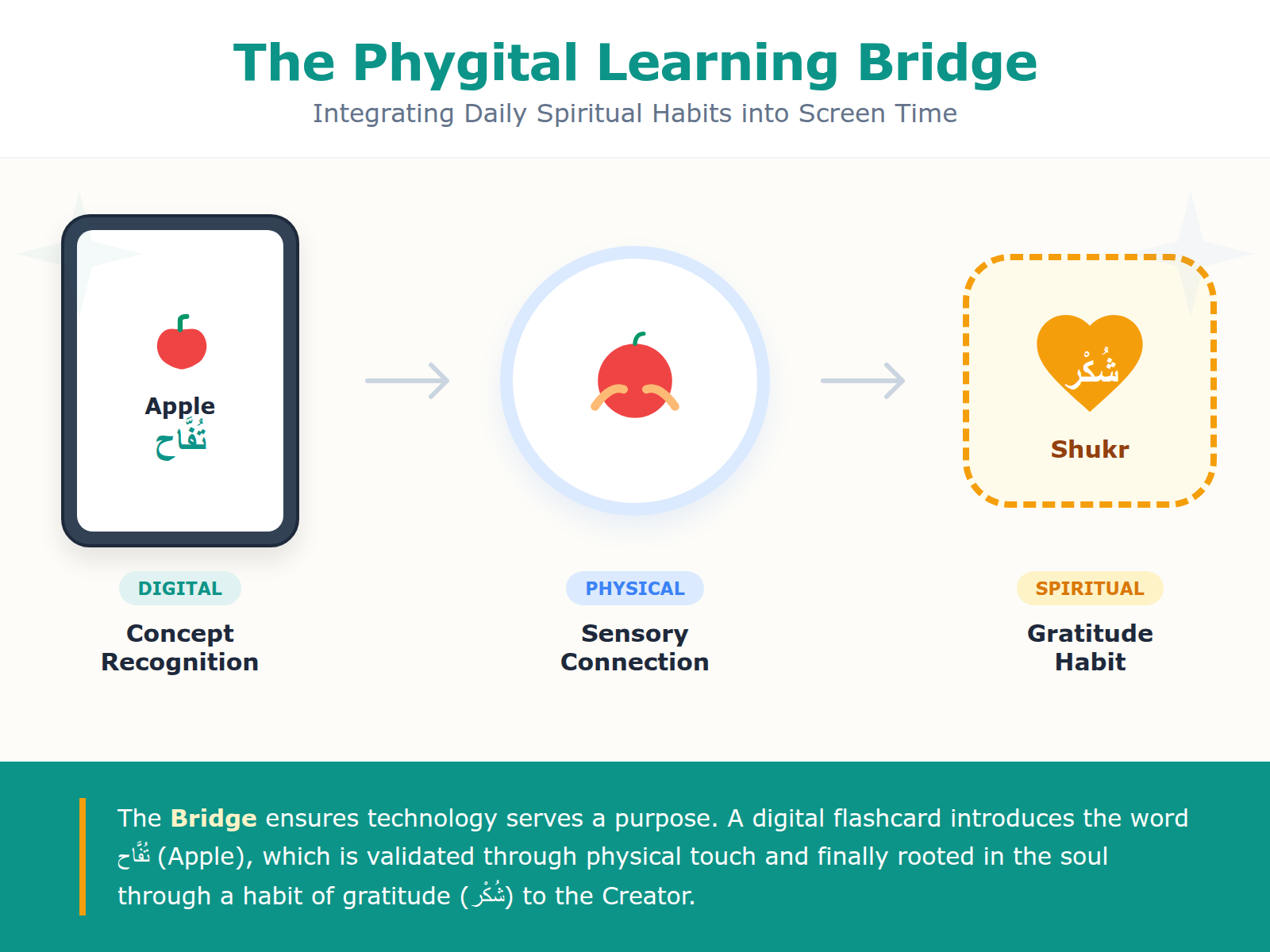
To keep digital time from feeling isolated, we use "Phygital" learning to connect the screen to the physical world. For instance, seeing a digital flashcard of an apple (Tuffah) can prompt your toddler to find a real fruit in your kitchen. This tactile interaction solidifies the concept of Shukr (gratitude), teaching them that every digital image is a reflection of Allah’s tangible provisions.
Cultivating Wasatiyyah through Tech-Free Zones
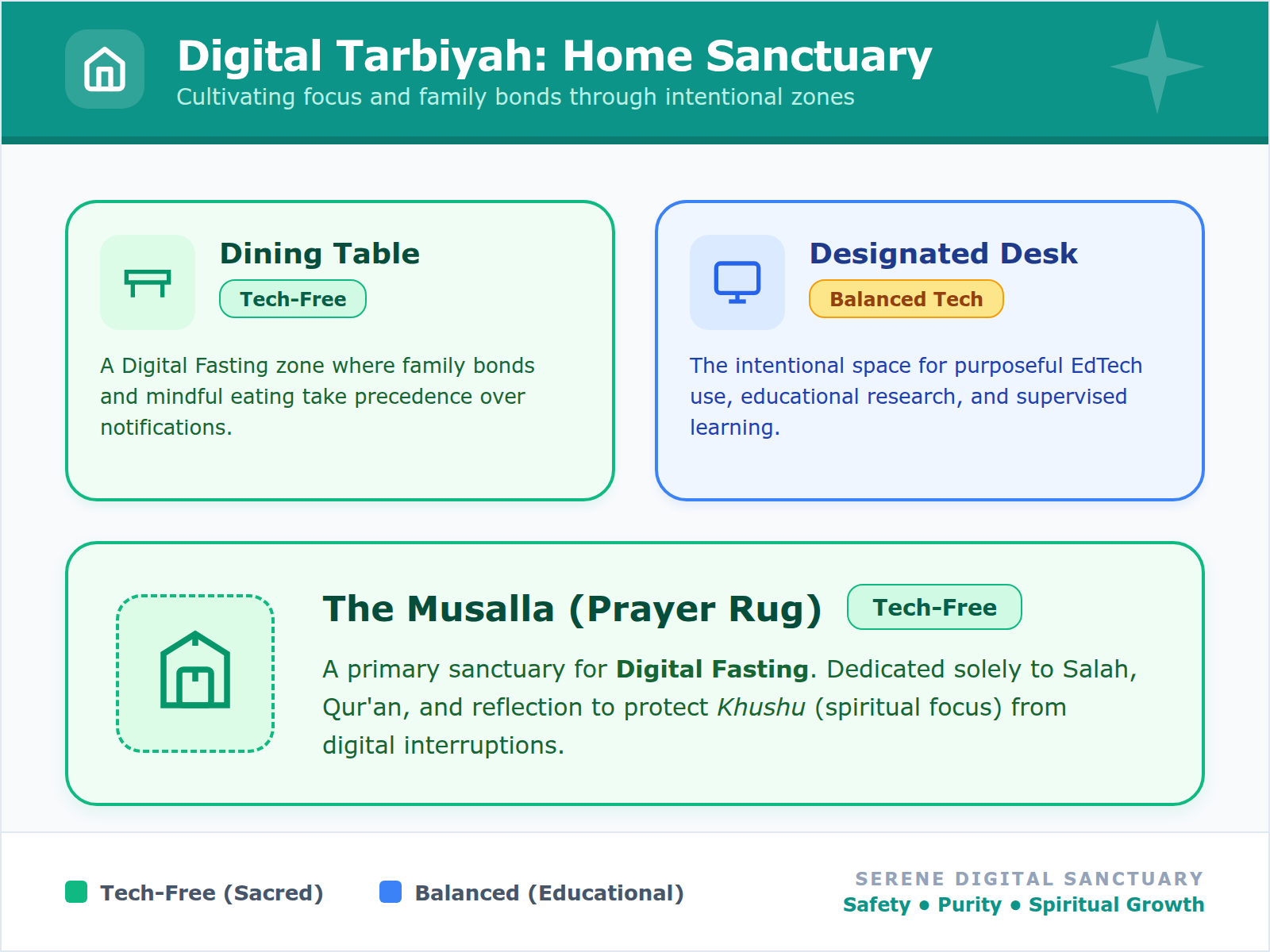
Maintaining Wasatiyyah (moderation) requires clear physical boundaries to protect the serenity of your home. Establishing "Digital Fasting" zones, particularly around the dining table and the Musalla (prayer area), preserves the sanctity of face-to-face connection. By designating these as tech-free, we're teaching our children that certain spaces are reserved exclusively for family and the worship of Allah.
Our AI-guarded sanctuary supports this by mirroring your home environment, with characters who model Sabr (patience) and kindness. When digital content acts as a mirror for the Sunnah, screen time is no longer an "empty" activity; it’s a deliberate tool for building your child’s identity within the Ummah.
The AI Sanctuary: How Babymode.ai Guards the Digital Gates
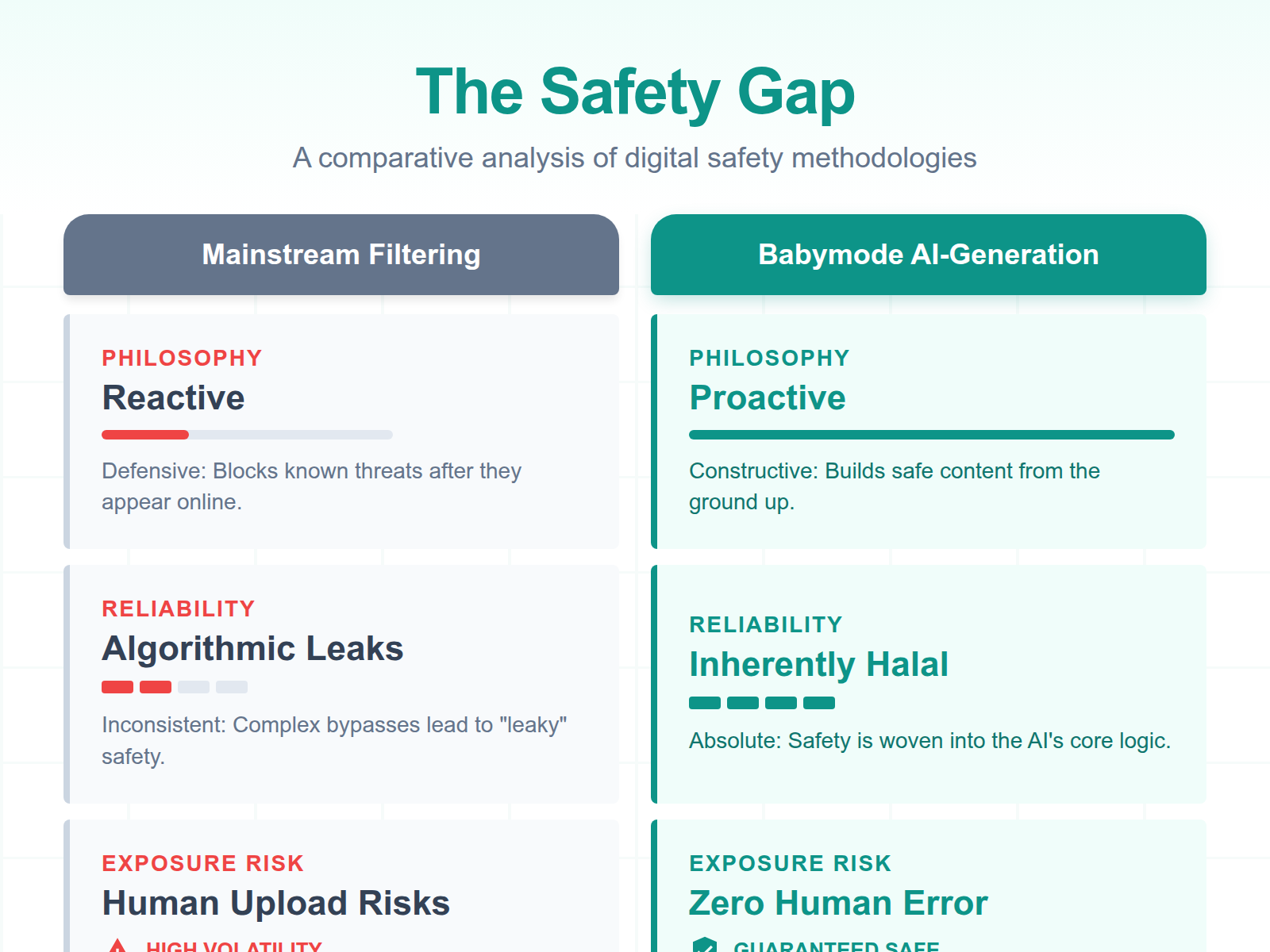
To uphold the principle of Sensory Zuhd, a digital environment must do more than just filter content; it must fundamentally restructure the viewer's experience. While mainstream filters play a constant game of "catch-up" with inappropriate uploads, our muslim toddler learning platform operates on a different blueprint. We’ve built an AI-guarded safe space where the architecture itself is rooted in Islamic values, ensuring no "algorithmic leak" ever reaches your child's eyes.
A Guarded Blueprint for Peace
The core of Babymode.ai is our "closed-loop" generation model, which replaces the "wild west" of human-uploaded content with a controlled digital environment. By utilizing halal-aware synthesis, our platform ensures every visual and auditory element is pre-vetted for modesty and spiritual alignment before it's even rendered. This technological boundary makes the presence of harmful content a logical impossibility, providing you with true peace of mind for your child.
Cultivating Sakinah through Design
Preserving a child’s Fitra requires an environment free from the "Attention Economy's" high-velocity noise. Our AI-only model intentionally avoids the rapid frame rates and jarring transitions that trigger dopamine spikes, favoring the rhythmic pacing of traditional storytelling. Every nasheed and educational video is scholar-reviewed and instrument-free to prioritize the natural voice and cultivate Sakinah (tranquility) within your home.

Features for Proactive Tarbiyah
We've designed our platform to empower you, moving from a role of constant surveillance to one of proactive mentorship. Our suite of features transforms screen time into a structured form of Tarbiyah, allowing you to guide your child’s digital journey with ease.
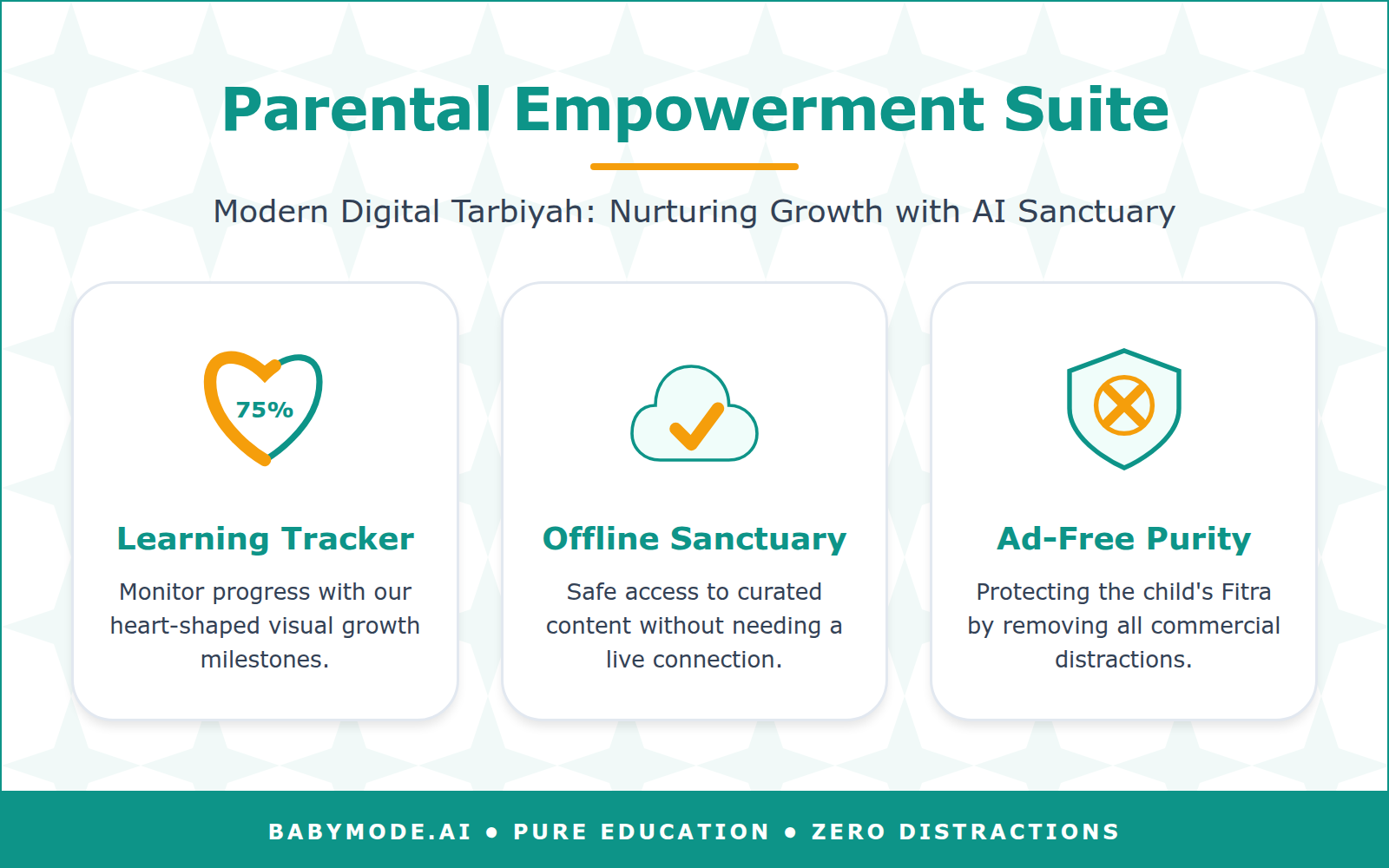
- Progress Tracking: Gain insights into which Duas or Arabic letters your toddler is engaging with most frequently.
- Offline Sanctuary: Download your child’s favorite content to maintain a consistent spiritual environment, even during travel.
- Ad-Free Security: A total removal of commercial influence, ensuring your child's heart is filled with Barakah rather than consumerist desires.
Conclusion
The journey from screen-time anxiety to a state of Sakinah begins with a fundamental shift in perspective. By embracing digital tarbiyah for kids, you transform parental guilt into a deliberate act of Amanah. Safeguarding your child’s Fitra is no longer about withdrawal, but about reclaiming the screen as a space for spiritual growth and discovery.

Technology becomes a bridge to the Deen when guided by intention rather than distraction. We invite you to explore Babymode.ai today to begin your journey of digital tarbiyah for kids, providing your little one with a guarded, faith-filled sanctuary where their heart and mind can flourish.
Frequently Asked Questions
What is digital Tarbiyah for toddlers?
It’s the intentional nurturing of your child’s Fitra through digital tools that honor Islamic Adab. We replace passive, high-velocity viewing with intentional spiritual grounding and character development for the next generation of the Ummah.
How do I secure my toddler’s digital space?
Focus on "walled garden" platforms like Babymode.ai that lack discovery-based algorithms. This prevents "algorithmic leaks," ensuring your little one remains safely within a scholar-reviewed halal sanctuary.
Can Quranic stories aid memorization?
Yes, through "Aural Anchoring." Melodic, instrument-free audio helps toddlers internalize the Quran by prioritizing rhythmic sound over the sensory overstimulation of rapid-cut visuals.
How does overstimulation affect spiritual growth?
Rapid-cut media triggers a dopamine-driven state that can impact executive function and emotional regulation, eroding the Khushu (tranquility) needed for worship. Calm, rhythmic media builds the spiritual focus required for a lifetime of prayer.