Sensory water toys are simply toys that use water to engage your little one’s senses. They play with textures, sounds, and colours to make playtime a rich, developmental experience. For Muslim parents, they’re a beautiful, screen-free way to bond with your baby and explore Allah's creation, turning simple moments into gentle learning.
Exploring Water Play Through Faith and Fun
As Muslim parents, we’re always looking for activities that are both nurturing for our children and aligned with our values. Finding calm, screen-free ways to engage our little ones is a huge priority, especially when we're trying to balance prayer times, meal prep, and all the other demands of the day. Simple water play is a perfect answer.
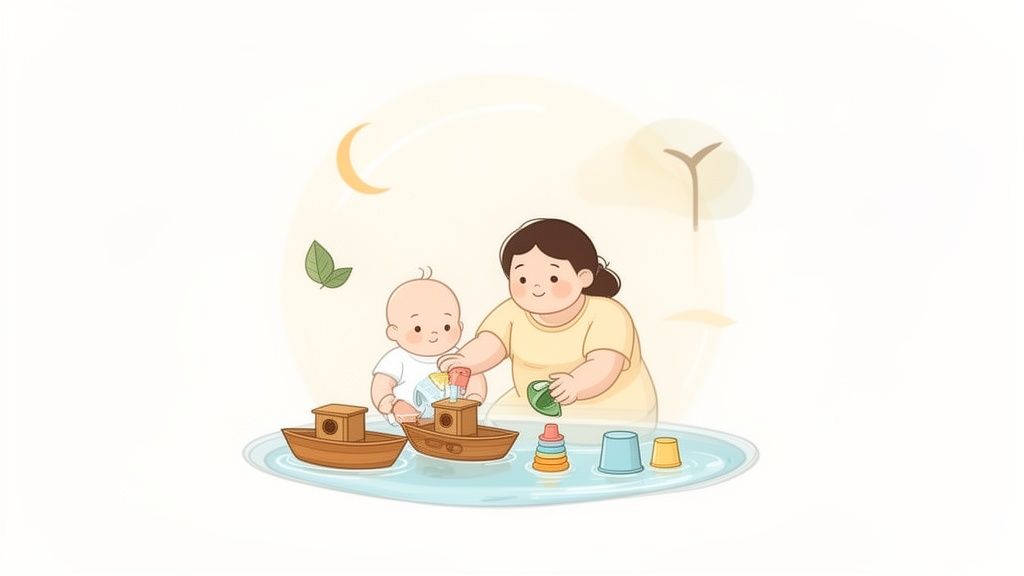
But this kind of play is so much more than just splashing around—it's a powerful tool for early childhood development. Think of a shallow tray of water as your child’s very first science lab. Every scoop, pour, and splash is a tiny experiment helping them understand the world Allah has created, all while building crucial skills.
It's this focus on tactile and visual stimulation that has made these toys so popular. The global market for pool and water toys reached a staggering $2,667.82 million back in 2021 and was expected to keep growing. This trend really shows how much parents are leaning into fun, hands-on learning. You can read more about these market trends for pool and water toys if you're curious.
Water is one of the first elements a child learns to interact with. It provides a multi-sensory experience that is naturally calming and endlessly fascinating, making it an ideal medium for learning through play.
A Natural Fit for Muslim Family Life
Sensory water toys fit so beautifully into the rhythm of a Muslim household. They are simple, wholesome, and spark a natural sense of wonder. It’s easy to see how they align with our core priorities:
- Supports Calm Routines: A warm bath with a few floating toys can become a soothing part of your baby’s bedtime routine, helping them wind down peacefully before sleep.
- Encourages Screen-Free Learning: In a world filled with digital noise, water play provides a healthy, hands-on alternative that protects your child’s innocence and focus.
- Fosters Appreciation for Creation: Gently guiding your child to notice how water feels, moves, and sounds is a wonderful way to introduce them to the beauty and blessings of Allah’s world.
This guide is here to help you discover how to use sensory water toys to create joyful, faith-inspired moments with your baby or toddler, inshaAllah.
How Water Play Nurtures Your Child's Development
Water play is so much more than a fun way to pass an afternoon. Think of it as a powerful engine for your child’s growth, where every scoop, pour, and splash is a rich sensory experience. It’s one of the most natural, hands-on ways for your little one to build foundational skills and make sense of the beautiful world Allah has created.
When you see your toddler carefully pouring water from one cup to another, they're not just making a mess—they're developing incredible skills. That simple, focused action strengthens the small muscles in their hands and sharpens their hand-eye coordination. It even mirrors the Islamic manner (adab) of moving with intention and gentleness, laying a quiet groundwork for graceful behavior.
Boosting Brains and Building Skills
The benefits of sensory water toys reach into every corner of early development. The repetitive, calming motions of pouring and splashing can be deeply regulating for a young child, helping them manage big feelings on a tough day. It's a secret weapon many occupational therapists have relied on for years.
In fact, the therapeutic value of water play is well-recognized, with some studies showing that its repetitive motions can boost cognitive skills by 20-30%.
This brain-building happens as children naturally explore simple physics concepts without even realizing it:
* Cause and Effect: "When I splash, water flies everywhere!" This is a classic example of learning that actions have reactions.
* Object Properties: They quickly figure out which toys sink and which ones float, instinctively sorting and categorizing objects in their minds.
* Volume and Measurement: Pouring between different-sized containers gives them their first intuitive grasp of concepts like 'full,' 'empty,' and 'more.'
Every splash is a tiny experiment. By engaging with water, children are not just playing; they are actively testing hypotheses, solving problems, and developing critical thinking skills that will serve them for life.
Water play provides a fantastic opportunity to observe and support your child's learning journey across various developmental domains.
Developmental Milestones Supported by Water Play
Here’s a quick look at how different water play activities support key milestones for babies and toddlers from birth to age three.
| Age Group | Developmental Area | Example Water Play Activity |
|---|---|---|
| 0-12 Months | Sensory Exploration | Gently swishing baby's hands and feet in a shallow tub of warm water. |
| 0-12 Months | Gross Motor Skills | Supervised tummy time on a water mat to build neck and core strength. |
| 1-2 Years | Fine Motor Skills | Scooping water with cups and pouring it into a larger container. |
| 1-2 Years | Cognitive Skills | Dropping different toys (e.g., a rubber duck, a plastic block) into the water to see which ones float and which ones sink. |
| 2-3 Years | Language Development | Naming the toys, colors, and actions during play (e.g., "The blue boat is floating fast!"). |
| 2-3 Years | Problem-Solving | Using funnels, tubes, and water wheels to figure out how to make the water move. |
As you can see, a simple basin of water can be a rich learning environment, adapting to your child's growing abilities and curiosity.
Connecting Play to Islamic Concepts
Beyond the physical and cognitive gains, water play offers a beautiful, age-appropriate way to introduce Islamic ideas. The calming nature of water can be linked to the peace (sakinah) we seek in prayer. The simple act of pouring and washing can also gently introduce the concept of cleanliness (tahara) and its connection to wudu (ablution).
You could use floating animal toys to tell simplified stories of the sea creatures mentioned in the Qur'an or talk about how Allah sends rain to help the plants grow. For a deeper dive into how sensory experiences shape your child's brain, this article on understanding baby sensory development is a great resource.
These small connections transform a simple activity into a moment of gentle, faith-aligned learning.
Choosing Safe and Halal-Friendly Water Toys
As parents, keeping our children safe is always priority number one. When it comes to sensory water toys, this means picking items that are not just fun, but also physically safe and in line with our family’s values. It can feel like one more thing on our already-long checklist, but a few simple checks can offer genuine peace of mind.
The first thing I always look at is the material. Make sure any toy you buy is explicitly labelled BPA-free, durable, and non-toxic. Little ones explore the world with their mouths, so ensuring the materials are completely safe is non-negotiable.
Just as important is the toy's design. I always opt for items that are easy to clean and can dry completely. This helps prevent that yucky mould growth that can happen inside toys. If you can find toys without small holes where water can get trapped, you're golden.
What Makes a Toy Halal-Friendly?
Finding toys that fit with our Islamic values is another key part of the puzzle. For me, a ‘halal-friendly’ toy is one that protects a child’s innocence and encourages wholesome, imaginative play.
When it comes to water play, this usually means choosing simple, open-ended items over toys that feature questionable characters or themes. Think about things that spark creativity and exploration, like:
- Simple tools: Cups, spoons, and small buckets are fantastic for pouring and scooping.
- Nature-inspired shapes: Floating boats, fish, stars, and ducks are always a hit.
- Basic building blocks: Floating foam blocks are great for stacking, sorting, and building.
The best sensory water toys are often the simplest. They don't need flashing lights or loud sounds—just the natural wonder of water and your child's boundless imagination. This simplicity is truly a blessing, as it helps nurture focus and creativity without causing overstimulation.
Checking for Safety Standards
It's no secret that navigating toy safety can feel a bit overwhelming. In fact, 42% of producers report that meeting the official regulatory standards for safe, durable products can be a real challenge.
Thankfully, there are clear safety marks you can look for that show a toy has been properly tested. Here’s what to keep an eye out for in different regions:
- UK: Look for the UKCA mark.
- USA: Check for ASTM F963 compliance.
- Canada: Look for the Canada Consumer Product Safety Act (CCPSA) seal.
- Australia: Ensure it meets AS/NZS ISO 8124 standards.
This decision tree gives a great visual of how different types of water play can support your child's focus and development, linking directly to either cognitive or emotional growth.
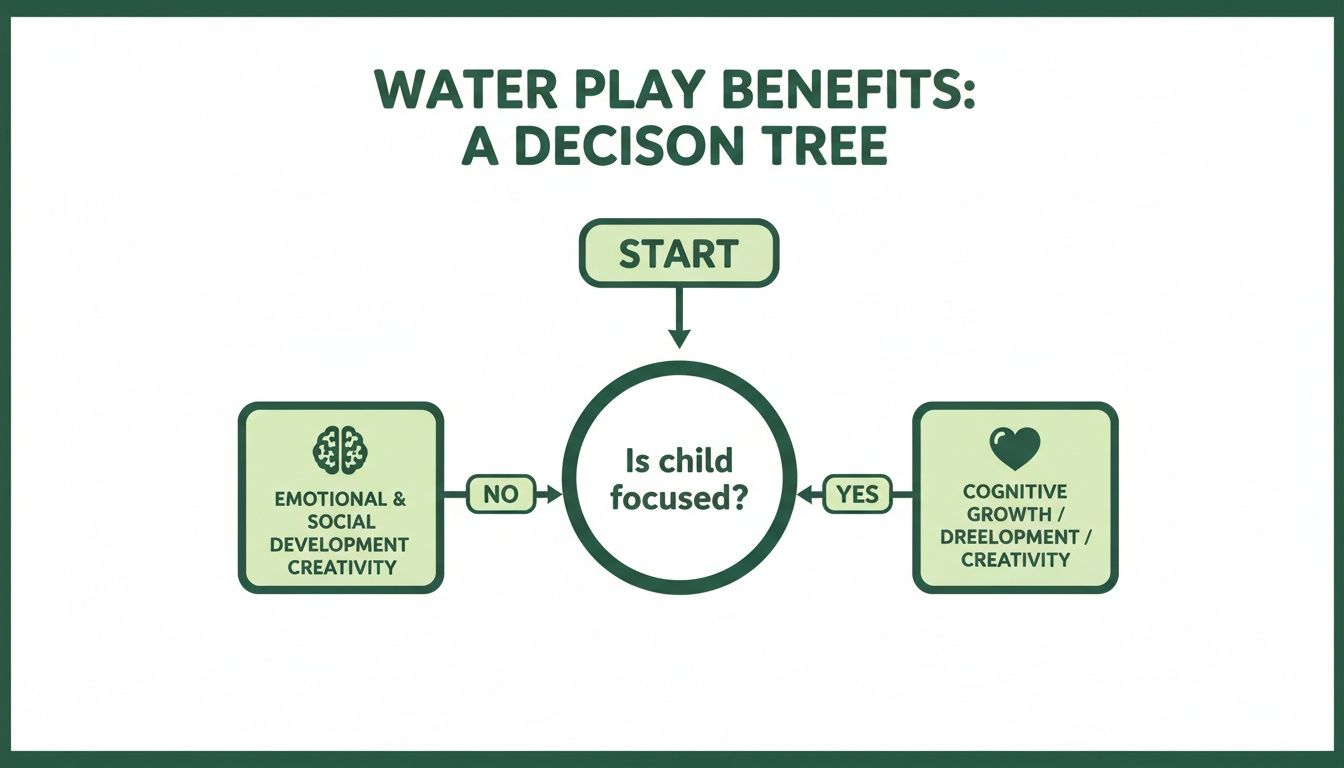
As you can see, whether your child is full of energy and needs to focus or is feeling a bit overwhelmed and needs to calm down, water play has an activity to support them. And for those bigger water play adventures, understanding safety is even more crucial; this Water Bounce House Rentals Guide is a really helpful resource for parents considering larger setups.
Creative DIY and Low-Cost Water Play Ideas
You absolutely don't need a collection of expensive sensory water toys to create meaningful play experiences. In fact, some of the most powerful learning moments happen with simple things you already have around the house. This approach beautifully aligns with the Islamic principles of simplicity and making the most of what we have.
All it takes is a little bit of water and a dash of creativity to turn an ordinary afternoon into an adventure.
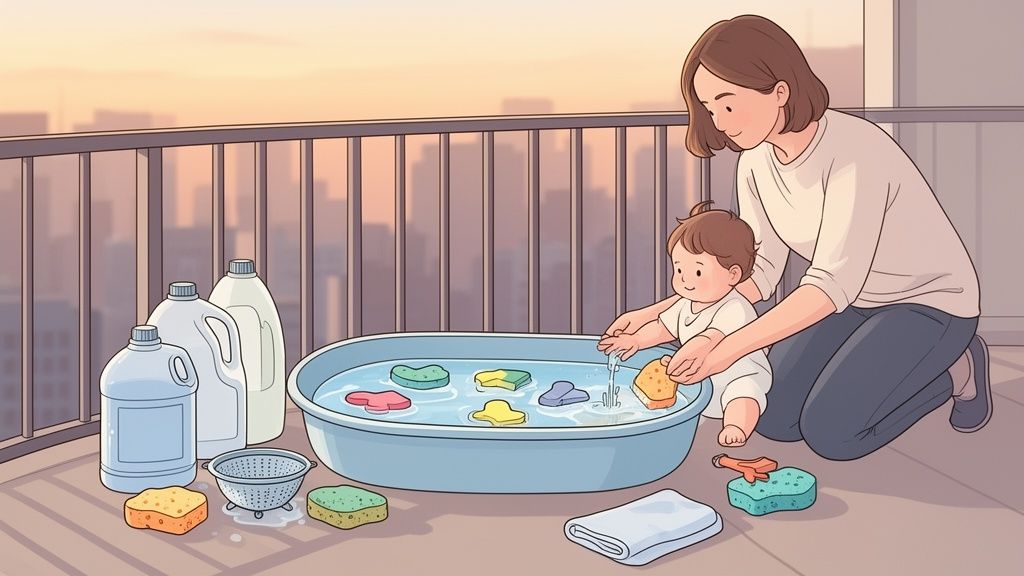
Picture this: it’s that busy time right before Maghrib prayers, or you’re preparing Iftar during Ramadan. A simple, low-cost sensory bin can keep your little one happily engaged and learning right by your side. A shallow container, some water, and a few household treasures are all you need.
Simple Ideas from Your Kitchen and Home
Your kitchen is a goldmine for water play! When you use everyday objects, you’re teaching your child that fun and discovery are everywhere—not just inside a toy box.
Here are a few ideas to get you started:
* Pouring Station: Grab a few plastic jugs, measuring cups, and spoons. Toddlers find pouring water from one container to another endlessly fascinating. It’s a fantastic workout for their fine motor skills and an early, hands-on lesson in volume.
* Sponge Squeeze: A few clean sponges of different sizes and textures are perfect for this. Squeezing the water out is a great way to strengthen little hands and provides wonderful tactile feedback.
* Colander Waterfall: A humble kitchen sieve or colander instantly becomes a magical waterfall. This simple activity is a brilliant way to demonstrate cause and effect as they watch the water sprinkle through the holes.
* Floating and Sinking Game: Collect a few safe items like a plastic bottle cap (it floats!) and a large spoon (it sinks!). This easy game introduces basic science concepts in the most playful way possible.
The best part about these activities is how adaptable they are. Set up a small basin on the kitchen floor while you cook, or take a larger tub out to the balcony for some fresh air before sunset.
One of the most beautiful lessons we can share with our children is that joy and learning can be found in simplicity. Everyday items, blessed with a child's imagination, become powerful tools for growth and connection.
Tummy Time Fun for Your Baby
Even the littlest ones can get in on the action. For babies still mastering tummy time, a DIY water mat is the perfect, gentle introduction to sensory play.
Just take a sturdy, zip-top freezer bag and fill it with a shallow layer of water. Add some colorful, non-sharp items like foam shapes or large, smooth buttons, then seal it securely with strong tape. When you place it on the floor, it creates a squishy, engaging surface that encourages your baby to lift their head and push up.
The gentle motion and textures provide calming stimulation without being overwhelming. This kind of focused, hands-on activity also builds a wonderful foundation for other imaginative games, like the ones we explore in our guide to finger puppets for toddlers. These simple ideas prove you can support your child’s development beautifully, no matter your budget.
Weaving Faith into Your Water Play Routine
Water play is so much more than just a way to fill an afternoon. It's a wonderful, natural opportunity to gently introduce the beauty of your faith into your little one’s world. This isn’t about sitting down for a formal lesson. It’s about planting tiny seeds of connection and awareness during moments of pure joy.
Think about how you can frame the experience. Simply starting your water play by saying "Bismillah" together sets a beautiful intention. It’s a small, gentle habit that teaches your child that we begin all things in the name of Allah, making it feel just as natural as the first splash.
From there, you can weave in simple, faith-aligned ideas as you play. The key is to let these thoughts flow naturally from the activity, enriching the fun rather than interrupting it.
Gentle Prompts for Faith-Based Play
The goal is to make these connections feel effortless and joyful. As your toddler pours water from one cup to another, you could mention how Allah gives us rain to drink and to help the pretty flowers grow. You could even talk about how we use water to make wudu to get clean before we pray.
It's all about connecting the physical world they're exploring with a deeper spiritual reality.
Here are a few more age-appropriate ideas:
* Talk About Creation: As a little toy boat floats by, you can say, “Look! Allah made the big, big oceans for boats and tiny fish to swim in.” You could even sing a simple nasheed about the rain.
* Practice Gratitude: A simple "Alhamdulillah for this cool water, it feels so nice!" helps your child connect feelings of happiness and comfort with gratitude to Allah.
* Show Gentleness: Encourage gentle splashing, connecting it to the beautiful Islamic manner (adab) of being careful and kind with all of Allah's blessings.
These moments are about organically blending your deen (faith) and dunya (worldly life), which is a core part of raising children with a strong yet gentle faith.
By connecting the feeling of cool water to the concept of Allah's blessings, you are helping your child build a sensory library of positive, faith-filled memories. This gentle approach fosters a love for Islam that is rooted in warmth, joy, and lived experience.
To make it even easier, here are a few simple conversation starters you can use during your next water play session.
Faith-Based Water Play Prompts
| Concept | Play Activity | What to Say or Do |
|---|---|---|
| Allah the Creator | Floating toy animals | "Look at the fish! Allah created all the animals that swim in the water." |
| Gratitude (Shukr) | Splashing on a warm day | "Alhamdulillah! Allah gave us this cool water to help us feel refreshed." |
| Blessings (Barakah) | Watering a small plant | "Let's give the flower a drink. Water is a blessing from Allah that helps things grow." |
| Cleanliness (Taharah) | Washing dolls or toys | "We're making the toys clean, just like we make wudu to be clean for Salah." |
| Gentleness (Rifq) | Pouring water carefully | "Let's pour gently. It’s a beautiful adab to be careful with Allah’s gifts." |
These small, consistent efforts are what truly matter. They transform simple playtime into a meaningful act of connection—between you, your child, and your Creator.
This method of integrating faith into daily activities is a cornerstone of raising resilient, spiritually aware children. For a deeper dive into this parenting philosophy, check out our guide on Islamic parenting for toddlers.
Keeping Water Play Clean and Stress-Free
Water play is such a beautiful way to connect with your child, but let's be real—the thought of cleaning up can sometimes feel like a huge task. The good news is, with a few simple strategies, managing your sensory water toys can be easy and stress-free, so you can keep the focus on all that joyful learning.
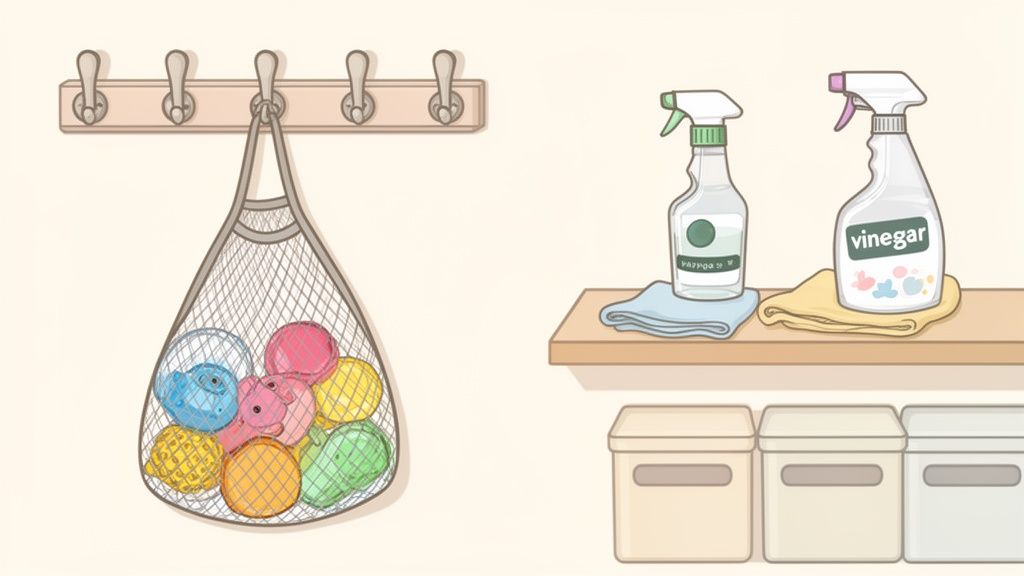
The trick is to create a manageable system from the very beginning. Think of it as creating a dedicated ‘splash zone’ to contain all the fun. Simply laying down an old towel or a waterproof mat before you start can save you a world of wiping up later.
This little bit of prep work is a lifesaver, especially when you need to tidy up quickly before Maghrib prayers or when guests are about to pop over. A splash zone turns cleanup into a quick, five-minute task instead of a major chore.
Simple Cleaning and Hygiene Tips
Keeping those toys clean is non-negotiable for your little one's health, and it also helps your toys last much longer. We all worry about mould, but it’s entirely preventable with a consistent routine.
- Squeeze and Dry: After every single use, make a habit of squeezing all the water out of any squishy toys. Get every last drop!
- Air Circulation is Key: Let everything air dry completely. A simple mesh bag that hangs in the bathroom is a perfect solution, allowing air to get all around the toys and stop moisture from settling in.
For a deeper clean, a weekly soak is a fantastic idea. You don't need harsh chemicals; a simple, natural solution of one part white vinegar to three parts water works wonders. Let the toys soak for about an hour, give them a good rinse with clean water, and let them dry fully before putting them away.
Smart Storage for Any Home
You don’t need a massive playroom to keep your water play items organized. Clever storage can make a huge difference, even if you're working with a small apartment space.
- Mesh Bags: As I mentioned, these are brilliant. They can hang from a suction cup hook on the bathroom tiles or right over the side of the tub. Easy peasy.
- Stackable Bins: A designated plastic bin is perfect for holding all your non-bath water toys. When playtime is over, everything has a home to go back to, ready for the next adventure.
By building these simple habits, you’ll ensure that your child’s sensory water toys remain a source of pure joy and learning, not a source of stress for you.
Your Questions, Answered
As a parent, you're bound to have questions when you're exploring new ways to play with your little one. That's completely normal! We’ve put together some of the most common questions Muslim parents ask about sensory water toys, with practical answers to help you feel confident and ready to dive in, inshaAllah.
When Is My Baby Old Enough for Sensory Water Toys?
You might be surprised by how early you can start! Even tiny newborns can get in on the action with a sensory water mat. It’s a fantastic, mess-free way to make tummy time more engaging from just a few months old, stimulating their sense of touch and sight without any water safety worries.
Once your baby is sitting up strong on their own, usually around the 6 to 8-month mark, they’re ready for the real deal. A shallow basin on the floor or a few inches of water in the tub is perfect. Just remember, the golden rule at every age is constant, hands-on supervision.
We Live in a Small Apartment. How Can We Do Water Play?
You don’t need a huge space to make a big splash! It's all about creating a contained play zone. The bathtub is your best friend here—it's practically designed for this.
Another great option is a large, shallow storage bin. Just lay down a few old towels or a waterproof mat on the floor, place the bin on top, and you’re good to go. A couple of inches of water is more than enough for a ton of fun. Giving them simple tools like stacking cups, a small funnel, or a sponge also helps keep the play focused and the splashing (mostly) in the bin.
What Are the Absolute Must-Know Safety Rules for Water Play?
Safety is everything. When it comes to water, there are a few simple rules that are completely non-negotiable. Sticking to them means you can relax and enjoy this precious time with your child.
- Constant Supervision: Never, ever turn your back on a child near water, not for a split second. An adult needs to be within arm's reach, always.
- Check the Temp: Before they get in, always test the water to make sure it's comfortably warm, never hot.
- No Choking Hazards: Stick to toys that are too big to be swallowed and give them a quick check for broken parts before each use.
- Empty Everything: The moment playtime is over, drain all tubs, buckets, and bins completely.
How Can I Keep Water Toys from Getting Mouldy?
That yucky black mould is a common worry, but it's easy to prevent with a good routine. The key is to get the water out. After every single use, squeeze any squirty toys until they’re completely empty.
Then, once a week, give them a deep clean. A good soak in a solution of one part white vinegar to three parts water for about an hour does the trick. Scrub them well, rinse with fresh water, and let them air dry completely. Storing toys in a mesh bag where air can circulate is the best way to keep them dry and mould-free.
Here at Babymode, our goal is to help you nurture your child's development with safe, faith-aligned resources. Sensory toys are incredible for hands-on learning, and for those moments you need a digital companion, we offer a halal, ad-free screen-time alternative. Our library of gentle stories and nasheeds is designed to support your little one's growth while connecting them to their beautiful faith.
Join the Babymode waitlist today and be the first to know when we launch, inshaAllah.