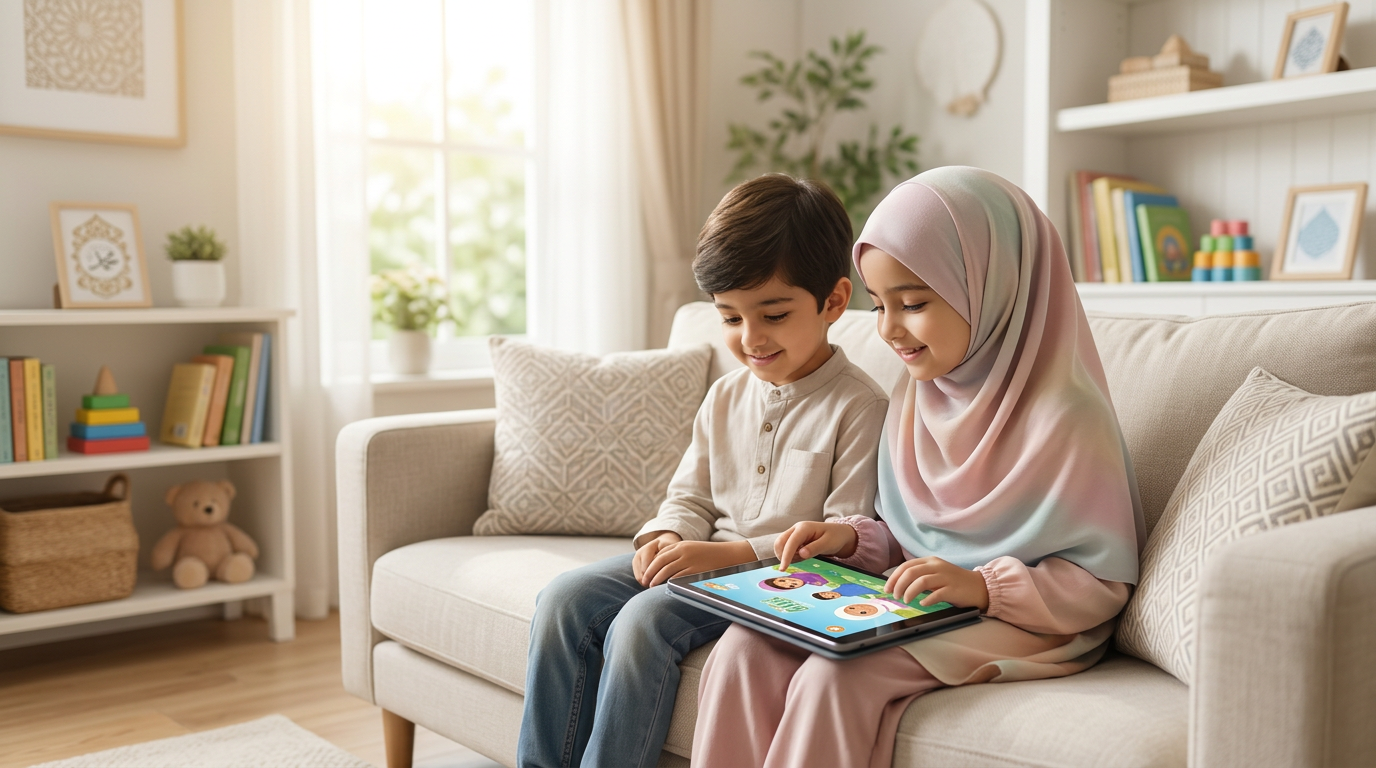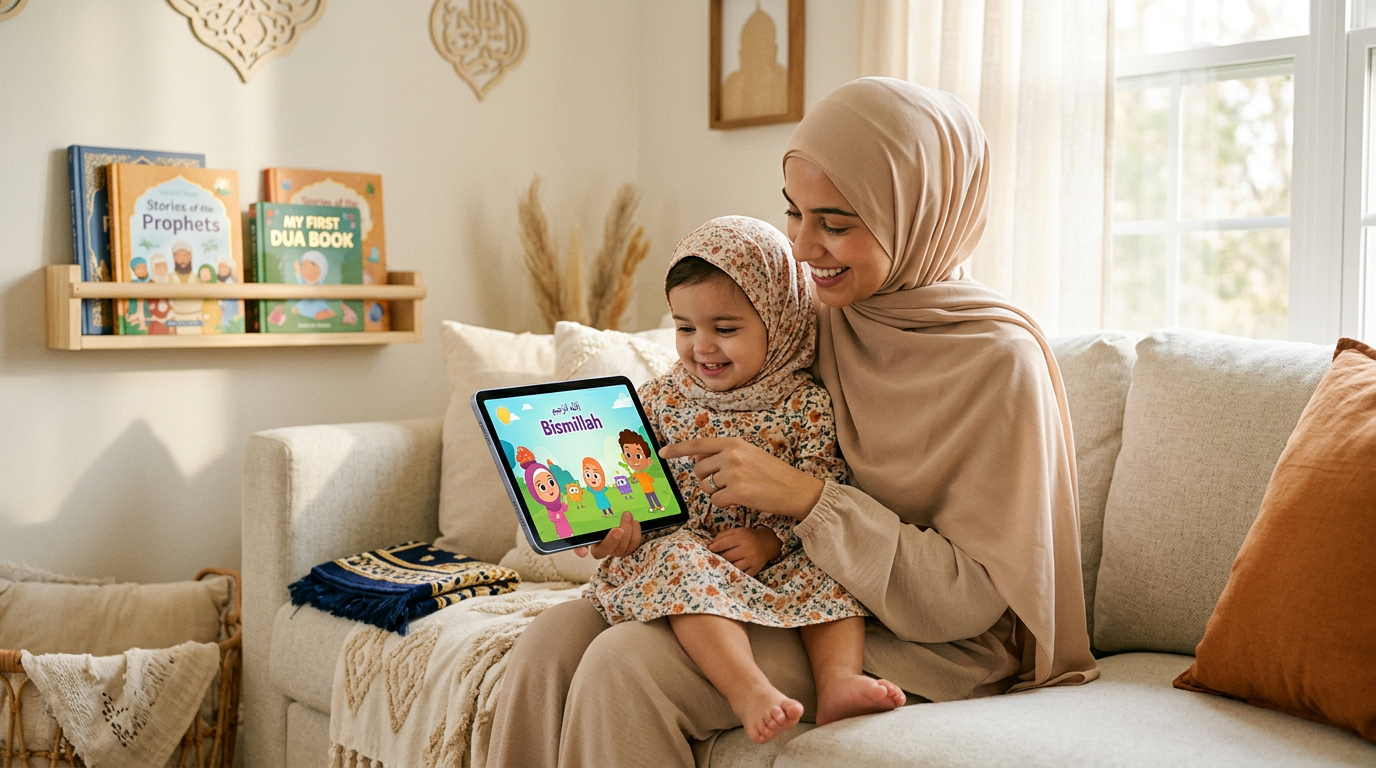
Finger puppets might seem like simple little toys, but don't let their size fool you. These tiny characters that slip right over a finger are absolute powerhouses for screen-free imaginative play. For a toddler, they're not just toys; they're the keys to unlocking language, creativity, and emotional understanding, making them an essential part of a healthy, wholesome playtime.
Why Finger Puppets Belong in Every Muslim Toddler’s Toy Box
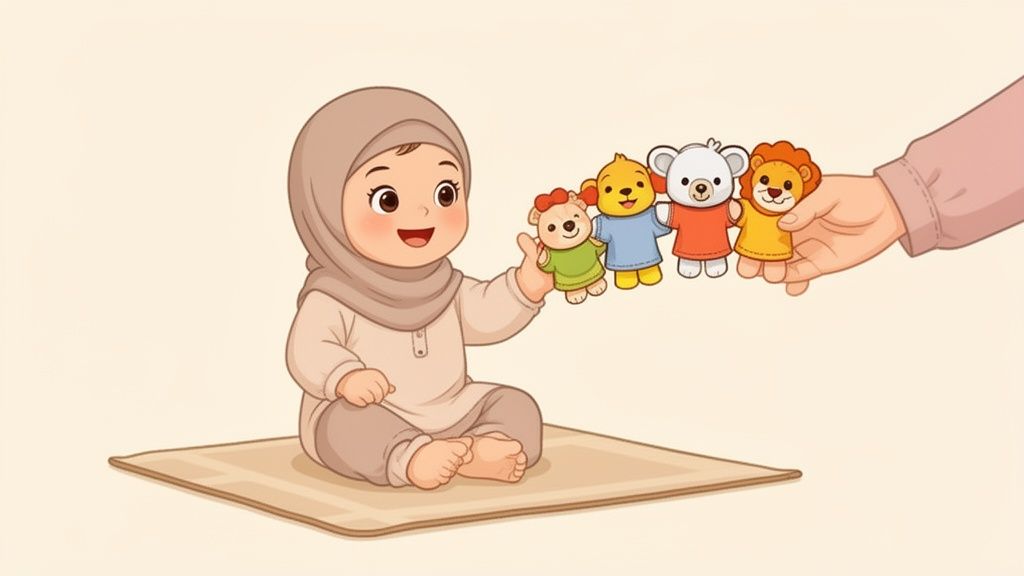
So many of us are actively looking for ways to dial back the noise and the screens in our children's lives. We want to nurture their fitra—their natural innocence and curiosity—with toys that encourage connection and creativity, not just passive consumption.
Finger puppets for toddlers offer that beautiful, gentle alternative. They invite your child to be an active participant in a story, not just a spectator. By engaging their senses of touch, sight, and hearing in a soft, controlled way, they are among the most effective and versatile types of sensory toys you can own. You can dive deeper into this topic in our complete guide to sensory toys for toddlers.
A Gentle Boost for Key Skills
The moment you slip a puppet onto your finger and give it a silly voice, you're doing so much more than just playing. You're naturally weaving critical skill-building into a moment of pure fun.
Developmental Benefits of Finger Puppets at a Glance
For busy parents, it helps to see the value of a toy at a glance. This table breaks down exactly how these simple puppets support your child's growth, with examples you can easily bring into your own home.
| Developmental Area | How Finger Puppets Help | Example in a Muslim Home |
|---|---|---|
| Language & Communication | Encourages listening, turn-taking, and vocabulary building in a low-pressure way. | A little sheep puppet can "baa" and then you can say, "The sheep says SubhanAllah!" to introduce Islamic phrases naturally. |
| Fine Motor Skills | Wiggling fingers to move the puppet strengthens small hand muscles, building dexterity for writing and self-feeding. | Your toddler tries to put a puppet on their own little finger, practicing their pincer grasp and hand-eye coordination. |
| Emotional Development | Allows children to explore complex feelings like sadness or shyness through a character, making them less intimidating. | A "sad" puppet can miss his "mama," giving you a chance to talk about feelings and reassure your child with hugs and kind words. |
| Social Skills | Puppets can act out scenarios like sharing, taking turns, or saying "Assalamu 'alaikum" to a friend. | Two puppets can model how to share a block peacefully, teaching cooperation and empathy in a way your child can understand. |
| Imagination & Creativity | Provides a blank canvas for storytelling, where a simple felt animal can become the hero of a grand adventure. | You can create a simple story about a camel traveling to Makkah, sparking your child’s imagination and connecting play to their faith. |
As you can see, the benefits are woven into every wiggle and every story, making these puppets one of the most impactful toys you can introduce.
Here’s a closer look at how it all comes together:
Language and Communication: Puppets are incredible conversation starters. When a little sheep puppet "talks" to your toddler, it's an open invitation to listen and babble back. For bilingual families, this is a fantastic tool for introducing words in Arabic or Urdu without any pressure.
Fine Motor Skills: Sooner or later, your toddler will want to take charge. The simple act of them trying to get a puppet onto their own finger is a fantastic workout for those tiny hand muscles, laying the groundwork for holding a crayon, zipping a coat, or using a spoon.
Emotional Development: You can use a puppet to play out scenarios that might be tricky in real life, like sharing a favorite toy or feeling shy. This gives your toddler a safe space to see and name big feelings, nurturing the empathy and kindness we hold so dear in our faith.
Finger puppets are more than just felt and thread; they are tiny storytellers that help you teach kindness, build vocabulary, and connect with your child, one little wiggle at a time.
These simple, classic toys have carved out a significant space in the global baby and toddler toys market, which has soared to USD 24.5 billion. Their enduring popularity comes from their proven ability to spark imagination and build essential skills—something parents everywhere value. You can read more about the growth of this market in the GM Insights report.
Finding the Right Finger Puppets for Your Toddler
When you're looking for finger puppets for your toddler, especially in a Muslim home, it’s about more than just grabbing the cutest set off the shelf. We're often looking for toys that feel right—wholesome, safe, and a gentle addition to our child's world.
The great news is that finger puppets are everywhere. They are a huge part of the stuffed and plush toys market, which is expected to grow from USD 10.2 billion to nearly USD 19.8 billion by 2034. That massive growth means we have more choices than ever before, making it much easier to find puppets that align with our family’s values.
Whether you're browsing a big toy store or scrolling through a small online shop, a little checklist can make all the difference in picking the perfect set with confidence.
A Quick Checklist for Wholesome Puppets
Before you click "add to cart," take a quick look at these points. This isn't about being restrictive; it's about being intentional and choosing toys that fit the gentle, loving environment you’re building at home.
Safety Is Non-Negotiable: First things first, check the age label (it's often 18m+ for finger puppets). You'll want to avoid any with small, glued-on parts like plastic googly eyes or tiny buttons that could pop off and become a choking hazard. Always look for durable stitching and non-toxic materials.
Mindful Character Design: Many parents prefer to steer clear of puppets with overly realistic facial features or those that represent themes we'd rather not introduce. Simple, friendly-looking animals, diverse family members, or even basic shapes and objects are fantastic alternatives.
Characters That Teach: Think about puppets that can help you share Islamic concepts in a playful way. Animals mentioned in the Qur'an (like a bee, a camel, or an ant) are wonderful for storytelling. Puppets representing community helpers or family figures (Mama, Baba, Jaddah) are perfect for role-playing good manners, kindness, and respect.
For puppets that help you explore big feelings in a wholesome way, sets like the Feelings Family™ Hand Puppets can be a great resource for teaching emotional awareness.
Where to Shop for the Perfect Puppets
You really don't have to search far and wide. Mainstream toy stores almost always carry sets of farm animals, sea creatures, or community helpers that are perfectly suitable and fun.
But don't overlook the smaller, independent shops. I've found some real gems on platforms like Etsy, where Muslim-owned businesses create beautiful, handcrafted puppets that reflect diverse families and cultures. These creators often put so much thought into the little details that matter to us, from fabric choices to the character's design.
By thoughtfully choosing puppets that reflect your family's values, you're doing more than just buying a toy. You're investing in a tool that will help you nurture your child's faith, character, and imagination in a gentle, loving way.
Bringing Islamic Stories to Life with Simple Puppet Play
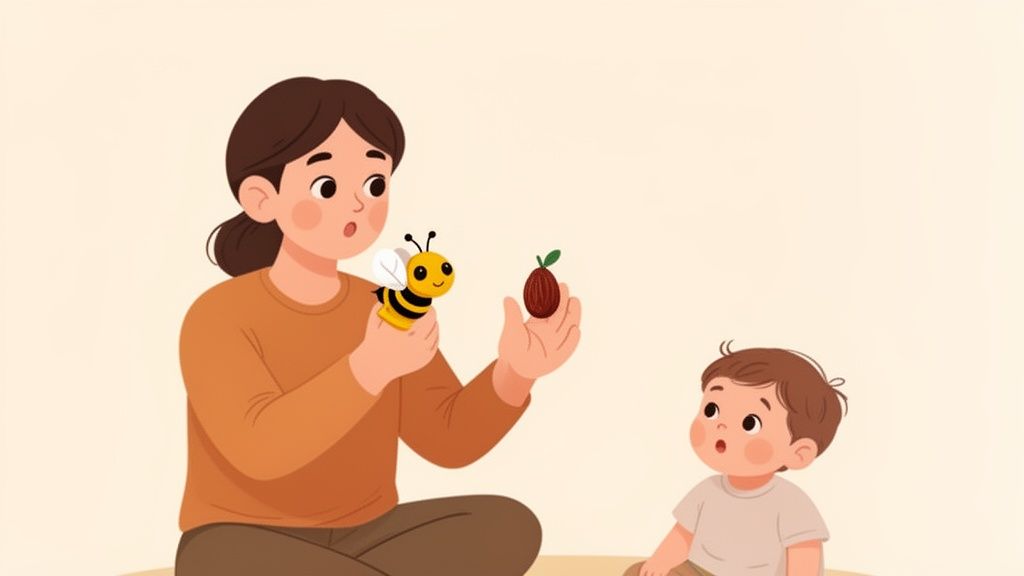
Now that you have your puppets, the real fun can begin. You don't need an elaborate stage or a perfectly memorized script to make magic happen. I've found that the most meaningful interactions often come in the quiet, in-between moments of a busy day—while waiting for dinner to cook, during a diaper change, or in those few calm minutes before a nap.
These tiny characters are a wonderful tool for turning routine parts of your day into chances for connection and gentle teaching. With just a little imagination, you can weave Islamic values and simple stories into playtime in a way that feels completely natural for your toddler.
Simple Stories for Everyday Moments
You can start with super short, instrument-free "shows" that are just long enough to capture your toddler's attention. The trick is to keep it simple, warm, and maybe even a little bit silly.
Here are a few ideas I've used that you can try right away:
The Little Bee Who Says Alhamdulillah: Pop a bee puppet on your finger and have it buzz around, "tasting" different things in the room—a flower on a blanket, a colorful block, or even your toddler's little nose! Each time the bee finds something sweet, it can happily say, "Alhamdulillah!" It’s a playful and memorable way to introduce gratitude.
Sharing Dates in Ramadan: Use two puppets to act out the spirit of giving. One puppet can have a "date" (a small brown pom-pom is perfect for this) and offer it to the other, saying, "Bismillah." It's a tiny scene that beautifully models sharing and Islamic etiquette.
The Kind Camel's Journey: Let a camel puppet take a slow walk across the rug, stopping to meet other toy animals along the way. With each new friend, the camel can offer a gentle "Assalamu 'alaikum." This puts Islamic manners into a social context your child can easily grasp.
These little stories don't have to be long at all. In fact, just 30 seconds of puppet play can plant a seed of kindness, thankfulness, or love for Allah's creation.
Singing Nasheeds and Reciting Duas
Finger puppets are also fantastic for making spiritual routines more engaging. When you sing a nasheed or recite a short dua, having a puppet "sing" or "recite" along can capture your toddler's focus like nothing else.
Imagine a little bird puppet on your finger, bobbing its head as you recite the dua for waking up. Or a whole family of puppets swaying gently as you sing "Tala' al-Badru 'Alayna." This multi-sensory approach helps anchor these important words and beautiful melodies in your child's heart and mind.
For more faith-based storytelling ideas, our guide on stories of the prophets for kids has a wealth of narratives you can easily adapt for your little puppet theater.
The goal is to always make these interactions feel like a loving game, not a formal lesson. When your toddler connects these beautiful Islamic concepts with the warmth of your voice and the fun of a wiggling puppet, you're helping build a foundation of love for their deen that will, Insha'Allah, last a lifetime.
Easy DIY Finger Puppets for a Halal Crafting Afternoon
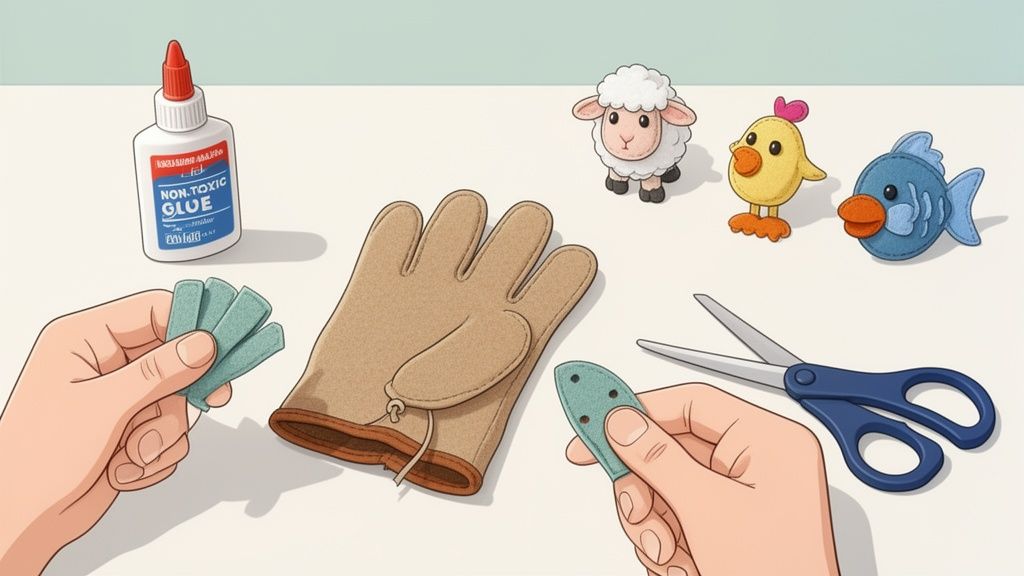
Let's be honest, sometimes the best toys aren't the ones you buy—they're the ones made with love right at the kitchen table. Making your own finger puppets for toddlers is a beautiful and budget-friendly way to spend a quiet afternoon. It’s the perfect activity for that little window of calm while dinner simmers or before Maghrib prayer.
Creating with our hands is such a grounding experience, and it ties into the Islamic value of resourcefulness. It's also a fantastic way to bond. Even older siblings can get involved, turning a simple craft into a sweet family project. Best of all, you control everything, ensuring the puppets are simple, wholesome, and perfectly safe for your toddler.
Simple No-Sew Felt Puppets
You don’t need any fancy crafting skills to make something your child will adore. Felt is incredibly forgiving and easy to work with, making it ideal for a quick, no-sew project.
Getting started is easy. First, fold a piece of felt in half and cut a simple dome or arch shape, about 2-3 inches tall, big enough to fit over your finger. This gives you two identical pieces for the front and back.
Next, grab some non-toxic fabric glue and run a thin line along the curved edge of one piece, leaving the bottom straight edge open. Press the second piece on top, and give it a little time to dry completely.
Now for the best part—decorating! This is where you can let your creativity shine. Cut out smaller felt shapes to make faces, ears, or clothes for animals, family members, or simple characters. If you want to get really creative with your felt colors, this practical guide to color mixing charts can be a huge help in creating just the right shades.
Quick and Easy Puppet Ideas
You can create a whole world of characters using just a few basic shapes. Here are a few ideas to get you started:
- A Little Sheep: A white felt body with a fluffy cotton ball glued to the front is all you need. Two simple dots from a black permanent marker make the perfect eyes.
- A Chirpy Bird: Use a yellow felt body, adding two small wing shapes to the sides. A tiny orange triangle makes an adorable beak.
- A Fish: Cut a body from blue or green felt. Then, cut a small heart from another color, turn it on its side, and glue it to the back for a tail.
- Family Puppets: Make little versions of Mama, Baba, and your toddler! Use different colored felt for their clothes and add little bits of yarn for hair.
The beauty of DIY puppets is in their simplicity. They don’t need to be perfect to spark a world of imagination. In fact, the simpler they are, the more room your child has to fill in the details with their own amazing creativity.
Just remember to always keep safety in mind. Double-check that all the felt pieces are glued down securely. It’s best to avoid small, detachable decorations like beads or googly eyes, which can be a choking hazard for little ones. This hands-on approach ensures your toddler’s new friends are made with care, love, and complete peace of mind.
Pairing Puppets with Purposeful Islamic Screen Time
Let's be real—in many of our homes, screen time happens. It might be to keep a little one safely occupied while we’re busy in the kitchen for Iftar, or maybe it’s for a few precious minutes of quiet to complete our salah.
Instead of treating screen time as totally separate from hands-on play, we can actually connect the two. A simple set of finger puppets for toddlers can become the perfect bridge, turning passive screen viewing into something active and engaging.
From Screen to Story
The goal here is to extend the experience beyond the screen. When you pair a wholesome Islamic video with a related puppet, you’re helping your child process what they’ve just seen. This simple act reinforces positive messages and turns screen time into a springboard for their own imagination.
Think of it as bringing the story to life. After your toddler watches a gentle, halal cartoon about one of Allah's creations, you can make the lesson tangible and memorable right in your living room.
Here are a few ideas I've tried that work wonders:
After a Nasheed About Farm Animals: The moment the video ends, bring out your sheep, cow, and chicken finger puppets. You can try re-singing a simple line from the nasheed and make the puppets dance along. Then, ask your toddler, "Can you make the little sheep say Baa?"
Following a Story About Bees: Grab a bee puppet and have it "fly" around the room, mimicking what you saw in the cartoon. Let it gently buzz and tickle your child’s hand while you say something like, "The bee is making yummy honey, Alhamdulillah!"
Learning the Arabic Alphabet: If you’ve just watched a video for the letter 'Baa' (ب) that featured a baqarah (cow), using a cow puppet to make mooing sounds is a fantastic way to reinforce the letter in a playful, low-pressure way.
This act of reenactment is so powerful. It helps your toddler connect what they see in the digital world to their physical surroundings, which makes the learning stick.
By linking puppets to screen time, you're not just distracting them—you're deepening their understanding. You are guiding them to take a positive message from a screen and bring it to life through their own creative play.
It’s no surprise that interactive, developmental tools like these are a huge part of the global toddler toys market, which is valued at USD 146.4 billion. Parents everywhere are looking for these exact kinds of enriching toys. You can see more about what's driving this trend in the kids' toys market report on futuremarketinsights.com.
This approach fits beautifully with the principles of purposeful media use. If you’re looking for more guidance on this topic, our article on creating healthy, Islamic screen time guidelines has some really practical tips for your family.
Ultimately, finger puppets give you the power to make screen time a more intentional and faith-aligned part of your day, Insha'Allah.
Answering Your Questions About Finger Puppets in a Muslim Home
It’s completely normal to have a few questions, even with a toy as simple as a finger puppet. As Muslim parents, we're always thoughtful about what we bring into our homes and how it aligns with our family's values.
Let's walk through some of the most common questions I hear from parents about using finger puppets for toddlers, so you can feel confident and ready to play.
When Can I Start Using Finger Puppets with My Baby?
You can bring out soft, simple finger puppets much earlier than you might think!
For very young babies, around 3-4 months old, a single, brightly coloured puppet is a fantastic tool for visual tracking. Just move it slowly back and forth and watch their little eyes follow along. Once they're a bit older, from 6-12 months, puppets are perfect for gentle peek-a-boo games or acting out the words to a sweet nasheed.
But the real magic happens between 18 months and 3 years. This is when your toddler's own imagination and language skills explode, and those little felt characters become friends with big personalities. Just be sure that any puppet you use is made from safe, non-toxic materials and has no small, detachable parts that could pose a choking risk.
Are There Any Types of Finger Puppets We Should Avoid?
Yes, it’s always a good idea to be mindful of the characters we invite into our children's playtime. I generally recommend steering clear of anything that could be frightening, like monsters or villains. It’s also wise to avoid puppets based on characters from media that you wouldn't want your child watching.
Many families also feel more comfortable with puppets that have simple, less realistic features rather than those with very detailed faces.
Your best bet is to stick with wholesome, familiar characters. Think about the animals mentioned in the Qur'an (a spider, an ant, a camel), diverse family members (Mama, Baba, a grandparent), or even simple shapes. The goal is to nurture gentle, pure play that protects your child’s fitra (their natural disposition).
What's the Best Way to Store Our Finger Puppets?
Keeping your puppets organised and easy to find is the secret to making them a regular part of your routine. If they're buried at the bottom of a toy chest, they'll never see the light of day!
A small, soft basket or a fabric drawstring bag on a low, accessible shelf works beautifully. This setup invites your toddler to choose them on their own, which is a great little boost for their independence.
For on-the-go entertainment, I always kept a few in a small pouch in my diaper bag—they were an absolute lifesaver during long waits at the doctor's office or when trying to keep them settled during Jummah. Some parents also love using a hanging shoe organiser on the back of a door; each pocket can hold a puppet, keeping them all visible and tidy.
What if My Toddler Just Doesn't Seem Interested?
First of all, don't worry! This is so common. A toddler's interests can shift from one minute to the next. If they aren’t immediately captivated, there's absolutely no need to force it.
Try bringing them out again during a quiet, connected moment—maybe after a nap or while you're snuggling together. Use a silly voice and have the puppet do something unexpected, like gently "nibbling" their toes or giving them a soft tickle.
Sometimes, the best strategy is to let your child lead. If all they want to do is hold the puppet or examine its texture, that's a perfectly valid way for them to play. You could also just leave the basket of puppets in their play area for them to discover in their own time. The most important thing is to keep it fun and entirely pressure-free.
At Babymode, we believe in nurturing a child's fitra through gentle, faith-aligned play—both on and off the screen. Our platform provides a curated library of wholesome, ad-free content designed to complement the loving, screen-free moments you create with toys like finger puppets.
Discover a safer, more purposeful screen time experience and join the waitlist today.