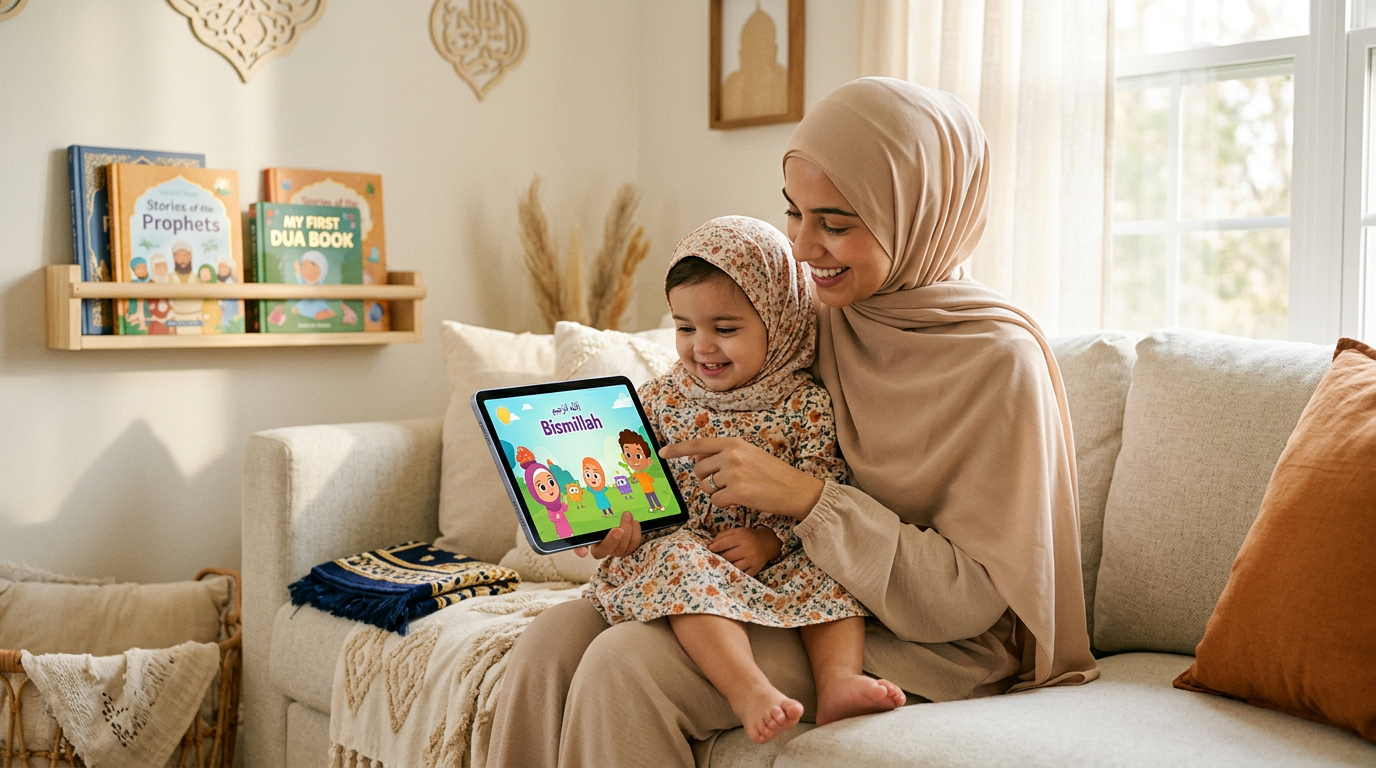
As the sun sets and the call to the Maghrib prayer approaches, a truly special moment arrives for a fasting family. It’s that quiet, deeply personal time right before you reach for a date or a sip of water, and it’s marked by a specific supplication: the dua for breaking your fast.
This isn't just a prayer; it's a profound acknowledgment of the day's journey. It captures the relief from thirst, the nourishment of the body, and the sincere hope that your fast has been accepted by Allah (SWT). For parents, it's also a beautiful opportunity to model gratitude and faith for your little ones.
Your Simple Guide to the Iftar Dua
Imagine the scene: the table is set, the family is gathered, and your baby or toddler is watching you, full of anticipation. This is the perfect time to introduce them to the dua for breaking your fast. It’s a short, powerful supplication that transforms the simple act of eating into a moment of worship and gratitude.
For parents, having this dua ready is key. Think of it as a peaceful pause—a chance to center everyone and anchor the meal in thankfulness before the happy chaos of iftar begins, especially when you're managing a hungry little one.

The Most Common Dua
The supplication most widely reported from the Prophet Muhammad (peace be upon him) is both beautiful and easy to remember. It’s found in the collection of Sunan Abi Dawud and is loved for its simple, profound message.
ذَهَبَ الظَّمَأُ، وَابْتَلَّتِ الْعُرُوقُ، وَثَبَتَ الْأَجْرُ إِنْ شَاءَ اللَّهُ
Reciting this together every evening builds a warm, consistent Ramadan ritual. Over time, your child will recognize the words and the special, calm feeling that comes with them.
Your Quick Guide to the Iftar Dua
To help you during those busy moments just before iftar, here’s a simple breakdown of this cherished dua. You can save it on your phone or even print it out and stick it on the fridge as a reminder for the whole family.
| Arabic | Transliteration | Simple English Meaning |
|---|---|---|
| ذَهَبَ الظَّمَأُ، وَابْتَلَّتِ الْعُرُوقُ، وَثَبَتَ الْأَجْرُ إِنْ شَاءَ اللَّهُ | Dhahaba adh-dhama’u, wabtallatil-‘urooqu, wa thabatal-ajru in sha Allah. | Thirst is gone, the veins are moistened, and the reward is certain, if Allah wills. |
What makes this dua so perfect is how it connects the physical experience of ending the fast with the spiritual hope for Allah's reward. It's a complete and heartfelt expression of a believer's state at iftar.
Understanding the Meaning Behind the Iftar Dua
The words we say at iftar are so much more than a routine before taking that first sip of water. It's a real, heartfelt conversation with Allah, packed with beautiful meanings that even our little ones can start to grasp.
When we say, “Thirst is gone,” it’s a simple but powerful expression of gratitude (shukr). Just imagine how that cool drink feels after a long day. That instant relief is a small taste of Allah's immense mercy. For a toddler, you can liken it to the pure joy they feel when they get their favorite snack or a warm cup of milk after a long nap.
This first part of the dua for breaking your fast takes a very real, physical feeling and ties it directly to being thankful to Allah for what He has given us.
A Heart Full of Hope
The dua carries on with, “the veins are moistened,” a beautiful, almost poetic description of the body reviving with that first drink. It’s a physical reality that connects us to a spiritual one.
Then, the final words, “and the reward is certain, if Allah wills,” shift our focus from the immediate meal to the bigger picture. This part of the dua is all about hope and faith. It's our quiet prayer that Allah accepts our effort, our patience, and our entire day of fasting. It’s a lot like when your child tries their absolute best to build a tower of blocks; they look up at you, hoping for a smile of approval. In this moment, we turn to Allah with that very same hopeful heart.
By reciting this dua, you are modeling a key Islamic value: that every blessing, from a sip of water to the promise of Jannah, comes from Allah alone. This helps plant the seeds of sincere gratitude in your child’s heart.
Different Words, Same Beautiful Meaning
You might hear other families recite a slightly different dua when breaking their fast, like "Allahumma inni laka sumtu..." which means "O Allah! I fasted for You...". It's important to know that these variations are all beautiful and completely valid ways of expressing the same core feelings: devotion, trust, and thankfulness.
These differences come from various narrations and scholarly preferences across the Muslim world. Whether you're in London, Lahore, or Kuala Lumpur, the spirit of the dua is exactly the same. The key is to choose one version and use it consistently as a family. This creates a predictable and comforting routine for your toddler, making the moment special.
Knowing this helps you focus on what truly matters—connecting with Allah together and turning iftar into a cherished memory filled with peace and blessings.
Creating a Calm and Happy Iftar Routine
For parents with babies and toddlers, those precious moments right before Maghrib can feel… well, anything but peaceful. Juggling a hungry little one while putting the final touches on the food and listening for the adhan can easily feel chaotic. But it doesn't have to be. With a bit of gentle planning, you can transform that pre-iftar rush into a cherished family ritual centered around the dua for breaking your fast.
The secret? Predictability. Toddlers absolutely thrive on routine. When they know what’s coming next, they feel secure and settled, which is half the battle won right there. An iftar routine doesn’t need to be complex—it just needs to be consistent.
Setting the Scene for a Peaceful Iftar
Your environment has a huge impact on everyone's mood. A few simple tweaks can signal to your toddler that a special, quiet time is about to begin. The idea is to cut down on the noise and create a space that feels warm, connected, and focused.
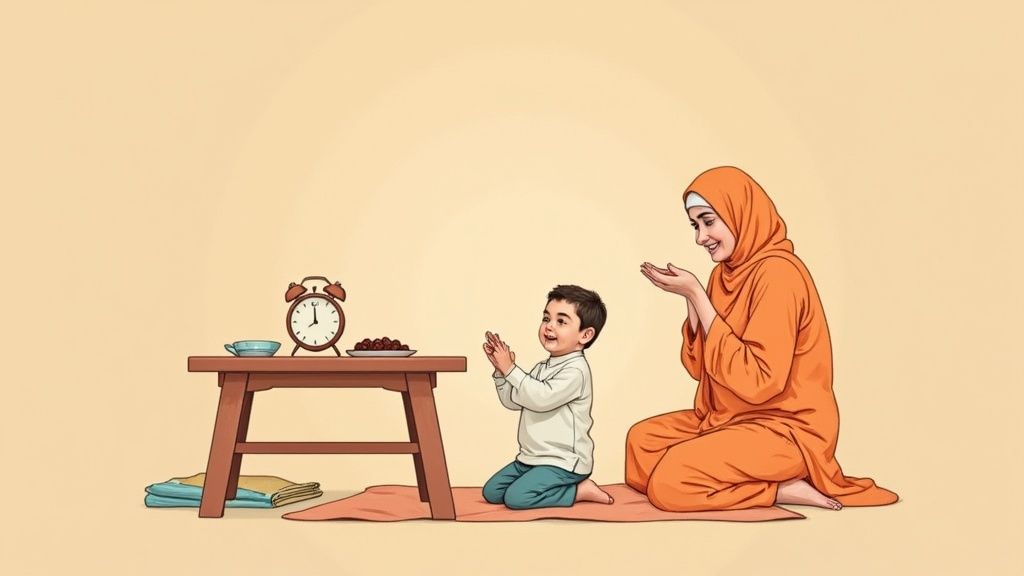
A really simple way to start is by having a designated 'iftar spot.' This could be a small mat on the floor or a special place at the table where the dates and water are set out a few minutes before the call to prayer.
To make this moment feel even more special, try these tips:
* Minimize Distractions: A few minutes before it’s time to break the fast, turn off the TV, put the phones away, and maybe dim the lights. This simple shift cuts way down on overstimulation and helps your child focus on the here and now.
* Prepare in Advance: Get everything you need—the dates, water, and maybe a small snack for your toddler—laid out ahead of time. This stops that last-minute scramble and keeps the energy in the room calm and collected.
* Use a Calm Voice: As you gather together, speak in a soft, gentle tone. Your calm energy is contagious and can work wonders on any pre-iftar fussiness.
This quiet lead-up builds a sense of positive anticipation, helping your child connect this time with peace and family, not just with food.
When and How to Make the Dua
The Sunnah is to break our fast as soon as Maghrib begins, without delay. For a family with little ones, this just means being ready to go the moment you hear the adhan or see the clock hit the right time.
A predictable routine is the foundation of a toddler's sense of security. Just as a consistent bedtime routine helps them wind down for sleep, a predictable iftar routine helps them transition calmly into the evening meal.
As the adhan starts, calmly sit together. Model the beautiful etiquette of raising your hands for dua. Even if your toddler just watches you, they are soaking in this powerful act of worship. Recite the dua aloud in a clear, gentle voice right before you pop that first date in your mouth or take a sip of water. This timing beautifully connects the words of gratitude with the blessing of food and drink from Allah.
Building this habit day after day creates a powerful anchor in your child's life. The consistency of this ritual works in the same way parents establish a soothing experience with an Islamic bedtime routine for toddlers, where predictable steps lead to a peaceful outcome. Over time, your child will learn that this quiet moment of dua is a non-negotiable, special part of every single Ramadan day, turning potential chaos into a cherished family memory, inshaAllah.
How to Gently Introduce the Dua to Your Toddler
Teaching your little one the dua for breaking your fast isn't about getting them to memorize it perfectly right away. It's really about creating a warm, happy feeling around this beautiful moment of the day. For babies and toddlers, the goal is simply positive exposure. They learn so much by watching us, hearing us, and playing—they’ll absorb the beautiful sounds and loving atmosphere you create around iftar.
The key is to keep it gentle and completely pressure-free. Think of it like a sweet lullaby or a familiar nursery rhyme. Your child doesn't need to understand every single word to feel its comfort and love. Your calm voice and joyful recitation are the most powerful tools you have.

Start With Simple Sounds And Actions
For the youngest members of the family, participation is all about simple, sensory experiences. Their minds are like little sponges, soaking in the routines that shape their world. You can start building these positive associations right from their very first Ramadan.
Here are a few gentle, age-appropriate ideas:
- For Babies (0-12 months): Just hold your baby close and recite the dua in a soft, melodic voice before you break your fast and they have their milk or a small bite of food. The sound of your voice becomes a comforting signal that it's time for nourishment and family connection.
- For Young Toddlers (1-2 years): Encourage them to copy you! As you say the dua, raise your hands and see if they do the same. You can also focus on one or two simple words, like "Allah" or "Bismillah," and repeat them with a happy, encouraging smile.
- For Older Toddlers (2-3 years): At this age, they adore songs and rhymes. Try chanting the transliterated words of the dua to a simple, familiar tune like "Twinkle, Twinkle, Little Star." This turns memorization into a fun game, not a chore.
The real aim here is to connect the beautiful words of the dua with the happy feeling of being together as a family at iftar.
Making a Global Tradition Personal
By introducing this dua, you're connecting your child to a beautiful tradition shared by Muslims all over the world. The act of breaking the fast at sunset is a globally significant practice. According to 2017 Pew Research data, eight-in-ten Muslim Americans report fasting during Ramadan, which just goes to show how deeply this ritual is cherished. By making the iftar dua a natural part of your family's routine, you're planting a seed that connects your child to this vast, diverse Ummah. You can find more fascinating insights into this global practice from the Pew Research Center's findings.
The most important thing is the feeling you create. Your toddler will remember the warmth, the smiles, and the taste of the first date long before they remember the exact words of the dua. Make it a moment of pure connection and joy.
Remember, every dua is a conversation with Allah. While this specific supplication is for breaking the fast, you can introduce other beautiful duas into your daily life. For instance, learning about the powerful dua starting with "Allahumma inni as'aluka" can further enrich your family's spiritual vocabulary in a simple, accessible way.
Use Playful Learning Tools
Toddlers learn best when they can see, touch, and interact with the world around them. You can use simple, everyday objects and playful tools to help them connect with the meaning behind the iftar dua.
To make it more concrete, here are a few simple, playful, and age-appropriate ways to introduce the iftar dua to your little one.
Age-by-Age Dua Introduction Ideas
| Age Group | Activity Idea | Goal |
|---|---|---|
| 0-12 Months | Cuddle & Hum: Hold your baby while reciting the dua in a soft, humming tone before their feed. | Positive sound association and comfort. |
| 1-2 Years | Copycat Hands: Raise your hands for dua and gently help them raise theirs. Say a simple word like "Allah!" with a smile. | Connect a physical action with a special moment. |
| 2-3 Years | Picture Match: Use flashcards of a date and water. Point to the water when you say, "The thirst is gone..." | Start building simple vocabulary and meaning. |
| 3-4 Years | Dua Song: Make up a simple tune for one line of the dua, like "Dhahaba-ẓ-ẓama'u!" and sing it together. | Make memorization feel like a fun game. |
These little activities are all about making the experience joyful and memorable.
Try creating some simple flashcards with pictures of a date, a glass of water, and maybe a smiling face. As you say each part of the dua—"Thirst is gone..."—you can point to the picture of the water. This visual link helps their developing minds make connections between the words and their real-world meaning.
These gentle, playful methods ensure that learning the dua for breaking your fast becomes a cherished part of their early childhood, building a foundation of love for the beautiful traditions of Islam, one happy iftar at a time.
Living the Spirit of Iftar Beyond Just Words
Iftar is so much more than the meal we eat after sunset. It’s a feeling of warmth, gratitude, and community that even the littlest hearts can understand and feel a part of. While your toddler is too young to fast, they are definitely not too young to absorb the beautiful lessons of Ramadan. By modeling the spirit of the dua for breaking your fast through your actions, you bring its meaning to life for them in the most gentle and powerful way.
Faith is shown, not just told. Simple, kind actions at iftar time teach your child that Islam is about sharing, patience, and being thankful for Allah’s blessings. Think of these small, repeated gestures as the building blocks of their spiritual understanding.
Making Gratitude a Family Action
Your toddler learns about shukr (gratitude) by watching you. When you say ‘Alhamdulillah’ with a genuine smile after taking that first sip of water, their little eyes are watching. They see your relief and connect it with a word of thanks to Allah. This is where the real learning happens, in those authentic, unscripted moments.
You can involve them in these moments in simple, age-appropriate ways:
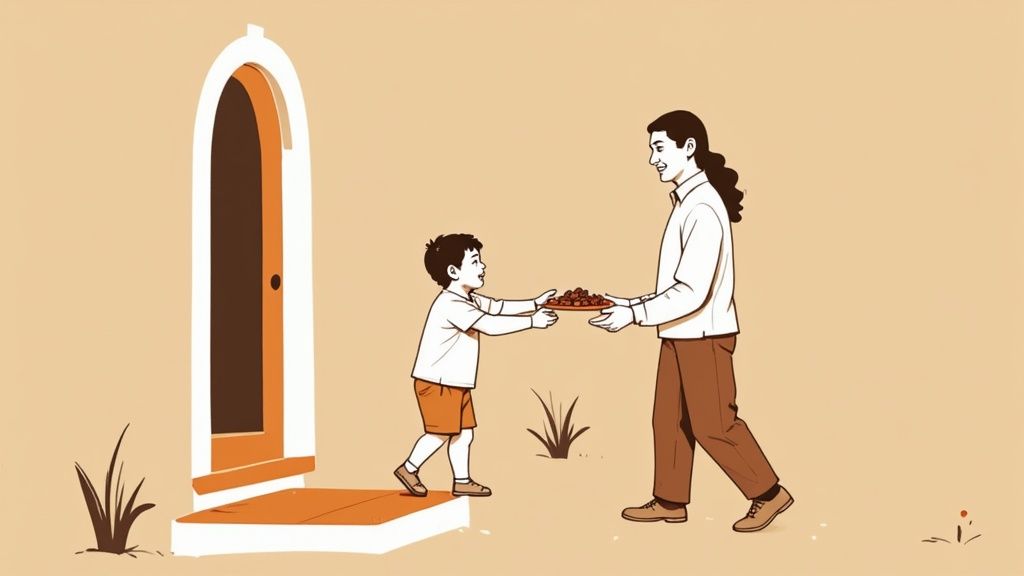
- Sharing with Neighbors: Let your toddler help you arrange a few dates on a small plate to share with a neighbor. This simple act of giving shows them what community and generosity look like in action.
- Waiting Patiently: As you wait for the adhan, you can say something like, “We’re waiting patiently for Allah’s special time to eat.” This frames the virtue of sabr (patience) in a real and immediate context they can grasp.
- Voicing Thankfulness: After they have their milk or a small bite to eat alongside you, encourage them to say "Alhamdulillah" with you. This simple practice connects the feeling of a full tummy with gratitude to Allah.
These small rituals are the essence of a living faith. Our guide to Islamic parenting for toddlers offers more practical ways to weave these values into your daily routines.
Iftar as a Shared Blessing
The act of gathering for iftar is a powerful symbol of family and community that resonates deeply with Muslims all over the globe. It's a tradition that goes beyond our individual homes, becoming a shared cultural and even economic touchstone. In fact, a 2023 analysis noted that 97 percent of the Muslim population expected to partake in Ramadan festivities, which often center around shared iftar meals. This just goes to show how the ritual you practice at home connects your family to a worldwide community celebrating the same blessings. You can discover more insights about the cultural significance of Ramadan from this EBSCO research summary.
It's a comforting thought for parents that even without fasting, your child is not missing out. They are fully participating in the blessings of Ramadan by being part of these beautiful shared family rituals.
Through these simple, consistent actions, your toddler learns that the dua is not just a collection of words. It is a feeling of joy, a practice of kindness, and a moment of deep connection with both family and Allah.
Common Questions About Iftar and Toddlers
As a parent with little ones, you’re probably juggling a lot of questions about how to blend Ramadan traditions with the beautiful chaos of family life. It's totally normal to wonder how to manage your own spiritual goals while caring for a baby or toddler. Let's walk through some of the most common concerns about iftar, fasting, and the dua for breaking your fast.
The most important thing to remember is to cultivate a feeling of warmth and joy. At this age, your child’s impression of Ramadan comes from the happy, loving atmosphere you create, not from getting every single ritual just right.
My Toddler Is Fussy at Iftar Time, What Can I Do?
You are not alone—this is probably one of the most common challenges! That Maghrib hour often lines up perfectly with a toddler's "hangry" and tired window. The secret is to plan ahead and keep your own cool.
- Offer a Small Snack: It is perfectly fine to give your toddler a healthy snack a little while before iftar if they are getting really restless. A few slices of a soft fruit or a small cup of milk can be a lifesaver, preventing a full-blown meltdown and letting the whole family enjoy a more peaceful moment when it’s time to break the fast together.
- Have Their Food Ready: Try to have their portion of the iftar meal plated and cooled to a safe temperature before the adhan. That way, as soon as you say your dua, they can dig in without having to wait.
Your calm energy makes all the difference. A little preparation can transform what could be a stressful moment into a settled and joyful one for everyone.
Should I Wake My Sleeping Baby for Iftar?
In a word: no. Sleep is absolutely crucial for a baby’s health and development. If your little one is sound asleep when it's time for iftar, the best thing you can do is let them rest. You can break your fast quietly and soak in the peaceful moment.
Once they wake up, you can feed them their meal as you normally would. They aren’t missing out on anything important; they are getting the deep rest their growing body needs, which is a mercy in itself.
Managing Iftar with Health Considerations
For many families, iftar planning also includes navigating health conditions, like a parent or grandparent with diabetes. While Islam provides a clear exemption for those whose health would be harmed by fasting, many still choose to participate with their doctor's guidance. In fact, global data shows over 116 million Muslims with diabetes fast during Ramadan, which makes careful meal management essential.
One study focusing on people with type 2 diabetes found that 43 percent experienced hypoglycemia during Ramadan, which really underscores the importance of a well-planned iftar. You can find more details in this study on Ramadan fasting and health management.
If this is part of your family’s reality, keeping things simple is a huge help. Prepping balanced meals ahead of time can lower stress and ensure everyone’s medical needs are met without taking away from the spiritual feeling of the evening.
Your main job as a parent during Ramadan is to model love, patience, and gratitude. How you handle these small, everyday challenges is a powerful lesson for your child.
By embracing flexibility and putting your child’s needs first, you'll find your family's Ramadan is much smoother and more blessed, inshaAllah. It’s all about connection, not perfection.
Ready to introduce your little one to Islamic concepts in a safe and engaging way? Babymode offers a library of beautiful, ad-free videos—from nasheeds about daily duas to stories of Allah's creation—all carefully designed for Muslim toddlers. Join the waitlist for Babymode today and be the first to access a world of gentle, faith-aligned screen time.