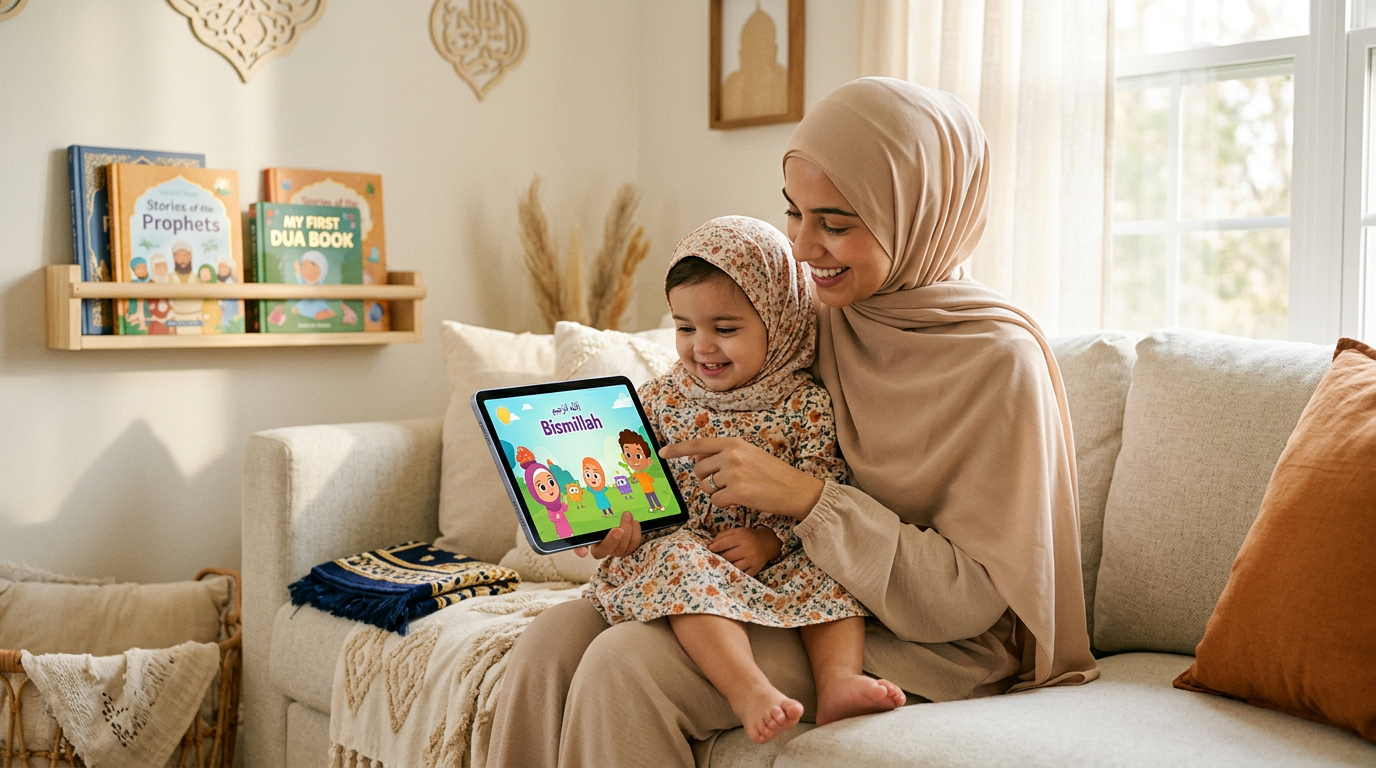
A good Islamic bedtime routine for toddlers is all about mixing simple acts of faith with gentle, calming activities. Think short duas and cozy cuddles. It’s not just a checklist to get them to sleep; it’s a beautiful way to wrap your little one in the comfort and love of our deen as their day ends.
Why a Muslim Bedtime Routine Matters
Let's be real—toddler bedtime can feel like a beautiful, chaotic whirlwind. One minute, you're enjoying quiet snuggles, and the next, you're trying to reason with a tiny person who has suddenly discovered a second wind right after Isha prayer. Juggling everything from dinner cleanup to prepping for the next day can make a peaceful evening feel like a distant dream.
This is exactly why a gentle, faith-filled routine is so much more than a sleep hack. It’s about planting the very first seeds of iman in a way that feels completely natural and secure for your toddler. It turns what can be a stressful time of day into a cherished moment of connection.

Building a Foundation of Peace and Identity
An Islamic bedtime routine isn't about rigid rules. It’s about creating a predictable flow that brings a sense of sakinah (peace and tranquility) into your home. Those simple, consistent actions become powerful anchors in your child’s day.
These small moments do more than just signal that it's time to sleep; they build a spiritual foundation brick by brick. By blending simple Islamic practices with calming activities, you're encouraging both healthy sleep habits and an early love for their faith. Many parents I know start with something as simple as saying 'Bismillah' before lying down, sometimes as early as age 2. For more great ideas on this, eQuranLearning.com has some wonderful insights.
By weaving these gentle practices into your nightly rhythm, you are not just helping your toddler sleep better. You are connecting them to their Muslim identity in a way that is filled with love, comfort, and security from their very first years.
Crafting Your Toddler's Gentle Bedtime Flow
Forget a rigid, by-the-clock schedule. Think of your toddler's bedtime routine as a gentle, predictable flow. It's a sequence of calming steps that lovingly signal to their little body and mind, ‘Sleep is coming soon, and you are safe.’ This isn’t about racing through a checklist; it’s about mindfully creating an atmosphere of peace and connection.
The real secret is building simple but powerful cues into your evening. For so many Muslim families, the day naturally shifts after the evening prayers, which provides the perfect starting point. Once Maghrib or Isha salah is done, you can start the wind-down process by dimming the lights and turning off any noisy TVs or tablets. This small change tells your toddler’s brain that the day's high energy is softening into the quiet of the night.
From Playtime to Peaceful Time
That transition from boisterous play to quiet rest is absolutely crucial. Now is the time to put away the loud, flashy toys and bring out gentle activities that soothe instead of stimulate. The goal is to calm their busy minds without immediately turning to a screen, which can often backfire and make them more hyper.
Here are a few screen-free ideas that work wonders:
- Looking at Islamic Picture Books: Snuggle up with a book about the prophets, Allah’s beautiful creations, or even the Arabic alphabet. The soft illustrations and the quiet sound of your voice are incredibly comforting.
- Sorting Soft Toys: A simple, repetitive task like putting all the stuffed animals into a basket or sorting colorful pom-poms can be very grounding and almost meditative for a toddler.
- Whispering About the Day: Gently talk about a happy moment from the day. “Remember when we saw that fluffy cat in the garden? Alhamdulillah.” This helps them process their experiences in a positive, secure way.
These quiet moments are a cornerstone of effective Islamic parenting for toddlers, teaching them how to self-soothe in a loving environment.
The Comforting Physical Steps
Once the atmosphere is calm, you can move into the more hands-on parts of the routine. Frame each step as an act of care, preparing them for the spiritual connection that comes next. A warm bath, for instance, does more than just get them clean; it washes away the day's tensions and relaxes their little muscles.
Changing into cozy pajamas is another powerful signal that it’s time to rest. As you help them get dressed, you can hum a gentle nasheed or whisper “Bismillah.” These aren’t just chores to be rushed through; they are moments of focused attention that make your child feel utterly cherished and secure.
This physical preparation is what gets their heart and mind ready for the most important part of the islamic bedtime routine for toddlers—the stories and duas that will help them drift off feeling protected and loved.
Remember, the goal is not perfection, but connection. A consistent flow, even a simple one, builds a powerful sense of security that helps your toddler welcome sleep as a peaceful part of their day.
Sacred Words and Stories Before Sleep
This is where the heart of your Islamic bedtime routine truly comes alive. After the quiet play and cozy pajamas, this is the moment for warm, cuddly connection, filling your toddler's heart with the comfort of sacred words and gentle stories before they drift off to sleep.
The goal isn't a formal lesson. Not at all. It's about creating a loving, peaceful atmosphere. Think soft tones, warm snuggles, and the gentle rhythm of your voice as you share the beauty of our deen in a way their little hearts can understand.
This visual guide shows just how simple that transition can be.
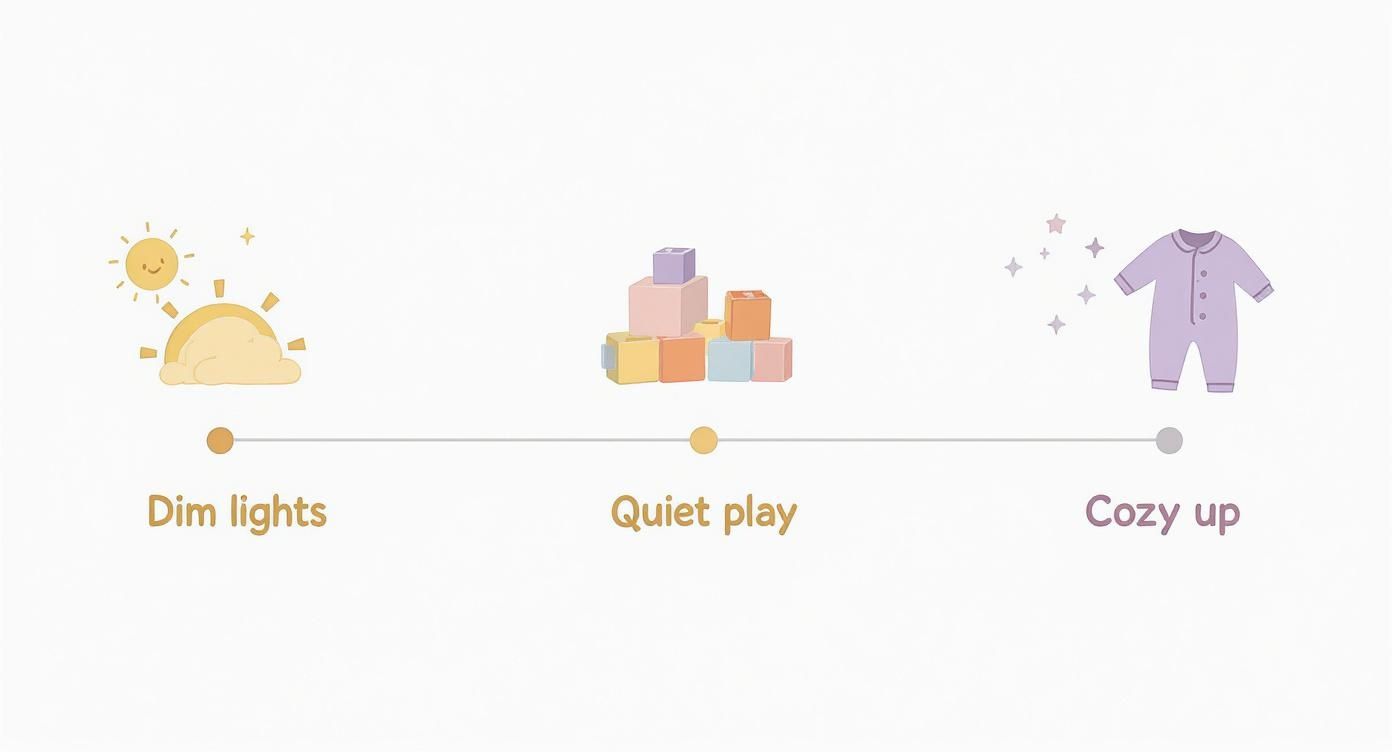
As you can see, each step gently signals to your toddler that it's time to wind down, moving from the busyness of the day toward a calm and spiritual rest.
Introducing Duas with Love
For a toddler, a dua should feel like a warm hug in word form. They don’t need to grasp every syllable to feel the peace and protection behind your words. Start with the simplest and most beloved sleeping dua, reciting it clearly and softly each night.
- The Dua for Sleep: Bismika Allahumma amutu wa ahya.
- A Simple Translation: "In Your name, O Allah, I die and I live."
Repeat it every single night, and soon enough, you’ll hear your little one trying to murmur the sounds along with you. It’s a powerful first step in connecting them with their Creator. For a deeper look into the power of supplication, our guide on the dua "Allahumma inni as'aluka" offers more beautiful insights.
This nightly ritual does more than soothe; it teaches your child that turning to Allah is a source of comfort and safety, a habit they will carry with them for a lifetime, inshaAllah.
As your child grows, you can gradually introduce more elements of a beautiful Islamic bedtime. But remember, the key is to keep it gentle and age-appropriate.
Age-Appropriate Islamic Bedtime Elements
This table offers a simple guide for what to introduce and when, ensuring the experience is always a positive one.
| Age Group | Focus | Simple Actions & Words |
|---|---|---|
| 12-18 Months | Soothing Sounds | Softly recite Bismillah before they sleep. Play a gentle nasheed or Quran recitation in the background. |
| 18-24 Months | Simple Repetition | Recite the main sleeping dua (Bismika Allahumma...) clearly. Let them hear the words consistently every night. |
| 2-3 Years | Active Participation | Encourage them to repeat parts of the dua. Introduce short stories about Allah's creations (moon, stars, animals). |
| 3+ Years | Deeper Connection | Introduce the 3 Quls (Al-Ikhlas, Al-Falaq, An-Nas). Talk about what the duas mean in simple terms. |
Remember, this is a gentle progression. The most important thing at every stage is the feeling of love and security you create.
The Magic of Islamic Storytelling
Bedtime stories are a beautiful way to plant the seeds of faith in an engaging, gentle manner. They build a foundation of love for Allah, His Prophets, and the values we cherish, all without feeling like a lesson.
When you weave Islamic themes into your storytelling, you’re doing so much more than just reading a book. Stories about Allah’s mercy or the kindness of the Prophets create a secure, loving environment that’s perfect for sleep. You can discover more ways to weave these narratives into your child's routine on amaliah.com.
Here are a few story ideas perfect for this age group:
- Tales of Allah’s Creation: Point out the window at the bright moon and twinkling stars. "Look! Allah Al-Khaliq, the Creator, made the beautiful moon just for us to see tonight."
- Stories of the Prophets: Keep it simple. The story of Prophet Nuh (AS) and all the animals on the big boat is a toddler favorite. Focus on the core message of listening to Allah and being kind to animals.
- Stories About Good Manners (Akhlaq): Make up a simple story about a little boy who shared his favorite toy or a little girl who said "Alhamdulillah" after drinking her milk. It makes the concepts real and relatable.
These stories don't need to be long or complex. The warmth of your presence and the love in your voice are what make these moments truly magical, wrapping your child in a blanket of faith as they close their eyes.
Crafting a Peaceful Sleep Sanctuary
Think of your toddler's bedroom as their own little sanctuary—a place where they feel completely safe, loved, and ready to drift off to sleep. Setting up this calm and secure space is a huge part of building a successful Islamic bedtime routine for toddlers. What truly matters is creating a space that feels peaceful and is filled with your family's love.
The basics for a good night's sleep are pretty simple. A dark, quiet, and cool room really does help little ones settle into a deeper, more restorative rest. I've found that blackout curtains are a lifesaver, especially on those long summer evenings when the sun is still out long after Maghrib. A white noise machine can also work wonders to block out the sounds of daily life, like older siblings running around or the clatter of dishes after dinner.

What About Your Family’s Sleep Style?
Let's be real—in many Muslim homes, the separate nursery isn't the norm. Co-sleeping or room-sharing is a beautiful, natural way to stay connected, and it's how many of us were raised. If this is how your family sleeps, the focus is still the same: safety and comfort.
- If You Co-sleep: The golden rule is safety first. Make sure the sleeping surface is firm and flat, with no loose blankets or fluffy pillows near your toddler. It's also critical to ensure there are no gaps between the mattress and the wall or bed frame where a child could get stuck.
- If You Room-share: When your toddler has their own cot or bed in your room, it helps to create a little "sleep zone" just for them. You might dim the lights on their side of the room first to signal that it's their wind-down time, even if you’re still up and about.
This is a common practice all over the world. In many cultures, room-sharing is almost universal. Interestingly, even with these close sleeping arrangements, about 37% of parents in some studies still face sleep challenges, often tied to later bedtimes. You can read more about these fascinating global bedtime practices on babyology.com.au.
The bottom line is this: there is no single "right" way for a family to sleep. Whatever setup is safest and most loving for your family is the absolute best one.
A Quick Word on Facing the Qibla
Parents often ask if a child’s bed or cot should face the Qibla. While it's a beautiful thought and a wonderful practice for our salah, there is no religious obligation for our sleeping direction. The number one priority should always be your toddler's safety and comfort.
Simply place the cot in the safest spot you can find—away from windows, dangling cords, or heaters. The most sacred element of your child's sleep space isn't its physical direction; it's the feeling of security and peace you build through the love and the duas you share within those four walls.
Navigating Common Bedtime Challenges
Even with the most beautiful, sakinah-filled routine, some nights are just plain hard. Toddlers are masters at pushing boundaries, and bedtime can feel like their grand finale. Don't worry, you're not alone in this. Facing these little hurdles is a universal part of parenting, and with a bit of patience and a whole lot of rahmah (mercy), you'll get through it.
The secret is to aim for connection instead of getting caught in a conflict. When your little one suddenly declares they aren't tired, it’s easy to feel your own patience wearing thin, especially at the end of a long day. But remember, their resistance is often a plea for more time with you or a desire for a little control—it's rarely about pure defiance.
"But I'm Not Tired!" — When Your Toddler Resists Bedtime
Ah, the classic bedtime battle. One minute, they’re rubbing their eyes and yawning; the next, they’re wide awake, asking for just one more story, one more sip of water, one more hug.
Instead of locking into a power struggle, try acknowledging their feelings while firmly but gently holding the boundary. A simple phrase can work wonders. Try something like, "I know you want to keep playing, and playing is so much fun, isn't it? Right now, it's Allah's special time for our bodies to rest so we can have lots of energy for a brand new day, inshaAllah."
This simple shift in language does a few things: it validates their desire, frames sleep in a positive Islamic light, and keeps the energy in the room calm. It turns a potential standoff into a moment of teamwork.
Addressing Fears of the Dark
A sudden fear of the dark is incredibly common around ages two and three. Their imaginations are exploding, which is wonderful, but it also means that a pile of laundry can easily become a scary monster in the shadows. This is a perfect opportunity to introduce Allah (SWT) as Al-Hafiz (The Protector).
Here are a few gentle ways to bring comfort:
- Recite Ayatul Kursi together. Explain in simple words that these are powerful words from the Quran, like a special shield from Allah that keeps them safe and sound all night.
- Introduce a "guardian light." A soft, warm night light isn't just a lamp; you can frame it as a special light that helps the angels watch over them while they sleep.
- Empower them with dua. Teach them a simple dua for protection. Giving them the tool to ask Allah for help directly is incredibly empowering for a small child.
By framing these tools within our faith, you’re not just chasing away monsters; you’re teaching your child that their ultimate source of safety and security is Allah (SWT).
Managing Routines with Multiple Children
Trying to get children of different ages to bed can feel like a chaotic juggling act. If you have a baby who needs to be asleep by 7 PM and a toddler who goes down at 8 PM, a staggered routine is your best friend.
Try letting the older toddler have some quiet, one-on-one time with one parent while the other gets the baby settled. This can make their later bedtime feel like a special privilege, not like they're being left out. For more ideas on quiet activities, our guide on managing Muslim toddler screen time has some great, practical tips.
During extra busy times—like Ramadan, when you’re traveling, or have guests over—remember the goal is consistency, not perfection. If the full, drawn-out routine just isn't happening, stick to the absolute core elements. A quick cuddle, reciting the sleeping dua, and a loving goodnight will maintain that crucial connection and make it much easier to get back on track when life calms down.
Common Questions About Toddler Bedtimes
Starting any new routine with a toddler is bound to bring up questions. As you start weaving faith into your family’s nightly rhythm, it's totally normal to wonder about the little details and the "what if" moments. Let's tackle some of the most common questions from Muslim parents.
What If We Miss a Night or Things Go Off-Track?
Life with a toddler is anything but predictable, isn't it? The real goal of a bedtime routine is consistency, not perfection.
If you have a chaotic evening, are traveling, or have guests over, just do what you can. Sometimes, all you can manage is a quick cuddle, whispering "Bismillah," and saying the sleeping dua together—and that's enough. That simple act still reinforces the connection. Don't let a missed step or a rushed night make you feel guilty. Allah (SWT) sees your intentions, and the most important thing is to get back to your familiar flow the very next day.
My Toddler Is Way Too Active for Stories. What Can I Do?
This is such a common struggle! Their little bodies are often still buzzing with energy, even when their minds are getting tired. If getting them to sit still for a story feels like an impossible task, try weaving gentle movement into your storytelling instead.
- Use your hands to show the stars twinkling while you talk about Allah’s beautiful creations.
- Make soft animal sounds when you share the story of Prophet Nuh (AS) and the ark.
- Use a soft puppet to tell a simple story about being kind or sharing.
Another great option is to switch to quiet audio stories or gentle, instrument-free nasheeds. The whole point is connection and calm, so find what works to capture their attention, even if it’s just for a minute or two before they finally wind down.
When’s the Best Age to Start This Kind of Routine?
Honestly, you can start from day one. The routine simply grows and changes as they do.
For a newborn, your routine might just be you softly reciting the Shahada or some dhikr while you rock them to sleep. Once they hit the toddler stage, around 18 months to 2 years old, you can start adding simple spoken words like "Bismillah" and encouraging them to listen as you recite the sleeping dua. The secret is to keep it gentle and age-appropriate, slowly adding more things like stories and short Surahs as they grow and understand more.
The beauty of an Islamic bedtime routine is that it’s not a rigid program. It’s a living, breathing part of your family life that can start at any age and evolve as your child blossoms.
Ready to make screen time a positive and faith-affirming experience for your little one? Babymode offers a safe, ad-free world of Islamic content designed just for toddlers. Explore Quranic stories, the Arabic alphabet, and beautiful nasheeds, all reviewed to align with our values. Join the waitlist today for early access and special launch pricing at https://babymode.ai.