Alphabet learning toys are essentially any tool designed to introduce your little one to letters and sounds through the magic of play. They can be as simple as classic wooden blocks and puzzles or as modern as interactive electronic gadgets, all working to build a strong foundation for language in a fun, hands-on way.
Why Alphabet Toys Are So Much More Than Just Play
As Muslim parents, we look for every opportunity to nurture our children's growth in a way that feels true to our faith. In those quiet, beautiful moments after Fajr prayer or during a bit of playtime before Maghrib, even simple toys can become powerful tools for learning. Alphabet learning toys are a perfect example of this—they do so much more than just teach the A, B, and Cs. They are the first blocks for building curiosity, strengthening little hands, and sparking a lifelong love for language.
Right from the start, these toys help your baby’s brain forge crucial new pathways. The simple act of a one-year-old wrapping their fingers around a chunky wooden letter or a two-year-old figuring out where a puzzle piece goes is a huge developmental win. This kind of hands-on play builds coordination and problem-solving skills in a way that screens just can't match.
A Foundation for Bilingualism
For many of our families, raising bilingual children is a beautiful and important goal. We want them to navigate the world confidently in English while also connecting deeply with Arabic, the language of the Quran. Alphabet learning toys are a wonderful, gentle way to introduce both alphabets right alongside each other.
Just imagine using colorful magnetic letters on the fridge to spell out your child's name in English, and then placing the Arabic letters for 'Alif' and 'Baa' right next to them. This simple, everyday exposure helps their amazing young minds grow comfortable with different scripts and sounds, paving a natural road to reading both languages later on, inshaAllah.
Nurturing a Calm, Focused Mind
In a world that often feels loud and full of distractions, simple, open-ended toys can offer a much-needed breath of fresh air. Unlike overstimulating gadgets that demand attention, classic alphabet blocks or puzzles encourage your child to focus and get creative. They create a peaceful space for learning at their own pace.
This gentle approach doesn't just support their cognitive skills; it aligns beautifully with the Islamic principle of raising children with a sense of tranquility and purpose. It’s all about making learning a joyful and natural part of your daily rhythm, not another stressful task.
To keep things fresh and exciting, you can mix in different kinds of activities. Moving beyond just the physical toys, playing some fun letter games for preschoolers can make recognizing letters a truly enjoyable adventure.
This blended approach, where you combine hands-on play with thoughtful digital tools, creates a wonderfully rich learning environment. For example, you could pair a physical Arabic alphabet puzzle with the halal, ad-free content on an app like Babymode. This reinforces learning through sight, touch, and sound, ensuring every experience is safe, meaningful, and perfectly aligned with your family’s values.
Choosing the Right Alphabet Toys from Birth to Age Three
Picking the perfect alphabet toy isn't about grabbing the fanciest gadget off the shelf. It’s really about matching the right tool to where your child is at developmentally. What fascinates a two-year-old will be completely lost on a six-month-old, and that’s perfectly normal.
When you understand what your little one can do at each stage, you can choose toys that truly nurture their growing skills without causing frustration. This approach weaves learning right into your daily playtime, making it feel natural and fun.
From Birth to One Year: Gentle First Introductions
In that first year, your baby is a little sensory explorer. Their vision is still coming into focus, and their main way of learning is through touch and, let's be honest, taste. The goal here isn't to teach them the ABCs but to create positive, gentle moments with the shapes and sounds of letters.
Simple is always best at this age.
- High-Contrast Alphabet Cards: A newborn's eyes are naturally drawn to bold, black-and-white images. Propping up cards with big, clear letters during tummy time is a fantastic way to stimulate their developing sight.
- Soft Fabric or 'Crinkle' Books: These are wonderful for sensory play. Your baby can safely mouth the pages, feel the different textures, and delight in that satisfying crinkle sound, all while you point out the letters. You can easily find beautiful options with both English and Arabic letters.
- Simple Wooden Blocks: They won't be building towers just yet, but lightweight wooden blocks with smooth, rounded edges are perfect for little hands to practice grasping.
If you’re looking for more ideas for this stage, our guide on educational toys for a 6-month-old has plenty of safe and engaging suggestions.
From One to Two Years: Building Skills with Purposeful Play
Once your baby becomes a toddler, their motor skills take a huge leap forward. They’re becoming masters of grasping and pointing, and their curiosity is off the charts. Now is the perfect time to bring in alphabet toys that require a bit more coordination and thought.
At this age, the connection between what their eyes see and what their hands do is strengthening every day. A toy that challenges them to place, stack, or fit pieces together isn't just teaching letters—it's building the foundation for problem-solving.
Look for toys that are durable enough to withstand some enthusiastic play.
- Chunky Wooden Puzzles: Puzzles with big, single-letter pieces are fantastic. They help your toddler develop hand-eye coordination and shape recognition as they figure out which letter fits where.
- Alphabet Blocks: The classic wooden block set is a must-have for a reason. Your child can stack them, knock them down, and start to see letters as distinct shapes. You can use them to spell out their name or simple, loving words like "Baba."
- Bath Letters: Foam letters that stick to the tub when wet can turn bath time into a relaxed learning session. It’s a wonderfully low-pressure way to expose them to the alphabet while they splash and play.
From Two to Three Years: Exploring Sounds and Meanings
Between two and three, your toddler's language skills are absolutely exploding. They’re starting to grasp the incredible idea that letters represent sounds and that those sounds string together to make words. It's an exciting time to introduce more interactive toys that build on this new understanding.
This infographic is a great reminder of how even simple toy blocks build a foundation for curiosity, key skills, and language.
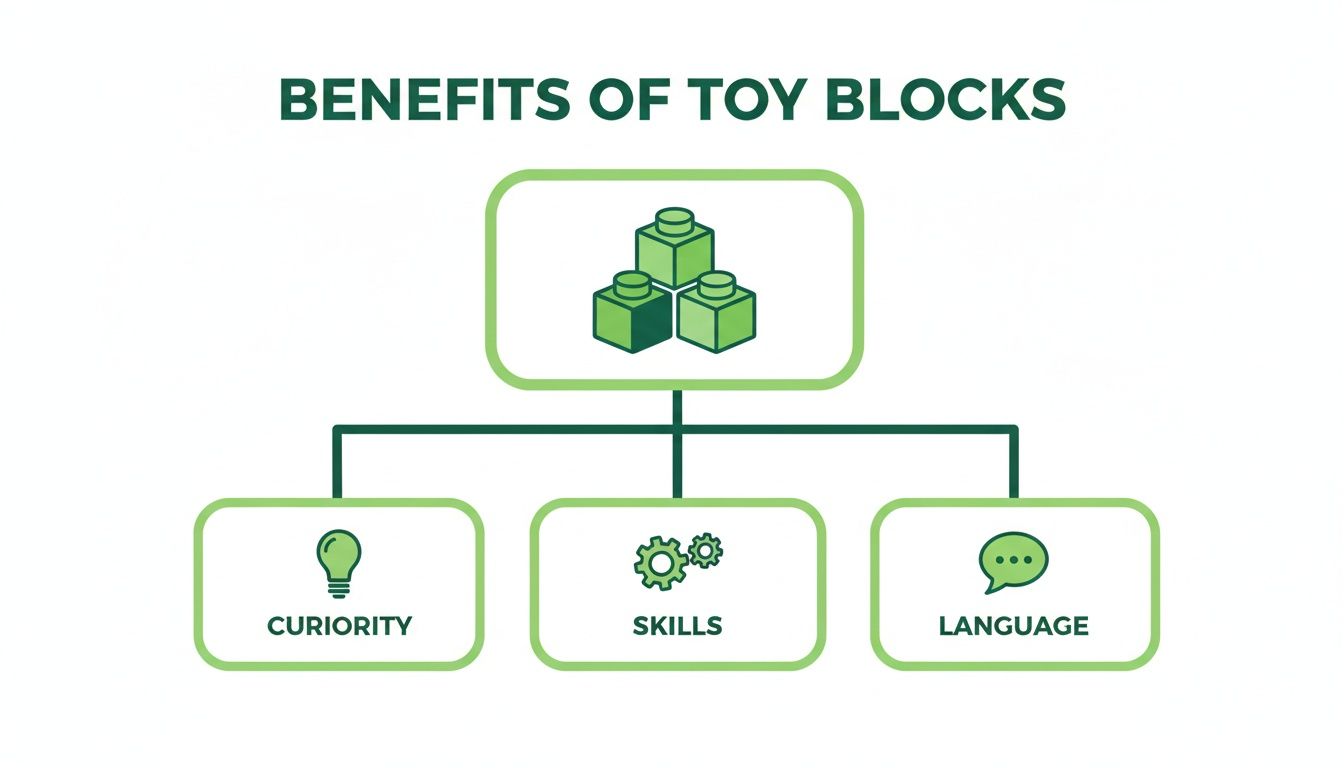
It really shows how basic play tools can directly support higher-level thinking.
- Magnetic Letters: A set of magnetic letters for the fridge is incredibly versatile. You can use them to spell out simple Arabic words like 'Bismillah' before a meal or practice English letter sounds while you make dinner.
- Beginner Phonics Toys: The right electronic toy can be helpful here, as long as it isn't too overstimulating. Look for ones that clearly pronounce the sound a letter makes when pressed, which helps build that crucial link between the written symbol and its sound.
It's no surprise that the educational toy sector is booming. The 0–4 years age group is a huge focus, driven by parents wanting to give their kids a strong start in literacy and numeracy.
To make things even easier, here's a quick guide to help you choose the right toy for your child's age, keeping our shared values in mind.
Age-Appropriate Alphabet Toy Guide for Muslim Toddlers
This table provides a quick reference for parents to select the right alphabet learning toys based on their child's developmental stage, with a focus on skills and halal-friendly options.
| Age Group | Developmental Focus | Recommended Toy Types | Bilingual Tip (English/Arabic) |
|---|---|---|---|
| 0–1 Year | Sensory exploration, grasping, visual tracking | Soft fabric books, high-contrast cards, smooth wooden blocks (large, unpainted) | Point to letters in both languages during cuddle time; use books with English/Arabic script. |
| 1–2 Years | Fine motor skills, hand-eye coordination | Chunky wooden puzzles, alphabet blocks for stacking, foam bath letters | Name the letters in both languages as they play; e.g., "This is 'B' for Baba." |
| 2–3 Years | Letter recognition, sound association, pre-writing | Magnetic letters, interactive phonics toys (with clear sounds), lacing alphabet beads | Spell simple words like their name or 'Allah' on the fridge; find toys with Arabic phonics. |
This guide is just a starting point, of course. The most important thing is to watch your child, see what captures their interest, and enjoy these playful learning moments together.
What to Look for in a Halal-Friendly and Safe Toy
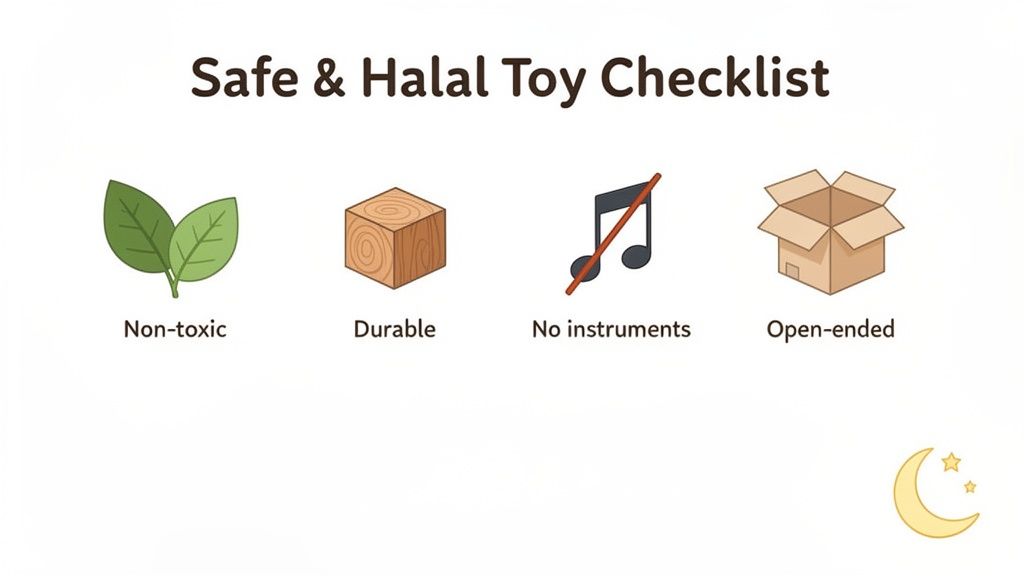
When you’re bringing things into your home for your little one, choosing the right alphabet learning toys is about more than just what looks cute or educational. For Muslim parents, it’s about creating a wholesome environment where our children can thrive, surrounded by things that are pure, safe, and in line with our family’s values.
We want toys that teach, of course, but also protect their fitra (natural disposition) and give us peace of mind. It’s a lot like picking the ingredients for a meal—every single component matters.
Prioritizing Physical Safety and Durability
First things first: a toy has to be safe. Babies and toddlers are natural explorers, and their main tools are their hands and mouths. Everything they play with needs to be ready for some serious, hands-on investigation.
- Non-Toxic Materials: Look for toys made from natural materials like wood, finished with non-toxic, water-based paints. If you're going for plastic, make sure the label says it's BPA-free, phthalate-free, and PVC-free. Since toys will inevitably end up in your little one's mouth, you need to be confident they aren’t ingesting anything harmful.
- Durability and Choking Hazards: Give the toy a good once-over. Are there small parts that could snap off? A well-made wooden block or puzzle piece should feel solid and smooth, without any splintered or sharp edges. Before you hand it over, give it a tug to make sure every part is secure.
And don’t forget about upkeep. Keeping those toys clean is just as important. Using a non-toxic toy cleaner ensures their play space stays hygienic without introducing harsh chemicals into the mix.
Aligning Toys with Islamic Values
Beyond the physical, we also want toys that feel right in our home and align with Islamic principles. This is all about fostering a gentle, faith-centered atmosphere for our children from day one.
- Avoiding Inappropriate Imagery: Many parents prefer toys with simple, neutral designs. This often means staying away from toys with detailed faces of animate beings or characters that don't quite fit with the family's preferences. Classic letter blocks, geometric shapes, and abstract patterns are fantastic choices.
- Checking for Sounds and Music: If a toy is electronic, have a good listen. Many of them play instrumental music, which some Muslim families choose to avoid. You can often find great alternatives that feature just the spoken letter, nature sounds, or even vocal-only nasheeds. A volume control is also a huge plus for keeping the home environment calm.
The Beauty of Simplicity and Open-Ended Play
In a world buzzing with flashy gadgets, there’s something truly special about simple, open-ended toys. These are the toys that don't dictate how a child should play; instead, they invite imagination to take the lead.
An open-ended toy, like a set of plain wooden alphabet blocks, can be anything a child imagines it to be. It can be a tower one day and a train the next, all while they are subconsciously absorbing the shapes of the letters.
This type of play helps build a focused attention span and avoids the overstimulation that often leads to meltdowns. It fits beautifully with a gentle parenting approach, allowing your child to learn at their own pace in a peaceful, supportive space.
By choosing toys that are simple, safe, and aligned with your values, you're doing so much more than just buying a plaything. You're thoughtfully nurturing your child’s mind, body, and soul.
Bringing Letters to Life with Faith-Inspired Activities
Once you’ve found the perfect alphabet learning toys for your family, the real fun begins. This is where you get to weave those letters right into the fabric of your day-to-day life. The most meaningful learning doesn't happen during scheduled "lessons"—it blossoms in those small, warm, and playful moments you already share.
These ideas are all about being simple and fitting into the natural rhythm of a busy Muslim household. The goal is to make learning letters a joyful, pressure-free part of your routine that strengthens the beautiful bond between you and your little one, inshaAllah.
Everyday Play Ideas for Your Home
The secret is to fold letter play into things you’re already doing. It makes the whole process feel completely effortless. Whether you're in the kitchen, getting ready for a nap, or just enjoying some quiet time on the floor, an opportunity is always there.
Here are a few simple ideas to get you started today:
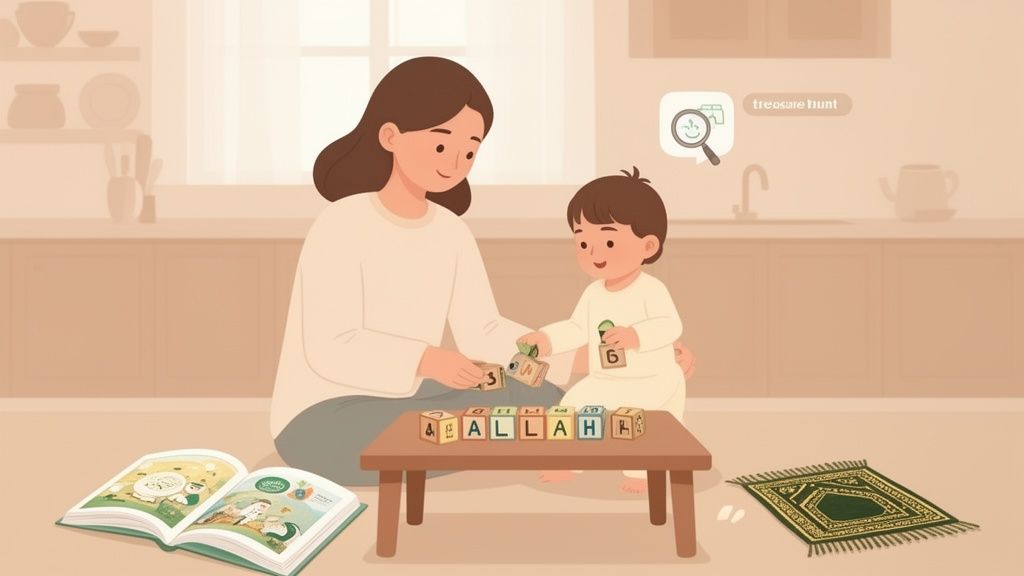
- Kitchen Companion: As you're prepping dinner before Maghrib, let your toddler play with magnetic letters on the fridge. You can work together to find the letter ‘A’ for Allah or ‘B’ for Bismillah. It’s a wonderful way to keep them happily engaged and learning right beside you.
- Alphabet Treasure Hunt: Hide a few chunky letter blocks around the room before naptime. Turn it into a game of finding them, calling out each letter's name and sound as it’s discovered. It’s a great way to add a little fun and movement to the day.
- Sensory Tray Surprise: Take a shallow tray and fill it with rice, lentils, or even sand. Let your little one trace letter shapes with their fingers or a smooth wooden block. This kind of tactile play is fantastic for building pre-writing skills.
Connecting Physical Toys with Books and Screens
To really solidify what your child is learning, try connecting the physical toys in their hands with the letters they see in books or on a screen. This helps them grasp that the wooden ‘Alif’ from their puzzle is the very same ‘Alif’ in their favorite Islamic storybook.
This simple act of matching helps your child’s brain make a crucial connection: the three-dimensional object in their hand represents the two-dimensional symbol on the page. It's a foundational step towards understanding that letters are symbols with meaning.
This technique is also brilliant for bilingual learning. For instance, as your child grows and you start exploring the fascinating connections between Hebrew and Arabic, our guide on the journey from Alef to Tav can offer some great context.
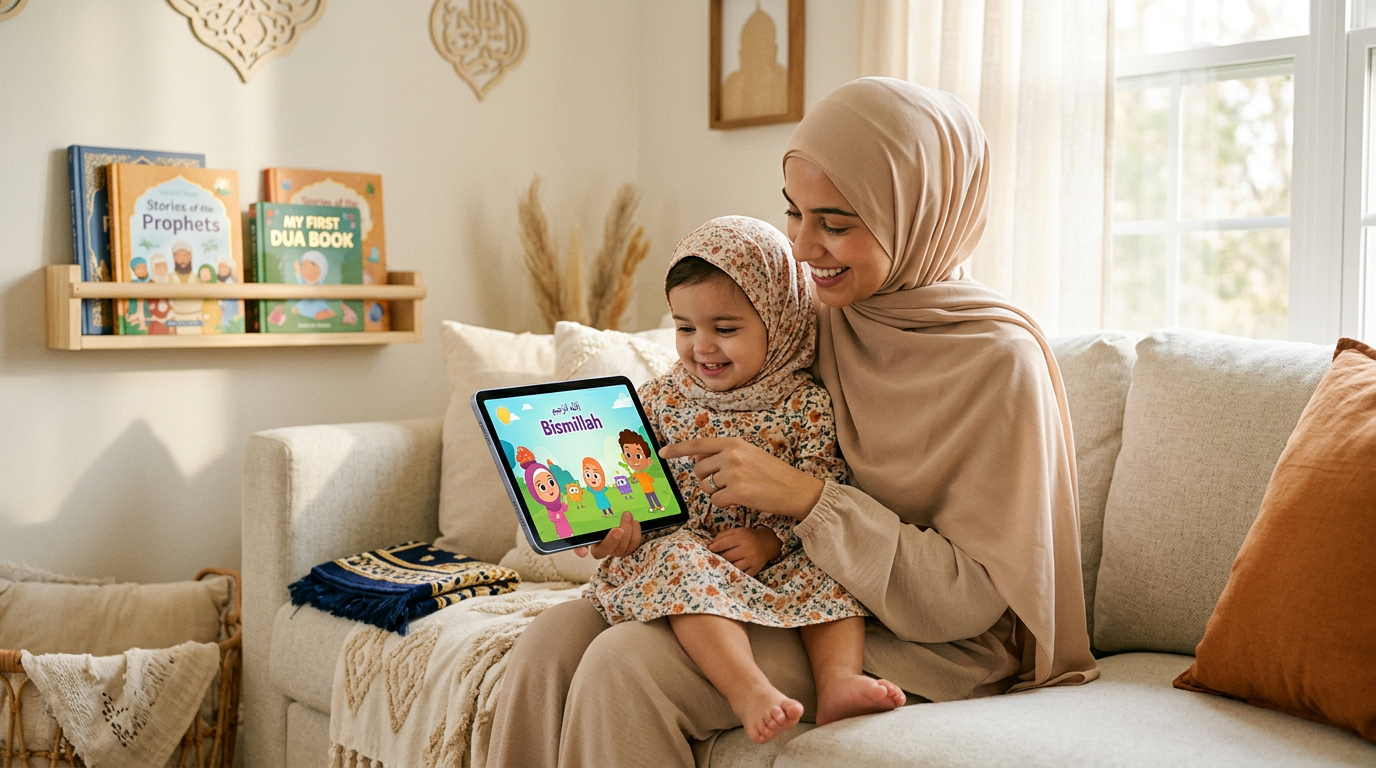
You can also build a bridge between hands-on play and safe screen time. When you’re watching a nasheed on the Babymode app together, grab your letter blocks. Ask your child, "Can you find the letter 'B' just like the one on the screen?" It’s a simple game that makes learning feel interactive and links their physical world to the gentle digital content you've chosen for them.
Making It Personal and Meaningful
The learning that truly sticks is the learning that connects to your child's world and your family's faith. Use those alphabet toys to spell out words that are important and loved.
- Spell out the names of family members: Baba, Mama, or their own name.
- Form simple, positive words like love, light (Noor), or peace.
- Arrange the letters for Allah and take a moment to talk about His beautiful names.
These activities do so much more than just teach letter recognition. They fill your child's playtime with warmth, identity, and a gentle awareness of their faith. By making learning personal, you're nurturing not just a growing mind, but a little heart, too.
Balancing Hands-On Play with Safe Screen Time
In a modern Muslim home, the discussion around screens isn't really about physical toys versus digital devices anymore. It’s about finding a thoughtful, blended approach that works for your family. How do we give our little ones the best of both worlds—the rich, tactile experience of hands-on play and the benefits of purposeful, safe screen time?
The truth is, physical alphabet learning toys offer something essential that screens simply can't. When your toddler holds a wooden ‘Baa’ in their hands, they're learning about weight, texture, and dimension. This sensory feedback is absolutely crucial for brain development and for building the fine motor skills they'll one day need for writing.
At the same time, we live in a world where digital tools, when used mindfully, can beautifully complement this learning. The key is to see them not as replacements for play, but as partners in it.
Finding a Purposeful Digital Partner
This is where a tool like Babymode can become a trusted part of your family’s routine. It’s designed specifically to work alongside—not against—the hands-on learning you’re already doing. Think of it as another gentle layer of reinforcement for what they’re already exploring.
For instance, after your child has spent time stacking their Arabic letter blocks, you can sit together and watch a calm, animated nasheed on Babymode. This brings those same letters to life with sound and movement, creating a powerful connection in their mind. It links the physical object they just held to its name and sound in a way that’s both engaging and memorable.
This blended method respects the deep developmental need for physical play while also acknowledging the reality of modern family life. It recognizes that sometimes you need a safe, engaging activity for your child while you prepare a meal before Maghrib or take a quiet moment for your own prayers.
Creating a Safe, Ad-Free Digital Space
For Muslim parents, the biggest worry with screen time is often what our children might see or hear. Mainstream platforms are flooded with ads, unpredictable algorithms, and content that might not align with our values. That’s why a closed, carefully curated environment is so important.
Babymode was built from the ground up to solve this very problem.
- Completely Ad-Free: You won't find any product placements or distracting commercials. Your child's focus stays on the gentle, educational content.
- Halal-Verified Content: Every video, from stories about the Prophets to simple daily duas, is reviewed to ensure it's appropriate and reinforces the positive, gentle values you're nurturing at home.
- No Instrumental Music: For families who prefer it, all nasheeds and songs are vocal-only, creating a peaceful and permissible soundscape.
The growing market for smart, interactive toys shows a huge parental interest in tech-based learning tools. The growth of the smart toys market on MarketResearchFuture.com shows how this trend highlights the urgent need for safe, ad-free digital options like Babymode that protect children from the data risks common in mainstream toys.
You Are Always in Control
Ultimately, balancing screen time is about intention and control. A tool should serve your family, not the other way around. With Babymode, you have complete oversight of what your child is watching. You can set viewing limits, choose specific categories, and monitor their engagement.
This ensures that screen time is always a purposeful, limited, and positive part of their day. It becomes a resource you can feel good about using—one that supports your child’s learning journey while protecting their innocence. For a deeper look at this topic, you can read our guide on navigating screen time for children aged 0-3 from an Islamic perspective.
Bringing It All Together: A Foundation for Lifelong Learning
As we wrap up our little guide, it’s clear that choosing an alphabet learning toy is about so much more than just the ABCs or the Alif-Baa-Taas. It’s really about sparking that initial flicker of curiosity in our little ones. It’s about weaving together play, learning, and faith in a way that feels warm, joyful, and completely natural.
Every decision, from the feel of a wooden block in their tiny hands to the gentle, halal content they see on a screen, helps build their world. By thoughtfully picking toys that are safe, just right for their age, and in tune with our family’s values, we’re laying the groundwork for a genuine love of learning—one that’s beautifully rooted in our Islamic faith.
You Are Their Best Guide
In all the hustle and bustle of daily life, it's easy to forget the most important thing: you are your child's very first, and very best, teacher. The toys and apps we've discussed are just that—tools to help you on this incredible journey.
Nothing can replace the sound of your voice, the patience in your touch, or the comfort of your presence. These are the things that make learning magical. The toys are just helpers in the beautiful story of your child's growth, and you are the main character.
The shared giggles over a toppled block tower or the soft whisper as you trace a letter together—those are the moments that build more than just knowledge; they build a heart. Insha'Allah, you're creating a loving foundation for their education and their identity as a young Muslim.
A Partner in Your Peaceful Home
Creating a nurturing, faith-filled environment is a big and wonderful responsibility, but you don’t have to do it alone. At Babymode, our hope is to be a quiet partner for your family, offering a calm, ad-free digital space that works hand-in-hand with the physical play you value so much.
We’re here to give you tools that help protect your child’s innocence while feeding their curiosity. By pairing hands-on toys with thoughtful, halal-verified screen time, you create a balanced learning world that’s just right for your modern Muslim family.
May your days be filled with blessed discoveries and the simple joy of watching your little one learn and grow.
Your Questions About Alphabet Toys, Answered
Choosing the right learning tools for your little one can bring up a lot of questions. Here are clear, reassuring answers to some of the most common things Muslim parents ask, helping you feel confident as you introduce the world of letters.
At What Age Should I Introduce Alphabet Learning Toys?
You can start as early as six months with simple things like high-contrast alphabet cards or soft fabric books. At this tender age, it’s not about memorization at all. It’s about gentle exposure, making the shapes of letters a familiar and comforting part of their world from the very beginning.
Once your child is a bit more mobile—around their first birthday—you can bring in more interactive toys like chunky blocks and simple puzzles. The most important thing is to just follow their lead. Keep it playful, keep it light, and never add any pressure.
Should I Teach the Arabic or English Alphabet First?
This is a great question, and the answer is that you can absolutely introduce them together! Toddler brains are wired to learn multiple languages at the same time without getting confused.
A helpful approach is to link each alphabet to a different context. For example, you might use English letter toys during general playtime and bring out the Arabic letter toys when you sit down to read an Islamic storybook. This consistency helps them build separate, strong connections for each language. Joyful, regular exposure is the real key.
My Toddler Isn't Interested in Alphabet Toys. What Should I Do?
First, don't worry—this is completely normal. A toddler's interests can change in the blink of an eye. The best thing you can do is step back and never force it, as that can create a negative feeling around learning.
Instead, try weaving the letters into activities they already love.
- For the sensory seeker: Hide letter blocks in a bin of rice or lentils for them to dig out and discover.
- For the car lover: Have their favorite toy cars drive over, around, and between letter shapes on the floor.
- For a fresh start: Try rotating their toys. Simply putting a toy away for a few weeks can make it feel brand new and exciting when it reappears.
Are Electronic Alphabet Toys with Sounds and Lights Okay?
They certainly can be, but moderation is key. When looking at an electronic toy, look for one with calm sounds, clear pronunciation, and—most importantly—a volume control. Try to steer clear of toys that are overly flashy or chaotic, as they can quickly become overstimulating for a young child.
It’s often best to balance these with simple, classic toys like wooden blocks, which encourage more open-ended imagination. And, of course, always give it a listen to make sure any sounds or songs align with your family's preferences, especially regarding instrumental music.
At Babymode, we believe in supporting your family with gentle, faith-aligned tools for your child's early development. Our ad-free, halal content is designed to work beautifully alongside hands-on play, creating a peaceful and enriching learning environment.