The best educational toys for a 6-month-old are the ones that meet them right where they are—engaging their budding senses and growing motor skills. Think soft blocks with interesting textures, high-contrast board books that captivate their developing vision, and simple rattles or shakers perfect for tiny hands to grasp and explore.
Your Baby's World at 6 Months
At six months old, your baby is blossoming. That tiny newborn is quickly transforming into a curious little explorer, eager to make sense of the beautiful world Allah (SWT) has created. Every single day brings new changes, turning what seem like ordinary moments into amazing opportunities for discovery and connection.
When you understand these key developmental milestones, you can choose toys that truly support your baby's growth, Insha'Allah.
Think about how your baby is already a part of your family's daily rhythm. They might watch you intently as you prepare for Salah, reach for your prayer beads with a new sense of purpose, or coo along to a soft Quran recitation. These aren't just sweet little moments; they're signs of major cognitive and physical leaps happening right before your eyes.
Key Milestones at 6 Months and How to Support Them
At this precious age, your baby's development kicks into high gear across several areas. These changes are exactly what makes playtime so important, as they directly influence how your baby interacts with and learns from their surroundings.
Here's a quick look at what's happening and how you can nurture that growth through simple, meaningful play in your Muslim household.
| Developmental Area | What You Might See | Simple Ways to Play |
|---|---|---|
| Gross Motor Skills | Sitting up with a little help, rolling over, pushing up on their arms during tummy time. | Encourage tummy time on a soft mat with a mirror or a favourite toy just out of reach. Help them sit supported by pillows while they play. |
| Fine Motor Skills | Grasping toys with their whole hand, bringing everything to their mouth to explore. | Offer easy-to-hold toys like soft blocks, teething rings, and lightweight rattles. Let them safely explore different textures. |
| Sensory Development | Tracking moving objects with their eyes, noticing different colours and sounds. | Read colourful board books together. Shake a rattle gently from side to side and watch their eyes follow. |
| Language & Communication | Babbling with more complex sounds ("ba-ba," "da-da"), responding to their name. | Talk to your baby throughout the day. Copy their babbles to have a "conversation" and sing them gentle nasheeds. |
| Cognitive Growth | Understanding cause and effect (shaking a rattle makes noise), beginning to grasp object permanence. | Play simple games like peek-a-boo with your hijab or a soft blanket. Show them how a toy makes a sound when they shake it. |
Recognizing these milestones helps you see playtime in a whole new light.
It’s not just about keeping your baby entertained. It's about providing the right tools to nurture the incredible abilities Allah (SWT) has gifted them with at this beautiful stage of life.
Choosing Toys That Nurture Development
Walking into a toy store or scrolling online can feel like a sensory overload. With endless options flashing and beeping, how do you pick the right educational toys for your 6-month-old? The secret isn't in complexity; it's in finding simple, purposeful items that match their current developmental leaps. This turns playtime into a genuine act of discovery.
This age is all about introducing toys that engage their blooming senses and strengthen their tiny, but mighty, motor skills. Think of it as giving them the right tools for the beautiful work they are already doing—exploring the world Allah (SWT) has created for them.
The infographic below breaks down the key developmental areas—vision, motor skills, and hearing—that are rapidly growing at the six-month mark.
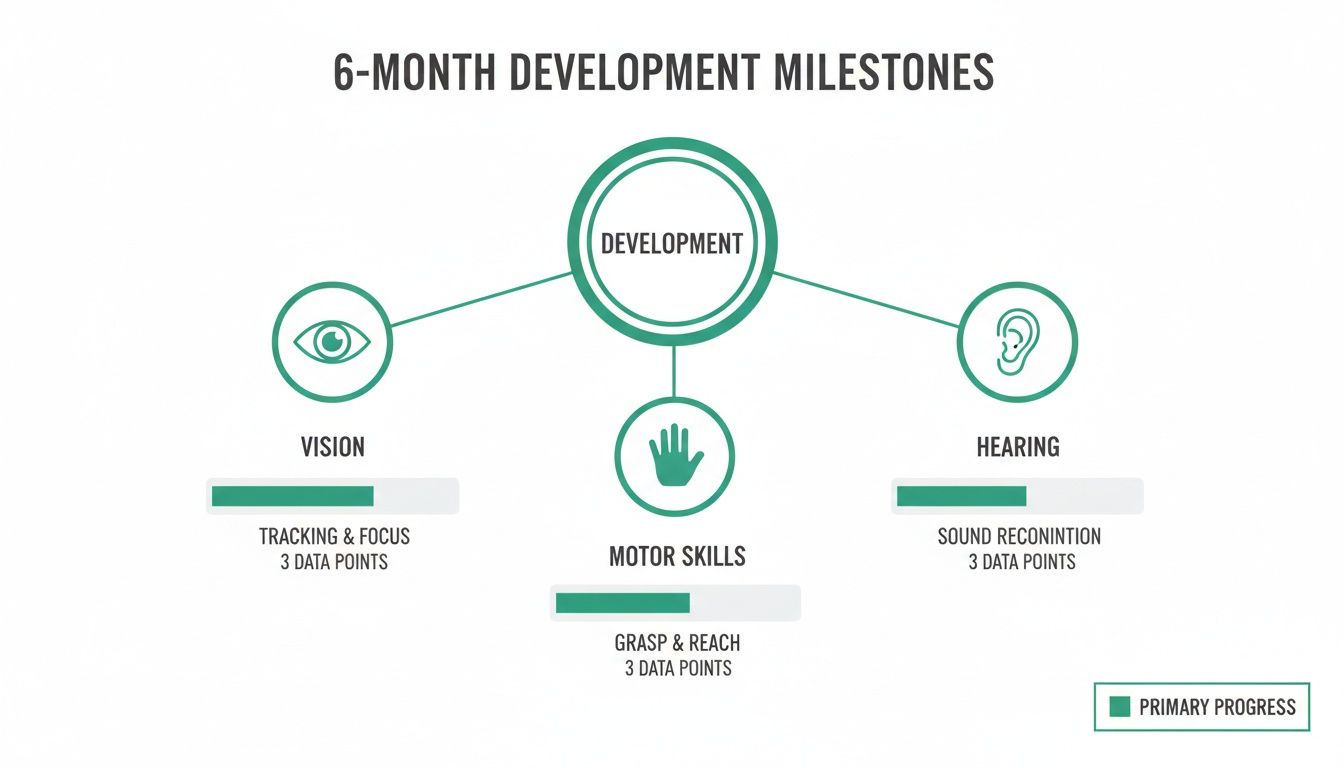
This visual is a great reminder of how interconnected these skills are. It shows why a single, well-chosen toy can often support multiple areas of growth at once.
Toys for Sensory and Motor Skill Growth
At six months, babies are masters of exploration. Their primary tools? Their hands and their mouth. Everything they can get their hands on will likely end up being tasted, so toys that cater to this natural curiosity are a huge win.
- Sensory Books and Toys: Look for soft, fabric books with different textures—crinkly pages, fuzzy patches, or smooth ribbons. Teething toys that are safe to chew are also fantastic. These items help your baby build connections between what they feel and what they see.
- Soft Blocks: Big, plush blocks are perfect for little hands to grasp, squish, and wave around. Try finding some with high-contrast colours, simple patterns, or even Arabic letters to introduce familiar shapes from an early age.
- Tummy Time Toys: Engaging toys can transform tummy time from a chore into a fun challenge, strengthening crucial neck and core muscles. Our guide on the best tummy time toys has plenty of ideas for this important daily routine.
A truly great educational toy for a 6-month-old doesn't need flashing lights or loud electronic sounds. Its real value is in how it responds to your baby's actions. A gentle shake makes a rattle, a squeeze produces a soft squeak. This is how they learn the foundational concept of cause and effect.
Fostering Cognitive Skills
Beyond just touching and feeling, certain toys are brilliant for building your baby’s thinking skills. This is where you can start laying the groundwork for future learning, one little "aha!" moment at a time.
Stacking rings are a classic for a reason. Right now, your baby might just enjoy knocking the tower over (and that's part of the fun!), but they are also beginning to absorb concepts like size, order, and how different objects fit together. This simple activity is a powerhouse for building hand-eye coordination and problem-solving abilities.
Even simple games like peek-a-boo or hiding a favourite toy under a blanket help them grasp object permanence—the huge cognitive leap of understanding that things still exist even when they can't be seen.
Choosing toys based on their educational benefits is a growing priority for parents globally. For a 6-month-old who is starting to roll, grasp, and babble in response to voices, this means more high-quality options than ever are available to support their development.
And if you're looking for something beyond a traditional toy, a personalized baby name book is a wonderful gift. It can spark a love for reading early on while creating a treasured keepsake for years to come.
Your Non-Negotiable Safety Checklist
As a parent, your child’s safety is a trust—an amanah—that comes before absolutely everything else. Before a toy can even be considered fun or educational, it must be completely safe for your curious six-month-old. And let's be honest, they will explore everything with their hands and mouth.
This checklist will help you feel confident and prepared, Insha'Allah.
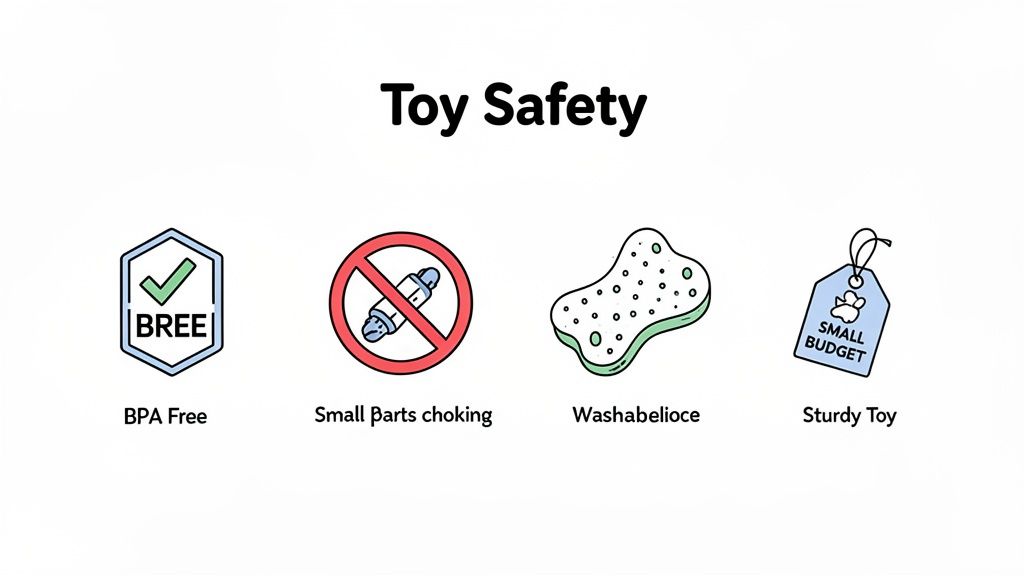
Materials and Choking Hazards
At six months old, every single toy is a potential teether. It's your baby's natural instinct to mouth whatever they can grab to learn about its shape and texture. This is exactly why the material of a toy is so incredibly important.
Always look for toys clearly labelled as BPA-free, phthalate-free, and made from non-toxic materials. You can't go wrong with natural options like untreated wood or food-grade silicone.
The most critical safety check you'll do is for choking hazards. An easy rule of thumb is the classic toilet paper roll test: if any part of a toy can fit through the cardboard tube, it's too small for your baby. Period. Double-check for any loose parts, small buttons, or weak seams that could break off.
Durability and Cleanliness
A toy that can't withstand a bit of rough love isn't a good investment—or a safe one. Look for sturdy construction that won’t splinter, crack, or fall apart after a few drops. A well-made toy not only lasts longer but is also much safer for your little one.
Cleanliness is also a huge part of your baby’s health. Let's be real—toys will be dropped, spit up on, and dragged across every surface. Choosing toys that are easy to clean is a must.
- Silicone and plastic toys should be simple to wipe down or even pop in the dishwasher.
- Fabric or plush toys should ideally be machine washable to keep them fresh and germ-free.
- Wooden toys can be easily cleaned with a damp cloth and a mild, baby-safe soap.
Remember, a high price tag doesn't always mean high quality. Some of the safest and most cherished toys are the simple, well-made classics. Your focus should always be on solid construction and safe materials, not on flashy brand names.
This mindset of prioritizing safety extends to all the items your baby interacts with, not just their toys. For instance, this helpful guide walks you through how to choose a personalized blanket for baby with tips on materials and safety, making sure comfort doesn't come with compromise. These same principles—checking materials and construction—apply to everything in your baby’s world, helping you create a secure space for them to grow and explore.
Weaving Play into Your Daily Muslim Life
You don't need a rigid schedule or a room overflowing with toys to foster purposeful play. In a Muslim home, some of the most beautiful learning moments happen organically, woven right into the calm, predictable rhythm of your family's day. The real secret is spotting those little pockets of opportunity for connection and development.
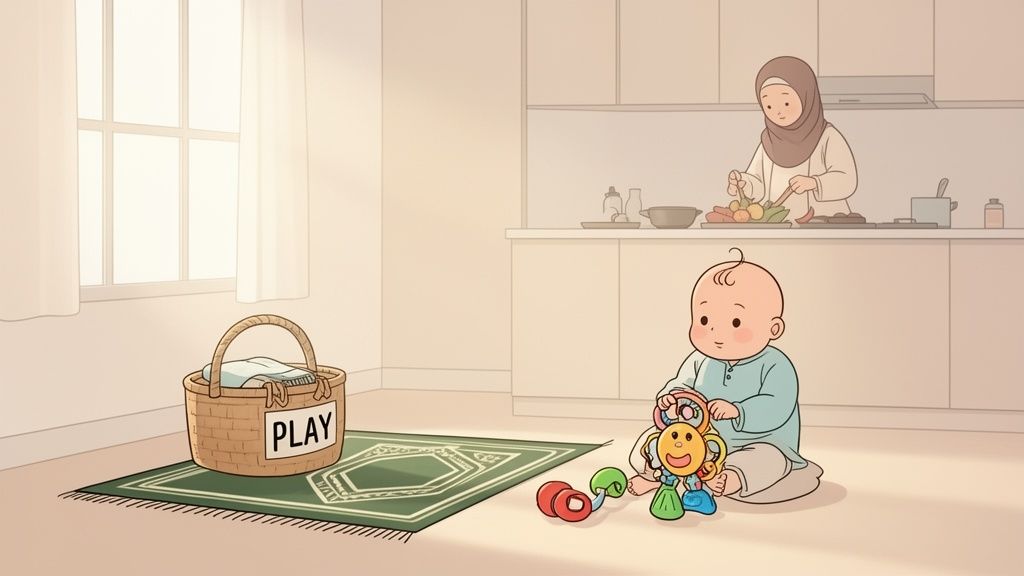
This gentle approach honours your baby’s need for routine and helps you avoid the overstimulation that almost always leads to a fussy, unhappy little one. Short, focused bursts of play between naps, meals, and prayers are far more impactful than long, drawn-out sessions. Just a few minutes of shared joy can do wonders for your bond and build crucial skills, making learning a natural, stress-free part of your life together.
Integrating Play into Your Routine
Finding these moments is easier than you think. It's all about being intentional with the time you already have, whether it’s five minutes before Maghrib or ten minutes while the rice is cooking. A little creativity can turn everyday chores into sweet moments of connection.
Here are a few simple ideas to get you started:
- Kitchen Companion: While you’re in the kitchen, pop your baby safely in their high chair with a couple of sensory toys, like a silicone teether or a soft crinkle book. You can chat with them about what you’re doing, describing the colours of the vegetables or the smell of the spices.
- Prayer-Time Play Basket: Keep a small basket of quiet, engaging toys near your prayer space. When it's time for Salah, your baby can have their own special things to explore. This gives them a peaceful activity and allows you a moment for focused worship.
- Laundry Day Learning: As you sort the laundry, let your baby touch and feel the different fabrics. The contrast between a soft wool sweater and a smooth cotton shirt is a simple, yet powerful, sensory lesson.
The Power of Simplicity and Intention
It’s easy to feel pressured to buy a mountain of educational toys. It's a massive industry—the infant and toddler toy market hit around USD 16.7 billion last year, driven by products promoting motor and cognitive skills. As parents learn how critical the first 1,000 days are for brain development, that number makes sense. You can find more details about this market on gminsights.com.
But here’s the truth: the most valuable "tool" for your baby's development is you. Your voice, your touch, and your undivided attention are more powerful than any toy on the market. Simple, open-ended toys are just props for that interaction, not a replacement for it.
By keeping your approach simple and intentional, you create a calm, nurturing atmosphere for your baby to thrive in. This mindset aligns beautifully with faith-based parenting, where presence and mindfulness are so deeply valued. If you're inspired to create a simple yet purposeful play space, you might enjoy our guide on the Montessori approach in a Muslim home. It's a wonderful example of how just a few well-chosen items can spark endless curiosity and learning, Insha'Allah.
A Balanced View on Screens and Hands-On Play
As a Muslim parent in a world full of glowing screens, it's completely understandable to feel wary. For your six-month-old, nothing beats the real world. Hands-on, tactile play is everything. The feel of a soft block, the jingle of a rattle, and the simple joy of seeing your face—these are the most powerful learning tools your baby has.
But we also have to be practical. Life happens. There will be moments when you need just a few minutes to make wudu, finish preparing a meal, or help an older sibling. This is where a mindful, balanced approach to screen time can come in. It's not a replacement for real interaction, but a supplemental tool for those specific, short moments. The secret is all in choosing the right kind of content.
Mindful Screen Time as a Helpful Tool
The best way to think about screen time is not as a digital babysitter, but as a carefully chosen, very brief activity. The goal is to sidestep the overstimulating, fast-paced, and often questionable content that dominates mainstream platforms. We want to find experiences that are calm, ad-free, and in harmony with our faith.
A platform like Babymode was created with this very purpose in mind. It provides gentle, instrument-free nasheeds or simple, sweet stories about Allah’s creations. This is a world away from the loud, chaotic cartoons and constant ads that can easily disrupt a baby's sense of peace.
When it comes to screen use for a baby, it’s all about quality over quantity. Think of it as a brief, supervised moment of enrichment that adds to the peaceful home environment you're creating, rather than taking away from it.
Choosing Calm, Faith-Aligned Content
If you do decide to use a screen for a few minutes, what’s on it matters immensely. The difference between a thoughtful choice and a random one is huge.
- Avoid Overstimulation: Look for content that is slow-paced. Steer clear of frantic scene changes, jarring electronic sounds, and chaotic visuals that can overwhelm a baby's developing nervous system.
- Insist on Ad-Free: Many mainstream kids' apps are built to sell things. An ad-free space protects your child’s innocence and keeps the experience pure and focused.
- Look for Islamic Values: Content that features soft recitations, stories about kindness, or gentle explorations of nature reinforces the beautiful values you hold dear.
Globally, parents are investing heavily in early learning—the educational toys market is valued between USD 51.99 billion and 66.22 billion, with North American families making up about 38% of that spending. This shows how much we value providing good learning tools. For Muslim families, this means that while the market for faith-aligned physical toys is growing, we also need high-quality digital options that reflect our values and avoid the common pitfalls of mainstream media.
If you're looking for practical tips on managing this, our guide on how to limit screen time for babies has some great strategies.
Ultimately, finding that balance between hands-on play and occasional, high-quality screen time is a personal journey. By keeping sessions very short, always supervised, and filled with calm, faith-aligned content, you can ensure that technology serves your family’s values, Insha'Allah.
Answering Your Questions About Baby Toys
When you're picking out toys for your 6-month-old, it's completely normal to have a ton of questions. You want to be practical, support your baby's growth, and make sure everything aligns with your family's values. Let's walk through some of the most common concerns we hear from fellow Muslim parents, so you can feel confident and at ease with your choices.
How Many Toys Does My 6-Month-Old Really Need?
Honestly, less is more at this stage. It's surprisingly easy for a baby to get overstimulated, so a small, curated collection of 5-7 high-quality, versatile toys is more than enough. The real goal is quality interaction, not the quantity of stuff in the toy basket.
A simple toy rotation system works wonders. Keep a few toys out for your baby to explore and tuck the rest away. Then, every week or so, swap them out. This little trick keeps things fresh and exciting for your baby without creating clutter or overwhelming their developing senses.
Are Toys with Lights and Sounds Bad for My Baby?
It’s a great question, and the answer really comes down to the type of toy. Those loud, flashy electronic toys with repetitive sounds can be incredibly jarring and don't offer much in the way of real learning. They can easily disrupt the peaceful, calm atmosphere you're trying to build in your home.
On the other hand, toys with gentle, natural sounds are fantastic. Think of a soft rattle, the crinkle of a fabric book, or the gentle clink of wooden blocks. Even a simple toy that plays a quiet nasheed when a button is pressed can be great for teaching cause and effect. The key is finding toys where your child is in control of the sound, and the overall effect is soothing, not chaotic.
The most enriching sounds for your baby are the ones that come from you and your home—your voice, a gentle recitation, or the sounds of daily life. Simple toys should complement this, not compete with it.
Can I Use Everyday Household Items for Play?
Absolutely! You’d be amazed at how many incredible learning tools are already sitting in your kitchen cabinets. Using everyday items is a beautiful way to nurture your baby’s curiosity, and with close supervision, they can be some of the best "toys" around.
- A wooden spoon and a pot: The perfect first drum set for exploring rhythm and sound.
- Different textured fabrics: A silk scarf, a cotton washcloth, or a fuzzy sock are all fantastic for sensory play.
- A set of plastic measuring cups: These make a wonderful, budget-friendly alternative to classic stacking rings.
Just be sure that anything you give your baby is clean, completely safe, and doesn't have any small parts or sharp edges. It's a brilliant way to spark creativity without spending a fortune.
Where Can I Find Good Islamic-Themed Toys?
Alhamdulillah, the options for beautiful, faith-centred toys are growing every day. Many wonderful Muslim-owned small businesses are creating thoughtful products for our little ones. A great place to start looking is online, especially on platforms like Instagram and Etsy.
You can find things like soft Kaaba blocks, wooden Arabic alphabet puzzles, and colourful board books about the prophets. When you can’t find the right physical toy, you can also supplement playtime with short, gentle screen experiences from trusted sources that introduce Islamic concepts in a calm, positive, and ad-free way.
At Babymode, we get how important it is to create a safe, halal, and nurturing environment for your little one, both in the real world and online. Our platform offers a library of gentle, ad-free videos—from soft nasheeds to stories about Allah's creation—designed specifically for Muslim children aged 0–3.
Join the Babymode waitlist today to be the first to know when we launch. You'll get early access to a screen-time experience you can truly feel good about, Insha'Allah.