From your baby’s first coos to their wobbly first steps, every moment is a milestone. The journey of introducing them to the Arabic alphabet, from Alif to Ya, can be just as gentle and natural. This isn't about flashcards or formal lessons; it's about weaving the beautiful sounds and shapes of the language of the Quran into the warm, loving moments you already share.
Your Gentle Start From Alif To Ya
For many of us, introducing our children to the Arabic alphabet feels like opening a door to their identity and faith. This journey is a full and loving introduction to a language that connects them to their heritage and the Quran.
This journey is not about pressure or perfection. For children aged 0–3, learning is all about connection, comfort, and curiosity.
It's about singing a soft nasheed with letter sounds while you change a nappy, or pointing to a colourful 'Baa' on a wooden block during playtime. These small, consistent interactions create positive associations, making the alphabet a familiar friend long before formal schooling begins.
This gentle approach is rooted in the idea that children learn best when they feel safe, happy, and engaged. The key to giving your baby a gentle start is to embrace the principles of play-based learning, which puts exploration and joy at the heart of everything. By making letters a part of their world through multisensory play, you are building a strong, stress-free foundation.
A Timeline For Gentle Exposure
So, what does this actually look like in practice? It’s not about pushing a 2-year-old to write but about meeting them exactly where they are. This visual guide illustrates how exposure to the Arabic alphabet can naturally progress through your child's first three years.
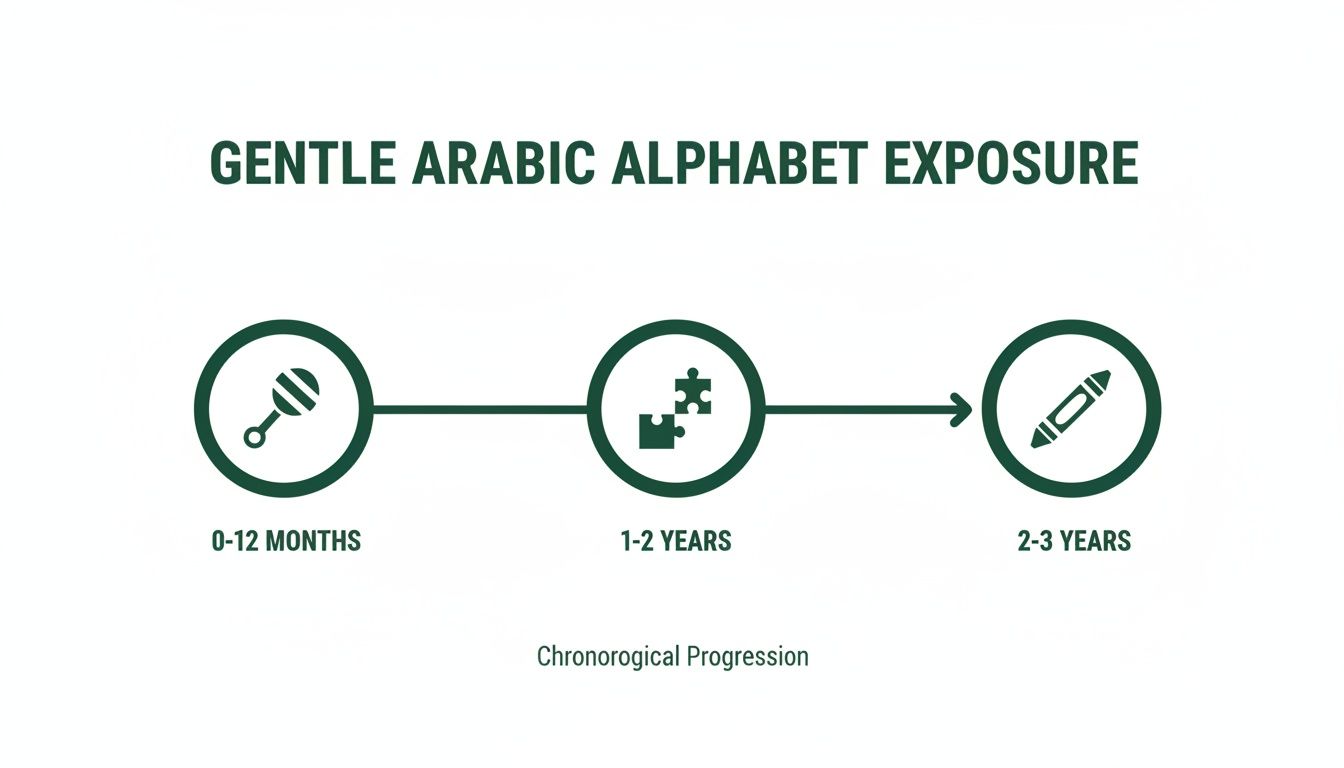
As you can see, the focus evolves from simple sensory input for infants to more interactive, hands-on play for toddlers.
Here’s a quick reference guide showing what gentle, play-based exposure to Arabic letters can look like at each stage.
Arabic Alphabet Milestones For Ages 0-3
| Age Range | Focus of Exposure | Simple Activity Idea |
|---|---|---|
| 0-12 Months | Auditory & Visual Familiarity | Sing alphabet nasheeds during cuddle time or point to large, colourful wall art featuring Arabic letters. |
| 12-24 Months | Tactile & Interactive Play | Introduce chunky wooden alphabet puzzles or play with alphabet foam letters in the bath. |
| 24-36 Months | Letter Recognition & Sound Association | Read alphabet board books together, pointing to letters and saying their sounds. Use playdough to form simple letter shapes. |
Remember, these are just gentle signposts, not rigid requirements. The goal is simply to create a positive and nurturing environment where the Arabic alphabet is a natural part of your child’s world.
Why Early Alphabet Exposure Matters in a Muslim Home
For Muslim parents, helping our little ones get to know the Arabic alphabet isn't just another educational milestone. It's an act of love, a deeply personal way to share our faith. This journey, from Alif to Ya, is all about planting the first seeds of connection to the Quran. It’s about building a positive, strong Islamic identity right from the start and making the language of our deen feel like home.
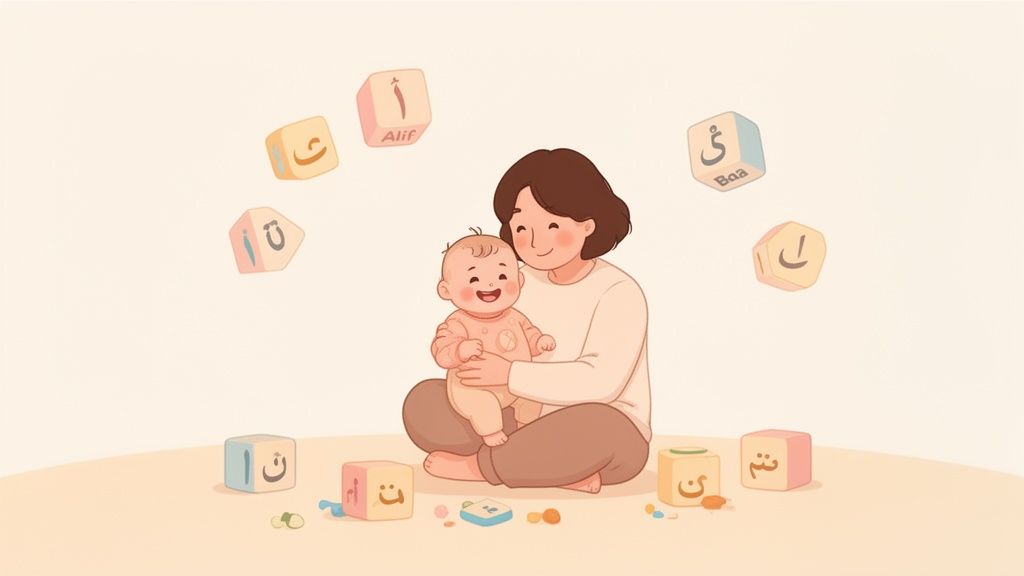
At this tender age, we're not aiming for memorization. Far from it. We're focused on creating a foundation of love and familiarity. When your baby babbles along to an alphabet nasheed or your toddler’s little finger traces the curve of a wooden letter, you’re creating beautiful, warm memories that will shape their relationship with the language for years to come.
This gentle exposure has a vital purpose: it offers meaningful, faith-aligned content that nurtures your child's fitra—their pure, natural disposition—in a world often filled with noise and overstimulation. It’s a beautiful way to guard their innocence while enriching their world.
Fostering a Lifelong Love for Language
Beyond the spiritual connection, introducing the sounds of Arabic early on carries incredible developmental benefits. Hearing the unique sounds of letters like 'خ' (Kha) or 'ق' (Qaf) builds phonemic awareness, which is the ability to hear and work with individual sounds in words. This is a cornerstone skill for all language learning, setting them up for success in both Arabic and English literacy down the road.
This early start is a huge advantage for the many Muslim families raising bilingual or even trilingual children. Research has consistently shown that early exposure to an alphabet’s sounds can give a child’s vocabulary a serious boost. This isn't unique to Arabic; it’s true for other phonetic alphabets, too. In fact, UNESCO data shows this kind of early introduction can increase vocabulary by as much as 40% by age three in multilingual homes. You can read more about how early phonetic training impacts language development to see the science behind it.
Building a Foundation of Faith Through Play
Ultimately, weaving the Arabic alphabet into your child's first few years is about making their faith a source of joy. It’s a simple, powerful way to show them that Islam is a living, breathing part of their everyday life—found in their songs, their playtime, and their bedtime cuddles.
These small, everyday interactions are where the magic happens:
* During story time: Point to the first letter of a character's name in an Islamic picture book.
* While playing: Use colourful Arabic letter blocks to build a wobbly tower together.
* At bedtime: Sing a soft lullaby that includes the Alif, Baa, Taa.
Each one of these moments is a tiny building block, creating a strong and happy connection to the language of the Quran. This loving introduction helps ensure that, inshaAllah, their very first experience with Arabic is one of warmth, security, and love.
Playful Ways to Introduce the Arabic Alphabet
Now that we’ve talked about the beautiful ‘why’ behind introducing the Arabic alphabet early on, let's get into the joyful ‘how.’ This is where the real fun begins, bringing the journey from Alif to Ya to life for your little one. And the best part? You don't need any special training or a mountain of expensive toys—just a bit of creativity and a willingness to play.
The idea is to get all of your child's senses involved. Little ones learn best when they can touch, see, hear, and move. This multisensory approach is fantastic for building stronger connections in their developing brains, making every learning moment something they enjoy and remember.
Making Learning Hands-On
Forget about flashcard drills and rote memorization. For babies and toddlers, learning is all about exploring and discovering the world around them. Honestly, the messier, the better!
Here are a few simple, faith-aligned ideas you can try using things you probably already have at home:
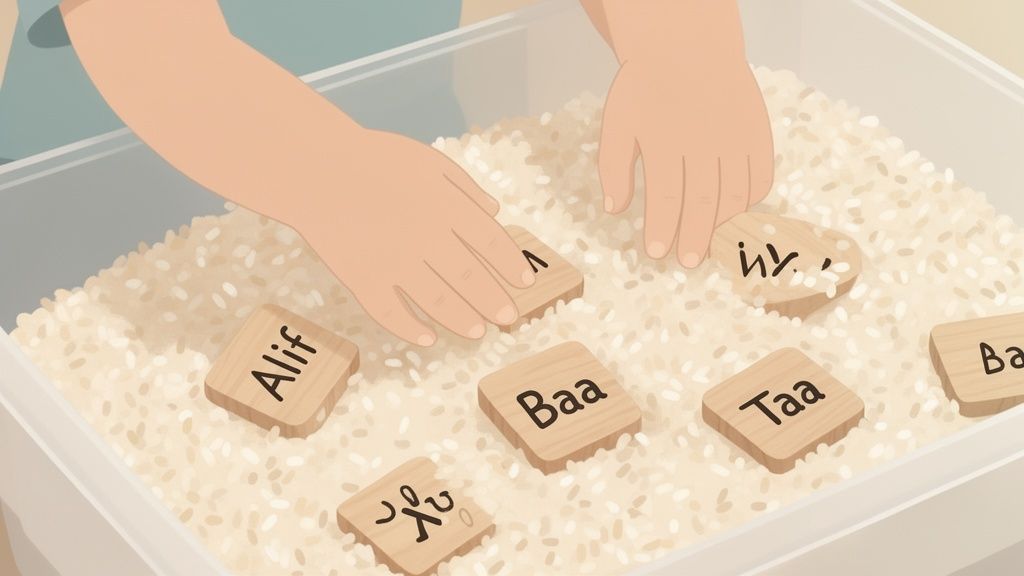
- Sensory Bins: Grab a shallow tray and fill it with something like uncooked rice, lentils, or even sand. Bury a few chunky wooden Arabic letters inside and let your toddler dig them out. Every time they find one, say its sound in a fun, playful voice.
- Alphabet 'I Spy': Get a set of colorful alphabet cards. Place a few around the room and say, "I spy with my little eye... the letter Alif!" Then you can crawl or toddle over together to find it.
- Playdough Creations: Squishing and rolling playdough is brilliant for strengthening little fingers. You can show your toddler how to roll a long "snake" to make an Alif or press out flat circles for Baa. It’s all about the process, not perfection.
Engaging Through Sound and Song
Sound is one of your most powerful tools. A gentle nasheed can work wonders to soothe a fussy baby in the car or turn cleanup time into a fun little game.
A simple, rhyming song about the alphabet does more than just teach letters; it creates a warm, positive atmosphere. This loving association is what helps your child build a lifelong connection to the language of the Quran, inshaAllah.
There are so many beautiful, instrument-free nasheeds out there that focus on the Arabic alphabet. Try singing them during nappy changes, bathtime, or while cuddling before a nap. The repetition is key—it helps those sounds stick in their memory without any effort.
You can also add an interactive audio element with tools like a sound alphabet puzzle, which reinforces letter sounds every time they place a piece correctly.
Arts, Crafts, and Storytime
Craft time doesn't need to be a huge production. Simple, tactile activities can be incredibly powerful for letter recognition. For example, let your little one trace letters with their finger in a tray of salt or use chunky, non-toxic paint to make letter stamps.
And of course, there’s storytime. This is such a precious opportunity for connection and learning. For some great ideas to get started, you can explore the best baby books for early reading.
When you're reading Islamic board books together, get into the habit of pointing to the letters, especially the first letter of words they hear often. Saying something like, "Look, that’s 'Baa' for Bismillah," connects the abstract shape of a letter to a meaningful, everyday concept.
Every one of these small activities is a loving step on their beautiful path from Alif to Ya.
Weaving the Alphabet into Your Daily Routines
The absolute best way to introduce the Arabic alphabet is to make it a natural, seamless part of your family’s rhythm. You don’t need to carve out extra time or plan elaborate lessons. Instead, the goal is to create small, consistent "alphabet moments" that fit into the things you're already doing every single day.
This approach turns learning into a comforting and predictable part of their routine, just like story time before a nap or a warm bath before bed. It’s all about building a rich, loving environment where the letters from Alif to Ya feel as familiar as the pictures on their bedroom wall.
These tiny interactions, repeated with love and consistency, are what truly build a strong and happy foundation. It’s a beautiful way to gently instill Islamic values while making learning feel like just another part of your family's life.
Finding Your Alphabet Moments
Believe it or not, your daily schedule is already packed with opportunities for this kind of gentle learning. The trick is to see your routine through a new lens, spotting those perfect little moments where you can easily point out a letter or its sound.
Here are a few real-world examples of what this can look like in a busy Muslim household:
- Mealtime: As you settle your toddler in for a snack, you can say, "Baa for Bismillah," while gently tracing the letter on their hand.
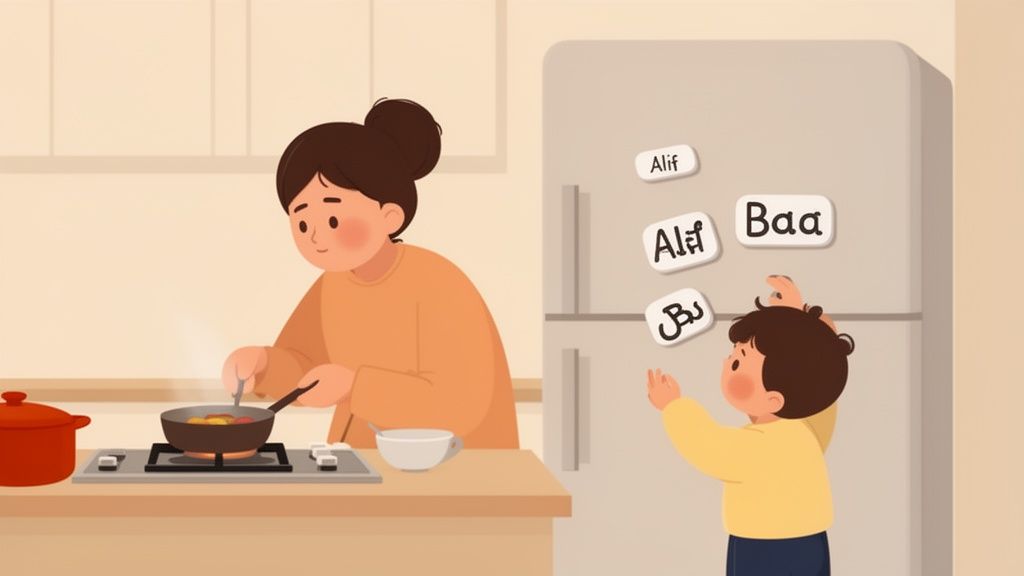
- While Cooking: Keep a set of Arabic alphabet magnets on the fridge. While you’re preparing dinner, you can hand one to your little one and say its name and sound out loud.
- Getting Dressed: As you put on their shoes, you could playfully say, "Shîn for Shoes!" This simple act links the letter sound to an object they use every day.
- Around the House: Point out the beautiful, straight shape of an Alif in an Islamic art print on the wall or the gentle curve of a Nûn in a piece of calligraphy.
By connecting letters to real-world objects and routines, you help your child understand that these shapes have meaning. This is so much more effective than just showing them abstract symbols on a screen or a card.
Sample 'Alphabet Moments' in a Muslim Home
The goal is to sprinkle these moments throughout the day, making the Arabic alphabet a warm and cherished part of your child’s world. To give you a clearer idea of how this flows, here are some ideas for weaving "alphabet moments" into your existing schedule. For more tips on using visual aids, check out our guide on using flash cards for first words in a playful way.
| Time of Day / Routine | Simple Integration Idea | Developmental Benefit |
|---|---|---|
| Morning Cuddles | Sing a soft alphabet nasheed while snuggling. | Builds positive associations and auditory recognition. |
| Playtime | Build a tower with alphabet blocks, saying the letter name with each block. | Enhances fine motor skills and letter shape recognition. |
| Before Maghrib | Tidy up toys while singing an alphabet cleanup song. | Connects learning with positive habits and routine. |
| Bedtime Story | Read an Islamic board book and point to the first letter of familiar words. | Fosters pre-reading skills and contextual understanding. |
Each of these interactions takes only a few seconds, but together they create a consistent, loving environment where the journey from Alif to Ya unfolds naturally.
Choosing Safe and Halal Screen Time for Learning
Let’s be real for a moment—screens are a part of life. As a parent juggling a million things, a few minutes of screen time can be the lifeline you need to get dinner on the table before Maghrib or finally send that important email. But when it comes to teaching our little ones the Arabic alphabet, from Alif to Ya, the idea of using digital tools often brings a wave of anxiety.
The big video platforms are a minefield. You have to worry about random ads popping up, jarring and overstimulating videos, and algorithms that can quickly steer your child toward content you’d never approve of. That’s the last thing any of us want when we’re trying to build a calm, faith-centered home.
This is where purpose-built platforms make all the difference, giving you peace of mind right from the start.
What to Look For in a Halal Platform
When you're searching for a digital resource, you're not just looking for something educational. You're looking for a safe, nurturing space that aligns with your family’s values. A truly high-quality, halal-aligned platform should feel like a trusted partner in your parenting journey, not another source of stress.
Here are the non-negotiables to look for:
- A Strictly Ad-Free Environment: This is the most important one. No pop-ups, no commercials, no sneaky product placements. This keeps your child focused on learning, not on the next toy they "need."
- Content Reviewed by Islamic Educators: Look for services where every single video, song, and activity has been checked by people who understand both child development and Islamic principles. This is your assurance that the content is appropriate and reinforces good adab (manners).
- Parental Controls That Empower You: You should always be in the driver's seat. Features that let you set screen time limits, choose which categories your child can watch, and see what they're learning give you complete control.
The goal is to find a tool that removes the guesswork and risk. Instead of constantly peeking over your child's shoulder, you can trust that they are in a safe, walled garden designed specifically for their spiritual and developmental needs.
Peace of Mind in a Digital World
Choosing a dedicated service means you're intentionally stepping away from the wild, unpredictable algorithms. The entire experience shifts from mindless entertainment to gentle, active learning. While our focus is on the Arabic alphabet, it's interesting to see how other faith communities handle this. For instance, you may hear the phrase “alef to tav,” which is how the Hebrew alphabet is described from start to finish. The careful, ethical teaching of this alphabet is a cornerstone of Jewish education, showing a shared value for preserving heritage through language. You can see this principle in action if you can explore the history of the Hebrew alphabet and its educational significance.
At the end of the day, a safe platform ensures your child’s first experience with the language of the Quran is a positive and pure one. For a deeper dive into this topic, our guide on choosing halal baby videos offers more tips on how to nurture your child's fitra.
Your Questions on Teaching the Arabic Alphabet Answered
Taking that first step to teach your child the Arabic alphabet, from Alif to Ya, is such an exciting milestone. But it's also totally normal to have questions pop up along the way. In parent groups and late-night chats with friends, I hear the same worries time and again.
So, I’ve gathered the most common questions from parents just like you. The goal here is to give you clear, reassuring, and practical answers that fit right in with the gentle, play-based approach we’ve been talking about. Think of this as your supportive guide to feeling confident and joyful about this beautiful process.
What Is the Best Age to Start Teaching the Arabic Alphabet?
Let's reframe this first. We’re talking about gentle exposure, not formal teaching. With that in mind, there's no "perfect" age to start, because every little interaction plants a seed of love for the language.
- For babies (0–1 year): Your voice is their favorite sound in the world. Singing a soft alphabet nasheed during cuddle time or showing them a high-contrast flashcard for just a moment is a beautiful start. It’s all about creating a warm, loving atmosphere where these sounds and shapes feel like home.
- For toddlers (1–3 years): As they become more interactive, you can bring in playful puzzles, alphabet blocks, or even trace letters in a tray of sand together. The focus is always, always on fun and connection, never on pressure or rote memorization.
Honestly, just start whenever you feel ready. Every loving moment you share while exploring the Arabic letters builds a positive foundation, inshaAllah.
Can My Child Learn the Alphabet Before They Can Talk?
Absolutely! This is a fantastic question that gets right to the heart of how our little ones develop language. Children start absorbing language long before they ever say their first word. Their brains are like tiny sponges, soaking up every sound, shape, and rhythm around them.
This early stage is all about building receptive language—their ability to understand what they see and hear. This skill develops way before expressive language, which is their ability to actually speak.
Hearing you sing the sounds of the Arabic letters, watching calm and colorful animations, or simply being around the language helps build crucial neural pathways. They are learning and processing, even when they can't yet say "Alif."
We Are Bilingual. Will Learning Arabic Confuse My Toddler?
This is easily one of the most common concerns for parents in multilingual homes, and it’s completely understandable. The good news is that children's brains are incredibly adaptable and are literally wired to learn multiple languages at the same time.
The key is to create context. When you use Arabic letters during specific, positive routines—like reading an Islamic board book before naptime or using a dedicated app—you help your child associate the language with that activity. It's also completely normal for bilingual toddlers to mix up words at first. This is a natural part of the process, not a sign of confusion.
Research consistently shows that early bilingualism offers significant cognitive benefits, improving problem-solving skills and mental flexibility. So, celebrate every single sound they make, whether it’s in English, Arabic, or a wonderful mix of both!
I'm Not Confident in My Own Arabic Pronunciation. What Can I Do?
Please, please don't let a quest for perfection stop you from starting this beautiful journey with your child. Your effort, your intention, and the love behind what you are doing matter so much more than perfect pronunciation. You are their first and most important teacher, and your enthusiasm is what they'll remember most.
This is also a wonderful opportunity to learn right alongside your little one. You can use high-quality audio resources, like trusted apps or nasheeds, where the pronunciation is clear and correct. Listen to beautiful Quran recitation together as you go about your day. Your child will benefit immensely from seeing you learn with them, which models a powerful lesson in humility, effort, and the joy of lifelong learning.
At Babymode, we get these questions because we're Muslim parents, too. We created our platform to be the reassuring answer you've been looking for—a completely safe, ad-free, and halal space where your child can explore the Arabic alphabet and Quranic stories with joy. Every video is designed to be gentle, engaging, and aligned with our shared values, giving you total peace of mind.
Join the waitlist to be the first to know when we launch and get early access at https://babymode.ai.