As Muslim parents, we look for every opportunity to fill our homes with peace, joy, and the remembrance of Allah. Finding the right toddler sing along songs is more than just entertainment; it’s about nurturing your child’s fitra (natural disposition) in a world full of noise. You want songs that are calming, not overstimulating, and that align with our values. This means no questionable lyrics, no jarring music, and content that respects the innocence of early childhood.
From keeping a little one happily occupied while you prepare a meal before Maghrib to creating a soothing atmosphere for a nap after Dhuhr prayer, the right songs can be a true blessing. They are a powerful tool for language development, motor skills, and most importantly, for bonding. Singing together builds connection and creates beautiful, lasting memories rooted in warmth and love.
This guide is designed to help you build a playlist that does just that. We have curated a list of songs that are both beneficial and enjoyable, blending classic English nursery rhymes with an Islamic-aware perspective. We'll provide lyrics, suggest simple motions, and explain the developmental benefits of each selection. Our goal is to give you a trusted resource for creating a joyful, faith-aligned auditory environment for your toddler, helping you find screen time solutions that feel good and support your family’s values, inshaAllah.
1. Twinkle, Twinkle, Little Star
A gentle classic for a reason, "Twinkle, Twinkle, Little Star" is one of the most beloved toddler sing along songs across the globe. Its simple, repetitive melody and calming rhythm have soothed children for generations, making it a perfect first lullaby. The song’s gentle lyrics about a star shining in the night sky tap into a child’s natural sense of wonder about Allah’s creation.
The song’s power lies in its predictability. For a toddler, a consistent bedtime routine provides security and helps them wind down. This familiar tune signals that it's time for rest, creating a peaceful transition from a busy day to a quiet night. Its gentle nature is a perfect example of content that protects a child's innocence while still being engaging.

Why It's a Great Choice for Muslim Families
This song beautifully aligns with the Islamic value of reflecting on the signs of Allah (ayat) in the universe. The simple act of wondering about a star can be an early, gentle introduction to the majesty of the Creator's work, without complex theological concepts. It provides a peaceful, screen-free moment of connection between you and your child, fostering a calm atmosphere that is ideal before bedtime duas. For families looking to introduce Arabic, there are beautiful versions of this classic. In fact, you can find inspiration for other gentle, faith-aligned songs by exploring different languages and nasheeds; you can find more about songs for kids in Arabic to expand your playlist.
Actionable Tips for Parents
- Create a Calming Atmosphere: Dim the lights and sing in a soft, gentle voice to maximize the song's soothing effects before nap or bedtime.
- Add Gentle Motions: Use your hands to make a twinkling star by opening and closing your fingers. Encourage your toddler to copy the motion to develop their fine motor skills.
- Incorporate Gentle Movement: Gently sway or rock your toddler in your arms as you sing. This rhythmic motion is deeply comforting and reinforces the sleepy-time message.
- Build a Bedtime Routine: Sing it every night in the same order (e.g., after brushing teeth, before their bedtime dua) to build a strong, predictable routine that helps your toddler feel secure.
2. The Wheels on the Bus
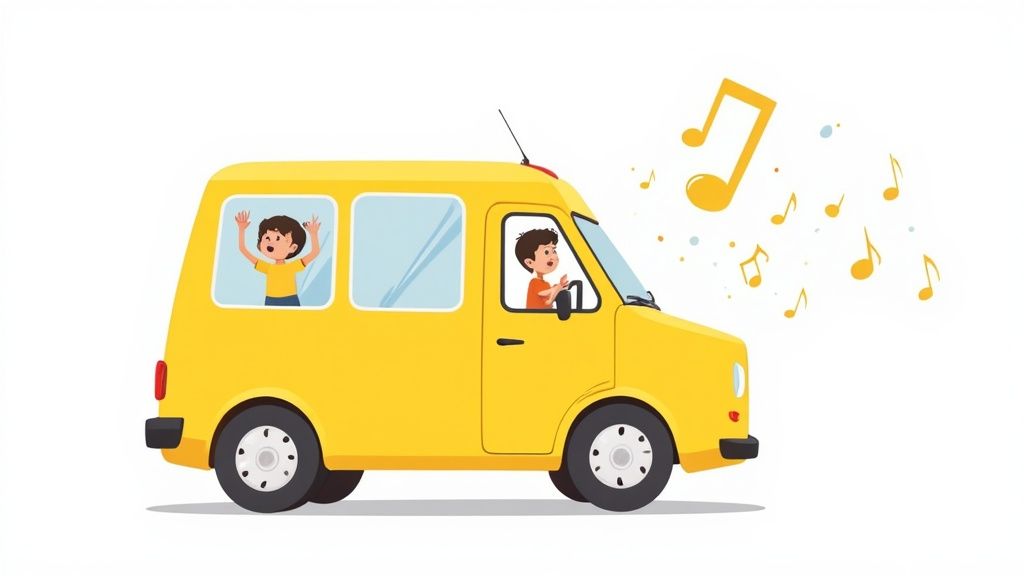
A classic for circle time everywhere, "The Wheels on the Bus" is one of the most interactive toddler sing along songs for a reason. Its repetitive structure and catchy tune describe the different parts of a bus, from the swishing wipers to the beeping horn. This song transforms listening into a full-body experience, encouraging toddlers to mimic actions and sounds, which is fantastic for their cognitive and motor skill development.
The song’s genius lies in its simplicity and adaptability. Each verse introduces a new concept with a corresponding action, making it easy for little ones to follow along and anticipate what's next. This predictability builds confidence and participation. Its widespread use in nurseries and playgroups means most toddlers will have some familiarity with it, making it an easy win for engaging them.
Why It's a Great Choice for Muslim Families
While not explicitly religious, "The Wheels on the Bus" is a wonderful tool for teaching about community and the world around us. The song features people going "all through the town," which can open up gentle conversations about neighbours, going to the masjid, or visiting family. It's a wholesome, energetic song that provides a healthy outlet for a toddler’s wiggles without any questionable themes, making it a safe choice for playtime.
This active song is perfect for breaking up a quiet day or transitioning between activities, like before it’s time to settle down for Quran stories. It encourages shared joy and laughter, strengthening the parent-child bond through playful interaction. The focus on sounds and actions also supports early language acquisition, helping toddlers connect words with meanings in a fun, pressure-free way.
Actionable Tips for Parents
- Go All In on Actions: Use big, exaggerated hand movements for the wheels ("round and round"), wipers ("swish, swish, swish"), and horn ("beep, beep,beep"). Your enthusiasm is contagious and will encourage your toddler to join in.
- Create Your Own Verses: Make the song personal to your family's life. Add verses like, "The baby on the bus says 'waa, waa, waa,'" or "The doors to the masjid go open and shut," to make it more relatable and fun.
- Use It for Transitions: Sing this song to make transitions smoother, such as when getting into the car seat. It can turn a potentially fussy moment into a fun game.
- Bring in Props: Use a toy bus or even a round cushion as a "steering wheel" to make the experience more immersive and stimulate your child’s imagination.
3. Old MacDonald Had a Farm
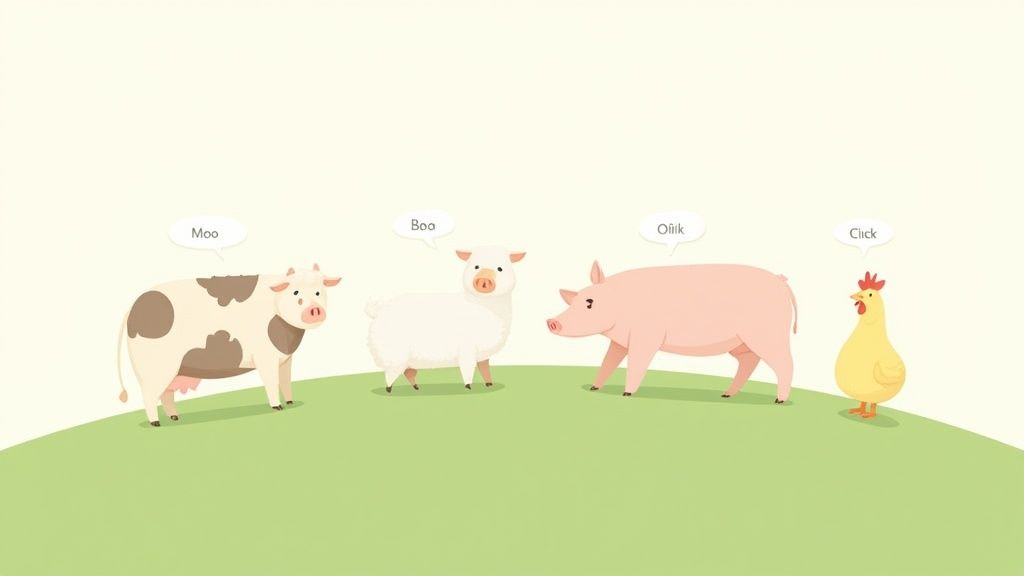
A joyful and educational classic, "Old MacDonald Had a Farm" is one of the most interactive toddler sing along songs that actively builds vocabulary and cognitive skills. Its repetitive, call-and-response structure is perfectly designed for a toddler's developing brain, making it easy for them to join in with the fun "E-I-E-I-O" chorus. The song’s brilliance lies in its simplicity: each verse introduces a new farm animal and its unique sound, turning a simple tune into a powerful learning tool.
This song is a staple in early childhood education because it makes learning feel like play. By associating an animal's name with its sound, toddlers strengthen memory, develop auditory discrimination skills, and expand their understanding of the world around them. For many children, it is their first introduction to the concept of different animals and the sounds they make, a foundational piece of early knowledge.
Why It's a Great Choice for Muslim Families
"Old MacDonald Had a Farm" provides a wonderful opportunity to teach children about the diversity of Allah's creation in a playful, engaging way. Discussing farm animals can naturally lead to conversations about how Allah provides for us through the food we eat, like milk from cows and eggs from chickens, fostering an early sense of gratitude (shukr). The song is adaptable, allowing families to include animals that are significant in Islamic tradition, such as sheep, camels, and goats, making it culturally and religiously relevant.
For families who avoid certain animals like pigs, the song's structure makes it incredibly easy to customize. You can simply swap out verses for other animals that align with your family's values, ensuring the experience remains positive and wholesome. This adaptability makes it a versatile tool for both entertainment and gentle, values-based learning. Exploring the animal world further can be a great next step; you can discover more about animal sounds and names to expand on the fun.
Actionable Tips for Parents
- Use Visual Aids: Enhance the learning experience by using animal puppets, flashcards, or toy figurines as you sing. Hold up the correct animal for each verse to create a strong visual-auditory connection.
- Encourage Participation: Get loud and silly! Exaggerate the animal sounds and encourage your toddler to "moo," "baa," and "cluck" along with you. This active participation boosts their confidence and language skills.
- Customize the Verses: Make the song personal by adding verses about your family pets ("and on his farm he had a cat...") or animals your child has seen at a local farm or zoo.
- Add Animal Movements: Make it a full-body experience. Flap your arms like a chicken, stomp your feet like a cow, or wiggle your nose like a sheep. This adds a fun, physical element that helps with gross motor skill development.
4. If You're Happy and You Know It
A high-energy classic for active toddlers, "If You're Happy and You Know It" is one of the most interactive toddler sing along songs for developing emotional literacy. Its call-and-response structure and associated actions make it a fantastic tool for kinesthetic learners, helping them connect physical movements with feelings. The song transforms abstract emotions into tangible actions like clapping hands or stomping feet, making it both fun and educational.
The song’s brilliance is in its simplicity and adaptability. It gives toddlers a healthy, physical outlet to express their big feelings, which is crucial for emotional regulation. This song is widely used by educators and speech-language pathologists to build emotional vocabulary and social skills. It's a great way to get children moving and thinking about their feelings in a positive way.
Why It's a Great Choice for Muslim Families
This song is a wonderful, playful way to teach children about emotions as blessings from Allah. It encourages them to express gratitude (shukr) when feeling happy and helps them learn that all feelings are natural. The physical actions align with the Islamic encouragement of play and movement for healthy development. It’s a joyful way to build a positive atmosphere at home, turning a simple song into a lesson on acknowledging and managing God-given emotions. This approach helps nurture a child who is in tune with their feelings and can express them constructively, a key aspect of good character (akhlaq).
Actionable Tips for Parents
- Expand the Emotions: Go beyond "happy." Try singing, "If you're sleepy and you know it, give a yawn," or "If you're excited and you know it, wiggle all around." This builds a broader emotional vocabulary.
- Use Visual Aids: Create simple emotion cards with smiley, sad, and excited faces. Show a card to your toddler and sing the corresponding verse to help visual learners connect the word with the feeling.
- Create Calm-Down Versions: For quiet time, use gentle actions. Sing "If you're calm and you know it, take a breath" or "If you're peaceful and you know it, give a hug" to help wind down.
- Manage Transitions: Use the song to release pent-up energy before a transition, like getting into the car or sitting down for a meal. Singing a verse of "If you're excited... wiggle it out!" can make the next step much smoother.
5. The Alphabet Song (to the tune of Twinkle, Twinkle)
Modern adaptations take the beloved melody of "Twinkle, Twinkle, Little Star" and transform it into a powerful learning tool, making it one of the most versatile toddler sing along songs available. The Alphabet Song is a prime example, using a familiar, soothing tune to teach foundational concepts like letters and numbers. This approach cleverly uses the song's memorability to introduce learning in a fun, engaging way.
The success of these versions lies in their ability to piggyback on a melody that is already comforting and recognizable to a toddler. Instead of a passive lullaby, the song becomes an active learning experience. For a developing mind, associating letters or numbers with a simple, repetitive tune helps solidify memory and makes the learning process feel like play, not a chore.
Why It's a Great Choice for Muslim Families
These educational songs offer a fantastic, guilt-free way to use screen time for a specific learning purpose. Instead of random entertainment, you are providing content that directly supports your child’s cognitive development. Many of these variations are simple animations without complex stories, which helps avoid overstimulation while still capturing a toddler's attention. This focused approach to learning aligns with the Islamic value of seeking knowledge (ilm) from a young age.
These variations also provide a constructive activity during a busy parent's day. If you need a few minutes to prepare a meal before Maghrib, setting your child up with a five-minute alphabet song on a safe platform can be a productive and beneficial choice. It's a modern solution that respects a child's developmental needs while fitting into the realities of a busy Muslim household. You can explore more options to support your child’s early education by reading about preschool learning songs.
Actionable Tips for Parents
- Match to Developmental Stage: Choose variations that suit your child's current learning. If they are just starting to babble, an alphabet version is great. For a 3-year-old, a simple counting song might be more appropriate.
- Combine with Visual Aids: Use flashcards or foam letters while singing the alphabet version. Point to the letters as they are sung to create a strong visual and auditory connection.
- Keep Sessions Short: Limit these learning sessions to 5-10 minutes. Toddlers have short attention spans, and this prevents them from becoming overstimulated or overwhelmed.
- Sing During Optimal Times: Use these energetic, educational songs during active playtimes, like mid-morning, rather than just before a nap or bedtime when calming classics are better.
6. Baby Shark
A modern phenomenon, "Baby Shark" is an energetic and incredibly catchy toddler sing along song that has captured the attention of children worldwide. Its simple, repetitive lyrics and an easy-to-follow dance routine have made it a global sensation. The song introduces a family of sharks one by one, with a high-energy pace that is perfect for active playtime.
The song's viral success speaks to its powerful appeal for young children. It combines a simple narrative, a memorable tune, and physical movement, hitting all the key elements that engage toddlers. Its rhythm is designed to get little ones moving, making it a fantastic tool for releasing pent-up energy in a fun and structured way.
Why It's a Great Choice for Muslim Families
While not faith-based, "Baby Shark" provides an excellent opportunity for physical activity and family bonding. The song focuses on family relationships (Baby, Mommy, Daddy, Grandma, Grandpa), which aligns with the strong emphasis on family in Islam. It's a joyful, shared experience that can bring laughter and fun into the home, strengthening the parent-child connection through a playful, shared activity.
The repetitive nature of the song is also beneficial for language development, helping toddlers recognize patterns and new vocabulary. As it is purely a song about a family of sharks, it contains no themes that would conflict with Islamic values, making it a safe choice for entertainment when you need a high-energy activity.
Actionable Tips for Parents
- Make It an Active Break: Use this song as a "brain break" or an energy-buster when your toddler is getting restless. It's perfect for transitioning between quiet activities or for a quick burst of fun before prayer time.
- Learn the Dance Together: The simple hand motions are great for developing coordination and motor skills. Turn it into a family activity where everyone, from siblings to grandparents, joins in.
- Set Clear Boundaries: Due to its extremely catchy nature, it's wise to limit exposure to prevent it from becoming overwhelming. Designate "Baby Shark time" for 10-15 minutes a day.
- Explore Variations: There are many different versions, including slower-paced or holiday-themed ones. Finding a less frantic version can offer variety while keeping the familiar tune your child loves.
7. Mary Had a Little Lamb
A classic storytelling song, "Mary Had a Little Lamb" is one of the most charming toddler sing along songs rooted in a real-life tale. Its simple, narrative-driven lyrics and memorable, moderate-paced melody make it incredibly engaging for young children who are just beginning to understand stories and sequences. The song tells a sweet and simple story of loyalty and companionship between a girl and her pet, a theme that resonates deeply with a toddler’s growing awareness of relationships.
The song’s power comes from its narrative structure, which is a fantastic tool for cognitive development. For a toddler, following the lamb’s journey to school and back helps build foundational skills in listening comprehension and understanding cause and effect. Its use in many early childhood music programs speaks to its effectiveness in teaching rhythm, language, and storytelling in one delightful package.
Why It's a Great Choice for Muslim Families
This song beautifully models the Islamic value of rahmah (mercy and compassion) towards animals. The story of Mary’s kindness to her lamb provides a gentle, age-appropriate example of how we should care for Allah's creatures. It opens up natural conversations about being gentle and responsible, core tenets of Islamic adab (manners).
The narrative format also helps build crucial pre-literacy skills, like sequencing events, which is beneficial for later understanding stories from the Quran and the lives of the Prophets. The song's focus on a wholesome, innocent friendship provides a safe and positive theme for your child's media consumption, free from complex or inappropriate content.
Actionable Tips for Parents
- Tell the Story Visually: Use a picture book or simple puppets that illustrate the story as you sing. Pointing to Mary and the lamb helps your toddler connect the words with the characters.
- Create Your Own Verses: After singing the original, create new verses together. "Ahmad had a little cat, its fur was soft and grey," or "Fatima had a little fish, that swam around all day." This builds creativity and language skills.
- Act It Out: Encourage your toddler to pretend to be the lamb following you (Mary) around the room. This makes the song an active, physical experience that improves gross motor skills.
- Connect to Real Life: Talk about your own pets or animals you see in books or at a farm, reinforcing the song’s theme of kindness to animals in a tangible way.
8. Row, Row, Row Your Boat
A timeless classic, "Row, Row, Row Your Boat" is one of the most interactive toddler sing along songs that encourages movement and cooperative play. Its simple, repetitive melody and gentle rhythm make it incredibly easy for young children to learn and enjoy. The song’s narrative of a gentle boat ride down a stream is peaceful and engaging for a toddler’s imagination.
The song’s real magic lies in its potential for physical interaction. By sitting opposite your toddler, holding their hands, and rowing back and forth, you create a powerful moment of connection and shared rhythm. This simple act not only develops gross motor skills and coordination but also strengthens the parent-child bond through playful, synchronized movement. It’s a perfect song for active playtime that isn't overstimulating.
Why It's a Great Choice for Muslim Families
This song is wonderfully neutral and focuses on a simple, wholesome activity found in nature. The line "life is but a dream" can be gently framed as a reminder of the temporary nature of this world (dunya) compared to the hereafter, a simple yet profound concept that can be introduced in an age-appropriate way as your child grows. It promotes cooperation and teamwork, which are beautiful Islamic values to instill from a young age.
More importantly, it provides a healthy, screen-free way to engage your child's body and mind. The song encourages face-to-face interaction, eye contact, and shared laughter, building social and emotional skills in a loving environment. It’s an ideal activity for a quiet afternoon or when you need a fun transition between activities, like before a snack or winding down for prayer time.
Actionable Tips for Parents
- Sit and Row Together: Sit on the floor facing your toddler. Hold their hands and gently rock back and forth in a "rowing" motion as you sing. This is fantastic for their core strength and sense of rhythm.
- Make a Family Boat: Get the whole family involved. Have everyone sit in a line, one behind the other, with their hands on the shoulders of the person in front, and row together.
- Incorporate Water Play: Sing the song during bath time or while playing with water in the garden. Use a toy boat to act out the song, enhancing the sensory experience.
- Add Playful Surprises: Add extra verses with silly actions, like "Rock, rock, rock your boat" (rocking side to side) or "If you see a crocodile, don't forget to scream!" followed by a playful squeal.
Comparison of 8 Toddler Sing-Along Songs
| Song | 🔄 Implementation complexity | ⚡ Resource requirements | 📊 Expected outcomes | ⭐ Key advantages | 💡 Tips |
|---|---|---|---|---|---|
| Twinkle, Twinkle, Little Star | Very low — simple melody, repetitive | Minimal — voice only; quiet setting | Calming; supports sleep and basic language | Universally recognized; soothes; easy to memorize | Dim lights; soft voice; consistent bedtime routine |
| The Wheels on the Bus | Moderate — multiple verses + actions | Moderate — space for movement; optional props | Motor skill development; engagement; pattern recognition | Highly interactive; adaptable verses; promotes coordination | Exaggerate gestures; use toy bus; use as transition energizer |
| Old MacDonald Had a Farm | Low — call-and-response structure | Minimal — optional puppets or picture cards | Vocabulary and phonetic awareness; animal ID | Highly adaptable; encourages participation; clear phonetics | Use puppets/cards; let children mimic animal sounds |
| If You're Happy and You Know It | Low–moderate — repeated actions per verse | Minimal — space for actions; adaptable intensity | Emotional vocabulary; body awareness; energy regulation | Teaches emotions; inclusive; good for movement therapy | Expand emotions; use emotion cards; offer calmer variants |
| The Alphabet Song | Moderate — lyric changes and multimodal aids | Moderate — videos/apps/flashcards often used | Early literacy/ numeracy/colors; multisensory learning | Builds on familiarity; supports multiple domains; cost‑effective | Pick age‑appropriate versions; limit to 5–10 min; pair with flashcards |
| Baby Shark | Low — simple choreography; repetitive hook | Minimal — video recommended for engagement | High engagement; gross motor activity; social bonding | Extremely engaging; global appeal; easy choreography | Use for active play; limit daily exposure; learn dance together |
| Mary Had a Little Lamb | Low — narrative, rhymed structure | Minimal — picture books improve context | Sequencing; rhyming and phonological awareness | Supports literacy and storytelling; historically familiar | Use storybooks; sequence events; combine with puppet play |
| Row, Row, Row Your Boat | Moderate — simple action; round version adds complexity | Minimal — partner/group useful; water‑play props optional | Rhythm and coordination; introduction to rounds/harmony | Teaches beat awareness; adaptable solo or group song | Teach rowing motion first; introduce round later; add splashing sounds |
Creating Your Family’s Halal-Friendly Soundtrack
Music and song are powerful tools in early childhood, shaping not just language and motor skills but also the very atmosphere of your home. The world of toddler sing along songs is vast, ranging from timeless English nursery rhymes like "The Wheels on the Bus" to beautiful, faith-inspired nasheeds that introduce the love of Allah and His creation. Your role as a parent isn't just to entertain but to curate an auditory environment that is nurturing, safe, and aligned with your family’s Islamic values.
By intentionally choosing the songs your child hears, you are actively protecting their innocence from inappropriate themes, jarring advertisements, and the unpredictable algorithms found on mainstream platforms. This careful selection is an act of love, ensuring that the first rhythms and words that fill their world are wholesome, beneficial, and contribute positively to their development.
Key Takeaways for Your Family’s Playlist
Let's recap the most important principles for building a joyful and halal-friendly musical experience for your toddler:
- Balance is Beautiful: A healthy media diet for your little one can include a wonderful mix of songs. Combine the developmental benefits of classic nursery rhymes that build vocabulary and motor skills with the spiritual nourishment of instrument-free nasheeds and dua songs that plant the seeds of faith.
- Engagement is Everything: Remember, you are your child's first and best playmate. Singing with them, incorporating hand gestures, and making eye contact transforms a passive listening activity into a powerful bonding and learning experience. Your enthusiasm is contagious and makes these moments truly memorable.
- Safety First, Always: The digital world is not designed with the well-being of our youngest children in mind. Prioritizing safe, ad-free platforms is crucial. This removes the risk of your toddler being exposed to harmful content and creates a calm, focused environment for them to enjoy the songs you’ve chosen.
Your Actionable Next Steps
Moving forward, the goal is to integrate these principles into your daily routine. Don't feel pressured to do everything at once. Start small and build a rhythm that works for your family.
- Start with One New Song: This week, choose one new song from our list. It could be an alphabet song to play during breakfast or a calming nasheed to wind down before naptime. Practice the simple actions together.
- Audit Your Current Playlists: Take a few minutes to review what you currently play for your toddler on platforms like YouTube. Are there ads? Do questionable "recommended" videos pop up? This will reinforce the importance of having a dedicated, safe source.
- Create 'Routine' Playlists: Designate specific songs for specific times of the day. A "Good Morning" playlist with upbeat songs like "If You're Happy and You Know It" and an "Evening Wind-Down" playlist with gentle duas can help create predictability and comfort for your toddler.
A Final Thought: The sounds that fill your home become the soundtrack to your child’s earliest memories. By thoughtfully curating these toddler sing along songs, you are doing more than just teaching them words and melodies. You are building a foundation of joy, security, and faith that will resonate throughout their lives, creating a beautiful legacy of shared moments and cherished Islamic values.
Ready to create a safe, ad-free, and faith-aligned listening environment for your little one? Discover Babymode, the streaming platform designed by Muslim parents to provide peace of mind with 100% halal and beneficial content. Explore our curated library of gentle nasheeds, educational songs, and soothing stories at Babymode and transform screen time into a positive, guilt-free experience.