As Muslim parents, we look for gentle, meaningful ways to help our little ones learn about the world. Teaching your toddler animal sounds and names is a beautiful way to introduce them to the diversity of Allah’s creation. It's more than just memorizing that 'the cow says moo!' – it’s a foundational step in language development, cognitive skills, and building a sense of wonder about the creatures around us. In our busy lives, juggling prayers, meal prep, and nap schedules, finding simple, faith-aligned activities can feel like a true blessing.
This guide is designed to fit right into your daily routine, offering a practical resource for this delightful learning stage. We will explore 10 common animals, providing you with everything needed to make the experience enriching and fun for your family.
Inside, you will find:
* Clear descriptions of each animal sound.
* Bilingual labels in English, Arabic, and Urdu to support language growth.
* Simple parent tips for teaching toddlers effectively.
* Nasheed-style, instrument-free singalong ideas.
* Guidance on using these sounds to build a connection to faith.
We’ve created this resource to help you nurture your child's curiosity in a way that feels natural, safe, and right for your family. Let's begin exploring the wonderful world of animal sounds and names together.
1. Dog – Bark/Woof (Sharp, explosive sound)
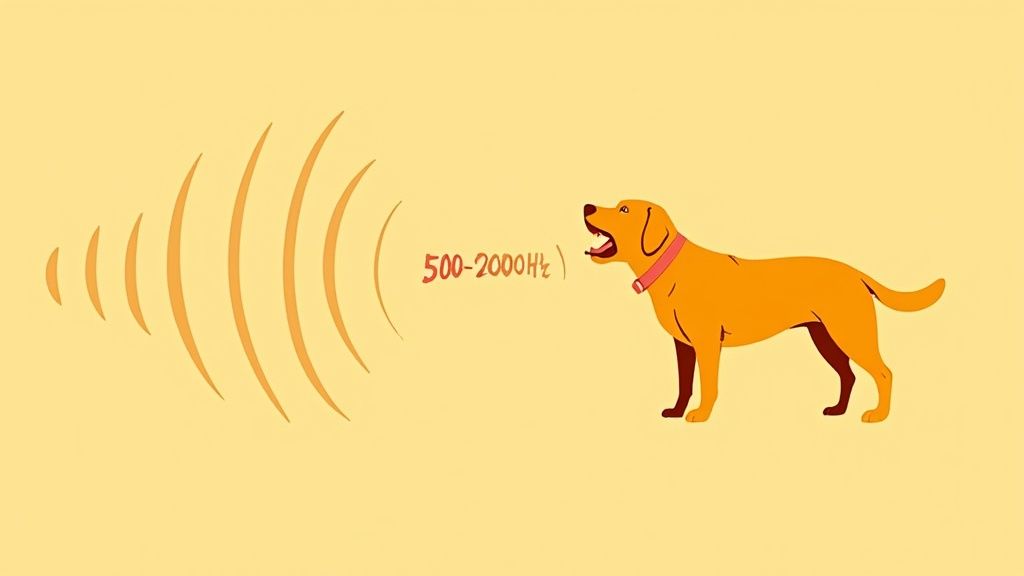
The familiar "woof" or "bark" of a dog is one of the first animal sounds and names toddlers learn. This sharp, explosive sound is made when a dog pushes air quickly through its vocal cords. A dog's bark is a powerful communication tool, used to express excitement, warn of strangers, or simply say hello. The pitch and frequency of a bark can tell you a lot about the dog's feelings, from a high-pitched yelp of playfulness to a deep, rumbling growl of warning.
Why It's a Great First Animal Sound
Teaching the sound a dog makes is a perfect starting point for your little one's language journey. Its simple, repetitive nature makes it easy for tiny mouths to imitate. Hearing and copying "woof woof" helps develop your child's vocal muscles and listening skills, laying a strong foundation for future speech development.
Parent Tips for Teaching
- Simple Repetition: Point to pictures of dogs in books or flashcards and say, "This is a dog. The dog says woof woof!" Use a playful, encouraging tone.
- Link to Daily Life: If you see a dog on a walk (from a safe distance), you can point and say, "Look, a dog! Woof woof." This connects the word and sound to a real-world experience.
- Action Play: Crawl on the floor with your toddler, pretending to be puppies and barking together. This makes learning fun and multisensory.
Bilingual Labels & Singalong Fun
Introduce new languages in a gentle, playful way.
- Arabic: كلب (Kalb) – says "haw haw" (هَوْ هَوْ)
- Urdu: کتا (Kutta) – says "bho bho" (بھونکنا)
You can create a simple, instrument-free nasheed-style song to the tune of "Old MacDonald Had a Farm":
"Little Ahmed has a dog,
Woof, woof, woof, woof, woof.
And in Arabic it’s a Kalb,
Haw, haw, haw, haw, haw."
This rhythmic approach helps your child remember the different animal sounds and names while enjoying quality time with you.
2. Cat – Meow/Mew (High-pitched, melodic sound)
The gentle "meow" or "mew" of a cat is a universally recognized sound, often one of the earliest animal sounds and names children learn after the dog's bark. This high-pitched, melodic sound is made when a cat pushes air through its vocal cords, usually with its mouth opening and then closing. Interestingly, adult cats primarily meow to communicate with humans, not with each other, making it a special form of interspecies connection. The pitch and length of a meow can signal anything from a friendly greeting to an urgent request for food or attention.
Why It's a Great First Animal Sound
The "meow" is an excellent sound for toddlers to learn because its melodic quality is engaging and fun to imitate. Making the "m" sound and then opening the mouth for the "ow" helps children practice different mouth shapes. Hearing and repeating "meow" supports the development of crucial listening and vocalization skills, which are fundamental for clear speech.
Parent Tips for Teaching
- Connect to Pictures: Use flashcards or books to show your toddler a cat. Point and say, "This is a cat. The cat says meow!" in a soft, playful voice. For some great visual aids, you can check out these printable first words flash cards.
- Real-Life Observation: If you have a family cat or see one in the neighbourhood, gently point it out. Say, "Look, there's a cat. Meow, meow." This helps your child link the sound to the real animal.
- Playful Actions: Pretend to be cats together. Crawl around, rub against furniture, and make soft "meow" sounds. This multisensory play makes learning interactive and memorable.
Bilingual Labels & Singalong Fun
Gently introduce new languages into your daily interactions.
- Arabic: قطة (Qittah) – says "mia'u" (مواء)
- Urdu: بلی (Billi) – says "meow meow" (میاؤں)
You can adapt the simple, instrument-free tune of "Twinkle, Twinkle, Little Star" for a sweet nasheed-style song:
"Little Fatimah has a cat,
Meow, meow, meow, meow, meow.
A pretty cat, a soft cat,
Meow, meow, meow, meow, meow."
Singing together is a beautiful way to reinforce these new animal sounds and names while creating a joyful, loving atmosphere.
3. Lion – Roar (Deep, resonant, thunderous sound)
The powerful roar of a lion is one of the most awe-inspiring animal sounds and names your child will learn. This deep, resonant sound is made when a lion pushes a massive amount of air through its larynx, causing its unique vocal cords to vibrate. A lion's roar is so loud it can be heard up to five miles away, and it's used to communicate with its pride, claim its territory, and warn off rivals. This thunderous call establishes the lion as a truly mighty creature.

Why It's a Great Animal Sound to Teach
Introducing the lion's roar adds excitement and drama to your toddler's learning. Imitating a deep "ROAR!" is a fantastic way for children to practice using a different vocal range, strengthening the muscles needed for speech. It’s also a sound that naturally encourages big, imaginative play, helping to build both confidence and creativity.
Parent Tips for Teaching
- Story Time Fun: Use books that feature lions, like stories of the prophets or jungle adventures. When the lion appears, pause and make a big, friendly "ROAR!" together.
- Safe Exploration: While looking at picture books, point out how the lion opens its mouth wide to roar. You can say, "Subhan'Allah, what a strong sound Allah gave the lion!"
- Imaginative Play: Pretend to be lions on a safari adventure in the living room. Crawl around and practice your quietest and loudest roars, making it a fun and interactive game.
Bilingual Labels & Singalong Fun
Gently introduce new words for this majestic animal.
- Arabic: أسد (Asad) – says "za'eer" (زَئِير)
- Urdu: شیر (Sher) – says "darhaarna" (دھاڑنا)
You can adapt the tune of "Twinkle, Twinkle, Little Star" for a simple, instrument-free nasheed-style song:
"Asad is the lion strong,
Roar, roar, roar all day long.
In Urdu he is called a Sher,
Roar, roar, roar without a fear."
This simple melody makes remembering the different animal sounds and names an enjoyable part of your daily routine.
4. Pig – Oink/Squeal (Grunting, high-pitched squeals)
The classic "oink" of a pig is a fun and distinct sound for toddlers to learn. This grunting noise is made as pigs communicate with each other, often expressing contentment, especially around feeding time. However, pigs are surprisingly vocal and also make high-pitched squeals to show excitement, fear, or distress. These varied animal sounds and names give little ones a rich auditory experience to explore.
Why It's a Great First Animal Sound
The short, nasal "oink" sound is fantastic for developing oral-motor skills. It encourages children to use their nose and the back of their throat to create a new sound, which is different from simple vowel sounds. Imitating the "oink" helps your child experiment with their vocal abilities and understand how different sounds are made, an important step in language development.
Parent Tips for Teaching
- Make it Physical: When you say "oink oink," scrunch up your nose and pretend to have a snout. This visual cue makes the sound easier for your toddler to remember and imitate.
- Story Time: Use books that feature farm animals. Point to the pig and make an enthusiastic "oink oink," encouraging your child to join in.
- Sensory Play: While playing with farm animal toys, you can make the pig figure "oink" as it walks around. This connects the sound directly to the animal. For more thoughts on how popular animal characters are viewed, you can find a helpful perspective on our blog about Peppa Pig for Muslim parents.
Bilingual Labels & Singalong Fun
Introduce new vocabulary during playful moments.
- Arabic: خنزير (Khanzeer) – says "khaa khaa" (خاء خاء)
- Urdu: سور (Suar) – says "ghur ghur" (گُھر گُھر)
Sing a simple, instrument-free nasheed-style song to the tune of "Baa Baa Black Sheep":
"Little Fatimah has a pig,
Yes miss, yes miss, oinking big.
It says "oink" all day long,
And in Arabic, sings its song:
Khaa, khaa, khaa, khaa, khaa."
This gentle, rhythmic activity reinforces the new animal sounds and names in a way that is engaging and easy for a toddler to follow.
5. Cow – Moo (Deep, resonant, melodic low sound)
The deep, melodic "moo" of a cow is one of the most recognizable animal sounds and names. This resonant sound is produced when a cow vibrates its vocal cords as air passes through its larynx, creating a low-frequency call that can travel a long way across fields. A cow's moo is a versatile communication tool, used for everything from a mother calling her calf to a herd signaling contentment while grazing.
Why It's a Great Early Animal Sound
Teaching the sound a cow makes is wonderful for your toddler's speech development. The long, drawn-out "mooooo" sound encourages your child to use their breath control and shape their lips into a round 'O' shape, which is a key skill for forming words. This simple, low-pitched sound is easy and fun for little ones to imitate.
Parent Tips for Teaching
- Story Time: While reading books about farms, point to the cow and make a long, deep "Moooo" sound. Encourage your child to copy you.
- Real-World Connection: If you ever visit a farm or see cows in a field, this is a perfect opportunity to connect the animal to its sound. You can say, "Look, a cow! The cow says moooo."
- Sensory Play: Use farm animal toys in a sensory bin with grass or oats. As you play with the cow figure, make its sound together, making learning a hands-on experience.
Bilingual Labels & Singalong Fun
Gently introduce new languages in a way that feels natural and enjoyable.
- Arabic: بقرة (Baqarah) – says "muaa" (مُواء)
- Urdu: گائے (Gaaye) – says "maaan" (ماں)
You can adapt the tune of "Baa, Baa, Black Sheep" for a simple, instrument-free nasheed-style song:
"Little Fatima sees the cow,
Moo, moo, moo it says.
In Arabic it is Baqarah,
Muaa, muaa, muaa it says."
This gentle, rhythmic singing helps your child learn different animal sounds and names and builds a loving connection during playtime.
6. Bird – Tweet/Chirp (High-pitched, melodic, varied patterns)
The sweet "tweet" or "chirp" of a bird is a sound that brings nature's beauty to our ears. Birds create these high-pitched, melodic sounds using a special vocal organ called the syrinx, allowing them to produce a huge variety of complex calls and songs. These vocalizations are a core part of how birds communicate, used for everything from attracting a mate and warning of danger to coordinating with their flock.
Why It's a Great First Animal Sound
Teaching the sound a bird makes introduces your child to one of the most diverse groups of animal sounds and names. The simple "tweet tweet" is easy for little ones to copy, but it also opens the door to listening for more complex patterns in nature. This encourages attentive listening skills and an appreciation for Allah's creation, from the birds in your garden to the pigeons in the park. Learning these sounds also helps toddlers distinguish between different pitches and rhythms.
Parent Tips for Teaching
- Listen Together: On your next walk or even just by an open window, pause and listen for birds. Point and say, "Listen! I hear a bird. The bird says tweet tweet."
- Use Visuals: Show your child pictures of different birds in books or on flashcards while making the "chirp" or "tweet" sound. This helps them connect the sound to the animal.
- Sensory Play: Use feathers in a sensory bin or craft activity while talking about birds and the beautiful sounds they make. You can find more ideas for teaching animal sounds to toddlers on babymode.ai.
Bilingual Labels & Singalong Fun
Help your child learn these words in other languages common in Muslim households.
- Arabic: طائر (Ta'ir) – says "zaqzaq" (زَقزَق)
- Urdu: پرندہ (Parinda) – says "cheun cheun" (چوں چوں)
Sing this simple, instrument-free nasheed together, adapting the classic tune of "Twinkle, Twinkle, Little Star":
"Little bird up in the tree,
Tweet, tweet, tweet, you sing to me.
In Arabic you are a Ta'ir,
Zaq, zaq, zaq, up in the air."
This gentle, rhythmic singing is a wonderful way to build vocabulary and make learning new animal sounds and names a joyful family activity.
7. Snake – Hiss (Sharp, continuous, air-expulsion sound)
The sharp, continuous "hiss" of a snake is a distinctive sound often associated with warning. Snakes create this sound by forcing air rapidly out of their glottis (the opening to their windpipe), producing a sustained "ssss" that serves as a powerful defensive signal. This hiss is a primary way a snake communicates its discomfort or intent to strike, effectively warning potential threats to keep their distance without physical contact.
Why It's a Great First Animal Sound
While snakes might seem intimidating, the "hiss" is a fantastic sound for developing speech. It helps your child practice the "s" sound, which is crucial for clear articulation. Imitating a long, drawn-out "ssssss" strengthens the tongue and facial muscles needed for forming more complex words, making it a valuable addition to your list of animal sounds and names.
Parent Tips for Teaching
- Playful Imitation: Use a toy snake or a picture and say, "This is a snake. The snake says ssssss!" Wiggle your finger like a snake as you make the sound to add a fun, visual element.
- Story Time Connection: When reading books that feature snakes, pause to make the hissing sound together. This links the sound to a character and a narrative.
- Safe Real-World Context: At a zoo or a wildlife park, you can point out snakes from a safe distance and whisper, "Look, a snake! It might say ssssss if it feels scared."
Bilingual Labels & Singalong Fun
Introduce new vocabulary in a fun, pressure-free way.
- Arabic: ثعبان (Thu'baan) – says "fassss" (فصصصص)
- Urdu: سانپ (Saanp) – says "phunkaar" (پھنکار)
You can adapt the tune of "The Wheels on the Bus" for a simple, instrument-free nasheed:
"The snake in the grass goes ssss, ssss, ssss,
Ssss, ssss, ssss... ssss, ssss, ssss.
The snake in the grass goes ssss, ssss, ssss,
All day long."
This simple melody helps embed the different animal sounds and names in your child’s memory while you enjoy a playful learning moment together.
8. Donkey – Bray (Loud, raspy, two-part vocalization)
The loud and unforgettable "hee-haw" of a donkey is a truly unique sound. This raspy, two-part call, known as a bray, happens when a donkey vibrates its vocal cords while pushing out air. The sound starts with a high-pitched "hee" and finishes with a lower "haw," creating one of the most distinctive animal sounds and names in the world. A donkey's bray is so powerful it can be heard from miles away, serving as an important tool for communication.
Why It's a Great Animal Sound to Learn
The two-part "hee-haw" sound is fantastic for developing your toddler's vocal control and rhythm. Mimicking the shift from a high tone to a low tone encourages them to experiment with different pitches. This helps build the muscles needed for more complex speech, all while they enjoy making a fun and dramatic sound.
Parent Tips for Teaching
- Storytelling and Sound: When reading stories that feature donkeys, like those about farms or prophets, pause and make the "hee-haw" sound with enthusiasm. Ask your child, "What does the donkey say?"
- Pitch Play: Exaggerate the high "hee" and the low "haw" to make it a game. You can raise your hands high for the "hee" and lower them for the "haw" to add a physical element to the learning.
- Connect to Real Life: If you visit a local farm or petting zoo, point out the donkeys. Hearing a real bray will create a strong memory link between the animal, its name, and its sound.
Bilingual Labels & Singalong Fun
Sharing new words in Arabic and Urdu helps connect your child to their heritage in a fun, natural way.
- Arabic: حمار (Himar) – says "nahīq" (نهيق)
- Urdu: گدھا (Gadha) – says "raikna" (رینکنا)
You can adapt the simple tune of "The Wheels on the Bus" for an instrument-free nasheed:
"The donkey on the farm says hee-haw-haw,
Hee-haw-haw, hee-haw-haw.
The donkey on the farm says hee-haw-haw,
All day long."
Singing together makes learning these different animal sounds and names a joyful and memorable part of your daily routine.
9. Owl – Hoot/Screech (Deep hooting or piercing screeches)
The mysterious "hoot" of an owl is a captivating sound, often associated with the quiet of the night. This deep, resonant sound is created when an owl pushes air through its syrinx, its vocal organ. However, not all owls hoot; some, like the barn owl, produce sharp, piercing screeches. These different vocalizations are essential for owls to communicate over long distances in the dark, helping them claim territory, find a mate, or warn off rivals.
Why It's a Great First Animal Sound
Introducing the sound an owl makes adds a touch of nighttime wonder to your child's learning. The simple, two-syllable "hoo hoo" is easy for little ones to mimic, helping them practice different vowel sounds. Learning about nocturnal animal sounds and names also gently introduces the concept of different daily cycles in Allah's creation, showing how some creatures are active while we sleep.
Parent Tips for Teaching
- Storytime Sounds: When reading bedtime stories that feature owls, make the "hoo hoo" sound with a soft, gentle voice. You can cup your hands around your mouth to change the sound.
- Nighttime Connection: If you hear an owl outside your window, you can whisper, "Listen, that's an owl. It says hoo hoo." This connects the sound to the peaceful, quiet atmosphere of the night.
- Hand Puppets: Use an owl puppet to make the sound, flying it around the room. This adds a playful, visual element that captures a toddler's attention and makes learning memorable.
Bilingual Labels & Singalong Fun
Gently introduce new words for this fascinating creature.
- Arabic: بومة (Boomah) – says "hoo hoo" (هُو هُو)
- Urdu: الو (Ullu) – says "hoo hoo" (ہو ہو)
You can adapt the tune of "Twinkle, Twinkle, Little Star" for a calm, nasheed-style song:
"In the night, I hear a sound,
Hoo hoo hoo all around.
It’s a Boomah, wise and great,
Hoo hoo hoo, it’s getting late."
This soothing melody is perfect for winding down before bedtime, reinforcing the different animal sounds and names in a calm and loving way.
10. Frog – Croak/Ribbit (Rhythmic, resonant, species-specific calls)
The rhythmic "croak" or "ribbit" of a frog is a sound many children find fascinating, especially near ponds or after rain. This resonant sound is made when a frog pushes air from its lungs over its vocal cords and into a vocal sac in its throat, which acts like an amplifier. A frog's call is a primary way it communicates, used mainly by males to attract a mate during breeding season. The unique patterns and pitches of these calls help different frog species find each other in a noisy environment, making these animal sounds and names a great example of nature's diversity.
Why It's a Great First Animal Sound
Teaching the sound a frog makes introduces your child to a more complex, rhythmic sound. Imitating "ribbit, ribbit" helps with consonant-vowel combinations and develops rhythmic awareness in speech. It’s a fun, bouncy sound that can be easily incorporated into games and songs, supporting both language and motor skills development.
Parent Tips for Teaching
- Story Time Fun: Read books about frogs and make the "ribbit" sound every time you see a picture of one.
- Jumping Game: Play a game where you and your toddler jump like frogs while making croaking sounds. This physical activity connects the sound to an action, reinforcing learning.
- Nature Connection: If you live near a pond or park, listen for frogs after rainfall. Pointing out real-world sounds helps your child understand that these noises are part of Allah's creation.
Bilingual Labels & Singalong Fun
Introduce new vocabulary in a gentle and playful way.
- Arabic: ضفدع (Difda’) – says "nawq nawq" (نَقْ نَقْ)
- Urdu: مینڈک (Maindak) – says "tarr tarr" (ٹر ٹر)
You can adapt the tune of "Row, Row, Row Your Boat" for a simple, instrument-free nasheed-style song:
"Jump, jump, jump like frogs,
Green and on a log.
In Arabic, they're Difda',
Nawq, nawq, nawq, nawq, nawq."
This simple tune helps your child associate the different animal sounds and names with a fun, memorable activity.
Nurturing a Love for Learning, the Halal Way
The journey through the vibrant world of animal sounds and names is more than just an educational activity; it is a profound opportunity to nurture your child's developing mind and spirit. From the gentle meow of a kitten to the mighty roar of a lion, each sound is a building block for language, a spark for curiosity, and a chance for you and your little one to connect in moments of shared wonder.
Throughout this guide, we've explored how simple, playful interactions can build a strong foundation for your child's communication skills. By imitating the moo of a cow during playtime or pointing out the chirp of a bird from the window, you are actively wiring their brain for listening, imitation, and eventually, speech. This hands-on, multi-sensory approach transforms learning from a task into a joyful discovery.
Weaving Faith into Everyday Learning
One of the most beautiful aspects of teaching your child about the creation is the opportunity to introduce them to the Creator. Connecting the sounds of animals to the magnificence of Allah's world is a gentle and age-appropriate way to instill a sense of awe and gratitude.
You can make this connection effortlessly in your daily routine:
* During Story Time: When reading a book about farm animals, you can say, "Subhan'Allah, listen to the cow's moo! Allah made so many amazing animals for us."
* While Playing with Toys: As your child lines up their animal figures, you might add, "All these animals, from the big lion to the little frog, were created by Allah."
* On a Walk Outside: Hearing a dog bark, you can remark, "That's a dog's voice! Isn't it wonderful how Allah gave every animal its own special sound?"
These small but consistent reminders help your child associate the world around them with the greatness and mercy of their Creator. It’s a natural, loving way to plant the seeds of faith that will, Insha'Allah, grow with them.
Key Takeaways for Your Family
As you continue this rewarding journey, remember the core principles we've discussed. Your active participation is the most powerful tool you have.
Your voice, your expressions, and your presence are your child's first and most beloved learning resources. No screen or toy can replace the warmth and responsiveness of a loving parent engaging in playful learning.
Let’s recap the most actionable steps to help you confidently teach animal sounds and names:
- Be the Sound Maker: Your own imitation of animal sounds is the most effective and engaging method. Exaggerate the sounds and make funny faces to capture your toddler’s attention.
- Integrate Bilingual Labels: Gently introduce words in Arabic and Urdu alongside English. This enriches their vocabulary and strengthens their connection to their cultural and religious heritage.
- Use Media Mindfully: Remember that direct interaction is best. If you choose to use videos, opt for slow-paced, instrument-free, and ad-free content, and watch together.
- Connect to the Creator: Always bring the lesson back to the wonder of Allah's creation. This simple practice fosters gratitude and builds a foundation of Tawhid (the oneness of God) in a way a young child can understand.
By embracing these strategies, you are not just teaching vocabulary; you are building a holistic learning environment that is safe, enriching, and deeply aligned with your family’s values. You are empowering your child to explore the world with curiosity, to communicate with confidence, and to see the signs of Allah in everything around them. May your efforts be blessed and your home be filled with the beautiful sounds of joyful learning.
Ready to give your child a safe, enriching screen time experience that aligns with your values? Babymode offers a curated world of instrument-free nasheeds, gentle stories, and educational content, including delightful animations about animal sounds and names, all designed for Muslim toddlers. Explore a world of halal learning at Babymode and transform screen time into a positive, faith-filled activity.