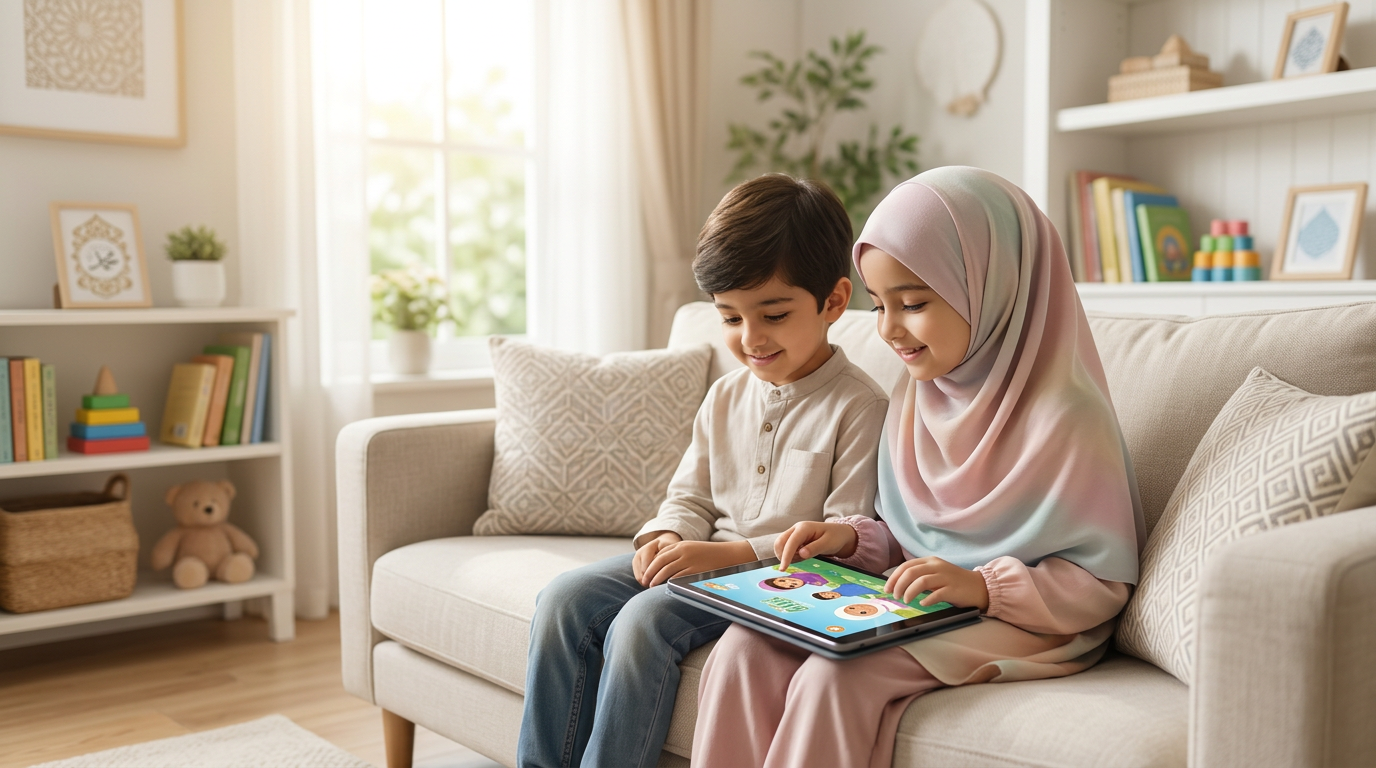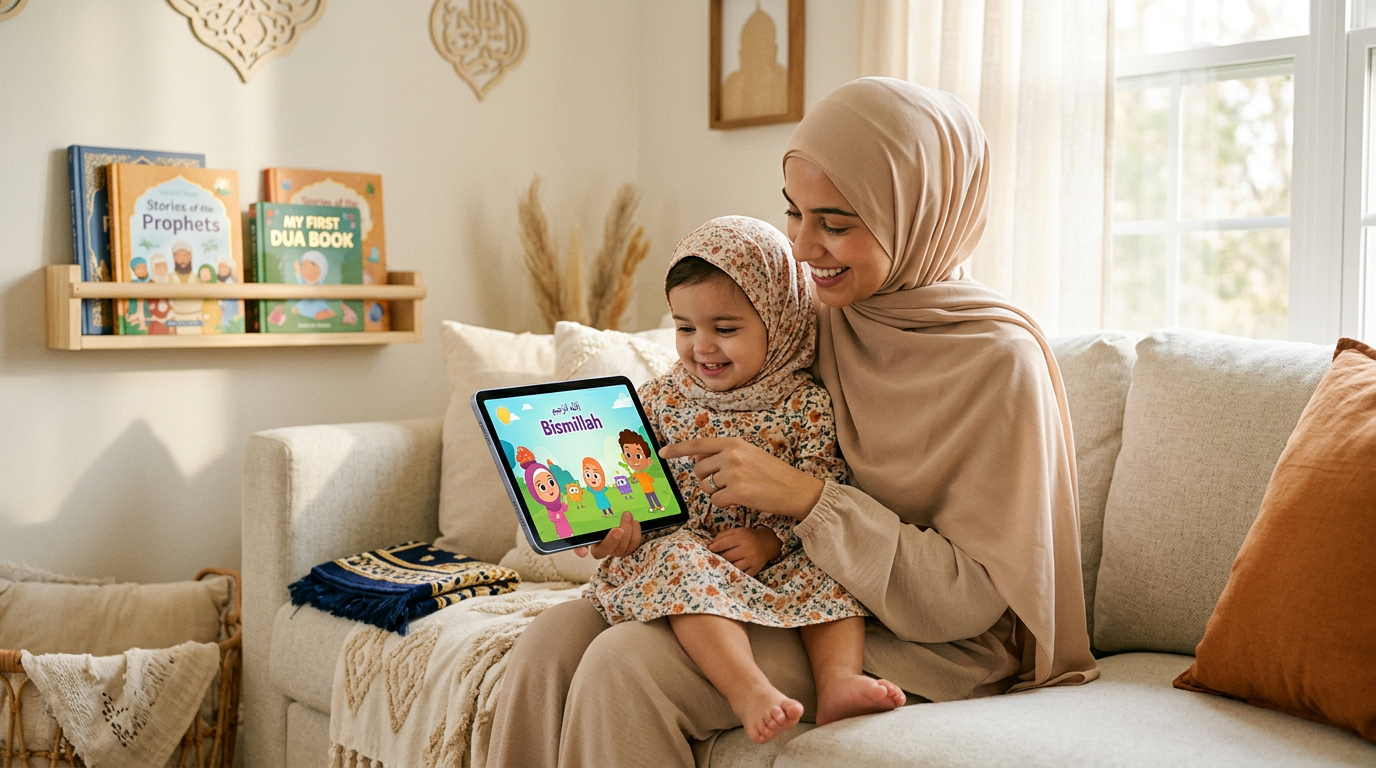
Baby learning flash cards are one of the simplest, most effective screen-free tools out there. They're perfect for introducing your little one to core concepts like colours, animals, and even the Arabic alphabet through gentle, visual repetition.
Why Flash Cards Are a Perfect Fit for Muslim Families
As Muslim parents, we’re always searching for ways to nurture our children's minds while protecting their fitra (their pure, natural disposition). Simple baby learning flash cards fit beautifully into this mission, offering a wonderful, screen-free tool that aligns perfectly with our values.
They provide a calm, focused way to introduce foundational concepts, from basic shapes and colours to the names of Allah's beautiful creations. Imagine sitting on the prayer mat after Asr, using a card with a picture of a cat to teach the word, or reviewing Arabic letters while your little one has their afternoon snack. It’s all about creating those small, joyful moments of connection and learning.
A Timeless Tool for Modern Homes
Flash cards are hardly a new invention, but their true value is being recognized now more than ever. Parents everywhere are rediscovering the benefit of helping little ones grasp new ideas through simple, visual repetition, which is why the global market for these tools has grown so much.
The secret to their effectiveness lies in proven learning methods like active recall techniques, which flash cards naturally encourage. Every time you ask your child to remember what they’ve seen on a card, you’re helping them build powerful neural pathways for long-term memory.
In our busy homes, finding moments for focused, one-on-one time can be a challenge. Flash cards offer a quick, meaningful way to connect—even for just five minutes between Maghrib and Isha—without the overstimulation that comes with screens.
This timeline gives you a great visual of how flash card activities can grow and change right along with your child.
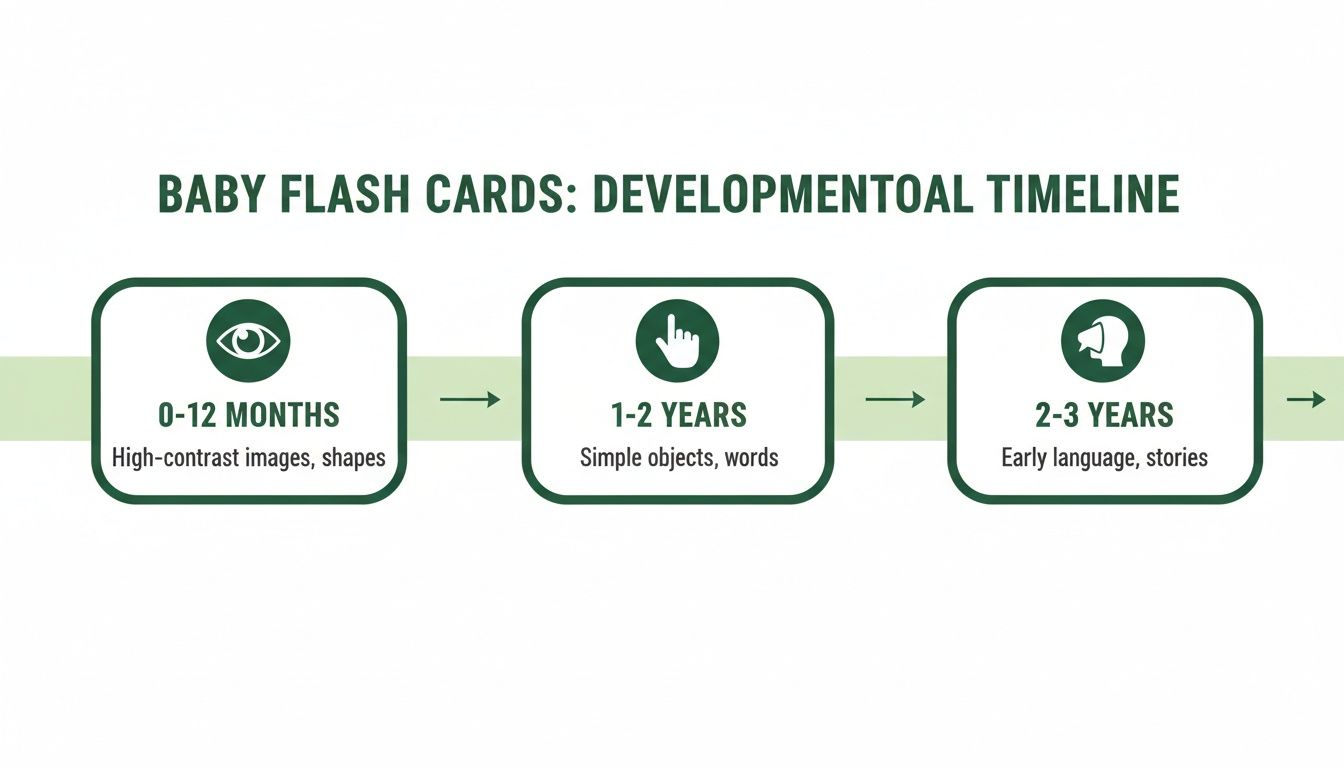
As you can see, these simple cards adapt beautifully, supporting everything from a newborn’s developing vision to a toddler’s exploding vocabulary. This versatility is what makes them such a valuable and long-lasting part of your child’s learning journey.
Choosing the Right Flash Cards for Your Muslim Baby
Finding the perfect baby products can feel overwhelming, especially when you want something that’s not only safe and effective but also resonates with your family's values. When it comes to baby learning flash cards, the key is to look at a few small details that make a big difference for both your child’s worldly development (dunya) and their gentle introduction to faith (deen).
First up, safety. Let’s be real—babies explore everything with their hands and mouths. This means you’ll want to look for cards made from non-toxic, BPA-free materials. Sturdy, thick cardstock with rounded corners is a must to avoid accidental pokes or paper cuts. Durability is a huge plus, too; cards that can handle a bit of chewing and bending will go the distance in a busy home.
What to Look For in Design and Content
For babies and toddlers, simple is almost always better. The best flash cards feature clear, high-contrast designs. For the littlest ones (0-6 months), black-and-white images are fantastic for their developing eyesight. As they get a bit older, you can bring in cards with realistic photos or straightforward illustrations of everyday items—think a spoon, a ball, or a pair of shoes.
From a Muslim parent's perspective, what’s on the cards is just as important as what they're made of. It's always a good idea to be mindful of the imagery. Many of us prefer to avoid cards with certain kinds of anthropomorphic animals dressed in clothes or acting in ways that feel a bit unnatural. The goal is to find beautiful, respectful representations of Allah’s creation.
A simple card showing a photo of a real cat is often more beneficial for a young child's learning than a cartoon one wearing a hat. This approach, often seen in Montessori-style resources, helps build a strong foundation in reality.
When you're building out your baby's learning toolkit, it's great to mix things up. Alongside flash cards, exploring the best educational toys for 1-year-olds can provide a well-rounded and engaging experience.
Bilingual and Faith-Aligned Options
For many Muslim families, raising bilingual children is a beautiful and important goal. If that sounds like you, look for flash card sets that feature both English and another language like Arabic, Urdu, or whatever is spoken in your home. They're a brilliant way to introduce the sounds and shapes of the Arabic alphabet early on, helping make the language of the Qur'an feel familiar and loved right from the start.
Here are a few faith-aligned themes that work wonderfully in a Muslim home:
- Creations of Allah: Cards showing the sun, moon, stars, rain, and various animals.
- Fruits and Vegetables: A perfect way to build vocabulary while encouraging healthy eating habits.
- The Arabic Alphabet: An absolute essential for early Islamic literacy.
- Good Manners: Simple, clear images representing actions like sharing or saying "Bismillah."
In the end, the "right" flash cards are the ones you feel genuinely good about sharing with your little one. If you’re thinking about how to introduce those all-important first words, you might find our guide on 1st words flash cards really helpful. A thoughtful choice can turn these simple cards into a cherished part of your daily routine.
Creating Your Own Islamic Baby Learning Flash Cards
There’s something truly special about the learning tools we make with our own hands, infused with love and intention. Crafting your own Islamic baby learning flash cards is a beautiful, budget-friendly way to tailor your child’s first lessons and turn a simple activity into a moment of genuine connection.
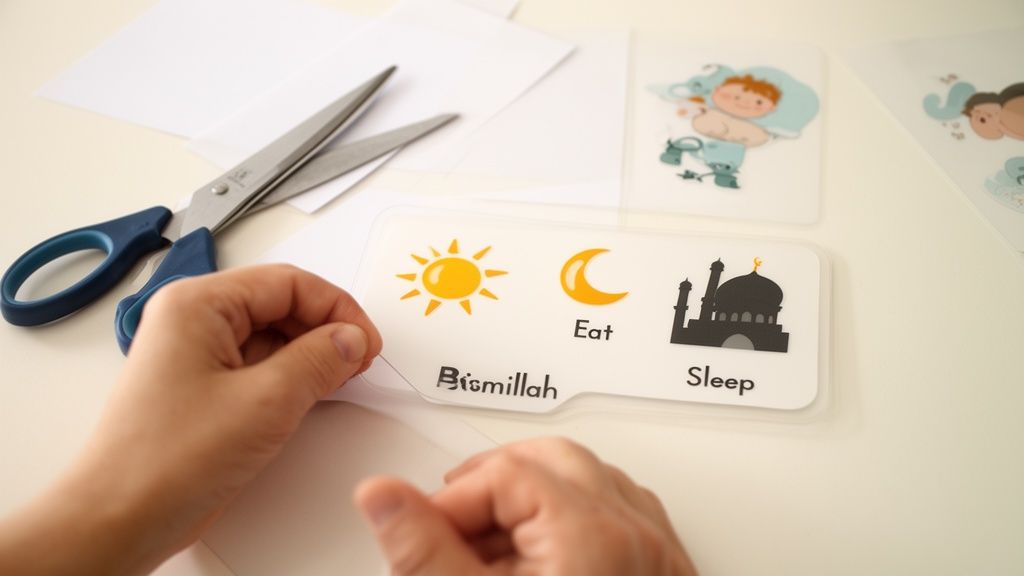
You don’t need to be a professional artist or have fancy supplies. For a young child's developing mind, simple and clear images are actually far more effective. The real magic is in the process itself—creating something unique that reflects your family’s values and gently introduces the beauty of Islam.
Ideas for Your DIY Flash Cards
So, where to begin? Think about the fundamental concepts you want to introduce. The goal here isn't rote memorization; it's about planting positive seeds that will, Insha'Allah, blossom as your child grows.
Here are a few simple but powerful ideas to get you started:
* The Arabic Alphabet: One letter per card is perfect. You can write the letter clearly and pair it with a simple drawing of an object that starts with it—think 'Alif' with an apple or 'Ba' with a boat.
* Creations of Allah: Dedicate cards to concepts mentioned beautifully in the Qur'an. The sun (shams), the moon (qamar), a star (najm), and rain (matar) are wonderful starting points.
* Simple Duas: Create a visual cue for everyday supplications. A card for eating with 'Bismillah' or for sleeping with 'Bismika Allahumma amutu wa ahya' can be paired with a drawing of a plate or a cozy bed.
* Good Manners: Visuals can make abstract concepts concrete. A card for saying 'Alhamdulillah' could show a happy child with a full tummy, while 'JazakAllahu Khairan' could feature someone receiving a gift.
These homemade cards quickly become more than just learning aids. They are tangible expressions of your hopes and duas for your child's spiritual and intellectual journey.
Research in early childhood education has shown that when parents are involved in creating learning materials, it significantly strengthens the parent-child bond. This hands-on involvement makes the learning process feel more personal, secure, and meaningful for the child.
Making Them Toddler-Proof
As any parent knows, anything that falls into a toddler's hands needs to be tough. Your beautiful, handmade cards will be no exception—expect them to be grabbed, bent, and probably even tasted!
Here’s a simple way to make sure your creations can withstand all that love:
1. Start with a Sturdy Base: Thick cardstock or plain index cards work great. If you’re using printouts, stick them onto the cardstock first.
2. Mount Everything Securely: Use a good glue stick to mount your images or drawings, paying close attention to the corners so they don't peel up.
3. Round the Corners: This is a crucial safety step. Use scissors or a corner punch to round off any sharp edges, making the cards much safer for little hands.
4. Laminate for Durability: This is the key to making them last. A small home laminator is a fantastic investment, as it will seal your cards and protect them from spills and teething. If you don't have one, covering both sides with clear, wide packing tape is a great alternative.
By taking these few extra steps, you can ensure your personalized baby learning flash cards are enjoyed over and over again, becoming a cherished part of your daily routine.
How to Use Flash Cards in Your Daily Family Routine
So, you’ve got your beautiful baby learning flash cards ready to go—whether you picked them up at a store or made them yourself. Now for the fun part: making them a natural part of your family's day. The secret isn't to treat them like a formal lesson or another thing to check off your list. Think of them as a joyful way to connect, filling those little pockets of time with warmth and discovery.
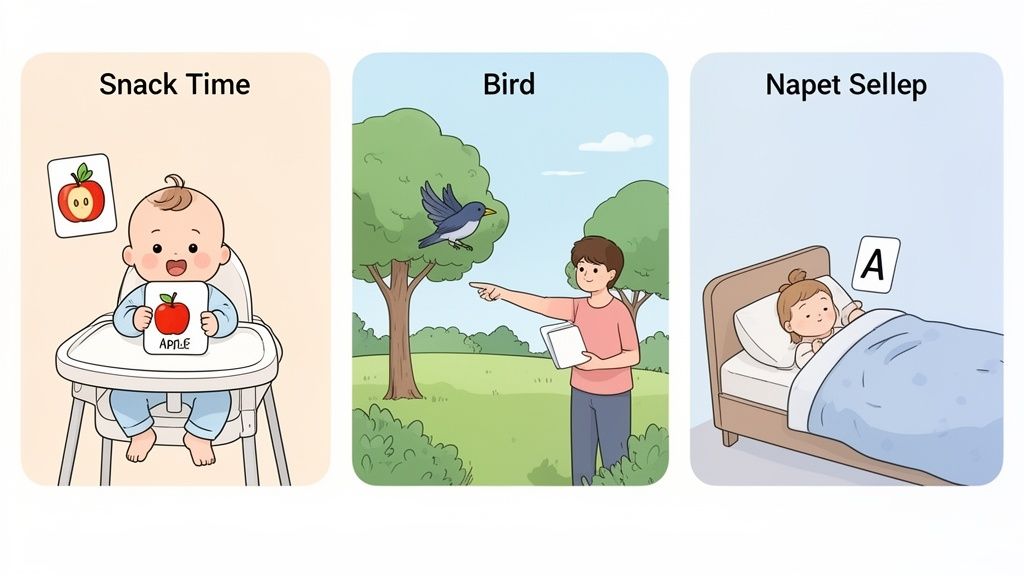
Forget about carving out a specific "learning hour." The best way to use flash cards is through gentle, consistent, and child-led moments. It’s all about meeting your little one where they are, tapping into their natural curiosity, and keeping every single interaction light and playful.
Weaving Learning into Everyday Moments
Take a look at your daily schedule. Where are the little gaps? Those moments when you're waiting for something? These are golden opportunities to pull out a few cards.
- During Snack Time: While you're getting a banana ready, show your baby the flash card for 'banana.' Say the word clearly, point to the real fruit, and then let them touch the card.
- While Waiting: Is the kettle boiling or dinner in the oven? A quick two-minute session with some animal cards can be a fantastic distraction while you’re busy nearby.
- Before Outings: If you're heading to the park, pull out the cards for a tree, a flower, or a bird. This helps build a powerful bridge between the picture and the real world, boosting their vocabulary and observation skills.
The whole point is to connect the cards to your child’s actual life. This is what makes learning feel relevant and exciting, not like some abstract chore.
A Gentle and Child-Led Approach
The number one rule for using flash cards with babies and toddlers is simple: keep it fun and pressure-free. If your child is interested and engaged, that's your green light. But if they turn away, try to snatch the cards, or start to get fussy, that's your cue to stop immediately.
Forcing a child to focus on flash cards when they aren't in the mood can backfire, creating a negative feeling about learning. It’s far better to have one joyful minute together than a stressful five-minute battle. Always, always follow their lead.
This gentle approach respects your child’s independence and builds their confidence. They learn that these colourful cards are part of a positive, shared experience with you, which only strengthens your bond.
Faith-Focused Sessions in Your Muslim Home
Flash cards are also a wonderful way to sprinkle moments of Islamic learning throughout the day. These sessions don't need to be long or formal; they are about creating a warm, faith-filled atmosphere in your home.
- Pre-Nap Quiet Time: The calm before a nap is a perfect time to quietly review Arabic alphabet cards.
- Post-Prayer Connection: After you've finished your Salah, sit with your little one for a moment and show them cards with the sun and moon, gently reminding them that these are creations of Allah.
- Making Dua a Habit: Keep the 'Bismillah' card near the high chair to show before meals, making it a natural part of your routine.
It's no surprise that flash cards have become such a staple in early learning. Data shows the growing flash cards market on Cognitive Market Research reflects their popularity. Parents using these simple tools often report big improvements in object recognition and vocabulary, especially when used consistently. This global trend shows a real desire for hands-on, educational resources that genuinely support a child's development.
By weaving these simple cards into your daily flow, you’re doing so much more than teaching words. You’re building routines, nurturing curiosity, and gently planting the seeds of faith in a way that feels completely natural.
Balancing Flash Cards with Halal Screen Time
As Muslim parents, we’re all navigating the tricky world of screen time. How do we give our kids the benefits of modern learning tools without exposing them to harmful content or too much stimulation? It’s a constant juggle.
This is where physical baby learning flash cards can work hand-in-hand with a safe, halal digital platform like Babymode. Think of them not as opposites, but as a powerful team.
Flash cards provide that crucial, hands-on experience that babies need for their sensory development. Then, a trusted digital resource can bring those same concepts to life through gentle animation and sound, all within a controlled, faith-aligned environment.
This combination creates a fantastic multi-sensory learning loop. Imagine your toddler watches a sweet Babymode story about saying 'Bismillah' before eating. A little later, when it's snack time, you can pull out your homemade 'Bismillah' flash card. This simple act connects the digital lesson to their real life, helping the idea stick in a truly meaningful way.
A Smart and Connected Approach
Modern parenting is definitely evolving. With many parents using apps to track milestones, blending digital and physical tools just makes sense.
We also know that consistent, early learning pays off. When used regularly, simple tools like flash cards can make a real difference in areas like phonics and recognizing emotions—skills that are foundational between ages 0–3. This is where Babymode's parent dashboard fits in beautifully, letting you monitor Islamic learning milestones as a screen-based complement to your hands-on activities. If you're curious about this trend, you can discover more insights about the toddler learning market on Dataintelo.
By thoughtfully blending these tools, you're really getting the best of both worlds. You're creating a learning environment for your child that is rich, engaging, and spiritually grounded.
Using physical flash cards to reinforce what your child sees on a trusted platform like Babymode bridges the gap between passive viewing and active learning. It transforms screen time from a simple distraction into a starting point for real-world interaction and connection.
Using Data to Guide Your Efforts
One of the most practical parts of this balanced approach is the insight it gives you. A platform like Babymode offers a parent dashboard that shows you exactly which videos and themes your child is drawn to.
Let's say you notice your little one absolutely loves the nasheeds about the Arabic alphabet. That’s your cue! You can then focus your next flash card session on those very letters, knowing you’re tapping into a genuine interest.
This method allows you to follow your child's natural curiosity, which always makes learning feel more like play and less like a lesson. For more ideas on this, check out our guide on using online flashcards for toddlers.
Common Questions from Muslim Parents
Even with something as simple as baby learning flash cards, it’s perfectly normal to have a few questions. As Muslim parents, we’re always thinking about how to bring things into our home that are not just educational but also align with our family’s values and rhythm.
Let's walk through some of the most common things parents ask, looking at them from a practical and faith-conscious perspective.
At What Age Can I Start Using Flash Cards with My Baby?
You can start much earlier than most people realize. For a brand-new baby, high-contrast black-and-white cards are a fantastic way to stimulate their developing vision in those first few weeks. Just a minute or two of holding up the patterns is a sweet, gentle way to interact.
Once your little one reaches around 3–6 months, you can start introducing simple, colourful images. Think everyday objects, animals, or fruits. The trick is to always keep sessions short and sweet. Treat it as a special moment of connection, not a formal lesson.
How Do I Keep My Toddler from Getting Bored with Flash Cards?
Ah, the toddler attention span! The secret here is to make it all about play and variety. Just flipping through cards one by one isn't going to hold their interest for long. You have to turn it into a game.
Here are a few ideas we've seen work wonders:
- Go on a treasure hunt: Hide a few cards around the room and ask your toddler to find the "cat" or the "apple."
- Get silly with it: Make the animal sounds together with lots of energy and funny voices. "The cow says MOOOO!"
- Play a matching game: Can they find the real-life object in the house that matches the picture on the card?
The most important thing is to read their cues. If they’re done after two minutes, that’s totally okay. Just put the cards away and try again another day. Keeping it positive and pressure-free is what really nurtures a love for learning.
The goal is never to force memorization. It's about joyful exposure. If your child just wants to stack, sort, or even chew on the cards, that's a valid form of learning and exploration for their age.
What if My Child Just Wants to Chew on the Cards?
Welcome to parenthood! This is completely normal and, honestly, expected. Babies and toddlers explore the world with all their senses, and their mouth is a primary tool for discovery. It’s actually a sign of healthy curiosity.
The key is simply to choose your materials well. Look for durable, non-toxic cards made from thick, laminated cardstock. There are also great options made from cloth or baby-safe plastic. Supervise them during card time, of course, and you can gently redirect them to look at the pictures. But don't stress about the chewing—it’s just a phase in their learning journey.
At Babymode, we believe in a balanced approach where hands-on tools like flash cards are beautifully complemented by safe, halal screen time. Our platform is designed to reinforce the very concepts you teach, from the Arabic alphabet to good manners, in an ad-free, faith-aligned environment. Join the Babymode waitlist today to be the first to know when we launch.