Finding the right preschool learning songs for your toddler can feel overwhelming. You want something engaging and educational that supports their development, but as a Muslim parent, you also need content that aligns with your family’s values. The search often involves skipping questionable videos, enduring endless ads, and worrying about what algorithm might play next. It’s a common challenge: how do you provide beneficial screen time that is both stimulating for your child and respectful of your faith?
This guide is designed to solve that problem. We've curated a list of high-quality, effective learning songs that are perfect for toddlers and preschoolers in Muslim homes. We’ll move beyond just the basics and show you how to build a well-rounded, halal-friendly playlist covering everything from the alphabet and numbers to Islamic manners and bilingual Arabic phrases. Each recommendation is chosen to help your child learn foundational concepts in a calm, positive, and age-appropriate way.
Here, you'll find a trusted resource filled with specific song suggestions, practical tips for integrating them into your daily routine, and ideas for interactive activities. We’ll also explain how you can use platforms like Babymode to create a secure, ad-free listening environment, giving you complete control over what your little one sees and hears. This list will help you confidently select content that nurtures your child's mind and spirit, making screen time a truly valuable part of their early years.
1. Super Simple Songs
Super Simple Songs is a very popular collection of preschool learning songs, originally created by an educator for English language learners. Their core strength lies in their simplicity: the songs use basic vocabulary, slow tempos, and clear, easy-to-understand animations. This makes them exceptionally effective for toddlers who are just beginning to grasp language and concepts.
The gentle, repetitive nature of these songs helps build confidence and encourages participation. For Muslim families raising children in English-speaking countries, these songs provide a solid, neutral foundation for language development that can complement other faith-based learning. While they focus on secular topics like animals and numbers, their calm and gentle approach makes them a safe starting point for building the vocabulary your child will need for all areas of their life.
How to Use Super Simple Songs Effectively
- Start the Day: Use an upbeat song like "Good Morning" as a gentle way to start your morning routine and bring some positive energy to the breakfast table.
- Connect with Movement: Pair songs with simple hand gestures or actions. For "Head, Shoulders, Knees & Toes," physically touch each body part as you sing along with your child to reinforce learning.
- Themed Learning: Create playlists focused on a specific theme, such as colours, shapes, or animals. This helps your child make connections between different concepts.
- Quiet Time Transitions: A calm song like "Twinkle Twinkle Little Star" can signal that it's time to wind down for a nap or bedtime, helping to create a predictable and soothing routine.
Parent Tip: For families looking to build a bilingual foundation, Super Simple Songs can be a great starting point. If you're focusing on Arabic, you can find a wealth of resources in our guide to songs for kids in Arabic.
2. The Kiboomers - Original Kids Songs
The Kiboomers offer a vast library of original preschool learning songs known for their upbeat, modern sound and practical themes. Their songs are specifically designed for toddlers, covering topics directly relevant to a young child’s daily life, such as routines, social skills, and managing emotions. Their contemporary production quality makes them engaging for both children and parents.
The Kiboomers' music is great for supporting behavioural and emotional development. For Muslim families, their songs about routines like handwashing or cleaning up can seamlessly integrate into daily life, reinforcing the importance of cleanliness and order in a fun, non-preachy way. The focus on social-emotional learning also helps children develop empathy and kindness, which are core Islamic values.
How to Use The Kiboomers Effectively
- Support Toilet Training: The popular "Potty Dance" song can help make toilet training a positive and exciting milestone rather than a stressful task.
- Establish Bedtime Routines: Play their calming bedtime songs about 15 minutes before sleep to signal that it's time to wind down. This helps create a predictable and soothing transition to bed.
- Teach Emotional Recognition: Use songs like "If You're Happy and You Know It" to create a game. Pause the song and ask your child to make the face that matches the feeling, helping them connect words to emotions.
- Reinforce Good Habits: Incorporate songs like the "Clean Up Song" into your daily routine. This turns chores into a fun, shared activity and helps your child learn responsibility from a young age.
Parent Tip: The Kiboomers' songs are excellent for transitions. If your child struggles with moving from playtime to mealtime, using a specific transition song can make the process smoother. This predictability is especially helpful during busy days like Ramadan or when preparing for Jummah prayer.
3. Cocomelon - Nursery Rhymes
Cocomelon is a global phenomenon, presenting classic and original preschool learning songs with bright, 3D animation. The episodes often follow the daily life of baby JJ and his family, embedding lessons on numbers, letters, colours, and social skills into simple, repetitive storylines. Its massive popularity stems from its highly engaging visual style and catchy music, making it a powerful tool for capturing a young child's attention.
While secular in nature, its emphasis on family, kindness, and daily routines provides a neutral backdrop that doesn't conflict with core Islamic values. For Muslim parents, Cocomelon can serve as a mainstream resource for language development and concept learning, but it's best used selectively and with clear boundaries due to its stimulating nature.
How to Use Cocomelon Effectively
- Set Clear Boundaries: Due to its highly stimulating nature, use Cocomelon intentionally rather than as background noise. A structured 15-20 minute session can be a planned part of the day, such as while you prepare dinner.
- Encourage Active Viewing: Watch alongside your child when possible. Pause the video to ask questions like, "What colour is the bus?" or "Can you count the ducks with JJ?" This transforms passive screen time into an active learning experience.
- Bring the Songs to Life: After watching, sing the songs during daily activities. If you watched the "Bath Song," sing it during your child's bathtime to reinforce the connection between the song and the real-world routine.
- Balance with Faith-Based Content: Use Cocomelon for foundational skills like the alphabet, but ensure you balance it with songs that introduce Islamic concepts. This helps your child build a well-rounded understanding of the world.
Parent Tip: Cocomelon's focus on daily routines and positive behaviour can be a great conversation starter. Use it as a springboard to introduce Islamic manners, such as connecting their "Please and Thank You" song to the importance of saying Alhamdulillah. You can also pair it with a foundational Islamic tune, like the song of Bismillah, to teach children the importance of starting actions with Allah's name.
4. Laurie Berkner Band - Preschool Music
The Laurie Berkner Band offers a fantastic collection of original preschool learning songs that are both educational and incredibly fun. Laurie Berkner's work is acclaimed for its catchy melodies, interactive lyrics, and themes that directly address a young child's world. Her music is a staple in many educational settings and is known for its wholesome, gentle approach.
The songs are designed to get children moving, thinking, and participating. This active engagement is why her work is so effective. For Muslim families, Laurie Berkner's music provides a high-quality, joyful option for entertainment and learning. The songs focus on universal childhood experiences like animals, food, and feelings, making them a safe and positive choice that can easily fit into your family’s daily life without conflicting with Islamic values.
How to Use Laurie Berkner Band Music Effectively
- Create a Dance Party: Use upbeat songs like "We Are the Dinosaurs" for a fun-filled dance session. This is a great way to get wiggles out, especially before prayer time or on a rainy day.
- Support Language Skills: Songs like "The Goldfish" introduce simple narratives. Sing them with your child and use puppets or toys to act out the story, helping them connect words with actions.
- Integrate into Car Rides: Her albums are perfect for car journeys. A familiar and engaging playlist can make trips to the mosque, grocery store, or grandparents' house much smoother for toddlers.
- Wind-Down Music: While known for her energetic tunes, Berkner also has gentler songs like "Moon Moon Moon" that are perfect for quiet time or as part of a calming bedtime routine.
Parent Tip: Many of Laurie Berkner's songs encourage imaginative play. After listening to a song like "Rocketship Run," you can extend the fun by building a "rocket" out of cardboard boxes and cushions, helping your child develop creativity alongside their listening skills.
5. Mother Goose Club - Interactive Songs
Mother Goose Club breathes new life into classic nursery rhymes. This platform combines traditional songs with modern games and activities, transforming passive listening into active engagement. The characters are bright and friendly, and the music is upbeat, which helps capture a young child's attention and makes learning feel like playtime. This interactive approach is particularly effective for toddlers who thrive on hands-on experiences.
For Muslim families, Mother Goose Club offers a rich library of secular, foundational content that helps build English vocabulary and concepts like counting and colours. While it is not faith-based, its focus on core educational rhymes provides a strong, neutral supplement to Islamic learning, helping your child develop the language skills needed for all aspects of their education.
How to Use Mother Goose Club Effectively
- Reward with Games: Use the interactive games as a positive reinforcement tool. After singing along to a song like "Old MacDonald," you can do the related game as a fun reward that solidifies the learning.
- Combine Digital and Physical Play: Bridge the gap between screen time and real-world activity. While singing "Ring a Ring o' Roses," encourage your child to act out the movements along with the characters on screen.
- Family Activity Time: Share the experience with your child. Complete the interactive puzzles or colouring activities together to make screen time a shared, bonding experience rather than a solitary one.
- Target Specific Skills: Use their playlists to focus on specific developmental areas. If you're working on phonics, you can find songs that specifically target letter sounds and early reading skills.
Parent Tip: For parents in community playgroups, the Mother Goose Club app can be a fantastic shared resource. You can align your group's weekly themes with the songs and activities, and then use the app's progress reports to track how different children are engaging with the material.
6. Disney Junior Music Collection
The Disney Junior Music Collection uses the appeal of beloved characters to create engaging preschool learning songs. These tracks, from popular shows like Mickey Mouse Clubhouse or Doc McStuffins, feature high production value and familiar faces, which creates an instant connection and makes learning feel like fun.
The songs often focus on themes like problem-solving, friendship, and health, woven into catchy tunes. For Muslim families, these songs can be a mainstream tool for developing English language skills, though parental guidance is key to ensure the content aligns with family values. The focus on kindness and helping others often resonates well with Islamic principles of good character (akhlaq).
How to Use the Disney Junior Music Collection Effectively
- Model Good Behaviour: Use songs from shows like Doc McStuffins to talk about caring for others or songs from Sofia the First to discuss kindness and good manners. This connects entertainment with real-world akhlaq.
- Create Themed Activities: If your child loves a particular character, build a learning theme around them. Pair a Mickey Mouse song about counting with a hands-on activity of counting dates or toys.
- Bridge to Literacy: Connect the songs to their corresponding storybooks. After listening to a song, read a book featuring the same characters to strengthen vocabulary and reading comprehension skills.
- Manage Screen Time: Since these songs are often tied to TV shows, use them as audio-only playlists during car rides or playtime to limit passive screen time while still enjoying the music.
Parent Tip: While many Disney songs are educational, always preview content to ensure it aligns with your family’s values. Use platforms like Babymode to create a pre-approved playlist, giving you peace of mind that your child is only accessing content you've selected, free from ads or inappropriate videos.
7. Twinkl Learning Music Library
Twinkl is a massive educational resource platform trusted by teachers, and its Learning Music Library is a fantastic tool for parents looking to bring structured, curriculum-aligned songs into their home. Twinkl offers thousands of preschool learning songs, rhymes, and activities designed by educators, with a direct link to educational goals.
For Muslim families, Twinkl provides a high-quality, secular educational foundation that you can trust. The songs are created with clear learning outcomes in mind, covering everything from phonics and counting to understanding the world. This makes it an excellent supplement to your child's Islamic learning, providing structured academic content that helps prepare them for school while you focus on faith-based teachings separately.
How to Use the Twinkl Learning Music Library Effectively
- Align with Learning Goals: Use Twinkl's filters to find songs that match specific learning goals. If you are working on number recognition, you can find a whole set of songs dedicated to it.
- Create Themed Units: Plan a "theme of the week," such as "Seasons" or "Community Helpers." Use Twinkl to create a playlist of songs and download matching worksheets to create an immersive learning experience.
- Offline Learning: Download the audio files and printable resources ahead of time. This is perfect for car journeys or for creating a screen-free activity where your child can listen to the music while engaging with a related colouring sheet.
- Bridge to Reading: Many of Twinkl’s songs are based on their own original storybooks. You can listen to the song first to build excitement before introducing your child to the book, helping to foster an early love for reading.
Parent Tip: While Twinkl is a subscription-based service, they often have free "taster packs" and resources. This is a great way to explore the quality of their content before committing. Look for their free resources section to find songs and activities you can try with your toddler today.
8. Dr. Jean - Songs and Fingerplays
Dr. Jean Feldman is a beloved figure in early childhood education, and her collection of songs and fingerplays is a staple in many preschools. Dr. Jean creates music that is both fun and purposeful, designed to teach foundational skills through movement and repetition. Her work is highly practical, focusing on everything from literacy and math to self-regulation.
The strength of Dr. Jean's music lies in its direct application to a young child's daily routine. These preschool learning songs are not just for entertainment; they are tools for teaching. For Muslim families, her songs on topics like transitions and cleanup offer a fantastic, neutral framework for establishing positive habits at home. While the content is secular, its focus on structure and positive reinforcement aligns well with the value of adab (good manners) in Muslim households.
How to Use Dr. Jean's Songs Effectively
- Master the Movements: Fingerplays are most effective when you know the actions well. Practice a song like "The Alligator Chomp" yourself first so you can guide your child with confidence.
- Manage Transitions: Use her "clean up" songs to make tidying up a fun, predictable game rather than a chore. A simple, cheerful song can signal that one activity is ending and another is beginning.
- Create Energizing Routines: Combine a few upbeat songs into a short "brain break" playlist. This is perfect for helping a restless toddler get their wiggles out before settling down for a calmer activity or story time.
- Reinforce Learning: Use specific songs to target skills. Her alphabet and phonics songs are great for pre-readers, while counting songs help build early numeracy skills in an engaging way.
Parent Tip: Many of Dr. Jean's most popular songs are available on her website and YouTube. Because they are designed for active participation, try playing the audio without the screen. This encourages your child to focus on your movements and the lyrics, enhancing memory and engagement.
9. Signing Time - Music with American Sign Language
Signing Time offers a unique approach to preschool learning songs by integrating American Sign Language (ASL) with music. Created by Rachel Coleman, this collection teaches vocabulary through songs where keywords are sung and signed simultaneously. This multisensory method benefits all children by reinforcing language through visual and kinesthetic learning. It can also reduce frustration in pre-verbal toddlers by giving them a way to communicate their needs.
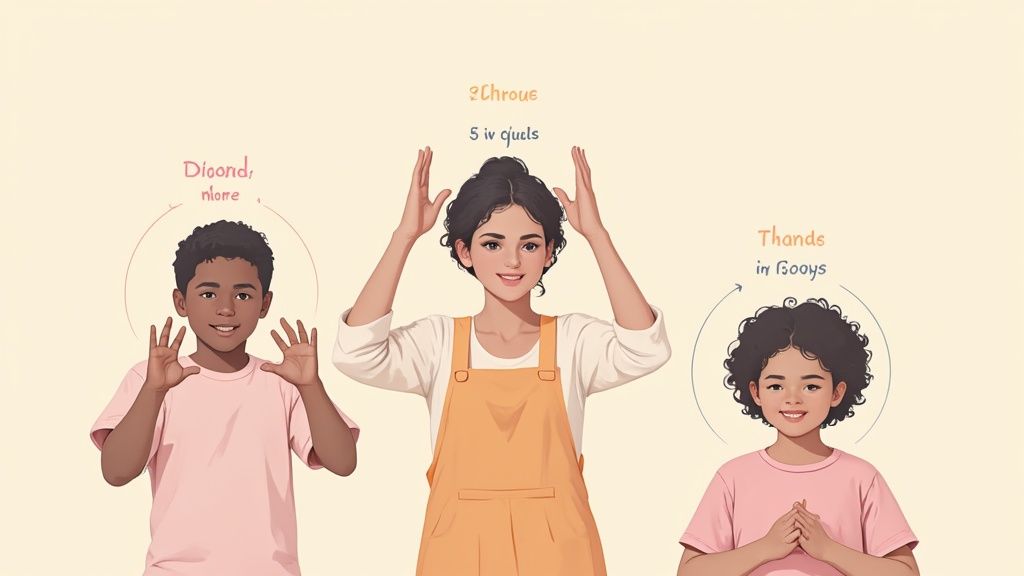
This approach is incredibly valuable for creating an inclusive learning environment. For Muslim families, it provides a beautiful tool that aligns with the Islamic value of inclusivity and compassion. Teaching a child ASL can be a practical skill and an act of empathy, preparing them to connect with a wider community. The songs focus on universal early childhood themes like animals, colours, and family, making them a safe and beneficial addition to your child's learning journey.
How to Use Signing Time Effectively
- Learn Together: Make it a family activity. Learn the signs along with your child from the videos. When you model the signs during daily routines, it reinforces their meaning and encourages your child to use them.
- Focus on Key Words: Start with essential signs like "milk," "more," "eat," and "all done." Using these signs during mealtimes can significantly improve communication and reduce toddler frustration.
- Connect to Storytime: Pair a Signing Time song with a picture book on the same theme. For example, after singing the "Zoo Animals" song, read a book about animals and practice the signs for each creature you see.
- Create an Inclusive Mindset: Use these songs to talk about different ways people communicate. This fosters an early sense of empathy and understanding, which are core Islamic values.
Parent Tip: Integrating ASL can be a fantastic bridge for language development, especially in bilingual households. The visual nature of signing can help clarify concepts that might be confusing when presented in two different spoken languages. You can explore more on this topic in our guide to ABC stories and ASL for early learners.
10. Jack Hartmann - Exercise and Learning Songs
Jack Hartmann's songs masterfully blend academic learning with physical movement. His extensive library of preschool learning songs is designed to get children up and moving, which is proven to enhance memory and focus. The songs cover everything from the alphabet and phonics to numbers and sight words, all set to energetic, easy-to-follow exercise routines.
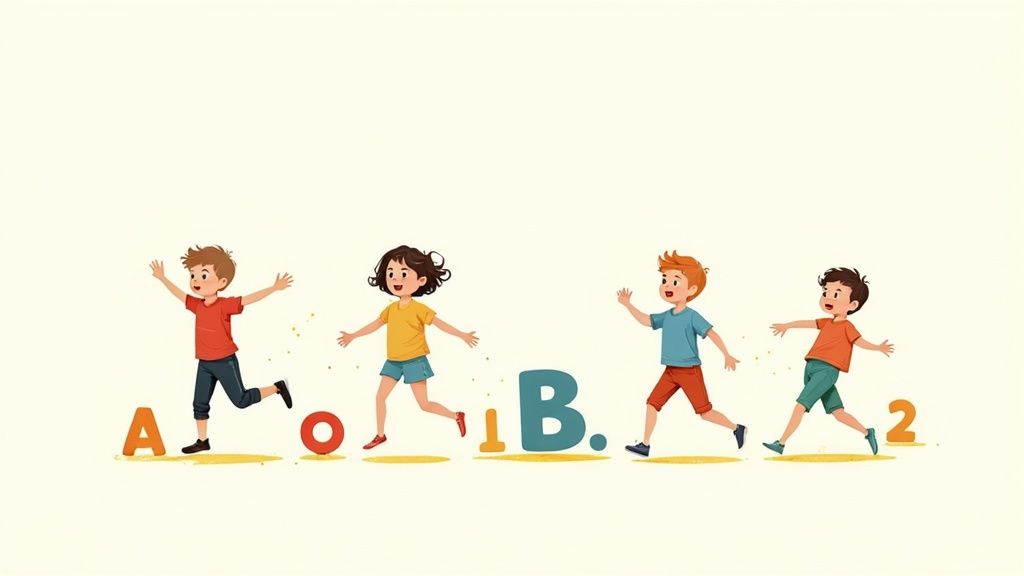
This approach is incredibly valuable for active toddlers who learn best by doing. For Muslim families, Jack Hartmann's content offers a fantastic, wholesome way to channel a young child's energy into productive learning, especially on rainy days or during times when outdoor play isn't an option. The songs promote coordination and gross motor skills, which are crucial for healthy development. Because the focus is purely on academics and movement, the content is neutral and fits easily into any family's routine.
How to Use Jack Hartmann Songs Effectively
- Brain Breaks: Use a short, high-energy song like "Workout to the Letter Sounds" as a "brain break" between quieter activities. This helps reset your child's focus and manage restlessness.
- Structured Movement Time: Designate 10-15 minutes each day for "learning and moving." This creates a predictable routine that helps your child burn off excess energy in a positive way.
- Ensure a Safe Space: Before starting a video, clear a small area of the floor from toys or furniture to give your child ample room to jump, dance, and move without bumping into anything.
- Family Fitness Fun: Join in with your child! Participating together not only models healthy habits but also turns learning into a fun, bonding activity for the whole family.
Parent Tip: Many of Jack Hartmann's songs are used by occupational therapists to support motor skill development. If you have concerns about your child's coordination or physical milestones, these songs can be a fun, low-pressure way to encourage movement and practice skills at home.
Top 10 Preschool Learning Songs Comparison
| Title | Implementation Complexity (🔄) | Resource Requirements (⚡) | Expected Outcomes (⭐ 📊) | Ideal Use Cases (💡) | Key Advantages |
|---|---|---|---|---|---|
| Super Simple Songs | Low 🔄 — plug-and-play video use | Low ⚡ — free YouTube, short clips | ⭐⭐⭐⭐ — basic vocabulary, clear pronunciation; high engagement 📊 | ESL/ELL warm-ups, preschool vocabulary drills, home practice | Accessible & free; repetitive, clear speech; high classroom adoption |
| The Kiboomers - Original Kids Songs | Low–Medium 🔄 — select theme-specific tracks | Medium ⚡ — multi-platform, subscription for full library | ⭐⭐⭐⭐ — social-emotional support; routine normalization 📊 | Toilet training, transition routines, emotional learning activities | Contemporary themes; professional production; downloadable content |
| Cocomelon - Nursery Rhymes | Low 🔄 — passive viewing, minimal setup | Medium ⚡ — streaming platforms (Netflix/YouTube); large file lengths | ⭐⭐⭐⭐⭐ — strong engagement, broad topic coverage; high recognition 📊 | Large-group storytime, rewards, brief instructional clips | Very high production value and global reach; varied topics |
| Laurie Berkner Band - Preschool Music | Medium 🔄 — teacher facilitation or live bookings | Medium ⚡ — paid albums, limited free streaming | ⭐⭐⭐⭐ — encourages participation, movement, developmental fit 📊 | Music class, live performances, movement-based learning | Award-winning, interactive call-and-response songs; expert-backed |
| Mother Goose Club - Interactive Songs | Medium 🔄 — app/game integration required | Medium–High ⚡ — subscription, internet for interactivity | ⭐⭐⭐⭐ — multisensory learning with measurable progress 📊 | Differentiated instruction, speech therapy, app-based practice | Interactive games paired with songs; progress tracking; curriculum alignment |
| Disney Junior Music Collection | Low 🔄 — streaming use; content curation | Medium ⚡ — Disney+ or streaming access | ⭐⭐⭐ — engagement via characters; behavior-modeling impact 📊 | Character-themed literacy, behavior modeling, familiar-character engagement | Strong brand recognition; appeals widely to preschoolers |
| Twinkl Learning Music Library | Medium 🔄 — planning and worksheet integration | Medium ⚡ — subscription, downloadable assets | ⭐⭐⭐⭐ — curriculum-aligned outcomes; lesson-plan ready 📊 | Lesson planning, curriculum delivery, special education resources | Teacher-curated; downloadable audio, sheet music, and worksheets |
| Dr. Jean - Songs and Fingerplays | Medium 🔄 — teacher-led practice required | Low–Medium ⚡ — books/DVDs/digital; active teacher role | ⭐⭐⭐⭐ — improved routines, motor skills, classroom management 📊 | Transitions, behavior management, movement/fingerplay sessions | Classroom-tested; multi-modal (song + movement + fingerplay) |
| Signing Time - Music with ASL | Medium 🔄 — requires ASL modeling and practice | Medium ⚡ — purchase/streaming; smaller library | ⭐⭐⭐⭐ — inclusive bilingual development (spoken + signed) 📊 | Inclusive classrooms, deaf/hard-of-hearing learners, family ASL learning | Comprehensive ASL integration; promotes inclusion and bilingual skills |
| Jack Hartmann - Exercise and Learning Songs | Low–Medium 🔄 — select videos and clear activity space | Low ⚡ — free YouTube; requires physical space | ⭐⭐⭐⭐ — boosts physical activity, engagement, motor development 📊 | Brain breaks, PE, movement-integrated academic learning | Strong exercise integration with academics; high engagement; free access |
Creating Your Family's Halal Screen Time Routine
We’ve journeyed through a comprehensive playlist of preschool learning songs, from counting numbers with The Kiboomers to learning letters with Super Simple Songs. Each one offers a unique pathway to making early learning joyful, interactive, and aligned with the values you hold dear in your Muslim home. The goal has never been just to find something to watch, but to thoughtfully curate a soundtrack for your child’s foundational years.
This curated list demonstrates that you don’t have to compromise on faith or quality. You can introduce the alphabet with the same intention you use to teach the first words of a Dua. By integrating these musical resources, you transform passive screen time into an active, shared experience that supports cognitive and motor development alongside your faith-based teaching. The power isn’t in the screen itself; it’s in how you, as a parent, guide its use with purpose and love.
From Playlist to Practice: Actionable Next Steps
Building a healthy media habit starts with small, consistent steps. Instead of feeling overwhelmed by the options, focus on implementing one or two ideas this week. Here is a practical roadmap to get you started:
Start with One Category: Did the gentle songs from Super Simple Songs resonate with your family’s style? Or perhaps the active songs from Jack Hartmann are what your toddler needs right now? Pick one category from our list and select two or three songs to introduce.
Schedule Your "Song Time": Integrate these songs into your existing routine. Maybe a calming song becomes part of the bedtime wind-down, or an energetic alphabet song is perfect for that post-nap burst of energy while you prepare a snack. Attaching it to a daily event makes it a predictable and comforting ritual.
Go Beyond the Screen: The true magic happens when the learning steps away from the device. After listening to a song about farm animals, find those animals in a picture book. If you sang about the colour red, go on a "red hunt" around the house together. This connects the digital concept to the tangible world.
Create a Family "Favourites" Playlist: Use the suggestions in this article to build your own go-to playlist. Having a pre-approved, curated list ready on a platform like Babymode means you are never caught scrambling for something appropriate when you need a calm, five-minute activity to transition between tasks, like just before Maghrib prayer.
The Lasting Impact of Intentional Media Choices
Choosing the right preschool learning songs is about more than just entertainment. It’s an act of nurturing your child’s fitra, their innate pure nature. The rhythms they hear and the words they repeat all contribute to the person they are becoming. By consciously selecting content that is gentle, educational, and respects your values, you are laying a strong foundation.
You are building a home environment where learning is a delight, not a chore. You are showing your child that your family's values are a beautiful and natural part of every aspect of life. This intentional approach to media fosters a sense of security, curiosity, and a positive identity from the very beginning. Remember, every small choice you make helps shape a calm, connected, and faith-filled childhood for your little one.
Ready to build a safe, ad-free listening environment for your child? Babymode offers a curated world of halal preschool learning songs and content, all within a parent-controlled app designed for peace of mind. Start your journey toward intentional, faith-aligned screen time today at Babymode.