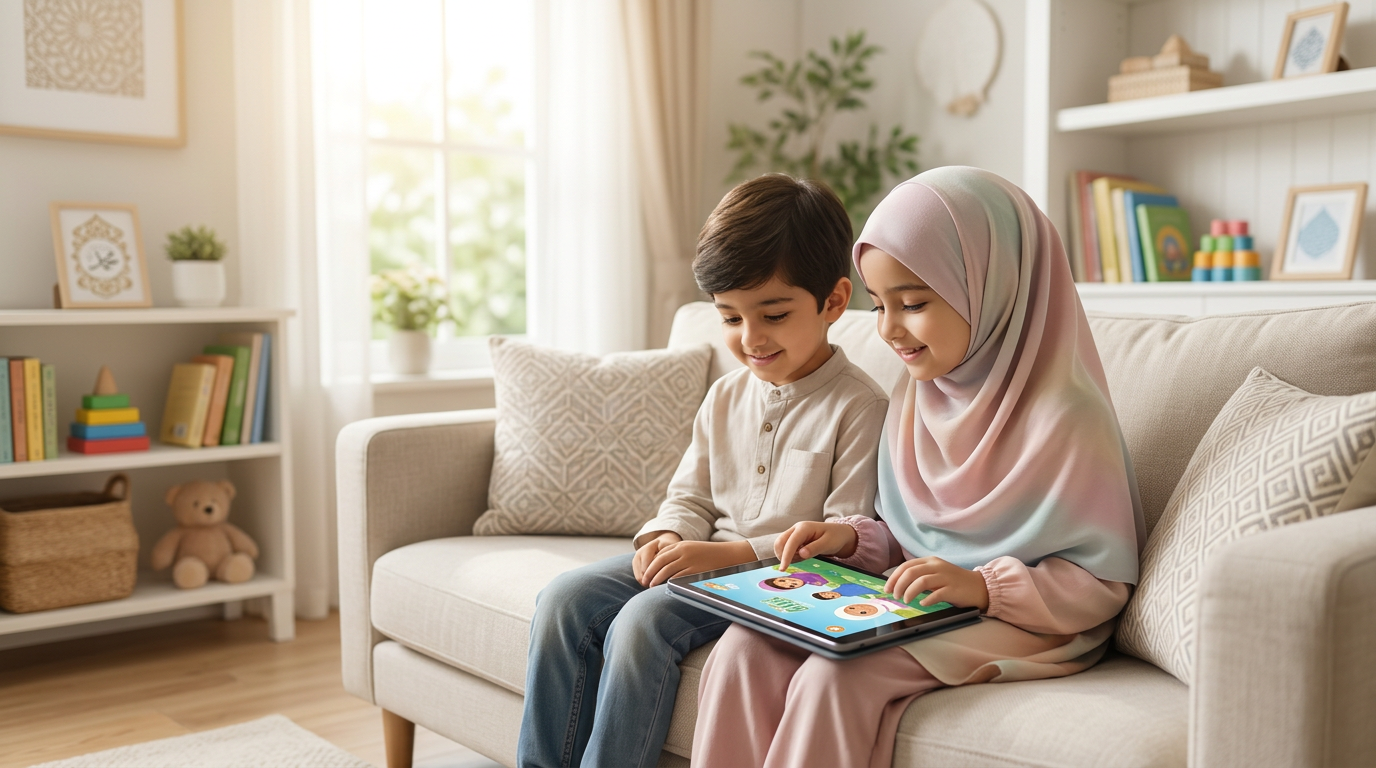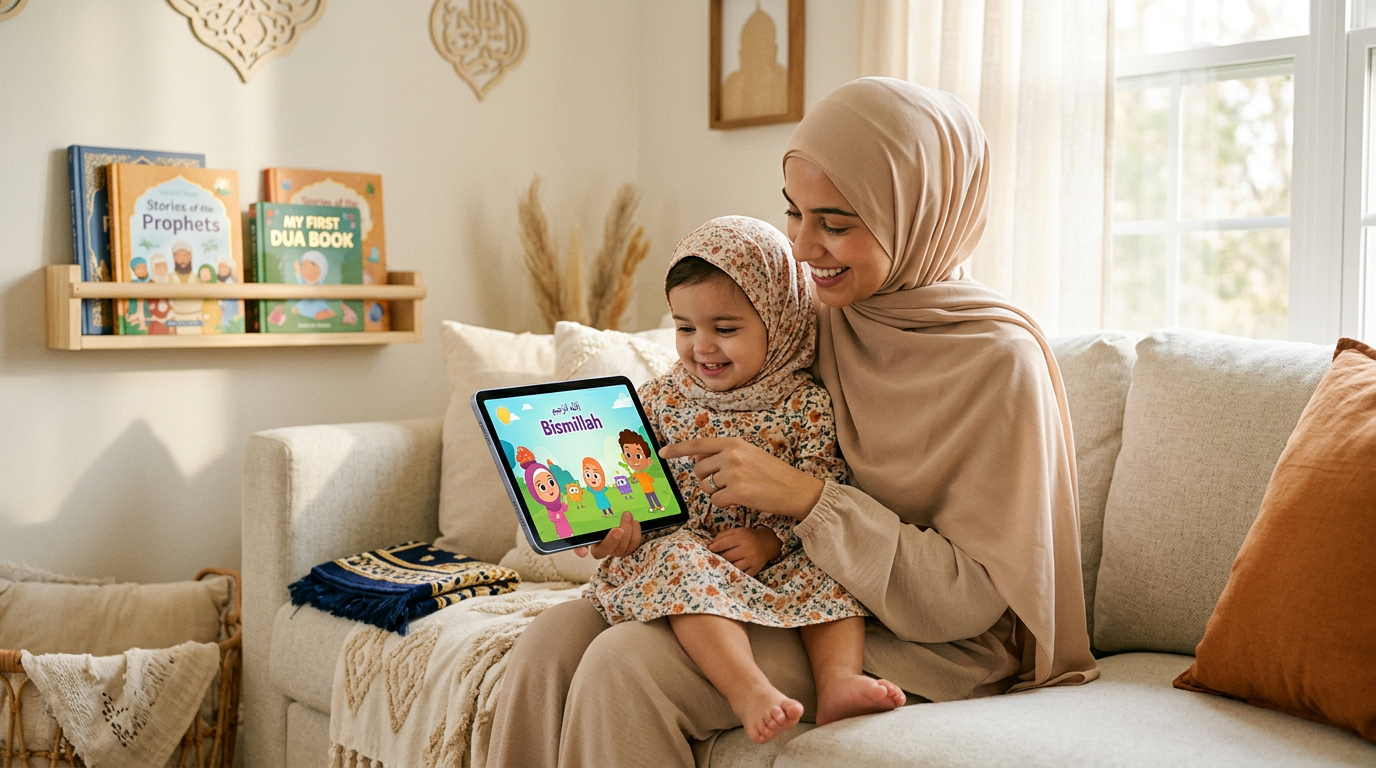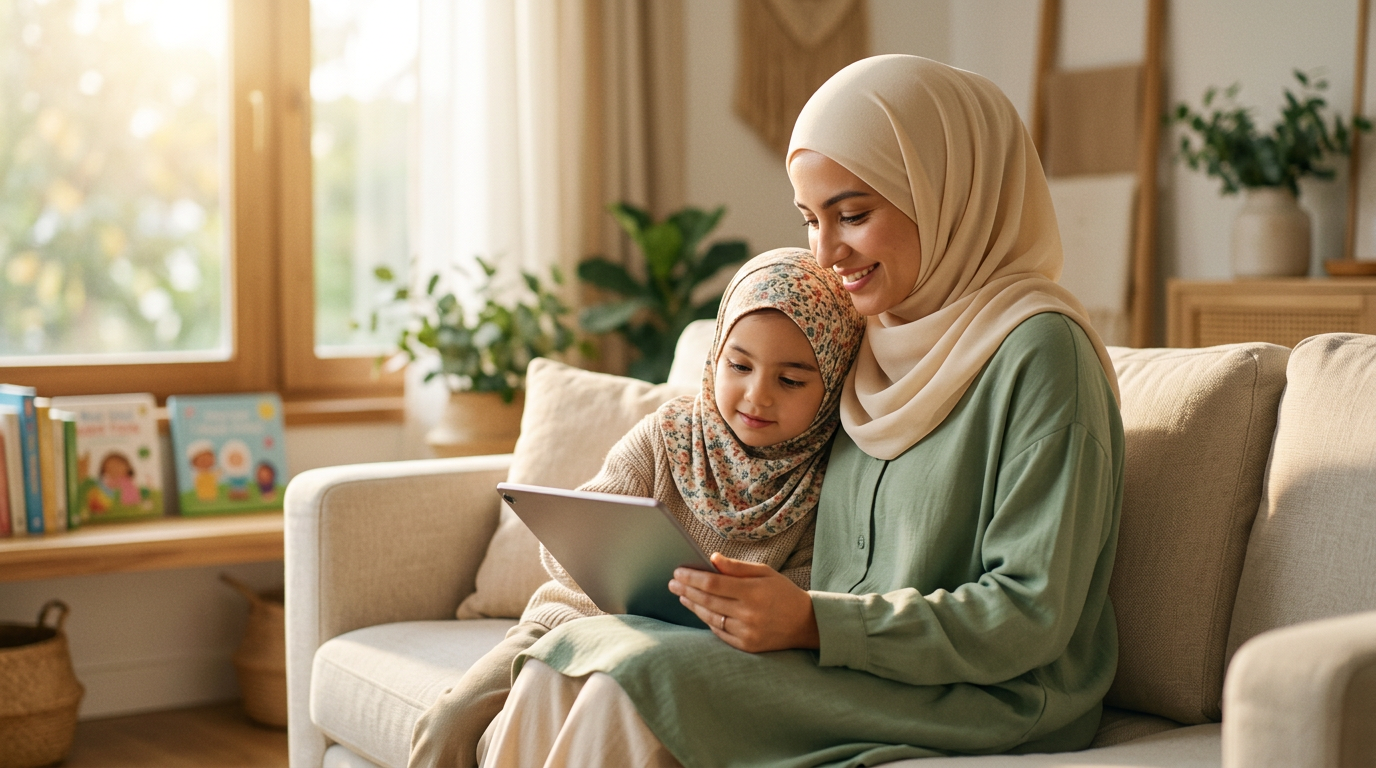
For Muslim families, faith-aligned learning preschool videos aren't just entertainment. Think of them as gentle, purposeful tools designed to nurture your child's natural curiosity while staying true to the core values of our faith. They go far beyond simple alphabet songs; these videos are intentionally slow-paced, model positive behavior, and reflect the beautiful calm of Allah's creation.
Defining Healthy Screen Time for Our Little Ones
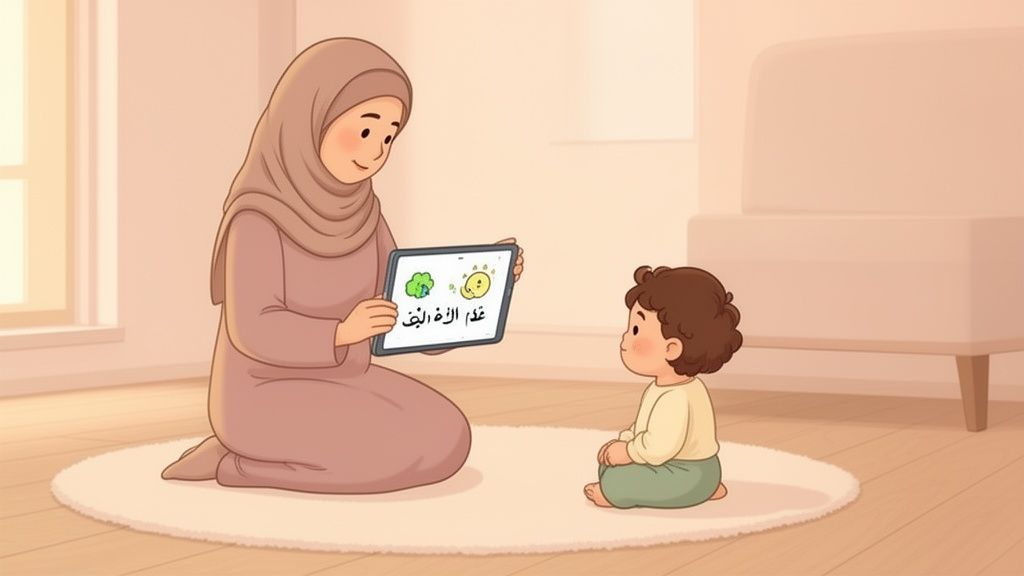
Let's be realistic. As a parent, you're constantly juggling household chores, caring for other children, or trying to get dinner ready before Maghrib. In those moments, you need a safe and constructive way to keep your toddler engaged. The goal isn’t to find a "digital babysitter," but to have a trustworthy resource that actually supports your child’s growth and honours your family’s values.
This is exactly where the right kind of learning preschool videos can be a real blessing. Unlike the chaotic, overstimulating content that floods mainstream platforms, faith-aligned videos are created with your child’s innocence and well-being at the forefront. They offer a moment of calm, educational engagement you can feel genuinely good about.
What Makes a Video "Halal and Healthy"?
So, what should you actually look for? It really comes down to finding content that protects your child’s fitra—their pure, natural disposition—while encouraging gentle learning. This means prioritising videos that are:
- Slow-Paced and Calm: They should use gentle transitions, soothing narration, and a calm visual pace to avoid overwhelming a young child's developing mind.
- Value-Centric: The stories and songs need to model positive Islamic manners (adab), like sharing, saying "Bismillah" before eating, and showing kindness to animals and family.
- Focused on Allah's Creation: Great content often explores nature, animals, colours, and shapes, framing them as signs of Allah's artistry and inspiring a natural sense of wonder.
- Free from Harmful Elements: This is crucial. It means avoiding music with instruments, immodest character designs, and any concepts that go against Islamic teachings.
This careful, intentional approach to media is more important than ever. The global demand for preschool content has shot up by about 25% in the last year alone, which shows just how integrated videos have become in our daily family routines. You can discover more insights about this global trend and how parents are using them for skill-building.
To make it easier, here's a quick comparison of what to embrace and what to steer clear of when choosing videos for your little one.
Quick Guide to Halal Learning Videos For Toddlers
| Feature | What to Look For (Halal & Healthy) | What to Avoid (Harmful or Inappropriate) |
|---|---|---|
| Pacing & Tone | Slow, gentle, and calming. Soothing narration or soft vocals. | Fast-paced, chaotic scenes. Loud, jarring sound effects. |
| Character Design | Modestly dressed characters. Simple, friendly animal figures. | Characters in revealing clothing. Unrealistic body images. |
| Music & Audio | Voice-only nasheeds, nature sounds, or acapella songs. | Instrumental music, pop songs, or distracting background music. |
| Core Message | Promotes Islamic values like kindness, gratitude (shukr), and honesty. | Glorifies materialism, disobedience, or rude behaviour. |
| Educational Focus | Teaches letters, numbers, and colours through the lens of faith. | Purely entertainment-focused with no educational substance. |
| Spiritual Content | Mentions Allah, Prophets, and concepts like "Bismillah" and "Alhamdulillah." | Content that is purely secular or contradicts Islamic beliefs. |
Choosing the right content transforms screen time from a passive activity into an active learning experience that aligns with your faith.
For Muslim parents, the key isn't avoiding screens altogether, but transforming how we use them. The right video becomes a tool for teaching gratitude (shukr), introducing the Arabic alphabet, or sharing a simple story about a prophet in a way that truly connects with a two-year-old.
Ultimately, faith-aligned learning videos give you peace of mind. They create a safe space where your child can learn foundational concepts through a beautiful Islamic lens, ensuring their first interactions with media are positive, gentle, and spiritually nurturing.
The Developmental Benefits of Purposeful Screen Time
When we use them thoughtfully, high-quality learning preschool videos can offer gentle developmental boosts that fit beautifully within our faith. This isn't about leaving a child in front of a screen for hours on end. It's about choosing short, meaningful moments that support their natural growth.
Think of it less like a TV show and more like a digital, interactive picture book that happens to move and sing.
This careful approach turns what could be passive viewing into a real tool for connection and learning. For example, playing a sweet, voice-only nasheed about sharing while your toddler is playing can gently plant the seed of kindness. Or, watching a calm, five-minute video about farm animals before a family walk might spark their curiosity and give them words for what they're about to see.
It's in these small, integrated moments that the real benefits emerge, turning screen time into a bridge between the digital world and their real-life experiences.
Nurturing Early Language and Communication
One of the clearest benefits of the right kind of video is language exposure. For little ones aged 0–3, hearing clear, slow, and repetitive language is the bedrock of their own speech development.
Well-made videos often include:
- Clear Narration: Simple, well-enunciated words help toddlers connect sounds to objects and actions.
- Repetitive Songs and Rhymes: Repetition is how young minds learn best. Nasheeds about the Arabic alphabet or numbers help these foundational concepts stick in a truly joyful way.
- Labelling and Naming: Videos that point to an object and clearly say its name—like "apple" or "cat"—build a child's vocabulary directly and effectively.
This is about more than just memorising words. It's about hearing language used in a positive, gentle context. This builds a strong foundation for communication, helping your little one express their needs and understand the world around them, all while absorbing a calm and respectful tone.
Introducing Foundational Concepts and Adab
Beyond just language, learning videos can be a wonderful way to introduce basic concepts and Islamic manners (Adab). A child’s mind is like a sponge, soaking up everything it sees and hears. By showing them content that reflects our values, we help shape their understanding from the very beginning.
Purposeful screen time is about planting good seeds. A short video that models saying "Alhamdulillah" after drinking water or shows characters treating animals with kindness teaches Islamic manners in a way a toddler can actually see and understand.
This kind of visual learning is incredibly powerful for young children. They get to see concepts in action, which is far more impactful than just being told about them. Many effective preschool videos also borrow ideas from gamification in education by using interactive elements to make learning feel more like gentle play.
Turning Screen Time into a Tool for Connection
Maybe the most important benefit comes from how you use these videos. Co-viewing—watching right there alongside your child—transforms what could be a solo activity into a shared, bonding experience.
When you watch together, you can:
- Point and Name: "Look, a blue bird! Subhan'Allah, it’s so beautiful." This connects the video to your faith and your shared world.
- Ask Simple Questions: "What sound does the sheep make?" This encourages your child to be an active listener, not a passive watcher.
- Sing and Act Along: Joining in with the songs and hand motions makes it fun and deepens the bond between you.
This kind of active participation ensures that screen time is never a substitute for your presence. Instead, it becomes another resource in your parenting toolkit—a way to introduce beautiful ideas, reinforce good manners, and create small, joyful moments of learning together.
Choosing Videos That Align With Islamic Values
For Muslim parents, picking the right learning preschool videos is about more than just education. It's about protecting your child's fitra—that pure, natural goodness they are born with. We want their first experiences with media to be gentle, positive, and firmly rooted in our beautiful faith. This means we have to be thoughtful and have a clear set of standards for what we allow into our homes and into their little minds.
Let's be honest, navigating mainstream platforms can feel like walking through a minefield. You find a sweet, innocent song about animals, but the very next video that autoplays is filled with jarring music or characters dressed in ways you're not comfortable with. It's a common struggle, and it's exactly why having your own mental checklist is so powerful. It helps you make confident, quick decisions, whether you're vetting a new channel on the fly or choosing a dedicated, safe platform.
The goal is to find content that gently builds a foundation of kindness, gratitude (Shukr), and a love for Allah's creation, one short, simple video at a time.
The Core Elements of a Halal-Aligned Video
So, what does "halal-aligned" even mean for a two-year-old? It really boils down to a few key principles that put their spiritual and developmental well-being first. Think of these as your non-negotiables when you're looking at content.
- Voice-Only Nasheeds and Audio: The clearest and most important criterion is the absence of musical instruments. Look for videos that use beautiful acapella vocals, gentle spoken words, or the soothing sounds of nature. This not only aligns with the guidance of many Islamic scholars but also creates a much calmer and less overstimulating experience for your toddler.
- Modest and Simple Character Design: How characters look and are presented truly matters. The best videos feature simple, modestly dressed characters or friendly animal figures that don’t push unrealistic body images or un-Islamic clothing styles. The real focus should always be on the story and the positive message, not on flashy or inappropriate outfits.
- Absence of Haram Concepts: This one is critical. The videos must be completely free from ideas that contradict Islamic teachings. This means avoiding themes of magic, pagan celebrations, romantic storylines, or any behaviours that go against the principles of good adab (manners).
When you use screen time with purpose, it can become a genuine tool for supporting key areas of your child's growth.
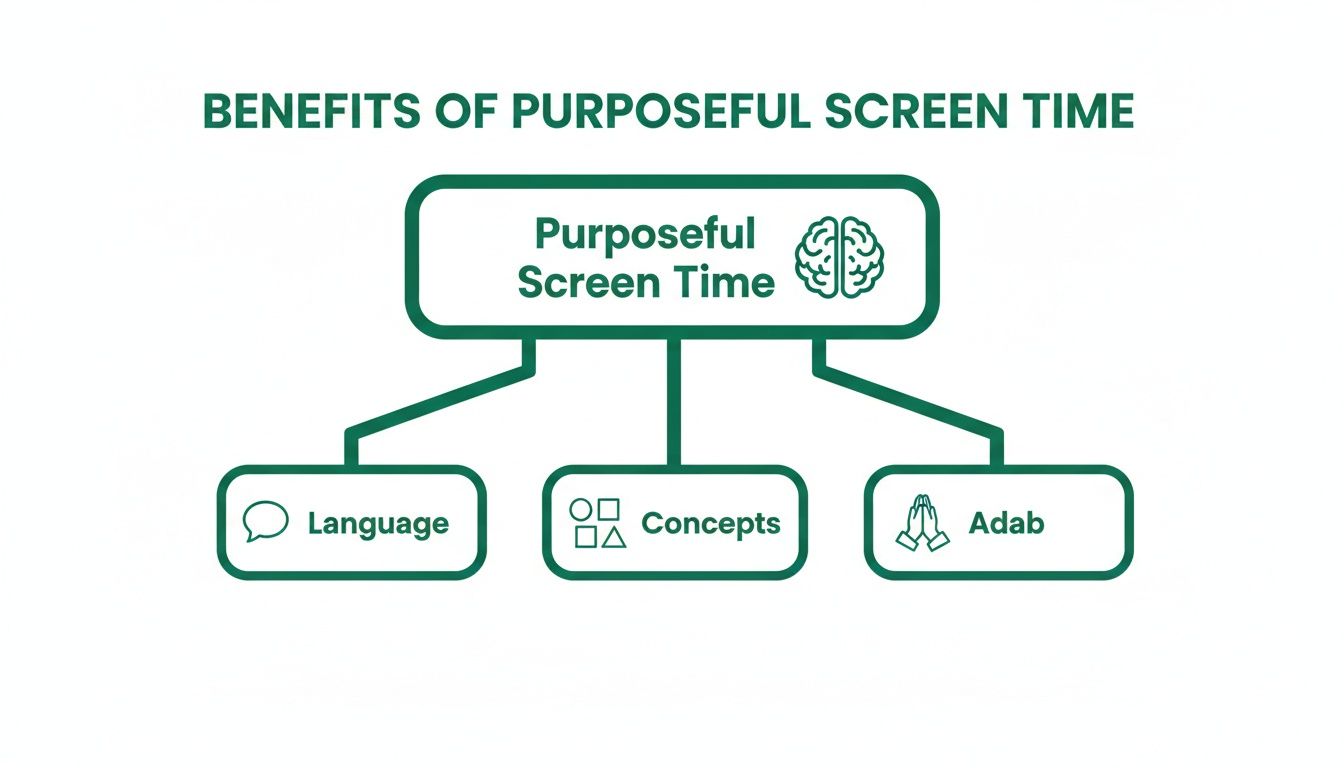
As the diagram shows, the right videos can help build language skills, introduce foundational concepts, and model the beautiful manners we want our children to learn.
A Practical Checklist for Evaluating Videos
It's one thing to know these principles, but it's another thing entirely to apply them when you've got a fussy toddler on your hip and dinner is about to burn. Keep this simple checklist handy to quickly size up any video before you hit play.
The "Five-Second" Check:
- Listen to the Audio: Do you hear any instruments in the first few seconds? If you do, it’s probably best to just move on.
- Look at the Characters: Are they dressed modestly? Is the animation style simple and calm, or is it chaotic and over-the-top?
- Scan the Title and Thumbnail: Does it suggest a positive, educational theme? Steer clear of anything that looks sensational, commercialised, or frantic.
If a video passes this quick scan, you can feel more comfortable letting it play while you take a closer look to make sure its overall message aligns with your family’s values.
The real challenge for Muslim parents isn't just finding Islamic content; it's finding high-quality, developmentally appropriate Islamic content that is also free from the distractions and dangers of mainstream platforms.
This problem is more pressing than ever. Research has found that a striking 37.0% of preschoolers actively watch mobile YouTube videos, and this often accounts for half of their total daily screen time. For parents trying to create a safe viewing bubble, this heavy reliance on open platforms is a major hurdle. You can read the full research about toddler screen time habits to get a deeper look at the data.
Beyond Content: Why the Platform Matters
Even the most perfect video can be ruined by the platform it's on. The single biggest risk with open video-sharing sites is the algorithm. Inappropriate ads can pop up out of nowhere, and the autoplay feature can drag your child from a gentle nasheed about "Alhamdulillah" to a loud, chaotic cartoon in a single click.
That's why the entire viewing environment is just as important as the video itself. A truly safe platform will offer:
- No Ads or Product Placements: This protects your child from the constant pressure of consumerism and keeps the focus purely on learning.
- No Algorithmic Recommendations: A curated library, where you are in complete control of what comes next, eliminates the risk of stumbling onto harmful content.
- Parental Controls: The ability to set time limits and hand-pick specific content gives you total peace of mind.
Ultimately, choosing videos that align with Islamic values is an act of love. It’s about consciously shaping your child’s world to nurture their soul just as much as you nurture their mind. For a deeper dive, check out our guide on finding halal baby videos that meet these high standards.
Integrating Learning Videos Into Your Family Routine
Figuring out which learning preschool videos are actually good for your little one is half the battle. The other half? Weaving them into the beautiful, busy rhythm of family life without letting screens take over. The idea isn't to have videos playing in the background all day, but to use them intentionally, like a specific tool for a specific job.
Think of these videos less like a constant digital babysitter and more like small, purposeful drops of learning and calm sprinkled throughout your day. It’s all about finding that sweet spot—a healthy balance where this resource supports you without disrupting prayers, mealtimes, naps, and most importantly, your family connection.
Setting the Stage for Mindful Viewing
The secret to making screen time work for you is to treat it like any other planned activity, whether it's story time or a trip to the park. When it has a clear beginning and end, kids learn that it’s just one small part of their day, not the whole day. This simple shift helps sidestep those endless pleas for "just one more video" and makes transitioning to the next thing so much smoother.
Before you even press play, it helps to have a few gentle but firm ground rules in place. This could look like:
- Designated Times: We only watch videos at certain times, like after lunch while you’re cleaning up or during that tricky pre-dinner stretch.
- A Calm Environment: Mealtimes and the bedroom are screen-free zones. Those times are reserved for connection and winding down, especially before sleep.
- One Shared Device: Try to keep viewing on a family tablet or TV. Using a personal phone can create a sense of private, endless access that’s harder to manage.
These simple boundaries build a predictable structure that toddlers thrive on. They quickly learn to see screens as a special, limited part of their routine.
Sample Mini-Schedules for a Muslim Household
Every family’s schedule is unique, and with prayer times shifting throughout the year, flexibility is everything. The great thing about short learning videos is that they can fit perfectly into the small pockets of time you already have.
Here are a couple of real-world examples of how you might weave them in.
The "While Mama Cooks" Routine:
- The Scenario: You need 15 minutes of focused time to get dinner on the table before Maghrib. Your toddler is getting fussy and needs a calm, engaging activity right now.
- The Solution: Set them up in a safe spot nearby with a 10-minute video about the Arabic alphabet or a short Quranic story. It’s a focused burst of learning that keeps them happily occupied while you get things done.
The "Pre-Nap Wind-Down" Routine:
- The Scenario: It’s almost naptime, but your little one is still bouncing off the walls. You need a way to gently transition them into a quieter state of mind.
- The Solution: Put on a very calm, five-minute video, maybe one with a gentle, voice-only nasheed or slow-moving visuals of nature. This can act as a peaceful bridge between energetic playtime and restful sleep.
A short, calming video before a nap can work wonders. It’s not about distraction; it's about shifting the energy in the room and helping your child’s busy mind and body prepare for rest.
Gentle Transitions Away From the Screen
Let's be real: one of the biggest parental headaches is the meltdown that can happen when screen time is over. The secret to avoiding this isn't magic, it's just a predictable and gentle transition. A sudden "Time's up!" can feel really jarring to a toddler who is completely absorbed in what they’re watching.
Here are a few tips for a tear-free transition:
- Give a Five-Minute Warning: A simple heads-up works wonders. You can say something like, "After this song is over, we’re going to turn off the tablet and read a book together."
- Have the Next Activity Ready: It’s so much easier to move away from something when you’re moving toward something else that’s fun. Have a favourite puzzle, book, or snack ready to go immediately.
- Stay Consistent: This is the hard part, but it’s the most important. If you stick to the agreed-upon limit every single time, your child learns the routine, and the protests will naturally start to fade.
By weaving learning preschool videos into your day with this kind of care and intention, you stay in the driver's seat. They become a helpful, supportive part of your daily rhythm rather than a source of stress, helping you nurture your child’s mind and soul in a way you can feel truly good about.
Extending On-Screen Learning Into Real-World Play
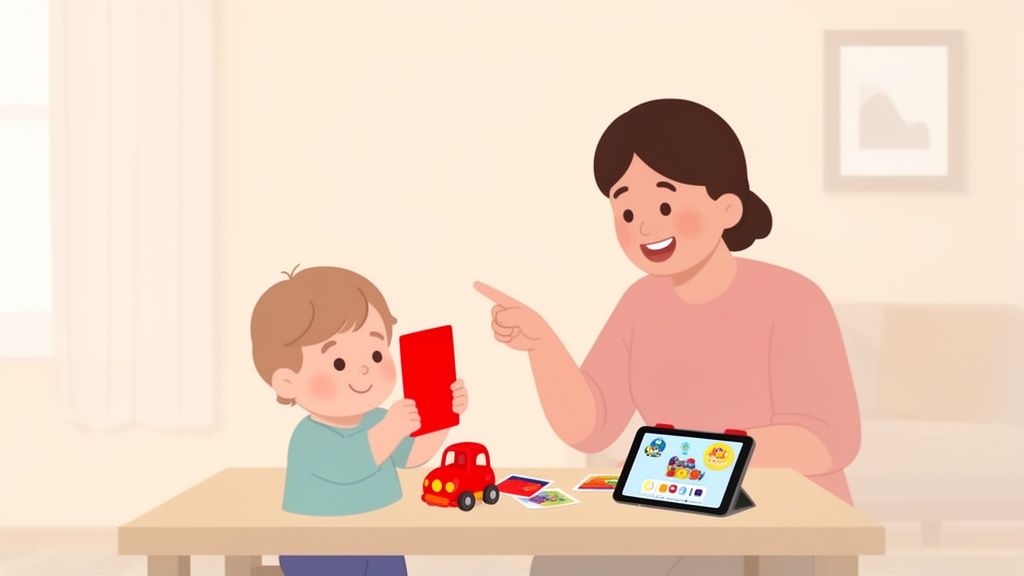
The real magic of high-quality learning preschool videos happens after the screen is off. What your child watches is just one piece of the puzzle; the most important part is how you help them connect those new ideas back to their real, hands-on world.
For a toddler, learning is a full-body experience. They need to touch things, move around, and experiment to truly grasp a new concept. This is where you come in.
Think of a video as a spark, not the whole fire. It can introduce a new colour, a new animal, or a new Islamic manner, but it’s the real-world activities that fan that spark into genuine understanding. When an idea jumps from the screen into their playtime, it stops being something they just saw and becomes something they truly know.
This connection is what makes learning stick. It shows your child that the concepts from their favourite nasheeds and stories are all around them, reinforcing their understanding in a way that’s tangible and, most importantly, memorable.
From Pixels to Playtime
Building this bridge from the screen to the living room floor is much simpler than it sounds. You don’t need elaborate setups or expensive toys. It’s all about being present and spotting little opportunities to link what they’ve seen to the everyday moments you’re already sharing.
For instance, after watching a video about colours, you might say, "Let's go on a colour hunt! Can you find something red like the apple we just saw?" All of a sudden, your home becomes a playground for learning.
This simple shift turns screen time from a passive activity into the starting line for a shared adventure. It reinforces that the best discoveries happen right here, together.
Simple, Low-Prep Activity Ideas
You don't need a Pinterest-perfect lesson plan. The best activities are often the spontaneous ones that use things you already have at home or notice on a walk.
Here are a few ideas to get you thinking, tied to common video themes:
Theme: Animals Mentioned in the Quran
- Video: A nasheed about the camel (jamal) or the ant (naml).
- Activity: On your next walk, crouch down together and watch the ants on the pavement. You can talk about how tiny and hardworking they are, just like in the story of Prophet Sulaiman (AS). Or, try making animal sounds—it’s fantastic for pre-speech development!
Theme: Shapes and Colours
- Video: A simple animation showing different shapes and naming them.
- Activity: During snack time, point out the shapes in their food. "Look, your cracker is a circle, just like the one in the video!" You can also use building blocks to create towers, naming the shapes as you stack them.
Theme: Islamic Manners (Adab)
- Video: A short story about saying "Bismillah" before eating.
- Activity: Gently model this at every single meal. Make it a joyful and consistent part of your routine by saying it together before taking that first bite. This real-life repetition is what truly builds the habit.
Theme: Gratitude (Shukr)
- Video: A nasheed about saying "Alhamdulillah" for Allah's blessings.
- Activity: Weave "Alhamdulillah" into your daily chatter. "Alhamdulillah for this warm sunshine!" or "Alhamdulillah for this yummy snack." This helps your toddler connect the word to a real feeling of thankfulness for the good things around them.
The goal is to make learning a natural part of your conversation and play. When you connect what's on the screen to your shared reality, you're not just reinforcing concepts—you're deepening your bond and showing them that learning is a joyful, everyday part of life.
By actively connecting screen-based lessons to real-world experiences, you ensure that learning preschool videos serve their proper role: as a healthy supplement to, not a substitute for, the rich, interactive play that is so vital for their development.
A Breath of Fresh Air for Family Screen Time
Let's be honest: finding high-quality learning preschool videos that also align with our faith can feel like a never-ending job. As parents, we're constantly on guard—skipping ads, vetting content, and cringing at the background music in so many videos. This constant filtering just adds another layer of stress to our already full plates.
This shared struggle is the very reason Babymode was born. It was created by Muslim parents who get it, for Muslim parents who need it. We wanted to build a calm, safe, and spiritually nourishing digital space for our little ones, a place filled with content you can finally trust without constantly looking over their shoulder.
Imagine an app where every single video, from gentle Quranic stories to peaceful, instrument-free nasheeds, has already been carefully reviewed. It’s checked not just for what’s inappropriate, but for what’s actively good for their development and their deen. It’s not about just avoiding the bad; it’s about intentionally choosing the good.
Built on a Foundation of Faith and Trust
At its core, Babymode is a curated, ad-free experience. The content is AI-generated and then painstakingly reviewed by humans to make sure it supports the gentle, faith-centred upbringing we all want for our children. That means every video is intentionally slow-paced, visually soothing, and filled with lessons on kindness and good manners (adab).
Here’s what we built to give you total peace of mind:
- A Fully Halal Library: You get access to a growing collection of videos covering beautiful Quranic stories, the Arabic alphabet, daily duas, and the wonders of Allah’s creation.
- Controls That Put Parents First: A simple dashboard lets you set daily time limits, decide which video categories your child can watch, and even keep track of learning milestones.
- Your Privacy is Our Priority: We believe your family’s privacy is sacred. Babymode has a rock-solid policy: no selling data, no ad tracking, and absolutely no behavioural profiling.
For Muslim families, a safe viewing platform isn’t just a nice-to-have; it’s a necessity. It’s about creating a protected garden where our children’s innocence and fitra are nurtured as they learn and explore.
A Growing Need for Halal Options
The demand for digital learning tools is skyrocketing. The global preschool education technology market has already reached an incredible USD 24,628.2 million and is expected to more than double by 2030. This explosive growth makes one thing clear: parents everywhere see the value in digital resources for early learning. Learn more about the education technology market findings on Grand View Research.
For Muslim families, this trend shines a spotlight on a massive need for options that actually align with our values. It’s a huge market, but so much of it feels generic or out of touch with our faith. Babymode was created to fill that gap, offering an ad-free, faith-centric haven in a sea of noisy apps.
Of course, other tools like Lumi H5P Cloud offer great ways for educators to create their own interactive videos. And for modern families constantly on the go, features like offline access are a lifesaver, helping keep routines consistent even during travel. If you’re looking for tips on this, you might find our guide on downloadable videos for your iPad really helpful.
Ultimately, it all comes back to a simple idea: giving Muslim families a solution that truly gets it, offering a little bit of peace in our wonderfully complex digital lives.
Common Questions From Muslim Parents
Trying to figure out screen time for your little one can feel overwhelming, can't it? As Muslim parents, we have that extra layer of consideration—we want to make sure every choice we make is nurturing our child's spirit just as much as their mind. Here are some of the most common questions we hear from families who are trying to use learning preschool videos in a mindful way.
At What Age Can I Introduce Learning Preschool Videos?
For babies under 18-24 months, nothing beats real-world interaction. Cuddles, conversations, and getting their hands on everything are their most important lessons. When you do decide to bring in videos, think of it as a gentle introduction. For a one-year-old, this could look like watching a very short, slow-paced video with you for just a few minutes a day.
Once your child is closer to two and beyond, you can start weaving short, structured videos (think 15 minutes or so) into their day. The secret sauce is always watching together and making sure videos are just a supplement to, not a replacement for, the rich, screen-free play that's so crucial for their growth.
How Can I Prevent My Toddler From Becoming Addicted to Screens?
The best way to build healthy screen habits is to set clear and consistent boundaries right from the start. The idea is to treat videos like a specific tool you choose to use, not just an all-day pacifier.
- Stick to a Routine: Set specific times for videos, like "one short nasheed after breakfast." This predictability helps your little one know what to expect.
- Give Gentle Warnings: A simple "five more minutes!" before screen time ends can make all the difference. Then, have something fun ready to go, like their favourite book or a puzzle, to make the transition easier.
- Model the Habits You Want to See: Our kids are always watching us. When they see us put our phones away during meals and family time, they’re much more likely to understand and accept those same boundaries for themselves.
A closed platform where you control the time limit is a game-changer. Instead of fighting an algorithm that’s designed to keep your child watching, you can set a firm time, and the app simply stops. It makes ending screen time so much smoother.
Are All Islamic Cartoons on YouTube Safe for My Toddler?
Honestly, no. While so many creators have wonderful intentions, the quality and safety of "Islamic" content on open platforms like YouTube can be a real mixed bag. You might find a beautiful video about Prophet Yunus (AS), but then the next video that autoplays could have loud music or an ad that’s completely inappropriate.
It’s so important to vet every single video and channel yourself. But that constant watching and worrying is exhausting. This is exactly why a closed, fully curated platform offers such peace of mind. Knowing that every piece of content has been professionally checked against strict Islamic and developmental standards lets you finally relax, confident that your child is in a safe, nurturing digital space.
For families looking for a truly safe and enriching screen time solution, Babymode offers a curated, ad-free library where every video is designed to nurture your child’s faith and development. Join the Babymode waitlist for early access.