It might seem like a simple toy, but a hand puppet is one of the most powerful first toys you can give an infant. This timeless classic is so much more than entertainment; it’s a gateway to connection, learning, and quiet joy. It's a beautiful way to help nurture your baby's pure, natural disposition (fitra).
Why Hand Puppets Are a Perfect First Toy
In a world overflowing with flashy gadgets, the humble hand puppet holds a special kind of magic. For Muslim parents looking for wholesome, screen-free ways to engage their little ones, hand puppets are a perfect fit. They slide seamlessly into the rhythm of family life, whether it’s for a quiet moment after Fajr prayer or to keep your baby happily occupied while you prepare Iftar.
This guide will walk you through how hand puppets for infants can become one of your most valuable parenting tools. Think of them not just as playthings, but as instruments for connection and gentle teaching, perfectly in tune with the values we hold dear.
Building Bonds Beyond the Screen
From their very first days, your baby learns about the world through you. A hand puppet acts as an extension of your loving presence—a soft, friendly face that immediately captures their attention and curiosity.
- For Newborns (0–6 months): A brightly colored puppet moving slowly in front of your baby helps them practice tracking objects with their eyes. This is a foundational visual skill, and the gentle voice you give the puppet is incredibly soothing, strengthening your bond with every little interaction.
- For Older Infants (6–12 months): As your baby starts to grasp cause and effect, they’ll break into giggles when the puppet plays peek-a-boo or gives them a soft nuzzle. This delightful back-and-forth is one of their very first lessons in social communication.
A simple puppet show creates a shared experience, a focused moment of laughter and connection just between you and your child. These moments are the bedrock of a secure and loving attachment, all without the distraction of a screen.
A Toy That Grows with Your Child
So many baby toys are quickly outgrown, but a hand puppet is different. It evolves right alongside your child's development, making it an investment in years of creative play. It’s fascinating to see how simple toys become cultural mainstays—even learning how the teddy bear got its name shows the lasting power of a cherished companion.
As your infant grows into a toddler, the puppet transforms from a simple visual toy into a full-fledged character in their imaginative world. They’ll use it to explore language, express big feelings they don't have words for yet, and act out simple stories.
For more ideas on age-appropriate play, you might find our guide on educational toys for a 6-month-old helpful. Ultimately, a hand puppet is one of those rare toys that supports the entire journey from their first social smiles to their very first words.
How Puppet Play Nurtures Your Child's Development
When your baby’s eyes lock onto a hand puppet, it’s so much more than just a cute distraction. Every wiggle of a felt ear, every soft-spoken word, and every game of peek-a-boo is actually building powerful connections in their rapidly growing brain. It might seem like simple fun, but this interactive play is one of the most effective ways to nurture your child's growth, one smile at a time.
For the littlest ones, a puppet is often one of their very first friends. As you make it dance back and forth, you’re helping their eyes learn to track movement—a foundational skill for everything from reading to catching a ball later on. When they reach out to pat its fuzzy head, they're not just playing; they're practicing fine motor skills and strengthening those tiny hand muscles.
This visual shows just how beautifully those skills progress with a puppet as a play partner.
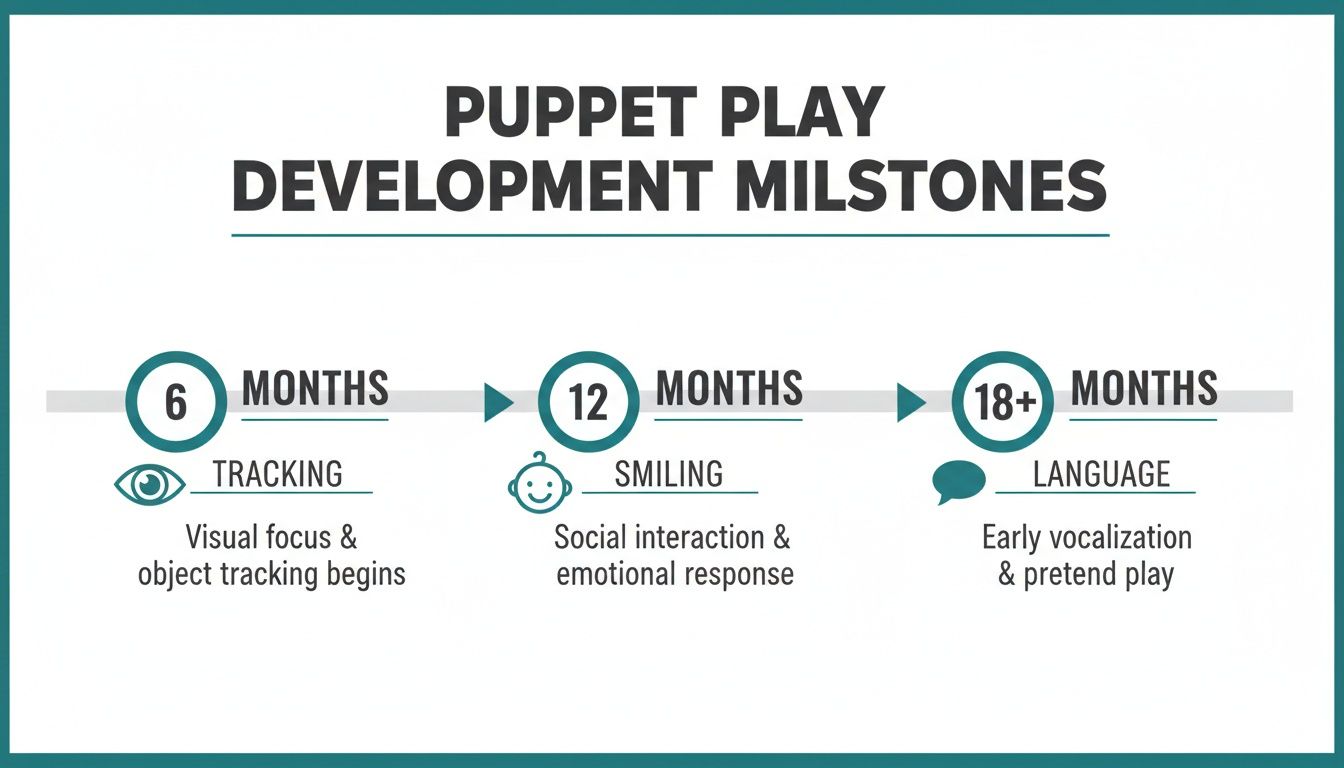
As you can see, puppet play naturally guides your child from basic visual skills to meaningful social smiles and, eventually, their first babbles and words.
Laying the Foundation for Language
That back-and-forth "conversation" you have with your baby through a puppet is a cornerstone of language development. When the puppet "asks" a question and you wait for your baby's gurgle in response, you're teaching them the natural rhythm of communication. It's their first lesson in turn-taking.
This isn't just a sweet theory; it's incredibly effective. Research from child development experts has shown that consistent puppet play from 6 months old can boost language acquisition by up to 30% as babies begin to mimic the sounds and expressions they see. You can discover more about toy market trends here.
Cultivating Good Manners and Gentleness
Beyond the physical and verbal skills, hand puppets for infants are a wonderful, gentle tool for weaving Islamic values into your child's world right from the start. They make abstract concepts feel tangible and real.
- Teaching Gentleness (Rifq): You can show what compassion looks like by having a puppet seem a little sad. When you guide your baby’s hand to gently pat the puppet, you’re teaching empathy in a way their developing mind can truly grasp.
- Modeling Good Manners (Adab): Simple role-play is perfect for introducing core manners. Have the puppet say "Bismillah" before pretending to eat or "Alhamdulillah" afterward. Suddenly, these important phrases become part of a fun, memorable game.
- Encouraging Sharing: As your little one grows into a toddler, a puppet can be a great helper for navigating those first lessons in sharing. One puppet can offer a toy to another, demonstrating generosity in a playful, low-pressure way.
Puppet play allows you to plant the seeds of good character long before your child can fully grasp complex ideas. It connects developmental milestones with the spiritual and moral foundation you wish to build for them, inshaAllah.
Through these simple, heartfelt interactions, a puppet becomes far more than just a toy. It becomes your partner in raising a child who is not only developing key skills but is also growing in kindness and good character from the very beginning.
Choosing the Right Puppet: A Guide to Safety and Connection
When you're picking out a hand puppet for your baby, you’re not just choosing a toy—you’re choosing their next best friend. As with any friend, you want them to be safe, reliable, and a good influence. Let's walk through how to find a puppet that's not only safe for your little one to gum and cuddle but also one that reflects the beauty of your family and values.
First Things First: The Safety Check
For a baby, the world is a multi-sensory experience, and their primary tool for exploration is their mouth. Everything goes in! That's why the physical safety of a puppet is non-negotiable.
Soft, natural fabrics like organic cotton, bamboo, or felt are your best bet. They’re gentle on delicate skin and, just as importantly, they're a breeze to clean. Because let's be honest, that puppet is going to need a good wash sooner rather than later.
Here's a quick guide to help you inspect any potential puppet pals.
Safety Checklist for Infant Hand Puppets
This simple checklist will give you peace of mind, ensuring any puppet you choose is ready for safe and happy play.
| Safety Feature | What to Look For (0-18 months) | Why It's Important |
|---|---|---|
| Eyes, Noses & Mouths | Embroidered or stitched features. No plastic buttons, beads, or glued-on parts. | These small, hard parts can easily detach and become serious choking hazards. |
| Materials | Non-toxic, baby-safe dyes and natural fabrics like cotton or felt. | Babies chew on everything. You want to be certain they aren’t ingesting harmful chemicals. |
| Construction | Simple, one-piece design. Avoid long strings, ribbons, or loose accessories. | These can pose an entanglement or strangulation risk for very young children. |
| Cleanliness | Machine-washable label. The puppet should be able to withstand regular washing. | A clean toy is a healthy toy. Easy washing prevents the buildup of germs and bacteria. |
By keeping these points in mind, you can confidently choose a puppet that’s a source of pure joy, not worry. This lets you relax and focus on what really matters: those precious moments of connection.
Finding a Puppet That Looks Like Family
Beyond the basics of safety, a hand puppet offers a wonderful chance to introduce your baby to their own identity. When a child sees a puppet that reflects their family, culture, and community, it helps plant the seeds of a positive self-image. It sends a powerful message: You belong. You are seen.
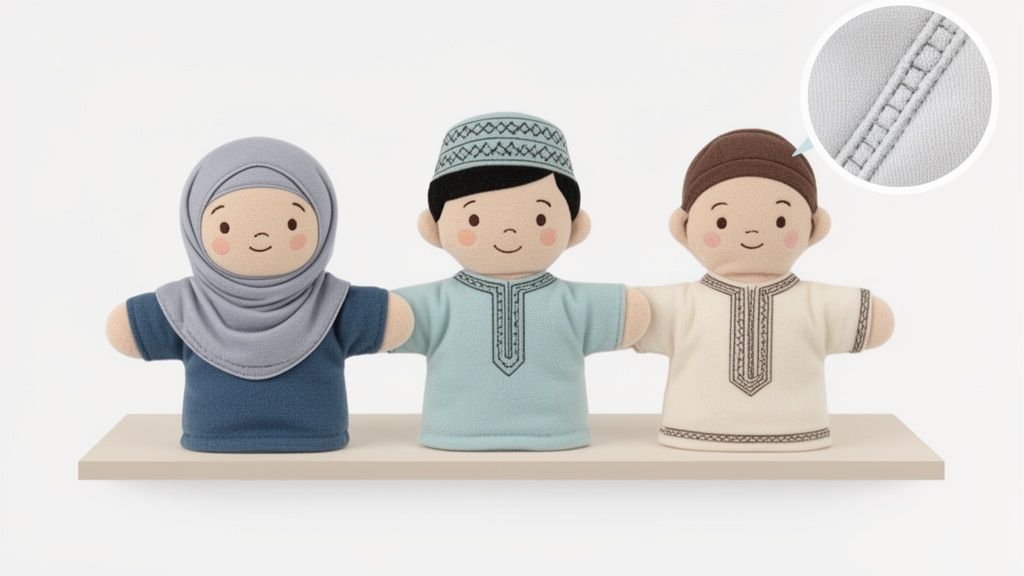
It’s true that finding diverse toys in big box stores can sometimes feel like a treasure hunt. But it’s a hunt worth embarking on! Look for independent creators or small online shops that specialize in culturally representative toys. You might find puppets wearing a hijab or a kufi, or dressed in traditional attire from different parts of the world.
This is also a perfect opportunity to get creative! You don’t need to buy something fancy. A simple sock or a basic felt puppet can be transformed with a little imagination. A small scrap of fabric can be fashioned into a headscarf, a few strands of yarn can become a beard, or a colorful patch can represent traditional clothing.
Making your own puppet isn’t just about saving money; it’s about modeling resourcefulness and showing your child that joy can be created with love and a little bit of effort—a beautiful lesson in itself.
Creative Puppet Play Ideas for Your Family
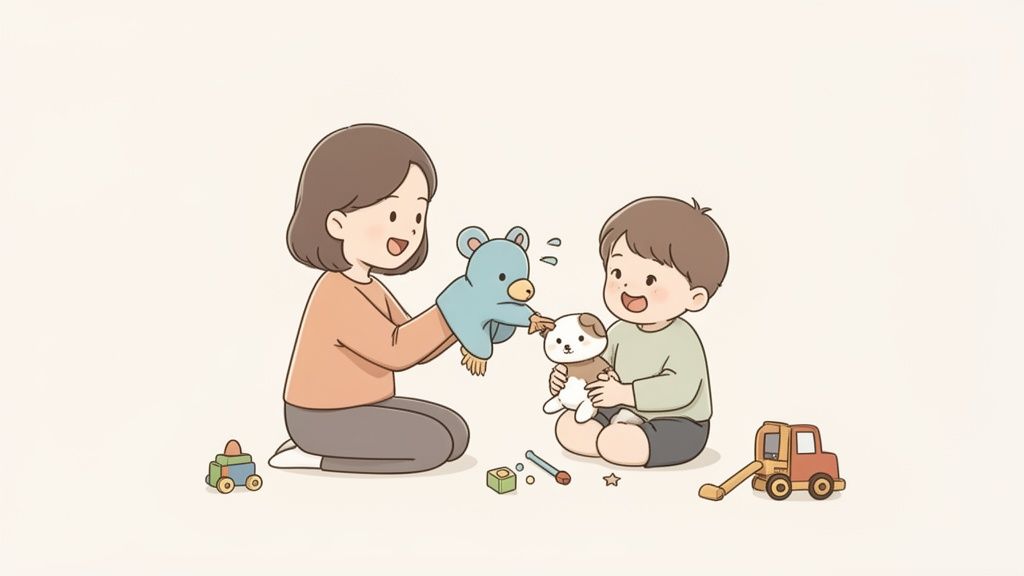
Now that you've got the perfect puppet friend for your little one, the real magic can begin. You don't need a fancy stage or complicated scripts. In fact, the most beautiful moments often happen in the small, ordinary parts of your day.
A hand puppet can turn a routine task into a sweet moment of connection, weaving Islamic values into play so naturally your child won't even realize they're learning. Think of the puppet as your little helper, a playful character that makes daily life a bit smoother and a lot more joyful.
Weaving Faith into Everyday Moments
One of the most wonderful ways to use hand puppets for infants is to introduce the beauty of Islamic manners (adab) in a gentle, captivating way. Your baby learns by watching you, and a puppet makes those lessons truly stick.
- Mealtime Blessings: Use the puppet to say "Bismillah" before taking a pretend bite of food. When your baby starts solids, the puppet can be the one to "remind" everyone to begin in Allah’s name. It's a simple act that turns meal prep into a sweet, interactive lesson.
- Saying Hello and Goodbye: Have the puppet greet family members with a cheerful "Assalamu 'Alaikum!" as they walk into a room. This playful repetition helps your child connect these important words with warmth and love.
- Practicing Gratitude: After a "meal" or a fun game, the puppet can happily say "Alhamdulillah." This models thankfulness in a simple, direct way that your little one can absorb long before they fully grasp the words.
These small interactions are so powerful. They plant the seeds of consciousness of Allah in your child’s heart through positive, loving play.
Simple Stories and Role-Playing
Puppets are born storytellers. You can use them to act out simplified tales that reinforce the values you cherish, creating a foundation for more complex stories as your child gets older.
A puppet can bring abstract concepts like kindness and compassion to life. By showing, not just telling, you help your child understand these values in a tangible way that their developing mind can process.
For example, you could use an animal puppet to teach kindness to all of Allah’s creation. The puppet might be a little kitten that’s hungry, and you and your baby can "feed" it together. Or perhaps it's a bird that needs help finding its way back to its nest.
Another beautiful idea is to act out a very simplified story of a Prophet, focusing on a single, core message of goodness. A puppet could show the kindness of Prophet Muhammad (peace be upon him) by sharing its "food" with another toy. For similar interactive ideas using smaller puppets, you can find great tips on how to engage your child with finger puppets for toddlers.
Making Routines Fun and Soothing
Let's be honest—some parts of the day are tough. A fussy toddler in a car seat or a little one who refuses to tidy up can test anyone's patience. This is where a puppet can become your best ally.
- The Tidy-Up Helper: Is it time to clear the toys before Maghrib prayer? Bring out the puppet! A silly voice saying, "Let's put the blocks to sleep in their box!" works wonders compared to a tired request.
- The Car Ride Companion: A puppet can be a lifesaver on long journeys or even short trips to the store. It can sing a nasheed, play peek-a-boo over the car seat, or simply "talk" to your child to ease fussiness.
- The Bedtime Buddy: A calm, quiet puppet can help soothe your child during the bedtime routine. Its soft voice can whisper goodnight and remind them to say their bedtime duas, creating a peaceful and loving transition to sleep.
Ultimately, these creative play ideas are all about building beautiful memories and strengthening your bond while gently guiding your child on their journey of faith and discovery.
Finding the Right Balance Between Screens and Hands-On Play
Let's be honest: in the juggle of daily life, finding a healthy tech balance for our kids can feel like a real challenge. Sometimes you just need a few minutes, whether it's to get dinner ready before Maghrib or help an older sibling with homework. It’s easy to reach for a screen, but we also worry about overstimulation and what our little ones might see.
This is where the simple magic of hand puppets for infants shines. They offer a wonderful, unplugged alternative that connects with your child in a way a screen just can't. When you bring a puppet to life, you’re not just entertaining your baby—you're building a real, back-and-forth connection.
Why Hands-On Play Is So Important
Nothing can truly replace active, hands-on play for a young child's developing brain. It’s how they learn about the world! It wakes up their senses, gets their little bodies moving, and teaches them about cause and effect in a very real way.
A puppet isn't just a character on a screen; your baby can reach out and touch its soft fur, see your face light up as you speak, and hear your voice change with the story. This creates a rich, multi-sensory experience that is foundational for learning.
For Muslim families who use screen time with intention—perhaps with Babymode’s nasheed-filled videos—puppets are the perfect partner. They provide a tactile, interactive break that sparks creativity and deepens your bond. It's no surprise that offline channels still command a huge 64% of the educational toy market. Plus, some studies suggest that infants who engage in puppet play show up to 40% better emotional regulation compared to those who are only passive viewers. You can see more trends in the baby toy market here.
Using Screens Mindfully, Without the Guilt
The goal isn't to demonize screens, but to be smart about how we use them. They can be just one tool in our parenting toolbox, especially when we need a safe, reliable option for a few moments.
A resource like Babymode is designed for exactly those times. It gives you a halal, ad-free space where you know the content is wholesome, freeing you from the stress of worrying about what the algorithm might show next.
When you pair this kind of intentional screen time with plenty of hands-on activities like puppetry, you're creating a healthy and balanced media diet for your child. This approach allows you to use digital resources when you need them, guilt-free, while always prioritizing the priceless value of real-world play that strengthens your bond and nurtures your child’s growth, inshaAllah.
For more practical tips, take a look at our guide on how to limit screen time for young children.
Common Questions Parents Ask About Hand Puppets
As you get ready to bring hand puppets into your child's world, it's natural to have a few questions. Below, we’ve tackled some of the most common queries from parents just like you, offering clear, practical answers to help you start with confidence.
When Is the Best Time to Introduce a Hand Puppet?
You can bring a simple hand puppet into your baby’s life right from the very beginning—even in the first few weeks.
For newborns (0–3 months), a puppet is a fantastic visual tool. A brightly colored puppet moving slowly a short distance from their face is perfect for helping them practice visual tracking, which is a huge developmental milestone. The sound of your gentle voice coming from the puppet is also incredibly soothing and familiar.
Once your baby is a little older (4–9 months), they’ll start to really interact. You’ll see them smiling, cooing, and maybe even reaching out to touch their new friend. This is when the puppet truly becomes one of their first companions and a wonderful tool for social connection.
How Do I Keep Hand Puppets Clean and Safe?
Hygiene is always top of mind, especially with little ones who love to explore the world with their mouths! Luckily, keeping fabric puppets clean is pretty simple.
- Look for Washable Materials: When you're choosing a puppet, try to pick one made from machine-washable fabrics like cotton or felt. A quick peek at the label before you buy can save you a lot of hassle.
- Use a Gentle Detergent: Always wash puppets with a mild, baby-safe detergent to protect your infant’s sensitive skin from any irritation.
- Let It Air Dry Completely: To help the puppet keep its shape and avoid any musty smells, it’s best to let it air dry thoroughly before it goes back into the toy bin.
- Spot Clean for Small Messes: For minor spills, a quick spot clean with a damp cloth and a bit of soap often does the trick between full washes.
Are Hand Puppets Actually Educational?
They absolutely are. Hand puppets for infants are a cornerstone of early developmental play and a significant part of the educational toy market, which hit USD 54 billion in 2023. Unlike toys that just sit there, puppets actively engage your child’s growing mind.
In fact, studies have shown that interactive toys like puppets can boost vocabulary in children aged 0–3 by an amazing 25-35%. For Muslim families, this hands-on approach is a powerful way to introduce good manners and Islamic concepts offline, which helps reduce screen dependency. You can read more about the educational toy market growth and see just how impactful these simple toys are.
What if My Baby Doesn’t Seem Interested?
Don't worry if your baby doesn't seem fascinated right away. Every child warms up to new things at their own pace.
The key is gentle, patient, and joyful interaction. Try again during a different time of day when your baby is calm and alert, perhaps after a nap or a feed. Keep the interactions short and sweet, and let your own delight shine through. Your positive energy is contagious!
Sometimes, other factors can affect a baby's engagement. For other important aspects of infant care, like making sure everyone is getting enough rest, you might find it helpful to explore effective infant sleep training strategies. A well-rested baby is often a more playful and engaged baby.
Just remember, the goal isn't a performance—it's about connection. With a little time and patience, that puppet will likely become a cherished friend for both of you.
At Babymode, we believe in nurturing your child’s development with tools that align with your faith and values. Hand puppets are a perfect hands-on complement to the safe, halal screen time we provide.
Discover how Babymode offers a secure, ad-free world of Quranic stories, nasheeds, and gentle learning, designed by Muslims for Muslim families. Join the waitlist for Babymode today.