To truly limit screen time, you have to create a routine that intentionally replaces digital devices with engaging, real-world activities and then consistently stick to those boundaries. For babies and toddlers, this means a heavy focus on connection, play, and exploration, making screens the exception, not the everyday rule.
Why Managing Screen Time Matters in a Muslim Home
Let’s be real for a minute: sometimes, that tablet feels like an absolute lifesaver. You’re trying to pray Isha without your toddler treating you like a climbing frame, or you’re desperately chopping onions for dinner before Maghrib. In those moments, a screen can feel like the only path to a few minutes of peace. There’s absolutely no judgment here—just a shared understanding of the daily juggle.
The best way to approach this topic is by starting with our intention (niyyah). The goal isn't to chase some impossible standard of perfection or to heap guilt on ourselves. It's about mindfully creating a home environment that nurtures our children’s spiritual, emotional, and cognitive development. For our littlest ones, this is incredibly critical.
The Bigger Picture
Limiting screen time for babies and toddlers isn’t just about avoiding something bad. It’s about actively choosing something so much better. It's about carving out dedicated space for:
- Human Connection: The smiles, the cuddles, the back-and-forth babbling that builds a secure and loving bond.
- Active Play: Exploring different textures, stacking blocks, and just moving their bodies helps their brains develop in ways screens simply can't replicate.
- Spiritual Grounding: Creating a calm, peaceful atmosphere where they can hear the adhan, watch you pray, and connect with family without the constant buzz of digital distractions.
The rise of digital media has completely changed what childhood looks like. The latest data really drives home just how much screen exposure our youngest children are getting.
These statistics aren't just numbers; they show a massive shift in how our kids are growing up, with smartphones becoming common even for toddlers and daily viewing times climbing fast.
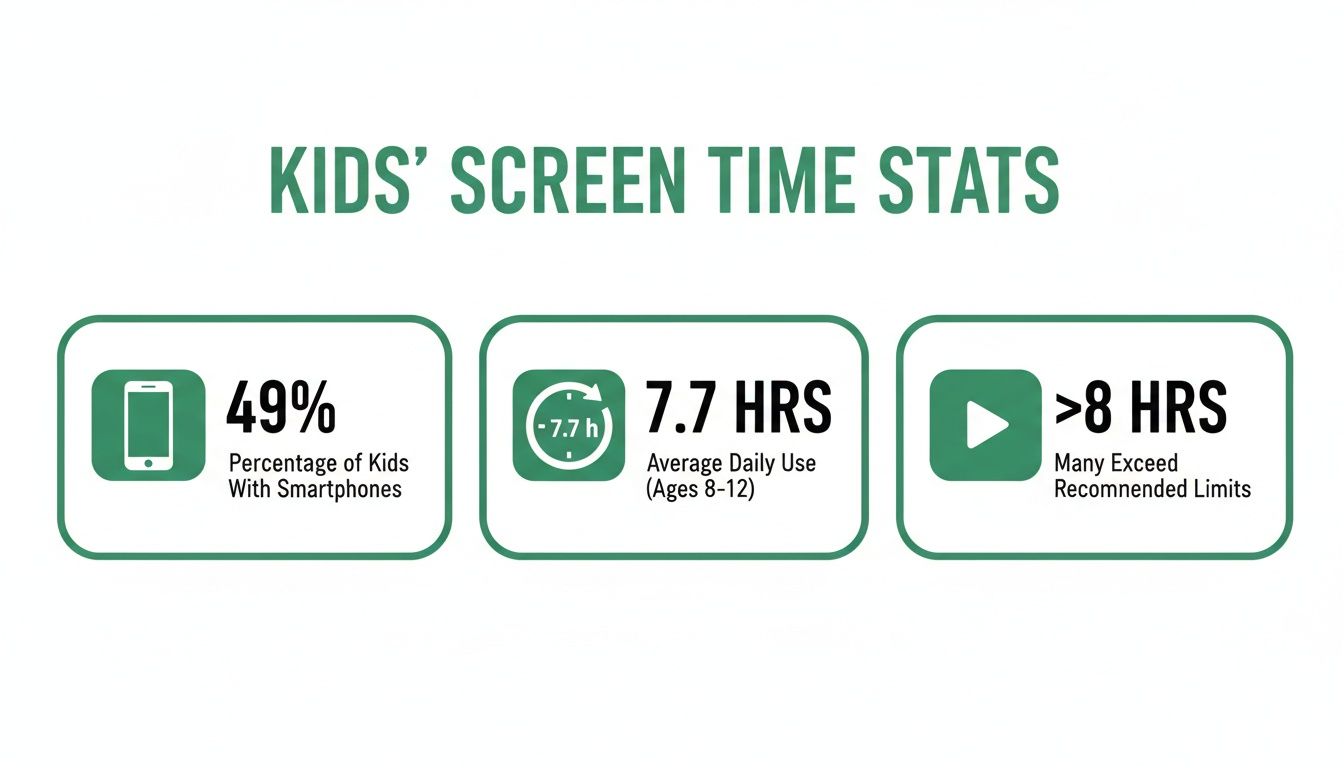
This trend shows just how big a part of a child's life a screen has become, right from the very beginning.
Setting a Foundation of Faith and Well-being
Global studies are painting a pretty stark picture. Screen time has surged, and alarmingly, 49% of children under the age of three are already using smartphones. After the pandemic, screen use for adolescents doubled to a staggering 7.7 hours per day, and that habit has stuck around. Managing this reality in our own homes has become a core part of modern parenting.
By setting intentional limits now, we're not just controlling a device. We're protecting our child's fitra (their natural innocence), encouraging their curiosity, and laying the groundwork for a balanced life rooted in our Islamic values.
This guide is all about practical, faith-aligned strategies that actually fit into the beautiful, and sometimes chaotic, rhythm of Muslim family life. We'll walk through how to handle this challenge with grace and patience, insha'Allah. For a deeper dive, you might find our guide on navigating the challenges of Muslim parenting in the digital age helpful.
Weaving Intention into Your Family’s Screen Routines
The secret to managing screen time isn't just about saying "no." It's about creating a predictable, calm rhythm to your day where screens have a very small—or nonexistent—and intentional place. For a Muslim family, this means designing a flow that works with your daily life and spiritual practices, not against them.
A solid routine is a source of security for young children. When they know what to expect, the power struggles and negotiations tend to melt away. Screens shift from being a constant, nagging possibility to a scheduled, non-emotional part of the day, just like naptime. This proactive approach lets you guide your child's expectations from the very beginning.

Establish Your Screen-Free Zones and Times
First things first, decide which parts of your day and home will always be screen-free. This consistency is the bedrock of your new routine. Think about the moments you want to protect for family connection, quiet reflection, and healthy development.
I highly recommend making these times and places completely tech-free zones:
- Mealtimes: Keep all meals and snacks as sacred opportunities for connection and building healthy eating habits. No digital distractions allowed.
- Bedtime and Naptime Routines: The hour leading up to sleep needs to be a calming wind-down period. The blue light from screens can mess with melatonin production, making it harder for your little one to fall and stay asleep.
- The Bedroom: Keeping all screens out of your child's sleeping area reinforces that the bedroom is a space for rest and peace.
- Prayer Times: Even if your child isn't formally praying yet, creating a quiet, screen-free environment during Salah helps model the reverence and importance of this time for the whole family.
Setting these non-negotiable boundaries simplifies your life. It’s no longer a debate about watching something during dinner; it’s just something you don’t do in your home. For more inspiration on structuring your day, you can check out our detailed guide to building a Muslim toddler's daily routine.
Designing a Schedule That Actually Works
So, if you do choose to use screens, when is the right time? Look for small, specific windows in your day where a short, supervised screen session could be genuinely helpful without derailing your core family rhythms.
For instance, you might decide on 15 minutes of a curated nasheed video while you’re prepping dinner before Maghrib. Or perhaps while you’re tidying up after the older kids get home from school.
The key is to be specific and consistent. Vague rules like "a little bit of screen time" are confusing for a toddler. Instead, define it clearly: "We can watch one episode of Omar & Hana while Mama gets the biryani ready." This predictability helps your child understand and accept the limits.
A Gentle Approach to Transitions: Let's be honest—the hardest part is often turning the device off. Try giving a five-minute warning, then a two-minute warning. When the time is up, use a calm but firm voice: "Okay, the nasheeds are all done! Time to help me set the plates for dinner."
How to Talk About Your Screen Time Rules
Explaining your screen time philosophy to others—especially loving grandparents or a babysitter—can feel awkward. The goal is to share your approach respectfully, framing it around what’s best for your child’s development, not as a criticism of how others might do things.
Here are a few gentle scripts you can adapt:
- For Grandparents: "JazakAllah khair for wanting to entertain her! We're really trying to focus on more hands-on play right now, as we’ve noticed it helps her language skills explode. Would you like to read this new book with her instead?"
- For a Babysitter: "Just so you know, we have a screen time routine we stick to pretty closely. We only use it for about 15 minutes in the late afternoon. Here are some of her favorite puzzles and blocks she loves to play with at other times."
- For Your Toddler: Even a two-year-old can grasp simple boundaries. Try saying, "The tablet is sleeping now. Let’s go wake up your dolls!" or "All done with videos. Time for wudu!"
When all the caregivers in your child's life are on the same page, your child receives a clear, consistent, and reassuring message. This unity makes it so much easier for them to adapt to the new routine without a fuss.
A Look at a Real-Life Schedule
To make this more concrete, here’s a sample schedule showing how you might weave a tiny bit of screen time into a day that’s rich with connection and Islamic values.
Sample Screen Time Routine for a Muslim Household
| Time of Day | Child's Activity (Age 2) | Parent's Activity | Screen Time Note |
|---|---|---|---|
| 7:00 AM | Wakes up, morning snuggles, Du'a | Morning prayer (Fajr), getting ready | No screens. Morning is for connection and starting the day peacefully. |
| 8:00 AM | Breakfast | Eating together | Screen-free zone. Focus on conversation and enjoying food. |
| 9:00 AM | Free play (blocks, puzzles) | Household chores, supervising play | Active, hands-on play is crucial for motor skill development. |
| 11:00 AM | Outdoor time (park, garden) | Engaging with child, getting fresh air | No screens. Nature is the best kind of stimulation. |
| 12:30 PM | Lunch, preparing for Zuhr prayer | Eating, modeling wudu | Screen-free zone. Another opportunity for connection. |
| 1:00 PM | Naptime | Prayer (Zuhr), rest, personal time | The bedroom is a quiet, screen-free space. |
| 3:30 PM | Wakes up, snack time | Preparing snack, getting ready for Asr | No screens. Post-nap time is for gentle re-engagement with the day. |
| 4:30 PM | Quiet activity (reading books, drawing) | Asr prayer, start dinner prep | No screens. Fostering a love for books and art. |
| 5:15 PM | 15 mins of an educational Islamic cartoon | Finishing dinner preparation | Intentional use: Screen time is short, supervised, and has a specific purpose. |
| 5:30 PM | Tidying up toys before dinner | Winding down the day's activities | Transition away from the screen with a clear task. |
| 6:30 PM | Dinner, Maghrib prayer | Family mealtime, prayer | Screen-free zone. A key time for family bonding. |
| 7:30 PM | Bath, pajamas, bedtime stories, evening Du'as | Bedtime routine with child, Isha prayer | No screens. The wind-down routine should be calming and tech-free. |
This is just one example, of course. The beauty of a routine is that you can adapt it to fit your family’s unique needs, rhythms, and values, ensuring that technology serves your family, not the other way around.
Make the Real World More Interesting Than the Screen
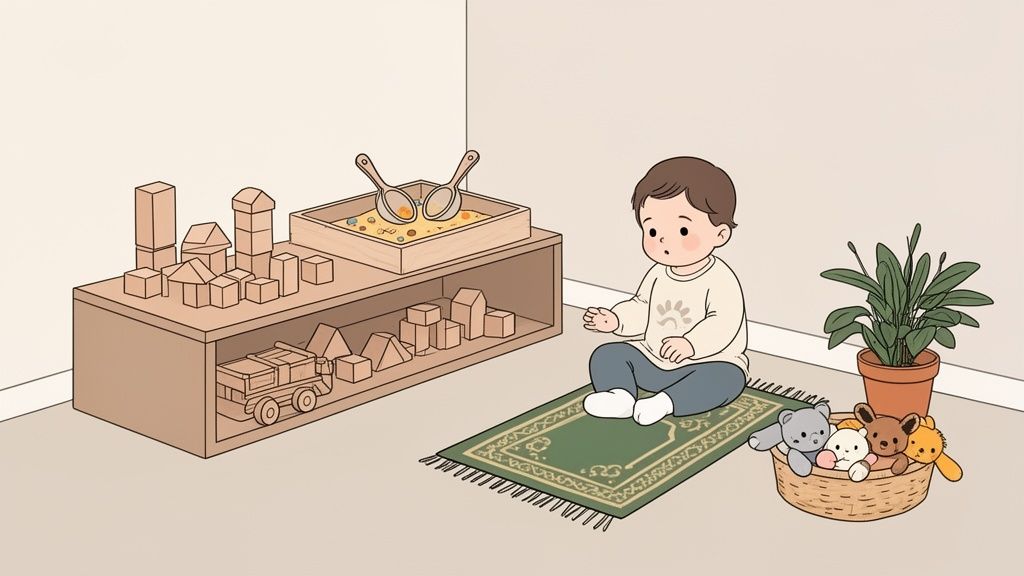
The single best way to reduce screen time is to make the world around the screen more captivating. It’s a simple concept, but it works. When a child's home is full of things to touch, explore, and discover, the pull of a passive screen starts to weaken. You don't need a house full of expensive toys or elaborate playrooms; it's about being intentional with your space to spark curiosity and invite hands-on play.
For babies and toddlers, the most important "content" they can get comes from the real world. Think about it: the feeling of a soft prayer mat, the smell of dinner cooking, the sound of your voice. These are the things that build their brains. Nothing is more valuable for their development than genuine human connection—the smiles, the songs, the little chats you have throughout the day.
Simple Play Ideas Rooted in Faith
Weaving this into the rhythm of a Muslim home comes naturally. Everyday routines and Islamic concepts can become beautiful opportunities for play, nurturing your child’s development and their connection to their faith right from the start.
Here are a few ideas to get you started:
- Explore Allah’s Creation: Step outside into the garden or a park. Let your little one feel the rough bark on a tree or watch an ant carry a crumb. You can use simple phrases like, "SubhanAllah, look at the beautiful flower Allah made!" This connects them to the natural world and the Creator.
- Wudu Sensory Play: When it's time for you to make wudu, give your toddler a small, safe bowl of water and a cloth. They can "wash" their own hands and feet alongside you, turning a daily routine into a fun, sensory experience that also models a core act of worship.
- Build with Barakah: While playing with blocks, try putting on some gentle, instrument-free nasheeds. It creates such a peaceful atmosphere for play, linking creativity and calmness with the beautiful sounds of your faith.
These don't have to be big, planned-out activities. They are just small, mindful shifts that fill your child's day with meaningful engagement, no screens required.
Set Up "Invitations to Play"
"Invitations to play" are a lifesaver for busy parents. The idea is simple: you arrange a few interesting items in a place your child can easily reach, sparking their curiosity so they can play independently. This can buy you precious minutes to get things done.
It's a total game-changer when you need to cook, clean, or just catch your breath.
A shallow bin with some uncooked rice and a few scoops can keep a toddler busy and happy while you’re prepping dinner. A small basket with soft books and toys near your prayer mat can be a quiet activity for them while you pray Salah.
The trick is to rotate these setups every few days to keep them feeling new and exciting. Keep it simple! A basket with different textured fabrics, a couple of pots and a wooden spoon, or some large pom-poms and a cardboard tube are all fantastic options.
Why This Matters Now More Than Ever
Building a home environment that encourages screen-free play is more critical than ever. Digital devices are everywhere, and the statistics are eye-opening. Research suggests that by 2025, a staggering 59% of children in the US will have started using screens by the time they are three years old. For many families, daily screen use is much higher than parents would like, often because finding real-world alternatives feels overwhelming. For more insight into these trends, check out the research on childhood screen use from Lurie Children's Hospital.
By creating an engaging home, you’re taking a powerful, proactive step. You shift the focus from what you're taking away (the screen) to all the wonderful, rich experiences you're giving them instead. You’re building a foundation of creativity, connection, and faith that will, insha'Allah, benefit your child for a lifetime.
Choosing Halal and Helpful Content When Screens Are Needed
Let’s be realistic. Even with the best intentions and routines, there will be moments when you need to use a screen. Maybe you have a crucial work call that can’t be rescheduled, or you’re on a long drive to visit family for Eid and the toddler meltdowns are starting.
In those moments, the question isn’t if they get screen time, but what they’re watching. And that’s where being intentional makes all the difference.
There's a world of difference between handing your phone over to an algorithm-driven video site and choosing a purpose-built platform. On mainstream sites, one innocent animal song can quickly autoplay into loud, chaotic, or even inappropriate content. The frantic pace, jarring edits, and non-stop ads are engineered to hijack attention, often leaving our little ones feeling wired and dysregulated.
When we approach screen time with a clear purpose, we can shift it from a mindless distraction to a calm, supportive, and even educational tool that fits our family’s values.
A Faith-Aligned Alternative to Mainstream Platforms
For Muslim parents, finding safe, halal content for the 0–3 crowd can feel like a losing battle. You want something that reflects your faith, but most options are either not truly age-appropriate or simply not available.
This is exactly why services like Babymode were created—by Muslim parents who were living this same struggle.
Instead of random algorithms, Babymode provides a carefully curated library. Every single video is made from scratch and personally reviewed by experts in Islamic education. The entire experience is designed to be slow, gentle, and completely free from ads or commercial noise. This approach fosters a peaceful digital space that actually supports healthy development.
Think of the content your child consumes as a form of nourishment. We are so careful about the food they eat; we need to be just as mindful about what's feeding their developing minds and hearts. A calm, faith-centric option can be a true source of barakah in your home.
This intentional choice is a powerful way to limit the negative effects of screen time. By taking away the unpredictability of mainstream platforms, you get the control back and can be confident that the content is always beneficial.
What to Look For in Quality Content
When screens are on, the content should actively support your child's growth. The goal is to find media that feels more like a gentle, interactive picture book than a flashy, over-the-top cartoon.
Here are the key things to look for in high-quality, halal content for babies and toddlers:
- Slow Pacing: Find videos with slow scene changes and a calm, gentle narrative. This helps prevent overstimulation and gives your child’s brain time to actually process what it’s seeing and hearing.
- Ad-Free Environment: This is non-negotiable. An ad-free experience protects your child from consumerism and keeps the content pure and focused.
- Islamic Values: The content should model kindness, good manners (adab), and a love for Allah. This could be through simple stories about sharing, instrument-free nasheeds, or quiet explorations of Allah’s creation.
- Educational Focus: Look for foundational concepts like the Arabic alphabet, numbers, colors, and simple Duas. This turns those few minutes of screen time into an active learning opportunity. Our article on finding halal baby videos has more great tips.
By prioritizing these qualities, you ensure that the brief time your child does spend with a screen is as positive and enriching as possible.
Navigating Common Challenges with Patience and Grace
Even with the best-laid plans, real life happens. You're going to face the post-screen meltdown. You'll have to navigate the well-meaning grandparent who just wants to "help." And some days, you'll be so exhausted that handing over a screen feels like the only option.
This is all completely normal. The real skill in limiting screen time isn’t about enforcing rigid rules; it’s about navigating these messy, human moments with patience, consistency, and a whole lot of grace—for your child and for yourself.
Remember, this is a journey. Building healthy habits takes time, and there will be bumps along the way. The goal isn't perfection. It's about showing up consistently and doing your best to nurture your child's well-being, insha'Allah.
Managing Toddler Meltdowns
We’ve all been there. The moment you turn off the screen can feel like a switch flips. One second, your toddler is happily watching a nasheed video, and the next, a full-blown tantrum erupts. This is so common because their little brains have a hard time with transitions, especially when moving away from something so incredibly engaging.
The key is to respond with calm empathy while holding your ground.
- Acknowledge Their Feelings: Get down on their level. Make eye contact and say something like, “I know you’re sad the videos are over. It’s hard to stop when you’re having fun.” This shows them you understand their feelings without giving in to the demand for more screen time.
- Redirect Their Attention: Have your next move ready. You could say, “The tablet is sleeping now. Let’s go see if the birds are visiting the garden!” or “All done! How about we build a giant tower with your blocks before we pray Asr?”
- Stay Consistent: This is the hard part. If you give in to the meltdown just once, your toddler learns that a tantrum is a pretty effective tool. By staying calm and consistent, you teach them that the boundary is real and reliable.
This consistency is what actually helps them feel secure, even when they’re upset. They learn that while their big feelings are always accepted, the family rules are predictable and safe.
Handling Pressure from Family and Friends
Navigating different parenting philosophies with loved ones can be tricky, especially when it comes to doting grandparents who just want to spoil their grandchildren. You might find your mother-in-law offering her phone to quiet a fussy toddler or your sister letting her kids watch videos during a family get-together.
The trick is to communicate your choices gently but clearly. Frame it around what your child needs, not as a judgment on their choices.
A respectful script can make all the difference. Try saying something like, "Jazakillah khair for trying to help. We're really focusing on hands-on play for her development right now, and we've noticed she sleeps so much better with less screen time. Would you like to read this new story with her instead?"
This approach honors their good intentions while confidently stating your family's values. It shifts the conversation from "your way is wrong" to "this is what works best for our child."
Modeling Healthy Habits Yourself
Our children are always watching us. One of the most powerful things we can do is model a balanced relationship with our own screens. If they see us constantly scrolling through our phones during playtime or at the dinner table, it sends a powerful—and conflicting—message. They learn that screens are just what you do in any quiet moment.
Recent data shows just how much screens have become a part of family life. In 2025, kids aged 0-8 in the US are averaging 2 hours and 27 minutes of screen time every single day. Toddlers under two are already getting over an hour, while preschoolers are at 2 hours and 8 minutes. You can dive deeper into these screen time trends and their impact on MonsterMath.app. These numbers really highlight how important it is for us, as parents, to set a conscious example.
Creating "phone-free" zones for the whole family—like during meals or the hour before bedtime—shows your child that you prioritize real-world connection above all else. When you do need to use your phone, try being vocal about it. Saying, “Mama is just sending a quick message to Auntie Fatima to plan our Eid visit,” demystifies the device. It shows them you're using it with a purpose, not just scrolling mindlessly.
Ultimately, our actions speak louder than any rules we could ever set.
Your Questions Answered: Navigating Screens with Faith and Confidence
Trying to figure out screen time for your little one can feel overwhelming. You’re navigating modern challenges while holding firm to timeless Islamic values, and it's completely natural to have questions. Let's walk through some of the most common concerns we hear from parents in our community.

Is Any Screen Time Really Okay for a Child Under Two?
This is the big one, isn't it? The guidance from child development experts is pretty firm: for children under 18-24 months, it’s best to avoid screen time, with one key exception—video calls.
The reasoning is simple. This is an incredible period of brain development, fueled by real-world, three-dimensional interaction. Your baby learns about the world by touching, tasting, and seeing things up close. They learn language by watching the way your mouth moves and hearing the love in your voice. A flat screen just can't compete with that richness.
But of course, we live in a global ummah. Video calling grandparents in Pakistan or an auntie across the country is a beautiful way to nurture family bonds. In this case, the screen is just a window connecting hearts.
- Be present: Sit with your baby during the call. Point to Tata’s face, say her name, and interact together.
- Short and sweet: A few happy minutes is far better than a long, drawn-out call where your little one gets fussy.
- Focus on connection: The goal here is building relationships, which makes it a truly valuable exception to the no-screens guideline.
How Can I Possibly Limit Screens When I Just Need a Break?
We've all been there. You're exhausted, you haven't had a quiet moment all day, and you just need five minutes to pray or make a cup of tea without a toddler literally hanging on to you. Reaching for a phone is so tempting, but there are other ways to carve out those moments of peace.
The trick is to be proactive. Try setting up a "yes space"—a safe, baby-proofed area where your child can play independently. This could be a playpen with a few engaging toys or a corner of the room that's just for them.
A great tip is to create small, screen-free "activity baskets" and rotate them. One basket might have some soft scarves and a wooden spoon; another could have a few chunky, non-toxic blocks. Keeping the toys fresh makes them way more interesting.
When you need that break, try using a timer. You could say, "Mama is going to pray Asr now. You can play with your special prayer-time toys until the timer dings." This creates a clear, predictable routine and slowly builds their ability to play on their own—a skill that will serve them for years to come.
What if My Family Thinks I’m Being Too Strict?
This can be so tough, especially in our close-knit families where everyone wants to help. A well-meaning grandparent might offer their phone to quiet a fussy toddler, thinking they’re doing you a favor. The best approach here is to be gentle but confident, framing your choices with love for your child.
Try to avoid a head-on debate. Instead, explain your decision based on what you’ve noticed about your child.
Here are a few phrases that might help:
- "JazakAllah khair for offering! We've just noticed he gets so overstimulated after watching videos, so we're trying to stick with his books for a little while."
- "We're really trying to help his words come out, and our doctor said lots of face-to-face play is the best thing. Would you like to sing his favorite nasheed with him instead?"
When you explain your ‘why’ in a positive, gentle way, you help your family understand your goals and invite them to be part of the solution. It’s about honoring their love while staying true to what you know is best for your child.
Ready to make screen time more intentional and faith-aligned when you do need it? Babymode offers a safe, halal, and ad-free digital space for your little one. Our platform is filled with gentle, expert-reviewed content that nurtures your child's development and reflects our beautiful Islamic values. Join our waitlist today for early access and special launch pricing. Learn more and sign up at https://babymode.ai.