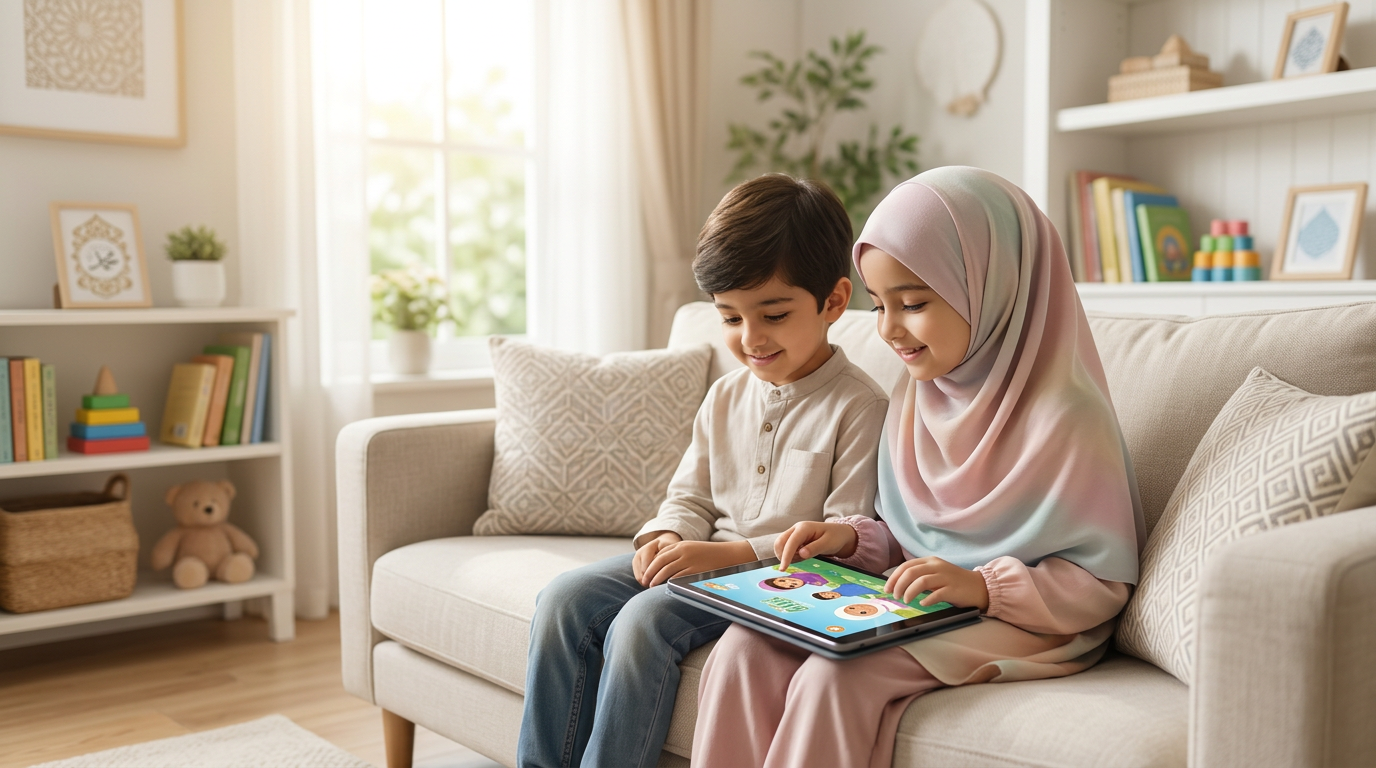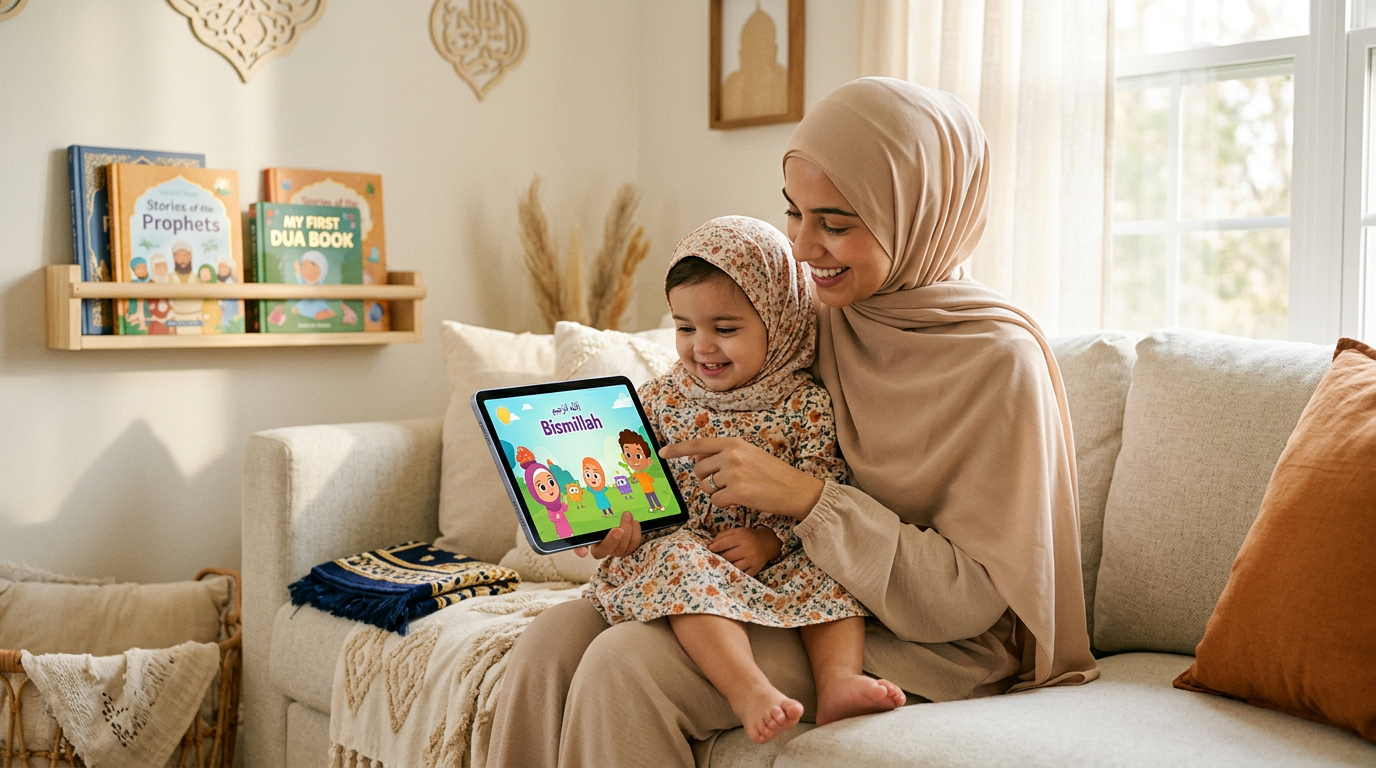
You’ve finally found a "halal" cartoon for your toddler, but seconds later, a jarring ad or high-sensory video triggers a digital meltdown. That guilt you feel isn’t a sign of failure; it’s because mainstream tools weren't built for your child’s spiritual or neurological peace. For the modern Ummah, we know that balancing convenience with conscience is a daily challenge in an unfiltered digital world.
During the critical 0–3 developmental window, your child’s brain is like a sponge, forming the foundation of their Fitra (natural disposition). This period is a sacred Amanah, where every image and rhythm shapes their earliest understanding of Allah’s world. When searching for Islamic educational videos for kids, you'll quickly realize that the delivery of the content matters just as much as the message itself.
Redefining Digital Tarbiyah
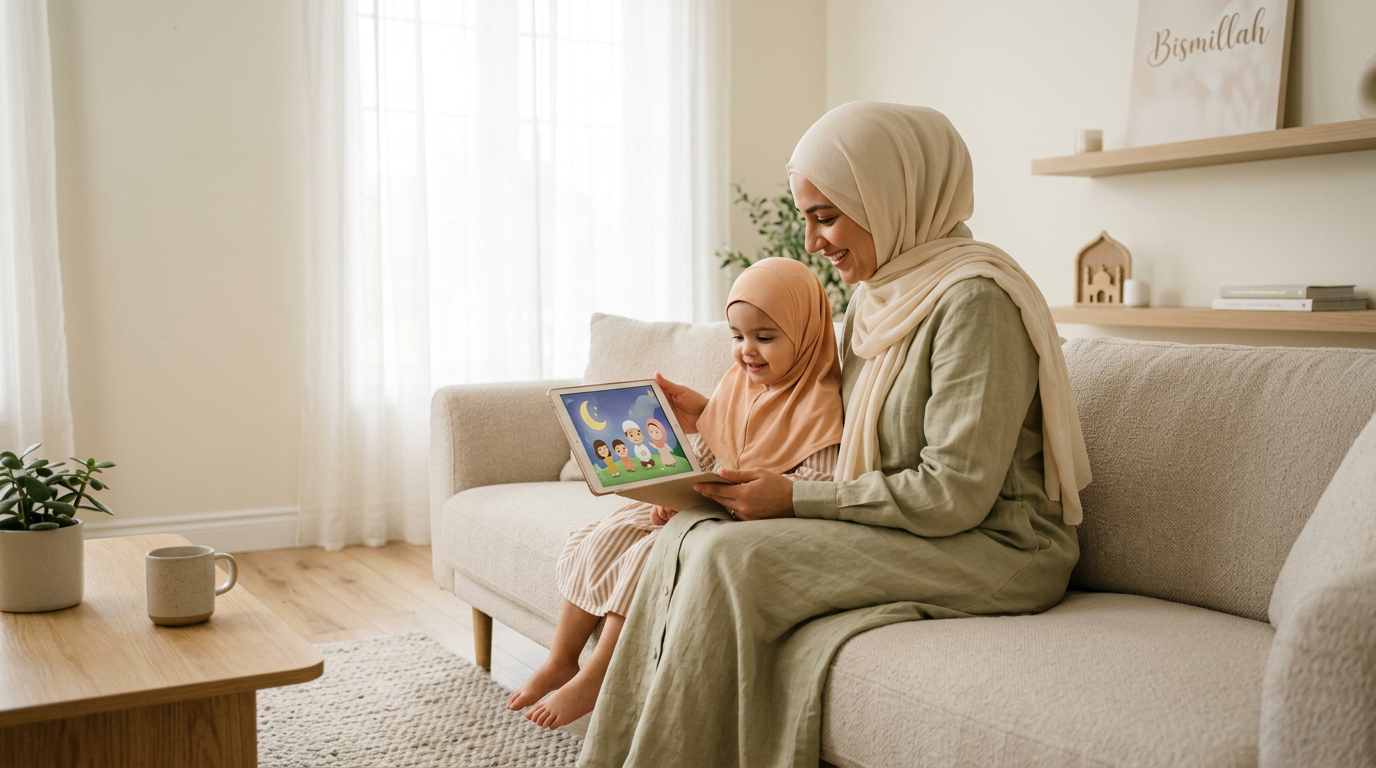
Mainstream platforms thrive on an "attention-economy" model designed to keep little ones hooked through overstimulation and rapid-fire transitions. True halal screen time goes beyond simply avoiding "haram" visuals; it’s about protecting your child’s Tarbiyah by preserving their mental serenity. We believe in creating a "Halal Environment"—an AI-guarded sanctuary that is entirely ad-free and intentionally slow-paced to mirror the tranquility of a God-conscious home.
Research suggests that high-sensory environments can disrupt early neurological development and lead to frequent screen-time tantrums. Experts advise that Muslim parents limit toddler screen time to a maximum of 20 to 30 minutes daily to ensure healthy growth. Because this window is so brief, every second must be of the highest quality, focused on Pure Screen Time that supports their spiritual milestones.
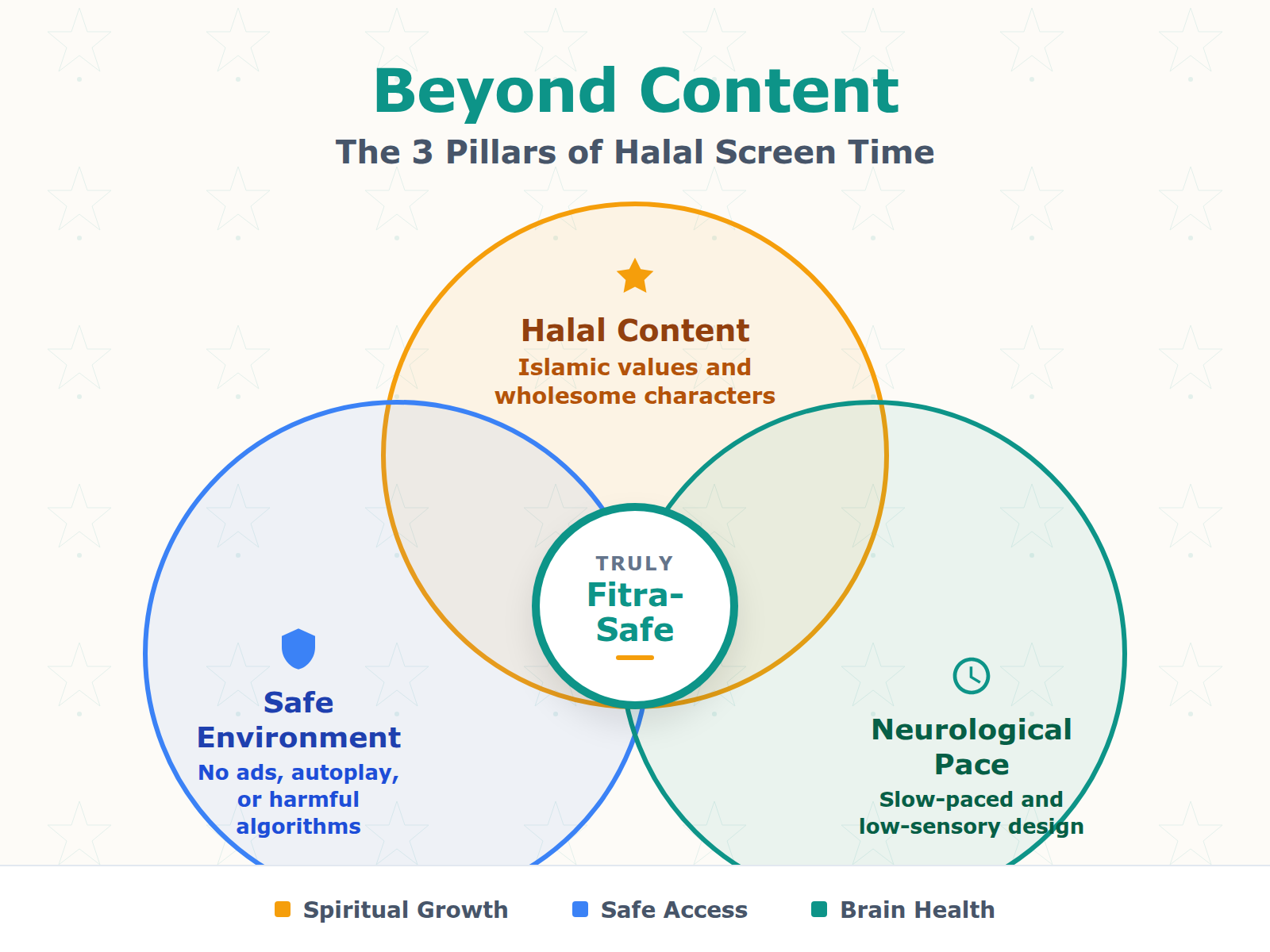
Spiritual Reminder: Our children are born upon the Fitra. Our role as parents is to provide a "guarded space" that allows this natural purity to flourish, even within the complex digital landscapes we navigate today.
In this guide, we’ll explore how to reclaim control over your child’s digital diet using technology that respects their developmental needs. You’ll discover how to introduce Arabic literacy and Quranic stories through a "guarded" environment that prevents sensory overload. It is time to transform screen time from a source of anxiety into a restorative, faith-building routine that protects your child's spiritual foundation.
Why Traditional Screen Time Fails Muslim Parents
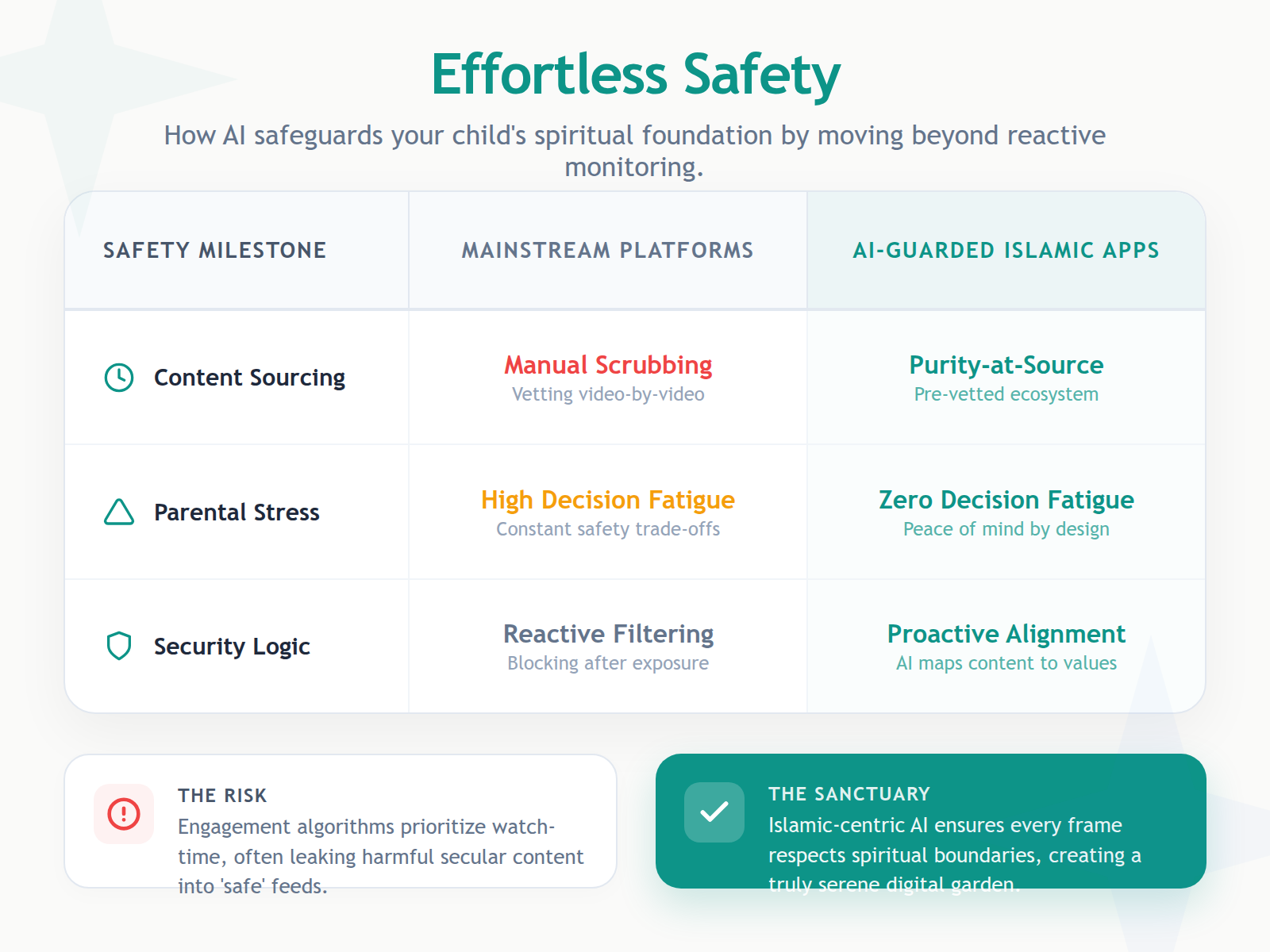
Mainstream apps are built for an "attention economy" that prioritizes engagement metrics over your child’s Tarbiyah. The underlying architecture of these platforms often pushes content through "algorithmic drift," where features like autoplay and rapid pacing can lead a toddler from a peaceful Quranic story toward overstimulating, high-decibel content that disrupts their Fitra.
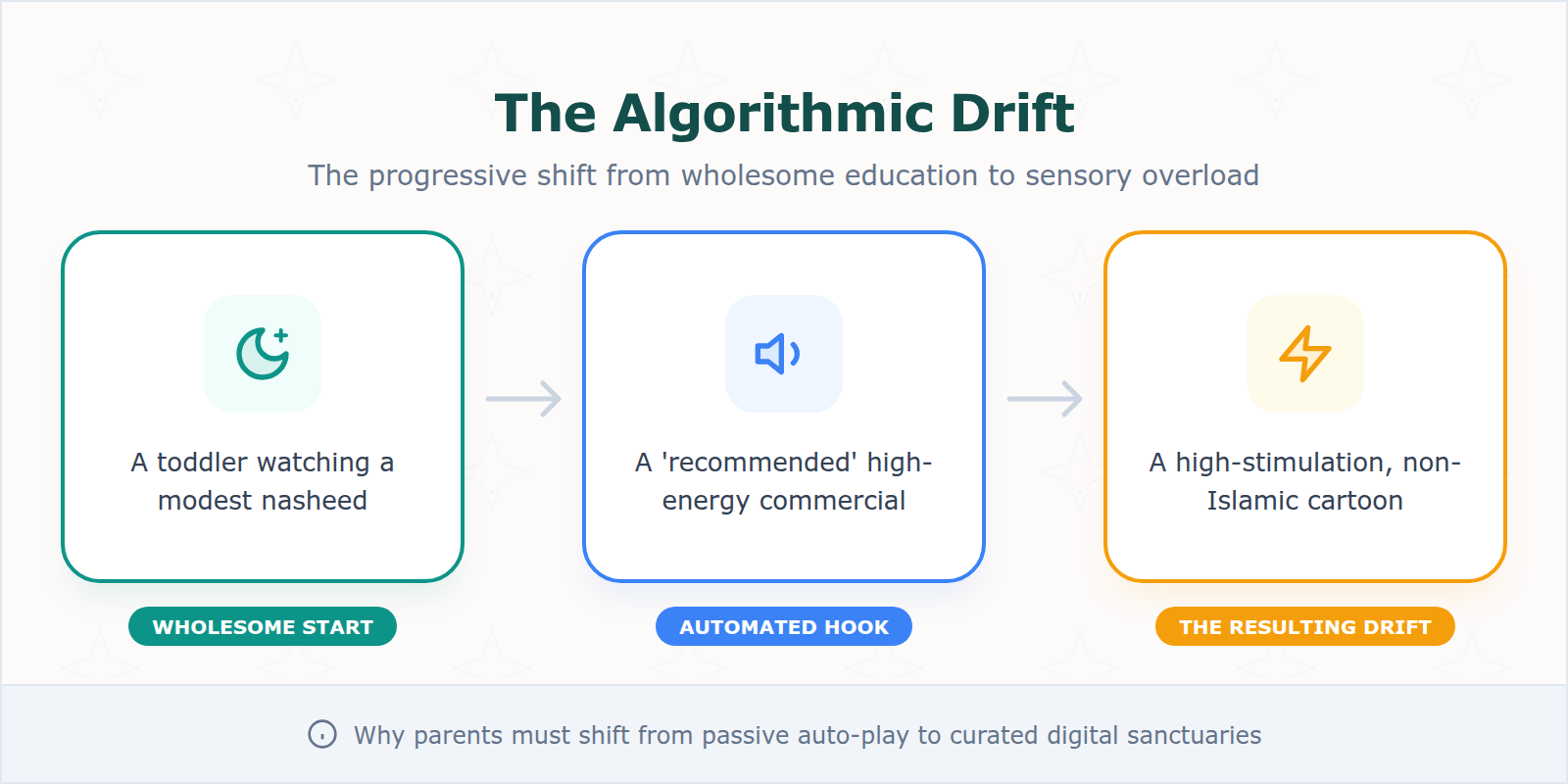
To protect your child's development, it is essential to move beyond reactive filtering and the "Halal Halo" of religious titles. True digital safety requires proactive stewardship—shifting from open-web platforms to intentional, closed-loop environments. In our guide to The Top Safe YouTube Alternatives for Muslim Kids, we explore how choosing 100% ad-free sanctuaries allows screen time to become a high-quality tool for Arabic literacy and character building that respects a child's natural pace. For further technical advice, see our checklist on 5 Common Mistakes in Muslim Toddler Screen Time Safety.
Parenting Tip: To prevent screen-time meltdowns, try using a "bridge" activity. When the session ends, transition from the video to a physical book or a bilingual flashcard to keep the learning momentum going in a serene, tactile way.
The Science of the 0-3 Window: Protecting Your Child's Fitra
The first three years are a window of unparalleled neurological growth, where a child’s brain is most receptive to its environment. This period is a sacred Amanah (trust), making muslim toddler screen time safety vital for protecting their innate Fitra. Mainstream media often utilizes "dopamine-loop" editing—rapid scene changes that can fragment attention and disrupt a child's spiritual stillness (Sakinah). To safeguard this development, parents can utilize a modern Islamic parenting app to create a "Sacred Sanctuary."
These AI-guarded environments replace chaotic feeds with sensory-safe content that supports Tarbiyah, ensuring digital interactions align with faith-based values and foster healthy cognitive growth. By transitioning from passive consumption to intentional engagement, we fulfill our role as protectors of our children's purity.
Spiritual Reminder: Our role as parents is to provide a "guarded space" that allows this natural purity to flourish, protecting the sanctity of their souls during these foundational years.

Defining the 'Halal Environment' Over 'Halal Content'
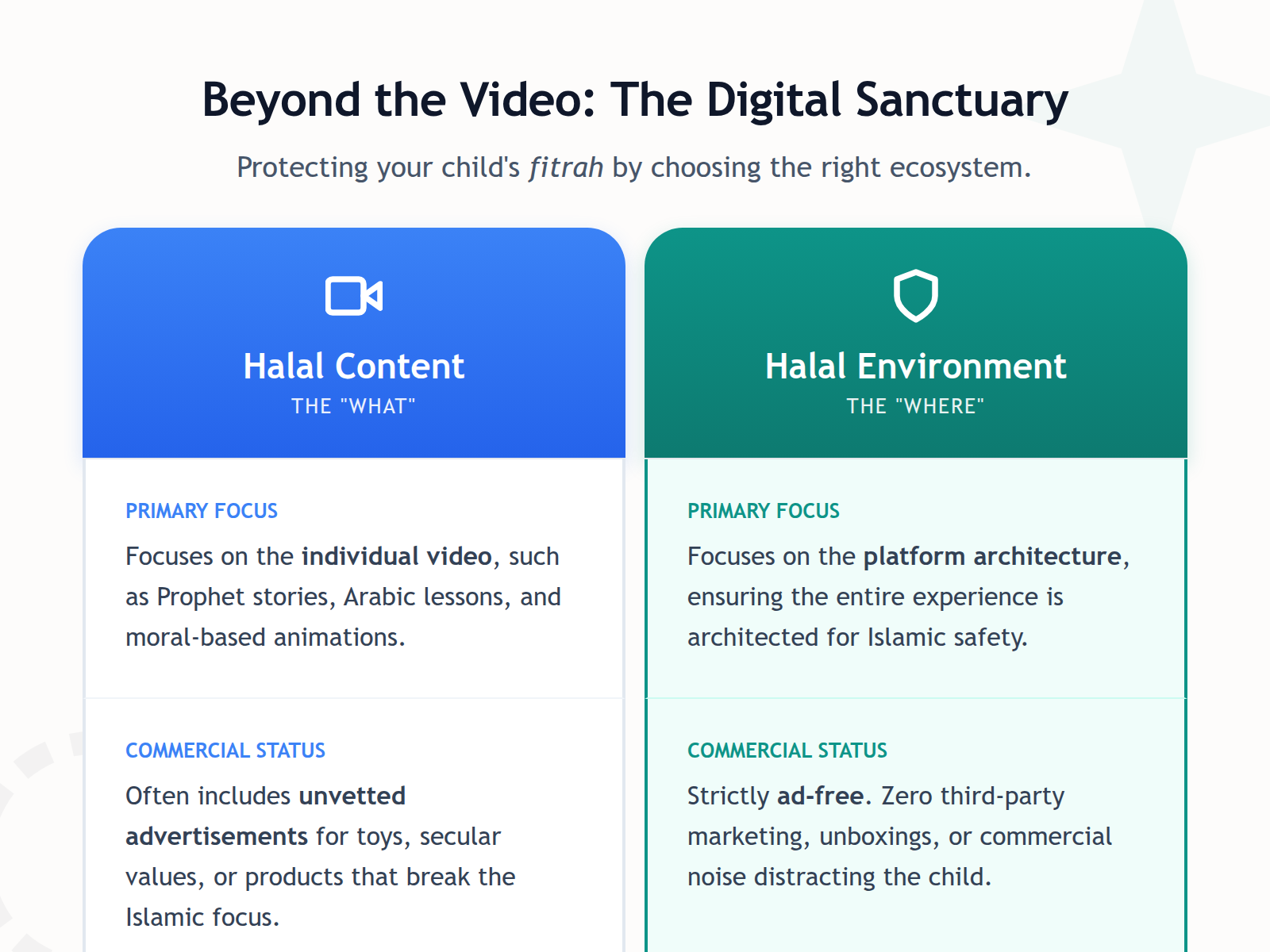
For many parents, the search for halal screen time for toddlers starts with finding the right characters. However, even the most beautiful Quranic story loses its impact if served on platforms designed for commercial engagement rather than Tarbiyah. Implementing a true 'Halal Environment' means shifting our focus from the individual video to the digital space it inhabits.
Building a Digital Sanctuary
A secure digital sanctuary prioritizes your child's spiritual and neurological peace through intentional guardrails: eliminating advertisements, removing predatory 'autoplay' algorithms, and enforcing strict vetting policies. This 'Safe-by-Design' approach moves parents from a state of constant monitoring to one of passive trust, ensuring screen time remains a restorative tool for the family.
To help you navigate these choices, our guide on Finding the Best Halal Streaming Platform for Kids: A Side-by-Side Comparison provides a detailed look at how different services protect your child's Fitra. By choosing a platform that honors your child's development, you preserve your energy as a parent and uphold your Amanah.
Parenting Tip: Use these calm screen-time moments to sit with your child when possible. Ask simple questions about the stories to bridge the gap between the digital screen and their real-world understanding of faith.
The Role of AI in Guarding Spiritual Foundations
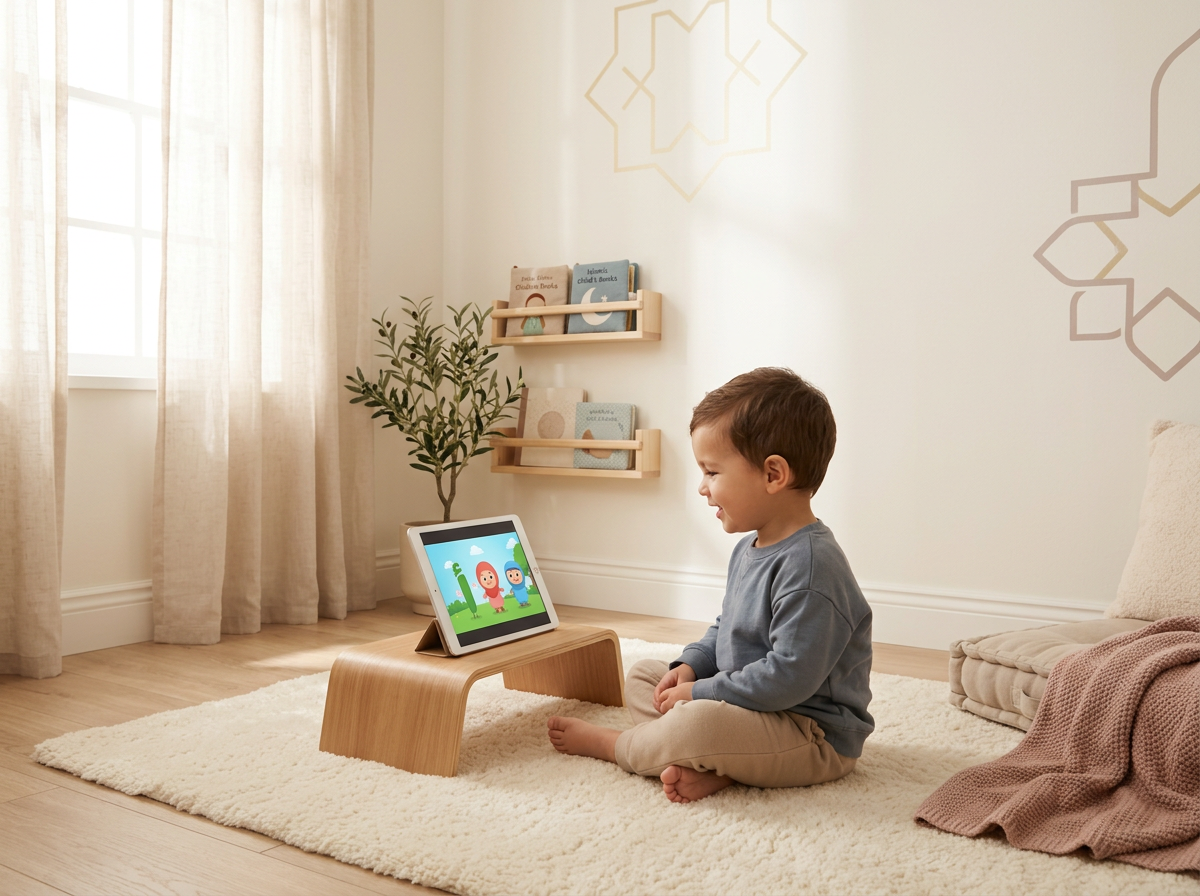
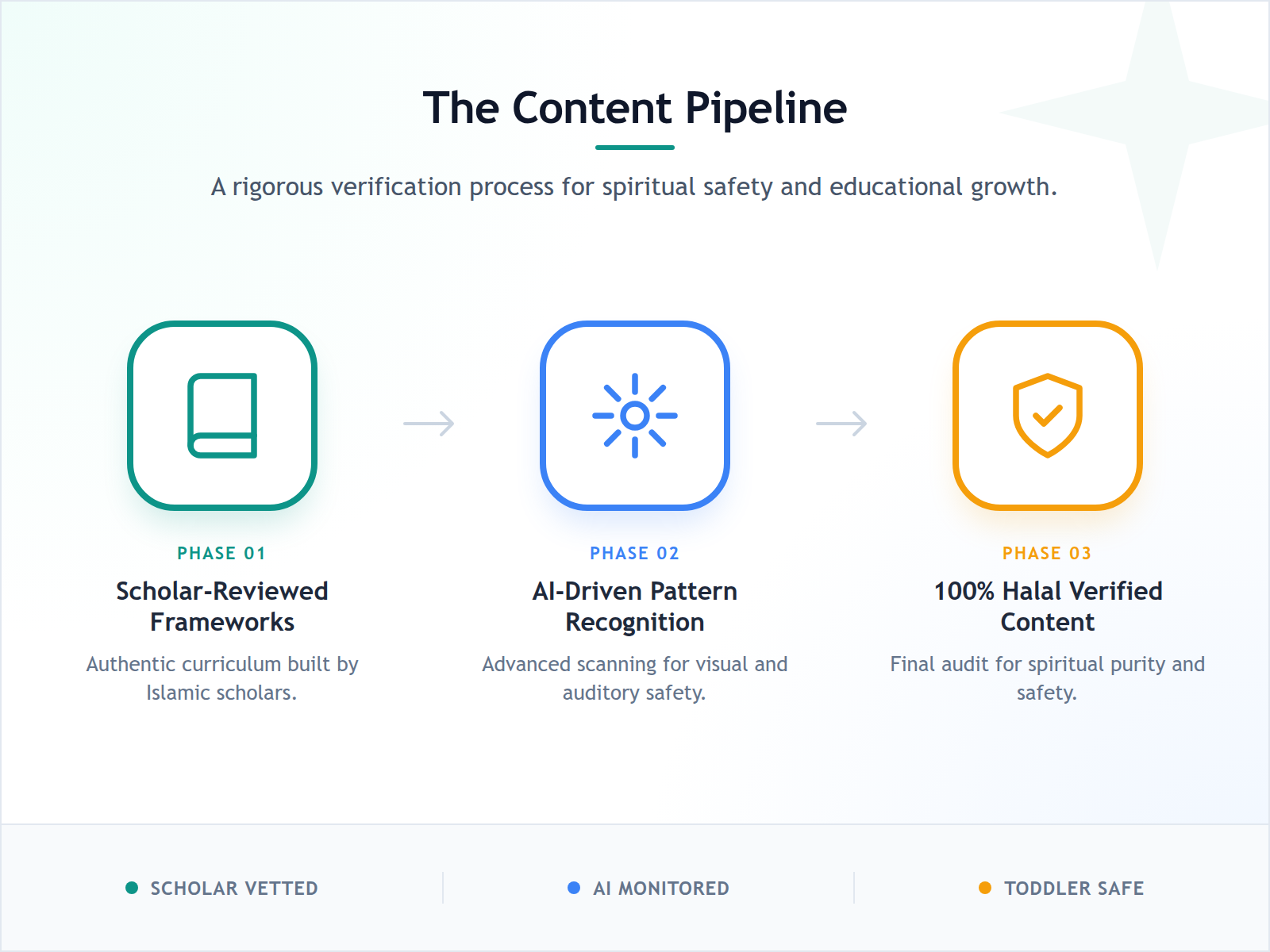
Technology shouldn’t be a source of stress or a threat to your child’s Fitra. As a "Digital Muhtasib," our islamic parenting app uses advanced content-aware filtering to ensure every frame aligns with your family’s values.
These AI-guarded safe spaces identify visual motifs that don’t align with the Sunnah, creating a protective canopy that prevents "algorithmic drift" into unsuitable territory. We’ve pioneered this technology to ensure your toddler’s digital experience remains a serene extension of your living room.

Scholar-Reviewed Frameworks for Tarbiyah
We never leave digital ethics to chance or unguided code. Our AI follows a sophisticated framework reviewed by scholars to ensure theological accuracy for every Dua, Nasheed, and story of the Prophets. This ensures the foundational lessons your child learns are both authentic and age-appropriate.
This "purity-by-design" approach acts as a 24/7 guardian for your child’s Tarbiyah, mirroring the Sakinah of your home and the sacred trust of early childhood. It allows the blossoming mind to focus on faith-based milestones without the interference of secular sensory noise or conflicting messages.
Automating Peace of Mind
A high-quality islamic parenting app should simplify your daily routine, not add to your cognitive load. By automating the vetting process, we eliminate the constant "decision fatigue" that comes from manual monitoring or having to hover over the skip button.
When technology is built with the concept of Amanah at its core, it becomes a steadfast partner in your family’s spiritual life. By choosing AI-guarded curation, you’re opting for Pure Screen Time that protects both the heart and mind of the next generation of the Ummah.
Spiritual Reminder: Your peace of mind is a gift to your child. A relaxed parent creates a home environment filled with Sakinah, making every learning moment more impactful for your little one.
Introducing Arabic Literacy: Language Learning for 2-Year-Olds
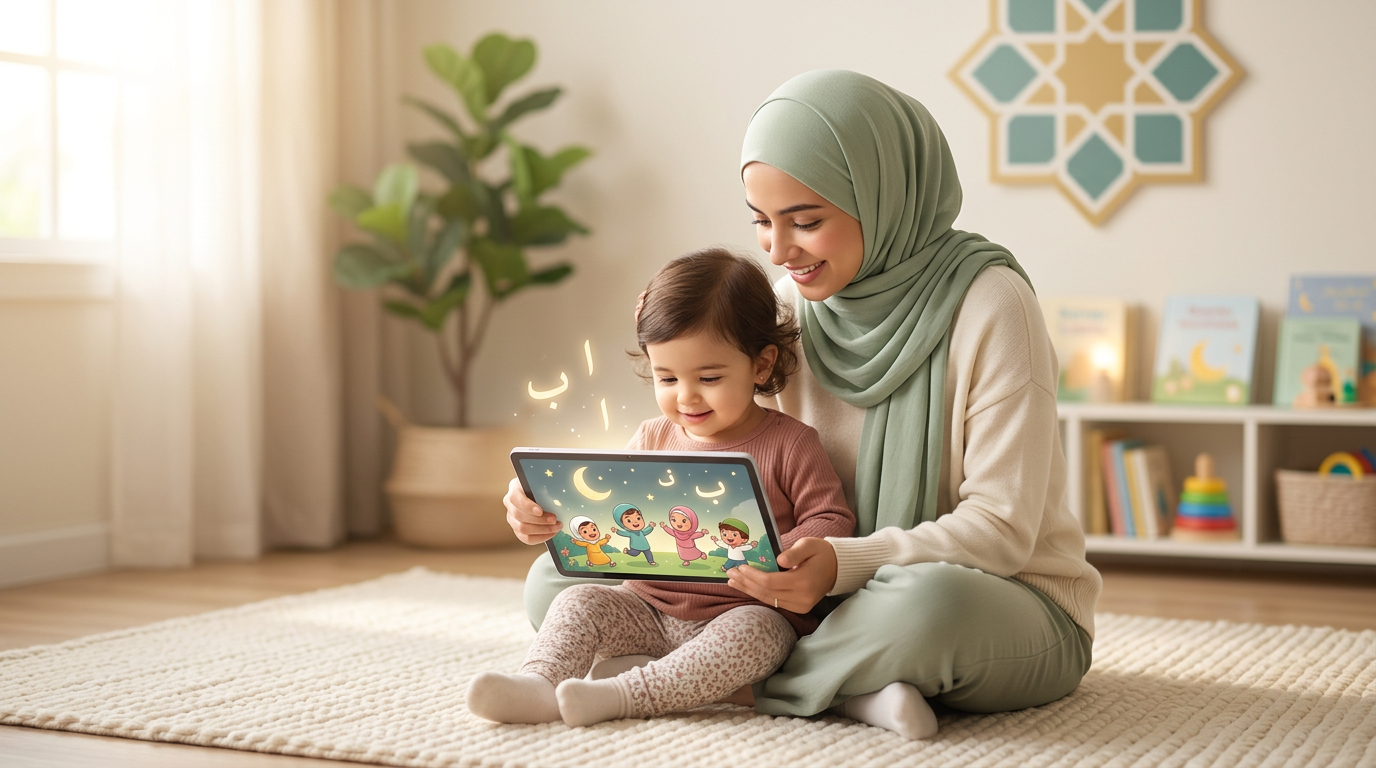
Between ages 0 and 3, your toddler’s brain undergoes "phonetic narrowing," a unique developmental window where they are naturally primed to absorb the melodic rhythms of the Quran. By introducing the arabic alphabet for 2 year olds during this phase, you ensure the makhraj (articulation points) feels as natural as their mother tongue. We focus on this golden age to protect your child’s Fitra while building a lifelong love for the language of our faith.
The Power of Melodic Repetition
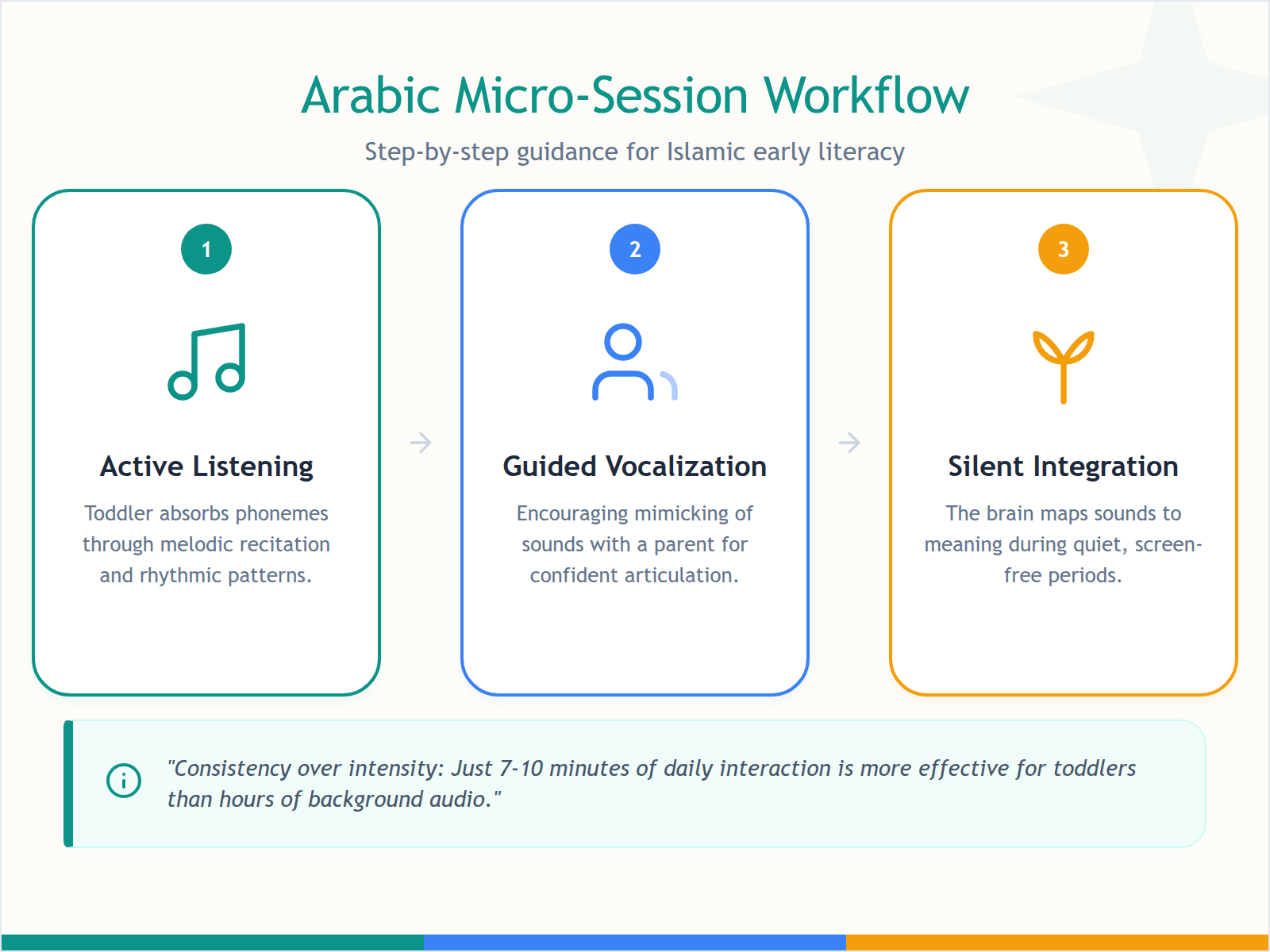
Teaching the arabic alphabet for 2 year olds requires a calm departure from the flashing visuals and frantic pacing found on mainstream platforms. We advocate for a "low-arousal" digital environment where melodic repetition and slow-paced transitions allow a toddler’s brain to move information into long-term memory. This gentle method prevents cognitive fatigue, ensuring the learning experience remains a state of Sakinah (tranquility).
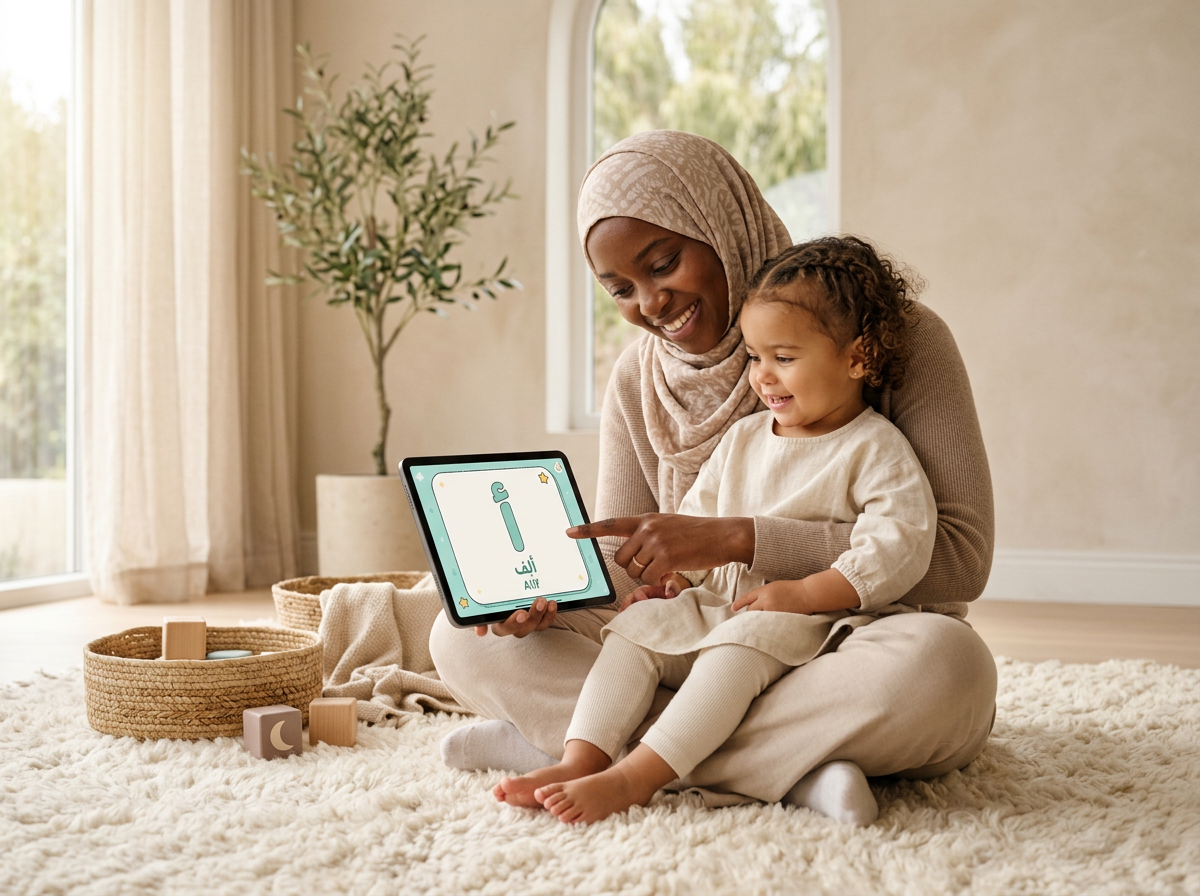
"Micro-sessions" that pair a visual letter with its clear, melodic sound are highly effective for these young learners. This rhythmic approach creates a "sonic cradle," making future Quranic studies feel like a natural homecoming rather than a chore. Consistent, gentle exposure helps your child absorb the building blocks of their faith without the stress of overstimulation.
Parenting Tip: Start with aural exposure before focusing on visual recognition. Let your toddler hear the rhythmic recitation of the arabic alphabet during quiet playtime to prime their ears for the subtle nuances of Tajweed.
Cognitive Benefits of Bilingual Learning
Bilingual digital flashcards and videos serve as a vital bridge, boosting executive function and cognitive flexibility from the very start. When you introduce the arabic alphabet for 2 year olds, you're helping them categorize their world through two linguistic lenses simultaneously. These tools are most effective when they prompt you to vocalize sounds together, turning screen time into a collaborative act of Tarbiyah.
We also believe in fostering a connection to the global Ummah by integrating community languages like Urdu, Bengali, or Malay into these early sessions. This inclusive perspective helps your little one realize that while Arabic is their spiritual anchor, their faith connects them to a diverse, worldwide family. This holistic approach ensures their first steps into literacy are both intellectually stimulating and deeply grounding for their soul.
Islamic Nursery Rhymes: Why Instrument-Free Matters
The tradition of the Nasheed—a vocal-only song or chant—is a foundational element of Tarbiyah that dates back centuries. For the youngest members of the Ummah, the human voice serves as the most natural and comforting instrument, bridging the gap between a peaceful home and the digital world. By using rhythmic, vocal-only melodies, you can teach daily Duas and good manners in a way that feels organic to your child’s Fitra.
Spiritual Reminder: Our pious predecessors used the melody of the human voice to instill the love of Allah in young hearts. This vocal-only Tarbiyah honors a long-standing tradition of simplicity and focus, keeping your child's spiritual environment pure.
The Developmental Power of the Human Voice
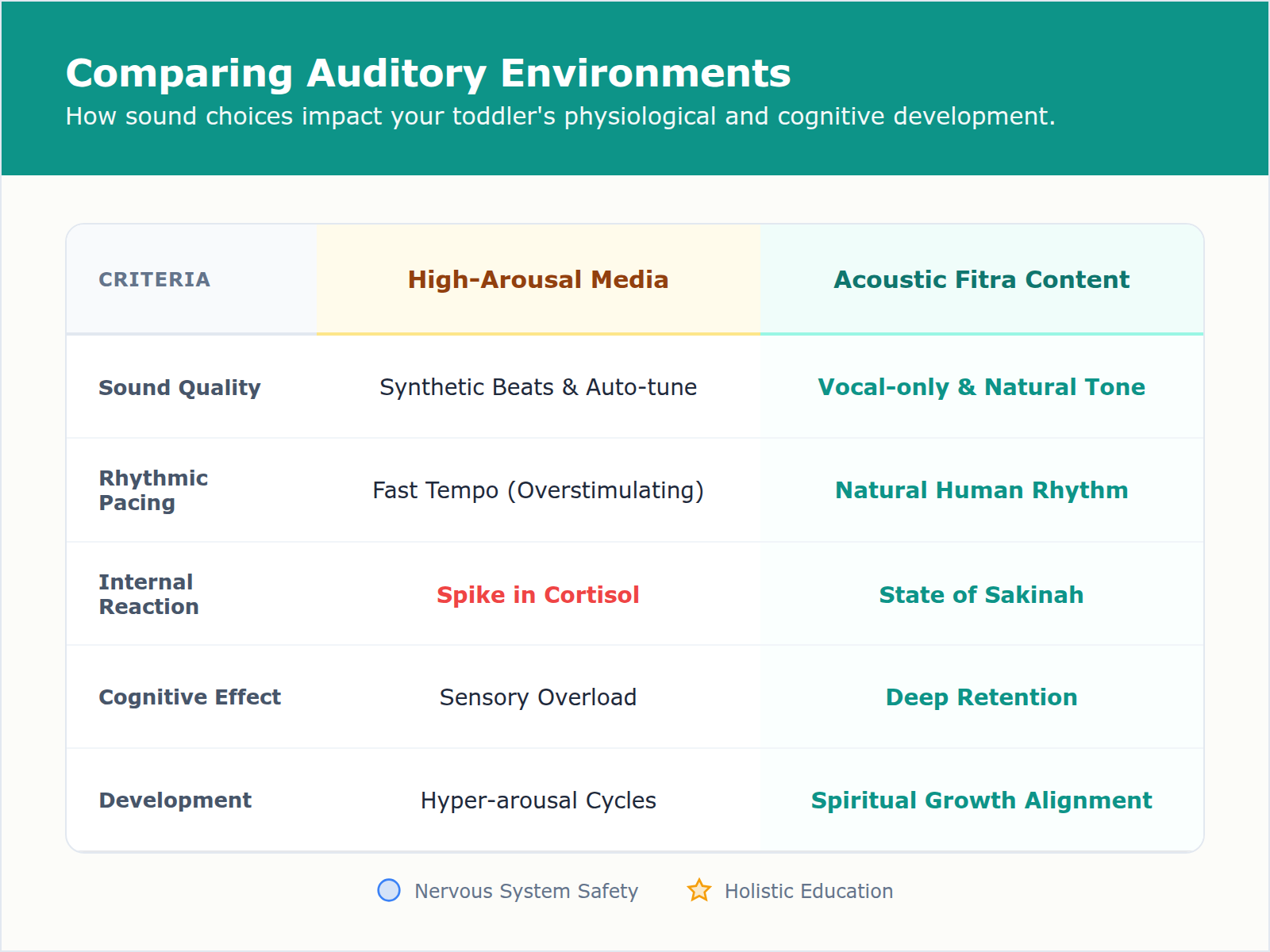
In our testing, we’ve observed that the human voice is the most recognizable sound to a toddler's developing brain. Research into early childhood audio processing suggests that overstimulating backgrounds can actually hinder language acquisition and focus. Unlike synthesized beats, vocal-only islamic nursery rhymes no instruments allow your child to focus entirely on the Makhraj (articulation) of sacred words.
This clarity helps them internalize the Sunnah of saying "Bismillah" or "Alhamdulillah" through gentle repetition rather than through loud, distracting backdrops. Many families specifically seek these rhymes to protect their child’s nervous system from the "high-arousal" nature of mainstream children's music. Constant exposure to high-tempo electronic instrumentation can trigger sensory overload, leading to the digital meltdowns many parents dread.

Safeguarding the Acoustic Fitra
At Babymode.ai, we prioritize what we call the "Acoustic Fitra" approach to media. These vocal-only tracks act as mnemonic devices, helping toddlers memorize the rhythm of prayer and the beauty of Islamic character (Akhlaq) without physiological stress. This curated approach respects the Amanah of your child’s auditory development, ensuring that their earliest digital memories are defined by Sakinah rather than frantic energy.
Maintaining cognitive hygiene is essential during the 0-3 window, where the brain is most vulnerable to auditory clutter. When the auditory environment is calm, the brain can more effectively move information into long-term memory. This ensures that these spiritual foundational lessons stay with them long after the screen is turned off.
Parenting Tip: Try humming the melodies of these instrument-free rhymes during bath time or before bed. This reinforces the learning off-screen and strengthens the emotional bond through the familiar sound of your voice.
Quranic Stories for Little Hearts: Adapting for Short Attention Spans
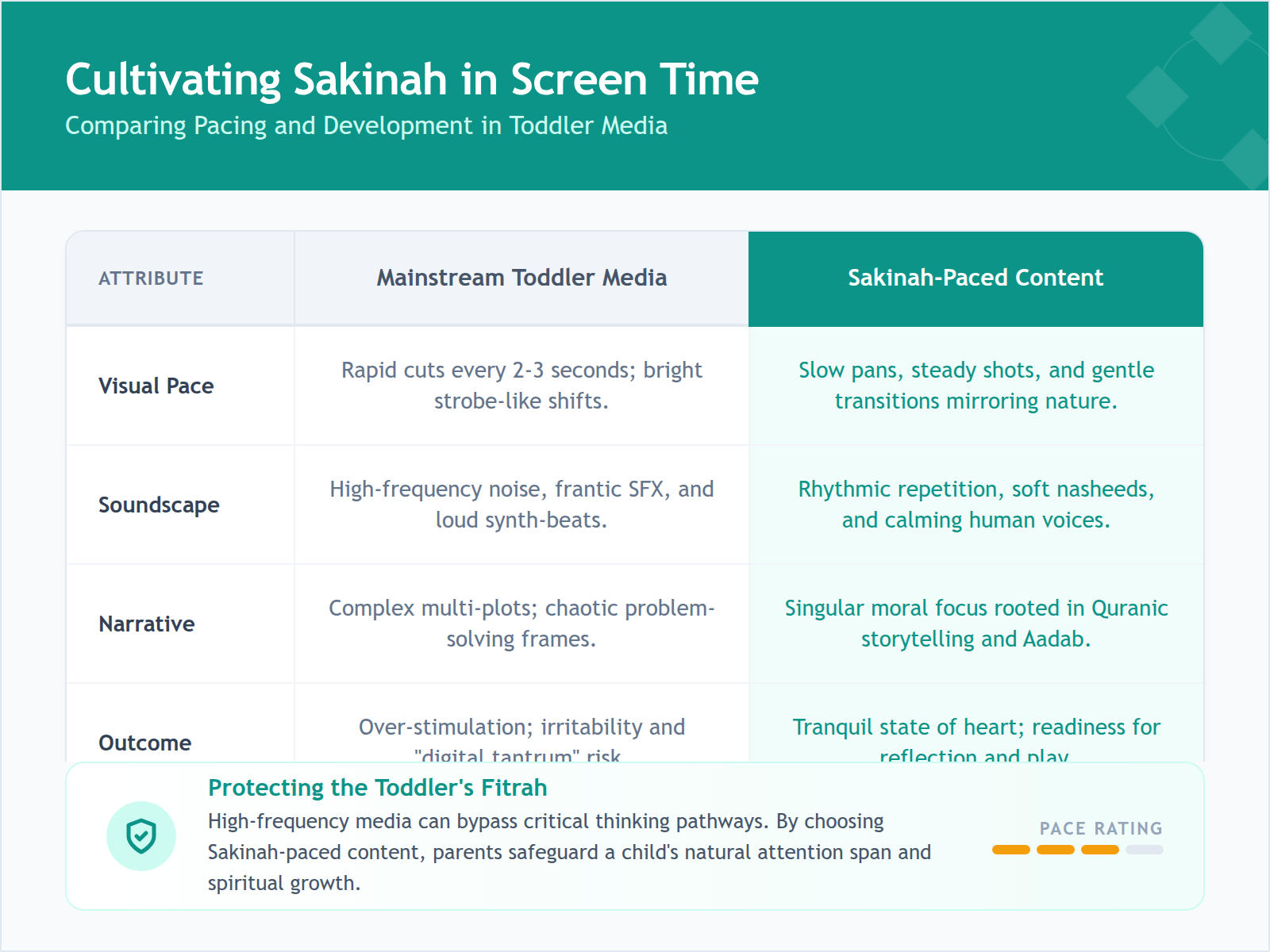
High-quality halal baby videos transform the lives of the Anbiya (Prophets) into accessible "Character-First" narratives. For your two-year-old, complex historical timelines can be overwhelming. We focus instead on "big ideas" rooted in their Fitra—mercy, kindness, and the foundational beauty of Allah's creation.
Grounding abstract concepts like Tawhid in nature-based analogies, such as a growing seed or the rising sun, helps your child observe the world with spiritual wonder. This approach nurtures their heart while respecting their developing memory. It ensures their first introduction to the Prophets is filled with love and clarity.

Nurturing Focus Through Visual Tranquility
The visual delivery of these sacred stories is just as critical as the narrative itself. Mainstream animations often use rapid cuts that trigger a toddler's "orienting reflex," leading to the digital overstimulation parents dread. In contrast, "Sakinah-paced" storytelling uses slow pans to allow for healthy visual processing.
This intentional "visual stillness" respects the developmental limits of your child's nervous system. By prioritizing tranquil aesthetics, the message of a Prophet’s patience or bravery isn't lost in a sea of frantic motion. This protects your child’s sensory health while allowing spiritual lessons to take root in a peaceful mind.
Fostering Connection Through Joint Engagement
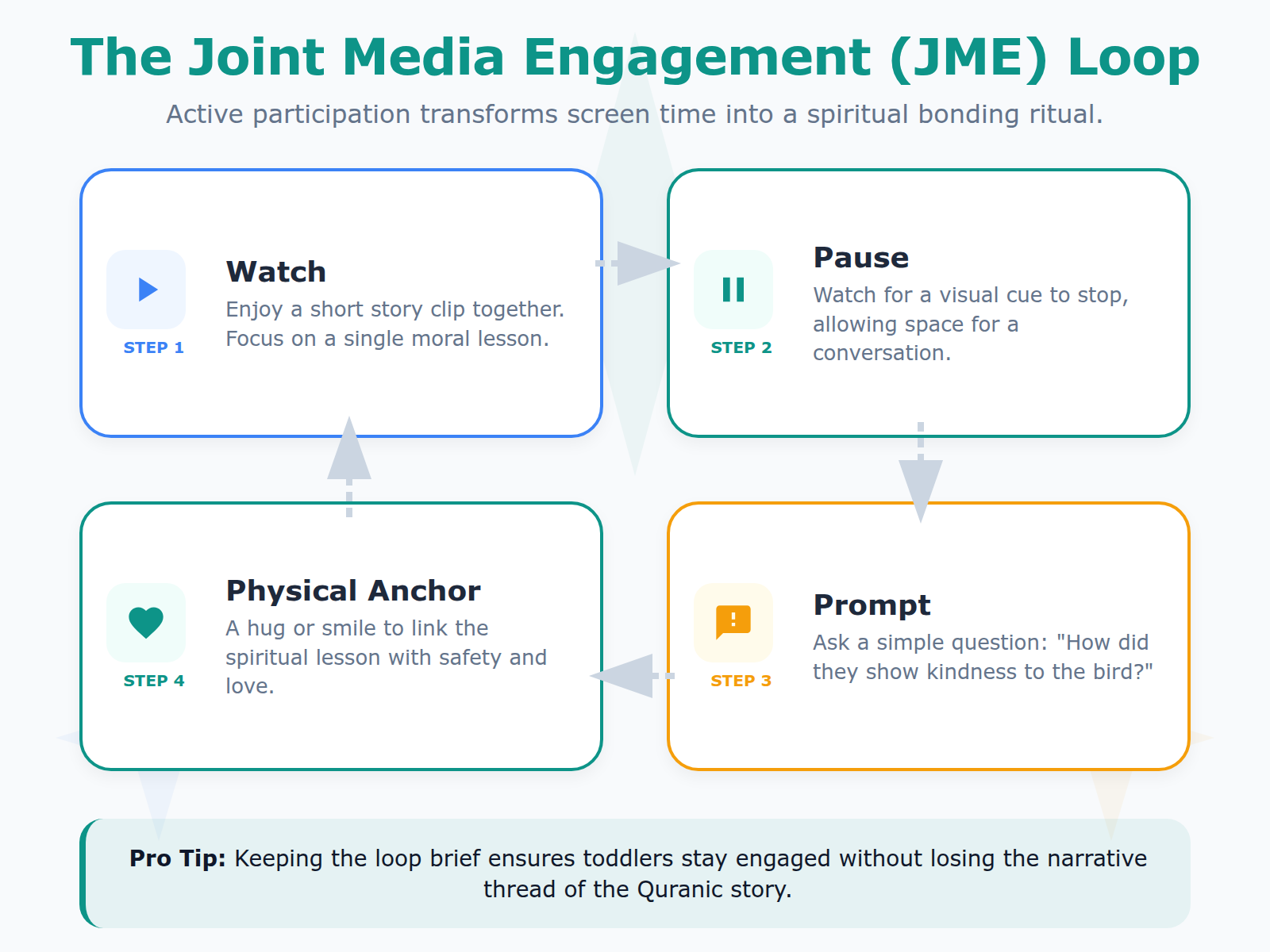
Prophetic stories are best used as a springboard for deep parent-child bonding. We advocate for the Joint Media Engagement (JME) model, where screen time becomes a collaborative tool for Tarbiyah. This involves watching short clips together and using them as conversation starters to anchor lessons in your daily life.
Spiritual Reminder: Your child’s emotional connection to the Prophets begins with the warmth they feel while learning by your side. When you share these stories, you aren't just teaching history; you're weaving the love of the Anbiya into the very fabric of their heart.
Use "Parental Prompts"—simple pauses in the video—to ask your child a question or share a warm hug. These physical anchors transform a digital story into a lasting spiritual memory, moving the lesson from the screen directly into their soul. This active participation ensures that screen time remains a purposeful, bonding experience for the whole family.
The Danger of the Ad-Driven Model for Muslim Families
Mainstream platforms are built on an "attention economy" that treats your toddler’s focus as a commodity to be harvested. These systems utilize intermittent reinforcement—the same psychological mechanic found in gambling—to keep little ones clicking through suggested videos. This constant stimulation disrupts the early development of Khushu (spiritual presence) and patience, qualities we strive to instill as part of a child's Tarbiyah.
The Spiritual Cost of Commercial Influence
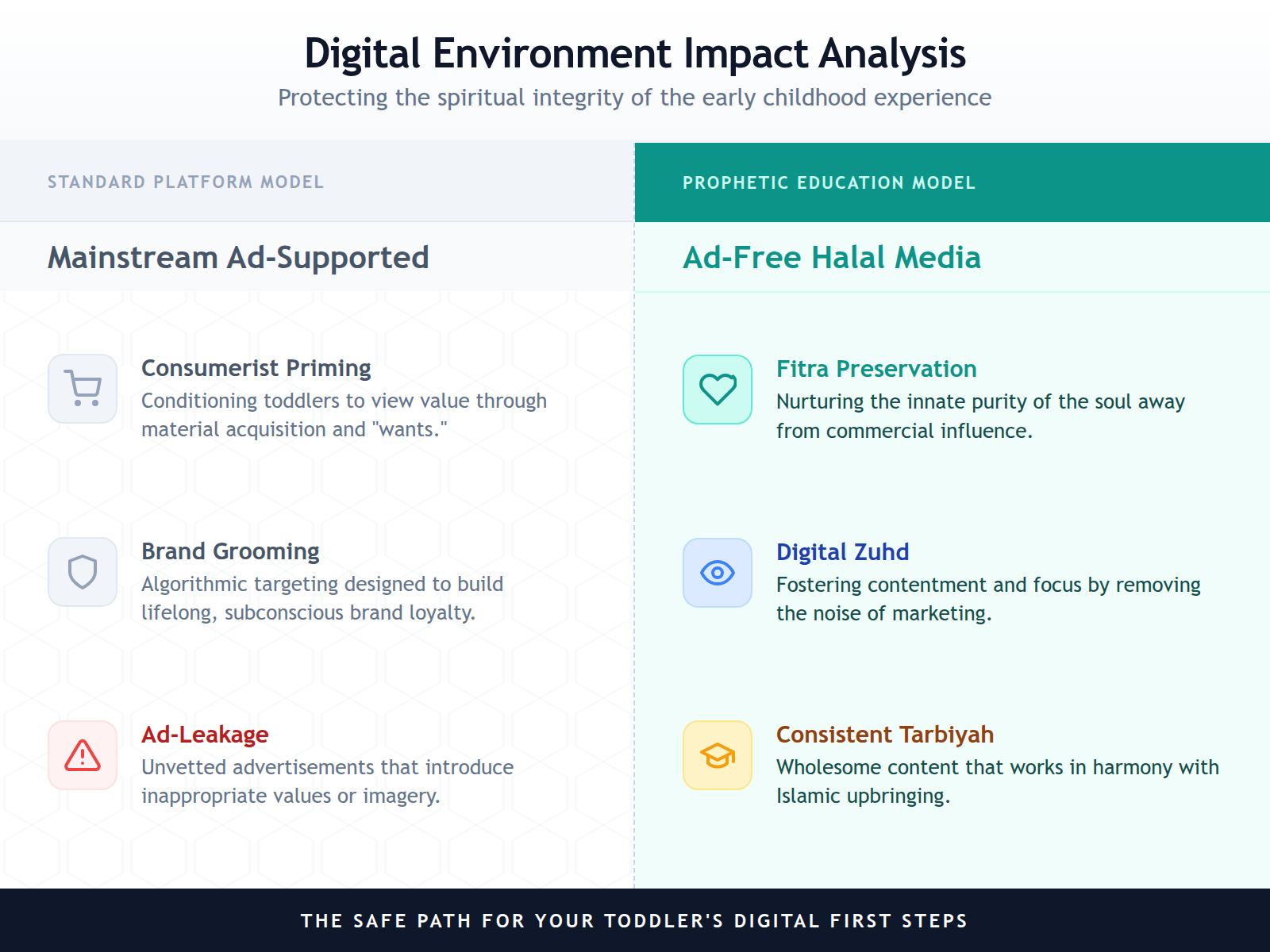
When a digital platform is "free," your child’s attention is the product being sold to the highest bidder. Even with filters, "ad-leakage" during real-time auctions can expose your toddler to lifestyles or messaging that directly contradicts your family's values. We've seen how this "brand grooming" quickly establishes consumerist neural pathways in very young children.
This cycle risks replacing the foundational Islamic value of Shukr (gratitude) with a secular habit of "wanting more." It overwrites the quiet, reflective nature of a spiritual upbringing with the frantic pace of commercialism. By prioritizing ad-free halal cartoons, you protect your child's Fitra from being influenced by corporate agendas.

Embracing Digital Zuhd in the Home
Transitioning to a curated environment is an intentional act of Digital Zuhd (detachment) for the modern Ummah. It removes the corporate "pester power" tactics designed to create friction between you and your little one. When you remove these interruptions, you reclaim your home as a sanctuary, ensuring your child's primary source of influence remains their family and faith.
Because every moment of your child's early life is a sacred Amanah, the time they spend with media must be of the highest spiritual quality. Utilizing ad-free halal cartoons ensures that their digital interaction is dedicated entirely to cognitive health and the beauty of the Sunnah. This shift replaces the sensory stress of the attention economy with the peaceful rhythm of Sakinah.
A Parent’s Checklist: Evaluating Your Child’s Digital Diet
Heading: A Parent’s Checklist: Evaluating Your Child’s Digital Diet
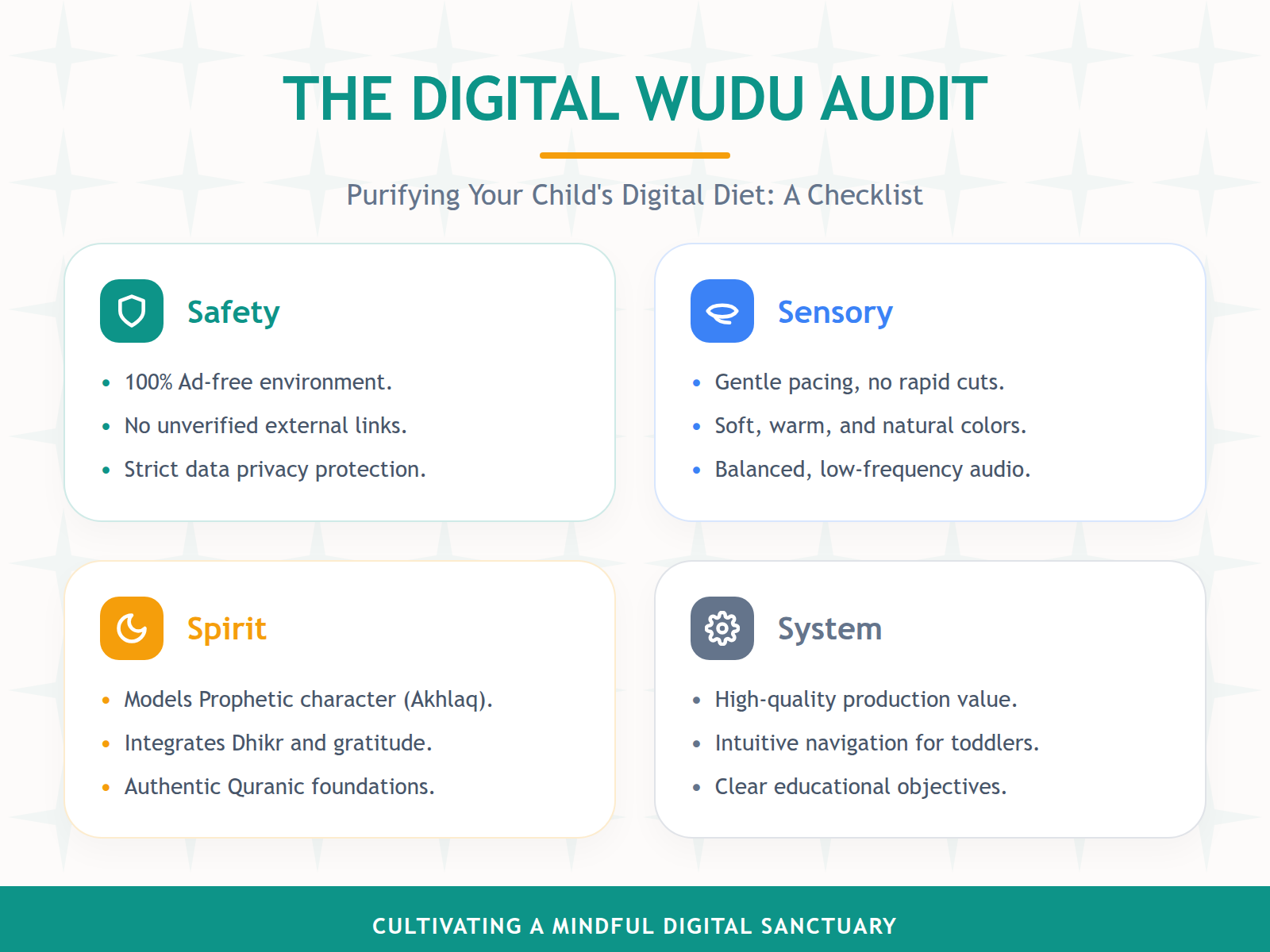
Protecting your child’s Fitra requires more than a quick glance at a video thumbnail. We suggest performing a "Digital Wudu"—a mindful purification of your toddler’s digital environment to ensure only the purest influences remain. This intentional audit transforms screen time from a source of anxiety into a supportive tool for Tarbiyah and spiritual growth.
To safeguard your home, parents must move beyond "reactive filtering." A robust evaluation includes verifying technical boundaries (ensuring platforms are 100% ad-free), auditing sensory pacing to prevent cognitive fragmentation, and checking for theological accuracy. For a detailed framework on how to spot "halal-washing" and protect your child's auditory purity, see our essential checklist for choosing halal baby videos. This guide highlights why mainstream "safe search" features often fail to protect a young soul’s innate purity.
Technical and Sensory Integrity
A truly guarded space must be algorithm-locked to prevent "content drift" into secular themes. We recommend keeping daily viewing to a maximum of 20 to 30 minutes and utilizing offline features to "air-gap" the device. This honors the Amanah of your child’s privacy while ensuring their environment remains a sanctuary of Sakinah.
Next, apply the "Three-Second Rule": if scenes change faster than every three seconds, it can trigger overstimulation. Your child’s digital diet should prioritize slow-paced visuals and vocal-only audio that respects their auditory Fitra. By selecting content where characters model beautiful Akhlaq, you ensure digital stories serve as a practical extension of your own home’s spiritual routine.
Setting Healthy Boundaries: The 20-30 Minute Rule
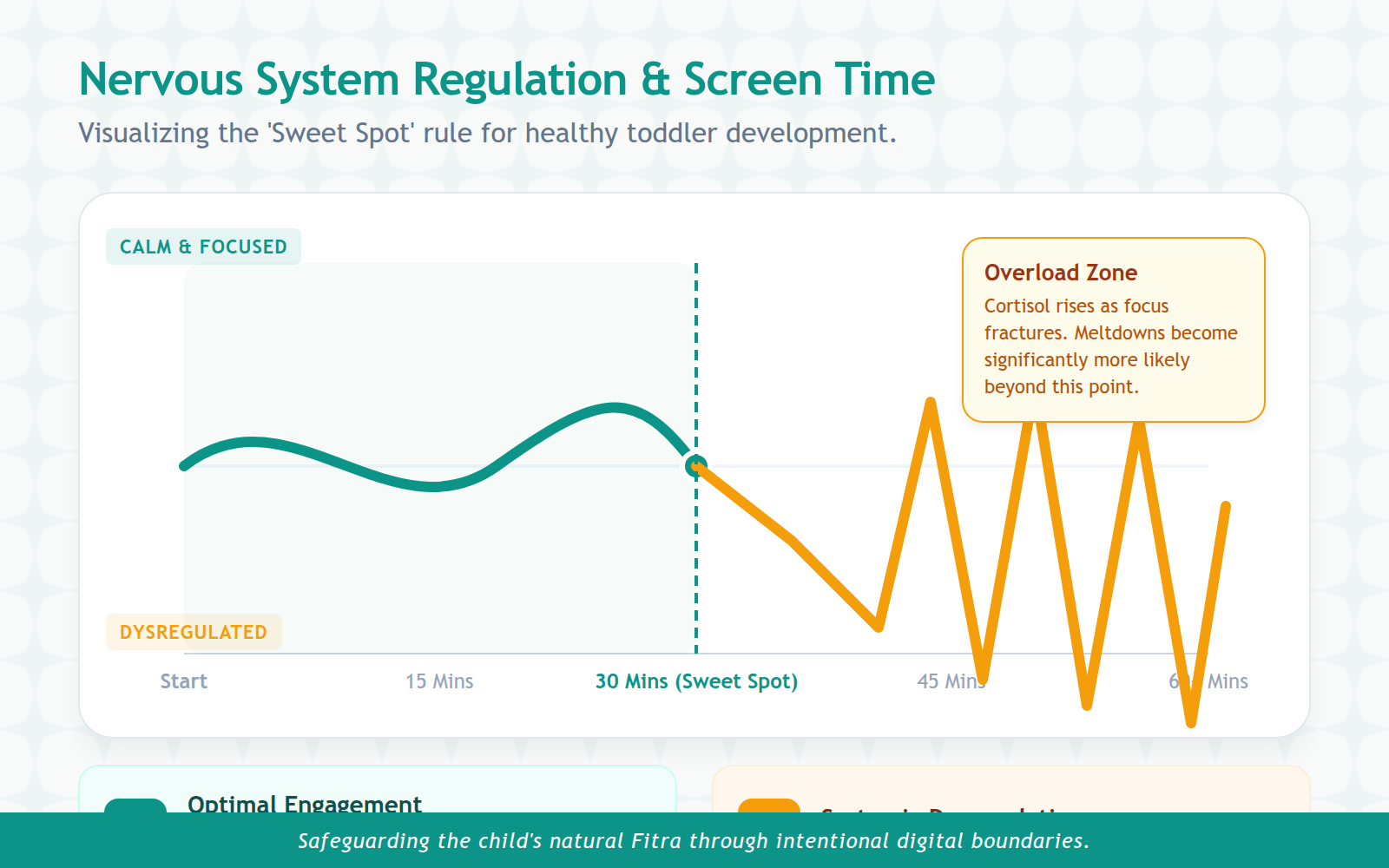
Establishing a healthy media rhythm is an act of guarding your child’s neurological and spiritual Fitra. For toddlers aged 0-3, the optimal window for digital engagement is remarkably brief to avoid sensory fragmentation. Experts at the American Academy of Pediatrics and Muslimi emphasize that limiting sedentary screen time is crucial for both healthy cognitive development and spiritual focus.
Embracing Wasatiyyah in Digital Habits
In our faith, Wasatiyyah (moderation) serves as a guiding light for every family habit, including technology. Specifically, we recommend that parents limit daily engagement with a halal streaming platform for kids to a maximum of 20 to 30 minutes. This "sweet spot" ensures your child benefits from high-quality learning without triggering the overstimulation that disrupts their internal Sakinah.
Strengthening Ties through Shared Tarbiyah
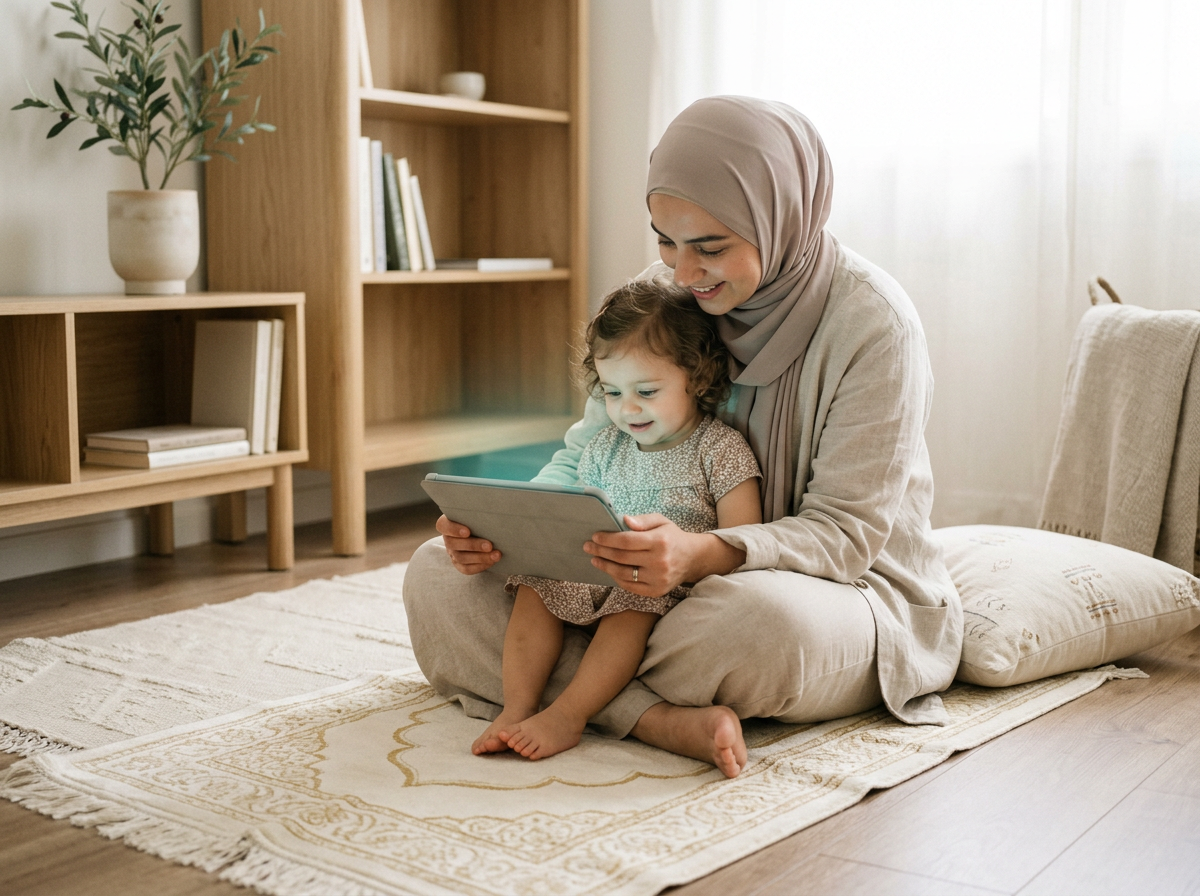
We encourage you to view screen time as a collaborative tool for Tarbiyah rather than a passive "digital babysitter." Sitting with your toddler to point out the beauty of Allah’s creation or repeating Duas together fosters a deep sense of connection. This shared presence transforms a short digital session into a lasting spiritual memory that bridges the screen and your child's heart.

Navigating the "Bridge Out" Transition
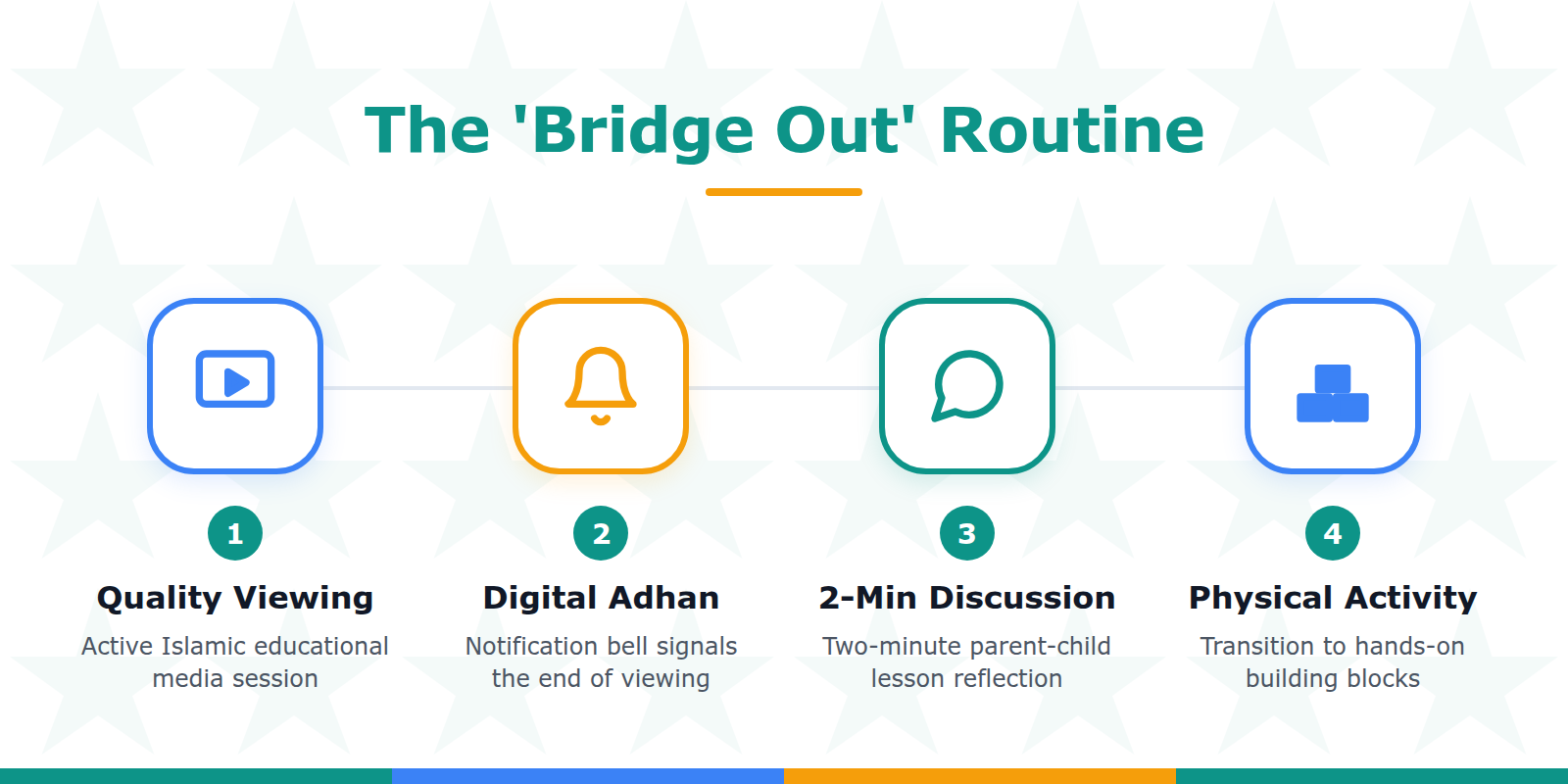
The most difficult part of any boundary is the ending, but you can ease this change with a "Digital Adhan"—a predictable signal that playtime is concluding. We recommend a "Bridge Out" strategy where you spend a few minutes discussing the video’s lesson immediately after it ends. Transitioning directly into physical activity, such as sensory play, helps ground their energy back into the peaceful rhythm of your home.
Parenting Tip: Success with the 20-30 Minute Rule
To make this limit work, try these practical steps:
* Visual Cues: Use a sand timer so your toddler can see the time remaining, reducing transition anxiety.
* Curated Selection: Pre-select one or two specific videos to avoid the "infinite scroll" trap.
* Narrate the End: Give a 5-minute and 1-minute warning to respect their sense of agency.
Transitioning to a Digital Sanctuary: The Babymode.ai Approach
We’ve designed Babymode.ai to transform digital engagement from a source of parental anxiety into a restorative sanctuary for your family. To us, true muslim toddler screen time safety isn't just about blocking "bad" content; it’s about proactively cultivating a space where every sound and image honors your child’s Fitra.
Guarding the Fitra with AI
Our platform uses pioneering, faith-aligned AI to move beyond the "algorithmic lottery" of mainstream video sites. This content-aware filtering ensures every frame remains 100% halal, effectively acting as a "Digital Muhtasib" to protect your home from "algorithmic drift." This architecture allows you to step back from the role of a digital security guard and return to being a nurturing guide.
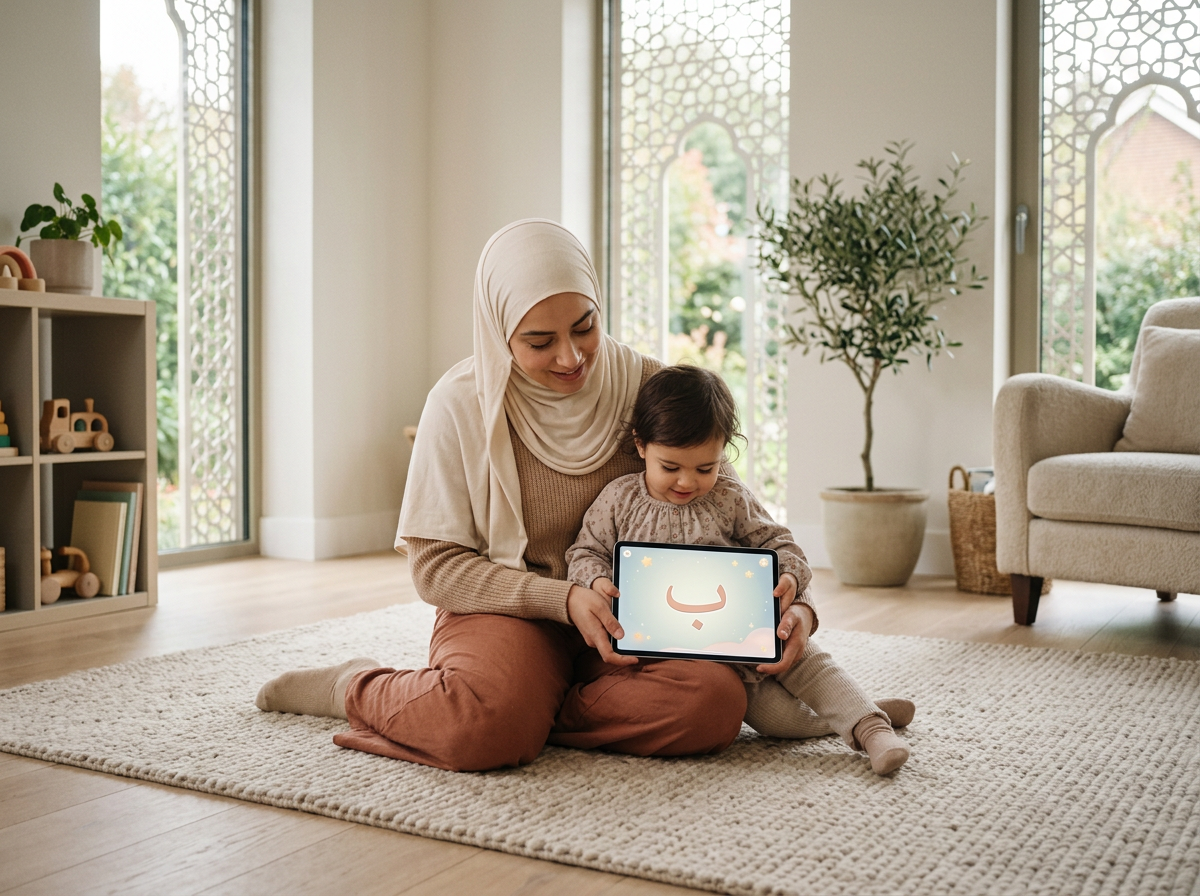
Features for a Peaceful Home
We believe that how your child consumes content is just as vital as the message itself. By providing a completely ad-free environment, we eliminate the sensory stress and consumerist "pester power" that mainstream apps use to keep children hooked. Our use of instrument-free audio and slow-paced visuals ensures that limited screen time is spent in a state of Sakinah (peace).

A Curriculum for Early Tarbiyah
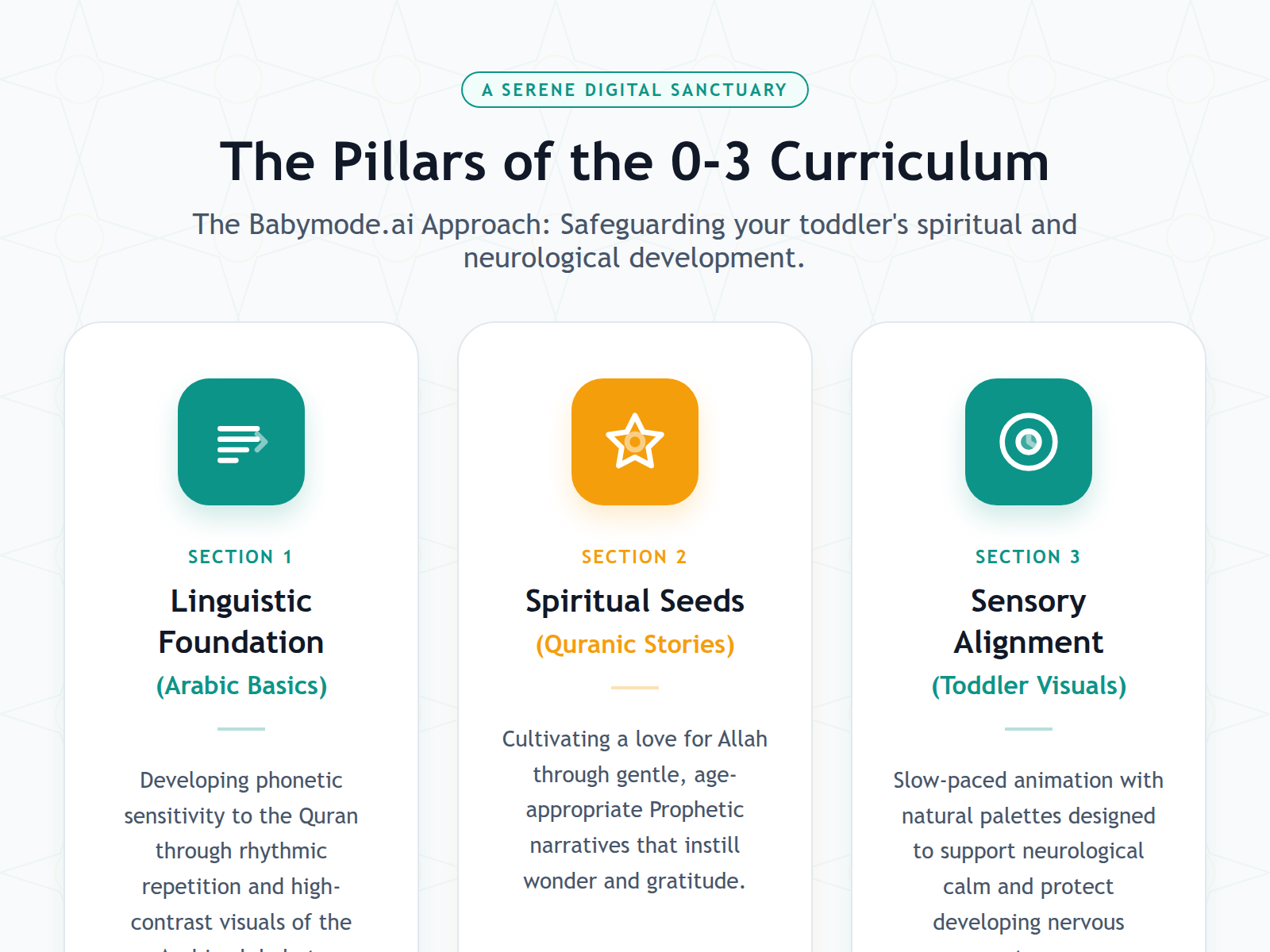
Our content library is specifically tailored for the 0–3 developmental window, focusing on linguistic foundations and spiritual seeds. From repetitive Arabic alphabet basics that build makhraj to simplified Quranic stories, our library serves as a dedicated tool for Tarbiyah. These stories emphasize the mercy of Allah and the beautiful character of the Prophets in ways toddlers can easily grasp.
Maintaining the Sanctuary Offline
To help you maintain healthy digital hygiene, our offline video download service keeps your sanctuary intact even while traveling. By downloading your toddler’s favorite Nasheeds, you can disable Wi-Fi entirely to prevent "content drift" or accidental data tracking. This simple boundary honors the Amanah of your child’s data privacy while keeping their focus on spiritual health.
Parenting Tip: When transitioning to Babymode.ai, introduce the platform during a calm part of the day rather than during a screen-time struggle. Present it as their "special digital garden," helping them associate this new space with a sense of Sakinah and focused, joyful learning.
By choosing Babymode.ai, you are joining a global Ummah of families reclaiming their homes from the attention economy. Together, we can ensure that our children’s first digital footprints are planted in the fertile soil of faith, peace, and "Pure Screen Time."
Conclusion
You no longer have to settle for the "digital guilt" that often comes with mainstream platforms. By choosing a guarded, intentional environment, you transition from a state of constant surveillance to one of empowered peace. You’ve learned that the architecture of the digital world is just as vital as the content itself in protecting your toddler’s neurological and spiritual development.
As the gatekeepers of your child’s Fitra, you hold a sacred Amanah to curate their early experiences. When you replace overstimulating ads and chaotic algorithms with calm, islamic educational videos for kids, you aren't just managing screen time—you are facilitating Tarbiyah. Even a focused 20 to 30 minutes of high-quality interaction (muslimi.com) can plant seeds of faith that last a lifetime.
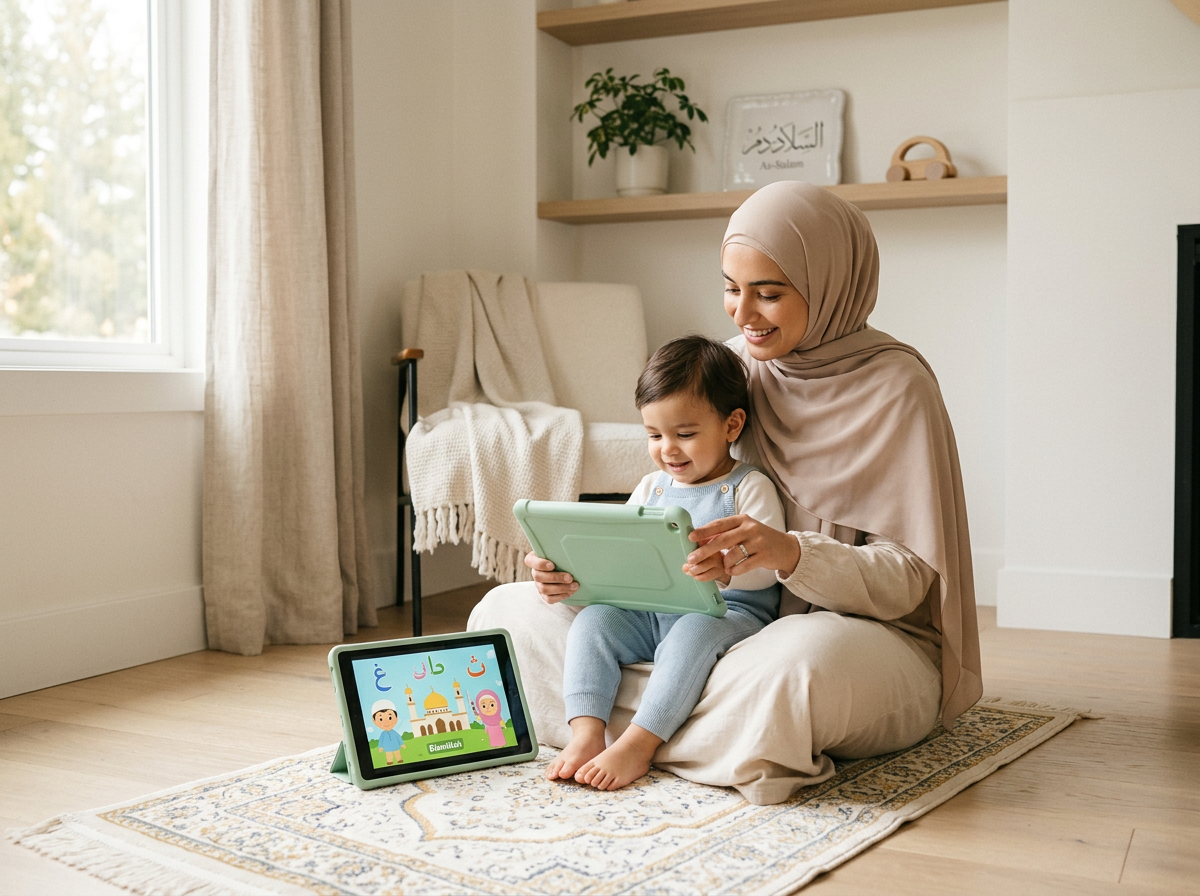
At Babymode.ai, we are honored to be your partner in this journey toward "Pure Screen Time." We’ve built a sanctuary where the human voice, slow-paced visuals, and AI-guarded safety work together to support your family’s values. Let’s reclaim these small windows of the day and transform them into a "Digital Musalla" for your little one. Join our community today by starting a free trial or subscribing to our newsletter for more tips on digital Tarbiyah.
Frequently Asked Questions
What makes a video 'halal' for a toddler besides just the characters?
Beyond modest characters, a truly halal video respects a child’s Fitra through slow pacing and the absence of musical instruments. It avoids overstimulating "high-sensory" cuts that trigger irritability, focusing instead on aural purity and calm, spiritually grounded visuals that protect the developing nervous system.
Is it okay to let my 2-year-old watch videos on YouTube Kids?
While it offers basic filters, YouTube Kids still relies on an ad-driven model and algorithms designed for addiction. This often leads to "content drift," where your child moves from islamic educational videos for kids to high-energy, consumerist entertainment that disrupts their natural focus and spiritual peace.
Why does Babymode.ai use AI instead of human-uploaded videos?
Human-uploaded content can contain subtle errors or inconsistent adherence to faith-based standards. Our AI acts as a "Digital Muhtasib," vetting every frame to ensure it meets strict halal criteria, providing a reliable sanctuary that manual moderation often misses.
How much screen time is recommended for a Muslim toddler?
To protect a child’s neurological development and Fitra, Muslim parents are advised to limit daily screen time for toddlers to a maximum of 20 to 30 minutes (muslimi.com). This brief window allows for meaningful engagement without the physiological stress caused by overstimulation.
Can I use Islamic educational videos to help my child learn Arabic if I don't speak it well?
Absolutely. The 0–3 window is a critical period for phonetic familiarity, and high-quality islamic educational videos for kids provide the correct makhraj (articulation). This helps your child absorb the natural rhythms of the Quran even if you are learning alongside them.