Listening to Arabic alphabet audio is a gentle, screen-free way to introduce the language of the Quran to your little one, right from the very beginning. It harnesses the power of sound to build a warm, positive connection to Arabic, making it a familiar and comforting part of their world. This method is all about gentle exposure, not memorisation, and it fits beautifully into your daily routine as a busy Muslim parent.
Why Audio Is a Gentle First Step to Arabic
When you welcome a new baby, your heart is full of duas for them. One of the deepest is the hope that they’ll grow to love the language of the Quran. Before they can even focus on a letter or hold a book, their tiny ears are perfectly tuned to the world of sound. Using Arabic alphabet audio is a wonderful way to honour this natural stage of development.
Think of it as surrounding your baby with the familiar, calming sounds of your faith and heritage—much like playing a soft nasheed during quiet time. This isn't about formal lessons or expecting them to repeat anything back. It's about creating a rich auditory environment where the sounds of ‘Alif, Baa, Taa’ become as comforting and normal as the sound of your own voice.
Why Audio Works Best for Ages 0–3
For babies and toddlers, learning is a sensory experience. Here’s a quick look at why an audio-first approach is so effective for this age group.
| Age Group | Developmental Focus | How Arabic Audio Helps |
|---|---|---|
| 0–12 months | Auditory discrimination & brain development | Babies' brains are rapidly forming neural connections. Hearing the distinct sounds of Arabic helps wire their brain for the language's unique phonetics, making future pronunciation easier, insha'Allah. |
| 1–2 years | Language imitation & sound association | Toddlers start mimicking sounds. Repetitive audio of the alphabet helps them associate specific sounds with the language, even before they understand meaning. |
| 2–3 years | Vocabulary foundation & positive association | At this age, children begin connecting sounds to concepts. Hearing the alphabet in a calm, playful way builds a positive, stress-free relationship with Arabic. |
Ultimately, sound is your child's first language. By using audio, you're meeting them exactly where they are in their development.
Building a Foundation Through Sound
A baby’s brain is a remarkable thing, masha'Allah, wired for language and soaking up the rhythms and tones of everything they hear. When you play simple, repetitive audio of the Arabic letters, you're helping their brain form crucial neural pathways.
This early exposure makes the distinct sounds of Arabic feel familiar long before they grasp the meaning. Just like with other languages, effective audio-based learning methods are key for good pronunciation, and this gentle first step lays that foundation effortlessly.
This approach also fits seamlessly into the busiest of days. You can have the audio playing softly in the background during:
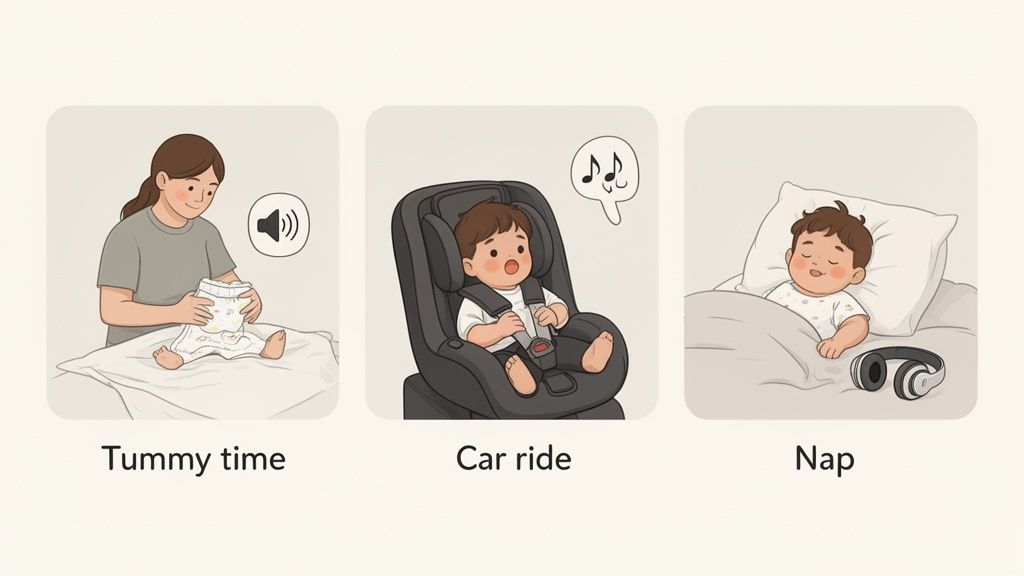
- Tummy time: A calm soundtrack while they build up their strength.
- Nap routines: Creating a soothing and familiar transition to sleep.
- Car rides: Turning travel time into a gentle learning moment, especially on the way to Jummah or family gatherings.
- While you cook: Keeping them engaged and surrounded by beneficial sounds as you prepare dinner before Maghrib.
Connecting to a Global Ummah
Introducing these sounds does more than just prepare them for language learning; it connects your child to a rich global heritage. The Arabic alphabet, with its 28 unique letters, is the foundation of a language spoken by approximately 422 million people worldwide.
By letting your child hear these foundational sounds from an early age, you're giving them a key to a vast and diverse Muslim culture. The goal is simple: to make the Arabic language feel like home. It’s all about love, familiarity, and positive association, ensuring that when your child is ready to learn more formally, the language will already feel like an old, beloved friend.
Choosing the Right Halal Audio for Your Child
As Muslim parents, we're constantly navigating a world of online content, trying to find things for our children that are pure, gentle, and actually beneficial. When it comes to something as important as the Arabic alphabet, this can feel especially daunting. You want to give them the best start, and that means finding high-quality Arabic alphabets audio that aligns with our Islamic values, creating a peaceful and enriching learning atmosphere right at home.
So, what should you actually be listening for? I always tell parents to focus on three things: clarity, calmness, and content. The pronunciation needs to be crystal-clear, allowing your little one’s ears to naturally tune into the correct sounds from day one. The tone should be gentle and soothing—never jarring or overly stimulating, which is so important for a baby's developing nervous system.
And of course, the content must be halal. For many of us, this means it's completely free from musical instruments. This simple filter ensures the sounds filling your home are wholesome and spiritually nourishing, protecting your child's fitra from the very beginning.
This little guide can help you picture the best approach for your child's age.
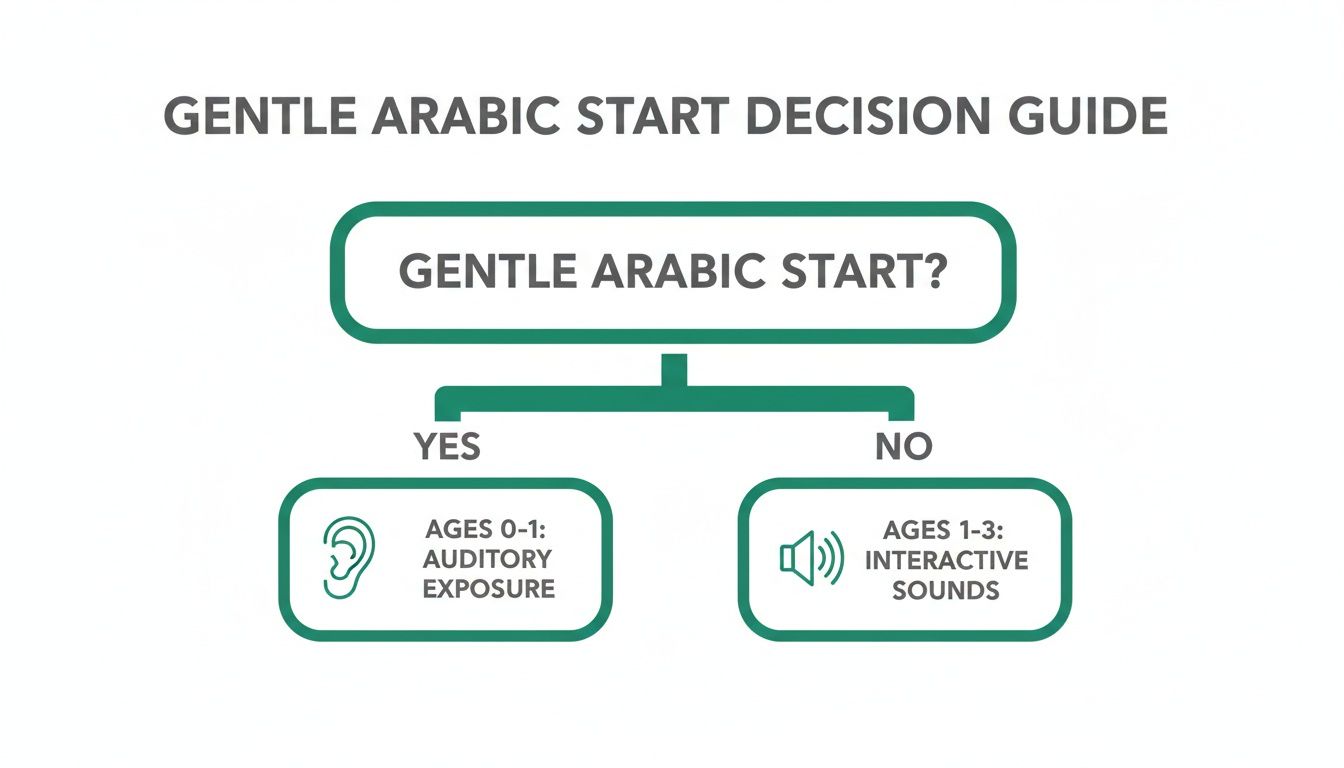
As you can see, the youngest babies thrive on simple, clear vocal sounds. Once they become toddlers, they're ready for more interactive, song-based audio.
Comparing Different Audio Styles
Not all alphabet audio is created equal, and knowing the difference helps you pick what’s right for your family’s routine and your child’s personality.
Here are the main styles you'll come across:
- Simple Letter Repetition: This is the most foundational style and, in my experience, the most effective for babies. It’s just a clear, calm voice reciting the letters—"Alif, Baa, Taa"—with perfect articulation. That simple repetition is fantastic for auditory imprinting.
- Alphabet Nasheeds: For toddlers who need a bit more engagement, gentle, voice-only nasheeds are a wonderful choice. They add a playful, rhythmic element to learning without any musical instruments. If you're looking for more like this, our guide to beautiful Arabic children's songs has some great ideas.
- Sound-Word Association: Some audio takes it a step further by pairing the letter sound with a simple Arabic word, like "Baa for Bayt." This is a perfect next step for older toddlers who are starting to connect sounds to meanings.
At the end of the day, the most important thing is to choose audio that feels right for your family. A calm, gentle, and instrument-free soundscape doesn't just support learning; it contributes to a tranquil atmosphere in the home, which is a blessing in itself.
Ensuring Quality and Safety
The Arabic alphabet has 28 letters, and many of their sounds are unique. Getting these right is the foundation for a lifetime of connection with the Qur'an and a language spoken by over 400 million people. This is precisely why audio quality is non-negotiable.
Always try to find audio recorded by a native speaker with clear Modern Standard Arabic (MSA) pronunciation. This ensures your child is learning the pure, correct sounds from the very start.
Finally, and this is a big one, prioritize ad-free sources. Mainstream video and music platforms can interrupt a gentle alphabet nasheed with a loud, jarring commercial that's completely inappropriate for little ears. Choosing a curated, ad-free service gives you peace of mind, knowing your child is only hearing the wholesome, beneficial content you intended for them.
Weaving Arabic Sounds into Your Daily Routine
The most beautiful learning happens when it’s not a "lesson" at all, but a natural, joyful part of life. As a busy parent, the idea of slotting "Arabic lessons" into an already packed day can feel overwhelming. Instead, let's reframe it: think about weaving Arabic alphabets audio into the small moments you already share with your little one.
Imagine this: you're in the middle of a diaper change. Instead of just going through the motions, you could softly chant "Alif, Baa, Taa" in a rhythmic, soothing tone. Or maybe you're strapping your toddler into their car seat. Playing a gentle, voice-only alphabet nasheed can turn that mundane task into a warm, positive experience with the language.
These moments don't need to be long. In fact, they’re far more effective when they're short and sweet. Consistency beats duration every time. A few minutes of joyful sounds each day builds a much stronger and more positive foundation than a long, forced session once a week.
Simple Ways to Practice Sound Association
One of the most powerful techniques for this age group is sound association. All this means is connecting an Arabic letter sound to a real-world object or action. It’s a simple trick that helps your toddler’s developing brain forge natural connections, making the language feel alive and relevant to their world.
Here are a few practical ideas you can try today:
- At the Door: As you walk through a doorway, gently say, “Baa for bab,” emphasizing the ‘Baa’ sound. You probably pass through doorways dozens of times a day, creating plenty of organic opportunities for repetition.
- During Mealtime: While giving your toddler some water, you can say, “Meem for maa’.” Connecting the sound to something so essential and familiar is incredibly effective.
- Looking at the Moon: Before bedtime, point out the moon and say, “Qaf for qamar.” This links the sound to one of Allah’s beautiful creations.
The goal isn’t to quiz your child. It’s about surrounding them with the sounds of Arabic in a context that makes sense to them, making it a natural part of your family’s vocabulary. This simple, loving exposure is the most powerful tool you have.
Making It Part of Your Rhythm
The key to making this stick is linking the audio to an existing part of your routine. Think about the pillars of your day—mealtimes, playtime, naptime, travel—and find a natural spot where a few minutes of sound can fit right in. To find the right tracks for your home, exploring various Arabic audio resources can provide a rich auditory environment.
In practice, this might look like:
* Playing a soft alphabet track while you prepare breakfast.
* Chanting the letters together while tidying up toys before bedtime.
* Listening to an alphabet nasheed on the way to the park.
By anchoring the audio to these predictable moments, it becomes part of the family rhythm. This approach feels effortless and sustainable, even on the most hectic of days.
Celebrating Your Toddler's Learning Milestones
Watching your baby blossom into a toddler is a beautiful thing, masha'Allah. As they grow, so will their connection with the Arabic alphabet audio you've been playing. This isn't about hitting targets or following a strict timeline; it's about celebrating the small, wonderful signs that they're soaking up the sounds of their heritage.
Every child learns differently, all on their own perfect schedule. One might be a chatterbox, trying to copy every sound, while another is a quiet observer, taking it all in. Both are learning, so the goal is simply to notice and appreciate their unique journey.
What to Look For at Different Stages
It's so encouraging to see how passive listening slowly turns into active engagement. Seeing these little signs of progress helps you know what to do next.
Here are a few gentle milestones you might spot along the way:
- Around 6-12 Months: Don't be surprised if your baby turns their head when a familiar alphabet nasheed begins. It seems simple, but that’s a huge leap! It shows their brain is making a connection between the sound and a pleasant experience.
- Around 12-18 Months: You'll probably start hearing them babble or coo along with the audio. It won't be a perfect "Baa" or "Taa" just yet, but the effort to mimic the sounds is a fantastic sign of active listening and vocal development.
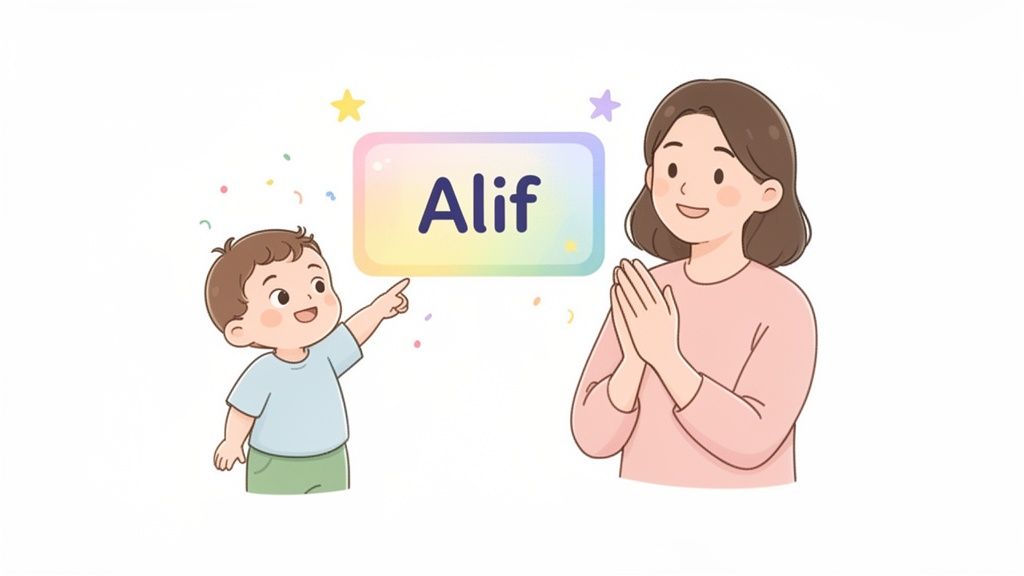
- Around 18-24 Months: Pointing! This is a big one. When they hear a letter, they might point to a flashcard or a letter block. This is a massive step, showing they're connecting the sound they hear with the shape they see.
- Around 2-3 Years: Get ready for a heartwarming moment. This is often when you'll hear their first real attempt at a letter. Hearing your two-year-old proudly say "Alif!" is pure joy. They might even start to guess which sound is coming next in a familiar song.
Encouraging Interaction Without Pressure
Your job is simply to be their gentle guide and create a space where their curiosity can thrive. The key is to keep it playful and loving, never like a formal lesson.
A great way to do this is to sit with them while an audio track plays. Spread out some large, colourful flashcards. When the audio says "Jeem," just smile and point to the Jeem card. You don't need to quiz them by asking, "What's this?" Your simple, joyful action is enough to model the connection for them.
Remember, the most important thing is the positive emotion you bring to the experience. Your warm smile, your gentle encouragement, and the fun you have together are what will truly build a deep-rooted love for the language of the Quran.
This gentle, no-pressure approach makes learning Arabic feel like a natural, happy part of their day. Whether it's turning their head to a familiar tune or pointing excitedly at a letter, each small step is a milestone worth celebrating.
Crafting a Wholesome Listening Environment
As Muslim parents, we’re incredibly mindful of what we feed our children. The same care should extend to what they hear, especially when introducing them to the beautiful sounds of the Arabic language.
The trouble with mainstream platforms is their unpredictability. You can queue up a lovely, gentle alphabet nasheed, but the autoplay algorithm might serve up a jarring cartoon or an ad for something completely inappropriate right after. That kind of digital whiplash can instantly shatter the calm, focused atmosphere you've worked so hard to build in your home.
That’s why setting up a dedicated listening ‘safe zone’ is so crucial. It’s about creating a space where you can press play and have complete peace of mind, knowing every sound is both educational and wholesome, insha'Allah.
Building Your Child's Audio Library
Creating this safe space doesn't need to be a huge technical project. It's really about being intentional and choosing content that lines up with your family’s values. Think of it like curating a special bookshelf, but for your child's ears.
Here are a couple of practical ways to get started:
- Go Offline with Playlists: This is my go-to recommendation for its simplicity and effectiveness. Find high-quality, instrument-free Arabic alphabet audio from sources you trust. Download the tracks directly onto a device and create a dedicated playlist. Playing it offline means zero chance of ads or surprise content.
- Lean on a Vetted Platform: If you prefer a more streamlined approach, look into services designed specifically for Muslim families. Platforms like Babymode do all the heavy lifting for you, offering a curated, ad-free experience where every piece of content is hand-picked to align with Islamic values.
Peace of mind is knowing your child is surrounded by sounds that nurture their fitra. Whether it's a simple offline playlist or a trusted platform, the goal is a predictable and spiritually uplifting audio environment.
Why Halal-Aligned Content Matters
Beyond just blocking ads, the nature of the content itself is what truly counts. When we talk about ‘wholesome’ audio, we mean sounds and messages that reflect our principles of gentleness, mercy, and a love for Allah.
For learning the alphabet, this translates to looking for a few specific things:
- Clear, Correct Pronunciation: This is non-negotiable. You want them to learn the sounds of the Qur'an correctly from the very beginning.
- A Calm and Gentle Tone: The goal is peaceful learning, not overstimulation. A soothing voice makes all the difference.
- Instrument-Free Nasheeds: For families who prefer a cappella or voice-only audio for religious and educational content.
- Positive and Loving Messages: The overall vibe should be warm, encouraging, and full of love.
By thoughtfully choosing what your child listens to, you're doing so much more than just teaching them letters. You are wrapping them in the comforting, beautiful sounds of their faith. You're laying a foundation of love for the Arabic language that will, Allah willing, last a lifetime.
Common Questions from Muslim Parents
It’s completely normal to have questions as you start this beautiful journey. Introducing the sounds of Arabic to your little one is a special act of love, and you want to get it right. Let’s walk through some of the most common queries we hear from parents just like you.
At What Age Should I Start?
Honestly, you can start from the day your baby is born, masha'Allah. For newborns and young infants (0-6 months), the goal is simply gentle, passive exposure. Think of it as creating a comforting soundscape.
Playing soft, clear Arabic alphabet audio in the background helps attune their tiny ears to the unique sounds of the language of the Quran. It’s not about "learning" just yet; it's about making these sounds a familiar, warm part of their world. As they grow into curious toddlers (1-3 years), this early foundation makes active engagement feel much more natural.
How Do I Know if the Audio Is High-Quality?
This is a fantastic and crucial question. To make sure the audio is both beneficial and appropriate for your child, I always recommend looking for a few key things:
- Clarity: Is the pronunciation crisp and correct? Stick with Modern Standard Arabic (MSA) for foundational learning, as this is the form used in the Quran.
- Calmness: The tone should be gentle and soothing. Avoid anything loud, jarring, or overly stimulating, which can be overwhelming for little ones.
- Content: This is the big one. Make sure the content is halal—that means it's free from musical instruments and aligns with our Islamic values.
Thankfully, vetted platforms designed for Muslim families often handle this curation for you, so you don't have to second-guess what you're playing.
The most important quality is that the audio contributes to a peaceful atmosphere in your home. The sounds your child hears should nurture their fitra (natural disposition) and build a positive, loving association with Arabic.
How Long Should Our Audio Sessions Be?
For a toddler, short and sweet is the way to go. A few minutes at a time is perfect. The real magic is in consistency over duration.
Think about it: short, playful, and frequent exposure is far more effective than a long, forced session once a week. Try integrating a two-minute alphabet nasheed while they're playing with blocks or during a short car ride. The idea is to make it a joyful part of your routine, not a chore that adds pressure to your day.
What if My Family Speaks a Dialect at Home?
That’s a wonderful blessing! Exposing your child to your family’s dialect is absolutely essential for connection, culture, and identity. Using Modern Standard Arabic (MSA) audio for the alphabet complements this perfectly; it doesn't compete with it.
By providing audio in MSA, you’re giving them the foundational sounds that will unlock Quranic recitation and formal reading later on. At the same time, they're learning your family's conversational dialect naturally from you. The two forms of the language support and enrich each other beautifully. If you're curious to learn more about the letters themselves, you can explore the meanings behind Arabic symbols in our detailed guide.
At Babymode, we create a safe, ad-free, and halal digital space where your little one can explore the sounds of Arabic with peace of mind. Join the waitlist for early access to our curated library of gentle, faith-aligned content at https://babymode.ai.