Think of a sound alphabet puzzle as a wonderful, screen-free way to connect the dots between what your child sees and what they hear. It’s more than just a picture puzzle; it’s an interactive tool that builds the very foundation of language by linking a letter's shape directly to its sound.
What Is a Sound Alphabet Puzzle?
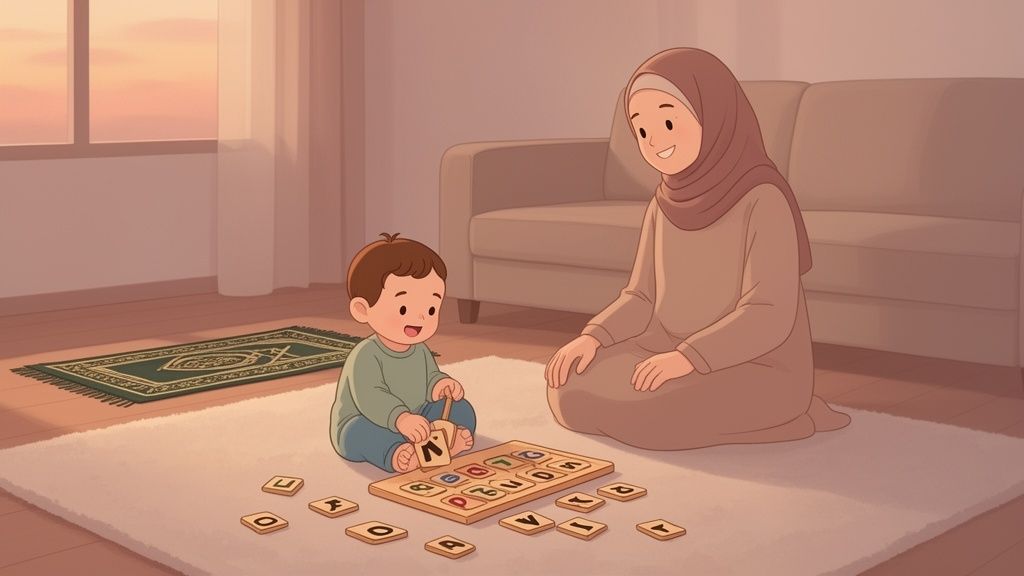
Picture a classic wooden alphabet puzzle. Now, imagine that when your toddler successfully places the 'B' piece into its matching slot, a friendly, clear voice says "/b/". That’s the simple yet brilliant concept behind a sound alphabet puzzle. It gives immediate audio feedback, creating a multi-sensory experience that helps your little one’s mind form those crucial early connections.
For Muslim families, this toy is especially meaningful. It beautifully aligns with the Islamic value of seeking knowledge (ilm) from the very beginning. It's the perfect calm, educational activity for those quiet moments in the day—maybe after Asr prayer while you’re getting dinner ready, or during a peaceful morning playtime before the nursery run.
More Than Just a Toy
A sound puzzle isn’t just for fun; it's your child's first introduction to the alphabetic principle. This is the big idea that letters represent the sounds we use in spoken language. It’s the very first brick in the path to reading and writing.
When your child plays with a sound alphabet puzzle, they aren’t just memorizing shapes. They are actively learning that these symbols have sounds, and that these sounds eventually come together to create words. This type of hands-on play builds a strong foundation for literacy in a gentle, no-pressure way that just feels like a game. You can learn more about how interactive toys boost development in our guide on cause and effect toys.
Quick Benefits of a Sound Alphabet Puzzle for Ages 0-3
These puzzles offer a wealth of developmental benefits packed into one simple toy. Here’s a quick look at how they support your child’s growth.
| Developmental Area | How a Sound Puzzle Helps | Age Focus |
|---|---|---|
| Cognitive Skills | Builds letter-sound recognition, the foundation for reading. | 18-36 months |
| Fine Motor Skills | Grasping puzzle pieces strengthens tiny hand muscles. | 12-24 months |
| Language Development | Introduces phonics and expands vocabulary through repetition. | 12-36 months |
| Problem-Solving | Figuring out which piece fits where teaches logic and reasoning. | 18-36 months |
| Sensory Stimulation | Engages touch, sight, and hearing for a rich learning experience. | 6-24 months |
As you can see, a sound puzzle isn't just about letters; it’s a holistic tool that nurtures multiple aspects of your child's early development.
A Tool for Calm and Connection
In a busy Muslim home, finding moments for focused, quiet play can feel like a true blessing. A sound puzzle provides just that. It doesn’t have the flashing lights or loud, distracting music that can easily overstimulate a young child. Instead, its simple, predictable nature creates a peaceful atmosphere.
This makes it an ideal toy for winding down before a nap or for a shared activity when you have a few minutes to sit on the floor together. It’s a gentle way to introduce learning that supports your child’s growth without overwhelming their senses, fitting perfectly into the calm, predictable rhythm you work so hard to create in your home.
At its heart, a sound puzzle helps your child realize that letters aren't just random shapes—they are the code for language. This simple toy gives them their first key to unlocking that code, nurturing a love for words and communication from the very beginning.
The science backing these puzzles is solid, built on decades of linguistic research. Today's puzzles can map letters to sounds with incredible accuracy, thanks to systems like the International Phonetic Alphabet (IPA). This comprehensive chart of speech sounds, refined over the 20th century, gives toy designers a precise blueprint for teaching phonetics. In fact, research shows that this kind of structured, sound-based learning can improve a child's sound identification accuracy by 10–30%, proving just how effective it is.
The Developmental Benefits for Your Little Muslim Learner
Let's be honest, sometimes we just need a toy to keep our toddler busy while we prepare Iftar or jump on a work call. But what if that toy was also a powerhouse of learning? A sound alphabet puzzle is so much more than a simple distraction; it’s a brilliant tool that nurtures your child's mind and body, all while fitting perfectly with the values we cherish.
Every time your little one fumbles with a puzzle piece, trying to make it fit, they're doing incredibly important work. That simple action builds fine motor skills, strengthening the tiny muscles in their hands and fingers. These are the very same muscles they'll eventually use to hold a crayon, feed themselves, and one day, insha'Allah, hold a pen to write.
And it's not just physical. The puzzle is one of their first real lessons in problem-solving. They look at a piece, then at the board, turning the letter this way and that until it finally clicks into place. This little game of trial and error is teaching them spatial awareness and logical thinking, with a wonderful sense of victory accompanying every correct match.
Building the Foundation for Language and Faith
The real magic, though, happens when we get to the pre-reading skills. When your child places a letter and hears its sound, they're learning something huge: the alphabetic principle. This is the core idea that letters represent the sounds we make when we talk. It’s the absolute cornerstone of learning to read.
For our families, this journey is especially beautiful. The ability to communicate is a profound gift from Allah (SWT), and helping our children develop this gift is an act of gratitude. A simple puzzle can be the first playful step toward the incredible goal of one day reading and understanding the Qur'an.
By connecting a shape to a sound, your child isn't just preparing for school; they are developing the tools they may one day use to connect with the words of Allah. It’s a gentle, play-based beginning to a lifelong journey of learning in both deen and dunya.
This early exposure to phonics couldn't come at a better time. A young child's brain is like a sponge for language, and multi-sensory tools like a sound puzzle make the learning process feel less like a lesson and more like a joyful discovery.
Making Meaningful Connections
As your child gets a bit older, you can use the puzzle to build positive, faith-based connections in a way that feels completely natural. The letter 'B' doesn't just have to be for 'ball'; it can also be for 'Bismillah'. The letter 'A' can be for 'apple' and for 'Allah'.
This gentle integration weaves the beauty of our faith right into their everyday play. It turns a standard educational toy into a meaningful tool for their early Islamic tarbiyah (upbringing), building a loving and positive foundation from the very start.
- Cognitive Growth: Matching shapes and sounds strengthens memory and concentration skills.
- Speech Development: Hearing clear, correct phonetic sounds encourages them to imitate and practice, which helps refine pronunciation. For more tips, check out our guide on toddler speech therapy at home.
- Hand-Eye Coordination: Guiding a puzzle piece into its slot is a fantastic workout for this essential skill.
Ultimately, this isn't just about learning ABCs. A sound alphabet puzzle supports your child’s physical, cognitive, and language development while opening up natural moments to introduce the beautiful words of our faith. It’s a calm, purposeful toy that fits perfectly into the peaceful learning environment you’re creating in your Muslim home.
How to Choose the Right Sound Alphabet Puzzle
Walking down the toy aisle or scrolling online can be completely overwhelming. With so many options flashing before your eyes, how do you pick a sound alphabet puzzle that’s actually good for your child—one that's safe, effective, and fits your family’s values? Let’s walk through a simple checklist to help you feel confident in your choice.
Making a smart decision really comes down to looking at a few key things in order. You want to start with safety, then think about the educational quality, and finally, how well it will fit into the calm and intentional home you’re trying to build.
Prioritizing Safety and Durability
Before we get into anything else, a toy has to be safe. Your little one is going to explore it with their hands and, let’s be honest, their mouth. It also needs to be sturdy enough to handle some enthusiastic play.
Here’s what to look for:
- Non-Toxic Materials: Always opt for puzzles made with non-toxic paints and glues. Look for labels like "BPA-free," "phthalate-free," and "lead-free" so you know there are no harmful chemicals involved.
- Splinter-Free Wood: If you’re going for a wooden puzzle, run your hand over the pieces and the board. It should feel smooth and well-sanded, with zero risk of splinters. Good quality wood is not only safer but will last for years.
- Secure Battery Compartment: This is a big one. For any toy that uses batteries, make sure the compartment is screwed shut. This is a crucial safety feature to keep curious toddlers away from small, dangerous batteries.
- Appropriate Piece Size: The puzzle pieces themselves, especially any little pegs or knobs, need to be large enough to not be a choking hazard for children under three.
Faith-Aligned and Child-Friendly Features
Once you're sure a puzzle is safe, the next step is to look at its content. For many Muslim parents, this means making sure the sounds, words, and images are wholesome and respectful.
This simple decision tree shows how a well-chosen toy can do so much more than just entertain—it supports fine motor skills, problem-solving, and even the very first steps toward reading.
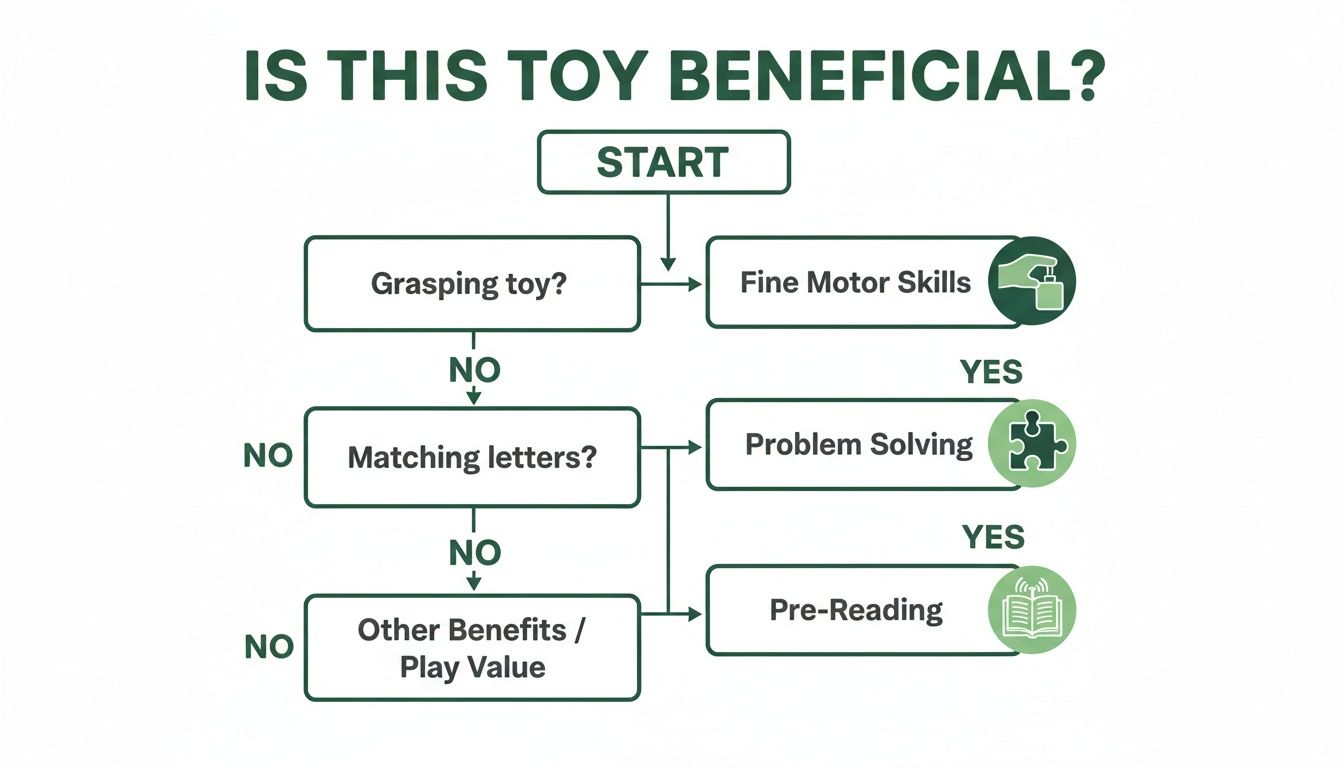
As the chart shows, the right toy is a powerful tool for holistic learning, engaging a child on many different levels at once.
The best educational toys are the ones that just feel like fun. A good sound puzzle should spark curiosity without being overstimulating, fitting perfectly into the peaceful, intentional atmosphere of a Muslim home.
When you’re comparing options, zero in on these features:
- Clear, Pleasant Voice: Listen to the audio. Is the voice clear, calm, and easy to understand? Does it pronounce the letter sounds correctly? Steer clear of puzzles with harsh, robotic, or super loud sounds that might startle a little one.
- No Music or Distracting Sounds: Many of us prefer to avoid toys with background music, which can often be jarring or just plain annoying. A puzzle that sticks to just the letter sounds is a more focused and effective learning tool.
- Appropriate Images: If the puzzle has pictures next to the letters (like 'A' for an apple), just check that the images are simple, clear, and wholesome.
Practical Considerations for Daily Life
Finally, think about how this puzzle will actually fit into your day-to-day. A toy that’s a hassle to manage can quickly become a source of frustration instead of joy.
- Volume Control or On/Off Switch: A puzzle with an on/off switch or adjustable volume is a lifesaver. It gives you the power to create a quiet play environment when you need one, like during prayer times or when a baby is napping.
- Ease of Cleaning: Let's face it, toddler toys get messy. Look for a puzzle with a smooth, wipeable surface that you can easily clean with a damp cloth.
- Battery Life and Type: Take a quick look at what kind of batteries the puzzle needs. A toy that burns through expensive batteries every few days can become a real inconvenience.
It's also interesting how much thought goes into which letters are included. Toy designers often look at letter frequency—the letters that pop up most often in a language. Think about it: letters like 'E', 'T', and 'A' are far more common in English than 'Z' or 'Q'. This idea of studying language patterns has deep roots, even going back to scholars like Al-Kindi in the 9th century. By matching the puzzle to the sounds children hear most, the design becomes more intuitive, which can lead to 15–25% faster mastery for some kids.
By keeping safety, faith alignment, and simple practicality in mind, you can pick a sound alphabet puzzle that will be a genuinely loved and beneficial part of your child’s early years. This mindful approach to choosing toys aligns beautifully with the principles of gentle parenting, which you can learn more about in our guide on the Montessori approach for Muslim families.
Creative Ways to Use the Puzzle in Your Daily Routine
A good sound alphabet puzzle is so much more than a way to keep your toddler occupied. Think of it as a wonderful tool for connection and gentle learning. Instead of just handing it over, weaving the puzzle into your family’s daily rhythm can create beautiful moments of shared discovery. You can transform this simple toy into a source of calm, focus, and faith-aligned fun that fits right into your busy day.
The secret is to meet your child exactly where they are. For the littlest ones, it’s all about sensory exploration—touching, feeling, and maybe even tasting the pieces! For growing toddlers, it becomes a fun game of matching and recognizing sounds. By adapting how you play, this one puzzle can serve your family for months, or even years, offering different benefits at each new stage.
Getting Started: Age-Appropriate Activities for Little Learners
Your child's interaction with the puzzle will naturally change as they grow. The most important thing to remember is that the goal is always connection, not perfection. Let go of the idea of "doing it right" and instead focus on exploring together. This creates a low-pressure, loving environment where their curiosity can truly blossom.
To get you started, here's a simple guide with a few age-appropriate activity ideas.
Sound Puzzle Activities by Age
This table offers some simple ideas to help you get the most out of your puzzle at every stage of your child's early development.
| Age Group | Activity Idea | Learning Goal |
|---|---|---|
| 6-12 Months | Sensory Exploration. Simply let your baby hold and feel the smooth wooden pieces. Guide their hands over the shapes and talk about them. | Building tactile awareness and fine motor grip without any pressure to complete the puzzle. |
| 12-18 Months | One-Piece Challenge. Hand them just one puzzle piece, like the letter 'B', and help them find its home. Celebrate when it fits! | Introducing the concept of matching and cause-and-effect in a simple, achievable way. |
| 18-24 Months | Sound Scavenger Hunt. Take out a few letters ('C' for car, 'B' for ball). Say the sound, "/k/, /k/, /k/," and ask them to find something that starts with it. | Connecting letter sounds to real-world objects, building early phonemic awareness. |
| 24-36 Months | Spelling Simple Words. Use the pieces to spell out their name or simple words like 'cat' or 'cup'. Place the puzzle board aside for this activity. | Introducing the idea that letters combine to form words, a crucial pre-reading skill. |
Remember, these are just starting points! Follow your child’s lead and let their curiosity guide your playtime together.
Weaving Faith and Learning into Playtime
One of the most beautiful things about a simple alphabet puzzle is how easily you can use it to introduce Islamic concepts in a natural, age-appropriate way. This doesn't need to feel like a formal lesson at all; it can just be a part of your loving, everyday interactions.
For instance, you can use the letter pieces to spell out beautiful, simple words from our faith.
- Spell 'Nur' (light) with the N-U-R pieces.
- Spell 'Din' (faith/religion) with the D-I-N pieces.
- Find the letter 'A' and talk about Allah.
- Find the letter 'P' and talk about our beloved Prophet.
This gentle practice creates positive associations from the very beginning, making the words of our deen a familiar and comforting part of their world. It's a simple, powerful way to nurture their fitra (natural disposition) through something as joyful as play.
The goal isn't to create a mini-scholar overnight. It's to plant tiny seeds of love for the language of our faith in a way that feels joyful, safe, and connected to you.
Interestingly, the clear, standardized pronunciation in quality sound puzzles has a fascinating history. This consistency traces back to mid-20th-century efforts to make spoken letters unambiguous for pilots and soldiers. After extensive testing, the now-familiar "Alpha, Bravo, Charlie" phonetic alphabet was officially adopted in 1956, creating a global standard. This same principle allows toy makers today to create puzzles with crisp, universally understood phonetics, which makes learning so much easier for little ears. You can read more about the history of the phonetic alphabet on The Week.
Making the puzzle part of your routine can also bring a sense of calm predictability to your day. It could become a quiet wind-down activity before Maghrib prayers or a focused task for your toddler while an older sibling does homework. By integrating the sound alphabet puzzle into these moments, it becomes more than just a toy—it becomes a treasured part of your family’s rhythm.
Faith-Aligned Alternatives and Hands-On Fun
While a great sound alphabet puzzle is a wonderful addition to any playroom, fostering a love for letters and language doesn't have to come from a store. In our faith, we know that resourcefulness and intention are what truly matter. The real magic of learning happens through our loving, direct interaction with our children, not just the things we buy for them.
You can create incredibly rich, hands-on learning experiences with simple items you probably already have. This approach not only saves money but also beautifully models the Islamic value that the best learning happens together, through creativity and shared play.
Simple DIY Alphabet Fun
Getting crafty at home can be just as powerful as any toy. These activities are perfect for a quiet afternoon and give your little one fantastic sensory input, which helps strengthen those crucial connections in their developing brain.
Here are a few ideas to get you going:
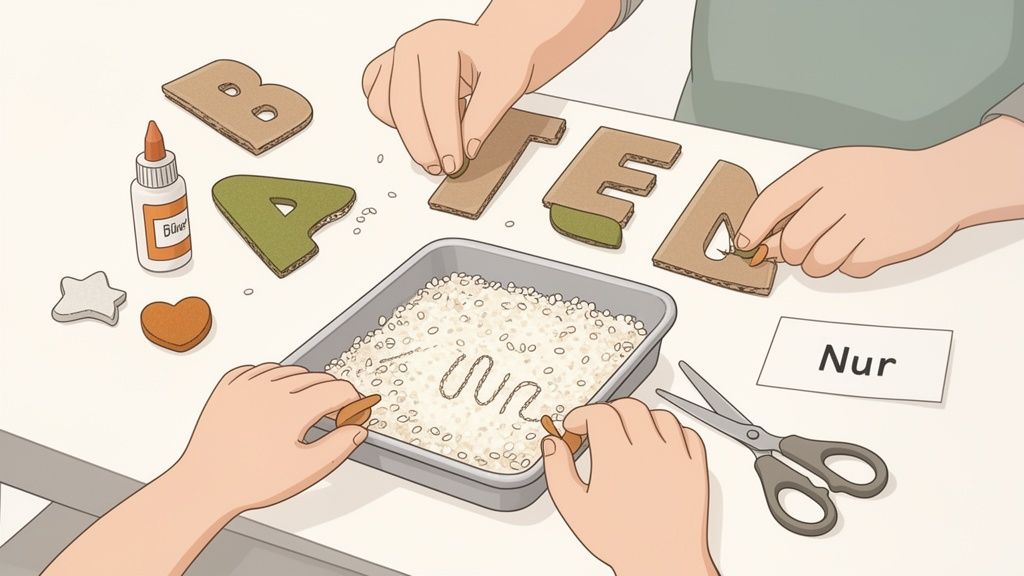
- Cardboard Cut-Outs: Grab an old delivery box and cut out some chunky letter shapes. Let your toddler feel them, trace them, and even paint them. As they explore each one, you can make its sound.
- Felt Board Letters: If you have any spare felt, cutting out letters is a breeze. They stick to a larger piece of felt, creating a simple, reusable activity for matching and sorting games.
- Sensory Tray Tracing: Pour a thin layer of rice, salt, or semolina into a tray. Guide your child’s finger to trace a letter while you say the sound out loud. This multi-sensory method is fantastic for memory.
These simple, tactile activities build the exact same foundational skills as a puzzle—letter recognition, fine motor control, and sound association—but with a personal, loving touch that can’t be bought.
A Gentle Approach to Digital Tools
Let's be realistic. There are times when a digital tool is genuinely helpful. Maybe you're stuck in a waiting room, trying to survive a long car ride, or just need five quiet minutes to make a call before Maghrib. In those moments, reaching for a screen can feel like a lifeline.
The key is to choose wisely and with intention. Instead of handing over your phone to an unpredictable video platform, you can turn to a trusted, faith-aligned digital resource. This helps you maintain a calm, halal-aligned environment for your child, even when you're on the go.
Our goal isn’t to eliminate screens entirely, but to use them as purposeful tools. We want to ensure that what our children see and hear aligns with the values we hold so dear. This turns a moment of distraction into a potential moment of gentle, supervised learning.
When a hands-on activity just isn't an option, a carefully selected app can provide a safe port in a storm. This is where services built by Muslims, for Muslims—like Babymode—can offer real peace of mind. By providing curated, ad-free content rooted in Islamic values, you can feel confident that even screen time is beneficial and wholesome.
The Heart of Learning Is Connection
At the end of the day, whether you're using a wooden sound alphabet puzzle, tracing letters in rice, or using a trusted app for a few minutes, the most important ingredient is always you. Your voice, your encouragement, and your presence are what truly bring learning to life.
It’s the way you say "/b/ /b/ Bismillah" as you trace the letter 'B' together. It’s the shared smile when they finally click a puzzle piece into place. These are the moments of connection that build not just their vocabulary and cognitive skills, but also their deep-seated sense of security and love.
The best tools are simply the ones that make these interactions easier. They help you create a joyful, peaceful, and faith-filled learning environment, turning everyday moments into opportunities for growth and bonding, insha'Allah.
Answering Your Questions About Sound Alphabet Puzzles
It’s completely natural to have questions when you’re thinking about bringing a new toy into your home. You want to be sure it’s not just fun, but also safe, beneficial, and a good fit for your family’s values. Let's dive into some of the most common questions Muslim parents have about sound alphabet puzzles.
When Is the Right Age to Start?
This is a fantastic question, and the answer really depends on your child. The sweet spot for actively learning letter sounds with a puzzle like this is usually between 18 and 36 months. This is when a toddler's language skills are taking off, and their little hands have developed enough coordination to really start working with the pieces.
But you don't have to wait that long! The puzzle can grow with your child.
- For Babies (6-12 months): Forget the "puzzle" part for now. Just let your baby explore the chunky wooden pieces. They can feel the smooth wood and trace the curves, which is a wonderful sensory experience. As they hold a piece, you can gently say the letter's sound in a playful voice.
- For Young Toddlers (12-18 months): At this stage, they're starting to figure out cause and effect. You can hand them a single piece and help guide it into the matching slot. That satisfying sound it makes when they get it right is a powerful little reward that helps them grasp the concept of matching.
The key is to simply follow their lead. It can start as a simple sensory toy and evolve into a powerful learning tool when they’re ready.
Are Battery-Operated Toys Okay?
Many of us thoughtfully consider the role of electronics in our homes. When it comes to a battery-operated toy like a sound puzzle, the conversation often centers on its purpose.
Unlike a toy that just plays constant music or flashes lights, a sound puzzle has a very specific educational job. The battery is there for one reason: to give your child immediate feedback, connecting a letter's shape directly to its sound. This isn't passive entertainment; it’s using a bit of technology to support a clear learning goal.
Many scholars and parents see these kinds of toys as permissible learning tools, as long as the content is wholesome and they're used with intention. The aim is to use the technology for a clear benefit—in this case, building the foundation for reading—rather than just for distraction.
Ultimately, it’s a personal decision for your family. A puzzle with an on/off switch offers the best of both worlds. You can use the sound feature for focused learning time and then switch it off for quiet, imaginative play.
How Should I Clean and Care for It?
Keeping toys clean is a top priority, especially with little ones who explore everything with their hands and mouths! Thankfully, taking care of a wooden sound puzzle is simple. Cleanliness is such an important part of our faith, and this is just one practical way to live that value.
Here’s an easy routine:
- Remove Batteries First: Always take the batteries out before you start cleaning to protect the electronic parts.
- Use a Damp Cloth: Mix a little mild soap or white vinegar with water and dampen a soft cloth. Make sure you wring it out well—it should be damp, not dripping.
- Wipe Everything Down: Gently clean the puzzle board and each of the letter pieces. Don’t forget the edges and little crevices.
- Air Dry Completely: Let all the parts air dry thoroughly before you put the batteries back in. Never soak a wooden or electronic puzzle in water. It can make the wood warp and will definitely ruin the sound mechanism.
This quick process keeps the puzzle hygienic and ready for play.
What If My Child Just Isn't Interested?
It can be a little deflating when you bring home a new educational toy and your toddler couldn't care less. Don't worry, this is completely normal! A young child’s interests can shift in the blink of an eye. The most important thing is to follow your child's lead.
If they aren't engaging with the puzzle, forcing it will only create a negative feeling around learning. Instead, try a gentler approach:
- Play With It Yourself: Sit down on the floor and start playing with the puzzle on your own. Make the letter sounds and talk about them with enthusiasm. Your genuine curiosity might just pique theirs.
- Give It a Break: Sometimes, a simple toy rotation is all it takes. Put the puzzle away for a week or two. When you bring it out again, it might feel new and exciting.
- Connect to Their World: Does your child love balls? Focus on the 'B' piece. Are they fascinated by the moon? Make a little game out of the 'M' piece. Linking the letters to things they already adore can build a bridge to engagement.
Remember, the goal is joyful discovery, not a test. By creating a relaxed and loving atmosphere, you give them the space to learn at their own pace, insha'Allah.
For those times when a physical puzzle isn't an option, Babymode offers a safe, halal-aligned digital space for your little one. It's designed by Muslim parents to provide ad-free, wholesome content that nurtures your child's curiosity and faith without overstimulation. Learn more and join the Babymode waitlist.