Welcoming a new baby brings a joy like no other, but it also awakens a powerful, 24/7 instinct to keep them safe from harm. The Abu Darda dua is a beautiful supplication for seeking Allah's complete protection over your family, your home, and everything you hold dear. It's more than just words; it's a spiritual shield and a source of deep comfort you can weave into your day—a quiet moment during morning cuddles or a calming whisper over your sleeping baby.
Finding Calm in Parenthood with a Powerful Dua

The journey of parenthood is incredible, but let's be honest—it can also be a rollercoaster of worry. From those late-night feeds to the first time your little one takes a tumble, a parent’s mind is constantly buzzing with the need to protect. In these moments, turning to Allah is our most natural source of strength and peace.
This guide is for Muslim parents navigating this beautiful, and at times overwhelming, stage of life. We'll explore the Abu Darda dua, a powerful prayer that offers a practical, faith-based way to find tranquility and soothe the anxieties that are simply part of being a parent.
A Dua for Every Parent's Heart
This supplication isn't just a ritual to check off a list; it’s an active way to place your complete trust in Allah's divine care. It becomes one of the first building blocks of your family’s spiritual foundation. For a parent of a baby or toddler, it can easily become a cherished part of your daily rhythm.
This simple act of remembrance can transform a moment of worry into a moment of worship. It gently shifts your focus from the "what-ifs" to the One who is truly in control, offering a peace that settles deep in your soul.
Bringing this dua into your family life offers some truly heartfelt benefits:
- Creates a Peaceful Environment: Softly reciting it around your baby helps create a serene and calm atmosphere, linking the remembrance of Allah with feelings of safety and love from the very beginning.
- Builds Early Faith Foundations: Long before they can speak, children absorb the spiritual practices around them. Hearing this dua regularly makes it a familiar and comforting sound.
- Soothes Parental Anxiety: It’s a powerful reminder that the ultimate protection comes from Allah, which can significantly ease the mental load of trying to watch over everything, all the time.
Think of this dua as a tool for connection—first with Allah, and then with your child. It’s a way to wrap your precious family in prayers for safety, well-being, and strong iman, every single day.
The Story and Meaning of the Abu Darda Dua

At the heart of every parent's prayer is a simple, powerful plea for protection. The Abu Darda dua is a beautiful supplication that captures this perfectly. It’s more than just a string of words; it’s a direct conversation with Allah, asking for His divine shield over your family, faith, and well-being.
Before we dive into the words themselves, understanding the incredible story behind them adds so much depth. This dua is connected to Abu Darda (RA), a respected companion of the Prophet Muhammad (peace be upon him). The story of his unshakable faith gives this supplication a powerful context that truly resonates with parents.
The Power of Certainty
The most famous account tied to this dua is a stunning display of trust in Allah’s promise. A fire once broke out in Abu Darda's neighborhood, and it was spreading fast. Someone rushed to warn him, "O Abu Darda, your house is on fire!" But he remained completely calm, stating with absolute certainty that Allah would not let his house burn.
Why was he so sure? Because he recited specific words taught to him by the Prophet (PBUH) every morning—words that came with a promise of protection.
Later, when the fire was put out, people discovered that every home surrounding his had been damaged, but his house stood perfectly untouched. This event is a beautiful real-life example of yaqeen—absolute, unwavering certainty in Allah's protection. For a deeper look into this story, you can find a great resource on AboutIslam.net.
For parents, this story is a huge source of comfort. It’s a powerful reminder that our sincere duas, when made with unwavering faith, are our greatest defence.
The Dua For Your Family's Protection
Here is the full text of the dua, laid out to make it easy to read, pronounce, and understand. Having the Arabic, its transliteration, and the English meaning side-by-side can help you connect more deeply with the prayer as you recite it for your little ones and your home.
| The Abu Darda Dua Text and Meaning |
|---|
| Arabic Text |
| اَللّٰهُمَّ أَنْتَ رَبِّيْ لَا إِلٰهَ إِلَّا أَنْتَ، عَلَيْكَ تَوَكَّلْتُ وَأَنْتَ رَبُّ الْعَرْشِ الْعَظِيْمِ. مَا شَاءَ اللهُ كَانَ وَمَا لَمْ يَشَأْ لَمْ يَكُنْ، لَا حَوْلَ وَلَا قُوَّةَ إِلَّا بِاللهِ الْعَلِيِّ الْعَظِيْمِ. أَعْلَمُ أَنَّ اللهَ عَلَى كُلِّ شَيْءٍ قَدِيْرٌ، وَأَنَّ اللهَ قَدْ أَحَاطَ بِكُلِّ شَيْءٍ عِلْمًا. اَللّٰهُمَّ إِنِّيْ أَعُوْذُ بِكَ مِنْ شَرِّ نَفْسِيْ، وَمِنْ شَرِّ كُلِّ دَآبَّةٍ أَنْتَ آخِذٌ بِنَاصِيَتِهَا، إِنَّ رَبِّيْ عَلَى صِرَاطٍ مُسْتَقِيْمٍ. |
This supplication is so comprehensive. It asks Allah to protect your faith (deen), your family, your own self, and your worldly possessions. It essentially wraps your entire life in a blanket of divine care, offering a profound sense of peace.
It's a powerful tool to turn to during those quiet moments in the morning after Fajr or as you settle down for the night after Maghrib. Think of it as setting a spiritual shield over your home before the day begins and as it comes to a close.
How This Dua Protects Your Family's World
When you recite the Abu Darda dua, you're asking for something so much deeper than just physical safety. It's like you're wrapping your entire world—your faith, your family, yourself, and your livelihood—in a blanket of divine care. Let's explore what this supplication really means for you as a parent.
This prayer is a complete and proactive appeal to Allah. You aren't just reacting to trouble; you're asking for His guard before any hardship can even begin. For a parent's heart, that brings a special kind of peace.
A Holistic Shield for Your Life
The beauty of this dua is in its structure. It methodically covers the four essential pillars of your life, making sure nothing you cherish is left vulnerable. Think of it as a spiritual safety net cast over everything that matters.
For Your Deen (Faith): This is our deepest prayer for our children. We long to see them grow up with a strong and sincere faith. In a world full of so many distractions, asking Allah to protect your deen is a powerful way to safeguard your family's spiritual core.
For Yourself: It's so easy to forget our own needs, but you can't pour from an empty cup. This part of the dua is a vital act of self-care. It’s an acknowledgment that your own strength, health, and well-being are the foundation upon which your family thrives.
For Your Family (Ahl): This is the heart of the prayer for any parent. It’s a direct plea for the safety, health, and happiness of your spouse, your little ones, and all your loved ones. It covers everyone under your roof and in your heart.
For Your Wealth (Maal): This isn't about greed; it's about stability. You're asking for protection over your livelihood and resources, for Allah to preserve the means He has provided so you can care for your family with security.
Embracing Certainty in an Uncertain World
The story behind this dua, with Abu Darda (RA), is a powerful real-life lesson in yaqeen—that unshakable, absolute certainty in Allah's promises. As a parent, this concept is an anchor. It helps you navigate daily worries and bigger anxieties with more calm and less fear. It shifts your trust in Allah from a passive hope into an active, confident reliance on His protection.
This is the kind of certainty the Prophet Muhammad (PBUH) encouraged, teaching supplications that could ease the calamities of this world. You can learn more about developing this deep spiritual conviction from Virtual Mosque's insightful article.
By reciting the Abu Darda dua, you are not just repeating words; you are practicing yaqeen. You are affirming that no matter what happens, your ultimate protector is Allah, giving you the strength to face parenthood’s challenges with a steady heart.
Gentle Ways to Share the Dua with Your Little One

Introducing the Abu Darda dua into your little one's world should feel as natural and comforting as a bedtime hug. With babies and toddlers, the goal isn't about perfect recitation or even memorization. It’s all about creating a warm, positive feeling—a beautiful connection between the sound of dhikr and the feeling of being safe, loved, and calm.
Remember, the sound of your voice is your child’s ultimate comfort. When you weave this dua into your daily rhythms, you're essentially wrapping them in a spiritual blanket. They start to link these sacred words with the most secure and peaceful moments of their day, laying a beautiful foundation of faith long before they can even speak.
Babies (0–12 Months): Creating a Soothing Atmosphere
At this precious age, it’s all about gentle, consistent exposure. Think of the dua as a spiritual lullaby—a sound that signals peace and closeness with you. The focus is purely on creating a serene environment where your baby feels completely secure and cherished.
- During Cuddles and Feeds: As you hold your baby close, recite the dua softly. The calming cadence of your voice combined with your warm embrace is incredibly soothing.
- While Rocking to Sleep: The gentle, repetitive motion of rocking pairs beautifully with the soft recitation of the dua. It can become a powerful and reassuring sleep cue that helps your little one drift off.
- After Bath Time: Those quiet moments after a warm bath are perfect. Whisper the dua as you're massaging them with lotion or dressing them for bed, when they are clean, warm, and relaxed.
Toddlers (1–3 Years): Making it Part of Their World
Toddlers are little bundles of energy and curiosity! Instead of trying to make them sit still for a "lesson," we simply integrate the dua into their world of movement, play, and exploration. The aim is to make it a normal, happy, and familiar sound.
A toddler’s spiritual development is built on love, not lectures. When they hear the Abu Darda dua recited with warmth during everyday moments, it becomes a familiar sound of home and family.
Here are some practical ideas that fit a toddler’s busy life:
- Morning Routine: As you're getting them dressed, say the dua out loud. You can make it playful by saying, “Let’s ask Allah to keep us safe and happy today!” before reciting it.
- Before Leaving the House: Turn it into a family habit. Recite it together at the door before heading out to the park or nursery. This helps them associate the dua with safety as they venture out.
- During Quiet Play: Find a gentle, instrument-free audio version of the dua and play it softly in the background while they’re focused on puzzles, colouring, or building blocks.
- Bedtime Blessings: Make this dua the final touch to your bedtime routine, right after their story. Whisper it in their ear as you tuck them in, ending their day with a beautiful prayer for protection.
Here’s a quick breakdown of how you can adapt your approach as your child grows.
Age-Appropriate Ways to Share the Dua
This table offers practical ideas for integrating the Abu Darda dua into your daily routine based on your child's developmental stage.
| Age Group | Activity Idea | Parenting Goal |
|---|---|---|
| 0–12 Months | Recite softly during feeds or while rocking to sleep. | Associate the dua with feelings of comfort, safety, and love. |
| 1–2 Years | Say it out loud before leaving the house or during morning routines. | Make the dua a familiar and normal part of daily transitions. |
| 2–3 Years | Play a gentle audio recording during quiet time; encourage them to say "Ameen." | Introduce the dua as an active part of their day and a source of blessings. |
By making the Abu Darda dua a simple, loving habit, you’re planting a seed of faith in their hearts. You are teaching them through your own consistent actions that turning to Allah for safety and comfort is the most natural thing in the world. For more tips on this journey, check out our guide on how to teach Islam to toddlers.
Making This Dua a Cherished Family Habit
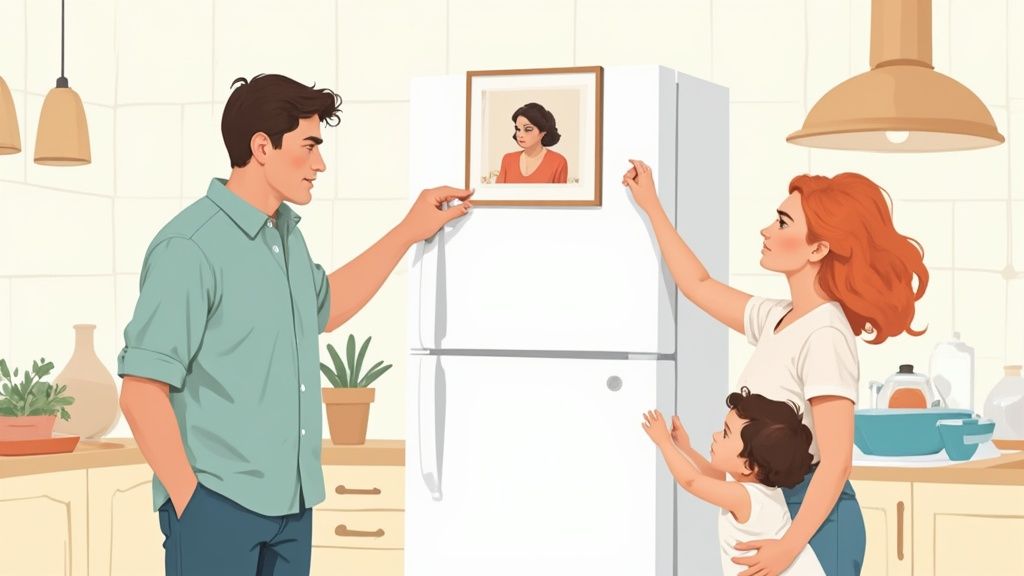
Weaving a powerful supplication like this into the fabric of your family life is a beautiful process. It's not about grand gestures, but about small, consistent steps. The real magic happens when reciting the Abu Darda dua becomes an easy, natural, and shared experience between you and your partner.
When your little ones see you both turning to Allah for protection day in and day out, it plants a seed. That simple act becomes a normal, even instinctive, part of their own developing worldview. It’s less about teaching them the words and more about showing them the way.
Simple Ways to Build Consistency
For busy parents, the secret to making a new habit stick is to make it visible and effortless. Life with a baby or toddler is already a whirlwind of activity, so gentle reminders are your best friend.
Here are a few simple ideas to get you started:
* Create a Visual Cue: Find a beautifully designed print of the dua and place it on the fridge or by your bedside. Seeing it every day acts as a soft, silent prompt.
* Set a Digital Reminder: Use your phone to set a gentle alarm for after Fajr and Maghrib. Naming it "Family Dua" can turn a solo reminder into a shared moment of connection.
* Pair It with an Existing Habit: This is a classic habit-forming trick. Agree to recite it together right after your morning tea or as you lay your little one down for the night. You're simply attaching this new practice to something you already do without thinking.
Fostering a Culture of Trust in Allah
The real beauty here goes so much deeper than just reciting words. It’s about building a home where the first instinct in times of worry is to turn to Allah. It quietly teaches your children that your family’s foundation is built on tawakkul—complete reliance on Him.
When your child sees you place your trust in Allah through the Abu Darda dua, they learn one of life’s most valuable lessons: that the ultimate source of safety and peace is not in our own efforts, but in His divine care.
This shared practice becomes a powerful anchor for your household's spiritual core. It’s a shared language of faith between you and your partner, creating a united front of trust in Allah’s protection. As your child grows, this dua becomes part of their own spiritual toolkit—a source of strength they’ll carry with them forever.
This kind of foundation is what creates a calm, faith-centred home, much in the same way that a consistent and peaceful atmosphere is essential for a positive islamic bedtime routine for toddlers.
Abu Darda: An Inspiring Role Model for Parents
The man behind this powerful dua, Abu Darda (RA), offers timeless wisdom that feels especially relevant for modern Muslim parents. It’s easy to focus on the incredible story of the fire, but his life itself is a beautiful example of balancing worldly duties with a deep, unwavering spiritual commitment.
That's a struggle many of us know all too well as we navigate work, home, and raising our little ones. By learning about his character, we can find inspiration for our own parenting. He was a man of immense knowledge, but more importantly, he put that knowledge into action, showing us that faith is something we live, not just something we say.
A Life Rooted in Dua
Abu Darda (RA) was famous for his dedication to prayer and supplication. He was one of the last prominent members of the Ansar to embrace Islam, but he quickly became known for his intense devotion, especially his prayers in the quiet of the night. He truly understood that sincere dua was the key to seeking Allah's help and protection.
Narrations describe his habit of staying awake at night to pray, driven by the beautiful belief that angels make dua for those who supplicate for their brothers and sisters in their absence.
This dedication connects perfectly to the Abu Darda dua he shared with us. His commitment to prayer shows us that turning to Allah is our greatest source of strength. For parents, his example is a comforting reminder that those quiet, heartfelt duas we whisper for our children are heard and cherished. You can learn more about his profound spiritual insights and the importance of dua in a believer's life.
His example encourages us to see dua not as a last resort, but as our first and most powerful tool. It’s a way to actively seek Allah’s protection for our babies, whether we’re whispering a prayer over their cot at night or asking for safety as we buckle them into their car seat.
Common Questions from Parents About This Dua
As you start to weave this beautiful supplication into your family's life, some questions will naturally pop up. That's perfectly normal! The goal is to feel confident and connected, so let's walk through some of the things parents often ask.
What Are the Best Times to Recite This Dua?
The tradition suggests reciting this dua once in the morning (after Fajr or whenever your day begins) and once in the evening (after Maghrib or as you're winding down). But honestly, consistency beats perfect timing every single time.
A great little trick is to "tether" it to a habit you already have. Maybe you can recite it while the kettle boils for your morning tea or make it the last quiet words you whisper in your child's room before you leave for the night. Find what works for your family's rhythm.
Is It Okay If I Cannot Read Arabic Fluently?
Absolutely. While there is a special blessing and beauty in the original Arabic, Allah hears the prayers of every sincere heart, no matter the language. Your intention and sincerity are what truly matter.
Feel free to use the English transliteration to get comfortable with the sounds, or simply say the meaning in English. The whole point is to connect with Allah and ask for His protection over your loved ones.
My Toddler Is Too Active for Duas! What Can I Do?
This is the classic toddler experience, and it's completely okay! For this age group, the goal is positive exposure, not perfect recitation. Forget trying to make them sit still—that's a battle you don't need to fight.
Instead, gently fold the dua into their world. Recite it softly while you're cuddling, driving to nursery, or during a quiet moment with their building blocks. Hearing the Abu Darda dua in a loving, calm voice is a beautiful way to plant the seeds for their future relationship with dhikr.
Can I Recite This Dua for My Unborn Baby?
Yes, and what a beautiful act that is! Making dua for your baby in the womb is one of the most powerful things you can do. Reciting this supplication during pregnancy is a wonderful way to ask Allah to shield both you and your little one. It creates such a peaceful, spiritual atmosphere, connecting you both to Allah's care before you even meet.
If you're looking for more duas to help you on your journey, our guide on the Allahumma inni as'aluka dua might be just what you need.
At Babymode, we believe in nurturing faith from the very first giggle. Our halal, ad-free screen time platform offers gentle, age-appropriate content designed to align with your family's values. From Quranic stories to daily duas, every moment is crafted to be safe and meaningful.