In a world buzzing with screens and noisy toys, there's a quiet power in something as simple as a word flash card. For Muslim parents, it’s more than just a learning tool; it's a calm, screen-free invitation to connect, a chance to share a moment of discovery and play with your little one.
The Gentle Power of Word Flash Cards in a Muslim Home
For many of us, finding activities that are both educational and aligned with our faith is always on our minds. We want to give our children the best possible start while nurturing their fitra (natural disposition). This is where the simple beauty of word flash cards really shines, offering a calm, focused alternative to the digital overwhelm.
Using flash cards isn't about rigid lessons or putting pressure on your baby. Think of it as weaving tiny, joyful moments of learning into the natural rhythm of your day. It could be as simple as showing your baby a card with a picture of the moon after Maghrib prayer, or pointing to a card for ‘water’ (ماء) as you fill their sippy cup. These small interactions build a surprisingly strong foundation for language.
Nurturing Curiosity with Faith and Focus
The real magic of physical flash cards is the connection they create. They encourage the crucial face-to-face interaction that is so essential for a baby's social and emotional growth. When you sit down with your child and a stack of cards, you're giving them the most valuable gift of all: your undivided attention.
This hands-on approach brings some beautiful benefits to a faith-centred home:
- It strengthens your bond. Sharing this simple activity carves out a special space for you and your child to connect, laugh, and learn together.
- It builds foundational skills. You’re helping develop your child's vocabulary, object recognition, and memory in a playful, no-pressure way. You can learn more about how flash cards support early development in our detailed guide on what flash cards are and how they work.
- It creates calm moments. In a busy home, even a five-minute flash card session can be a pocket of peaceful focus—a welcome break from the usual noise and distractions.
A Timeless Tool for Today's Families
This method is anything but new. The idea of using illustrated cards to teach children actually goes all the way back to the 17th century. But in our modern world, with a renewed focus on foundational literacy, it's become a booming industry.
The global flash cards market was recently valued at an incredible USD 2.3 billion, with production hitting 385 million units worldwide—a huge jump from previous years.
For Muslim families, these simple pieces of cardstock are a powerful way to teach first words about Allah’s creation, our families, and the world around us, all within the warmth and safety of our homes.
Selecting Words That Nurture Faith and Identity
Choosing the first words you introduce to your baby is a deeply personal and exciting journey. It's about so much more than just ticking off a generic vocabulary list. We can be intentional about it, carefully picking words for our flash cards that mirror our family's daily life, our values, and, most importantly, our Islamic identity. This thoughtful approach transforms simple learning into a rich experience, where every new word helps build a strong foundation of faith and belonging.
A great way to start is by balancing three key areas. This ensures your little one learns about their immediate world, the wonders of Allah’s creation, and the special words that connect them to their faith and heritage.
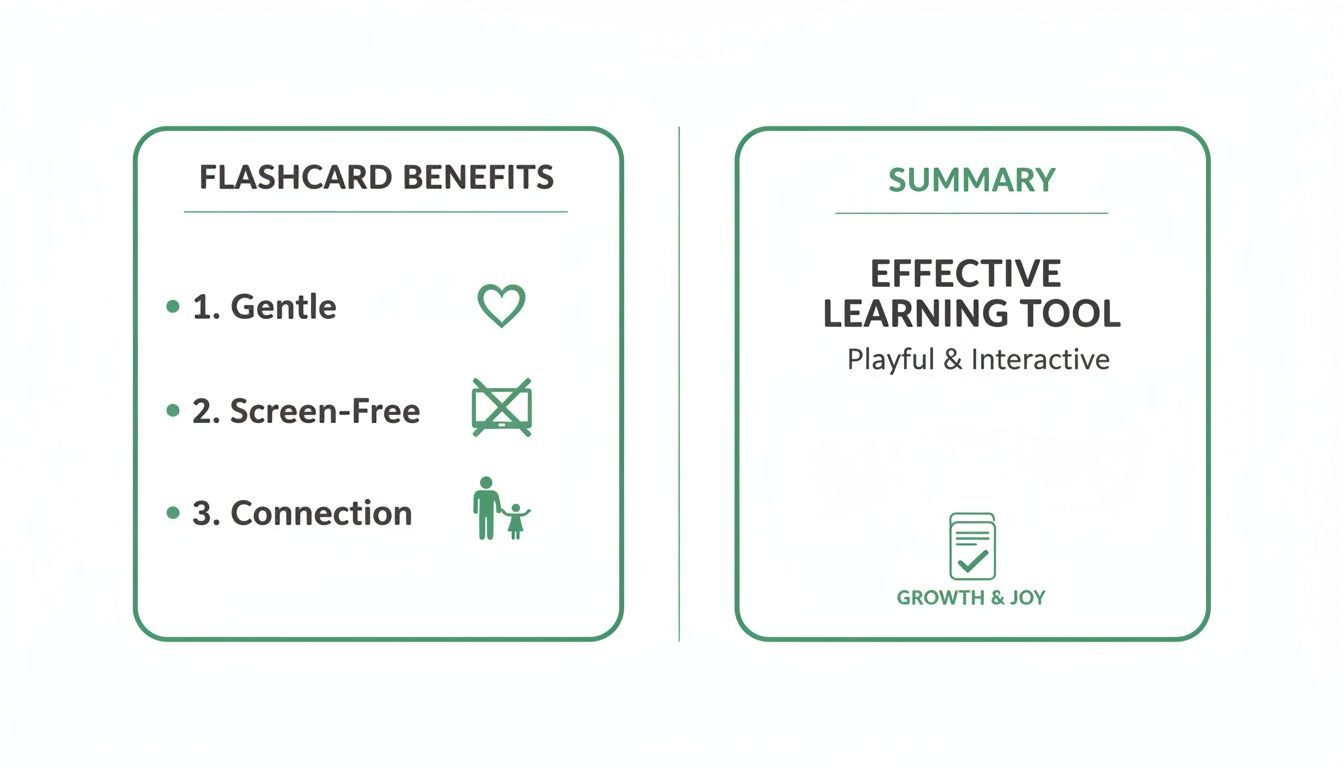
As this shows, physical flash cards offer a gentle, screen-free way to connect and learn together, making these moments truly special.
Everyday Essentials in Your Home
The best place to begin is right where you are—with the familiar and tangible things in your home. These are the "sight words" of your child's world, the people and objects they see and touch every single day. Using word flash cards for these items helps your baby forge a direct link between the picture, the printed word, and the real thing.
Think about the simple, high-frequency words that pop up in your daily routine:
- Objects: cup, mat, light, door, key
- Family: Ammi (Mom), Abbi (Dad), Dada (Grandfather), Nana (Grandmother)
- Actions: eat, sleep, play, wash
These words have immediate relevance, which is incredibly rewarding for a little one. When they see the flash card for 'cup' and then spot their own cup at snack time, their brain makes a powerful and lasting connection.
Parent Tip: Keep it simple and pressure-free. A quick, two-minute session while your little one is in their high chair or during a quiet moment after prayer is perfect. The goal is joyful interaction, not memorisation drills.
The Wonders of Allah's Creation
Next, you can introduce words that spark a sense of awe and curiosity about the natural world. This is a beautiful, gentle way to plant the seeds of Tawhid (the Oneness of Allah) by connecting language to the incredible beauty of His creation. You can find more ideas for linking early learning with faith in our guide on teaching the Arabic alphabet in a meaningful way.
These words are perfect for pointing things out on a walk, from the car window, or even while looking through books:
- Nature: moon, sun, star, rain, tree, flower
- Animals: cat, bird, ant, fish
When you show the 'moon' card and then point to the real moon in the sky after Maghrib, you’re doing so much more than just teaching a word. You're creating a shared moment of wonder and reflection.
Foundational Islamic and Bilingual Words
Finally, start weaving in the words that are central to your Muslim identity. Introducing these terms early helps them become a natural, cherished part of your child’s vocabulary, deeply rooted in a sense of love and familiarity.
This category is also a fantastic home for bilingual words that reflect your family's heritage.
- Core Islamic Terms: Allah, Bismillah, Salam, Dua, Masjid
- Bilingual Words (e.g., Urdu/Arabic): Pani/Maa (water), Doodh/Haleeb (milk), Shukr/Shukran (thanks)
Hearing the word 'Salam' while seeing a corresponding card helps build a warm, positive association with this beautiful Islamic greeting. These carefully chosen words do more than just build vocabulary; they build identity.
First Words Vocabulary Planner for Muslim Babies (0-3 Years)
To make this process easier, here’s a simple planner to help you choose meaningful first words across different categories, balancing those crucial developmental milestones with a strong sense of Islamic and cultural identity.
| Age Group | Everyday Words (English) | Allah’s Creation | Islamic & Bilingual Words |
|---|---|---|---|
| 0-12 months | Mama, Dada, milk, ball, cat, baby, book, cup | moon, sun, star, water (pani/maa) | Allah, Bismillah |
| 1-2 years | door, light, eat, sleep, more, car, shoes | tree, flower, rain, bird, fish | Salam, Dua, Masjid, Shukr |
| 2-3 years | play, wash, chair, walk, hot, cold | ant, cloud, sky, grass | Insha'Allah, Alhamdulillah, Halal |
This planner is just a starting point, of course. Feel free to adapt it to your own family's language, routines, and the things your child shows the most interest in. The key is to make learning feel personal, relevant, and filled with love.
Creating Your Own Halal and Toddler-Proof Flash Cards
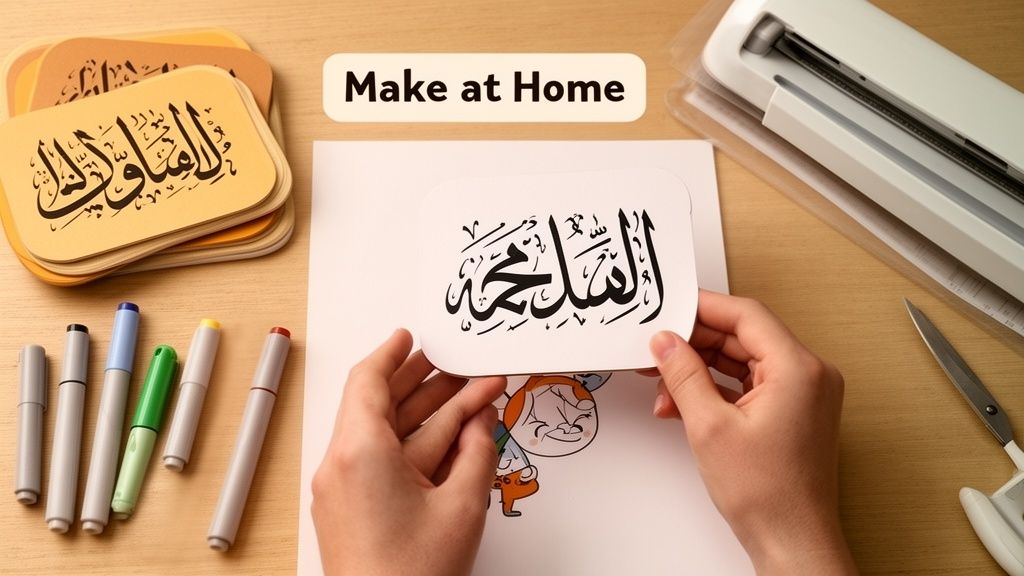
There’s something truly special about making your own word flash cards for your child. It’s a chance to create a learning tool that’s not just educational, but also deeply personal. You get to control everything—the vocabulary, the look, the feel—and make sure every card is safe, durable, and perfectly aligned with your family’s values. It’s a wonderfully rewarding project you can be genuinely proud of.
Getting started is a lot easier than you might think. You don’t need to be a professional artist or designer. All it takes is a few basic materials and a bit of quiet time. Maybe it's after the little ones are asleep or during a peaceful Friday afternoon. The goal is simple: create cards that are engaging for your baby and tough enough to survive their enthusiastic curiosity.
Choosing Safe and Sturdy Materials
Let's be real: your little one is going to touch, bend, and probably even try to taste their new flash cards. That’s just part of the learning process! So, safety and durability have to be top priorities. Anything you make needs to be completely toddler-proof and crafted from non-toxic materials.
Here are a few baby-friendly supplies I always recommend:
- Thick Cardstock: Go for a heavy-weight paper—at least 300 gsm—that can stand up to grabbing and bending without tearing easily.
- Non-Toxic Markers or Pens: Check the labels to ensure any coloring tools you use are certified non-toxic and safe for children.
- A Corner Rounder: This simple craft tool is a game-changer. It trims sharp corners, making the cards much safer for tiny hands and mouths.
- Lamination (Optional): If you want ultimate durability, laminating your cards is the way to go. It makes them wipeable (hello, snack-time spills!) and nearly indestructible.
By making your own cards, you have total peace of mind knowing that every single element is halal and safe. You control the images, the materials, and the final product from start to finish.
Designing Cards for Little Eyes
When you're designing your flash cards, simplicity is your best friend. A young child’s brain responds best to clear, uncluttered visuals. It's one thing to make cards, but knowing how to create flashcards that actually work makes all the difference in their educational impact.
Stick to these core design principles:
- High-Contrast Images: Babies and toddlers are naturally drawn to bold, high-contrast visuals. A simple, clear picture against a plain white background is far more effective than a busy, detailed scene.
- Clear, Simple Fonts: Use a large, easy-to-read font for the word. Steer clear of overly decorative or cursive styles that can be confusing for a child just starting out.
- Halal-Aligned Imagery: Sourcing the right images is crucial. You can use beautiful photos of nature (a leaf, the moon, a cat), simple drawings of everyday objects, or even elegant Arabic calligraphy for words like 'Allah' (الله).
This focus on creating effective learning tools at home is part of a much larger global trend. The market for sight word flash cards for kids was recently valued at a staggering $1.27 billion. The real story here is the explosion in home use among parents of 0-3 year-olds, as awareness of early literacy benefits grows. Your homemade set is a personal, faith-centered contribution to this important movement.
Weaving Flash Cards into Your Daily Family Rhythm
So you've created your beautiful, personalized word flash cards—now for the best part! The goal isn't to schedule a formal "lesson." Life with a little one is way too unpredictable for that. Instead, the real magic happens when you weave these learning moments into the natural rhythm of your day, turning ordinary routines into opportunities for connection and discovery.
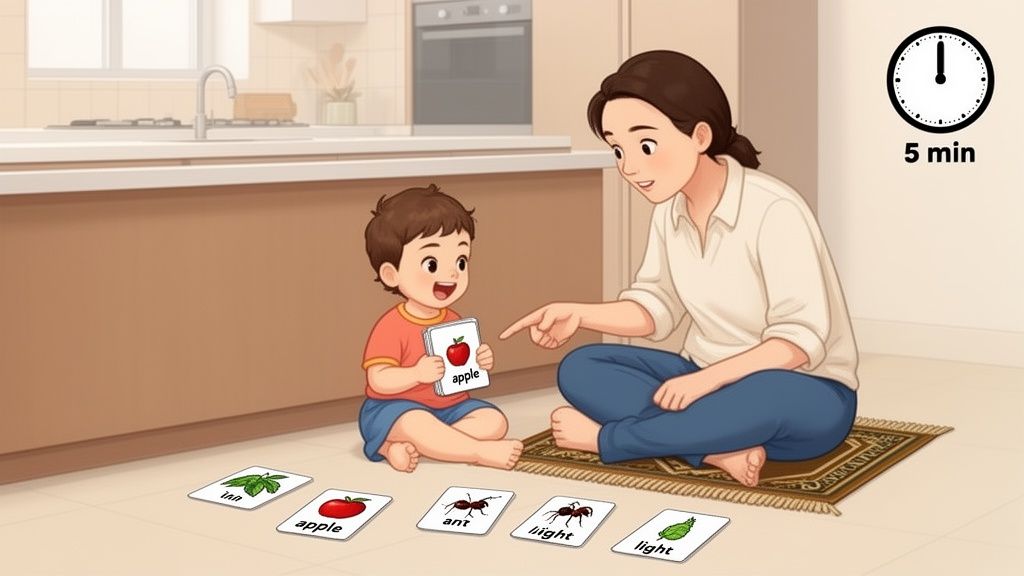
Forget about the pressure of structured sessions. We're talking short, joyful bursts of interaction. A young child's attention span is fleeting, so aiming for just two to five minutes at a time is the sweet spot. These little pockets of focused play are surprisingly easy to tuck into even the busiest schedules, whether it's in the quiet moments after Fajr or while you're waiting for the kettle to boil.
From Showing Cards to Playing Games
Simply showing and repeating a word gets old fast. The key to keeping your little one hooked is to turn it into a gentle game. And you can adapt these games to whatever you’re doing, wherever you are.
Here are a few simple ideas that really work:
- "Find the Object" Hunt: During that calm window after Dhuhr prayer, lay out three cards—maybe 'ball', 'cup', and 'book'. Then ask, "Can you find the ball?" and cheer them on when they point to or grab the right one.
- Snack Time Match-Up: As you're slicing up their snack, pull out the flash card for 'apple' or 'banana'. Show them the card, then point to the actual fruit on their plate. This simple act of matching the picture to the real thing forges powerful connections in their brain.
- "What Sound Does It Make?": Before naptime, grab your animal cards like 'cat' or 'bird'. Show the card, say the word, and then make the animal sound together with lots of silly enthusiasm. It adds a whole sensory layer to their learning.
The most important thing is to keep it light and follow your child’s cues. If they’re engaged, lean in. If they seem distracted or fussy, just put the cards away for later. The goal is always joyful connection, not a test.
Stacking Habits with Daily Routines
The secret to making this a consistent practice is to "stack" it onto a routine you already have. By linking this new habit to something you do every single day without thinking, it becomes a natural and effortless part of your family's rhythm.
Think about the anchor points in your day:
- Meal Times: Keep a small stack of food-related cards tucked near the high chair.
- Prayer Times: A few cards with words like 'moon', 'star', or 'dua' can be a lovely, quiet activity right after prayer.
- Getting Dressed: As you're getting ready to head out, use cards for 'shoes', 'sock', or 'coat'.
- Bedtime: Wind down the day by looking at a couple of calming cards like 'sleep' or 'book' as part of your bedtime story routine.
By integrating word flash cards into these everyday moments, you’re gently and consistently building your child's vocabulary in a way that feels loving, natural, and deeply connected to their world.
Finding a Healthy Balance with Screen Time
Let's be honest: managing screen time is one of the biggest challenges we face as parents today. It feels like a constant battle. We want to protect our little ones from the overwhelming and often questionable content that's everywhere online.
This is exactly why starting with physical word flash cards is such a brilliant move. It creates a screen-free foundation for learning built on what truly matters—play, connection, and real-world interaction.
But we can't ignore the world we live in. Technology is a part of it. The trick is to use it on our own terms, making sure any screen time is intentional, controlled, and actually supports our family’s values. Instead of letting screens replace hands-on learning, we can use them as a mindful supplement.
From Physical Cards to Mindful Media
There’s no doubt that digital learning is growing. In fact, the market for early childhood education apps is expected to hit a staggering USD 31.28 billion by 2035. A huge piece of that growth comes from digital flash cards.
For families like ours, especially in North America and the Asia-Pacific region, the hunger for high-quality, bilingual resources is immense. This is where a tool like Babymode can be a fantastic bridge, extending the learning from your physical cards into a safe, halal digital environment.
Think of it as a partner, not a replacement for your precious one-on-one time. The AI-generated videos on the Arabic alphabet or stories from the Qur'an are essentially 'digital flash cards.' They’re short, focused, and designed to reinforce the very things you're already teaching.
The goal isn’t a total screen ban, which often feels impossible. It’s about making sure that when screens are on, they’re working for your family’s goals, transforming passive watching into an active, faith-filled learning experience.
Taking Control of Your Child's Digital World
What makes this approach so different from just turning on a mainstream video app? Control.
Unlike platforms that run on ads and unpredictable algorithms, Babymode is a closed, ad-free space. You are in the driver's seat, deciding what your child sees and for how long.
- You Curate the Content: Pick categories that match your physical flash cards, like videos about Allah’s beautiful creations, Islamic manners, or simple daily duas.
- You Set the Limits: The parent dashboard lets you set firm viewing times. This helps stick to a healthy routine and puts a stop to mindless scrolling. For more great ideas on balancing screen time, this article has some wonderful, practical strategies.
- No Nasty Surprises: You’ll never find ads, product placements, or weird algorithm-pushed videos that could lead your child down a rabbit hole of inappropriate content.
This intentional method means screen time becomes a tool you wield, not one that controls you. It works with you to support the values and lessons you’ve already established at home.
For more in-depth strategies, check out our guide on how to limit screen time for toddlers. By blending the tangible joy of physical cards with carefully chosen digital content, you can create a truly balanced learning environment that nurtures your child's mind and their deen.
Got Questions About Word Flash Cards? We’ve Got Answers.
It's totally normal to have questions when you’re starting something new with your little one. Kicking off a journey with word flash cards is exciting, but it can definitely bring up thoughts about the "right" way to do things.
Let’s walk through some of the questions we hear most often from fellow Muslim parents. These answers come from real-world experience, rooted in the practical realities of raising young children in a faith-centred home.
Our hope is to help you feel confident and joyful as you get started.
When Is the Best Age to Start?
Honestly, there’s no magic start date. You can actually begin introducing simple, high-contrast image cards as early as 3-6 months. At this stage, it's all about visual stimulation and them hearing the sound of your voice. As your baby grows, around 9-12 months, they’ll start to build those amazing connections between the picture and the word you’re saying.
The real key is to follow your child’s lead. When you see them showing interest in pictures and pointing at objects, that's your green light to gently bring flash cards into your playtime.
How Long Should a Flash Card Session Last?
Keep it short and sweet! For babies and toddlers, a "session" should only last as long as they are happy and engaged. We're talking just 2-5 minutes at a time.
Trying to push for longer often backfires and creates frustration for both of you. It’s far more powerful to have several super-short, playful interactions throughout the day than one long, forced lesson. Think of it as a little game you can play while waiting for lunch to warm up or during a quiet moment after Asr prayer.
What if My Toddler Just Isn’t Interested?
This is such a common worry, so please don't let it discourage you! If your child turns away, decides the cards are better for throwing, or just isn’t in the mood, simply put them away. No big deal. Try again another time. Forcing it will only build a negative feeling around them.
Parent Tip: Make it a game! Instead of just showing the card, try hiding it under a cushion and asking, "Where did the qitt (cat) go?" Or use a silly voice when you say the word. Sometimes, a simple change in your approach is all it takes to spark their curiosity. Remember, the goal here is connection, not performance.
Should I Use English, Arabic, or Another Language?
This is a beautiful opportunity to embrace your family's unique identity! There is no single "right" answer. In fact, many families find a bilingual or even trilingual approach works wonderfully. A wealth of research shows that exposing young children to multiple languages is fantastic for their cognitive development.
Here are a few strategies that families in our community love:
- One Parent, One Language: One parent might consistently use English with the cards, while the other uses Arabic or Urdu.
- Context-Based: You might use Arabic cards for Islamic concepts ('Masjid', 'Dua') and English for everyday household items ('ball', 'cup').
- Paired Cards: Create two cards for the same object—one with the English word and one with the Arabic or Urdu word—and show them together to build both vocabularies.
The best method is whichever one feels most natural and joyful for your family. What matters most is that consistent, loving exposure to language.
Ready to create a safe, faith-aligned digital space to complement your hands-on learning? With Babymode, you can extend the joy of discovery with ad-free, halal-generated videos on Qur'anic stories, the Arabic alphabet, and more.