When you're looking for the best educational toys for an 18-month-old, think simple and hands-on. Toys that support their major developmental leaps in motor skills, language, and problem-solving are always the best bet. Things like stacking blocks, chunky puzzles, and shape sorters are perfect because they tap right into a toddler's natural curiosity and their rapidly growing physical skills.
Understanding Your 18-Month-Old's World
At 18 months, your toddler's world is a beautiful, busy whirlwind of discovery—a true blessing from Allah (SWT). They've moved past just observing and are now active little explorers, determined to figure out how everything works, one wobbly block at a time.
This incredible period of growth is the ideal time to bring in toys that gently challenge and delight them. When you understand these developmental milestones, you can look past the bright colours and find toys that truly support their fitra, or natural disposition. For them, play isn't just fun; it's how they make sense of the world.
A Time of Incredible Growth
Your toddler's brain is firing on all cylinders, constantly forging new connections. That amazing moment when they finally push a square block through the matching hole? That's a huge cognitive victory. They're learning about cause and effect, solving simple problems, and grasping that objects still exist even when they can't see them.
This is also when you'll start to see the first sparks of imaginative play. A banana might suddenly become a telephone, or they might try to feed their favourite stuffed animal from an empty plate.
Physically, their movements are getting steadier and more confident. Stacking two or three blocks is a massive accomplishment that showcases their developing fine motor skills and hand-eye coordination. It's these small, precise movements that will eventually help them hold a crayon or use a spoon all by themselves.
This mind map breaks down the main developmental areas you'll be noticing right about now.
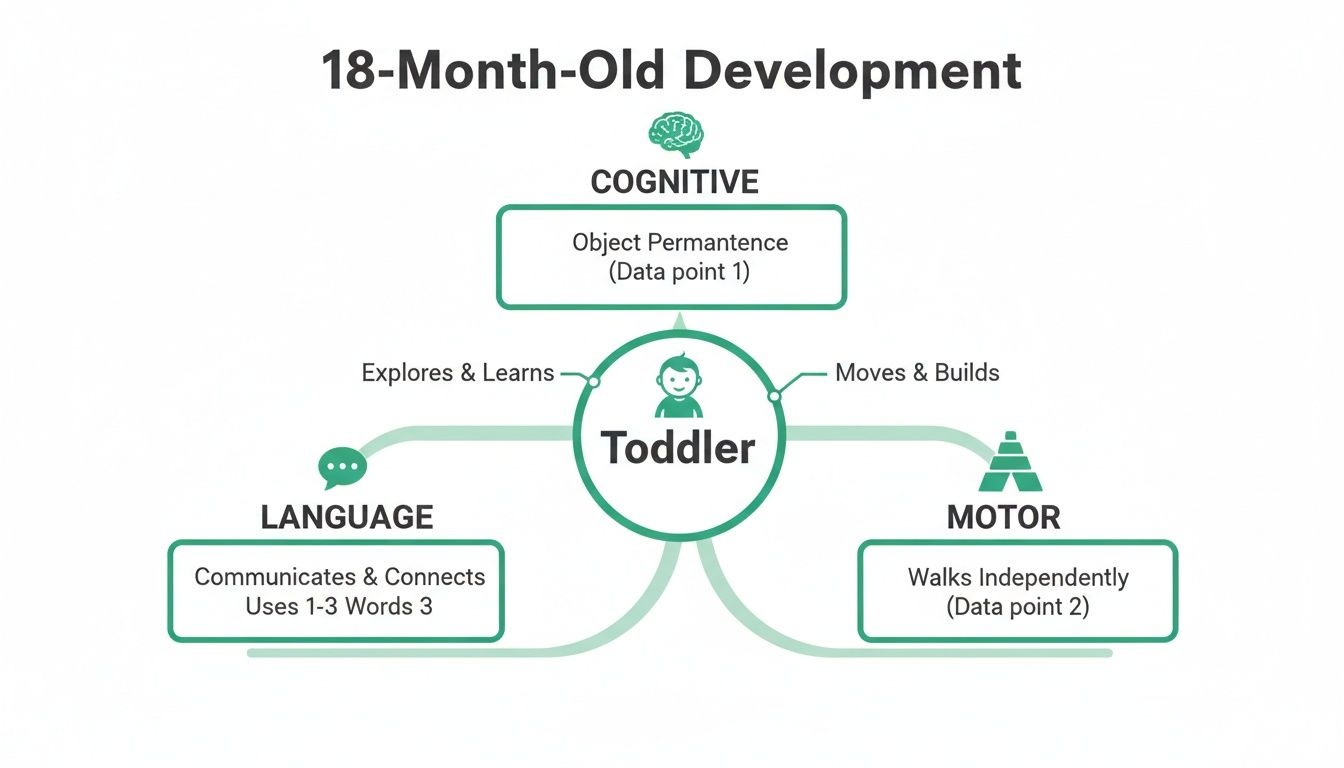
As you can see, their cognitive, motor, and language skills are all deeply connected. Progress in one area almost always supports growth in the others, and it all happens through the power of play.
To help you connect the dots, here’s a quick guide matching what you’re seeing with the types of toys that can help.
Developmental Milestones and Toy Pairings for an 18-Month-Old
| Developmental Area | What You Might See | Best Toy Category |
|---|---|---|
| Fine Motor Skills | Stacking blocks, turning pages, scribbling with a crayon. | Stacking & Sorting Toys, Chunky Puzzles |
| Gross Motor Skills | Walking confidently, starting to run, kicking a ball. | Motor Skill Toys (push/pull toys, balls) |
| Language | Using 10-20+ single words, pointing to body parts. | Language & Sensory Toys, Pretend Play Items |
| Cognitive Skills | Solving simple puzzles, imitating household chores. | Pretend Play Toys, Puzzles, Sorters |
Choosing the right toys helps you meet your child where they are, giving them the tools they need to practice these new and exciting skills.
The Importance of Intentional Play
Parents' focus on early childhood development has fuelled incredible growth in the toy market. The educational toys sector is projected to reach USD 72.59 billion in 2025 and is expected to hit USD 108.51 billion by 2030. The segment for children aged 0-4 is growing especially fast, which really underscores how valuable these early years are.
Choosing the right toys is about more than just entertainment. It’s about providing the tools your child needs to explore their world, build confidence, and develop foundational skills in a way that feels like pure joy.
To support their cognitive development and help them engage with their surroundings, consider introducing classic early learning picture books. The simple, repetitive stories are fantastic for building vocabulary and recognition skills in a calm, focused way. An intentional approach to toys helps you create a nurturing environment where your child can thrive, insha'Allah.
The Best Categories of Educational Toys for Your Toddler
Choosing the right educational toys for an 18-month-old isn't just about picking something colourful off the shelf. It’s about understanding what skills each toy helps build. Think of it like putting together a balanced meal for your toddler—they need a good mix of nutrients to grow. In the same way, a well-rounded toy box will nourish different parts of their development.
At this age, toys generally fall into a few key categories, each serving a beautiful purpose in your child’s learning journey.
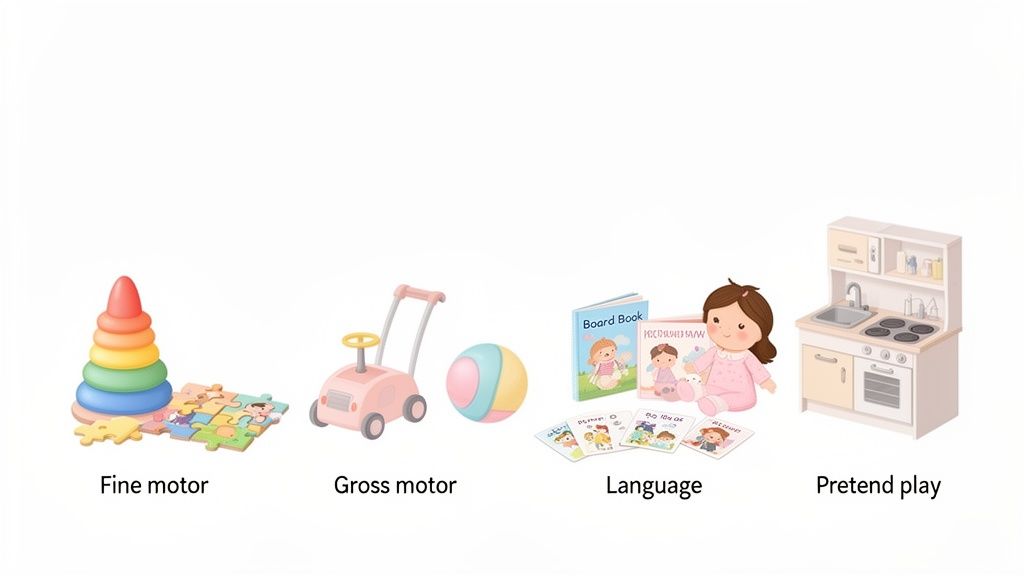
Toys for Motor Skills Development
This is probably where you're seeing the most obvious growth right now! Motor skills are broken down into two main groups:
- Gross Motor Skills: These are the big movements that use the large muscles—think walking, climbing, and kicking. Toys that get your toddler moving their whole body are fantastic for building strength and confidence. Push-along walkers, soft balls to roll and chase, or even a small, sturdy ride-on toy are perfect for this stage.
- Fine Motor Skills: These are all about the small, precise movements of the hands and fingers. Every time your little one stacks a block or turns the page of a board book, they're strengthening the muscles they’ll eventually need for writing and self-feeding. You can't go wrong with chunky puzzles and classic stacking rings here.
This focus on developmental play is huge. In fact, the global market for these kinds of toys was valued at USD 12.49 billion in 2022 and is expected to climb to USD 20.92 billion by 2032. It just goes to show how much parents everywhere value building these foundational skills.
Toys for Language and Sensory Exploration
Your toddler's mind is a little sponge right now, soaking up new words and sensations every single day. Toys in this category create gentle, joyful moments for learning.
Board books with bright, clear pictures of animals, everyday objects, or scenes from nature are a must. As you point to pictures and name what you see, you’re actively building their vocabulary. You can even find books that touch on themes of Allah’s creation, connecting their learning to your family’s faith right from the start.
Sensory toys are just as important. These toys engage the senses with different textures, sounds, and materials. Simple shakers, textured balls, or different types of fabric squares can provide rich sensory input without becoming overwhelming. For more ideas, you can explore our guide on sensory toys for toddlers.
The best toys don’t just entertain; they invite interaction. They create a natural reason for you to talk, laugh, and connect with your child, which is the most powerful learning tool of all.
Toys for Pretend Play and Problem-Solving
Right around 18 months, you'll start to see those first beautiful sparks of imagination. Pretend play is your toddler’s way of making sense of the world by imitating all the things they watch you do.
- Pretend Play: Simple things like a toy kitchen, a soft baby doll, or a play telephone open up a world of role-playing. These toys are key for developing social and emotional skills as your child acts out familiar scenarios, like feeding a baby or having a chat on the phone.
- Problem-Solving: Shape sorters and simple puzzles are classic for a reason. They teach cause-and-effect, spatial awareness, and persistence. When your child finally gets that circle block through the right hole, that look of triumph is a huge developmental win. It builds their confidence and resilience, insha’Allah.
How to Choose Safe and Wholesome Toys
As a parent, your child’s safety is a constant du’a, a quiet prayer in your heart. This feeling naturally extends to every part of their world, especially the toy box. For Muslim families, picking out toys isn’t just about physical safety; it’s also about making sure they are tayyib—pure, wholesome, and in line with the values you're nurturing at home.
This practical checklist will help you confidently sort through the options for educational toys for an 18-month-old, ensuring they are both safe for play and good for the soul.
The Material Safety Check
Let’s be honest—at 18 months, everything eventually ends up in your toddler’s mouth. This is why the materials a toy is made from are so incredibly important. A hands-on inspection is always the final, most crucial step.
- Look for Non-Toxic Finishes: Opt for toys made from solid wood with water-based paints, food-grade silicone, or sturdy plastics that are clearly labelled BPA-free.
- Check for Physical Hazards: Run your hands over the toy. Are there any sharp edges or pointy bits? Could a small piece splinter or snap off? A well-made toy will have smooth, rounded edges and feel solid enough to handle being dropped (or even thrown!).
- Do the Choke Test: Here's a simple but effective trick—use an empty toilet paper roll. If any part of the toy, or a piece that could potentially break off, fits completely inside that tube, it’s a potential choking hazard.
A toy that feels flimsy or has a strong chemical smell is a red flag, no matter what its packaging says. Your parental intuition is a powerful tool—trust it.
Beyond the Physical Toy
For Muslim parents, safety also means protecting our children’s innocence and spiritual well-being. This is where the idea of "content safety" comes in. It’s an aspect of choosing toys that's often overlooked but is just as important.
It's helpful to think about the messages a toy sends, both obvious and subtle. This might mean considering toys with sounds or music that don’t align with your family's preferences. It also means taking a closer look at the imagery and characters. Do they model gentleness and kindness? Or do they introduce themes you aren't quite ready for your child to see?
To get a better sense of what goes into safe production, it can be helpful to look at a manufacturer's perspective, like understanding safety standards in stuffed animal manufacturing.
Vetting Brands and Building Trust
The toy aisle can be overwhelming, and it's hard to know which brands to trust. With the global educational toy market projected to hit USD 98.9 million by 2034, there’s a huge focus on creating safe, innovative products for kids under four.
When in doubt, stick with brands that are transparent about their materials and manufacturing process. Choosing toys that promote positive principles—like sharing, helping others, and being kind to animals—can turn simple playtime into a gentle act of tarbiyah (upbringing), building a foundation of goodness, insha'Allah.
Integrating Faith and Culture into Playtime
Play is one of the most powerful and gentle tools we have for tarbiyah (upbringing). For Muslim families, this means that even playtime is a beautiful opportunity to nurture our child's pure, natural disposition—their fitra. Choosing the right educational toys for an 18-month-old can help you effortlessly weave your faith and culture into their daily discoveries.
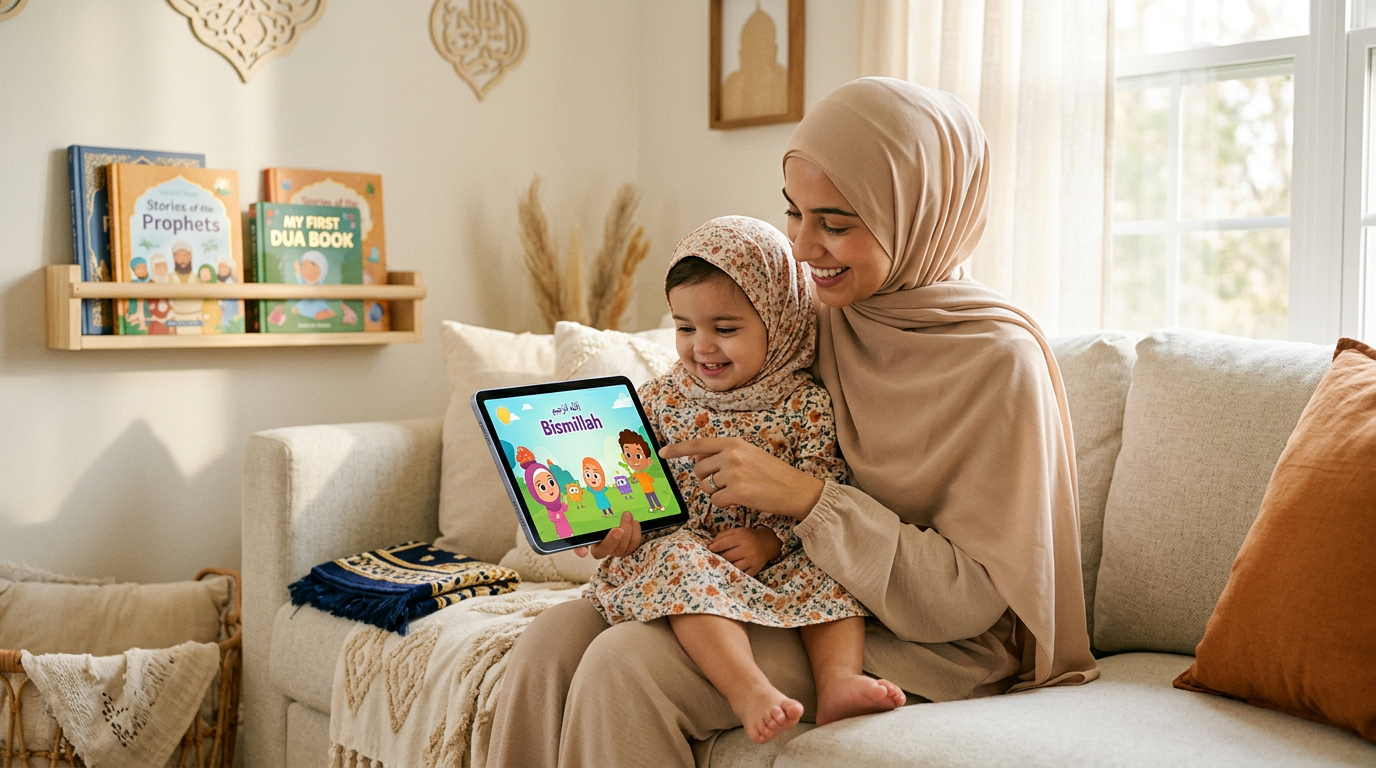
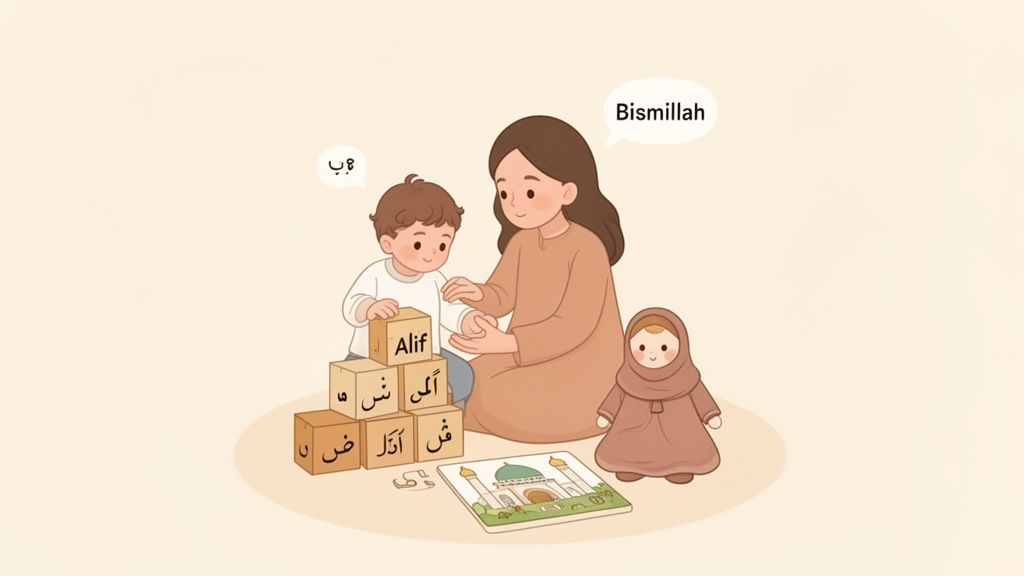
This isn’t about sitting them down for formal lessons. It’s about creating joyful, positive connections. You can start with simple habits that feel completely natural, like saying "Bismillah" together before tipping over a basket of blocks or "Alhamdulillah" after finishing a puzzle. This helps your little one associate these beautiful phrases with feelings of fun and success.
Making Faith a Natural Part of Play
Bringing Islamic values into the playroom can be as simple as choosing toys that reflect the beauty of our faith and culture. There are so many wonderful options out there that can spark curiosity and start building a foundation of love for their identity.
Think about adding toys like these to their collection:
* Arabic Alphabet Blocks: These are perfect for introducing the shapes of the letters in a hands-on, pressure-free way. As your child stacks and sorts them, you can gently say the letter sounds.
* Puzzles with Familiar Themes: A simple puzzle showing a mosque, a prayer mat, or a crescent moon can make these symbols a normal, happy part of their world.
* Dolls with Modest Clothing Options: Having dolls that can be dressed in simple, modest outfits lets your child engage in imaginative play that mirrors your family’s values.
* Counting Beads: While great for practising numbers, these can also be a subtle nod to the tasbih, creating a familiar and positive connection.
These kinds of toys act as gentle invitations, making faith a tangible and delightful part of their play environment.
The goal is gentle exposure, not instruction. By surrounding your toddler with toys and habits that reflect your values, you are building a positive, love-filled foundation that will, insha'Allah, stay with them for life.
Supporting Bilingual Families
For many Muslim families, raising bilingual children is a deeply held goal. Toys are an absolutely fantastic way to introduce vocabulary in Arabic, Urdu, Farsi, or any other language in a way that just feels like fun.
When you’re playing with animal figures, try naming each one in both English and your family’s language. This simple repetition is a huge key to language learning at this age. Even telling simple stories with puppets can turn into a rich language activity. To get some more ideas, check out our guide on finger puppets for toddlers. When you pair words with physical objects and fun actions, you make learning a new language a totally natural part of their day.
Balancing Hands-On Play and Screen Time
Let’s be real for a moment. Managing screen time in a busy household is tough. Some days, you just need a few minutes of quiet to get dinner on the table before Maghrib, fire off a quick work email, or simply catch your breath. This isn't about feeling guilty; it’s about being intentional.
When you do decide to use a screen, the key is making that time as wholesome and beneficial as possible. Instead of viewing it as a completely separate activity, try to think of it as one tool in a bigger learning toolbox, where digital content and physical toys can actually work hand-in-hand.
Making Screen Time Count
This is where a resource like Babymode can be a game-changer. It was designed from the ground up to be a safe, halal, and ad-free space for our youngest Muslims. Every single piece of content, from gentle nasheeds about Allah’s creation to simple stories about good manners, is made to be age-appropriate and aligned with our Islamic values.
You won't find any surprise ads, questionable characters, or addictive algorithms pushing random videos. That gives you, the parent, complete peace of mind, knowing that what your little one is watching is pure and positive. For a deeper dive, we have a whole guide covering a balanced Islamic perspective on screen time for young children.
By choosing high-quality, faith-aligned content, you transform screen time from a simple distraction into a purposeful learning tool that complements your family’s values and supports your child's development.
This mindset helps build a bridge between what your toddler sees on-screen and the world they can touch and feel. It opens up all sorts of opportunities to reinforce ideas and make learning more tangible.
Creating a Learning Ecosystem
The real magic happens when you connect what your child sees on a screen with the educational toys for an 18-month-old they can physically play with. This synergy helps new concepts stick and makes learning feel like a natural part of their day.
For instance, maybe your toddler is playing with a set of chunky farm animal puzzle pieces. A little later, you could put on a Babymode nasheed that sings about the different animals Allah (SWT) has created. It's such a simple pairing, but it connects the physical object in their hands with a beautiful, faith-based concept in a gentle, memorable way.
Here are a few more ideas for how you can pair toys with wholesome content to create a connected learning experience.
Pairing Babymode Content with Educational Toys
The table below gives some practical examples of how you can connect wholesome screen time with hands-on play to reinforce important learning concepts.
| Toy Type | Learning Goal | Complementary Babymode Content |
|---|---|---|
| Arabic Alphabet Blocks | Introduces letter shapes and sounds in a tactile way. | Watch a Babymode video that sings the Arabic alphabet song. |
| Shape Sorter | Teaches shapes, colours, and problem-solving skills. | View a simple animation about different shapes found in nature. |
| Toy Kitchen/Food | Encourages pretend play and learning about daily routines. | Listen to a story about saying 'Bismillah' before eating. |
By thoughtfully combining safe screen time with hands-on educational toys for an 18-month-old, you create a rich, supportive environment. Every activity, whether it's on a screen or on the floor, works together to nurture your child's mind and spirit, insha'Allah.
Common Questions from Muslim Parents
Choosing the right educational toys for your 18-month-old brings up a lot of questions. It's only natural to want the very best for your child's development and to create a home environment that feels right for your family. Here are some reassuring, practical answers to the questions we hear most often from fellow Muslim parents.
Are toys with music okay for my toddler?
This is a really common and thoughtful concern in our communities. Islamic perspectives on music can vary, and many parents find a balanced approach that aligns with their family's values. For many, this means choosing toys with simple, gentle melodies, calming nature sounds, or beautiful, instrument-free nasheeds.
The key is often to steer clear of music with inappropriate lyrics or themes that don't fit the peaceful atmosphere you're trying to build at home. Ultimately, you know what’s best for your family. If you decide to avoid musical toys altogether, there are so many wonderful alternatives! Wooden shakers, small drums, and tambourines are fantastic for supporting your toddler’s auditory development.
How do I stop my toddler from being overwhelmed by too many toys?
Masha'Allah, this is a beautiful question that really gets to the heart of the Islamic value of avoiding excess. A huge pile of toys can be completely overwhelming for a toddler, making it hard for them to focus and get into that deep, meaningful play we want to see. The best approach I've found is toy rotation.
It works like this:
- Keep it simple: Only have a small selection of toys out at one time—maybe 5-7 items in a basket or on a low, accessible shelf.
- Store the rest: Put all the other toys away, completely out of sight.
- Swap them out: Every few weeks, or whenever you notice your toddler’s interest starting to wane, switch the current toys for a "new" set from storage.
This simple strategy keeps playtime feeling fresh and exciting. It encourages your child to engage more deeply with each toy, and, Alhamdulillah, it makes cleanup so much easier. A calm, uncluttered space really does help foster a calm, focused mind.
How can I gently guide family members toward better toy gifts?
Navigating gift-giving with well-meaning grandparents, aunties, and uncles requires a bit of gentle, proactive planning. Generosity is such a beautiful part of our culture, and we want to honour that while still being mindful of what comes into our home.
A great way to handle this is to create a simple online wishlist before occasions like Eid or a birthday. You can fill it with links to specific toys you’ve researched and feel good about. Then, frame it as being helpful: "So many people have been asking for ideas for the little one, so we put a few things here to make it easier for you!"
This respectfully guides their kindness toward items that align with your family’s values and your child's developmental stage. It ensures their gifts will be truly loved and used for months to come, insha'Allah.
What if my toddler ignores the educational toys I bought?
Don't worry, this is completely normal! Toddlers have their own ideas about what's fun. If a new toy is met with a shrug, take a breath. First, quickly check if the toy might be a little too advanced for them right now—that can be a source of frustration.
More often than not, the secret ingredient to making a toy interesting is you. Get down on the floor with your toddler and simply model how to play. Do it in a fun, no-pressure way. Stack the blocks yourself, make the car go "vroom," or pop a puzzle piece into its spot with an excited, "Look!" Your engagement and enthusiasm are often what sparks their curiosity. If they still aren't interested, just put the toy away and try reintroducing it in a few weeks. The goal is joyful discovery, so always follow your child's lead.
At Babymode, we get these questions because we've asked them ourselves. Our platform is designed to be the perfect complement to hands-on play, offering wholesome, ad-free content that you can feel good about. When you do need a bit of screen time, you can be confident that it’s a safe, enriching part of your child’s learning journey.