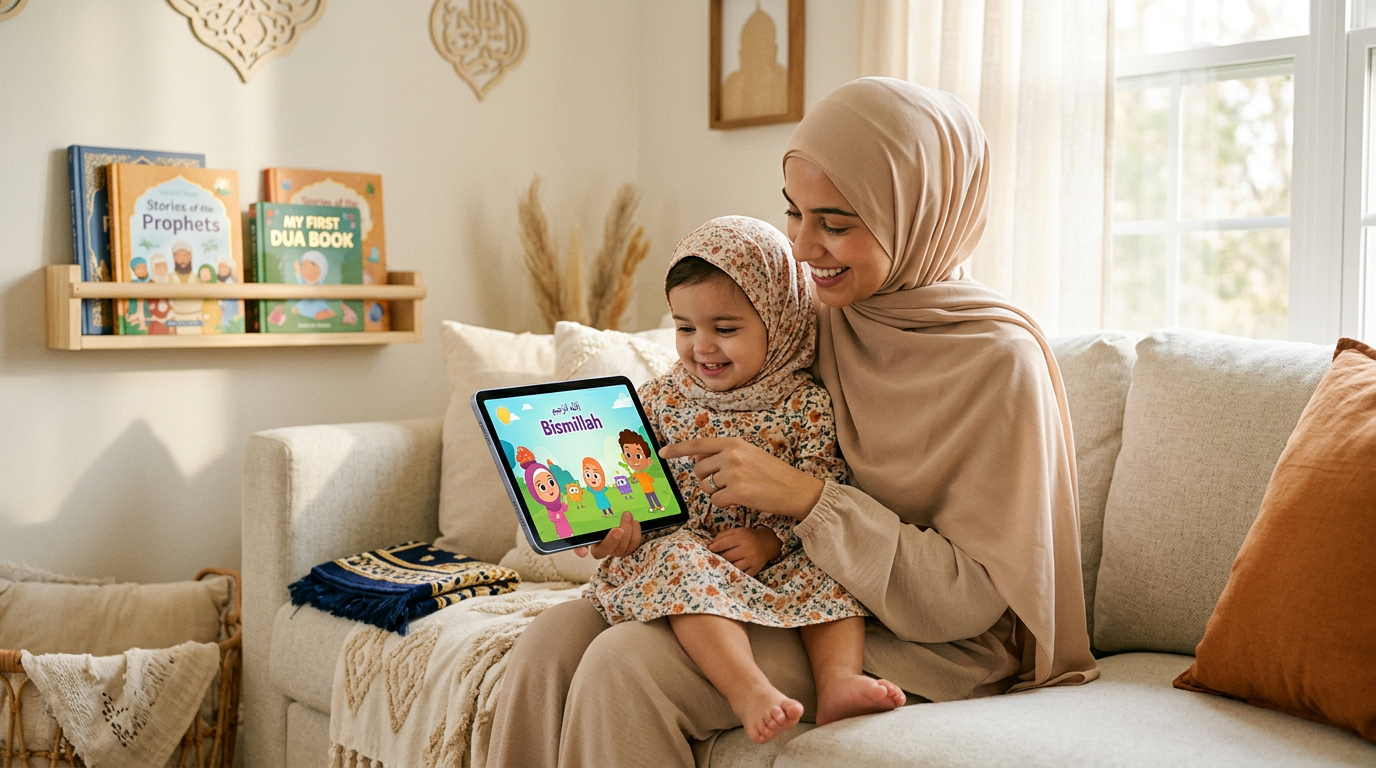
As Muslim parents, we know every sound our baby hears matters. It’s not just about keeping them entertained while you grab a moment to make wudu or prepare a meal; it’s about nurturing their fitra (natural disposition) from day one. You're looking for children's arabic songs that are more than just a catchy tune. You want something that feels safe, wholesome, and aligns with the gentle Islamic values you’re building your home on.
But finding the right content can feel like an endless scroll. How do you find songs that teach the Arabic alphabet without exposing your little one to ads for toys or junk food? Or gentle nasheeds about Allah’s creation without stumbling upon overstimulating cartoons? This guide is for you. We have carefully curated and reviewed the best platforms to find beautiful, age-appropriate Arabic songs and nasheeds perfect for your 0–3-year-old.
This list will give you a practical look at each option, with screenshots, links, and insights to help you choose the right fit for your family's routine. We’ll cover everything from dedicated, ad-free halal libraries like Babymode to mainstream services with hidden gems. While our focus is on finding engaging children's Arabic songs, understanding how to promote music online can offer a glimpse into how these melodies reach your home. Our goal is to help you fill your home with sounds that are both joyful and spiritually nourishing, so you can press play with complete peace of mind, inshaAllah.
1. Babymode
For parents of babies and toddlers aged 0 to 3, finding safe, high-quality, and faith-aligned content can feel like an endless search. Babymode is a purpose-built solution, carefully designed to meet the specific needs of Muslim families. It is not just another streaming service; it is a safe digital space created to support early development within an Islamic framework. The platform offers a curated library of children's Arabic songs, nasheeds, Quranic stories, and educational animations, all without the ads, product placements, or unpredictable algorithms found on mainstream sites.
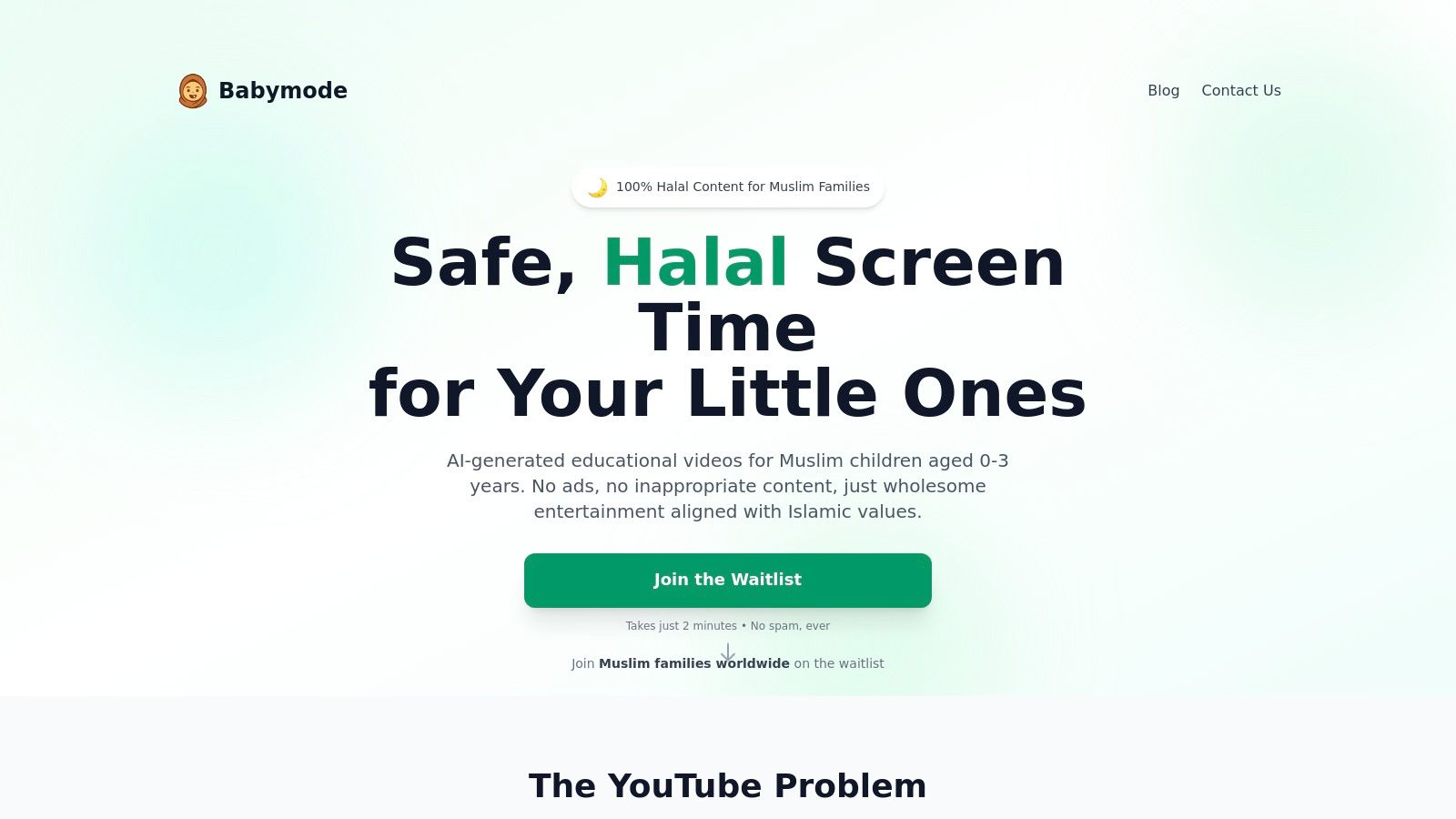
Babymode’s promise is a "halal by design" experience. Every piece of content, from simple alphabet songs to gentle nasheeds about Allah’s creation, is AI-generated and then carefully reviewed by both an Islamic advisory board and early childhood education experts. This double-check ensures that all videos are not only theologically sound and free of instruments but also developmentally appropriate, promoting good manners (akhlaq) and hitting key learning milestones for the 0–3 age group.
Key Features and Parent-Centric Design
Babymode is built to give parents control and peace of mind. Its features are designed to empower you, not just entertain your child.
- Granular Parental Dashboard: Go beyond simple screen time limits. You can approve specific content, see what your child is learning, and track their progress against developmental milestones. This turns passive viewing into a structured, beneficial activity.
- Privacy-First Architecture: In an era of data exploitation, Babymode’s stance is reassuring. The platform operates with a strict no-tracking, no-profiling, and no-data-selling policy. It collects only the minimal data needed for the service to function, ensuring your family’s digital footprint remains private.
- Multi-Lingual and Multi-Device Access: Recognizing the global ummah, Babymode launches with content in Arabic, English, and Urdu. The service is accessible across phones, tablets, smart TVs, and computers, with offline downloads available for travel, long car rides, or areas with poor connectivity.
This focus on safety and educational value makes Babymode a truly helpful tool for modern Muslim households. For families interested in the educational power of nasheeds, Babymode's approach aligns with creating a positive and spiritually enriching environment. You can explore more on this topic and find a nasheed for children that fits your family's routine.
Availability and Getting Started
Babymode is preparing for its official launch in early 2026, insha'Allah. Pricing details are still being finalized, but the platform has opened a waitlist for interested families. By joining, you can secure special launch pricing and other exclusive benefits. This early-access model allows the platform to build a community-driven foundation and incorporate feedback from its first users.
| Feature Summary | Babymode's Approach |
|---|---|
| Content Safety | 100% ad-free and halal-vetted by Islamic and educational advisors. |
| Target Age Group | Specifically designed for the developmental needs of children aged 0–3. |
| Parental Controls | Advanced dashboard for content approval, time limits, and milestone tracking. |
| Data Privacy | Strict no-tracking, no-profiling, and no-data-selling policy. |
| Accessibility | Launches in English, Arabic, and Urdu; available on all major devices with offline mode. |
Pros:
* Eliminates exposure to ads and inappropriate algorithm-driven content.
* Original, high-quality content created and reviewed by Islamic and educational experts.
* Robust parental controls that provide deep insights and genuine oversight.
* Unwavering commitment to user privacy.
* Multi-language support and offline functionality for ultimate flexibility.
Cons:
* Initially focused only on the 0–3 age group.
* Not yet publicly launched; access is currently via a waitlist.
Website: https://babymode.ai
2. Apple Music
For families already using Apple devices, Apple Music offers a reliable and large library of children's Arabic songs in a familiar, ad-free environment. Its strength lies in providing a huge catalog that includes everything from classic lullabies to modern educational tracks, making it a solid choice for parents who want a mainstream service with good parental controls and high-quality audio.
Unlike dedicated kids' apps, Apple Music is a general music platform, but its search function and curated playlists make finding Arabic content simple. You can create your own playlists for different routines, like a calming nasheed playlist for naptime or an upbeat alphabet song collection for playtime. The ability to download tracks for offline listening is especially useful for car journeys or when you don't have internet access.
Why It's a Strong Choice for Families
The main benefit is how well it works across Apple devices. A playlist you make on your iPhone is instantly available on an iPad or Apple TV, keeping your child's routine consistent. The platform also lets you see the lyrics for many songs, which is great for parents who want to learn the words with their children and make learning interactive.
From a safety perspective, Apple’s built-in parental controls (Screen Time) allow you to restrict explicit content and manage app usage, giving you peace of mind. While the library is huge, it's important to check artists and albums yourself to ensure they align with your family’s values, as the platform does not specifically curate for halal content.
Using Apple Music Effectively
To get the most out of the platform, try these practical tips:
- Create Specific Playlists: Build playlists like "Arabic Alphabet Songs," "Gentle Bedtime Nasheeds," or "Islamic Manners Songs." This saves you from searching for individual tracks every time.
- Utilize Offline Downloads: Before a long trip, download your child's favorite playlists. This ensures uninterrupted listening without using mobile data.
- Enable Parental Controls: In your device settings, go to Screen Time > Content & Privacy Restrictions to filter out explicit music. This is a crucial step to keep the environment child-friendly.
| Feature Comparison | Apple Music |
|---|---|
| Content Type | Mainstream Music Library |
| Ad-Free | Yes (with subscription) |
| Halal Curation | No (parental vetting needed) |
| Offline Access | Yes |
| Parental Controls | Strong (via iOS/macOS) |
| Cost | Subscription-based (monthly fee) |
Ultimately, Apple Music is an excellent option for families who prioritize a premium, ad-free listening experience and are comfortable curating their own content.
Website: https://music.apple.com
3. Amazon Music (and Amazon Store)
For families who use Amazon for everything from shopping to smart home devices, Amazon Music provides a convenient and integrated platform for accessing children's Arabic songs. Its unique advantage is the dual-access model: you can stream an extensive library via Amazon Music Unlimited or purchase individual MP3 tracks and albums directly from the Amazon Store. This flexibility is ideal for parents who may want a subscription but also wish to permanently own specific nasheeds or educational albums.
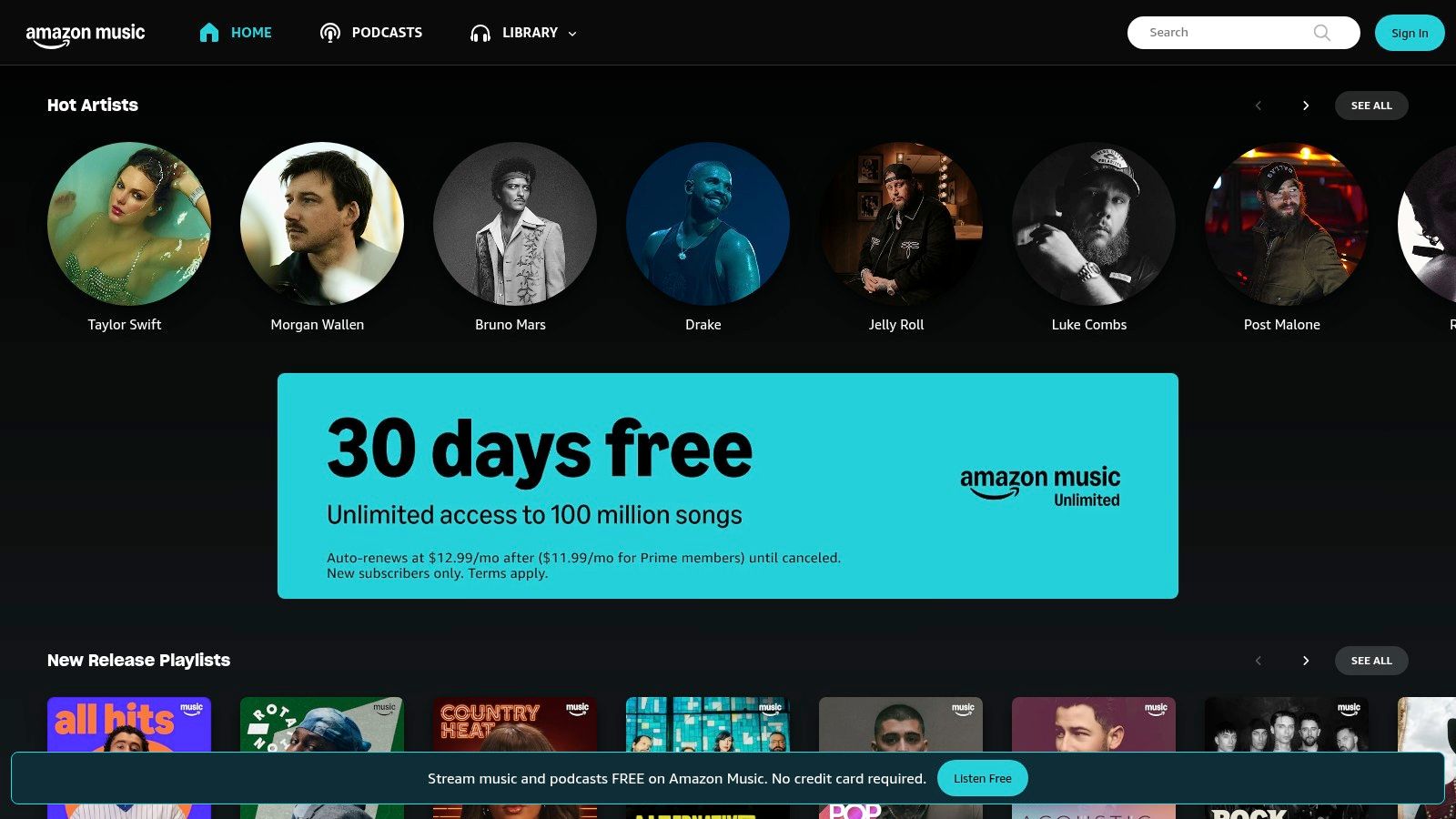
The platform works seamlessly with Echo devices, allowing for easy voice-activated playback. A simple command like, "Alexa, play Arabic alphabet songs for kids," can instantly start a playlist, which is a lifesaver for busy parents trying to manage tasks with a toddler in tow. While the catalog of Arabic children's music might be smaller than on specialized services, it features many popular artists and educational content, making it a strong contender for families already in the Amazon ecosystem.
Why It's a Strong Choice for Families
The primary benefit of Amazon Music is its convenience and hybrid approach. You aren't locked into a subscription if you prefer to buy music. This is great for building a permanent, curated digital library of your child's favorite songs that you own forever. The platform can also be a good discovery tool for niche artists or independent educational releases.
From a safety standpoint, Amazon offers parental controls that can be configured to block explicit content. However, like other general music platforms, it does not specifically curate for halal content, so parental supervision and vetting are essential. The ability to download tracks for offline listening is another key feature, perfect for keeping little ones entertained on flights or long car rides.
Using Amazon Music Effectively
To make the most of the platform, consider these practical tips:
- Explore Both Streaming and Buying: Use an Amazon Music trial to discover new artists. If you find an album your child loves, consider buying the MP3 version from the Amazon Store to own it permanently.
- Leverage Alexa for Hands-Free Control: Create routines in the Alexa app. For example, a "Naptime" routine could dim the smart lights and play a specific playlist of gentle children's Arabic songs, all with one voice command.
- Create Child-Specific Profiles: If you have an Amazon Household account, you can create a profile for your child to help personalize their music experience and keep their listening history separate from yours. Be sure to enable explicit content filters on their profile.
| Feature Comparison | Amazon Music |
|---|---|
| Content Type | Mainstream Music Library & MP3 Store |
| Ad-Free | Yes (with subscription) |
| Halal Curation | No (parental vetting needed) |
| Offline Access | Yes (with subscription) |
| Parental Controls | Strong (via app/device settings) |
| Cost | Subscription-based or a la carte purchases |
Ultimately, Amazon Music is a practical and flexible choice for families who appreciate the convenience of the Amazon ecosystem and want the option to either stream or buy their content.
Website: https://music.amazon.com
4. Anghami
As an Arabic-first streaming service, Anghami is uniquely positioned to help families discover a rich and authentic library of children's Arabic songs. Its deep catalog is tailored to the Middle East and North Africa region, making it an exceptional tool for finding heritage songs, regional nursery rhymes, and popular modern tracks that might not be prioritized on global platforms. For families wanting to connect their children with the cultural sounds of the Arab world, Anghami is an invaluable resource.
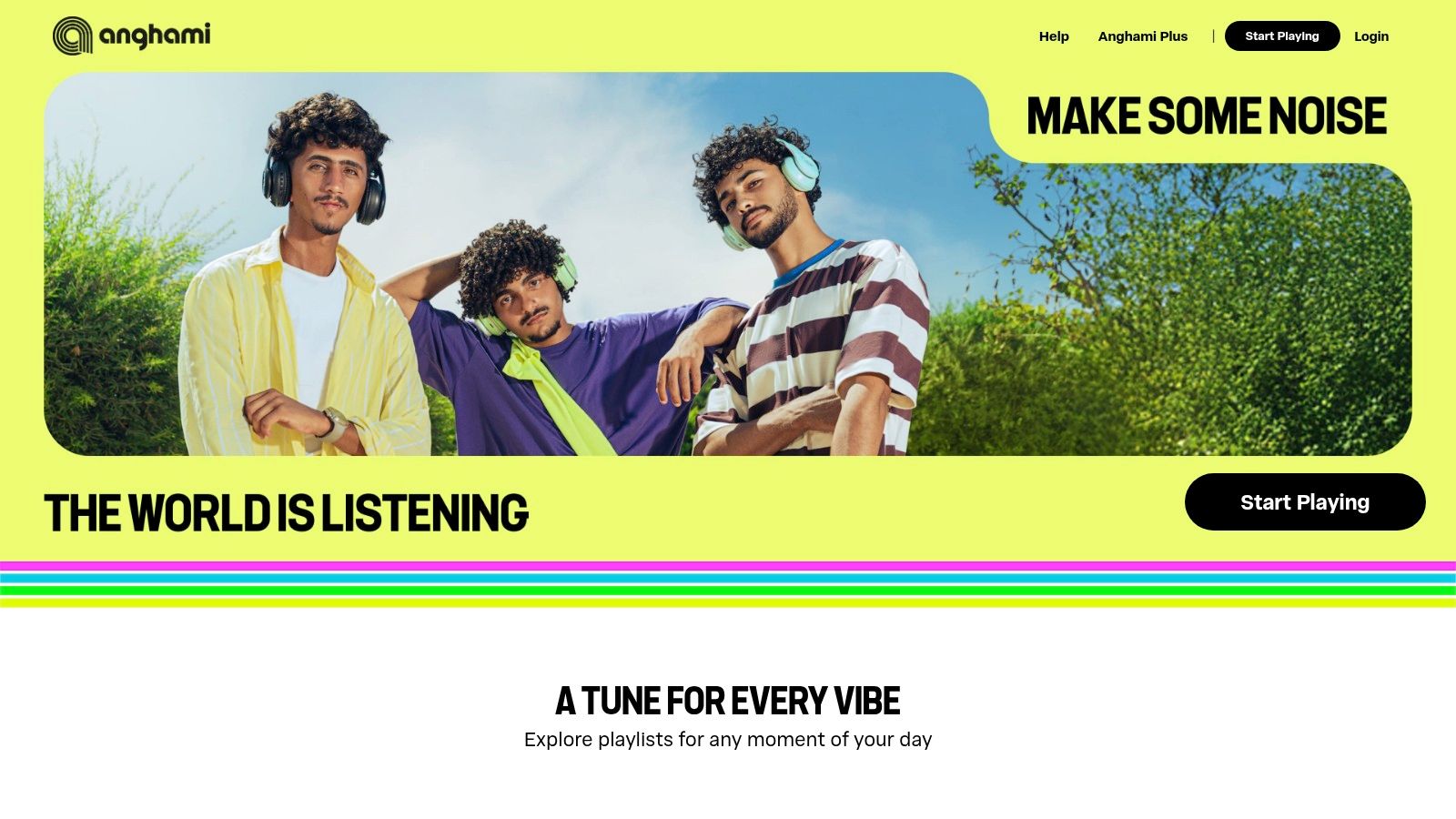
While Anghami has a free version, the premium subscription (Anghami Plus) is essential for an ad-free experience, which helps create a calm and uninterrupted listening environment for young children. Its strength lies in its editorial playlists, which are curated specifically for Arabic listeners. You can easily find collections like "Sing-Along Kids Arabic" that gather popular and beloved songs in one place, saving you time and effort.
Why It's a Strong Choice for Families
Anghami’s core advantage is its focus on Arabic music discovery. Unlike Western-centric platforms where Arabic content can be harder to find, Anghami’s algorithms and curated lists naturally bring classic and contemporary children's Arabic songs to the forefront. This makes it an ideal choice for diaspora families who want to ensure their children are exposed to the same lullabies and playtime songs that they grew up with.
The platform offers a family plan that supports up to six individual accounts, allowing each family member to have their own profile and playlists. This is perfect for households with multiple children or for parents who want to keep their own music preferences separate from their child's. The inclusion of lyrics for many songs also supports interactive learning, helping parents and children sing along and build vocabulary together.
Using Anghami Effectively
To get the most out of Anghami for your little ones, consider these tips:
- Explore Editorial Playlists: Start by searching for pre-made children's playlists. These are often well-curated and provide an excellent introduction to the platform's kids' content without you having to search for individual artists.
- Create Routine-Based Playlists: Build your own playlists for different parts of the day, such as a "Morning Anasheed" list for energetic play or a "Calm Quran Recitation" list for winding down before naps.
- Download Favorites for Offline Use: With Anghami Plus, you can download entire playlists. This is a must-have feature for car rides, flights, or any situation where you won't have a stable internet connection, ensuring your child's routine isn't disrupted.
| Feature Comparison | Anghami |
|---|---|
| Content Type | Arabic-Focused Music Library |
| Ad-Free | Yes (with Anghami Plus) |
| Halal Curation | No (parental vetting needed) |
| Offline Access | Yes |
| Parental Controls | Limited (no dedicated content filters) |
| Cost | Subscription-based (monthly/family plans) |
Ultimately, Anghami is the go-to platform for families who prioritize authentic Arabic musical heritage and want a service designed with Arab listeners in mind.
Website: https://www.anghami.com
5. YouTube Kids
YouTube Kids is often the first stop for parents seeking free access to a vast world of children's Arabic songs, from classic nursery rhymes to animated educational videos. As a child-focused version of the main platform, it provides a more contained environment with essential parental controls, making it a highly accessible option for families looking to introduce the Arabic language and Islamic concepts through music and visuals.
The platform’s greatest strength is its sheer volume of content. You can find dedicated channels for Arabic kids' music, instrument-free nasheeds, and animated videos that teach the alphabet, numbers, and Islamic manners. This makes it an invaluable resource for discovering new songs and artists. However, its free model means ads are shown by default, which can be disruptive and expose children to consumerism.
Why It's a Strong Choice for Families
For many families, being free to use is the primary appeal. You can create individual profiles for each child, allowing the app’s algorithm to suggest age-appropriate content. Parents can set timers to manage screen time, disable the search function to create a more limited content library, or hand-pick specific channels and videos that they approve of, giving them significant control over what their child sees.
From an Islamic perspective, YouTube Kids hosts a wide range of content from creators who specifically produce halal-friendly material. Channels dedicated to instrument-free nasheeds or songs about the prophets and daily duas are plentiful. Once you've found suitable content, you might want to build an offline collection. A helpful guide explains how to safely extract MP3 from YouTube to create a personal, ad-free playlist for car rides or quiet time.
Using YouTube Kids Effectively
To ensure a safe and beneficial experience, follow these practical tips:
- Create and Customize Profiles: Set up a profile for your toddler with the "Preschool" age setting. Go further by turning off the search function and using the "Approved Content Only" mode to hand-pick every video and channel your child can access.
- Block Unwanted Channels: If a channel or video appears that doesn't align with your family’s values, use the block feature immediately. This helps refine the algorithm and prevent similar content from being recommended.
- Subscribe to Quality Channels: Find and subscribe to trusted channels that consistently produce high-quality, faith-aligned children's Arabic songs. This makes it easier to find appropriate content quickly.
| Feature Comparison | YouTube Kids |
|---|---|
| Content Type | User-Generated Video Content |
| Ad-Free | No (unless with YouTube Premium) |
| Halal Curation | No (parental vetting essential) |
| Offline Access | Yes (with YouTube Premium) |
| Parental Controls | Strong (profiles, timers, blocking) |
| Cost | Free (ad-supported) or paid via Premium |
Ultimately, YouTube Kids is a powerful tool for accessing a massive library of Arabic songs, but it requires active parental involvement to curate a truly safe and enriching environment.
Website: https://www.youtubekids.com
6. Lamsa
Lamsa is a purpose-built Arabic early learning app designed specifically for preschoolers, making it an exceptional resource for families focused on building strong language foundations. More than just a song library, it offers an integrated ecosystem of children's Arabic songs, rhymes, interactive stories, and educational games in Modern Standard Arabic. Its Arabic-first approach ensures that the content is culturally authentic and pedagogically sound for young learners.
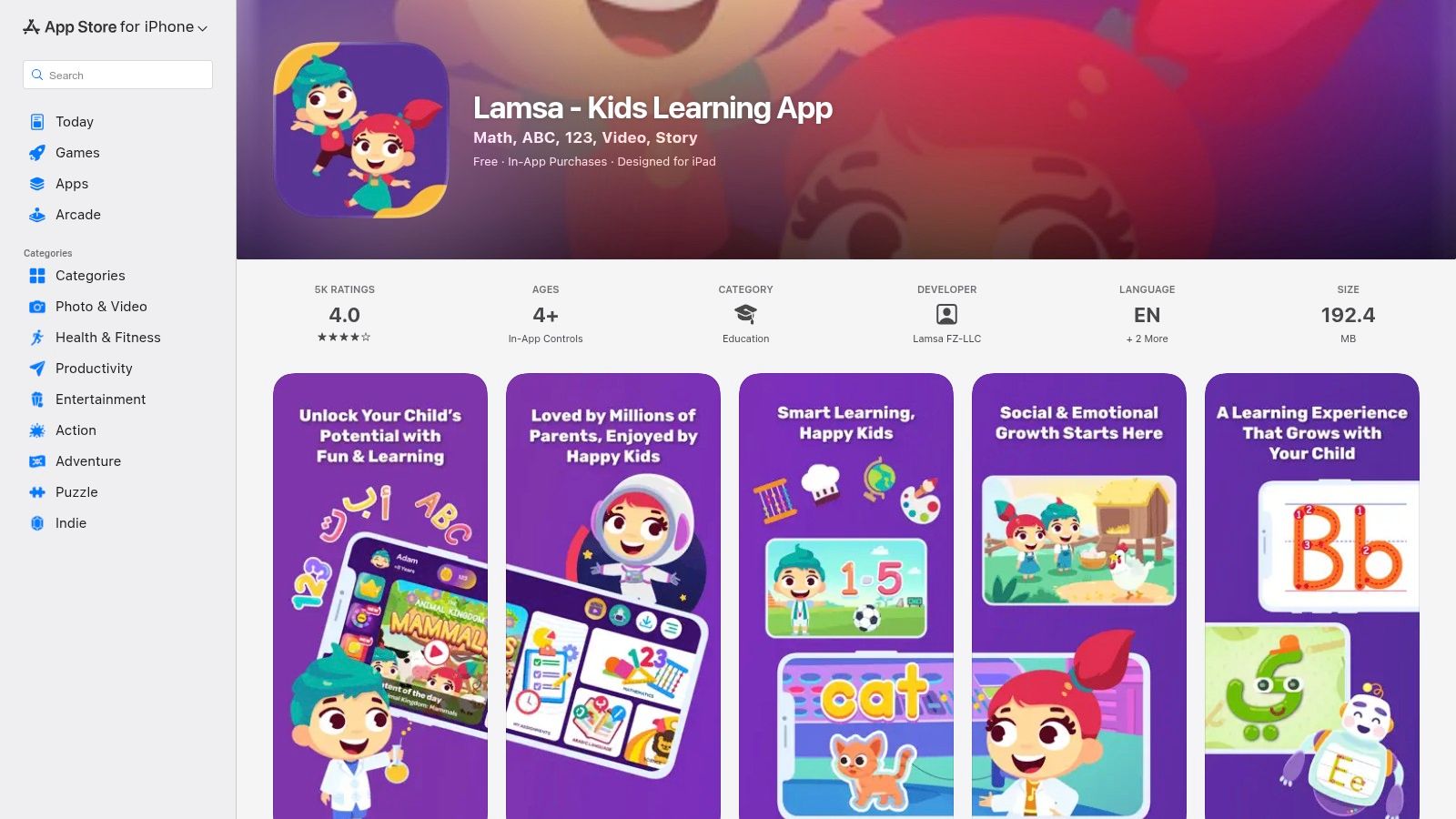
Unlike general streaming platforms, every piece of content within Lamsa is created for early childhood development. The app helps children learn the Arabic alphabet, numbers, colors, and core vocabulary through engaging and repetitive tunes. For Muslim families, this means having a trusted, self-contained environment where their child can explore a rich library of content without the risk of stumbling upon inappropriate material. The app’s bilingual interface options (Arabic/English/French) also make it accessible for parents who may not be native Arabic speakers themselves.
Why It's a Strong Choice for Families
Lamsa’s greatest strength is its singular focus on Arabic early education. The content is not an afterthought or a small category within a larger library; it is the entire purpose of the platform. This dedication is evident in the quality of the animations, the clarity of the audio, and the thoughtful design of its interactive activities. The app receives frequent updates, ensuring a fresh and expanding library of topics relevant to a child's world.
From a practical standpoint, the platform’s offline access is a key feature for busy families. Parents can download their child’s favorite songs and activities, providing a reliable and educational screen time option during travel or appointments. The subscription model is managed transparently through in-app purchases, giving parents clear control over access without hidden costs. You can learn more about the role of music in early development in our guide to children learning songs.
Using Lamsa Effectively
To get the most value from the Lamsa app, consider these tips:
- Integrate It into Learning Routines: Use specific songs or activities to reinforce daily learning. For example, play an alphabet nasheed during a crafting session or a numbers song while tidying up toys.
- Explore Beyond Songs: Take advantage of the interactive stories and games that complement the musical content. These activities help solidify concepts introduced in the children's Arabic songs and improve motor skills.
- Download Content for Offline Use: Before leaving the house, open the app and download a selection of your child’s favorite videos and games. This ensures you have calm, educational entertainment ready without needing Wi-Fi or mobile data.
| Feature Comparison | Lamsa |
|---|---|
| Content Type | Dedicated Early Learning App (Songs, Stories, Games) |
| Ad-Free | Yes (with subscription) |
| Halal Curation | High (content is educational and child-safe) |
| Offline Access | Yes |
| Parental Controls | Yes (in-app controls) |
| Cost | Subscription-based (via in-app purchase) |
Lamsa is an excellent, immersive choice for parents seeking a high-quality, all-in-one Arabic learning tool that is both safe and highly effective for the preschool years.
Website: https://apps.apple.com/us/app/lamsa-kids-learning-app/id517583488
7. Makooky
Makooky is a bilingual Arabic and English app designed specifically for young learners, offering a rich world of children's Arabic songs, stories, and simple games. It stands out by integrating music directly into a structured learning journey, making it an excellent tool for parents focused on building foundational Arabic language skills in a playful, interactive environment. The platform’s emphasis on both Modern Standard Arabic and various dialects provides valuable exposure for children.
Unlike general streaming services, Makooky is a curated educational experience. Its songs are created to teach core concepts like the alphabet, numbers, and daily routines, all within a child-friendly interface. The app is distributed primarily through the Apple App Store and Google Play, making it easily accessible on tablets and smartphones, which are often the preferred devices for toddlers.
Why It's a Strong Choice for Families
The standout benefit of Makooky is its dedicated focus on Arabic language acquisition. The songs are not just entertainment; they are educational tools designed by experts. For Muslim families raising children in non-Arabic-speaking countries, this provides a structured and engaging way to introduce the language of the Quran from a very early age. The offline download feature is a lifesaver for parents, allowing them to access content during travel or in areas without Wi-Fi, ensuring a consistent routine for their child.
From a usability perspective, the bilingual interface is a thoughtful touch, enabling parents who may not be fluent in Arabic to navigate the app and participate in their child's learning. Regular content updates keep the experience fresh and exciting for little ones. While the app itself doesn't explicitly filter for halal content, its educational nature means the songs and stories are inherently child-appropriate and align well with Muslim family values.
Using Makooky Effectively
To maximize the benefits of Makooky for your toddler, consider these strategies:
- Integrate Songs into Daily Routines: Use the songs about waking up, brushing teeth, or bedtime to add structure and fun to your child’s daily schedule. This reinforces both the routine and the Arabic vocabulary.
- Utilize Offline Mode: Before heading out, download a few favorite playlists or stories. This is perfect for keeping your child calmly engaged during car rides or while waiting for appointments without relying on mobile data.
- Explore Dialect Options: If your family speaks a specific dialect, explore the app’s offerings. Hearing familiar colloquialisms alongside Modern Standard Arabic can strengthen a child's connection to their heritage.
| Feature Comparison | Makooky |
|---|---|
| Content Type | Educational App (Songs, Stories, Games) |
| Ad-Free | Yes (with subscription) |
| Halal Curation | No (but content is inherently child-safe) |
| Offline Access | Yes |
| Parental Controls | In-app controls, plus device-level settings |
| Cost | Subscription-based (via in-app purchase) |
Makooky is a fantastic, focused resource for parents who want to go beyond simple entertainment and use children's Arabic songs as a cornerstone of early language learning.
Website: https://apkpure.com/makooky-kids-stories-songs/com.makooky.makookyworld
Childrens Arabic Songs — 7-Platform Comparison
| Platform | Complexity 🔄 | Resources ⚡ | Expected outcomes 📊 | Ideal use cases 💡 | Key advantages ⭐ |
|---|---|---|---|---|---|
| Babymode | Low — parent dashboard; easy setup (early-access waitlist) | Subscription (pricing TBA); phone/tablet/TV/computer; offline downloads; minimal data collection | Faith-aligned, age-appropriate 0–3 videos with progress tracking | Families wanting halal, ad-free early-learning for infants/toddlers | Privacy-first, Islamic advisory-reviewed AI content; granular parent controls |
| Apple Music | Medium — account/subscription setup; seamless in Apple ecosystem | Subscription or per‑track purchase; device storage for offline | Extensive Arabic kids’ music catalog; ad-free playback with subscription | Apple users seeking broad music catalog and offline listening | Large catalog, cross-device sync, lyrics, reliable playback |
| Amazon Music (Store) | Medium — subscription or purchase; integrates with Echo/devices | Unlimited/Prime subscription or MP3 purchases; Echo support; downloads use storage | Streaming + purchase flexibility; decent discovery for niche Arabic artists | Users who prefer buying tracks or using Amazon devices (Echo) | One account for streaming and purchases; Echo/device integration |
| Anghami | Low — simple signup; feature set varies by region | Free tier (ads) or Plus subscription; offline downloads; family plan option | Strong Arabic discovery and curated kids’ playlists | Arabic-first listeners seeking regional/classic children’s songs | Deep Arabic catalog, editorial playlists, competitive family pricing |
| YouTube Kids | Low — install and configure profiles, timers and filters | Free with ads (or Premium for ad-free/offline); internet for streaming | Very broad Arabic kids’ video library; curation quality varies | Families wanting free access to wide variety of clips and channels | Massive content breadth, built-in parental controls, free access |
| Lamsa | Low–Medium — app onboarding; in-app subscriptions and updates | Subscription/in-app purchases; mobile device; offline downloads | Structured preschool early-learning in MSA with interactive activities | Families prioritizing Arabic language foundations and preschool learning | Purpose-built Arabic early-learning content; interactive activities; frequent updates |
| Makooky | Low — app install and in-app discovery | App-based subscription/in-app purchases; offline downloads; device storage | Bilingual songs, stories and simple games for young children | Bilingual households wanting Arabic+English content with offline options | Bilingual focus, offline support, learning-integrated songs and stories |
Creating Your Family's Perfect Playlist
As we’ve seen, the world of children's Arabic songs is rich and full of beautiful ways to nurture your little one’s faith and language skills. Now, your role is to be a mindful curator for your family, creating a soundscape that enriches your home with peace, joy, and Islamic values.
This article has offered a practical look at different tools, from dedicated halal platforms to mainstream streaming services. The key takeaway is that the "best" choice is the one that fits your family’s priorities, whether that’s a completely ad-free, faith-centred experience or the flexibility to build playlists on a service you already use.
Recapping Your Options: A Quick Guide
To help you decide, let's revisit the core strengths of each platform:
- For Ultimate Peace of Mind: If your top priority is a 100% halal, ad-free, and algorithm-free environment specifically for Muslim toddlers, a dedicated service like Babymode is the clear frontrunner. It removes all the guesswork and safety concerns.
- For Existing Subscribers: If you already have a family plan for Apple Music or Amazon Music, using these platforms can be cost-effective. Your main task will be diligent curation: building private playlists of trusted artists and nasheeds to avoid your child stumbling upon inappropriate content.
- For Regional Content: Platforms like Anghami offer a deep library of Arabic-language content. However, like other mainstream services, it requires careful playlist management to keep the experience child-appropriate.
- For Interactive Learning: Educational apps such as Lamsa and Makooky integrate songs into a broader learning experience with stories and games. These are excellent for active, engaging screen time but might not be ideal for background listening during playtime or naps.
- For Cautious Visuals: YouTube Kids provides access to countless visual nasheeds. While its parental controls are good, the risk of your child seeing overstimulating or subtly inappropriate content via auto-play and recommendations is a real concern for many parents.
Your Actionable Next Steps
Building the perfect playlist is a joyful, ongoing process. Here are some practical steps you can take today to integrate beautiful children's Arabic songs into your daily routine:
- Define Your "Why": What is your primary goal? Is it teaching the Arabic alphabet, instilling good manners, creating a calm bedtime atmosphere, or simply having uplifting background sounds? Your goal will guide your song selection.
- Start Small: Choose just three to five songs from our list that you like. Focus on themes relevant to your child's current stage, like a song about animals, salah, or saying "Bismillah."
- Integrate, Don't Just Play: Link the songs to real-life moments. Sing the "Clean Up" nasheed while tidying toys, or play a song about loving Allah during a quiet cuddle before Maghrib. This connection makes learning meaningful.
- Listen and Observe: Pay attention to how your child responds. Do they clap along to an upbeat nasheed? Do they seem soothed by a gentle, instrument-free track? Their reactions are your best guide.
Ultimately, you are not just choosing songs; you are crafting the soundtrack of your child's early years. By thoughtfully selecting media that reflects your faith and values, you are laying a foundation of love for Allah, the Prophet (peace be upon him), and the beautiful Arabic language. This is a powerful act of tarbiyah, nurturing your child's spirit one gentle, joyful note at a time.
Ready to build a safe, enriching, and 100% halal playlist without the stress of constant supervision? Babymode offers a curated library of beautiful children's Arabic songs and nasheeds in an ad-free, algorithm-free environment designed specifically for Muslim families. Start your free trial today and fill your home with sounds you can trust.