As a Muslim parent, you want to fill your home with peace and gentle learning, even during playtime. You want your little one to absorb their beautiful heritage, but finding content that aligns with Islamic values can feel like an endless search, especially for the 0-3 age group. So much of what's online is overstimulating, filled with ads, or simply doesn't feel right for our babies' hearts and minds. It’s a common challenge: how do we introduce the beauty of the Arabic language without resorting to chaotic screen time?
This guide was created with your family in mind. We've carefully curated a list of eight gentle and educational arabic songs for kindergarten-aged children and their younger siblings. These aren't just catchy tunes; they are tools for teaching foundational concepts in a calm, faith-centred way. Whether you're trying to make car rides more peaceful or create a soothing routine before naptime, these songs help. In this list, you will find songs that introduce the Arabic alphabet, numbers, and positive manners, all through joyful melodies. We'll share practical tips for using them at home, helping you turn everyday moments into meaningful learning experiences, Insha'Allah.
1. Assalamu Alaikum - The Greeting of Peace Song
One of the most foundational songs to introduce is one that teaches the beautiful Islamic greeting, "Assalamu Alaikum." This song is more than just a melody; it's a baby's first step into understanding the core values of peace and respect in Islam. Through a simple, repetitive tune, it introduces toddlers to the essential phrases "Assalamu Alaikum" (Peace be upon you) and the reply, "Wa Alaikum Assalam" (And upon you be peace). The song’s gentle rhythm makes it easy for little ones to hear and eventually babble along to.
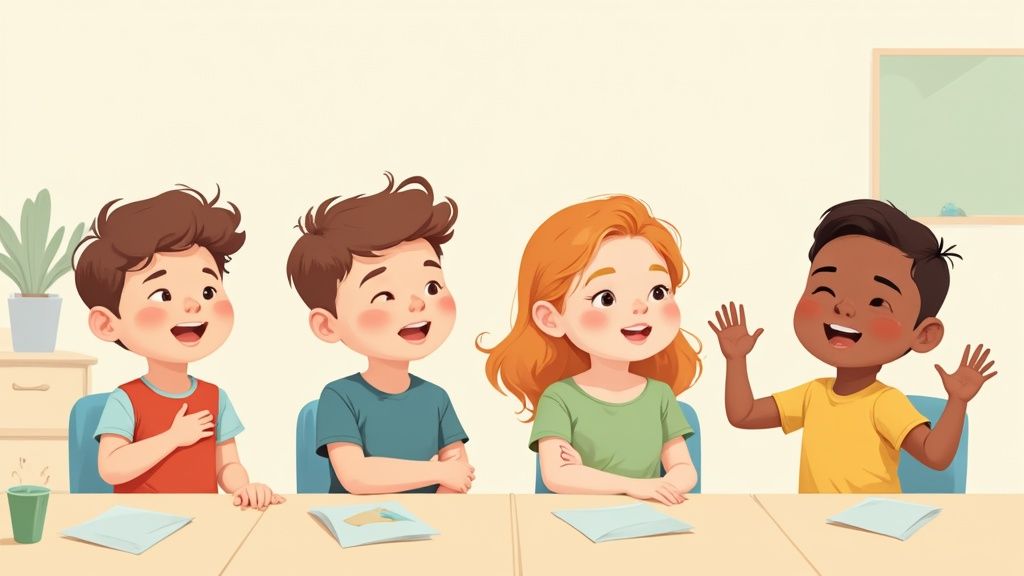
This song helps build good adab (manners) from the very beginning. By associating the greeting with a joyful tune, children learn that welcoming others is a positive and rewarding act. It's a beautiful way to normalise Islamic greetings in your home.
Learning Objectives and Benefits
- Manners and Courtesy: Instills the primary Islamic greeting as a natural habit.
- Language Skills: Introduces foundational Arabic vocabulary and sounds.
- Social Development: Encourages children to greet family members and friends, fostering a sense of belonging.
At-Home Activities
To make this song even more effective, pair it with simple, daily routines. Sing "Assalamu Alaikum" when you enter your baby's room in the morning, and have other family members sing "Wa Alaikum Assalam" back. Incorporate waves or placing a hand on the heart to connect the words with a physical gesture of respect. Making it a part of daily rituals helps embed the greeting into their interactions, making it a cherished habit.
- Where to Find It: Numerous ad-free versions are available on YouTube channels like "Zaky" or dedicated Islamic kids' apps. Look for creators focusing on halal educational content with gentle animation.
2. Alef Ba Ta - Arabic Alphabet Song
A cornerstone of early Arabic exposure, the "Alef Ba Ta" song is one of the most essential arabic songs for kindergarten and toddlers. This foundational melody introduces children to the 28 letters of the Arabic alphabet in a rhythmic and memorable way. Each letter is clearly pronounced, helping little ears get used to the sounds of the language. It transforms the big task of learning a new alphabet into a joyful and engaging sing-along.
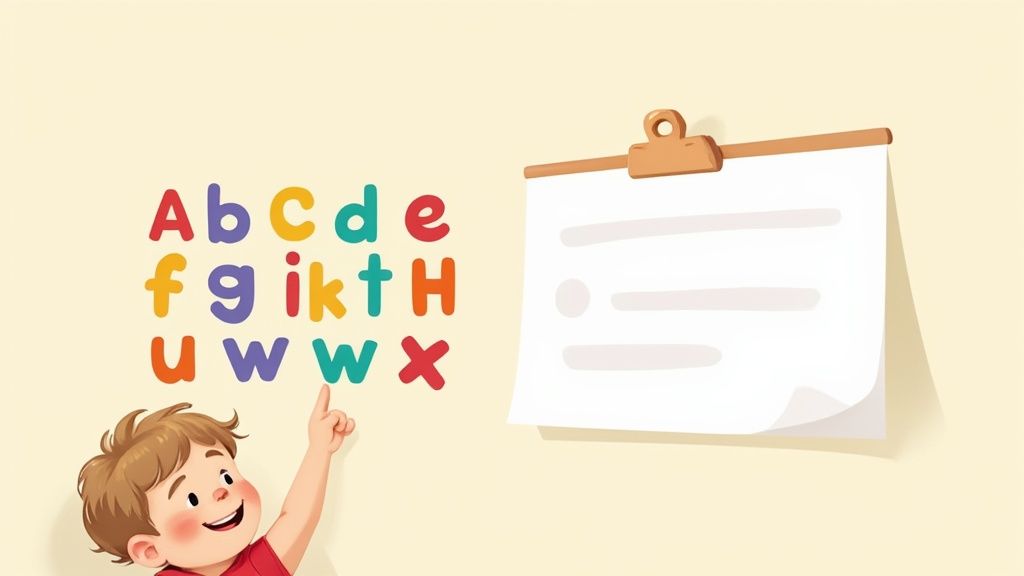
This song is a staple in Muslim homes because it lays the groundwork for connecting with the language of the Qur'an. By turning phonics into a fun game, it helps children build a positive association with Arabic from a very young age.
Learning Objectives and Benefits
- Literacy Foundation: Introduces the shapes and phonetic sounds of all 28 Arabic letters.
- Vocabulary Building: Many versions connect each letter to a simple word (e.g., "Ba" for bab, door).
- Cognitive Development: Enhances memory and pattern recognition through repetitive melody.
At-Home Activities
To maximise learning, play the song gently in the background during quiet playtime. Use colourful, soft flashcards or wooden letter puzzles, holding up the corresponding letter as you sing. For older toddlers, incorporate a multi-sensory approach by having them trace letter shapes in sand, playdough, or on a whiteboard. A quick, 5-minute daily routine during a calm moment can build strong recall without feeling like a lesson.
- Where to Find It: Countless versions are available on YouTube. Look for channels like 'Qasas Abjad' or 'Arabic for Kids' that offer clear animation and pronunciation. Many Islamic kids' apps also feature their own interactive versions of this classic song.
3. Twinkle Twinkle Little Star (Arabic Version)
Using familiar melodies is one of the most effective ways to introduce new languages, which is why the Arabic version of "Twinkle Twinkle Little Star" is a wonderful choice for your little one. This beloved nursery rhyme uses the classic, gentle tune that children already know, making the transition to Arabic words feel natural and less intimidating. The song typically uses simple, repetitive vocabulary centered around stars (najma), the sky (sama), and shining (talma’), making it an accessible and joyful learning experience.
This song is an excellent bridge for children in bilingual households. Its calm and soothing nature makes it perfect for a bedtime routine, helping little ones wind down while gently reinforcing their first Arabic words.
Learning Objectives and Benefits
- Vocabulary Building: Introduces core Arabic words like najma (star) and sama (sky).
- Phonetic Skills: Helps children practice common Arabic sounds within a familiar and predictable melody.
- Cognitive Connection: Builds a bridge between English and Arabic, showing children that songs can exist in multiple languages.
At-Home Activities
To bring this song to life, incorporate simple props. Use star-shaped cutouts, glow-in-the-dark stickers on the ceiling, or a soft night light to create a "starry" environment. Encourage gentle hand motions, such as twinkling fingers for the star. Singing this song slowly as part of a bedtime or naptime routine provides a calm, reassuring, and educational transition to sleep, helping you establish that predictable schedule all parents need.
- Where to Find It: Safe and child-friendly versions are widely available on YouTube channels like "Little Muslim" and educational platforms that adapt classic nursery rhymes. Search for "Twinkle Twinkle Arabic" for various renditions.
4. Rana Rana - The Frog Song (Arabic Nursery Rhyme)
For engaging active toddlers, "Rana Rana" is one of the most beloved arabic songs for kindergarten and younger children. This playful action song centers around a frog, or rana (رَنَا), and uses a catchy, simple melody to teach animal vocabulary and action verbs. The song is highly interactive, inviting children to mimic a frog's movements like jumping and hopping, turning language acquisition into a full-body experience.
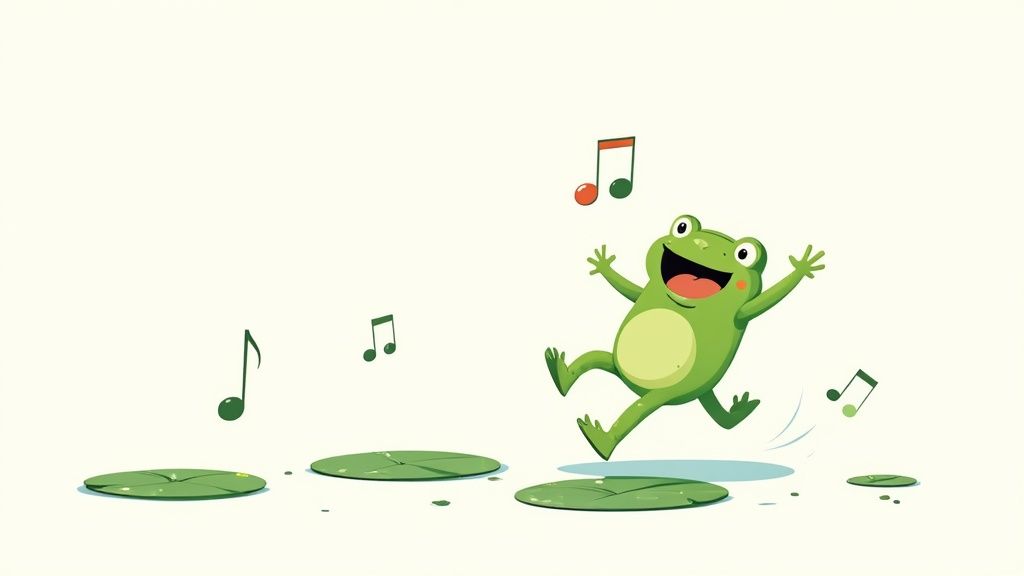
This song seamlessly blends language learning with physical development. It provides a perfect outlet for a toddler's boundless energy while reinforcing new Arabic words through repetition and movement, making the vocabulary memorable and fun.
Learning Objectives and Benefits
- Gross Motor Skills: Develops coordination, balance, and strength through jumping and hopping.
- Language Skills: Introduces key Arabic vocabulary, including "rana" (frog).
- Following Directions: Encourages listening skills and the ability to follow simple, song-based instructions.
At-Home Activities
To get the most out of "Rana Rana," create a safe, open space for movement. Use green cushions or small mats as "lily pads" on the floor to give your little one clear targets for their jumps. First, teach the movements separately, like practicing frog jumps, before combining them with the song. This song works beautifully as a transition activity to get wiggles out before a quiet activity or as a fun brain break when your toddler is getting fussy. For more ways to connect language with nature, explore learning about different animal sounds and names.
- Where to Find It: This traditional rhyme is widely available on YouTube. Search for "أغنية الضفدع رنا" and look for animated versions from channels specializing in Arabic children's nursery rhymes.
5. Colors Song - Alwan (أَلْوَان)
Teaching colors is a fundamental part of early childhood education, and the Alwan (Colors) song is a fantastic tool for this purpose. This engaging tune introduces essential color vocabulary in Arabic, such as Ahmar (red), Azraq (blue), and Akhdar (green), by associating each word with familiar objects. The song's repetitive and melodic structure helps children easily memorise the names of colors, building a strong foundation for their language skills.
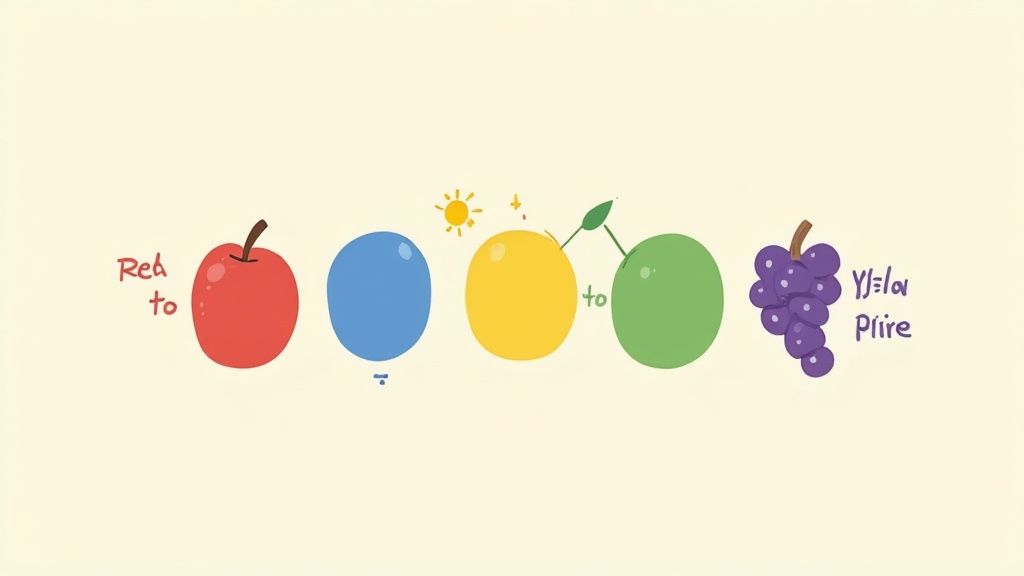
This song is celebrated by parents who want to integrate language learning into daily life. By linking colors to everyday items like a red apple (tuffaha hamra') or the blue sky, it makes learning practical and relevant. The visual and auditory association is a powerful tool for retention, helping toddlers build their vocabulary in a fun, natural way.
Learning Objectives and Benefits
- Vocabulary Expansion: Introduces and reinforces the Arabic names for primary and secondary colors.
- Cognitive Skills: Enhances color recognition, sorting, and matching abilities.
- Language Development: Improves pronunciation and listening skills in Arabic through a catchy melody.
At-Home Activities
Bring the Alwan song to life with hands-on, multi-sensory activities. Gather colorful blocks, scarves, or fruits and have your child point to or hold up the correct item as each color is sung. You can create a "color of the day" theme where you both try to spot objects of a specific color around the house. Art activities are a perfect companion; sing the song while painting or playing with colored play-dough. Ask simple questions like, "Where is the red car?" to reinforce their learning throughout the day.
- Where to Find It: High-quality, child-friendly versions are widely available on YouTube channels that focus on Arabic educational content for children. Look for versions with clear animation and correct pronunciation.
6. Numbers Song - Raqam Raqam (أرقام)
Learning to count is a key early childhood milestone, and the Raqam Raqam song is one of the most effective arabic songs for kindergarten and younger children. This rhythmic and catchy tune introduces the Arabic numerals, typically from one to ten (واحد to عشرة). Through repetition and a simple melody, it helps little ones recognize the sound of each number, building a crucial foundation for early numeracy skills. The song’s vibrant nature transforms counting from a rote task into a joyful game.
By singing about numbers, children develop quantity association and sequencing skills in Arabic, which is especially valuable for families aiming to raise bilingual children. It seamlessly integrates language learning with essential math concepts.
Learning Objectives and Benefits
- Numeracy Skills: Teaches counting and number recognition in Arabic.
- Cognitive Development: Strengthens memory and pattern recognition through a repetitive song structure.
- Language Acquisition: Reinforces Arabic vocabulary for numbers one through ten.
At-Home Activities
Bring this song to life by incorporating physical movement and visual aids. Use your fingers to count along with the song, encouraging your child to mirror your actions. For a hands-on approach, use blocks or pieces of fruit to represent the quantities, helping to build a concrete understanding of each number. You can make counting a part of daily routines, like counting steps on the way to the park or counting out dates for a snack. This is a simple way to make learning happen naturally during your busy day.
- Where to Find It: Countless versions are available on educational YouTube channels like "Baraem" and "Hikayat Jinan." Many Islamic kids' apps also feature interactive number songs, often in an ad-free environment.
7. Body Parts Song - Asai Jasadi (أعضاء جسدي)
One of the most engaging arabic songs for kindergarten and toddlers is the classic body parts song, "Asai Jasadi." This tune transforms learning vocabulary into a fun, interactive game. Through a catchy melody, children learn the Arabic names for their body parts, such as rass (head), ainain (eyes), anf (nose), and yadain (hands). The kinesthetic nature of the song, which encourages pointing and touching, helps solidify these new words in a child's memory.
This song masterfully combines language acquisition with motor skill development. By connecting words to physical actions, it supports body awareness and helps children learn to follow directions, making it a powerful educational tool for home.
Learning Objectives and Benefits
- Vocabulary Expansion: Teaches essential Arabic words for different body parts.
- Kinesthetic Learning: Reinforces vocabulary through physical movement and touch.
- Body Awareness: Helps children identify and name their own body parts, promoting self-awareness.
- Listening Skills: Develops the ability to listen and respond with the correct action.
At-Home Activities
Bring "Asai Jasadi" to life during nappy changes or bath time. Gently touch your baby's nose while singing the word anf, or wiggle their toes when you sing about feet. Start by slowly demonstrating each action, asking your older toddler to mirror you as you sing. Integrate the vocabulary into daily routines, such as saying "Let's wash our yadain" before meals or "Brush your asnan (teeth)" at bedtime. This contextual learning makes the vocabulary practical and meaningful.
- Where to Find It: Safe, ad-free versions are widely available on YouTube channels like "Learn with Zaky" and other dedicated Arabic educational platforms. Many Islamic kids' apps also feature animated versions of this classic song.
8. Days of the Week Song - Ayyam Al Usbou (أيام الأسبوع)
Structuring a child's understanding of time is a foundational learning milestone, and an "Ayyam Al Usbou" song is a wonderful way to introduce this concept. This melodic tune introduces little ones to the seven days of the week in Arabic. Its repetitive and sequential nature helps toddlers and preschoolers grasp concepts like yesterday, today, and tomorrow, which are essential for building the routine and predictability they thrive on.
This song is a daily staple in many preschools. By linking the words for days to a simple, catchy melody, the song transforms a potentially abstract concept into a fun and memorable activity. It also helps familiarise children with key days like Al-Jumu'ah (Friday), connecting their weekly rhythm to an important part of Muslim life.
Learning Objectives and Benefits
- Cognitive Skills: Develops an understanding of time and sequence.
- Language Acquisition: Teaches essential vocabulary for days of the week (e.g., Al-Ahad, Al-Ithnayn).
- Organizational Skills: Helps children anticipate weekly routines, fostering a sense of security.
- Cultural Connection: Familiarizes children with the Islamic week and the significance of Friday.
At-Home Activities
Integrate this song into your morning routine to make it a powerful learning tool. Use a simple wall calendar. As you sing, have your child point to the correct day. Emphasise concepts like "today" (al-yawm), "yesterday" (ams), and "tomorrow" (ghadan) to provide practical context. This helps build a predictable start to the day, which can be very calming for young children.
- Where to Find It: Educational YouTube channels like "Learn with Zakaria" and various Arabic kids' learning apps offer animated versions. Search for "أغنية أيام الأسبوع" for child-friendly options.
Comparison of 8 Arabic Songs for Young Children
| Song | 🔄 Implementation complexity | ⚡ Resource requirements | 📊 Expected outcomes | 💡 Ideal use cases | ⭐ Key advantages |
|---|---|---|---|---|---|
| Assalamu Alaikum | 🔄 Low — simple melody & gestures | ⚡ Low — 1–2 min, no materials needed | 📊 Greeting recall; social etiquette; positive manners | 💡 Morning routines; greeting guests; leaving the house | ⭐ Highly memorable; culturally authentic; easy to repeat |
| Alef Ba Ta - Alphabet Song | 🔄 Medium — 28 letters; best learned in small chunks | ⚡ Medium — letter cards/puzzles, audio support, short sessions | 📊 Letter recognition; phonics foundation; pre-reading skills | 💡 Quiet playtime; dedicated learning moments; car rides | ⭐ Strong literacy foundation; many gentle versions available |
| Twinkle Twinkle (Arabic) | 🔄 Low — melody is already familiar | ⚡ Low — 1–2 min, optional star props or night light | 📊 Gentle vocabulary exposure; bridges English→Arabic | 💡 Bedtime/naptime routine; calming down a fussy baby | ⭐ Low-anxiety entry; emotionally comforting; very gentle |
| Rana Rana - The Frog Song | 🔄 Low–Medium — needs space for safe movement | ⚡ Medium — open floor space, optional "lily pad" cushions | 📊 Action words; gross motor skills; high engagement | 💡 Getting wiggles out; active playtime; brain breaks | ⭐ Excellent for active toddlers; blends movement & language |
| Colors Song - Alwan | 🔄 Medium — requires visual coordination | ⚡ Medium — colored objects, flashcards, or art supplies | 📊 Color naming; visual association; practical vocabulary | 💡 Arts & crafts time; playing with blocks; getting dressed | ⭐ Practical & assessable; visually engaging; multi-sensory |
| Numbers Song - Raqam Raqam | 🔄 Medium — requires repetition for sequencing | ⚡ Medium — number cards, counters, finger counting | 📊 Number recall; early numeracy; counting skills | 💡 Snack time (counting dates/grapes); playtime; tidying up | ⭐ Strong numeracy foundation; kinesthetic supports retention |
| Body Parts Song - Asai Jasadi | 🔄 Low–Medium — easy actions, very interactive | ⚡ Low — no materials needed, just you and your child | 📊 Body vocabulary; spatial awareness; motor coordination | 💡 Bath time; nappy changes; getting dressed | ⭐ Immediate feedback; highly engaging; strengthens bond |
| Days of the Week Song | 🔄 Medium — abstract concept for toddlers | ⚡ Medium — wall calendar, day cards, consistent routine | 📊 Temporal concepts; sequencing; understanding routines | 💡 Morning routine; older toddlers (2-3+); circle time at home | ⭐ Teaches organization; integrates with routines; builds security |
Making Music a Meaningful Part of Your Day, InshaAllah
Weaving these beautiful arabic songs for kindergarten into your family's daily rhythm doesn't need to be another item on your ever-growing to-do list. Instead, think of it as a simple, joyful way to layer language, faith, and connection into the moments you already share. The eight songs we've explored, from the foundational "Assalamu Alaikum" to the playful "Rana Rana," offer a toolkit for building your child's early Arabic vocabulary in a way that feels natural and fun.
This is about more than just memorising words. It's about creating a home where the sounds of our faith and the beauty of the Arabic language are a familiar, comforting presence. When you sing the "Alef Ba Ta" song while tidying up toys or play the "Alwan" (Colors) song during arts and crafts, you are planting seeds of identity and love for the Quran's language that will, Insha'Allah, flourish as your child grows.
Key Takeaways for Busy Mums and Dads
Remember these simple truths as you start incorporating these songs:
* Consistency over Intensity: A few minutes of singing each day is far more effective than an hour once a week. Attach a song to a routine you already have, like putting on shoes or brushing teeth, to make it an effortless habit.
* Embrace Imperfection: Your pronunciation doesn't have to be perfect. Your child will benefit most from your enthusiasm and the loving interaction. They are learning from your effort and your joy.
* Connect to Real Life: Point out the colors you learned in the "Alwan" song while at the grocery store. Count the dates in Arabic using the "Raqam Raqam" song during Ramadan. These real-world connections make the learning stick.
Ultimately, these gentle Arabic songs are a powerful tool for early tarbiyah. They help you multitask spiritually, enriching your child's development while you manage the countless other demands of parenthood. You aren't just teaching them letters and numbers; you are tuning their hearts to the sounds that will, one day, help them connect with the words of Allah. It’s a beautiful, blessed foundation to build upon, one simple nasheed at a time.
Tired of worrying about ads and inappropriate content interrupting your child's learning? Babymode is creating a 100% halal, ad-free streaming service designed specifically for Muslim toddlers, featuring curated nasheeds, Quranic stories, and more. Join the waitlist to be the first to know when we launch and create a safer screen time experience for your family. Learn more at Babymode.