An ABC wooden puzzle is so much more than a toy—it's one of the first and best tools for gentle, hands-on learning. For many of us in Muslim families, the search for quality, screen-free activities that feel right for our homes is constant. An ABC wooden puzzle is a simple, beautiful answer for creating those quiet, focused moments.
Why An ABC Wooden Puzzle Belongs In Your Home
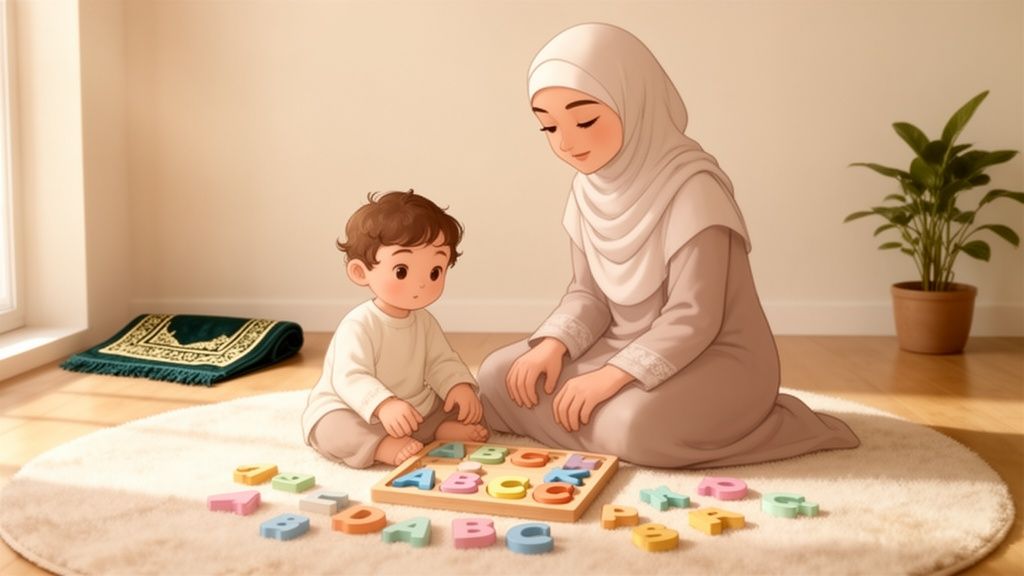
Let’s be honest—in a busy home, especially around prayer times or when you’re rushing to get dinner ready before Maghrib, reaching for a screen is tempting. But we also want to protect our children's innocence and avoid the overstimulation that often comes with digital content. This is exactly where a classic wooden puzzle shines, offering a peaceful alternative that truly nurtures your child's growing mind.
These puzzles are perfectly made for little hands. They invite your toddler to focus and solve problems without any distracting flashing lights or loud sounds, which helps create a calm and gentle learning space. This approach fits so well with the kind of tarbiyah many of us are trying to practice.
Fostering Patience and Curiosity
Working on a puzzle is a quiet act of discovery. It’s a wonderful way to help your toddler build concentration and patience—virtues we value so deeply in our faith and life. As they grasp a piece, turn it over, and figure out exactly where it fits, they are developing critical skills that lay the groundwork for all future learning.
This simple activity teaches them to stick with a small challenge and feel that wonderful sense of satisfaction when they complete it. It’s a gentle introduction to structured thinking that feels just like play.
An ABC wooden puzzle isn’t just about memorizing letters; it’s about nurturing a calm, focused mindset. It provides a healthy, hands-on activity that respects your child’s pace and protects their gentle nature.
On top of that, these puzzles build a strong foundation for literacy. Just recognizing the unique shape of each letter is the very first step toward reading. This early, playful exposure can spark a genuine curiosity about language that will serve them for years to come, preparing them conceptually for everything from English storybooks to one day, inshaAllah, learning the Arabic alphabet. You can learn more about finding the right educational toys for one-year-olds in our detailed guide.
Choosing an ABC wooden puzzle is a deliberate move toward mindful, wholesome play that fits beautifully into the rhythm of a Muslim family’s daily life.
How Puzzles Nurture Your Toddler's Development
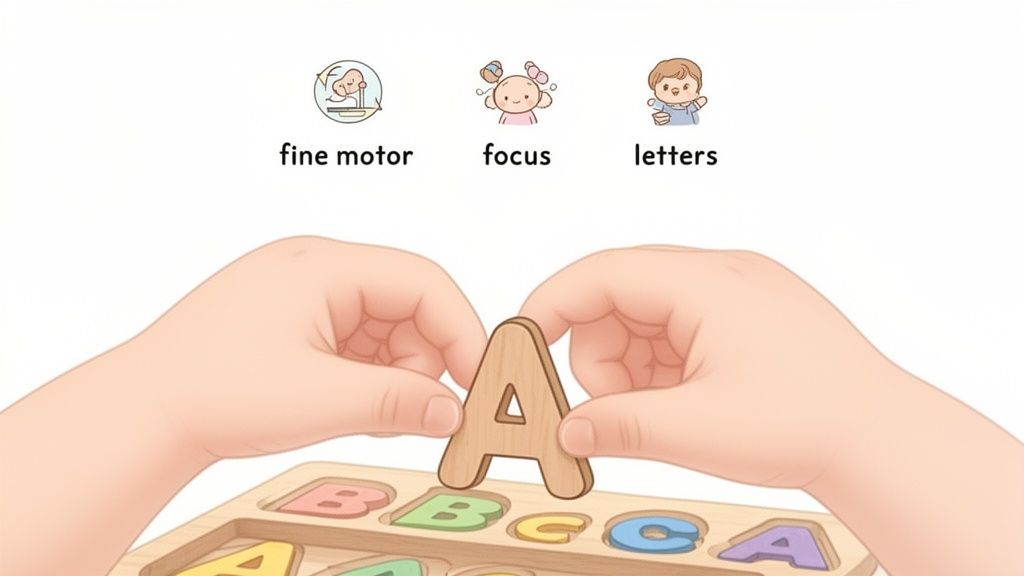
An ABC wooden puzzle might look like just a simple tray of letters, but it’s actually a powerhouse for building the very skills your toddler needs to thrive. Every single time they reach for a piece, they’re doing important work, growing in quiet but incredibly meaningful ways.
Think about how your little one tries to pick up a single cheerio or a small raisin. The puzzle pieces demand that exact same motion, giving them loads of practice with their pincer grasp—that delicate pinch between the thumb and forefinger. If you're curious about the mechanics, understanding what are fine motor skills really puts into perspective how much is happening with each movement.
That one simple action is the building block for holding a crayon, using a fork, and one day, writing their own name. It's no wonder parents are moving towards these kinds of hands-on toys. The global wooden toys market hit an impressive $26.21 billion in 2023, a clear sign that families everywhere are choosing sustainable, developmental play.
Building Brains and Character
Beyond the physical benefits, these puzzles are a workout for the mind. When your toddler tries to force the 'B' piece into the 'D' slot and discovers it won't fit, they're not just playing—they're learning. This is problem-solving 101, a hands-on lesson in shapes, space, and trial and error.
This process builds mental agility and persistence. And in those quiet moments of intense focus, they’re also developing character traits we deeply value in our Muslim homes:
- Patience (Sabr): Working to find the right home for each letter teaches them to keep trying without getting frustrated and giving up.
- Focus: A puzzle demands their full attention, helping to strengthen their ability to concentrate on a single task.
- Hand-Eye Coordination: Their brain has to tell their hand exactly where to go, reinforcing that crucial connection with every successful placement.
Every letter they place correctly is a small victory, a little confidence boost. This isn't just about memorizing the alphabet; it's about showing your child that with focus and a bit of patience, they can figure things out all on their own.
Paving the Way for Future Learning
Getting familiar with the shapes of the English alphabet is a huge first step on the road to reading. An ABC wooden puzzle frames this learning as a fun game, not a chore, which can spark a genuine love for letters and words.
This early exposure also does something incredible for their future. It primes their mind for learning, including, insha'Allah, the Arabic alphabet down the road. While the letters look different, the foundational skills are identical: recognizing unique shapes, understanding that symbols carry meaning, and building an appreciation for language itself. You’re truly laying the groundwork for a lifetime of learning.
Your Halal and Safe Toy Checklist
Choosing the right toys for our little ones can feel like a huge responsibility. We want something that's not just fun and educational, but also safe and, most importantly, fits into the values we’re nurturing in our Muslim home. An ABC wooden puzzle is a fantastic choice, but it's worth knowing that not all puzzles are created equal.
This guide is designed to give you peace of mind. Think of it as your go-to checklist for finding a puzzle you can feel completely confident about, knowing it’s the right fit for your child and your home's values.
Material and Physical Safety
Before we even get to the learning part, let's talk about safety. This is the absolute priority, especially since toddlers explore everything with their hands and, yes, their mouths! A toy has to be physically safe, period.
Here’s what to keep an eye out for:
- Non-Toxic Finishes: Check that the puzzle is finished with water-based, non-toxic paints and sealants. This is critical for preventing your child from ingesting any harmful chemicals.
- Smooth, Splinter-Free Wood: Run your hand over the pieces. High-quality wood like beech or rubberwood should be sanded perfectly smooth with rounded edges. This simple check protects those precious little hands from scratches and splinters.
- Choke-Proof Piece Size: For any child under three years old, every single piece must be large enough that it can't become a choking hazard. A good home test? If a piece can fit through a toilet paper tube, it’s too small.
A well-made wooden puzzle isn't just another toy; it's an investment in a safe, durable learning tool. It’s the kind of piece that can be passed down, creating memories without creating worry.
Halal and Value-Aligned Design
Beyond physical safety, we want toys that reflect the positive, wholesome environment we're trying to build. A puzzle’s design matters just as much as its materials. This is where we consider if a toy is "halal-friendly"—not in a strict, technical sense, but in how well it aligns with our family’s values.
An ABC wooden puzzle is usually a pretty safe bet, but it’s always wise to look closely at the details. The best choices have designs that are simple, educational, and free from imagery that might feel out of place in your home.
This quick table breaks down exactly what to look for when you're out shopping. It will help you evaluate any puzzle in just a few seconds.
ABC Wooden Puzzle Safety and Quality Checklist
| Feature to Check | What to Look For | Why It Matters for Your Family |
|---|---|---|
| Imagery and Characters | Simple letters, animals, or common objects. | This helps you avoid puzzles with characters from questionable cartoons or imagery that might conflict with Islamic values. |
| Educational Focus | Clear, easy-to-read letters and simple designs. | The main goal is to learn the alphabet in a positive, straightforward way, without distracting or unsuitable themes. |
| Overall Quality | Sturdy, durable wood and construction. | A well-made toy naturally encourages respect for one's belongings and is a much better long-term investment. |
By keeping these simple points in mind, you can confidently choose an ABC wooden puzzle that is safe, high-quality, and a perfect addition to your faith-centered home.
Bringing The Puzzle To Life With Simple Activities
Alright, you’ve found the perfect ABC wooden puzzle. Now, the real fun begins. This simple toy is so much more than just a set of letters; it’s a wonderful tool for learning and connecting with your little one, especially in those small, quiet moments that fill your day.
You don’t need a complicated lesson plan. The most memorable learning happens with simple, spontaneous ideas. These activities are designed to be low-prep and easy to slip into your daily rhythm—maybe in the calm minutes before Maghrib or for a bit of focused fun on a weekend morning. The idea is to gently weave worldly knowledge and faith together through play.
Faith-Inspired Letter Play
One of the most beautiful ways to use an alphabet puzzle is by linking the letters to concepts that resonate with your family’s faith. It’s a gentle way to show your child that learning and belief are connected right from the start.
Here are a few easy ways to do this:
- Spell a Special Name: Pull out the letters to spell a name with a beautiful meaning, like 'A' for Adam, 'N' for Noor, or 'S' for Safa. As you both place the letters, you can say the name and talk about what it means.
- Introduce Positive Words: Use the letters to form simple, gentle words like 'Kind' or 'Love'. This helps connect the physical act of learning the alphabet with the positive values you’re nurturing at home.
- Go on a Gratitude Hunt: Pick a letter, say 'B' for ball, and find one together. When you find it, you can say, "Alhamdulillah for this ball that Allah gave us." It’s a sweet, simple way to practice gratitude throughout the day.
This flowchart can help walk you through the key things to look for, making sure the puzzle you choose is safe, age-appropriate, and aligns with your family’s values.
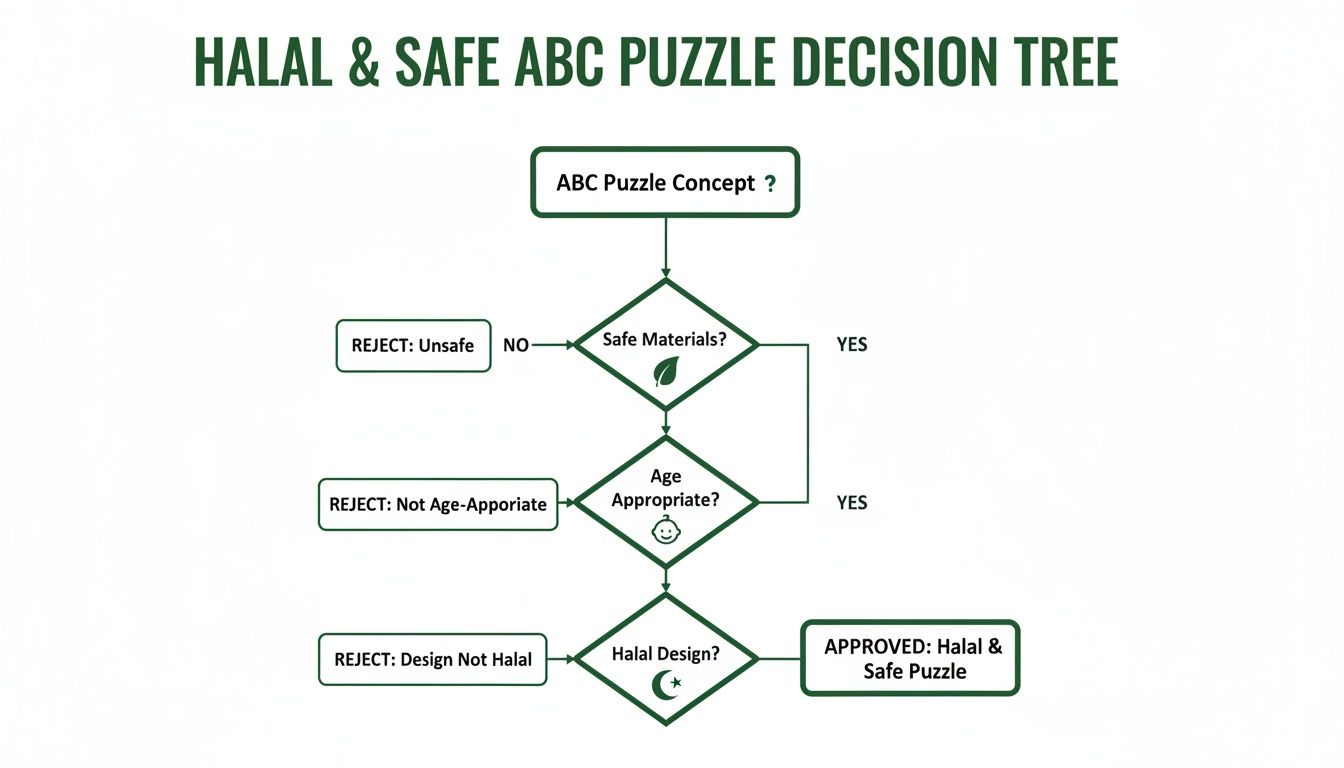
This just goes to show that a great puzzle is about more than just letters—it’s about safety, developmental fit, and thoughtful, halal-friendly design.
Making Learning a Multisensory Game
Toddlers learn with their whole bodies, not just their eyes. You can easily take the puzzle beyond just fitting pieces into slots to create a much richer, more engaging experience.
The beauty of a wooden puzzle is its simplicity. It invites you to be creative, turning a basic alphabet tool into a foundation for language, faith, and connection.
Try having your child trace the shape of a letter with their finger before placing it. This simple action helps build muscle memory that will be a huge help when they start learning to write. Another great idea is to match the wooden letters to letters you find in a favorite storybook, helping them connect the 3D object in their hand with the 2D symbol on the page.
It’s no surprise that these kinds of toys are so popular. The global wooden toys market was valued at a huge $27.56 billion in 2022, and puzzles are a big reason why—parents everywhere see how powerfully they impact cognitive and motor skills.
These simple, repeatable games reinforce learning in a way that feels like pure fun. For more ideas on how to bring letters to life, check out our guide on combining the alphabet with ASL storytelling.
Caring For Your Wooden Toys
Think of an ABC wooden puzzle as a long-term investment in your child's learning. With just a little bit of care, it won’t just last for a few months—it can become a cherished family heirloom, passed down from one sibling to another. The good news is, keeping it clean and organized is incredibly simple, and you won't need any harsh chemicals.
This simple act of maintenance also offers a gentle way to teach your little one about the importance of looking after their things—a lovely, practical lesson in responsibility. A well-kept puzzle is always ready for the next round of play, whether it's for a quiet morning activity or a focused few minutes before naptime.
Simple and Safe Cleaning
When you're cleaning a toy that will almost certainly end up in your toddler's mouth, gentle is the only way to go. Thankfully, you don't need any special products to keep your abc wooden puzzle safe and hygienic.
A simple, homemade solution does the job beautifully:
- Mix Your Cleaner: Just combine equal parts white vinegar and water. Vinegar is a wonderful natural disinfectant, and it's completely safe for children once it has dried.
- Wipe, Don't Soak: Dampen a clean cloth with your vinegar-water mix and wipe down each puzzle piece and the board itself. A crucial tip: never submerge wooden toys in water. Soaking can make the wood swell, warp, and crack.
- Air Dry Completely: Lay all the pieces out on a towel and let them air dry thoroughly before you pack them away. This prevents any moisture from getting trapped, which is key to preserving the wood's integrity.
Keeping toys clean is a simple act of love for your child's health. Using natural ingredients like vinegar and water offers peace of mind, knowing there are no harsh chemical residues left behind for little hands and mouths.
Smart Storage Solutions
Is there anything more frustrating than a puzzle with missing pieces? The secret to keeping your abc wooden puzzle complete is having a dedicated, simple place to store it.
A small cotton drawstring bag works wonders. When playtime is over, you can turn cleaning up into a little game by asking your child to help put all the letters "to bed" in their bag. This not only keeps your living space tidy but also helps your toddler learn the valuable habit of putting things back where they belong, inshaAllah.
Balancing Hands-On Play With Mindful Screen Time
In our homes, we're always trying to find a healthy balance. It's true for our work, our worship, and especially for how we're raising our children. An ABC wooden puzzle is a perfect example of this balance in action—it offers a peaceful, tangible way for our little ones to learn, completely unplugged from screens.
But let's be realistic, the goal isn't to banish technology entirely. It's about using it wisely and with clear intention. Think about the skills your child is building with their puzzle: letter recognition, problem-solving, and the quiet focus it takes to fit a piece into its place. These are the very skills that prepare them for positive, educational digital experiences down the road.
The puzzle and mindful screen time aren't enemies; they're actually partners in your child’s development. One builds foundational, hands-on skills, while the other can reinforce them in a different, engaging way.
From Wood Blocks to Mindful Clicks
When you do need a screen time solution—maybe you're trying to cook dinner or survive a long car ride—you want something you can feel good about. The patience and concentration nurtured by a simple wooden puzzle actually lay the groundwork for engaging with high-quality, faith-aligned content without the risk of overstimulation.
This back-to-basics approach is gaining traction as more parents seek grounded, screen-free activities. In fact, the global wood jigsaw puzzle market was valued at $218 million in 2025 and is expected to keep growing, showing a real desire for toys that counter our kids' heavy digital exposure. This trend is particularly strong among Muslim families looking for wholesome, enriching alternatives. You can read more about the growth of the wooden puzzle market on datainsightsmarket.com.
The time spent with an ABC wooden puzzle is not just about learning letters. It’s about building the cognitive and emotional readiness for a balanced life, where both hands-on play and purposeful technology have their place.
This foundation makes the eventual transition to screen time much smoother and more meaningful. It prepares them for platforms like Babymode, where learning can continue in a safe, halal environment. To keep a healthy mix of digital and real-world play, parents can also explore other engaging activities, like those offered through a Mega Choice for Kids and Teens voucher, which encourages them to get active and interactive.
By starting with a simple, beautiful toy like a wooden puzzle, you’re not just teaching the alphabet. You’re setting your child up for a healthy relationship with learning in all its forms.
To dive deeper into this important topic, check out our full guide on screen time for children aged 0-3 from an Islamic perspective.
Common Questions From Parents
It's completely normal to have questions when you bring a new toy into your home, especially one that's meant for learning. An ABC wooden puzzle is a wonderful tool, but you want to make sure you’re using it in a way that’s safe, effective, and just feels right for your family.
So, let's walk through some of the most common questions we hear from parents just like you.
When Should I Introduce an ABC Wooden Puzzle?
There isn't a single magic age, but the sweet spot for most toddlers is somewhere between 18 and 24 months old. Honestly, it's less about the number on their birth certificate and more about watching for little signs of readiness.
You'll know they're getting there when you see cues like these:
- They're starting to show an interest in fitting simple shapes into their matching slots.
- You notice their hand-eye coordination is getting better—they can pick up smaller objects with more confidence.
- They can sit still and focus on one thing for at least a few minutes.
If you're nodding along to these points, your little one is probably ready for the gentle challenge of an ABC wooden puzzle.
How Can I Make Sure It's Safe?
Safety is, and always should be, your top priority. Even if a toy is marketed as "natural" or "educational," it's always smart to do your own quick check. The good news is that the most important safety points are simple and easy to spot.
First, make sure the puzzle uses non-toxic, water-based paints and is made from smooth wood with no chance of splinters. Most importantly, check that every single letter piece is big enough that it can't become a choking hazard. A great rule of thumb is the toilet paper roll test: if a piece can fit through the tube, it's too small for a child under three.
"My toddler gets frustrated and walks away from the puzzle. What should I do?" This is something we see all the time. Toddlers have tiny attention spans and can get overwhelmed in a heartbeat. The trick is to keep it feeling like a game, not a test.
What if My Toddler Gets Frustrated?
If you see frustration bubbling up, the best thing you can do is simplify. Don't present them with all 26 empty slots at once—that’s a lot for a little mind to process! Instead, take out just three or four familiar letters and put the rest away for later. You can even gently guide their hand to help them feel the shape and find its home on the board.
Celebrate every small win, even just one letter placed correctly, with a big smile or a clap. Remember, the goal isn't to finish the puzzle perfectly. It's to build their confidence and create a happy, positive feeling around learning. Over time, as they succeed with just a few pieces, they'll feel brave enough to try more, inshaAllah. This patient, playful approach is what nurtures a love for learning that lasts a lifetime.
Ready to introduce your little one to a world of positive, faith-aligned learning? Babymode offers a safe, ad-free screen-time experience designed just for Muslim families.
Explore our library of gentle stories, nasheeds, and educational videos by joining the waitlist at https://babymode.ai.