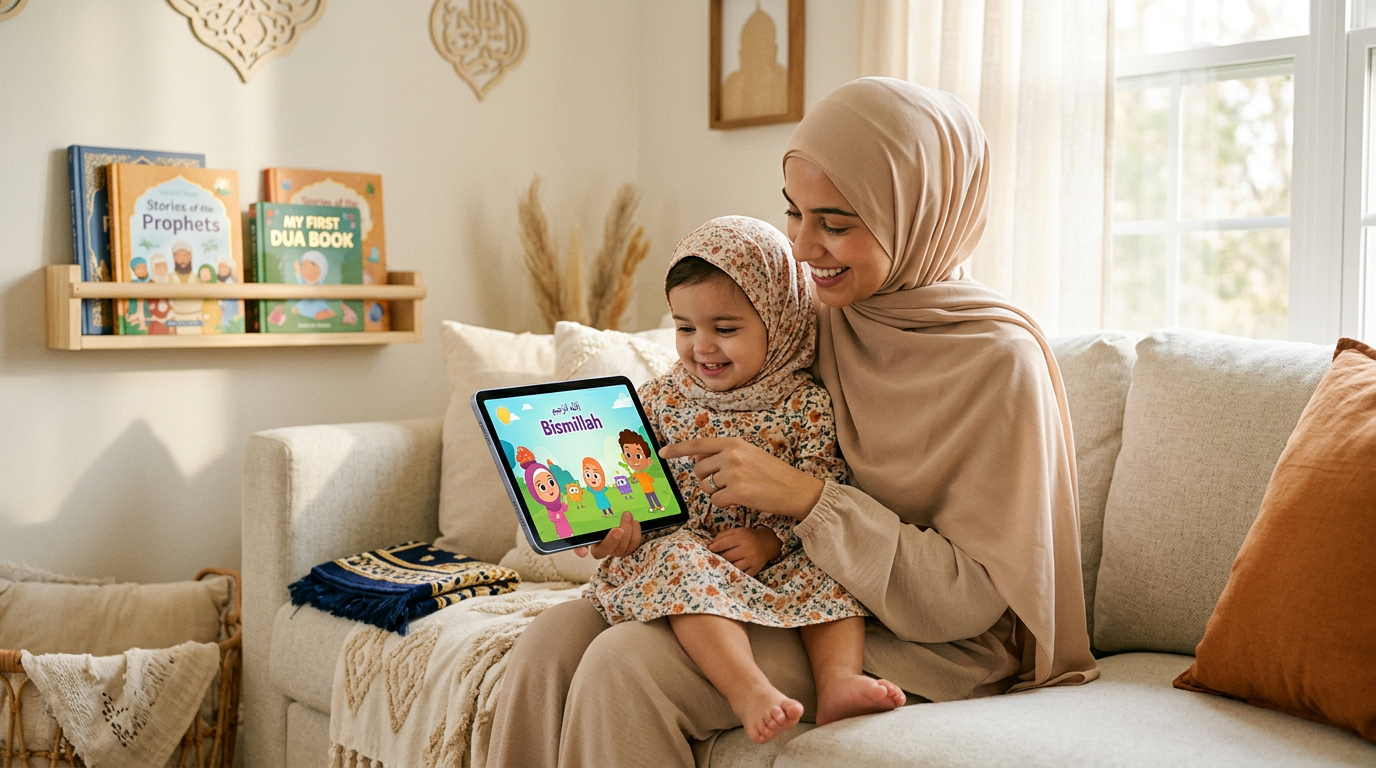
As a Muslim parent, you know the unique tranquility that fills a room when the Quran is playing. It’s a sound that brings a special kind of calm into our homes. But for our little ones, aged 0-3, not all recitations have the same effect. Some are too fast, others have an emotional intensity better suited for adults, and many platforms are filled with distracting ads or unsuitable recommendations. Finding the perfect, gentle recitation can feel like searching for a hidden gem. You want a voice that soothes your baby during naptime, creates a peaceful atmosphere during playtime, and gently introduces them to the words of Allah without overstimulating their developing minds.
This guide solves that exact problem. We’ve looked into the best sources for beautiful, high-quality, and child-appropriate Quran recitations. Instead of you spending hours sifting through websites and apps, we’ve put together a list of the top 7 platforms where you can find these recitations safely and reliably. Our goal is to make it simple for you to find the best recitation of the Quran to weave into your daily routines, whether you need a slow, clear voice to play in the background or a continuous, soothing track for bedtime. Let’s create a foundation of faith and serenity for your growing family.
1. Quran.com
Quran.com is a wonderful resource for Muslim families and a top contender for the best recitation of the Quran online. It has a clean, ad-free interface that lets you focus on the Quran without distractions, making it a safe digital space to introduce the sounds of the Quran to your little ones. The platform is entirely free and doesn’t need a sign-in to listen.
This website stands out for its helpful features for both parents and children. The word-by-word audio, where you can click on an individual Arabic word to hear it, is great for parents improving their own Tajweed. For little ones, the A-B repeat function lets you loop a short, soothing verse like Ayat ul-Kursi during quiet time or before a nap, creating a calming and spiritually nurturing atmosphere.
Key Features for Parents
| Feature | How It Helps Families (Ages 0–3) |
|---|---|
| Ad-Free Experience | Provides a completely safe listening environment, free from commercial interruptions or inappropriate content. |
| Multiple Reciters | Allows you to find a voice and pace that is most soothing for your child, from slow and clear to melodic and gentle. |
| A–B Repeat/Looping | Perfect for playing a specific āyah or short sūrah repeatedly to create a familiar, calming soundscape for naptime. |
| Curated Radio Stations | Offers continuous, hands-free playback (e.g., Juz 'Amma), ideal for background listening while you're busy with the baby. |
| Word-by-Word Audio | A great tool for parents to refine their own pronunciation, helping them recite more accurately to their children. |
Practical Tips for Use
One of Quran.com's most useful features for parents is the "Quran Radio." These are 24/7 streams that play specific selections of the Quran on a loop. You can select a station for "Short Surahs" and let it play continuously in the background. This is incredibly practical for busy parents who want to fill their home with the sound of the Quran without having to constantly manage a playlist.
While the platform is excellent for online use, downloading audio for offline listening requires saving each sūrah individually. However, for its ease of use, high-quality audio, and commitment to being a free, safe resource, Quran.com is an indispensable tool for every Muslim household.
- Access: Free, no sign-in required
- Link: https://quran.com
2. QuranicAudio.com
For parents looking to build a permanent, offline library of Quran recitations, QuranicAudio.com is an amazing resource. It’s a huge, free archive of high-quality MP3s, making it one of the top choices for finding the best recitation of the Quran to download. Its main strength is offering complete, high-quality albums from lots of different reciters, which you can save directly to a computer, phone, or a simple MP3 player to use anytime, anywhere, without needing internet.
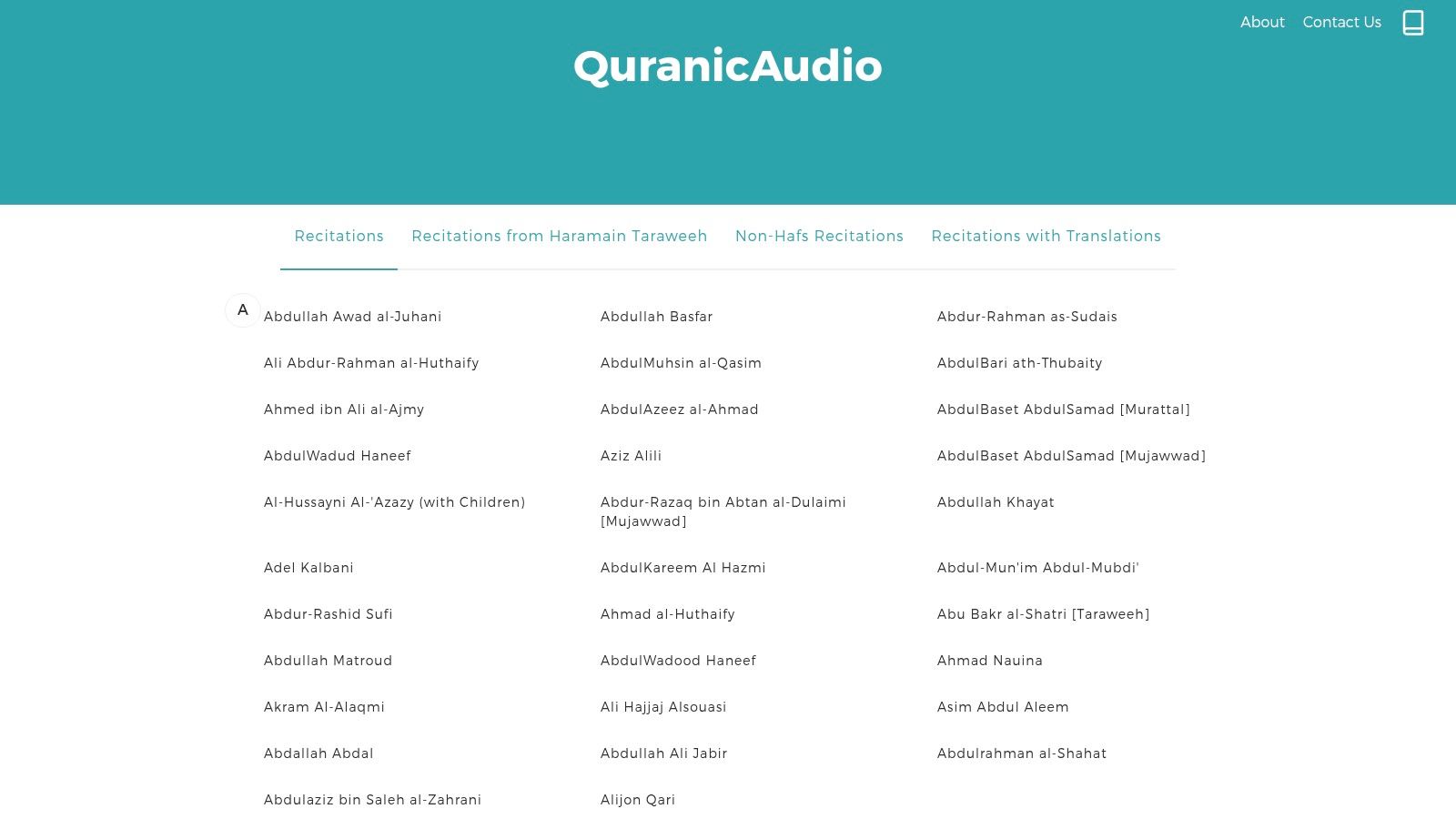
This website is especially valuable for creating a distraction-free listening environment for young children. By downloading the audio files, you can play them on devices that have no internet access, completely removing the risk of ads, notifications, or your child accidentally clicking on other content. It’s perfect for loading onto an old smartphone for your toddler’s room or a portable speaker for car rides.
Key Features for Parents
| Feature | How It Helps Families (Ages 0–3) |
|---|---|
| High-Quality MP3 Downloads | Allows you to build an offline audio library, ensuring your child always has access to calming recitations, even on the go. |
| Extensive Reciter Catalog | Provides a huge selection of voices, so you can find the perfect gentle and soothing tone for your baby. |
| Specialty Collections | Offers unique options like tarāwīḥ recordings or recitations with English translation, adding variety to listening. |
| Completely Free Access | The entire library is available for personal download at no cost and without requiring any sign-up or personal information. |
| Offline Playback | Lets you create a 100% safe, ad-free listening experience on any device, protecting children from online distractions. |
Practical Tips for Use
The real power of QuranicAudio.com is how simple it is to build your own library. A great idea is to download the complete mushaf (full Qur'an) from a reciter with a particularly soothing voice, like Sheikh Mishary Rashid Alafasy. You can then create a dedicated playlist of short, gentle sūrahs from Juz 'Amma to play during naptime or in the car. Since the files are standard MP3s, you can easily transfer them to any device. This "do-it-yourself" approach ensures you have full control over what your child hears.
While the site doesn't have interactive features like looping, its value is in the sheer volume of high-quality, free recitations perfect for creating a permanent, safe, and offline Quran library for your family.
- Access: Free, no sign-in required
- Link: https://quranicaudio.com
3. Quran Central (QuranCentral.com)
Quran Central is a unique library that makes it incredibly easy to follow and listen to specific qurrā’ (reciters). For parents who have found a particular reciter whose voice calms their baby, this platform is a fantastic find. It organises its massive collection around individual reciters, treating each one like a dedicated channel. This simplifies finding the best recitation of the Quran for your family's specific taste.
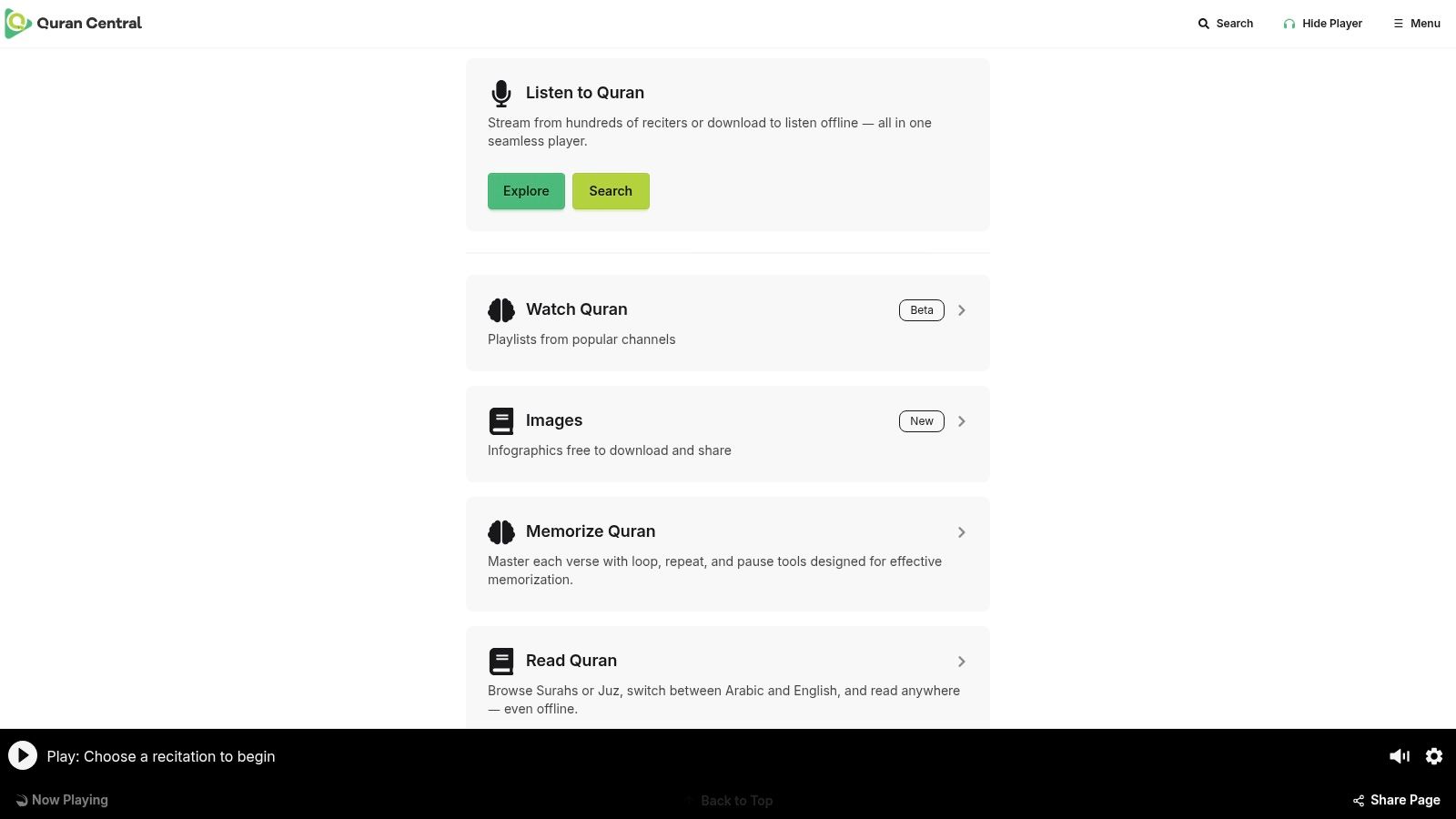
The platform’s standout feature is its podcast-style setup. Instead of just streaming online, you can subscribe to a specific reciter’s “feed” through any podcast app. This means new recitations can automatically download to your phone, ensuring you always have offline access during car rides or in areas with poor internet. This is particularly useful for establishing a consistent audio routine for a young child, using the same soothing voice for every naptime.
Key Features for Parents
| Feature | How It Helps Families (Ages 0–3) |
|---|---|
| Per-Reciter Podcast Feeds | Allows you to “follow” a favorite reciter and have their audio auto-downloaded for offline, uninterrupted listening. |
| Massive Reciter Library | With hundreds of reciters, you can explore and find the perfect voice and pace that resonates with your child. |
| Smart Device Integration | Easily play recitations through smart speakers and car systems, making it simple to fill your home or car with the Quran. |
| Mobile App with Offline Mode | The dedicated app allows you to download entire sūrahs for reliable playback without needing data or Wi-Fi. |
| Free Access | The entire library of recitations is available completely free, with no subscriptions or hidden costs. |
Practical Tips for Use
The most powerful way to use Quran Central is to treat it like a personal Quran podcast service. Find a reciter whose voice is particularly gentle, like Sheikh Mishary Rashid Alafasy. Then, use the podcast link on their page to subscribe via a podcast app. Set the app to automatically download new episodes (sūrahs). This creates a ready-made, offline playlist perfect for calming a fussy baby during a late-night drive or playing in the background without worrying about buffering.
While the sheer number of reciters can feel like a lot at first, the platform is excellent for those who want to stick with a familiar voice. Its strength lies in providing easy access to specific reciters you love.
- Access: Free, no sign-in required
- Link: https://www.qurancentral.com
4. MP3Quran.net
MP3Quran.net is a huge and well-known digital library, famous for being a go-to source for downloading high-quality Qur’an audio files. For parents wanting to build a permanent, offline collection of recitations for their family, this platform is an invaluable resource. Its simple interface is designed to help you quickly find and save audio, making it ideal for creating playlists for car rides, home speakers, or a child’s dedicated audio player.
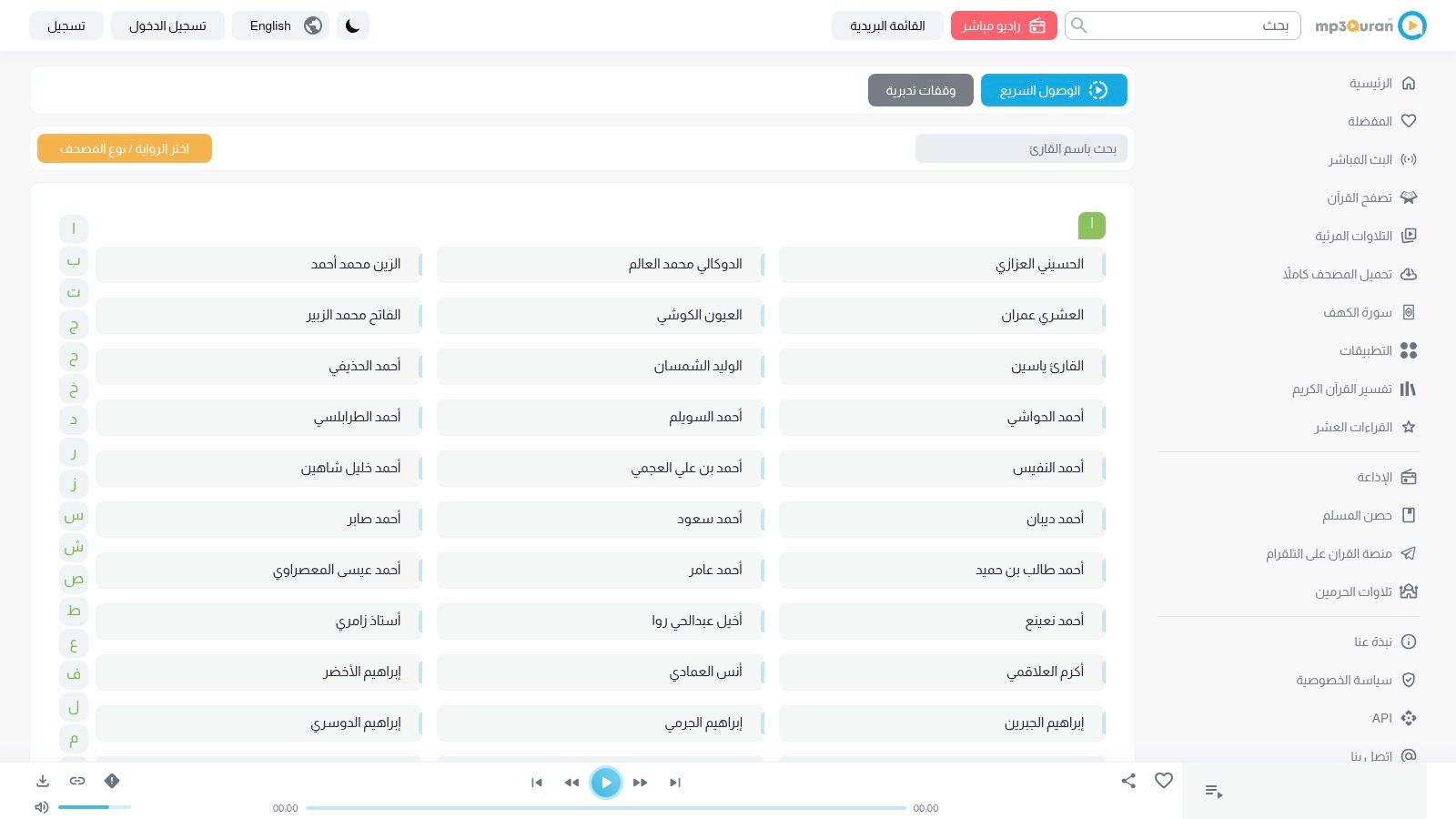
The website's primary strength is its sheer volume and accessibility. With hundreds of reciters available, parents can explore and find the exact voice and style that works best for their family. Whether you need a slow, clear recitation for your toddler to absorb or a more melodic one to create a tranquil atmosphere, the direct MP3 download links for each sūrah make it exceptionally easy to build your personal library. This is perfect for parents who want full control over their child’s listening environment, free from streaming interruptions or internet dependency.
Key Features for Parents
| Feature | How It Helps Families (Ages 0–3) |
|---|---|
| Hundreds of Reciters | Offers an extensive selection to find a voice that is exceptionally calming and soothing for your little one. |
| Direct MP3 Downloads | Lets you easily save entire sūrahs or the full Qur’an for offline listening on any device, ensuring continuous playback without Wi-Fi. |
| Multiple *Riwāyāt* | Caters to families from diverse backgrounds who are accustomed to specific narrations. |
| Quran Radio Streams | Provides continuous background listening, perfect for filling the home with the sound of the Qur’an throughout the day. |
| Official Mobile Apps | Extends access to its vast library on smartphones and tablets, making it convenient to listen on the go. |
Practical Tips for Use
A great way to use this site is to create a "Naptime Playlist." You can browse reciters known for their gentle and slow pace, such as Sheikh Mishary Rashid Alafasy or Sheikh Muhammad Siddiq al-Minshawi (with children). From their pages, download short, calming sūrahs like Ar-Rahman, Yusuf, or the last three quls. Save these MP3 files into a folder on your phone or a USB stick and play them on a loop using a simple music app or smart speaker. This gives you a screen-free, internet-independent solution for a peaceful and consistent nap routine.
While the interface can feel a bit dated, its usefulness is unmatched for those who prioritise offline access. The sheer depth of its catalog makes MP3Quran.net a powerful tool for finding the best recitation of the Quran to download and keep forever.
- Access: Free, no sign-in required
- Link: https://www.mp3quran.net
5. Assabile.com
Assabile.com is a huge digital library for anyone seeking the best recitation of the Quran, with a massive index of over 500 reciters and 60,000 recordings. Its primary strength is its sheer breadth of choice, making it a go-to resource for discovering both world-renowned and lesser-known qurrā’. For families, this means a great opportunity to explore different recitation styles to find the one that brings the most peace to their home.
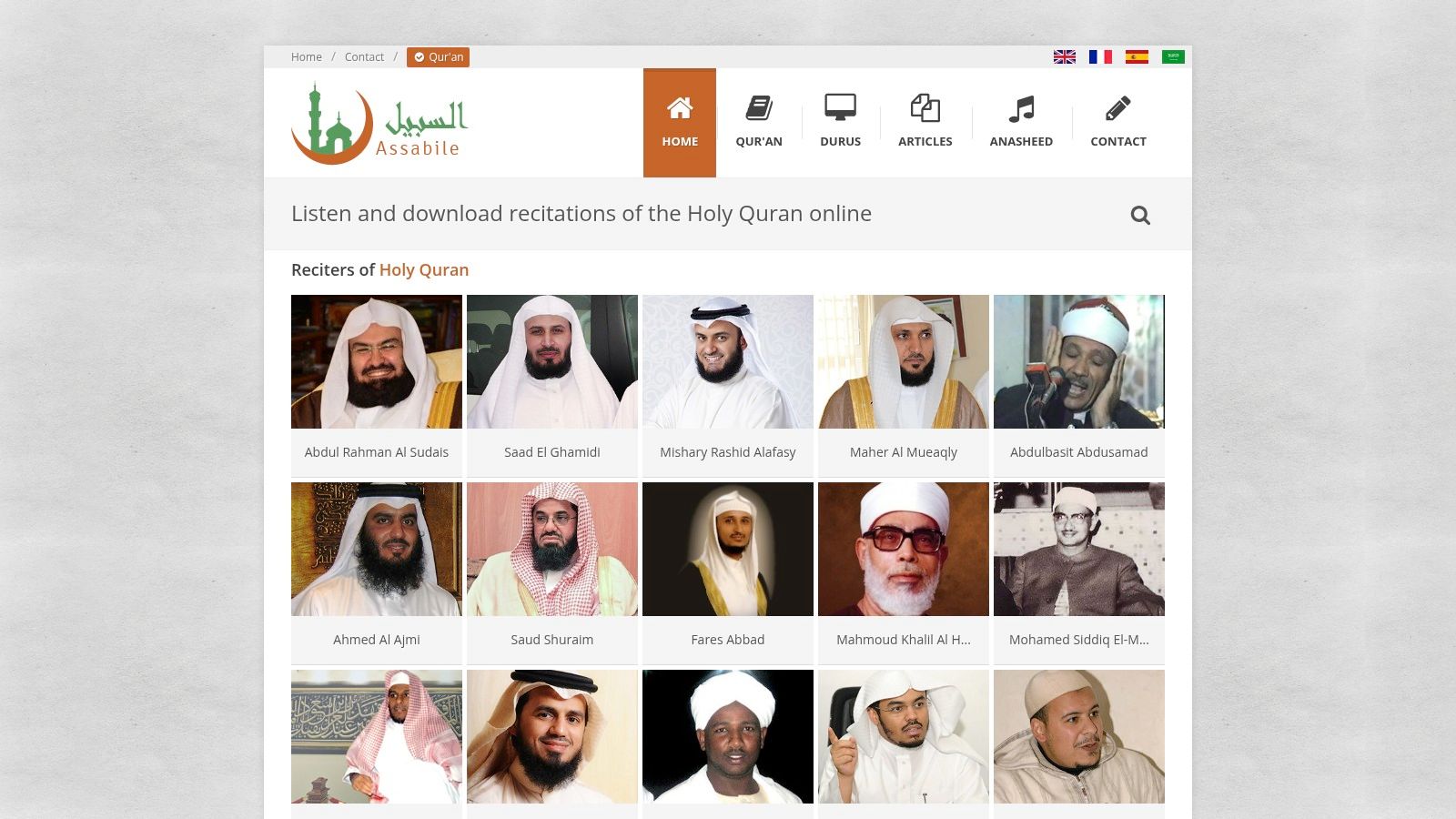
The platform is particularly useful for parents looking to download entire sūrahs for offline use. This is a huge advantage when you want to play recitations in the car, on a device without internet, or to ensure your child’s listening environment is free from Wi-Fi signals during naptime. While the interface can feel busy compared to more modern sites, its straightforward approach makes accessing and saving high-quality MP3s easy and free.
Key Features for Parents
| Feature | How It Helps Families (Ages 0–3) |
|---|---|
| Massive Reciter Library | Offers a huge selection, allowing you to find gentle, slow-paced reciters ideal for creating a calm atmosphere for a baby. |
| Free MP3 Downloads | Enables you to create an offline playlist of your child’s favorite sūrahs for use on any device, ensuring uninterrupted playback. |
| Thematic Sections | The "Children Recitations" section provides recordings by young reciters, which can be an inspiring sound for toddlers to hear. |
| Multilingual Interface | Accessible to non-English or non-Arabic speaking family members (e.g., grandparents) with French language support. |
| Sortable Directory | Helps you quickly find specific reciters you may have heard and want to introduce to your child at home. |
Practical Tips for Use
A highly practical way for parents to use Assabile.com is to build a custom "naptime audio library." You can browse the extensive list of reciters to find voices that are exceptionally soft and slow. Download the MP3s for short, soothing sūrahs such as Ar-Rahman, Yā-Sīn, or the last three sūrahs of the Qur'an. By saving these files directly to a phone or a simple MP3 player, you create a dedicated, screen-free, and internet-free device for your child's room, perfect for promoting a serene sleep environment.
The site’s navigation can be a bit dense due to the sheer volume of content. However, its value as a free, comprehensive archive for high-quality audio downloads is undeniable. For parents who want to build their own collection of Quranic audio without subscriptions or restrictions, Assabile.com is an essential bookmark.
- Access: Free, no sign-in required
- Link: https://www.assabile.com
6. Apple Music / iTunes Store
For families using Apple devices, Apple Music and the iTunes Store offer a streamlined way to access high-quality albums of the best recitation of the Quran. This platform is ideal if you prefer managing all your audio in one place, from your iPhone to your HomePod. Its strength lies in providing complete recitation albums, perfect for offline listening during travel or in areas with poor connectivity.
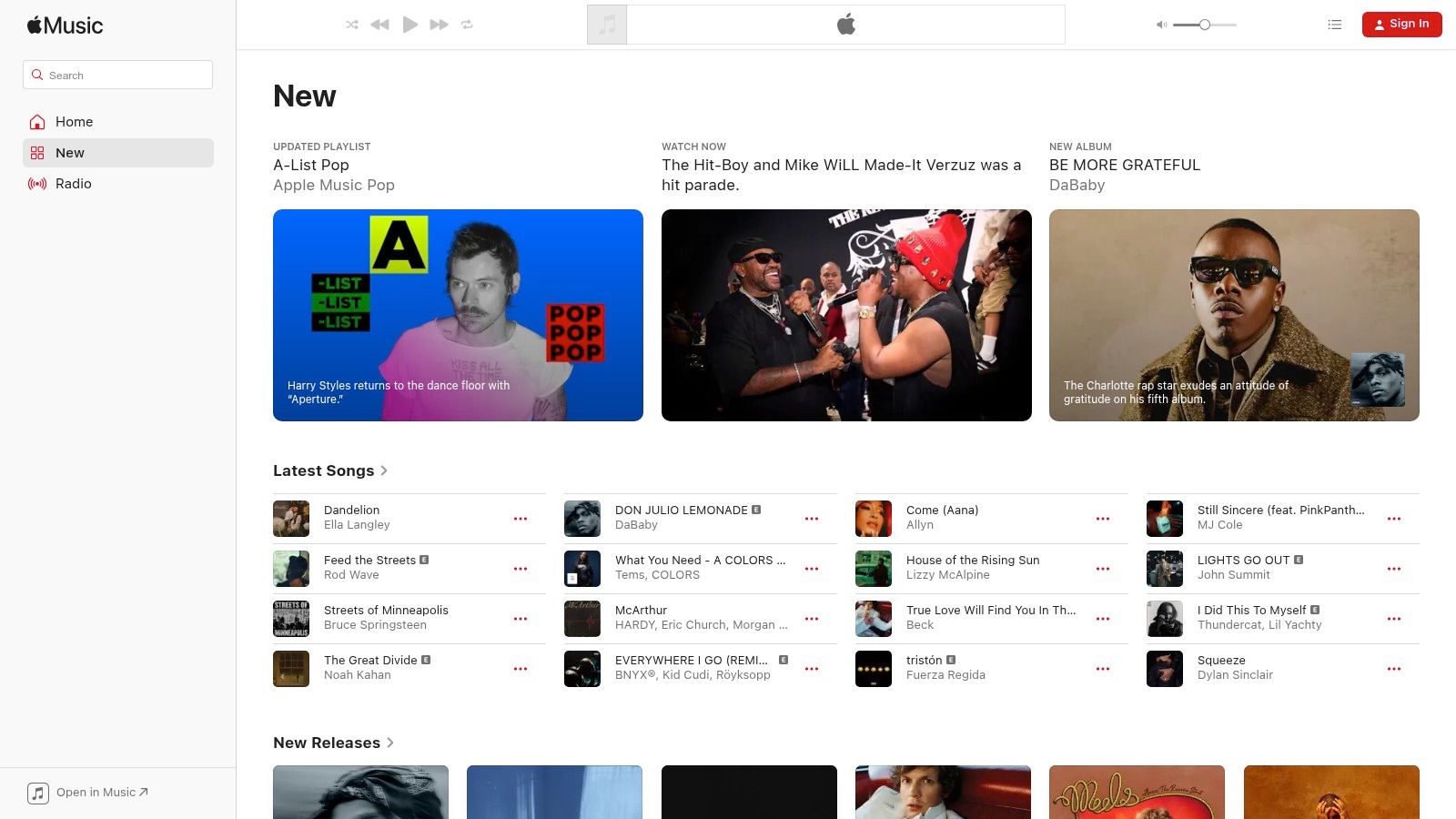
Unlike dedicated Quran apps, the experience is built around your own library. Once you purchase an album or add it via an Apple Music subscription, it’s yours to manage. This makes creating custom playlists for your child incredibly easy. You can build a "Naptime" playlist with slow, soothing sūrahs or a "Morning" playlist with more uplifting recitations. This is particularly useful with CarPlay for listening in the car or for asking Siri to play a specific reciter on a HomePod, creating a seamless, hands-free Islamic atmosphere at home.
Key Features for Parents
| Feature | How It Helps Families (Ages 0–3) |
|---|---|
| High-Quality Albums | Provides professionally produced audio, so albums are well-organized with correct reciter and sūrah names. |
| Apple Ecosystem Integration | Works flawlessly across iPhone, iPad, Mac, Apple Watch, CarPlay, and HomePod for a consistent listening experience. |
| Offline Downloads | Easily download entire albums for flights, road trips, or any situation without internet, ensuring the Qur’an is always available. |
| Family Sharing | An Apple Music family subscription allows up to six family members to access the entire library on their own devices. |
| Custom Playlists | Create playlists of calming sūrahs, which can be a great alternative to commercial nasheeds for children during playtime. |
Practical Tips for Use
To get the most out of Apple Music, create specific playlists for different routines. For example, a "Bedtime Recitations" playlist featuring sūrahs like Al-Mulk, As-Sajdah, and the last three sūrahs of the Qur'an can become a soothing part of your child's sleep routine. You can set this playlist to play on a HomePod in your child's room on a timer. The key is to use the platform's strength in library management to build a calming audio environment tailored to your family's needs.
The main drawback is that it requires a paid subscription or individual purchases, and the search function can sometimes mix in other content. However, for its superb device integration and high-quality audio, it remains a convenient choice for families already using Apple products.
- Access: Apple Music subscription required for streaming; per-album purchases on iTunes Store
- Link: https://music.apple.com
7. FirdousBooks.com
For families who prefer the simplicity of physical media, FirdousBooks.com offers a valuable, screen-free option to find the best recitation of the Quran. This Islamic bookstore specializes in tangible products, including complete Qur’an audio sets on CD. This provides a dedicated, distraction-free listening experience, perfect for creating a calm Islamic atmosphere at home or in the car without relying on apps or devices that might have other distractions for little ones.
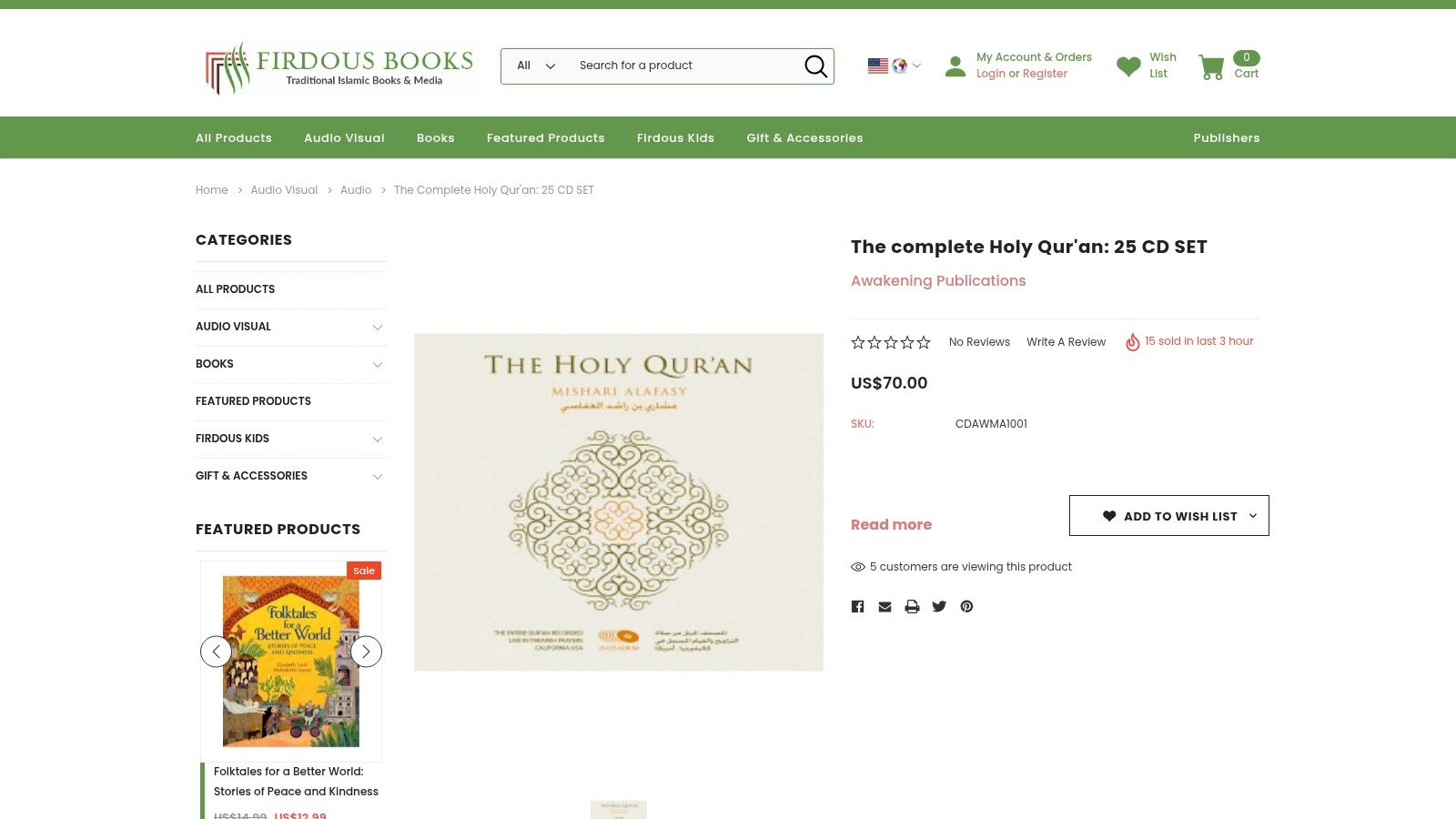
Purchasing a complete 25-CD set, such as the one by Shaykh Mishary Rashid Al-Afasy, means you have the entire Qur’an at your fingertips for any CD player. It’s an ideal solution for parents who want to play recitation during car rides, for grandparents who may prefer traditional stereos, or for setting up a dedicated listening station in a child's room for naptime without the risks of ads or notifications.
Key Features for Parents
| Feature | How It Helps Families (Ages 0–3) |
|---|---|
| Physical CD Sets | Provides a tangible, screen-free way to play the Qur’an, eliminating exposure to ads, notifications, or other digital distractions. |
| U.S.-Based Retailer | Offers straightforward and reliable domestic shipping, making it easy to purchase and receive products without international delays. |
| Complete Qur’an Audio | Owning a full boxed set ensures you always have access to any sūrah, perfect for consistent background listening. |
| Ideal for Gifting | A beautifully packaged CD set makes a meaningful and lasting gift for new parents, baby showers, or for a family’s home library. |
| No Logins or Apps | The simple "insert and play" format is perfect for busy parents or grandparents seeking a low-tech, focused experience. |
Practical Tips for Use
One of the best uses for these CD sets is to create a predictable naptime routine. Keep a simple, child-safe CD player in the nursery and play a specific sūrah at the same time each day. The physical act of choosing and playing a CD can become a comforting ritual for both parent and child. This method ensures the audio environment remains pure and focused solely on the words of the Qur’an, which is so valuable for a child’s development.
While the CD format is a huge plus for screen-free households, it lacks the instant digital access of streaming platforms. For its reliability, simplicity, and focus on physical media, FirdousBooks.com is an excellent resource for families wanting to fill their homes with the sound of the Qur’an in a more traditional way.
- Access: Products for purchase, U.S. shipping
- Link: https://firdousbooks.com/the-complete-holy-quran-25-cd-set/
Top 7 Quran Recitation Platforms Comparison
| Item | 🔄 Implementation complexity | ⚡ Resource requirements | ⭐ Expected outcomes | 💡 Ideal use cases | 📊 Key advantages |
|---|---|---|---|---|---|
| Quran.com | Low — web/mobile, instant playback, minimal setup | Online streaming; optional per-sūrah downloads (manual) | ⭐⭐⭐⭐ — Strong study & playback tools | Learning, memorization, hands‑free listening | Ad‑free; word‑by‑word audio; curated radio stations |
| QuranicAudio.com | Low–Moderate — download organization required | Significant storage for CD‑quality MP3s; manual library management | ⭐⭐⭐⭐ — Excellent offline audio fidelity | Building a high‑fidelity offline collection | CD‑quality downloads; extensive reciter catalog |
| Quran Central | Moderate — podcast subscriptions and app setup | Podcast client or Android app; offline storage; smart device integration | ⭐⭐⭐⭐ — Great for recurring following of reciters | Following favorite qurrā’, car/smart‑speaker use | Per‑reciter channels; auto‑downloadable podcast feeds |
| MP3Quran.net | Low — straightforward site and direct links | Bandwidth for downloads; optional mobile apps | ⭐⭐⭐ — Reliable downloads and radio streams | Quick MP3 downloads; radio‑style listening | Large catalog; straightforward per‑sūrah downloads |
| Assabile.com | Moderate — powerful but busy navigation | Complete‑Qur’an downloads available; multilingual interface | ⭐⭐⭐ — Broad discovery across languages and styles | Discovering varied reciters and thematic collections | Very wide coverage; thematic and children’s sections |
| Apple Music / iTunes Store | Moderate — account/subscription and store purchase flow | Apple device ecosystem; subscription or per‑album purchases | ⭐⭐⭐⭐ — Licensed, well‑organized releases with metadata | Users within Apple ecosystem seeking official releases | Consistent metadata; family sharing; CarPlay/HomePod support |
| FirdousBooks.com | Moderate–High — ordering and receiving physical media | CD player or drive, shelf space, shipping cost | ⭐⭐⭐ — Tangible media for offline use and gifting | Gifts, madrasa libraries, cars with CD players | Physical boxed CD sets; U.S. shipping and retail support |
Creating a Home Filled with the Sound of the Quran
Surrounding our children with the words of Allah is one of the greatest gifts we can give them. Finding the best recitation of the Quran for your family is a personal journey that can transform a chaotic afternoon into a peaceful one and make bedtime a serene, spiritual experience.
This guide was designed to give you choices that fit your family’s unique rhythm. We have explored a variety of platforms, from the comprehensive libraries of Quran.com to the dedicated audio archives of QuranicAudio.com. Each resource offers a different way to access beautiful recitations, whether you prefer streaming on the go, downloading a full Mushaf for offline use in the car, or building a permanent collection.
Key Takeaways for Your Family
As you build your audio library, remember these key ideas:
- Prioritize Ad-Free Environments: For children aged 0-3, ads can be disruptive. Platforms like Quran.com and dedicated download sites offer an ad-free experience, protecting your child's focus and innocence.
- Match the Pace to the Purpose: A slow, clear recitation like that of Sheikh Mishary Rashid Alafasy is ideal for calming a fussy toddler.
- Focus on High-Quality Audio: Clear, professional recordings are important for developing young ears to hear the words of the Quran beautifully and accurately.
- Consider Your Lifestyle: If you are often in the car, downloading recitations from MP3Quran.net or buying a CD set from FirdousBooks.com is a practical solution. If you prefer seamless streaming, Quran.com might be your go-to.
Your Next Steps: Building a Quran-Centric Atmosphere
Choosing the right tool is the first step. The next is weaving these sacred sounds into your daily life. Start small. Play a gentle recitation of Surah Al-Fatiha during breakfast or the last three Surahs before naptime. Consistency is more important than duration. The goal is to make the sound of the Quran a familiar, comforting presence in your home.
For parents who want to engage more deeply with the meaning of the verses, using technology can be a great help. Exploring various audio to text converter tools can be a valuable approach to create your own study materials or follow along with the Arabic text, enhancing your family's learning journey.
Ultimately, the best recitation of the Quran is the one that brings peace and connection to your family. We hope this list has given you the confidence and resources to create a beautiful and spiritually enriching audio environment for your little ones. By thoughtfully choosing what our children listen to from the very beginning, we can, inshaAllah, nurture a lifelong love for the words of Allah.
Ready to simplify your search for safe, faith-aligned content? Discover Babymode, the upcoming ad-free platform designed specifically for Muslim families with children aged 0-3. Sign up for our waitlist to be the first to know when we launch our library of gentle Quranic stories, calming nasheeds, and more. Babymode