When you're looking for the best educational toys for a one year old, think simple and hands-on. Things like classic stacking blocks, chunky shape sorters, and colorful board books are perfect. They're built to help your little one hit those crucial developmental milestones—like improving fine motor skills and sparking early problem-solving—all while keeping them safely engaged in a wholesome way.
Why The Right Toys Matter For Your One Year Old
That first birthday is such a special milestone, mashaAllah! Your baby is officially a toddler, and their world is expanding by the minute. They're stacking, taking those first wobbly steps, and maybe even delighting you with their first "Mama" or "Baba." It’s a beautiful time of discovery, and as Muslim parents, we have a unique opportunity to nurture their fitra (their pure, natural disposition) through play.
Before we jump into specific toy recommendations, it’s worth taking a moment to appreciate the profound importance of early childhood education. Understanding this helps us see that for a child, play isn't just fun—it's serious work.
This is why we approach toy selection with intention. Our framework is simple but powerful, built on three core pillars: Development, Values, and Safety.
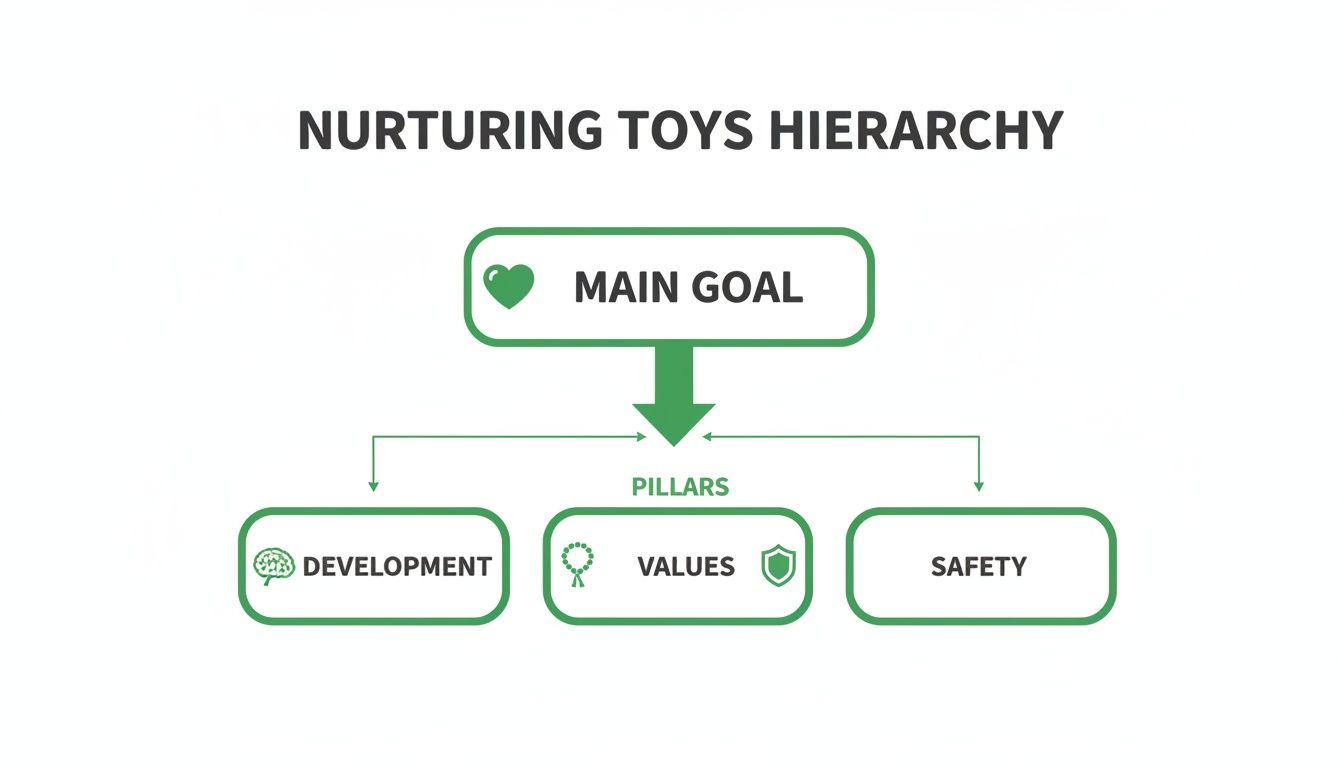
This hierarchy is our guide. It reminds us that the best toys do more than just entertain; they also align with our faith and, most importantly, keep our children safe. Our goal is to choose purposeful playthings that create joyful moments of connection between you and your child, inshaAllah, helping them learn and grow in a loving, wholesome environment.
Developmental Milestones and Toy Matches for a One Year Old
To really get this right, it helps to connect the dots between what your one-year-old is learning to do and which toys can best support that growth. A well-chosen toy meets them exactly where they are.
This table gives a quick snapshot of the key developmental areas for a 12-month-old and the kinds of toys that help them flourish.
| Developmental Area | What They Are Learning | Examples of Educational Toys |
|---|---|---|
| Fine & Gross Motor Skills | Grasping, stacking, pulling up, walking | Stacking rings, push walkers, soft blocks |
| Cognitive Development | Cause and effect, problem-solving, object permanence | Shape sorters, simple puzzles, pop-up toys |
| Language & Communication | First words, pointing, responding to names | Board books, picture cards, simple dolls |
| Social & Emotional Growth | Imitating actions, showing affection, parallel play | Pretend-play food, simple dolls, toy phones |
| Sensory Exploration | Exploring textures, sounds, and shapes | Textured balls, sensory blocks, soft musical toys |
Think of this table as your cheat sheet. When you understand the "why" behind a toy, it becomes much easier to pick items that will truly captivate and support your little one's development.
What to Look for When Selecting Toys for Your Toddler
Choosing the right toy for your one-year-old is about so much more than just picking something fun off the shelf. For Muslim families, it’s a chance to be intentional—to select toys that not only support our child’s development but also align with our values and protect their well-being. It’s a thoughtful process that puts safety, simplicity, and faith first.
And we're not alone in this focus. In fact, the market for educational toys is booming, with the toddler segment (ages one to three) accounting for a huge 51.0% of sales in 2023. It’s clear that parents everywhere are recognizing just how critical these early years are for building a foundation for learning. You can read more about the growth of the educational toy market in recent industry analyses.
Safety First Always
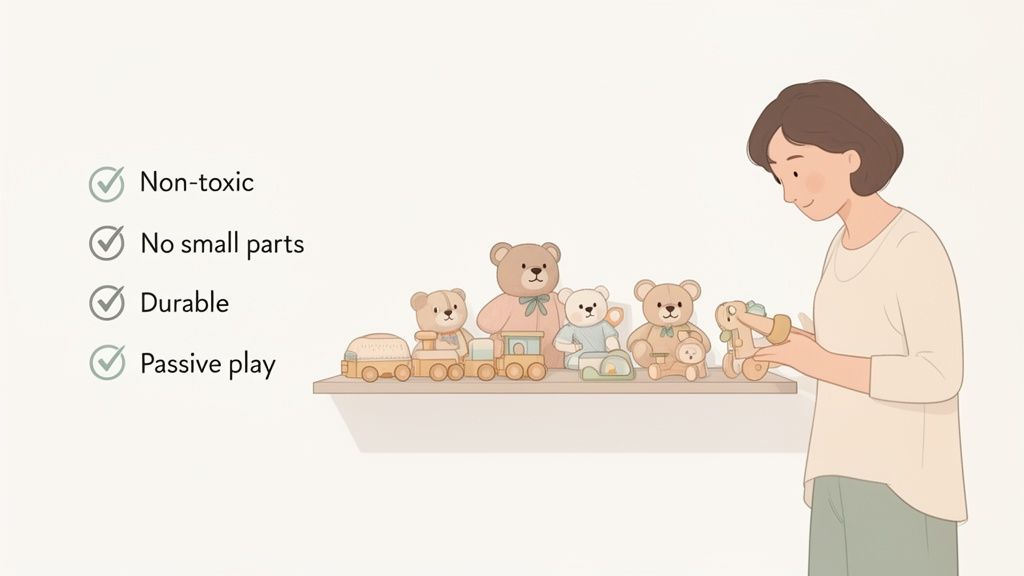
Before a toy can teach anything, it has to be safe. A one-year-old’s job is to explore the world with their hands and, yes, their mouth. That makes safety our non-negotiable first step.
Non-Toxic Materials: Always check the labels. Look for toys made from natural wood finished with water-based, non-toxic paint. If you're choosing plastic, make sure it’s explicitly marked as BPA-free and phthalate-free. Food-grade silicone is another fantastic, safe choice for little ones who love to chew on everything.
No Choking Hazards: Small parts are a genuine danger. A great rule of thumb is the "toilet paper roll test." If any part of a toy—or a piece that could break off—can fit inside a standard toilet paper roll, it’s too small for your toddler.
Sturdy Construction: Let’s be honest, toddlers aren’t exactly gentle! Look for toys that are well-made and can withstand being dropped, banged, and thrown. Check for sharp edges, splinters, or weak points that could easily snap.
Choose Simplicity Over Stimulation
In a world filled with flashy gadgets that beep and light up, it’s the simple, classic toys that often pack the biggest developmental punch. The best educational toys are passive; they don't do the work. Instead, they invite your child to be the active one. A simple set of wooden blocks sparks far more creativity and problem-solving than a plastic gizmo that sings a song at the push of a button.
Overly stimulating toys can easily overwhelm a toddler’s developing nervous system. A quiet, simple toy encourages focus, imagination, and deep engagement—the real building blocks of learning.
Aim for toys that are open-ended, meaning they can be used in countless ways. These are the toys that grow with your child, sparking new kinds of play as their imagination blossoms. It's a much better investment than a one-trick pony that only holds their attention for five minutes.
Protecting Their Fitra and Innocence
Finally, as Muslim parents, we have a unique and beautiful responsibility to protect our child's pure, innate nature—their fitra. This means being mindful of the messages and images our children absorb, even from their toys.
- Avoid Inappropriate Imagery: Steer clear of toys that feature scary, violent, or immodest characters. Many families also choose to avoid toys with hyper-realistic faces or those that promote ideas contrary to our Islamic values.
- Focus on Allah's Creation: Instead, lean into toys that celebrate the beauty of the natural world. Think simple animal figures, nature-themed puzzles, or building blocks in earthy, natural colours. These choices gently nurture a love and appreciation for everything Allah has made.
By keeping these points in mind, you can confidently choose educational toys for your one year old that are not just safe and stimulating, but also help create a wholesome, faith-filled environment for play in your home.
Top Toy Categories to Support Your One-Year-Old's Growth
When it comes to educational toys for a one-year-old, the classics are classics for a reason. You don’t need a room full of flashy, battery-operated gadgets. The most powerful learning tools are often the simplest—inviting your child to explore, experiment, and get their little bodies moving.
Knowing which types of toys offer the most developmental bang for your buck can help you be much more intentional with your choices.
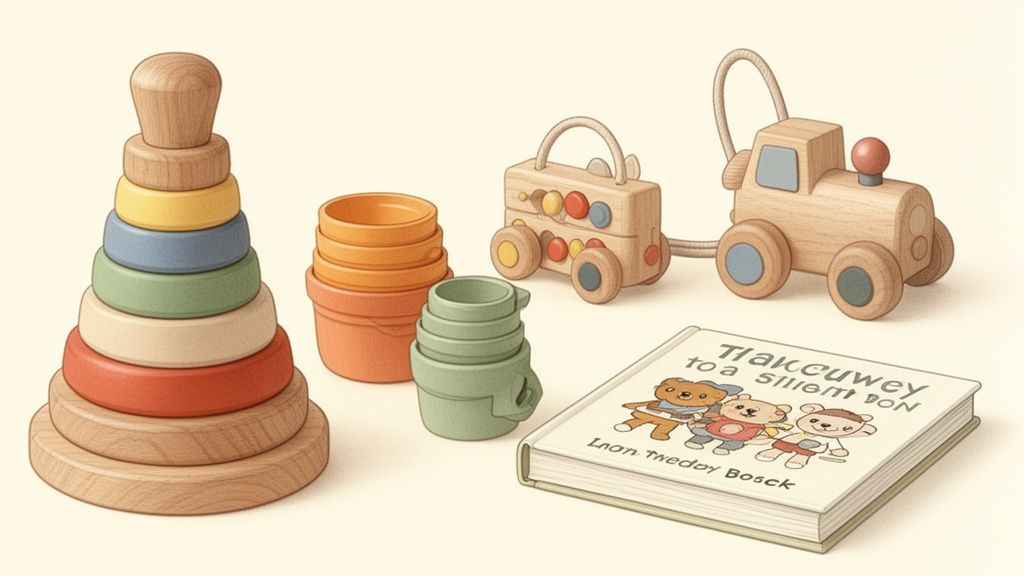
These time-tested toys are perfectly designed to support this year of incredible growth, from honing motor skills to building the very first blocks of language. Let's walk through the essential categories that will truly champion your child's development.
Building Fine Motor Skills and Focus
Stacking rings and nesting cups are absolute must-haves for one-year-olds. Think of them as the original brain-builders, perfect for developing fine motor skills, hand-eye coordination, and a basic grasp of how things fit together in the world.
Each time your child carefully places one block on another or figures out which cup fits inside the next, they're doing serious work. This focused repetition is strengthening neural pathways for problem-solving and concentration.
This isn't just a game; it's a toddler's first physics lesson. They are learning about size, balance, and order in the most hands-on way possible. These toys also beautifully illustrate cause and effect—when the tower gets too high, it tumbles! To dive deeper into this concept, check out our guide on the benefits of cause and effect toys.
Encouraging Movement and Confidence
Just as your little one starts pulling up on furniture and taking those first wobbly steps, push-and-pull toys become their new best friends. These toys offer the perfect blend of support and motivation to build gross motor confidence.
A sturdy push walker or a little wooden duck on a string encourages them to get on their feet and go, strengthening their core, legs, and balance with every step. It gives them a wonderful sense of independence, turning a trip across the living room into a triumphant expedition.
Watching your toddler proudly navigate the room with their favorite push toy isn't just adorable—it's a huge step in their physical journey. It empowers them to explore their world with more stability and a whole lot of joy.
Developing Coordination and Logic
Simple puzzles and shape sorters are fantastic for challenging that budding one-year-old brain. The best ones for this age feature big, chunky pieces, often with knobs that are easy for tiny hands to grip and maneuver.
Figuring out that the circle piece goes in the round hole is a huge mental workout. It teaches toddlers to observe, compare, and test their ideas, all while refining the pincer grasp they'll eventually need for holding a pencil. These toys provide the perfect "just right" challenge to keep them engaged without getting overly frustrated.
Nurturing Early Language and Connection
Never, ever underestimate the power of a good board book. With their thick, sturdy pages and bright, clear pictures, they are one of the most essential educational toys for a one year old. A simple book is your number one tool for building vocabulary and a lifelong love of stories.
When you point to a picture and say, "Look, a red car!" or "That's a fluffy cat," you're forging connections between words and the world. Cuddling up for a story before bed is about more than just learning; it strengthens your bond and creates a comforting routine filled with the reassuring sound of your voice.
Weaving Faith and Values into Playtime
Play is such a pure, wonderful way to introduce your one-year-old to the values at the heart of our faith. It’s less about finding explicitly "Islamic" toys and more about using simple, everyday objects to gently model kindness, gratitude, and a love for everything Allah has created. This approach weaves our deen into the fabric of daily life, making it a warm and natural part of their world.
Even the simplest playtime can become a moment of connection and reflection. Choosing the right educational toys for a one year old helps you plant these early seeds of faith in a way that feels organic and full of love.
Celebrating Allah's Creation
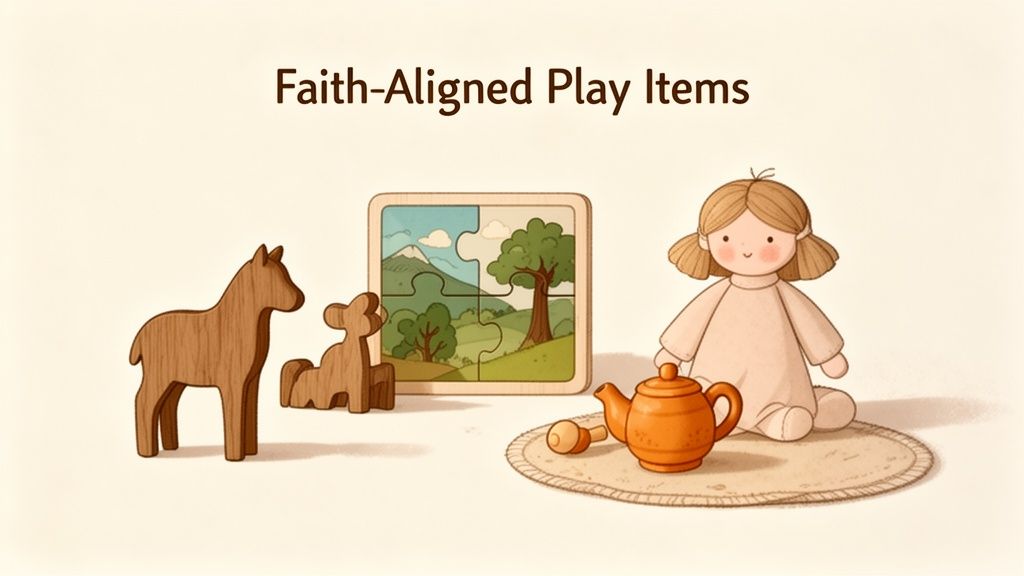
One of the most powerful ways to nurture your child's fitra (their innate disposition) is by picking toys that reflect the beauty of the natural world. This helps them build a deep appreciation for their surroundings as a sign of the Creator's magnificence.
- Wooden Animal Figures: Simple, beautifully crafted animal figures are fantastic tools for this. Many families opt for those without detailed facial features. You can make animal sounds together, talk about their homes, and say "SubhanAllah" as you marvel at each unique creature.
- Nature-Themed Puzzles: Think chunky puzzles with vibrant images of fruits, leaves, or the moon and stars. These connect their indoor play to the real world right outside their window.
- Picture Books: Sturdy board books filled with diverse animals, plants, and weather create countless opportunities to talk about Allah’s beautiful world.
Nurturing Good Manners and Gentle Hearts
For a child, playtime is life's first rehearsal. Through simple pretend-play, you can model the adab (manners) and gentle character we value so deeply. These little interactions teach empathy, sharing, and kindness right from the start.
The goal isn't to hunt for toys with religious labels. It's about using simple, open-ended toys to model the character and kindness that our faith teaches us. A toy teapot used to "serve" you tea is a powerful, hands-on lesson in hospitality.
A soft doll, for example, is a perfect way to practice gentleness and care. You can show your little one how to gently rock the baby, pretend to feed it, or cover it with a blanket, whispering "Bismillah" before it "eats." This simple act nurtures compassion and a sense of responsibility.
As your child starts babbling and forming their first words, exploring early language can also be a joyful experience. For more ideas on this, check out our guide on the journey from Alef to Tav and beyond.
Beyond Toys: Finding Play in Everyday Moments
It’s easy to get overwhelmed by the sheer number of educational toys out there—it's a massive $4.5 billion industry in the U.S. for babies and toddlers alone. And while the right toys are wonderful, I want to let you in on a little secret I've learned over the years: the most powerful learning moments don’t come from a box.
They’re woven into the simple, everyday routines you already share with your little one. These are the moments where deep connection happens and development really takes root, and they don't cost a thing. All you need is your presence and a dash of creativity.
Turning Daily Routines into Playful Learning
Believe it or not, your home is already the perfect learning lab for your one-year-old. When you invite them to be part of your daily tasks, you’re doing so much more than just keeping them busy—you're building their confidence, their coordination, and their sense of belonging.
Kitchen Helper: As you’re getting dinner ready before Maghrib, set your toddler up on the floor with a wooden spoon and a plastic bowl. Let them stir, bang, and “cook” right alongside you. They get to safely explore sounds and movements while feeling like an important part of the family rhythm.
Laundry Day Fun: This one's a classic for a reason. Let them "help" you load the machine with soft clothes or pull clean, fluffy towels from the basket. The different textures are a fantastic sensory experience, and the simple act of moving things from one place to another is great for their gross motor skills.
Tidying Up Together: Turn clean-up into a gentle game. Sing a simple song while putting blocks back into a basket. This teaches the first seeds of responsibility and makes the transition from play to tidy feel fun and predictable.
These small, shared activities are so much more than chores. They are rich opportunities to model cooperation, introduce new words ("Let's put the soft towel in!"), and strengthen that beautiful bond between you and your child.
Simple Sensory Play, Minus the Mess
Sensory exploration is fuel for a one-year-old’s developing brain, but it doesn't have to mean complicated, messy setups. You can create incredible sensory experiences with things you already have at home or just outside your door.
A supervised session with a shallow tray of water and a few plastic cups can keep a toddler completely captivated. As they pour and splash, they’re learning fundamental lessons about cause and effect. Or, take a moment in the garden to explore different textures—a smooth leaf, a rough piece of bark, the feel of soft grass. It's a simple way to connect them to the beauty of Allah's creation in a very real, hands-on way.
Filling Your Home with Calming Sounds
Sound is such a powerful way to shape the atmosphere in your home. Instead of the constant beeps and boops of electronic toys, you can fill your space with sounds that are both soothing and spiritually nourishing.
Try gently chanting Dhikr (remembrance of Allah) or singing soft, instrument-free nasheeds during playtime. This creates a wonderfully calming backdrop for any activity. You're not only surrounding your child with beautiful, faith-filled words from the very beginning, but you're also helping to regulate their emotions, making playtime a more focused and serene experience for everyone, inshaAllah.
A Gentle Approach to Screen Time When You Need a Helping Hand
Let’s be honest for a second. Parenting a toddler is a whirlwind, and sometimes you just need a moment. Maybe you're trying to find your focus for salah, get the house ready for Jummah, or handle an urgent call for work. In those moments, you need something safe and constructive to keep your little one occupied.
While nothing beats hands-on, interactive play with educational toys for a one year old, it's smart to have a guilt-free backup plan. Instead of handing them a phone with unpredictable YouTube algorithms and constant ads, a purpose-built alternative can make all the difference.
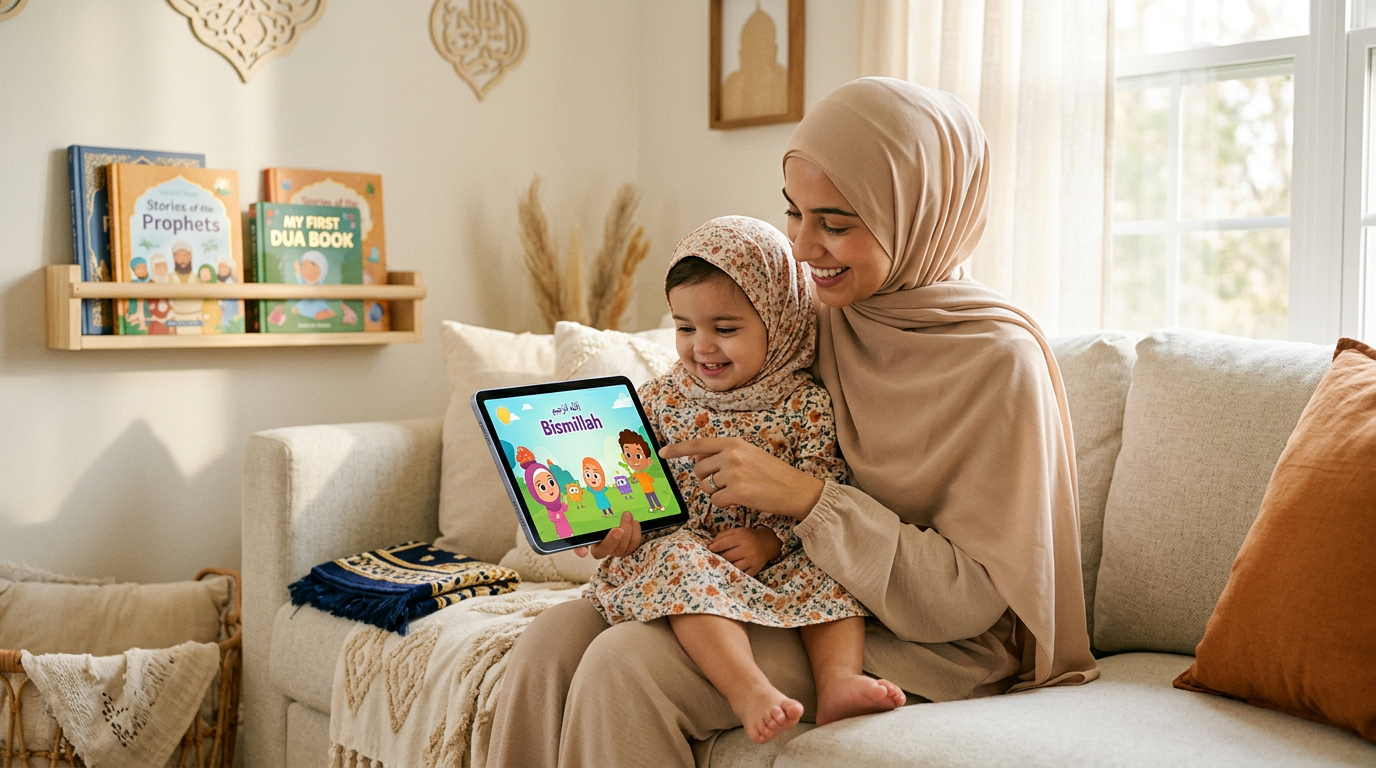
That's where an app like Babymode comes in. It was designed by Muslim parents for the unique needs of children aged 0-3, offering a library of gentle, faith-aligned content you can actually feel good about.
A Purpose-Built, Halal Alternative
Think of it less as "screen time" and more as a complementary tool in your parenting toolkit. It’s there to give you peace of mind when you need it, knowing your child is interacting with content that supports their growth and echoes your family's values.
- Curated Content: Everything is carefully selected, from Quranic stories and Arabic alphabet songs to lessons on good manners. It's all designed to be gentle and age-appropriate.
- Ad-Free and Safe: You’ll never find ads, product placements, or unpredictable algorithms. It’s a pure, focused environment for your child.
- Positive Exposure: The app provides positive exposure to language and faith in a controlled, supportive way, reinforcing the beautiful values you're already teaching at home.
Ultimately, navigating screen time is about making conscious, intentional choices for your family. If you want to dive deeper into this topic, you can read our guide on approaching screen time from an Islamic perspective.
And for those times when you choose a screen-based activity, you can also explore educational apps that offer real learning value. The goal isn’t to avoid screens entirely, but to have trusted, high-quality resources ready for when life happens.
Common Questions About Toddler Toys
Stepping into the world of toddler toys can feel a bit overwhelming. You want to make choices that are not only fun and educational but also feel right for your family and your faith. Let's tackle some of the most common questions that come up for Muslim parents when picking out toys for their one-year-old.
How Many Toys Does My One-Year-Old Actually Need?
It's tempting to think more is better, but when it comes to toddlers, less is definitely more. A small, thoughtfully selected collection of 8-10 high-quality, open-ended toys is so much better than a room overflowing with plastic. Too many options can actually overwhelm a little one, making it harder for them to focus and really get lost in deep, meaningful play.
Think about versatile classics like stacking blocks, a simple shape sorter, a few sturdy board books, and a push toy to help with those wobbly first steps. A great trick is to rotate them. Put a few away for a couple of weeks, and when you bring them back out, they feel brand new all over again. This keeps things fresh and encourages your child to engage more deeply without you having to constantly buy more.
Are Toys With Music and Lights Bad for My Toddler?
They're not necessarily "bad," but those super loud, flashy toys that do all the work can easily overstimulate a one-year-old's sensitive, developing brain. More importantly, they often encourage kids to just sit back and watch, rather than getting their hands dirty and figuring things out for themselves—which is where the real learning happens.
It's almost always better to choose toys that need your child to be the one making things happen. If you want to bring music into their world, try singing to your child or playing some gentle, instrument-free nasheeds softly in the background. It creates a much calmer and more connected playtime than the repetitive, often jarring sounds of electronic toys.
What Is the Best Way to Clean and Maintain Wooden Toys?
Wooden toys are so beautiful and durable, subhanAllah. Keeping them clean is actually pretty simple. All you need to do is wipe them down with a damp cloth and a little bit of mild, non-toxic soap. A gentle solution of white vinegar and water works wonders, too.
The key is to avoid soaking wooden toys in water. This can make the wood swell, crack, and lose its shape. Just give them a good wipe, let them air dry completely, and they’ll be ready for the next play session.
This simple routine keeps them hygienic and safe for your little one without having to use any harsh chemicals.
Are There Toys I Should Avoid for Religious Reasons?
This is a really personal decision that every family makes based on their own values and comfort level. Many Muslim parents prefer to steer clear of toys with detailed, realistic faces (especially the eyes), figures that could be seen as idol-like, or characters from shows that don't align with Islamic values.
Thankfully, there are so many wonderful alternatives. Simple, more abstract figures or toys that focus on the beauty of nature, shapes, and patterns are always a fantastic choice. The global demand for creative and engaging educational toys is growing, with North America holding about 30.3% of the market share in 2023. This means parents have more power than ever to find options that fit their family's needs perfectly. You can read more about these global toy market trends to see just how much variety is out there.
Ready to find a safe, halal, and ad-free screen-time solution for those moments when you need a helping hand? Join the waitlist for Babymode and be the first to know when we launch.