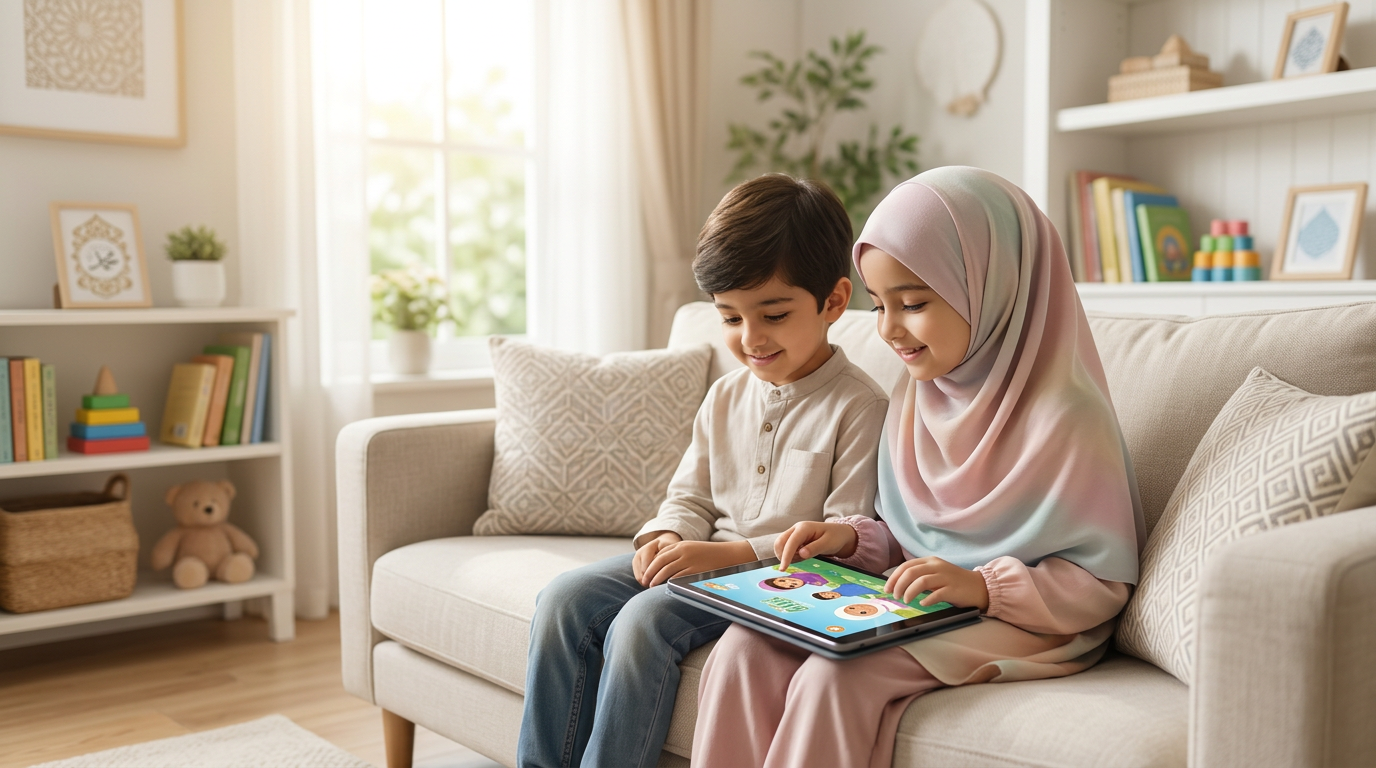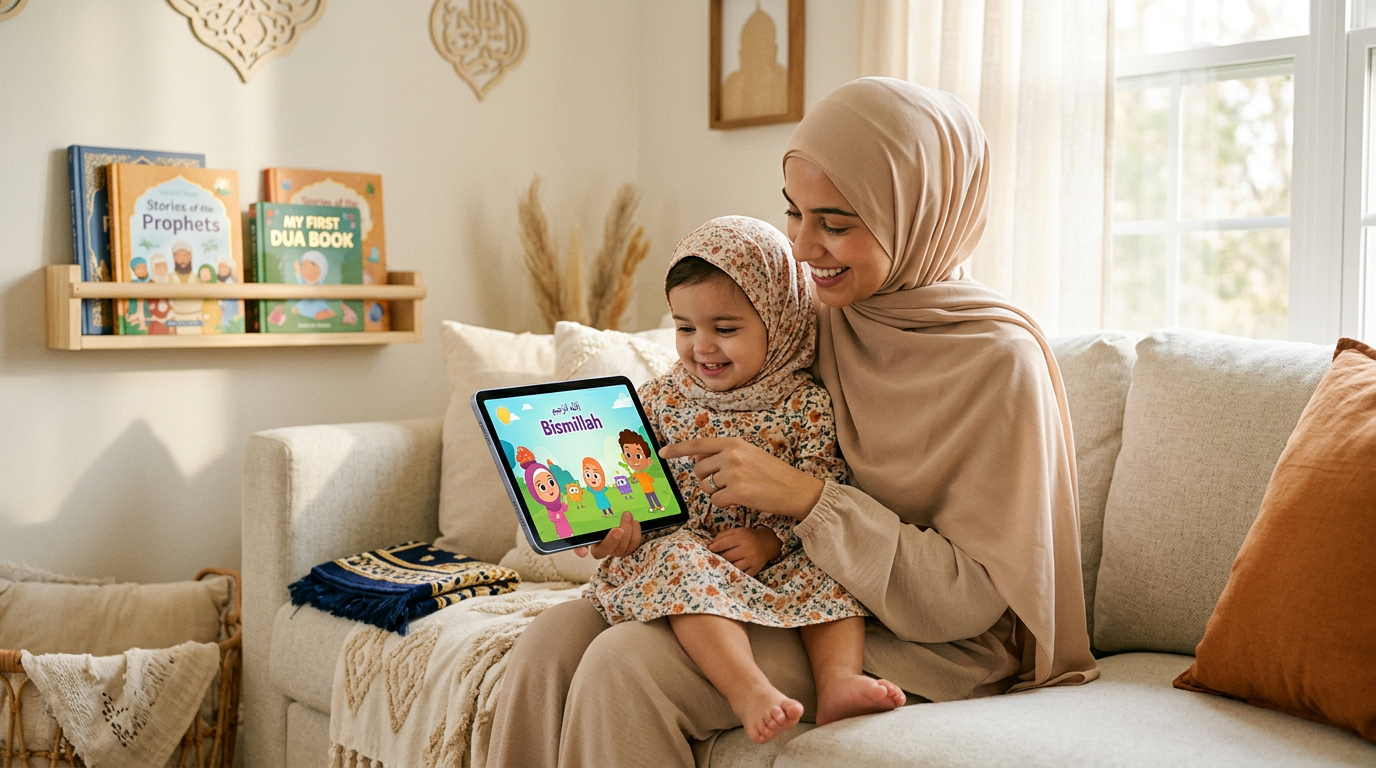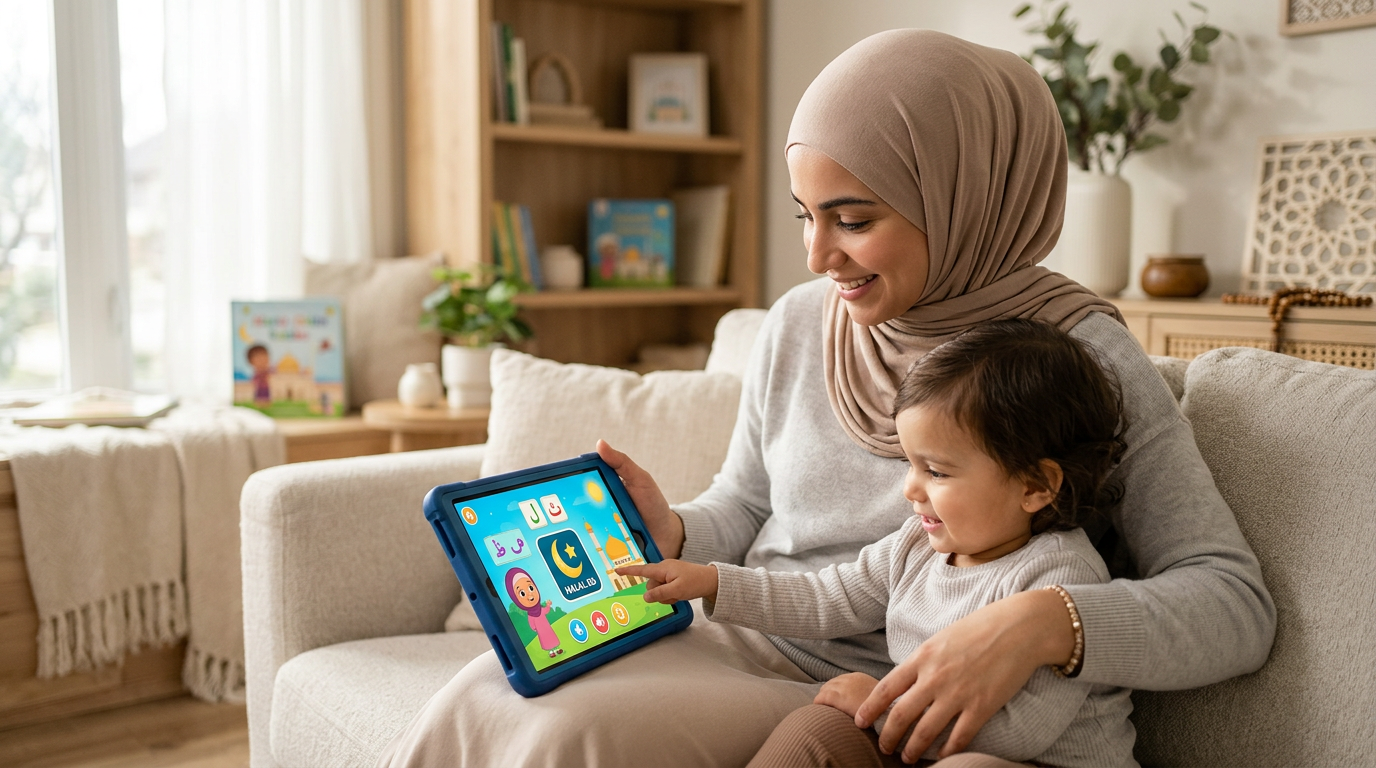
We understand the anxiety of the "autoplay" countdown and the "wild west" of mainstream algorithms. Protecting your child’s Fitra shouldn't be a struggle, yet we often feel caught between daily burnout and the need for safe, halal screen time.

It’s time to transition from passive viewing to intentional Digital Tarbiyah. Research suggests Muslim parents should limit toddler screen time to 20–30 minutes daily. When this "sacred window" is faith-aligned, it becomes a powerful tool for spiritual growth rather than a source of stress.
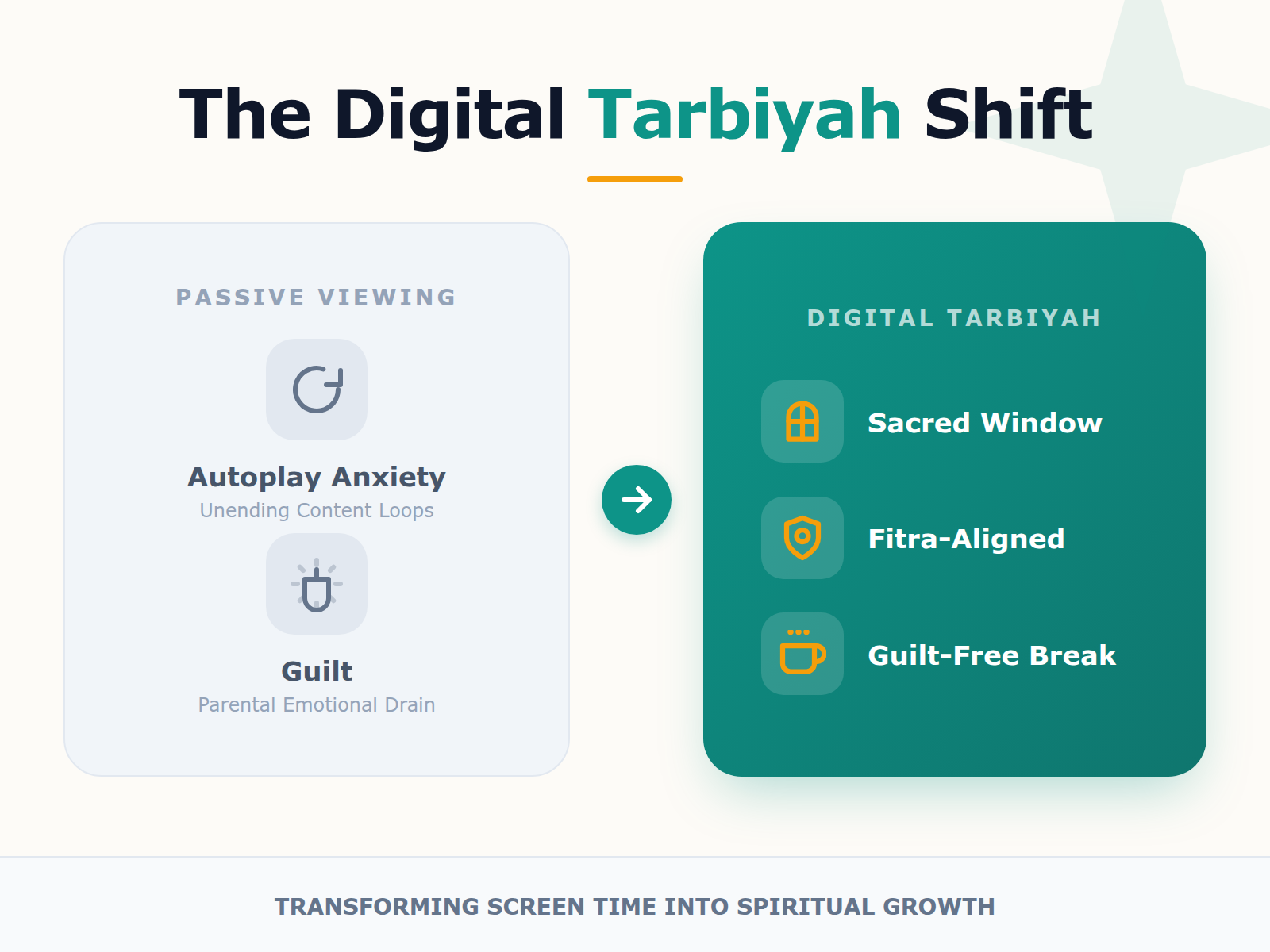
This guide helps you move from "screen-time anxiety" to "peace of mind." We’ll show you how to secure your devices and curate a digital sanctuary that nourishes your child’s Deen while providing you with a restorative, guilt-free break.
Understanding Digital Tarbiyah: Protecting Your Child's Fitra
This Fitra is more than just innocence; it's a delicate internal compass oriented toward the Divine from the very first breath. As parents, we recognize this purity as an Amanah (sacred trust), placing us as the primary guardians of their early spiritual and cognitive landscape.
Protecting this natural state requires us to be intentional about the digital "guests" we invite into our homes. By guarding their senses today, we're ensuring their hearts remain open to the beauty of the Deen tomorrow.
Intentional Curation
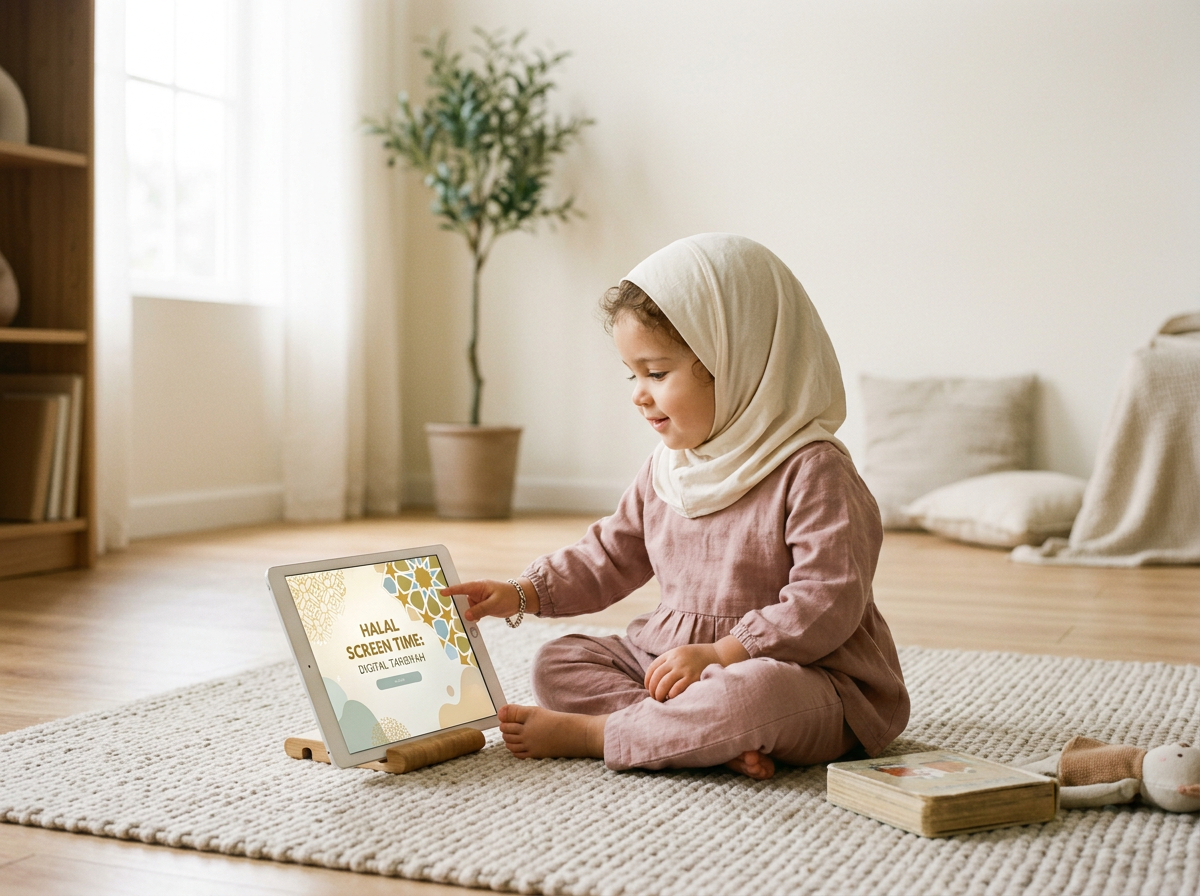
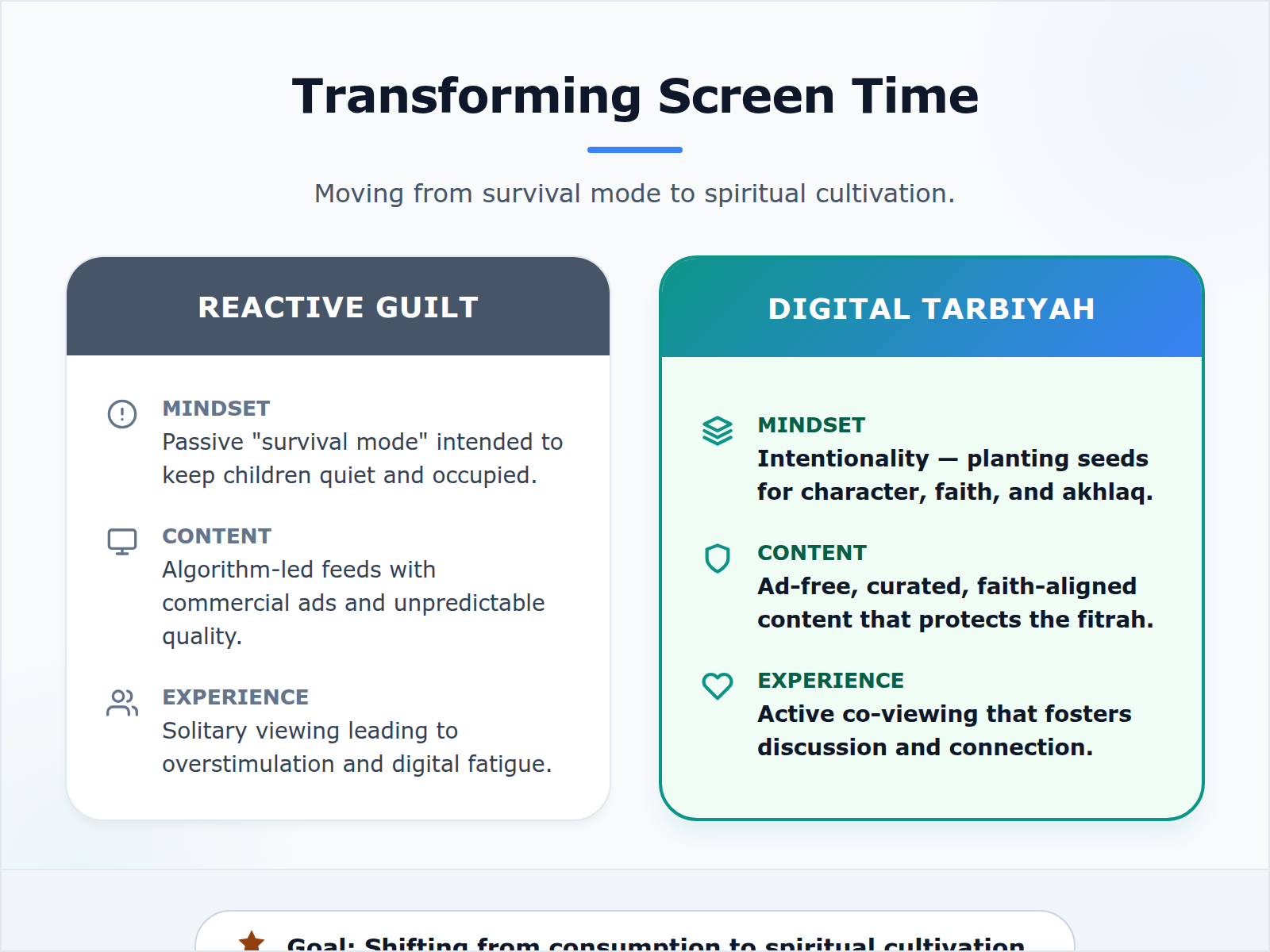
Mainstream platforms often rely on hyper-stimulating content and unpredictable algorithms designed to hijack a child's focus. We believe your child deserves an AI-guarded sanctuary that respects their developing mind and honors their inherent values.
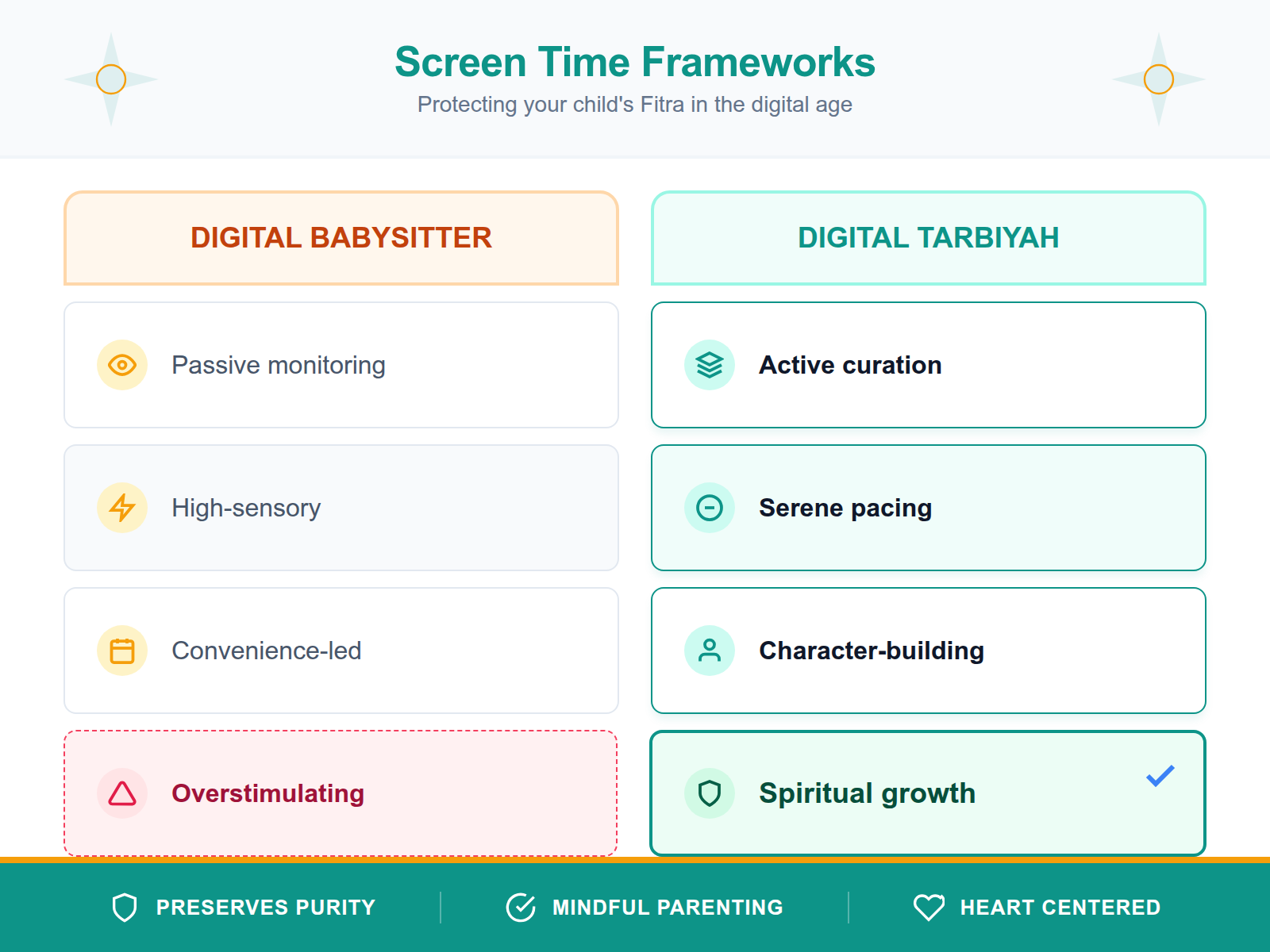
By adopting a Digital Tarbiyah model, we shift from passive viewing to active, prayerful curation. We choose content that isn't just "safe," but is actively pure, wholesome, and beneficial for the soul. This proactive approach transforms screen time into a high-tech tool for building Akhlaq (character) through every frame.
Balancing the Sacred Window
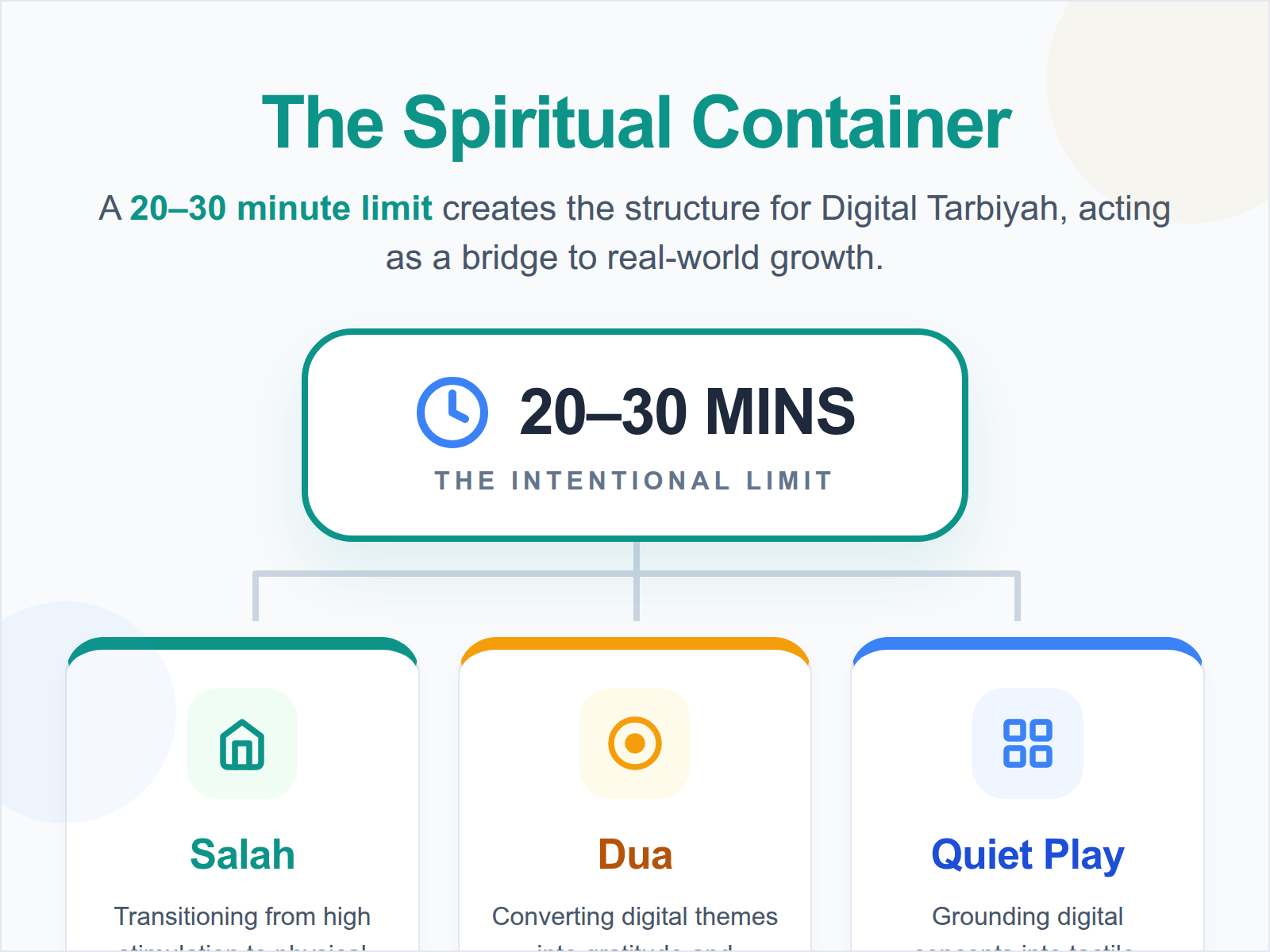
Developmental experts and health organizations like the World Health Organization (WHO) emphasize that high-quality content and strict time limits are vital for healthy growth. For the youngest members of our Ummah, we recommend keeping halal screen time for toddlers to that daily window of 20 to 30 minutes.
This intentional limit ensures their digital intake remains a blessing rather than a burden on their sensory development. Mainstream media often uses rapid cuts that can overstimulate a child’s brain, making quiet moments like Salah feel difficult or dull.
By choosing media with slow pacing and melodic, instrument-free Nasheeds, you help protect your child's natural attention span. This gentle approach helps toddlers stay "content-aware," allowing for easy transitions back to their physical spiritual routines.
Spiritual Reminder: When we protect our children's eyes and ears, we are guarding the gateways to their hearts. Every mindful choice you make today is a lasting investment in their Tarbiyah.
Cultivating Spiritual Boundaries
Think of this daily window as a "spiritual container" that provides your child with a sense of routine and security. Consistency helps manage the transition away from the device, teaching toddlers how to respect healthy limits while feeling safe.
These moments can even reinforce Sunnah habits, like saying "Bismillah" before starting or learning simple Duas through song. You aren't just filling time; you’re planting seeds for their future through mindful technology use.
This structured approach allows you to manage your home with peace of mind, knowing your child is engaging with nourishment rather than noise.
The Technical Lockdown: How to Secure Your Devices for Safety
Securing your device is the first practical step in your family's journey of Digital Tarbiyah. It transforms a potentially chaotic digital window into a controlled, Tayyib (pure) environment for your little ones. By setting these technical boundaries, you’re fulfilling your Amanah to protect their focus and innate Fitra.
Seamless Security on iOS
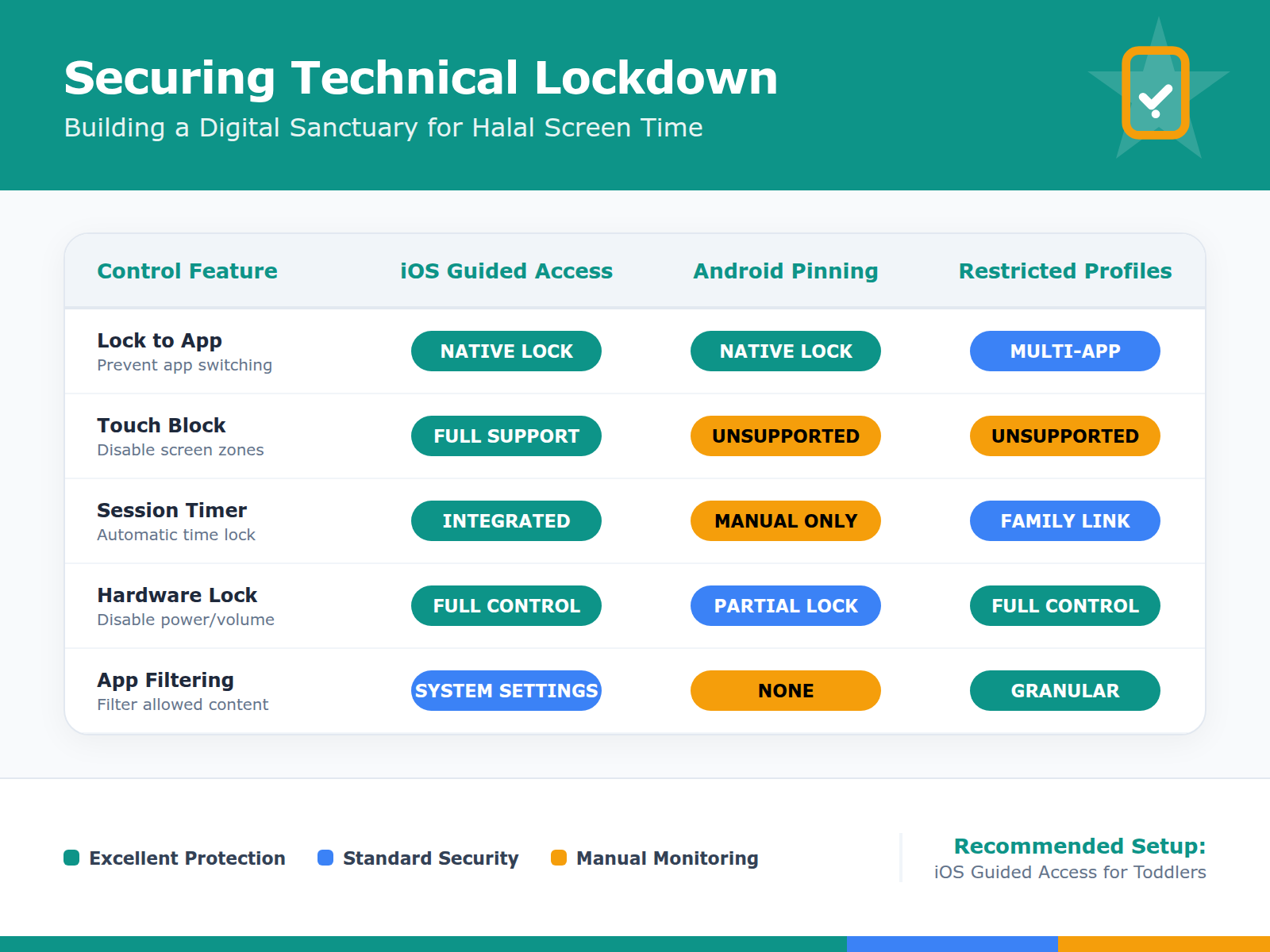
Using guided access for toddlers is the most effective way to lock your iPhone or iPad into a single, safe app. This prevents "digital wandering" and keeps your child within an AI-guarded safe space where they cannot access unvetted content.
- Enable: Go to Settings > Accessibility > Guided Access and toggle the feature on. We recommend setting a passcode that is different from your main lock screen for extra security.
- Lock: Open your chosen halal app and triple-click the side button to start the session. This effectively "pins" the screen, making it impossible for tiny fingers to close the app.
- Refine: You can even disable "hot zones" like volume buttons or specific areas of the screen to prevent sudden noise or accidental changes.
Building a Sanctuary on Android
Android offers flexible tools to sanitize your child’s digital environment with minimal stress. These features help you create a permanent sanctuary on shared devices, ensuring your personal apps remain private and protected.
- App Pinning: Found in Settings > Security, this locks the device to one specific app until you enter your secure pattern or PIN. It's a quick win for parents who need to hand over their phone for a few minutes of quiet learning.
- Restricted Profiles: On tablets, you can create a secondary user account where only faith-aligned, halal apps are visible. This creates a dedicated "kid mode" that mirrors the peace of a physical prayer space.
Ending the Infinite Scroll
Mainstream platforms use Autoplay to bypass your parental intent, pushing toddlers into an endless loop of overstimulating content. We believe screen time should be an intentional choice, not an automated cycle that is difficult to break.
Manually disabling autoplay in your app settings ensures your child’s session ends exactly when you intended. This small change makes the transition back to physical play much easier, as it avoids the "cliffhanger" effect of a new video starting.
Spiritual Reminder: Consistency in digital boundaries builds Sabr (patience) and self-regulation in our children. When the screen turns off as planned, it reinforces that technology has a purposeful, limited place in a believer's life.
Guarding Physical Well-being
Managing the physical impact of screens is just as vital as the content itself for healthy Tarbiyah. Automate blue light filters—like Night Shift—to activate at Asr or Maghrib to protect your child's natural sleep cycle. This simple adjustment ensures their digital engagement doesn't interfere with a peaceful, Sunnah-aligned bedtime.
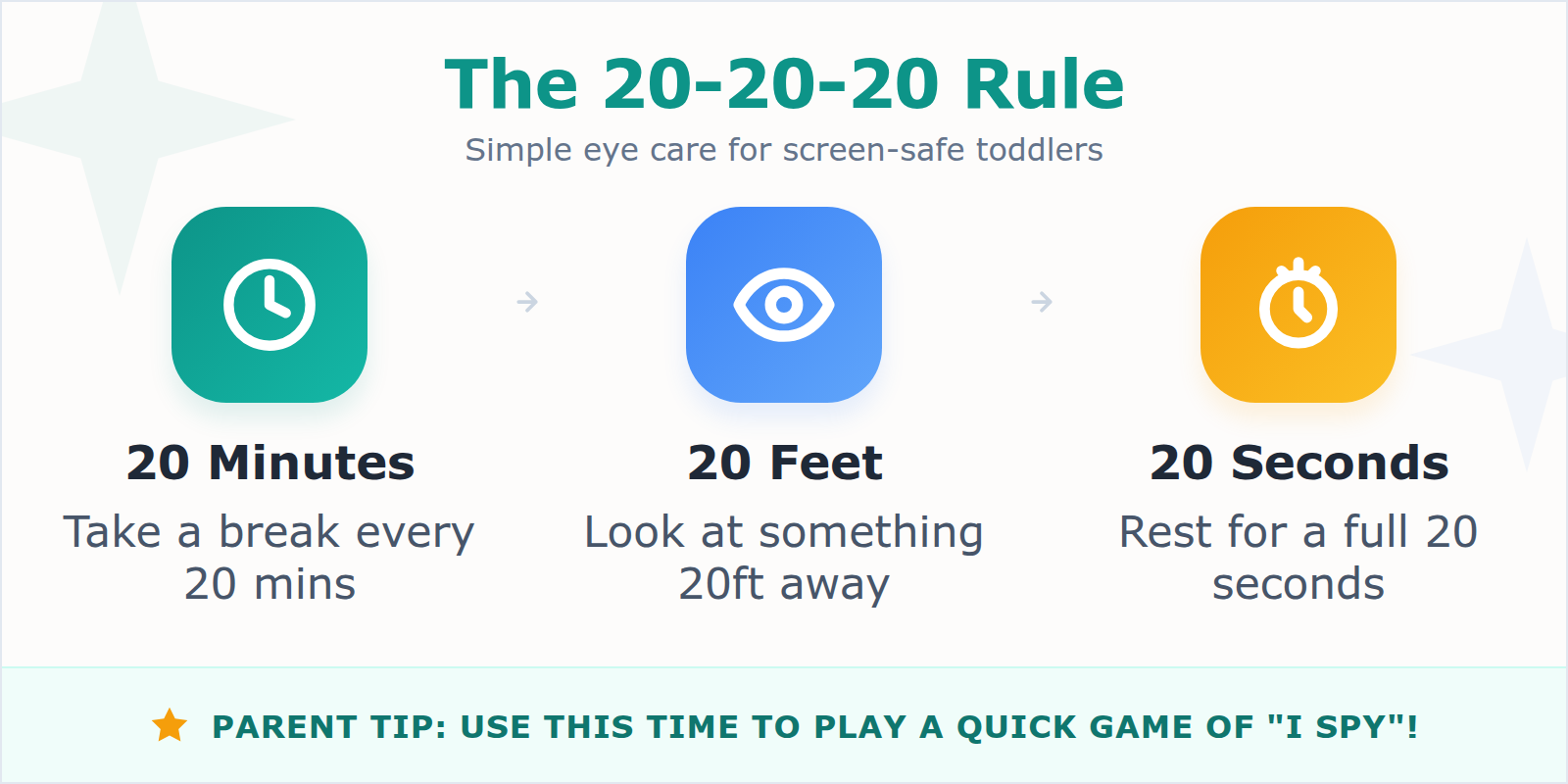
We also encourage the 20-20-20 rule to prevent digital eye strain during their "sacred window" of screen time. Every 20 minutes, encourage your child to look at something 20 feet away for 20 seconds. This creates a natural rhythm of pause and reflection, keeping their eyes and hearts refreshed for the world around them.
The Content Audit: Transitioning to Ad-Free Halal Videos
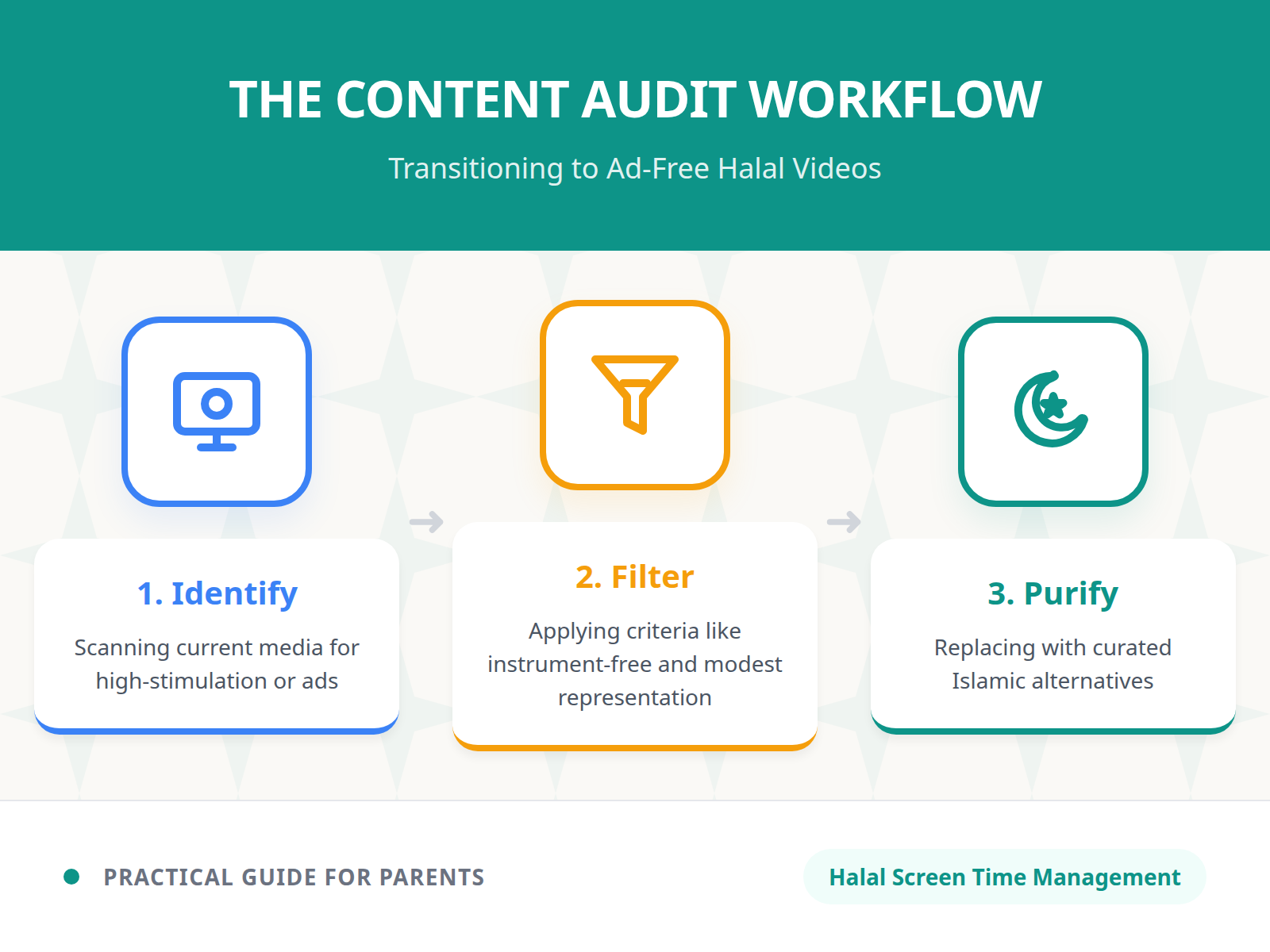
A content audit is a transformative step in your Digital Tarbiyah journey. It shifts your focus from merely avoiding "haram" to embracing the high standard of Tayyib—content that is pure and protective of your child’s Fitra. By being intentional today, you're building a steadfast foundation for their future relationship with technology.
Distinguishing Sensory Noise from Spiritual Nourishment
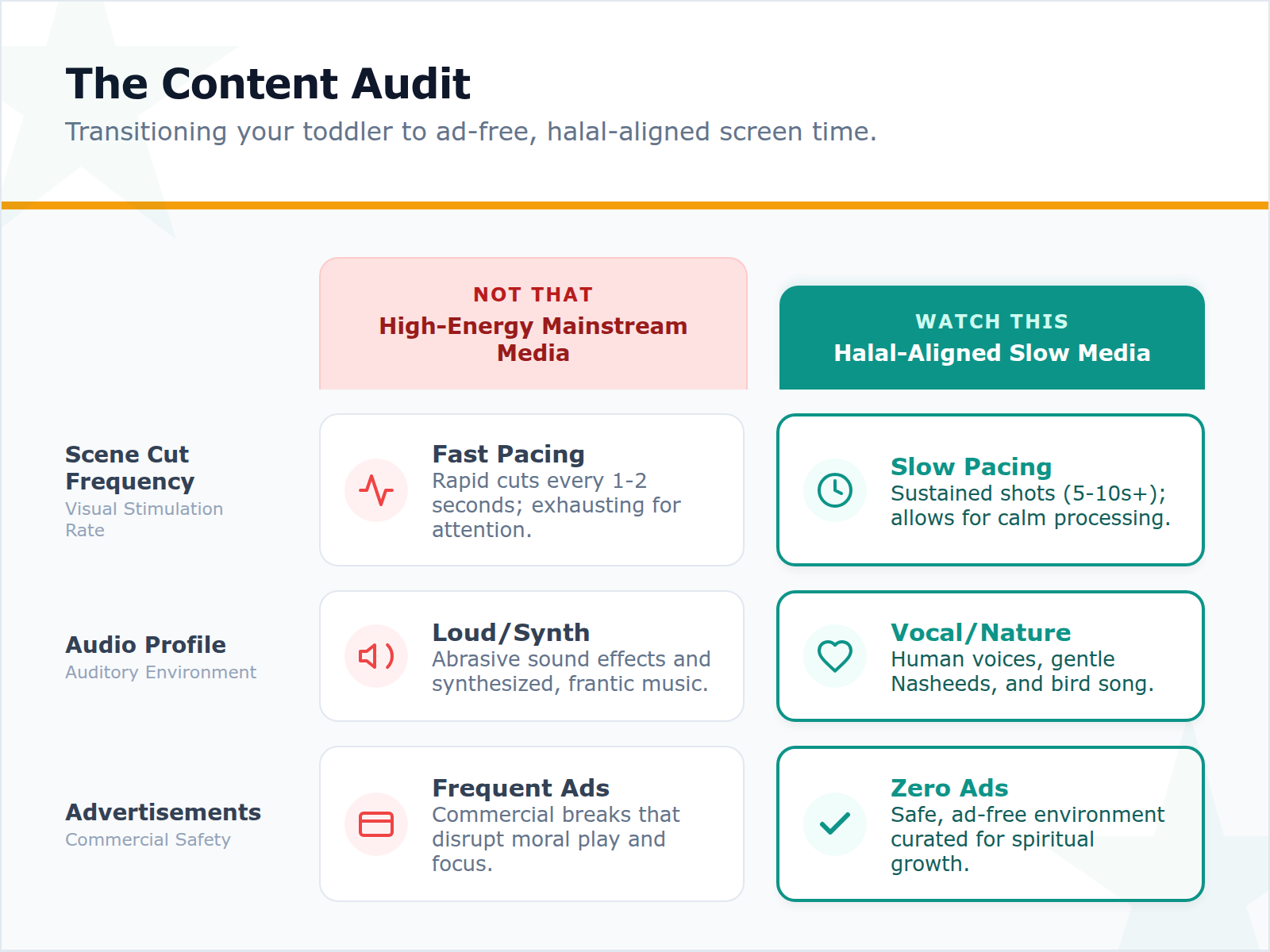
Identify the "Cocomelon effect"—the hyper-stimulating, fast-cut editing style prevalent in mainstream media. These rapid scene changes can overwhelm a toddler's developing nervous system, often leading to post-screen irritability and restlessness.
High-quality Islamic media prioritizes "Slow Media" principles that respect a child's natural pace of discovery. By choosing content with longer shot durations and serene aesthetics, you invite Sakina (tranquility) into your home and heart.
Streamlining Your Tayyib Criteria
To begin the transition, evaluate your child’s current favorites against a standard of excellence in both character and design. We recommend replacing high-energy, instrument-heavy cartoons with vocal-only Nasheeds and stories of the Prophets.
This proactive curation ensures the media your child consumes is beneficial for their soul. Use this expert checklist to audit your digital library and ensure it meets a Tayyib standard:
- Sound: Does it feature calm, natural audio rather than loud, synthesized beats?
- Akhlaq: Does it model prophetic character, like saying "Alhamdulillah" or sharing?
- Pacing: Does the animation allow your child time to process what they are seeing?
The Necessity of Ad-Free Environments
Mainstream platforms often surround content with loud commercials designed to spark a consumerist "I want" culture. Switching to ad-free halal videos on an AI-guarded safe space like Babymode removes this external pressure entirely.
This ensures your child’s focus remains on spiritual values like Shukr (gratitude) rather than the next toy they see in a 15-second unskippable ad. By filtering out these commercial distractions, you prioritize the Tayyib quality of their environment, allowing their focus to blossom in a calm, protected space.
Spiritual Reminder: Protecting your child's focus from consumerism is a form of guarding their Amanah. When we remove the noise of ads, we make room for the remembrance of Allah.
Boosting Development through Bilingual Content
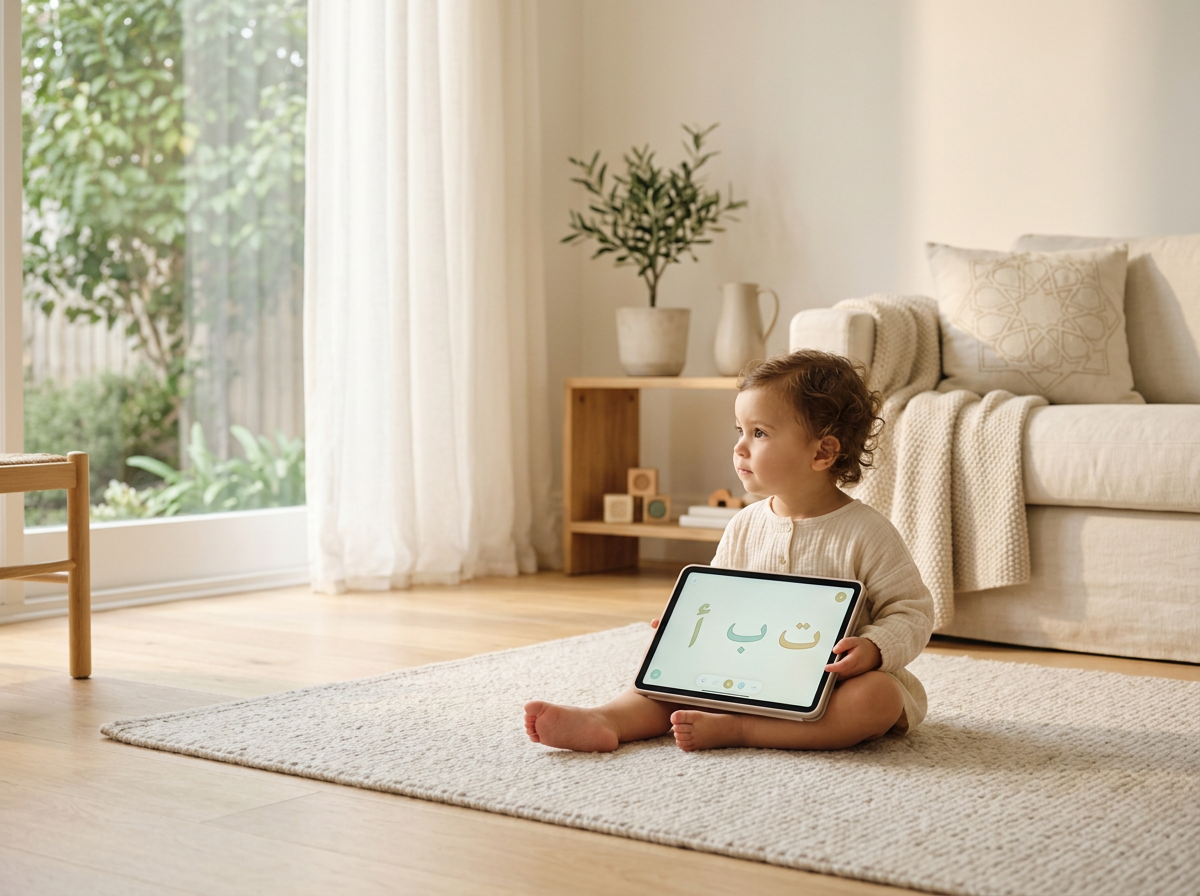
Finally, prioritize bilingual engagement in Arabic or English to leverage your child's natural neuroplasticity. An intentional session of ad-free halal videos featuring Arabic phonemes can foster early language familiarity and a love for the Quran.
This approach turns a necessary break for you into a "passive gain" for your child’s cognitive and spiritual development. We’ve seen how these small, consistent steps build a lasting connection to the language of our Deen.
Building a Faith-Centered Routine: Scheduling and Co-Viewing
Integrating digital tools shouldn't feel like a compromise of your values. By aligning muslim toddler screen time safety with your family’s natural rhythm, you transform a potential distraction into a pioneering tool for growth. We’re here to help you move from "digital babysitting" to intentional, faith-aligned engagement.
Rhythms of the Day: Setting Healthy Limits
We recommend viewing screen time as a "Digital Prayer Mat"—a purposeful transition that supports both parent and child. This intentionality honors the duration we discussed earlier, ensuring the screen remains a blessing rather than an addictive habit. It provides you with the peace of mind needed to fulfill your own obligations without the anxiety of unfiltered content.
Parenting Tip: The Dinner Dash
Use a short, curated loop of Quranic stories during meal prep. This allows you to focus on the kitchen while your toddler remains in an AI-guarded safe space, learning about the Prophets instead of watching mindless ads.
The ‘Pause and Prompt’ Method
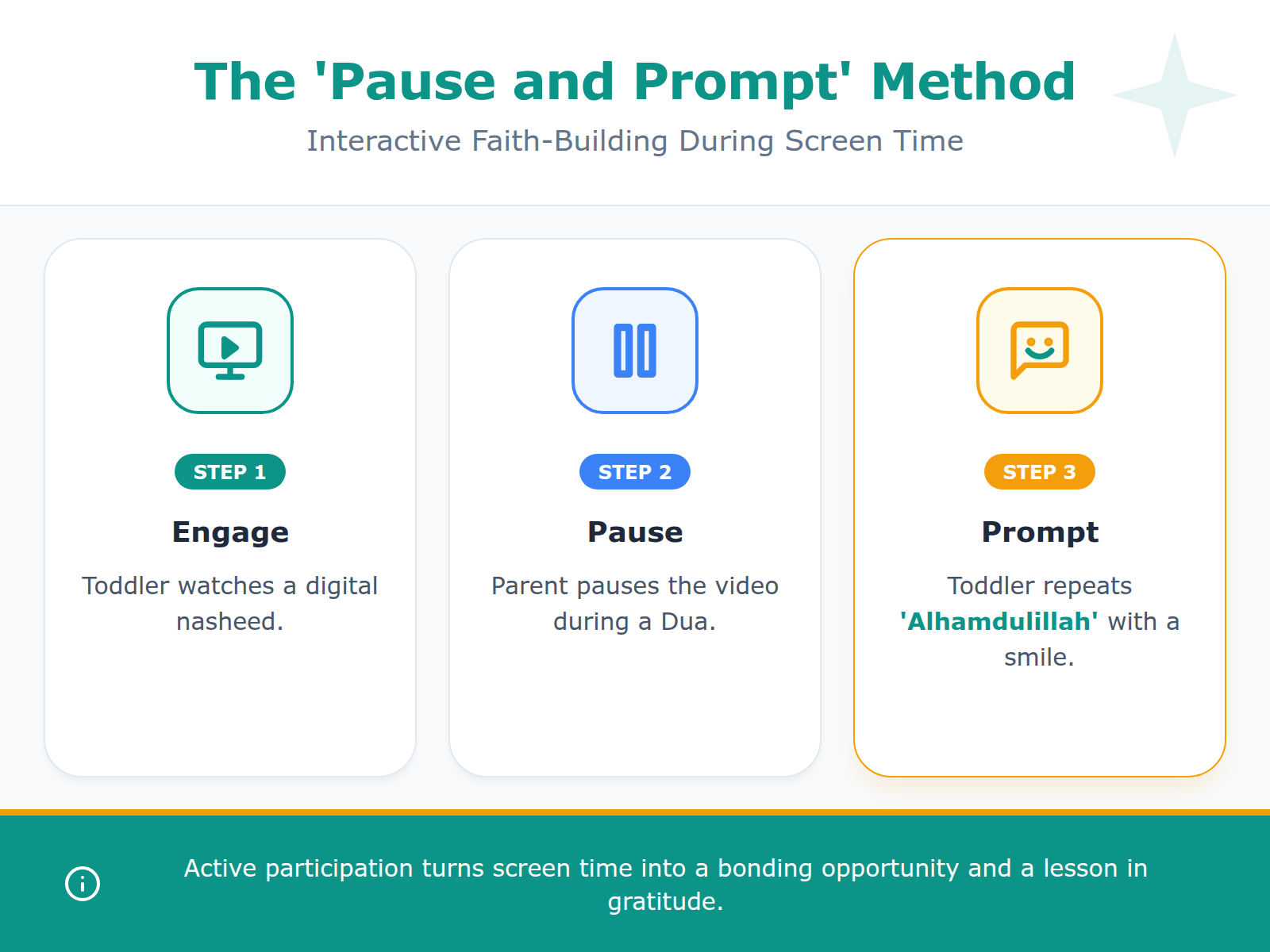
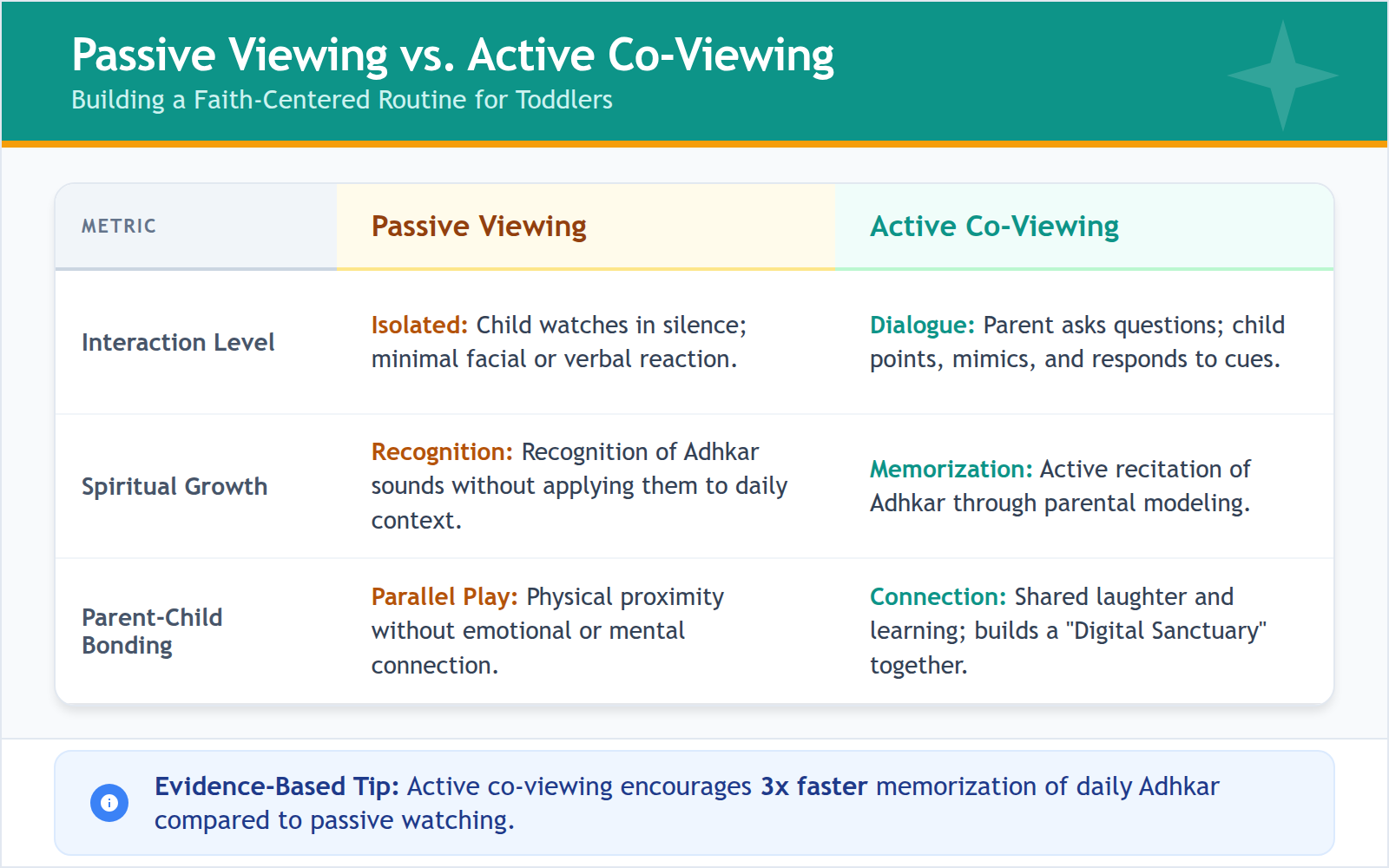
Co-viewing transforms passive consumption into a spiritual milestone. Try the "Pause and Prompt" method by stopping a video during a Dua to ask your toddler to repeat "Alhamdulillah" or "Bismillah." This nurturing approach bridges the digital world with their Fitra, ensuring every minute spent on the screen builds their character and vocabulary.
Defining Boundaries with the ‘Mussalla Rule’
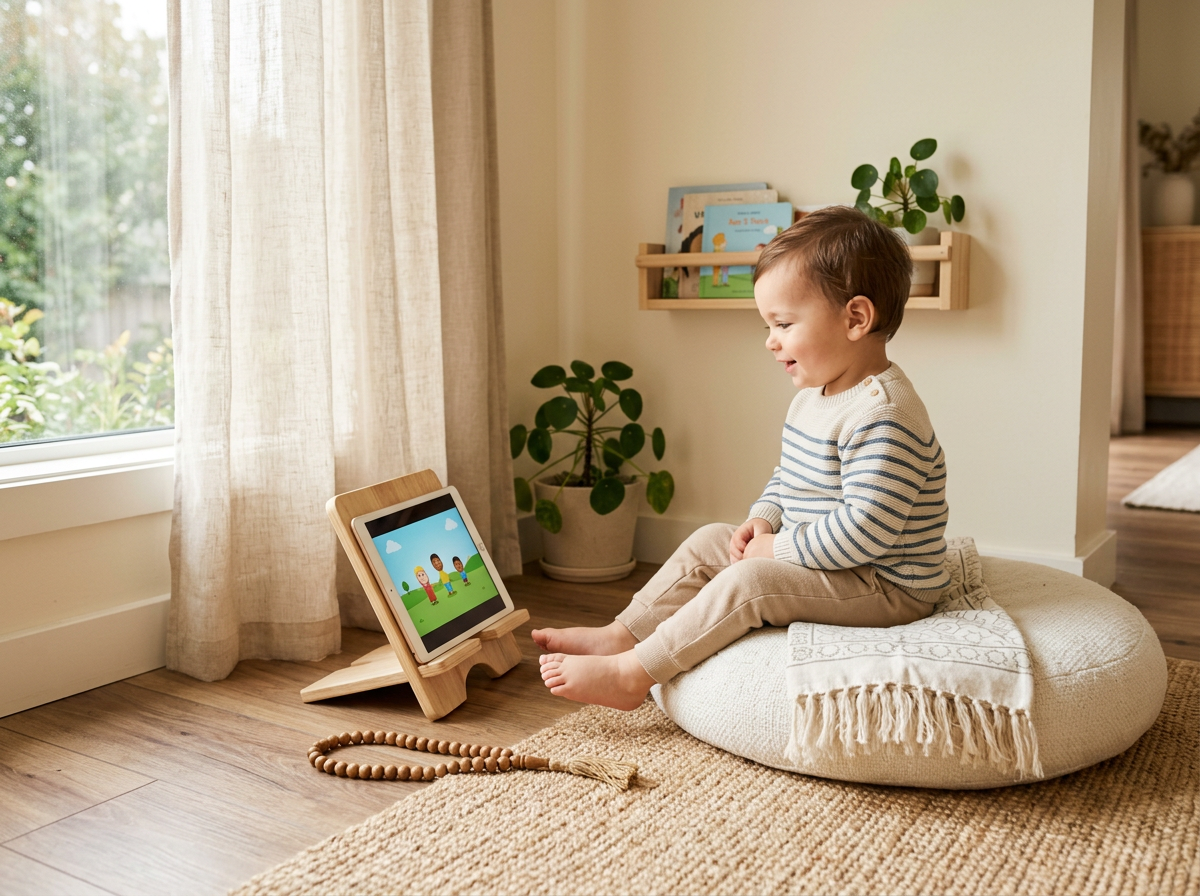
Establish "Screen-Free Zones" in high-connection areas like the dining table and bedrooms to maintain deep family bonds. We suggest the "Mussalla Rule": just as we have a dedicated space for prayer, create a specific "Learning Nook" for digital time. This physical boundary helps your child understand that screen time has a clear beginning and end, protecting the heart’s focus on real-world connection.
Sensory Anchors for Peaceful Transitions
Ending a session can lead to meltdowns, but Sensory Anchoring helps ease the shift for both you and your toddler. Use a specific, calming Nasheed as a recurring "closing theme" to signal the end of this focused window. This predictability reduces anxiety and helps your toddler practice Sabr (patience) as they learn to regulate their impulses.
The Tired Parent's Toolkit: 5-Minute Screen-Free Transitions
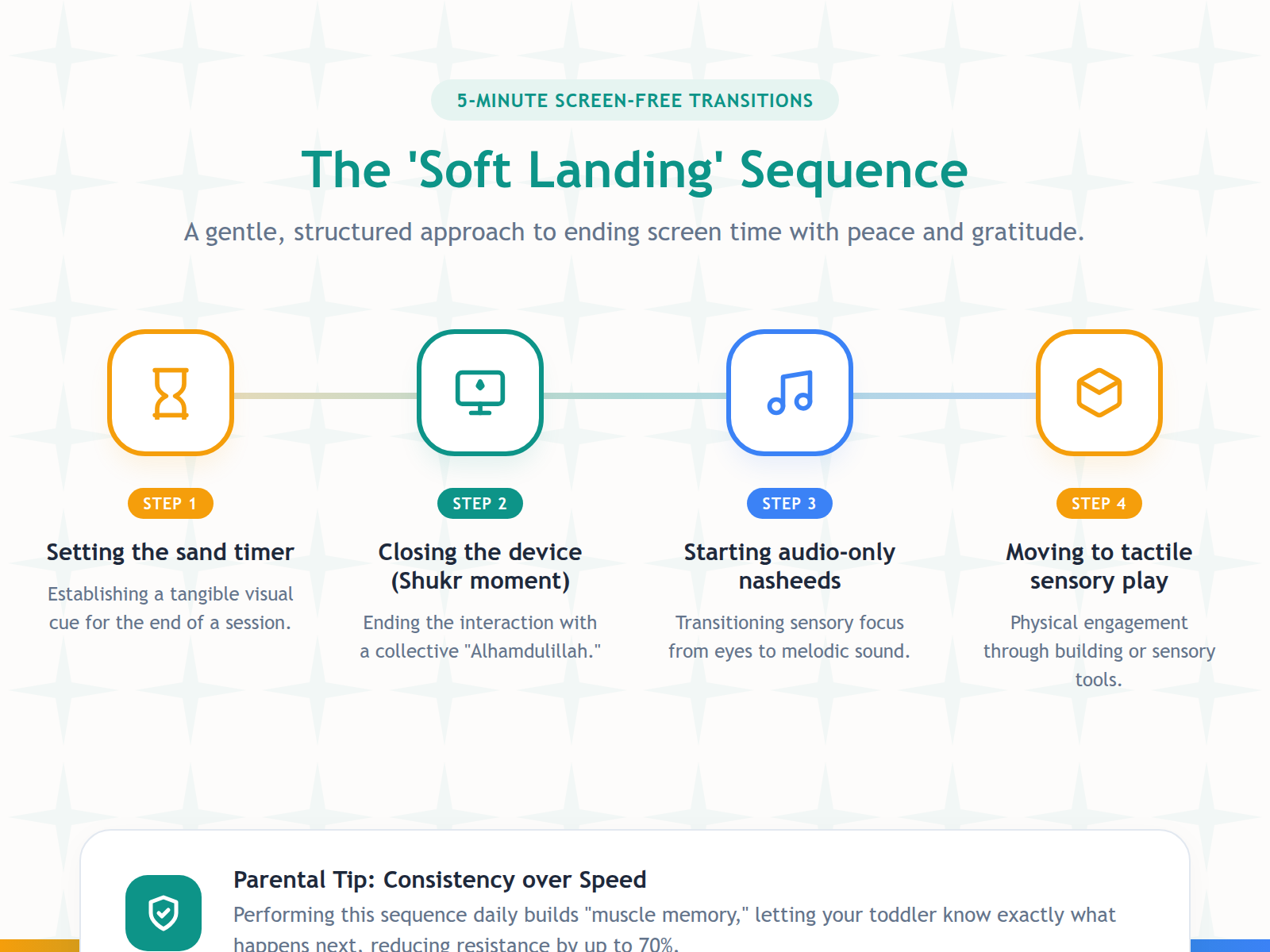
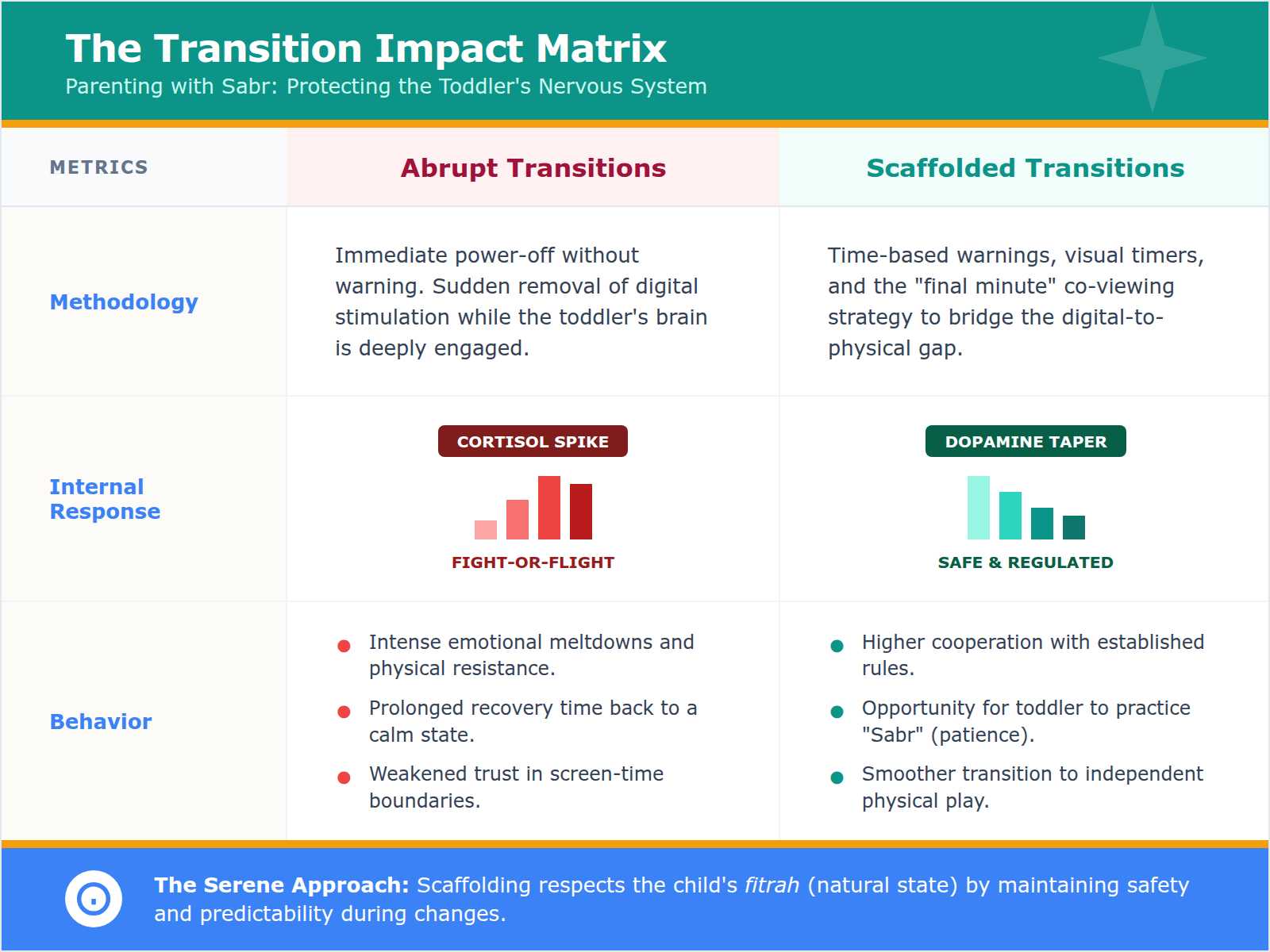
Transitioning from a screen to the physical world can often jolt a toddler’s sensitive nervous system. We use "scaffolded transitions" to help your child regulate their emotions and maintain the Sakina (tranquility) you’ve nurtured through Islamic digital tarbiyah. This intentional pacing ensures the "power-down" phase remains peaceful rather than a struggle for your family.
Visual Timers and the 'Shukr' Hand-off
Visual cues are often more effective than verbal warnings, which can feel like a confrontation to a young child. A simple sand timer provides a serene countdown, helping your child see time "moving" so the boundary feels like a natural conclusion. When the session ends, transform the power-down into a Shukr (gratitude) moment.
Encourage your child to say "Alhamdulillah" for what they learned and have them "tuck the device in" to a drawer. Giving them agency over this transition honors their Fitra and supports healthy emotional regulation. This simple ritual shifts the focus from what is ending to the blessings they just received.
The Sensory Bridge: Audio and Tactile Grounding
If visual stimulation was high, transition immediately to audio-only, instrument-free Nasheeds. This acts as a Sensory Bridge, allowing the visual cortex to rest while maintaining a calming auditory rhythm. It prevents a sudden "crash" and keeps the atmosphere of the home grounded in faith.
Pair this with a "One Household Item" challenge to ground your toddler in reality. A simple bowl of water or a container of dry lentils provides immediate tactile feedback. This sensory reset moves the child from passive observation back to active, physical exploration of their environment.
Creating a 'Quiet Corner' for Offline Tarbiyah
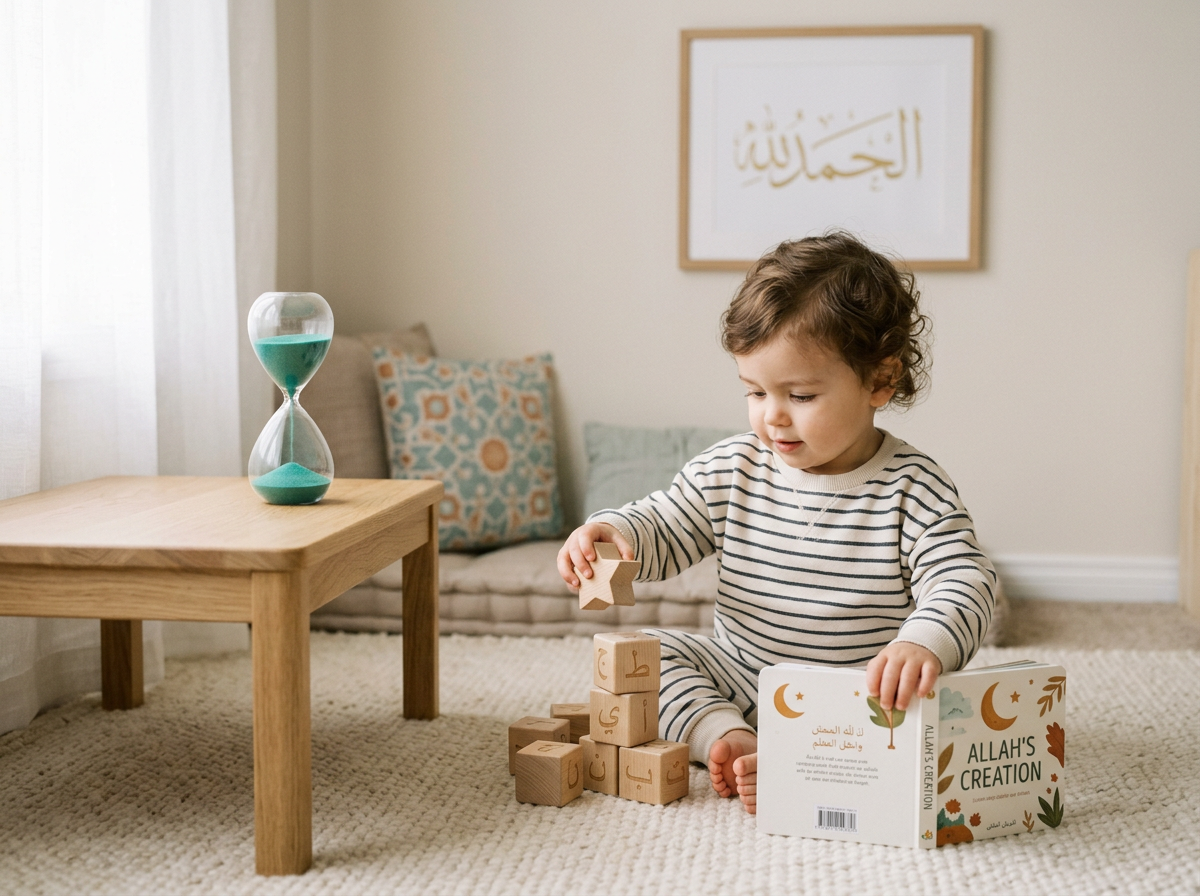
Establish a permanent "Quiet Corner" in your home featuring a soft rug, wooden blocks, and Islamic board books. This space serves as a low-energy sanctuary where your child can retreat once the screen is off. It’s a dedicated space for them to process their day in peace.
By using toys that mirror the themes of their halal videos—like Arabic alphabet blocks—you move their learning from 2D to 3D. This scaffolded approach ensures your home remains a place of growth for the whole Ummah. Providing a gentle path back to physical play turns the end of screen time into a beautiful opportunity for independent Tarbiyah.
Conclusion
Transitioning from reactive "guilt-viewing" to proactive Digital Tarbiyah is a profound shift for any family. By choosing intentional, halal screen time for toddlers, you reclaim your role as the guardian of your child's fitra. We know this amanah can feel heavy, but your sincere niyyah (intention) to protect your little one is seen and rewarded by Allah.
You are now building a foundation of Barakah and Sakina in your home, one peaceful session at a time. Take the next step in your journey toward a faith-aligned sanctuary today. Explore Babymode’s AI-guarded, ad-free platform to nurture your child’s spiritual growth with ease and confidence.

Frequently Asked Questions
Is screen time considered haram for my toddler?
It’s less about a "yes or no" and more about seeking what is Tayyib (pure). We recommend limiting daily viewing to 20–30 minutes to protect your child's delicate Fitra and fulfill your Amanah with peace of mind.
How do I handle unfiltered media at a relative's home?
Communicate with Adab (etiquette), explaining that you’re prioritizing your toddler's spiritual Sakina. Framing it as a boundary for focus and development helps others respect your family's intentional digital journey.
Can Quranic stories really teach my toddler Arabic?
Yes! Rhythmic Nasheeds and stories help your child bond with Quranic phonetics from an early age. This creates a natural, foundational love for the language of the Deen through melodic repetition.
Why is Babymode safer than mainstream video platforms?
Mainstream apps are built on addictive algorithms and intrusive ads. We provide an AI-guarded, ad-free sanctuary designed specifically to protect the Ummah’s youngest members and nurture their spiritual growth.