Embarking on the potty training journey is a massive milestone for any family. A gentle, low-pressure way to get the conversation started is with potty books for toddlers. These wonderfully simple and colorful stories can help demystify the whole process for your little one, easing common fears and building excitement about becoming a ‘big kid’—all while fitting in perfectly with your family’s values.
Your Guide to Potty Books for Muslim Toddlers
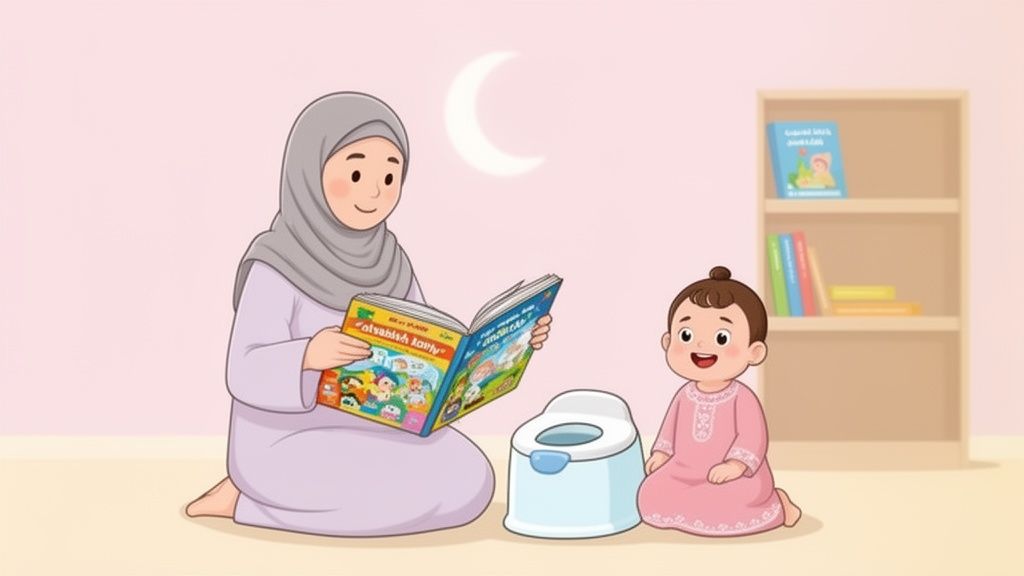
For Muslim parents, potty training is so much more than just another developmental stage. It’s often one of the very first opportunities we have to teach our children about taharah (purity and cleanliness). It's a beautiful, practical way to instill core Islamic manners from the very beginning.
Of course, knowing that doesn't make the path to diaper freedom any less intimidating! You might be asking yourself when the right time to start is, how to handle inevitable accidents with patience, and how to keep the entire experience positive. This is exactly where a good potty book becomes one of your most valuable allies.
Making the Potty a Positive Place
Think of a potty book as your toddler's personal tour guide to the toilet. It takes this big, sometimes loud and unfamiliar, object and turns it into a normal, everyday thing. When a child sees a relatable character—another child, a friendly animal, or a familiar figure—successfully learn this new skill, they get to explore the idea from a safe and comfortable distance.
This gentle introduction works wonders in a few ways:
* It builds familiarity: Hearing stories over and over again about sitting on the potty, using toilet paper or water, and washing hands makes the routine feel normal and expected.
* It reduces anxiety: The best stories tackle common fears, like the flushing sound or the worry of falling in, often with a comforting or even silly twist.
* It creates excitement: Cheering for a character's success makes your child feel like they're about to join an exclusive "big kid" club.
A Foundation in Faith and Gentle Parenting
This book-based approach fits seamlessly with the principles of gentle, faith-led parenting. Instead of creating pressure or forcing the issue, you’re inviting your child to learn through connection and patience. You’re using positive reinforcement in its purest form. You can dive deeper into this mindset in our guide to Islamic parenting for toddlers.
These books aren’t just about the mechanics of using the toilet. They are about building confidence, fostering independence, and creating a calm, predictable routine that fits beautifully within the rhythm of a Muslim household.
By framing this milestone with love and encouragement, you set the stage for a much smoother transition. You're not just teaching a practical skill; you're nurturing your child’s understanding of cleanliness and self-care, which are values at the very heart of our faith. This guide will show you exactly how to pick the right books and weave them into your routine.
How Potty Books Actually Help Toddlers Grow
Potty books are so much more than a simple how-to guide for using the toilet. They’re a powerful tool for nurturing your little one’s mind, heart, and social skills. By reframing a potentially scary milestone as a fun, engaging story, these books lay a positive groundwork that taps into your child’s natural curiosity and growing desire to be a "big kid."
Think about it from their perspective: the potty is new, maybe a little loud, and definitely unfamiliar. When a child sees a character just like them successfully figure it out in a book, it gives them a safe space to process the whole idea. They can watch, ask questions, and get used to the routine—all without any pressure to perform. This gentle, no-stress introduction is really the heart of patient, faith-led parenting.
Building Confidence and a "Can-Do" Attitude
One of the biggest wins with potty books is the incredible confidence boost they give. Mastering a new skill is a huge deal for a toddler, and these stories frame it as an exciting adventure instead of a dreaded chore.
- Soothing Common Fears: Let's be honest, the flush of a toilet can be startling! Many toddlers are anxious about new things, and books can gently address these fears, often with a bit of humor, showing characters who were nervous at first but learned it was all okay.
- Encouraging Empathy: When a character in a story feels proud after using the potty, your toddler connects with that feeling. They start to understand what accomplishment feels like and get excited to experience that pride themselves.
- Fostering Independence: The classic "you're a big kid now" narrative is incredibly empowering for toddlers. It gives them a sense of control over their own bodies, which is a massive step in their development.
This push for independence is a global trend. The market for potty training aids hit USD 231.4 million in 2023, and with 72% of parents in developed countries starting to use them by age two, it's clear that fostering autonomy early is a priority for many families.
Creating Calm, Predictable Routines
For Muslim families, calm and predictable routines are the glue that holds the day together, helping life flow smoothly around prayer times and other responsibilities. Potty books are a fantastic way to establish this kind of predictability.
The simple repetition in these stories helps the sequence of events stick in a toddler’s mind: feeling the need to go, sitting on the potty, wiping, flushing, and washing hands. It creates a mental roadmap that makes the real thing feel less scary and more automatic.
By reading the same book at regular times—maybe after breakfast or right before a nap—you naturally create a "potty time" ritual. This consistency helps your toddler’s body and mind know what to expect, which often reduces resistance and turns the whole process into a positive, shared activity.
Growing Minds and Vocabularies
Finally, don't underestimate the power of potty books for language skills. They introduce new words related to the body and bathroom routines in a perfectly natural context. As you point to the pictures and name the objects, you’re helping your child connect words to their meanings and build a stronger foundation for communication.
Of course, a holistic approach to your toddler's development goes beyond just books. Physical well-being is just as important. For instance, making sure your child is drinking enough water is key to their health and can even make potty training easier. You can learn more by understanding the importance of children's hydration. Ultimately, these simple books support your child’s growth from every angle—nurturing their mind, emotions, and burgeoning sense of self.
Choosing the Right Potty Book for Your Family
Stepping into the children's section of a bookstore or browsing online can feel overwhelming. There are so many options, and when you’re looking for a potty book that aligns with your family’s values, the search gets even trickier. As Muslim parents, we’re not just looking for a how-to guide; we want a story that is positive, encouraging, and, importantly, modest.
The best potty books feel less like an instruction manual and more like a gentle friend guiding your child through a huge milestone. The goal is to find stories that make using the potty seem like a normal, everyday thing, completely free of any shame or pressure. A great book will celebrate every small success and treat accidents as just a part of the learning process. This approach is key to building your toddler’s confidence and making them feel excited about their growing independence.
Look for Modesty and Relatable Characters
For many Muslim families, finding illustrations that respect our values of haya (modesty) is a top priority. This means looking for characters who are dressed appropriately and stories that talk about bodies and bathrooms in a simple, direct way—without being overly graphic or silly.
A story really clicks when a child sees a character they can connect with. Maybe the character looks like them, lives in a similar home, or just acts like a curious toddler. That connection helps them see themselves succeeding on their own potty journey.
The goal is to find a book that feels like a natural extension of your home environment: calm, respectful, and focused on positive growth. This ensures the lessons from the story stick, reinforcing the gentle parenting approach central to an Islamic upbringing.
This simple decision tree shows how the right book can meet your child exactly where they are, whether they need a confidence boost or help building a new habit.
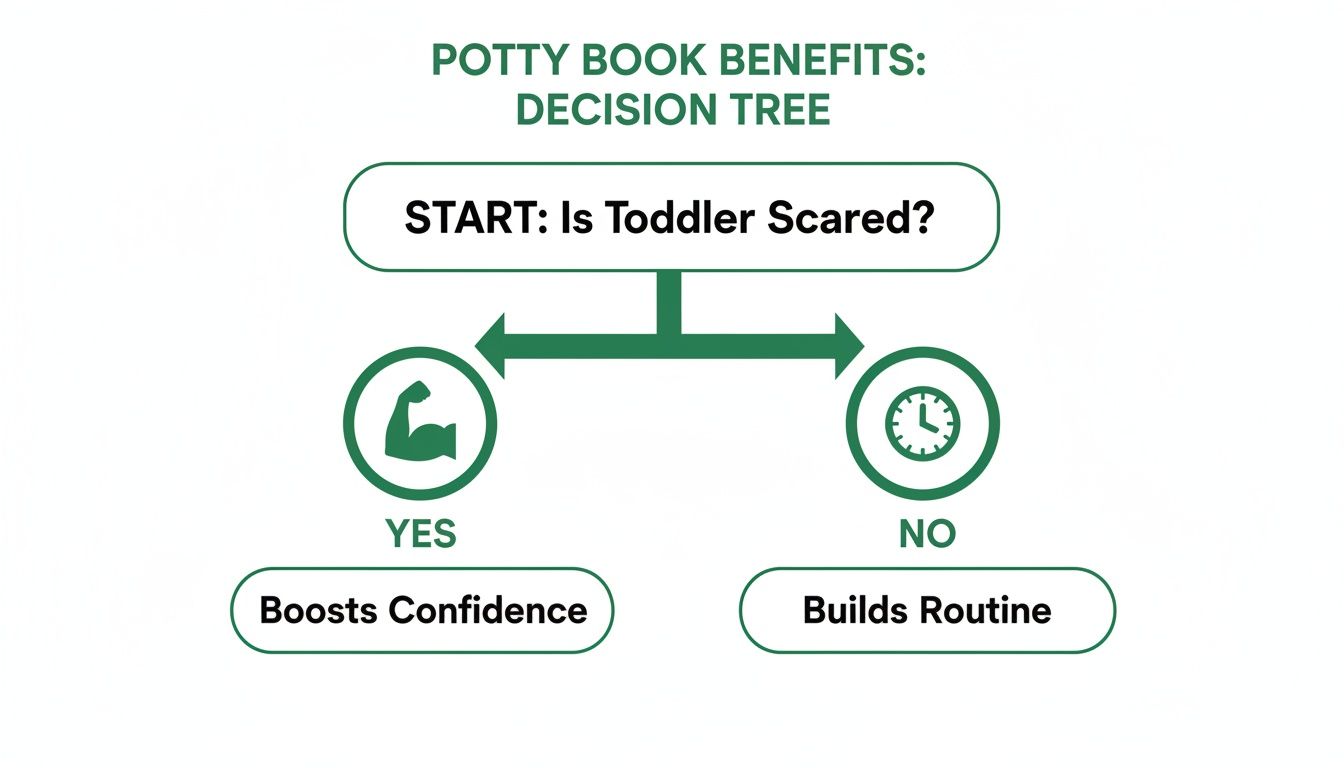
As you can see, a potty book isn't just a story; it's a tool that can be adapted to your child’s specific emotional needs during this big transition.
Durability and Engagement are Key
Let's be real for a second—toddlers are tough on their belongings. That’s why board books are a must. They’re built to survive enthusiastic page-turning, the inevitable spills, and even the occasional nibble. A sturdy book will last through the entire potty-training adventure and, inshaAllah, can be passed down to younger siblings.
Beyond just being tough, a good potty book needs to hold your toddler's notoriously short attention span. Here are a few things to look for:
- Interactive Elements: Lift-the-flaps, sound buttons, and little pull-tabs turn reading into a game. This is perfect for keeping a wiggly toddler happy and engaged while they sit and wait.
- Simple Language: The best books use clear, repetitive text that’s easy for little ears to follow. Rhyming stories are fantastic because they're catchy and so much easier to remember.
- Bright, Clear Illustrations: Pictures are powerful. Look for illustrations that clearly show the steps: sitting on the potty, wiping, flushing, and washing hands. Visuals help the process make sense to them.
To help you feel confident in your choice, I've put together a checklist you can use when you're browsing online or at the library.
Checklist for Choosing a Muslim-Friendly Potty Book
Use this table to evaluate potty books and ensure they align with your family's values and your toddler's needs.
| Feature to Check | What to Look For | Why It Matters for Muslim Families |
|---|---|---|
| Tone & Language | Positive, gentle, and encouraging words. Avoids shaming or pressure. | Reinforces a gentle, faith-based parenting approach that builds confidence. |
| Illustrations | Characters are modestly dressed. The process is shown simply, not graphically. | Upholds the Islamic value of haya (modesty) from a young age. |
| Character Relatability | Diverse characters or simple animal characters your child can identify with. | Helps your child see themselves in the story, making the lesson more effective. |
| Story Focus | Celebrates trying, not just succeeding. Treats accidents as normal. | Teaches resilience and normalizes the learning process without causing anxiety. |
| Handwashing Step | Clearly shows and emphasizes washing hands after using the potty. | Connects potty training to the important Islamic principle of tahara (purity). |
| Durability | Sturdy board book construction that can withstand toddler handling. | A practical choice that ensures the book lasts through the entire training period. |
| Engagement | Interactive features like flaps, sounds, or textures. Simple rhymes. | Keeps your child interested and makes potty time a fun, positive experience. |
Finding a book that ticks these boxes means you’re not just getting a training tool, but a story that fits beautifully into your home and faith.
The global demand for good potty training resources is huge. In 2023 alone, over 42 million child potty seats were sold worldwide, with the market projected to hit USD 300.89 million by 2033. This isn’t just about potties; it reflects how much parents are looking for effective, supportive tools for these early milestones. You can find more details on the growth of the potty training market on marketgrowthreports.com.
Choosing the right book is just as important as picking the right potty chair. By thinking about the tone, illustrations, and practical features, you can find a book that truly helps your child and becomes a beloved part of your family’s library.
Integrating Potty Books into Your Daily Routine
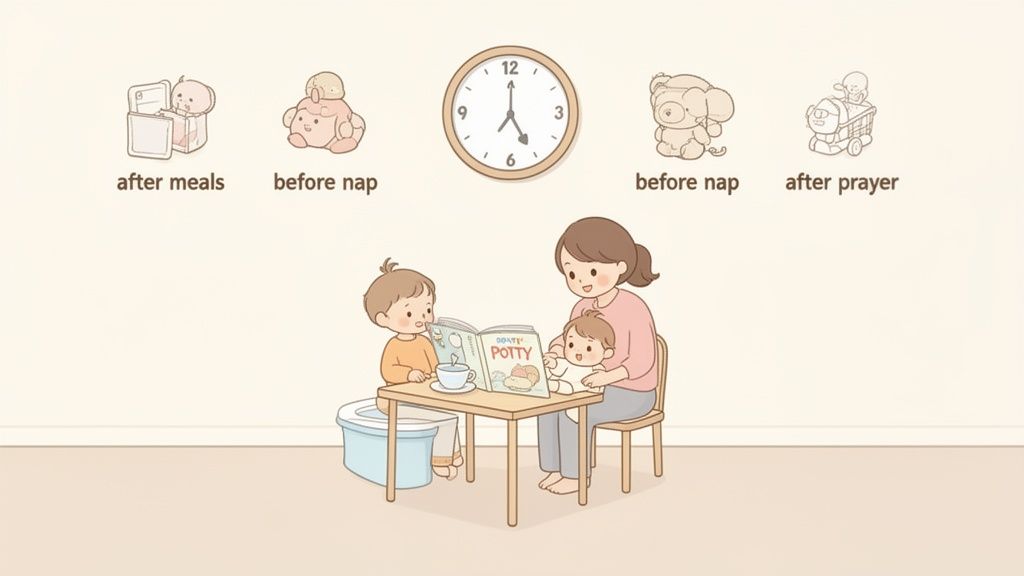
So you've found the perfect, faith-aligned potty book—that's a fantastic first step! But the real magic happens when you bring that book into the natural rhythm of your family’s day. This isn't about creating a rigid, stressful schedule. It's about turning potty time into a gentle, positive moment, just like story time before bed.
When you create a predictable routine, you’re giving your toddler a sense of security. They know what to expect, which is incredibly calming for little ones and makes them much more open to learning this big new skill. You’re simply adding a short, sweet activity into the moments you already share.
Finding Your Potty Time Rhythm
The easiest way to make potty books for toddlers a regular thing is to connect them with the natural transitions in your child’s day. Think about the times they’re most likely to need the potty anyway. Doing this turns a potential power struggle into a cozy, one-on-one moment. It also helps build a predictable flow that can easily fit around prayer times and other family duties.
Here are a few moments that work beautifully for a "potty story":
* After Waking Up: Start the day with a gentle sit on the potty and a quick, happy story. It’s a great way to catch that first-morning pee!
* After Meals: About 20–30 minutes after your toddler eats or drinks, settle them on the potty with a book. This works with the body's natural reflex to empty.
* Before Outings: Make a potty visit part of your "getting ready to go" routine. A short story can help them relax and try before you get them strapped into the car seat.
* Before Naps and Bedtime: Weave a potty stop into your wind-down routine, right before you snuggle up for the final stories in bed.
Parent Tip: Keep a small basket of potty books right there in the bathroom. Having them within arm's reach makes it effortless to grab one whenever the moment strikes, turning any waiting time into fun reading time.
Making Reading Interactive and Fun
Just reading the words is fine, but you can really capture your toddler's attention by making the story an interactive experience. Your enthusiasm is what makes it fun! When you bring energy and joy to it, they'll start to see potty time as a positive event, not a chore.
Try these simple tricks to bring the stories to life:
1. Point and Name: Point to the pictures and talk about what you see. "Look, there's the potty! And here are the clean hands." This builds their vocabulary and connects the pictures to real-life things.
2. Make Fun Sounds: Get a little silly and exaggerate the sounds. A big "whoosh!" for the toilet flush or a funny "plop" sound can make them giggle and ease any anxiety.
3. Cheer for the Character: When the character in the book uses the potty successfully, celebrate! Clap your hands and say, "Yay, you did it!" This shows them exactly the kind of positive reaction they'll get.
4. Ask Gentle Questions: Keep them engaged with simple questions. "What is the little bear doing now?" or "Do you see the soap for washing hands?"
A consistent family rhythm is key to helping your toddler feel secure through this change. For more ideas on creating that supportive structure, check out our guide to building a predictable Muslim toddler routine.
A Unified Approach with Grandparents and Caregivers
For many of us, grandparents, aunties, and other caregivers are a huge part of our village. To make potty training as smooth as possible, it really helps if everyone is on the same page. When a toddler gets the same response from every adult, they learn much faster and feel less confused.
Share your game plan calmly and respectfully. Explain that you’re using books to create a positive, low-pressure experience. Show them the specific potty books you're using and walk them through your simple routine, like reading a story on the potty after lunch. This ensures your child receives the same gentle encouragement no matter who is looking after them, reinforcing that this new skill is a team effort celebrated by the whole family.
Complementing Books with Safe Screen Time
While physical books are the gold standard for early learning, let’s be honest—many families also use digital resources to help with big milestones. But for Muslim parents, finding safe, halal, and ad-free screen time can feel like a real uphill battle. You’re looking for something that supports good habits without throwing your toddler into a world of distracting commercials, unpredictable video suggestions, or content that’s just too stimulating.
This is where a faith-aligned digital tool can really change the game. Think about pairing the lessons from your favorite potty books for toddlers with a gentle, thoughtfully made animation. A short, sweet story about a character learning to use the potty, set to a calming nasheed about cleanliness, can make the whole concept click for your child in a new and exciting way.
This approach blends the hands-on experience of reading a book with the visual storytelling of a video, helping to make the potty routine stick in your child's mind.
A Halal Digital Environment for Your Toddler
The trick is to find a platform built around your family’s values. Instead of sifting through mainstream video sites, a service like Babymode gives you a curated, Islamically-guided library where every single video is created to be both safe and beneficial.
This means you can feel good about letting your toddler watch something that reinforces their potty training, knowing it is:
- Completely Ad-Free: Your child’s focus stays on the story, not on the latest toy commercials.
- Values-Aligned: The content models gentleness, good manners, and the importance of cleanliness (taharah).
- Calm and Purposeful: The animations are designed to be soothing and educational, not hyperactive or overwhelming.
A trustworthy digital tool acts as a partner in your parenting journey. It provides a safe space where technology can support your child's development while respecting and upholding the values you cherish in your home.
Interactive learning is becoming a massive part of early childhood education. The market for interactive baby and toddler books is currently valued at around $1.2 billion, and online sales are growing faster than in traditional stores because parents are looking for convenient resources. This trend shows a clear demand for engaging, multi-format learning tools that can support milestones like potty training. You can explore more data on the growth of the interactive book market on marketreportanalytics.com.
How It Works Alongside Your Books
Think of safe screen time as just another way to reinforce what you’re already teaching. After you read a book about washing hands, a short video showing a character happily sudsing up while a gentle song plays can make that lesson even more memorable and fun.
A parent dashboard gives you complete control over what your child is watching. You can hand-pick content that focuses on potty training, keep an eye on viewing habits, and feel confident that their screen time is both productive and protected. It’s all about maintaining the calm, predictable routines you’ve worked so hard to establish. You can read more about how to approach this topic in our guide on the Islamic perspective on screen time for young children.
By being thoughtful about your digital resources, you can make sure screen time works with your efforts with physical books, creating a complete and encouraging learning environment for your toddler as they take this big step.
A Final Word of Encouragement
Taking the first steps on the potty training journey is a huge milestone, not just for your toddler but for you, too. It’s a path marked by tiny victories and, let's be honest, a few big emotions. As you move forward, remember that your greatest tools aren't a fancy potty or a strict schedule—they're your patience, your gentleness, and your loving duas for your little one.
This whole process is less about hitting a deadline and more about gently guiding your child toward independence with wisdom and grace. The goal isn't a perfectly dry day one. It's about creating a positive, reassuring experience that builds their confidence. By using potty books for toddlers, you’re building a bridge of understanding, turning something that can feel intimidating into a normal, everyday part of life.
Trust Your Instincts and Your Child
Every child follows their own unique timeline—a truth we know deep in our hearts as parents. One toddler might be curious at 20 months, while their cousin might not be ready until closer to three. Pay attention to your child’s signals and trust your own intuition. You know them better than anyone.
There will be good days, and there will be days with accidents. Both are completely normal and necessary parts of learning.
Celebrate every small win along the way:
* The first time they tell you they need to go.
* The moment they sit on the potty without any prompting.
* When they proudly wash their hands all by themselves.
These are the moments that build a foundation of confidence.
Your calm and steady presence is the most reassuring guide your child can have. By treating this milestone with patience, you are teaching them that learning new things is a safe and supported journey—reinforcing the loving environment so central to a Muslim home.
Key Takeaways for Your Journey
As you get started, just keep these simple ideas in your back pocket. They are the core of a gentle, faith-aligned approach that honors your child’s pace and your family’s values.
- Potty Books are Your Allies: Use them to introduce the idea softly, ease any fears, and make the whole routine feel fun and predictable.
- Choose with Care: Look for books with positive messages and modest illustrations that feel right for your family and align with the principles of taharah.
- Routine is Comfort: Weave these stories into your daily rhythm—maybe after meals or before naps—to create a sense of calm and consistency.
- Patience Above All: This is a marathon, not a sprint. Your gentle encouragement is what will truly help them succeed.
This stage, like every other in childhood, will be over in the blink of an eye. By leading with love and celebrating every effort, you’re doing more than just teaching a practical skill. You are nurturing a confident, capable little person who feels secure in their ability to grow and learn, inshaAllah. Trust the process, trust your child, and above all, trust in your ability to guide them with kindness.
Your Potty Training Questions, Answered
Potty training can feel like a big puzzle, and it’s natural to have a lot of questions. Let's tackle some of the most common ones that pop up for Muslim families when they start using potty books.
When Is the Right Time to Introduce Potty Books?
You can bring potty books into your reading routine much earlier than you might think—often around 18 months. The goal here isn't to start training; it's to gently introduce the potty as a normal, friendly part of the house, with absolutely zero pressure.
Think of it as planting seeds. Reading these simple stories helps your child get comfortable with the words and ideas in a fun, relaxed setting. That way, when they start showing real signs of readiness (usually between ages 2 and 3), the potty won't be a strange new thing. It’s a fantastic way to build a positive vibe right from the beginning.
How Can I Weave in Islamic Values with Potty Books?
Potty training is one of the very first opportunities we have to teach our little ones about core Islamic principles in a tangible way. It’s the perfect, hands-on introduction to the concept of taharah (purity and cleanliness).
Here’s how you can gently connect the dots:
- Cleanliness as Faith: You can explain that keeping ourselves clean is a beautiful thing that Allah loves.
- Good Manners: Frame the potty routine as part of learning good manners—for taking care of our bodies and keeping our home tidy.
- Simple Duas: As they get a bit older, you can introduce the short, simple duas for entering and leaving the bathroom.
The key is to keep it simple, positive, and age-appropriate. You're helping them connect the practical act of using the potty with the beautiful Islamic emphasis on hygiene and self-respect.
What if My Toddler Just Isn’t Interested in the Books?
First off, don't worry! It’s completely normal for a toddler to ignore a new book. The most important thing is to never force it. Pushing them to read can create a negative feeling about the potty itself, which is the last thing you want.
If your child isn't engaging, just leave the potty books in an accessible spot—maybe in a little basket in the bathroom or near their toys. This lets them discover and explore the books on their own terms, whenever curiosity strikes.
You could also try a book with more interactive elements, like lift-the-flaps, textures, or sound buttons, which can be more engaging for busy little hands. Sometimes, just showing your own excitement while reading the book can be enough to draw them in. If they still resist, it might just mean they aren't ready yet. Take a break for a few weeks and try again later.
How Can Digital Tools Work Alongside Potty Books?
Safe, well-chosen digital tools can be a fantastic partner to physical books. While a potty book introduces the story and the steps, a gentle, ad-free animation can make those concepts come alive in a different way.
For instance, watching a curated video of a character happily using the potty and washing their hands reinforces the exact same positive messages you're reading about. Adding a simple nasheed about cleanliness can help connect the practical steps of hygiene to the wider values of our faith. Platforms with parent controls allow you to handpick content that supports this specific milestone, creating a well-rounded and safe learning environment.
At Babymode, we're building a safe, halal, and ad-free digital home to support your child's journey. Our Islamically-guided videos are designed to reinforce good habits and values in a gentle, engaging way, making it a perfect complement to your family's favorite books. You can learn more and join the waitlist at https://babymode.ai.