Welcoming a baby into the family is a profound blessing from Allah (SWT) that begins a beautiful, faith-filled journey. For Muslim parents, the first three years are especially precious, laying the foundation for a child's spiritual, emotional, and intellectual well-being. This period is filled with countless "firsts": the first smile, the first steps, and the first whispered words. It is also the first opportunity to gently introduce the beauty of our faith into their lives, creating an environment of peace, love, and security.
Navigating this path, however, can feel overwhelming. Many parents ask themselves how to balance modern life with timeless Islamic traditions. How do we create calm, predictable routines that accommodate prayer times, especially when juggling feeding schedules before Maghrib or managing nap times around Jummah? Where can we find trustworthy advice that aligns with our values? This guide is designed to answer these questions by providing practical and spiritually grounded muslim parenting tips for babies. We understand the unique challenges and priorities of raising children in diverse communities, from London to Toronto, and have compiled actionable steps that respect our Islamic heritage while supporting healthy early childhood development.
This guide moves beyond generic advice to offer specific, faith-aligned strategies for everything from early Qur'anic exposure and establishing Sunnah practices to nurturing good character from the very start. Each tip is designed to be easily integrated into your daily life—whether you're working from home with a baby or multitasking between older kids and household chores—helping you feel confident and supported as you nurture your little one. Let’s explore these gentle, actionable steps to help you raise a happy, healthy child, insha'Allah, who feels a deep and lasting connection to their faith and family.
1. Recitation of Qur'an During Pregnancy
One of the most profound and gentle Muslim parenting tips for babies begins even before they are born. Reciting the Qur'an during pregnancy is a beautiful practice that nurtures the spiritual connection between mother and child from the very earliest stages. Research has shown that babies can hear and recognise sounds from the womb, and many Muslim families believe that the sacred words of the Qur'an can have a calming and spiritually uplifting effect on the developing baby.

This practice isn't just for the baby; it provides immense comfort and tranquility for the expectant mother, helping to reduce stress and anxiety. It establishes an early foundation of Islamic consciousness, enveloping the child in the remembrance of Allah (SWT) and setting a blessed tone for their arrival.
How to Implement This Practice
Integrating Qur'anic recitation into your daily routine can be simple and rewarding. The goal is consistency, not duration, creating a peaceful habit that benefits both you and your unborn child.
- Set a Specific Time: Choose a quiet time each day, perhaps after Fajr prayer or before bed, to recite a few verses. Even five minutes of focused recitation can be impactful.
- Choose Meaningful Surahs: While all of the Qur'an is beneficial, many mothers find particular comfort in reciting Surah Maryam, which narrates the miraculous birth of Prophet Isa (AS), or Surah Luqman, which contains wisdom on parenting. Surah Al-Fatiha, Al-Ikhlas, Al-Falaq, and An-Nas are also excellent choices.
- Involve Your Spouse: Make this a shared spiritual practice. Having your husband recite near your belly is a wonderful way for him to bond with the baby and for you to strengthen your connection as a family.
- Listen to Recitations: On days when you feel tired or are unable to recite, listening to high-quality audio recordings of the Qur'an is an equally beneficial alternative. This can be useful after your baby is born too. For more on this topic, explore finding appropriate Islamic media for young children on BabyMode.ai.
- Make Du'a: After reciting, take a moment to make a personal du'a (supplication) for your baby’s health, faith, and righteous character. This combines the recitation with your heartfelt parental hopes.
2. Adhaan (Call to Prayer) in Baby's Ear
Immediately following birth, one of the most significant and spiritually resonant Muslim parenting tips for babies is the recitation of the Adhaan (the call to prayer) into the newborn's ear. This beautiful Sunnah (practice of the Prophet Muhammad, peace be upon him) serves as the baby’s first formal introduction to the faith. The powerful words proclaiming the greatness of Allah (SWT) and the testimony of faith are the first sounds the child officially hears, establishing a spiritual foundation from their very first moments of life.
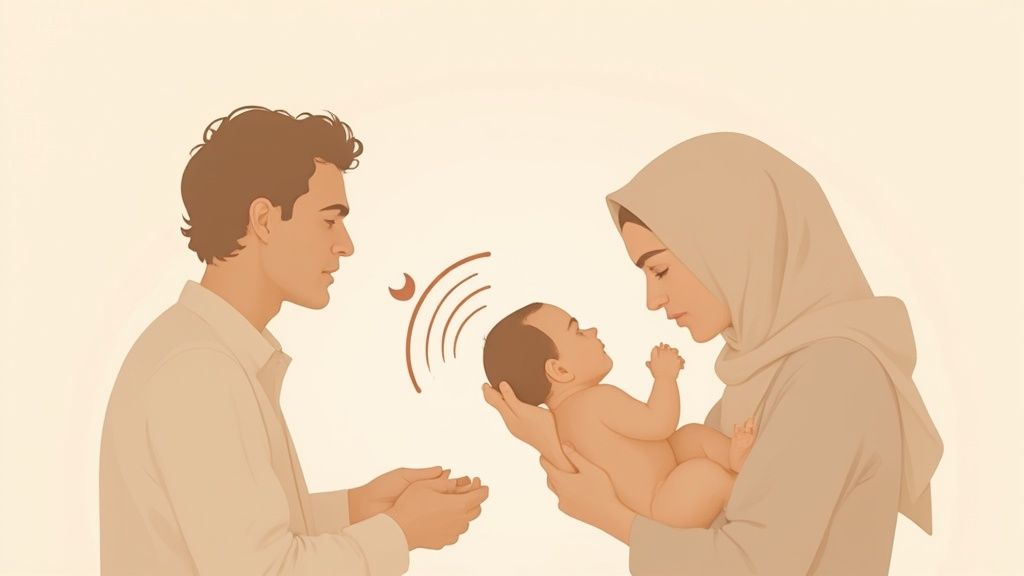
This act is a profound declaration of the child's Muslim identity and a prayer for their protection and guidance. It symbolically welcomes the baby into the Ummah (the global Muslim community) and serves as a reminder to the parents of their sacred duty to raise their child upon the path of Islam. It is a deeply personal and emotional moment that connects the newborn to their Creator before anything else.
How to Implement This Practice
Performing the Adhaan for your newborn requires some simple preparation, especially in a hospital setting. The key is to plan ahead to ensure this precious moment is calm and respectful.
- Plan in Advance: Whether you are having a hospital or home birth, discuss your intention to perform the Adhaan with your spouse and healthcare providers. Informing hospital staff beforehand helps ensure you are given the privacy and time needed after the baby is cleaned and stable.
- Designate the Reciter: Traditionally, the father or grandfather recites the Adhaan. Choose someone who can recite it clearly and correctly. It is good practice for this person to be in a state of purity (Wudu).
- Perform the Sunnah: Once the baby is settled, the reciter should gently hold the baby and recite the Adhaan softly into the baby's right ear. Following this, the Iqamah (the call to commence prayer) can be recited into the left ear.
- Focus on Intention: The core of this practice is the sincere intention to welcome your child with the remembrance of Allah (SWT). The recitation should be done with a clear, gentle voice, not so loud as to startle the newborn.
- Make Du'a: Conclude this beautiful rite by making a personal du'a for your baby. Ask Allah (SWT) to make them a righteous, healthy, and pious individual who will be a source of joy for your family and a benefit to the community.
3. Tahneek (Sweetening the Baby's Palate)
Among the most beautiful Sunnah practices for welcoming a newborn is the Tahneek, a tradition that involves placing something sweet, usually a softened date, onto the baby's palate. This act, performed by Prophet Muhammad (PBUH) for newborns, is a beautiful first taste of nourishment and is believed to introduce blessings (barakah) and strength to the child. It is a symbolic gesture that connects the baby to their Islamic heritage from their very first moments.
This cherished ritual is not just a tradition; it also has a practical benefit. The natural sugars in the date can help stabilise a newborn's blood sugar levels and provide a gentle source of energy. It is a profound act of love and prayer, marking the beginning of the child’s life with sweetness and the remembrance of Allah's blessings, making it one of the most heartwarming Muslim parenting tips for babies.
How to Implement This Practice
Performing Tahneek is a simple yet deeply meaningful act. Ensuring it is done safely and with the right intention (niyyah) is key to honouring this sunnah.
- Source Quality Dates: Choose soft, clean, high-quality dates. Ajwa dates are traditionally preferred due to their significance in the Sunnah, but any good quality, ripe date will suffice. Ensure they are free from preservatives or additives.
- Prepare with Care: The person performing the Tahneek should have clean hands. The date should be chewed until it is completely soft and paste-like, or softened with a little clean water. The goal is to create a smooth texture that poses no choking hazard.
- Apply Gently: Using a clean finger, take a very small amount of the softened date paste and gently rub it onto the upper palate inside the baby's mouth. This should be a delicate touch, not a forceful application.
- Make It a Spiritual Moment: This is an ideal time for du'a. As you perform the Tahneek, make heartfelt supplications for the baby’s health, righteousness, and a life filled with faith and goodness. Recite the Basmala ("Bismillah") before you begin.
- Involve a Righteous Person: It is a beautiful tradition to have a pious and knowledgeable family member, like a grandparent or a respected elder, perform the Tahneek. This connects the child to the wisdom and blessings of the older generation.
4. Importance of Breastfeeding (Rida'ah)
In Islam, breastfeeding, or Rida'ah, is not just a method of feeding but a divinely encouraged practice that builds an unbreakable bond between mother and child. The Qur'an recommends breastfeeding for up to two full years, a guideline that aligns with modern health recommendations and acknowledges the profound physical, emotional, and spiritual benefits for both the baby and the mother. This practice provides the perfect nutrition, including essential colostrum, and fosters a sense of security and love.

This emphasis on breastfeeding is a beautiful example of how Islamic teachings support the well-being of the family unit. It is recognised as an act of immense love and sacrifice, for which a mother is rewarded. The physical closeness during nursing provides comfort, warmth, and reassurance, laying a foundation of trust and attachment that is critical in the early years.
How to Implement This Practice
Embracing breastfeeding is a journey that requires support, patience, and intention. Integrating this sunnah into your life can be a rewarding spiritual act.
- Make the Intention (Niyyah): Approach breastfeeding as an act of worship and a fulfilment of your child's right. This intention can provide strength during challenging moments, such as sleepless nights or difficulties with latching.
- Start Early: As recommended by health experts, initiate breastfeeding within the first hour after birth to provide your baby with vital colostrum, often called "liquid gold," which is packed with antibodies.
- Seek Support: Don't hesitate to ask for help. Connect with lactation consultants, many of whom are available through hospitals or community health centres. Experienced mothers in your family or community are also invaluable sources of wisdom and encouragement.
- Nourish Yourself: Remember that your well-being is crucial. Stay hydrated and maintain a healthy, nutritious diet to support your milk supply and overall energy levels. This is one of the important muslim parenting tips for babies that focuses on the mother's health.
- Combine Nursing with Dhikr: Use feeding times as moments for quiet reflection and remembrance of Allah (SWT). You can softly recite short Du'as or make dhikr, creating a peaceful and blessed atmosphere for you and your baby.
- Understand Your Options: Islam is a practical faith that offers flexibility. While breastfeeding is encouraged, it is not an obligation if it is not possible for you. The most important thing is that your baby is fed and cared for with love.
5. Naming the Baby with Islamic/Meaningful Names
Choosing a name for your child is one of the first and most lasting gifts you will give them. In Islam, a name is more than just a label; it is a du’a, a reflection of identity, and a connection to a rich spiritual heritage. Selecting a righteous and meaningful name is a cherished practice that can inspire a child's character and ground them in their faith from day one.
The Prophet Muhammad (peace be upon him) encouraged giving children good names, as names can have a profound psychological and spiritual influence. Names like Muhammad, Aisha, or Fatima connect a child to the best of generations, while names with beautiful meanings like Noor (light) or Amal (hope) can serve as a positive affirmation throughout their life. This is a foundational step in Muslim parenting for babies, setting an intention for a righteous upbringing.
How to Implement This Practice
The process of choosing a name is a special time for parents. Approaching it with intention and care makes the experience even more meaningful and helps ensure you select a name you will love forever.
- Research the Meaning: Before settling on a name, thoroughly research its meaning and origins. Ensure it has a positive and honourable significance in Arabic or Islamic tradition.
- Draw Inspiration from Righteous Figures: Consider names of the Prophets (like Ibrahim, Yusuf), the Sahaba (like Ali, Khadijah), and other pious individuals. This provides your child with a powerful role model from the very beginning.
- Consider Pronunciation and Culture: Think about how the name will be pronounced in your local language and culture. A name that is easy for family, friends, and teachers to say can make social integration smoother for your child.
- Avoid Prohibited Names: Steer clear of names with negative connotations, names that imply servitude to anyone other than Allah (SWT), or names that are exclusively attributed to Allah (e.g., Al-Khaliq, The Creator).
- Involve Your Family: While the final decision rests with the parents, involving grandparents or close family in the discussion can be a beautiful way to share the joy and honour them.
- Hold an Aqiqah: If you are able, perform the Sunnah of Aqiqah on the seventh day after birth. This is a celebration that includes naming the baby, shaving their head, and offering a sacrifice, officially welcoming them into the community.
6. Maintaining Islamic Cleanliness Practices (Istinja and Diaper Care)
One of the foundational Muslim parenting tips for babies involves instilling the principles of Tahara (purity and cleanliness) from day one. In Islam, physical cleanliness is deeply connected to spiritual purity, making diaper care more than just a routine task. It's an early, practical lesson in an essential aspect of faith. This practice involves using water for cleansing after a baby soils a diaper, a method known as Istinja, which ensures a thorough and gentle clean.
This tradition prioritises water over relying solely on wipes, which can sometimes leave residue or irritate sensitive skin. By embracing this sunnah, parents introduce their children to the Islamic emphasis on hygiene in a gentle, loving manner. It establishes a standard of cleanliness that will serve them well as they grow and learn to perform wudu and pray, making purity a natural and integral part of their daily life.
How to Implement This Practice
Integrating the practice of Istinja into your baby's diaper changes can be simple and efficient with a bit of preparation. The key is to create a process that is comfortable for the baby and practical for you.
- Prepare Your Station: Keep a small peri bottle, a soft jug of lukewarm water, or a spray bottle near your changing area. Having cotton wool or soft, dedicated washcloths on hand is also helpful.
- Use Water First: After removing the soiled diaper, gently and thoroughly cleanse the area with lukewarm water. For baby girls, it is crucial to wipe from front to back to prevent infections.
- Pat Dry Completely: Use a soft, clean towel or cloth to gently pat the area completely dry. This is a vital step to prevent moisture build-up, which can lead to diaper rash and discomfort.
- Adopt a Hybrid Approach: For convenience, especially when out of the house, you can use water-based, fragrance-free wipes for an initial clean, followed by a final rinse with water once you are home.
- Make a Gentle Du'a: While cleaning your baby, you can softly recite "Bismillah" or make a quiet du'a for their health and purity. This turns a routine task into a moment of mindful, spiritual connection.
7. Teaching Qur'an and Islamic Knowledge Early
One of the most valuable Muslim parenting tips for babies is to introduce them to the beauty of the Qur'an and foundational Islamic knowledge from infancy. This process, known as Tarbiyah (upbringing), isn't about formal lessons but about creating a nurturing environment where the sounds of the Qur'an and the remembrance of Allah (SWT) are a natural part of daily life. A baby’s brain is incredibly receptive, and this early exposure lays a spiritual foundation for a lifelong connection to their faith.
This gentle approach focuses on listening, repetition, and positive association rather than rote memorisation. By hearing the Qur'an recited beautifully and listening to simple, age-appropriate stories of the Prophets, a child’s heart becomes attached to Islam in a loving, organic way. It helps build spiritual character and sharpens their listening and memorisation skills for the future.
How to Implement This Practice
Integrating early Islamic education should feel joyful and effortless, weaving into your family's daily rhythm. The key is to make it a positive and engaging experience that your child looks forward to.
- Create a Qur'an-Rich Environment: Play recordings of beautiful Qur'an recitations softly in the background during playtime, mealtime, or before naps. This passive listening helps familiarise your baby with the sounds and rhythm of the verses.
- Tell Simple Islamic Stories: During cuddle time or before bed, narrate simplified, child-friendly stories from the Qur'an, such as the story of Prophet Yunus (AS) and the whale or the miracle of the Zamzam well. Use expressive tones and simple language to capture their attention.
- Introduce Basic Concepts: Use simple phrases like "Bismillah" before eating or "Alhamdulillah" after a sneeze. Associating these words with daily actions is a powerful way to teach core Islamic concepts naturally.
- Utilise Visuals and Interactive Tools: Use colourful Islamic board books, flashcards with Arabic letters, or puppets to make learning interactive and fun. As they grow, you can explore some of the best Islamic apps for kids together for short, supervised sessions.
- Make Learning a Family Affair: Involve siblings and grandparents in the process. When a child sees the whole family engaged and happy while learning about Islam, it reinforces the importance and joy of their faith.
8. Dua (Supplication) and Prayer for Baby's Well-being
One of the most powerful tools in a Muslim parent's toolkit is Dua, the heartfelt act of supplicating to Allah (SWT). Making Dua for your baby's well-being is a constant, beautiful conversation with the Creator, entrusting your child's health, faith, protection, and righteous future to Him. This practice instills a deep sense of peace and reliance on Allah, turning moments of worry into opportunities for connection and worship.
This spiritual safeguard is not just for challenging times; it's a daily practice of gratitude and hope. From a quiet whisper while they sleep to a heartfelt prayer during Sujud, Dua envelops your child in divine care. It is a profound expression of love, acknowledging that all goodness and protection come solely from Allah (SWT), and it’s one of the most essential Muslim parenting tips for babies.
How to Implement This Practice
Integrating Dua into your daily life creates a blessed environment for your baby and strengthens your own faith. The key is to make it a natural and consistent habit, turning to Allah in all circumstances.
- Make Dua at Specific Times: Seize the precious moments when supplications are more likely to be answered, such as during the last third of the night, between the Adhan and Iqamah, during Sujud in your daily prayers, and on Fridays.
- Use Prophetic Duas: Recite authentic supplications from the Qur'an and Sunnah for protection and well-being. For example, reciting Surah Al-Ikhlas, Al-Falaq, and An-Nas over your baby before sleep is a well-known practice of the Prophet Muhammad (PBUH).
- Be Specific and Sincere: When you make Dua, be specific in asking for what you desire for your child: "O Allah, grant my child good health, a gentle character, and a heart attached to the Deen." A sincere heart and full presence are vital.
- Combine Dua with Action: Place your complete trust (Tawakkul) in Allah while also taking practical steps. For instance, make Dua for your baby's health while also ensuring they receive proper medical care and nutrition.
- Involve Family: Encourage grandparents and extended family to join in making Dua for your baby, especially during gatherings or if the child is unwell. Collective prayer can bring immense comfort and blessings. Discover more about the meaning and benefits of a powerful dua for all needs on BabyMode.ai.
8-Point Comparison of Muslim Baby Parenting Practices
| Item | Implementation Complexity 🔄 | Resource Requirements ⚡ | Expected Outcomes 📊⭐ | Ideal Use Cases 💡 | Key Advantages ⭐ |
|---|---|---|---|---|---|
| Recitation of Qur'an During Pregnancy (Qur'anic Exposure) | Moderate — regular maternal commitment and scheduling | Low ⚡ — time, quiet space, Qur'an/audio | Spiritual bonding, calmer prenatal environment — 3⭐ 📊 | Pregnant individuals/families seeking prenatal spiritual nurturing | Strengthens faith and mindfulness; easy to integrate |
| Adhaan (Call to Prayer) in Baby's Ear | Low — single, short ritual requiring a prepared person | Minimal ⚡ — knowledgeable person, brief privacy | Immediate spiritual identification and Sunnah fulfillment — 4⭐ 📊 | Immediately after birth in hospital or home births | Direct Prophetic Sunnah; meaningful family moment |
| Tahneek (Sweetening the Baby's Palate) | Low–Moderate — simple technique with hygiene precautions | Low ⚡ — quality dates, softened utensil, clean hands | Early comfort, minor nourishment, perceived Barakah — 3⭐ 📊 | First days after birth; families practicing Sunnah | Follows Sunnah; provides mild nutritional benefit and bonding |
| Importance of Breastfeeding (Rida'ah) | High — sustained long-term commitment, technique learning | High ⚡ — mother's time, nutrition, lactation support | Optimal nutrition, immunity, strong bonding — 5⭐ 📊 | All mothers when medically feasible; long-term child health | Best-known infant nutrition; supported by Islamic texts and health evidence |
| Naming the Baby with Islamic/Meaningful Names | Low — decision and family consultation | Low ⚡ — research time, possible Aqiqah arrangements | Identity formation, sense of belonging — 4⭐ 📊 | At birth/naming ceremonies; families prioritizing heritage | Connects child to Islamic legacy; positive psychological impact |
| Maintaining Islamic Cleanliness Practices (Istinja & Diaper Care) | Moderate — routine habit formation and technique | Moderate ⚡ — water access, cloths/wash facilities | Reduced skin issues, lifelong hygiene habits — 4⭐ 📊 | Daily care at home, eco-conscious households, early hygiene teaching | Aligns with faith, improves hygiene, environmentally friendly |
| Teaching Qur'an & Islamic Knowledge Early | High — ongoing instruction, requires consistency | High ⚡ — time, quality resources, apps/materials | Strong Islamic identity, memorization potential, moral framework — 4⭐ 📊 | Families seeking to integrate faith into daily life | Builds long-term faith literacy and ethical foundations |
| Dua (Supplication) and Prayer for Baby's Well-being | Low — easy to integrate; requires sincere intention | Minimal ⚡ — knowledge of authentic Duas, regular practice | Spiritual comfort for parents, perceived protection — 4⭐ 📊 | Daily routines, times of illness, special occasions (Tahajjud, Jumu'ah) | Strengthens parental faith and hope; complements practical care |
Your Parenting Journey, Guided by Faith
The journey of raising a child, from the very first breath to their first wobbly steps, is one of the most profound experiences Allah (SWT) grants us. As you navigate these early years, the collection of muslim parenting tips for babies shared in this guide serves as more than just a checklist; it represents a holistic approach to nurturing a soul grounded in faith, love, and tradition. By integrating these practices, you are laying the foundational stones of your child's spiritual and emotional home, a sanctuary they will return to throughout their lives.
Recalling the Qur'an during pregnancy, whispering the Adhaan into their tiny ear, and performing the Tahneek are not merely rituals. They are the first threads of connection between your child and their Creator, weaving a tapestry of divine remembrance from their earliest moments. These acts, rooted in the beautiful Sunnah of our Prophet (PBUH), establish a spiritual precedent, signaling that this child is, and always will be, under the care and guidance of Allah.
Weaving Faith into Daily Routines
The real art of Islamic parenting lies in transforming everyday actions into acts of worship. When you choose a meaningful name, you are making a dua for your child’s character. When you meticulously maintain their cleanliness according to Islamic principles, you are teaching them the importance of purity (taharah) in both body and spirit. This intentional approach transforms the mundane, often exhausting, tasks of baby care into opportunities for immense reward and connection.
The core takeaways from our discussion are:
* Intention is everything: Your niyyah (intention) elevates simple actions like feeding and cleaning into ibadah (worship).
* Consistency over intensity: Small, consistent acts of faith, like reciting short duas before sleep or playing the Qur'an softly during playtime, build a strong foundation over time.
* Patience is paramount: The early years are demanding. Remember that your patience is a virtue rewarded by Allah, and it is the best example you can set for your child.
Mastering these concepts is not about achieving perfection. It is about striving with sincerity (ikhlas) and seeking Allah's help along the way. Your efforts to provide not just physical nourishment but also spiritual nourishment through early Islamic exposure (tarbiyah) will, Insha'Allah, shape a child who is resilient, compassionate, and connected to their deen. The love, security, and faith-filled environment you create now are the most valuable gifts you can give them, impacting their well-being and identity for a lifetime.
As you move forward, the next practical step is to consciously choose one or two practices from this guide to integrate into your weekly routine. Perhaps it's dedicating five minutes after Fajr to recite Qur'an to your baby, or maybe it's being more mindful of reciting duas before feeding. Start small and build from there. Remember, you are a shepherd entrusted with a precious amanah (trust) from Allah. May He grant you the wisdom, strength, and patience to fulfill this trust beautifully and make your children a source of coolness for your eyes. Ameen.
As your baby grows into a curious toddler, managing their environment includes finding safe, enriching digital experiences. Babymode offers a purpose-built solution, providing a 100% halal, ad-free, and educational screen time world that aligns perfectly with the Islamic values you are nurturing. Discover gentle, faith-inspired content designed specifically for Muslim toddlers at Babymode.