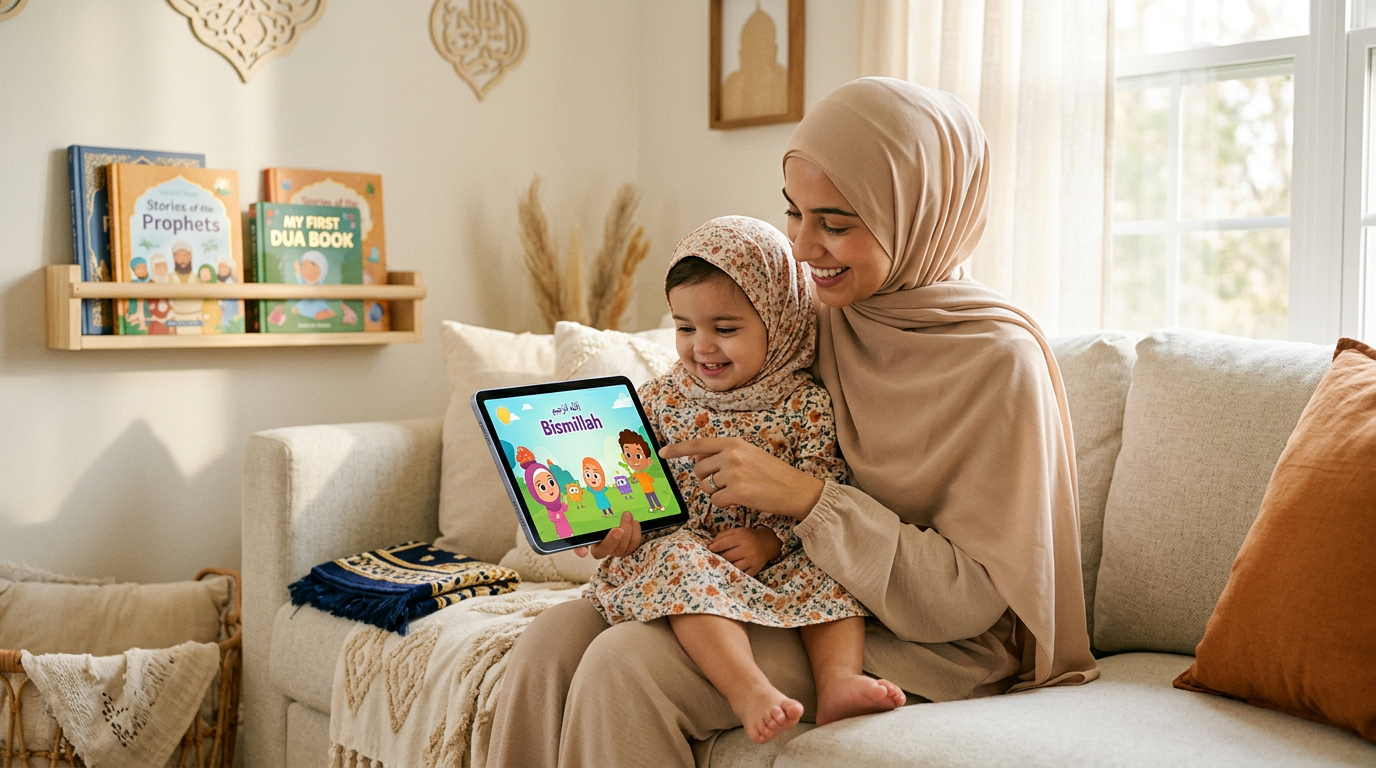
The breaking your fast dua is a simple but incredibly meaningful prayer we say just before that first sip of water or bite of a date at sunset. It's a treasured practice that carves out a moment of peaceful connection with Allah, even with the happy chaos of a toddler at the table.
The Special Moment of Iftar with Your Family

Iftar is so much more than just the first meal after a long day of fasting. For Muslim families, especially those with little ones, it’s a moment of shared gratitude. It's that gentle shift from the quiet reflection of the day to the warmth of a family gathering, a welcome sight after a long day of juggling work, chores, and childcare.
Even with a baby in your arms or a toddler squirming in their high chair, this time has a unique spiritual weight. It’s a chance to show them what thankfulness looks like and create a positive, faith-filled atmosphere that they will soak up long before they can say the words themselves.
A Time for Connection and Gratitude
Those few minutes just before the Maghrib adhan can feel like the world is holding its breath. The food is ready, the dates and water are on the table, and now, you wait together. This simple act of waiting creates a beautiful, comforting rhythm in your child's day, connecting them to the special patterns of Ramadan.
Reciting the breaking your fast dua turns this waiting into an act of worship. It's an incredibly powerful time; this specific moment is when our prayers are said to be especially accepted. A well-known hadith states that “The supplication of a fasting person at the time of breaking fast is not rejected.” You can dive deeper into the importance of dua during Ramadan and learn more about this blessing.
This beautiful tradition isn't about perfect recitation or forcing your toddler to sit still. It's about inviting a moment of peace and remembrance into your home, showing your child that gratitude is the first and most important nourishment we seek.
By making this dua a consistent part of your iftar, you are planting tiny seeds of faith. You’re not just breaking your fast; you’re building a foundation of cherished memories and spiritual routines that will nourish your family for years to come.
The Main Duas for Breaking Your Fast
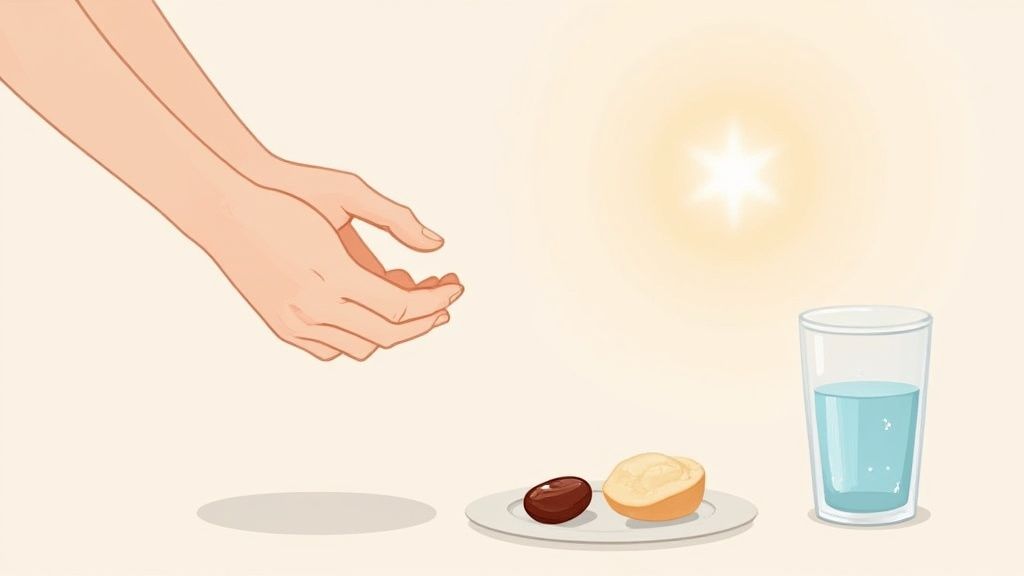
When the Maghrib adhan finally calls, signaling the end of the day's fast, the moment is filled with a unique blend of relief and spiritual significance. Knowing the right words to say for your breaking your fast dua helps center your focus, turning this simple act of eating into a meaningful moment of worship.
There are two well-known and beautiful duas that are perfect for this occasion. We’ve put them into a simple table below so you can have them ready when it's time to break your fast.
Quick Guide to Iftar Duas
This table gives you a clear, side-by-side look at the two most common duas recited at iftar. You'll find the original Arabic, a simple transliteration to help with pronunciation, and the English meaning.
| Dua Text (Arabic) | Transliteration | English Translation |
|---|---|---|
| ذَهَبَ الظَّمَأُ، وَابْتَلَّتِ الْعُرُوقُ، وَثَبَتَ الْأَجْرُ إِنْ شَاءَ اللَّهُ | Dhahaba adh-dhama’u, wab-tallatil ‘urooqu, wa thabatal-ajru in sha Allah. | The thirst is gone, the veins are moistened, and the reward is confirmed, if Allah wills. |
| اللَّهُمَّ إِنِّي لَكَ صُمْتُ وَبِكَ آمَنْتُ وَعَلَى رِزْقِكَ أَفْطَرْتُ | Allahumma inni laka sumtu wa bika aamantu wa 'ala rizqika aftartu. | O Allah, I have fasted for You, and I believe in You, and with Your provision, I break my fast. |
Choosing one or both of these duas is a wonderful way to begin your iftar. Let's explore what makes each one so special.
Dua 1: Thirst is Gone, Reward is Confirmed
This first dua is incredibly powerful because it beautifully captures the immediate physical relief of breaking the fast and connects it to the ultimate spiritual goal. It's reported that the Prophet Muhammad (peace be upon him) would often recite this one after taking his first sip of water or bite of a date.
ذَهَبَ الظَّمَأُ، وَابْتَلَّتِ الْعُرُوقُ، وَثَبَتَ الْأَجْرُ إِنْ شَاءَ اللَّهُ
Transliteration: Dhahaba adh-dhama’u, wab-tallatil ‘urooqu, wa thabatal-ajru in sha Allah.
Translation: The thirst is gone, the veins are moistened, and the reward is confirmed, if Allah wills.
Think about that first sip of water after a long day. This dua perfectly describes that feeling—the thirst vanishing and life flowing back into your body. It’s a moment of pure gratitude, acknowledging the relief Allah has provided and holding onto the hope that our efforts have been accepted.
Dua 2: For You I Have Fasted
The second dua is a powerful declaration of your intention and faith. It’s a way of reminding yourself and affirming to Allah that the entire day's struggle was undertaken for His sake alone. It’s often recited just before taking the first bite.
اللَّهُمَّ إِنِّي لَكَ صُمْتُ وَبِكَ آمَنْتُ وَعَلَى رِزْقِكَ أَفْطَرْتُ
Transliteration: Allahumma inni laka sumtu wa bika aamantu wa 'ala rizqika aftartu.
Translation: O Allah, I have fasted for You, and I believe in You, and with Your provision, I break my fast.
This supplication is a heartfelt acknowledgment that our ability to fast comes from our belief in Him, and the food we are about to eat is a direct provision from Him. It frames the meal not just as nourishment for the body, but as a blessing we are receiving from our Creator.
Both of these duas are deeply rooted in Islamic tradition and beautifully capture the essence of iftar—relief, gratitude, and sincere devotion. As you can find in thoughtful discussions from Islamic educators on the topic, what truly matters is the sincerity behind the words.
Whether you choose one dua or recite both, you're transforming a meal into a profound act of worship, creating a beautiful spiritual anchor for your family’s Ramadan evenings.
Gently Teaching the Iftar Dua to Your Toddler

Sharing the beautiful tradition of the breaking your fast dua with your little one is all about connection, not perfection. For babies and toddlers, the goal isn't to have them memorize it flawlessly. It’s about creating a warm, positive feeling around this special moment of gratitude.
Think of it like singing a familiar lullaby. Your child might not understand every word, but they absolutely feel the love, calmness, and security in your voice. By consistently including them in this ritual, you’re planting seeds of faith through gentle exposure and a predictable, loving routine. The real focus is on making it a happy and expected part of their day.
Start with Simple, Playful Cues
Little ones thrive on simple, repeatable actions. You can create a gentle cue that signals it's almost time to eat, which helps manage their excitement and makes them feel included.
- Use a consistent phrase: As you settle down just before the adhan, try saying something warm and simple like, "It's almost dua time!" or "Let's get ready for iftar!"
- Introduce hand gestures: Gently take their little hands and help them cup them together, or just cup your own. This physical action quickly becomes a powerful non-verbal signal that a special moment is about to happen.
This isn't about forcing them to sit perfectly still or be silent. It’s about inviting them to share in a peaceful pause, creating a rhythm they can learn to recognize and even look forward to.
Lead with a Calm and Loving Voice
Your tone of voice is everything. When you recite the dua, do it in a calm, gentle, and clear voice. Your child will naturally be drawn to the soothing sound and rhythm of the words, long before they can repeat them.
The most important thing is the loving atmosphere you create. By associating the iftar dua with warmth, comfort, and the joy of eating together, you are building a positive foundation for their spiritual life. They learn that faith is a source of peace and togetherness.
This consistent, gentle recitation is the most natural way for them to absorb the sounds and feelings of the dua. Over time, they might surprise you by trying to echo a word or two, but the real learning is happening in their hearts.
Age-Appropriate Ideas for Inclusion
Making the dua feel like a special family activity is the key. Here are some simple, pressure-free ways to involve your toddler:
- For Babies (0-12 months): Just hold them close or have them in their high chair nearby. Let them listen to the sound of your voice as you recite the dua before you give them their milk or a soft piece of food.
- For Young Toddlers (1-2 years): Encourage them to cup their hands by showing them how. After you say "Ameen," shower them with praise and a big smile before handing them a date or a sip of water.
- For Older Toddlers (2-3 years): They might start trying to mumble along! You can simplify it by just teaching them to say "Bismillah" or "Ameen" with the family. Celebrate every little effort with lots of enthusiasm.
Remember, every child develops at their own pace. The journey of teaching Islam to our little ones is built on these small, consistent, and love-filled moments, not on performance. Your gentle efforts are shaping their connection to faith in the most beautiful way.
Creating a Calm Iftar Routine with Little Ones
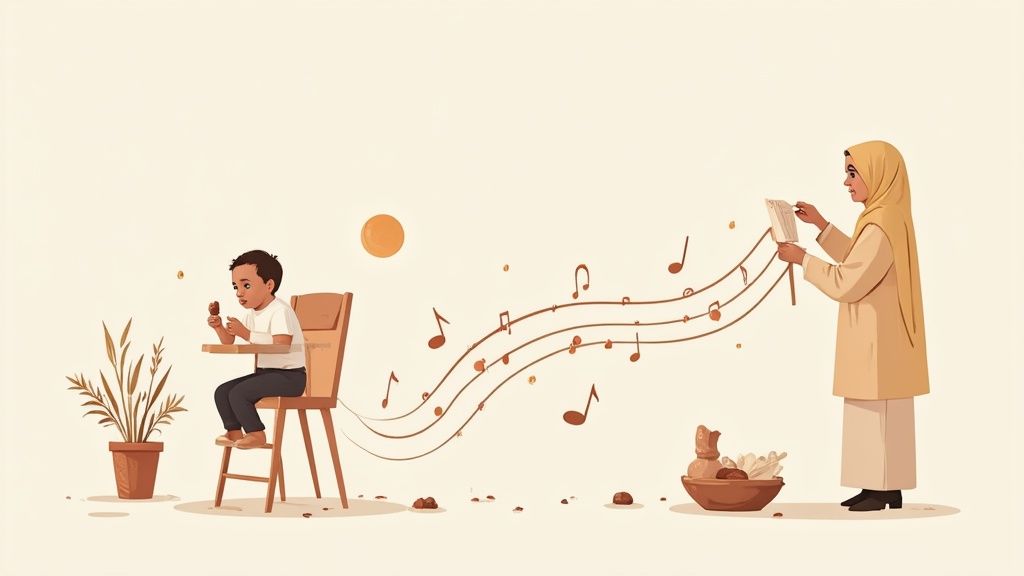
Those final few minutes before iftar can feel like a mad dash, especially with a hungry, tired toddler. The secret to a peaceful sunset isn't about achieving perfect silence; it’s about creating a calm and predictable routine that makes space for the breaking your fast dua while helping your little one feel secure and happy.
Let's be real—trying to focus on your supplication while managing a fussy child is stressful. But with a little bit of prep, you can transform this time into a beautiful moment of shared tranquility. It's all about making the experience smooth and joyful for everyone.
Preparing for a Peaceful Pause
Just a few minutes of setup before the adhan can honestly change everything. Think about what your child needs to feel comfortable and know that food is just around the corner.
- Settle them in first: Get your toddler comfortably situated in their high chair a few minutes before it's time to break your fast.
- Have their iftar ready: Place a soft, pitted date or a small, toddler-safe cup of water right on their tray. When they see it, they understand food is coming very soon.
- Create a visual cue: Place your own dates and water on the table, too. This simple setup becomes a familiar, comforting signal that a special family moment is about to begin.
This little bit of preparation helps manage impatience and creates an atmosphere of calm anticipation instead of frantic hunger.
Managing Toddler Impatience
Even with the best planning, little ones can get restless. It happens! Having a quiet activity ready to go can help bridge those last few minutes before you can eat.
Your aim isn't to demand perfect silence but to create an island of calm. By making the routine predictable and comforting, you show your child that this is a special time for our family, and they are a cherished part of it.
Here are a few gentle distractions that work wonders:
- A special book: Keep a specific Ramadan or Islamic-themed board book that you only read during this time. The novelty makes it much more engaging.
- A quiet nasheed: A soft, familiar nasheed (without instruments) can be incredibly soothing. Singing "Bismillah" or a simple song about Allah can capture their attention beautifully.
- A special toy: Have a quiet toy, like a soft doll or even a set of prayer beads (with close supervision, of course!), that is reserved just for these pre-iftar moments.
By building these small steps into your day, you create a more predictable and calm iftar. For more ideas on structuring your day around Islamic practices, you can explore our detailed guide to creating a Muslim toddler routine. This consistency helps your child feel secure, making the beautiful ritual of the breaking fast dua a peaceful and positive experience for the whole family.
Sunnah Practices for a Blessed Iftar
Beyond the beautiful words of the breaking your fast dua, you can bring a whole new layer of meaning to your family's iftar. The key is to weave in the simple, gentle traditions of Prophet Muhammad (peace be upon him). These small acts connect your modern family routine to a timeless, prophetic example, adding so much blessing to your meal.
Don't worry, adopting these sunnah practices isn't about adding complexity to an already busy time. Their power is in their simplicity, making them easy to embrace, even with a toddler eagerly waiting in their high chair.
Hasten to Break Your Fast
One of the most important sunnahs of iftar is to break the fast the moment Maghrib begins. There's a beautiful wisdom in this: the Prophet (peace be upon him) taught that people will remain on the right path as long as they hasten to break their fast.
This brings a sense of joyful urgency to the table. For a toddler, it also means less waiting around, which is always a good thing for keeping the pre-dinner mood calm and happy!
Dates and Water First
Following the prophetic tradition, the best way to begin is with an odd number of fresh or dried dates. If you don't have any, a few sips of water are the next best thing. This isn't just nutritionally smart—dates give you that much-needed, quick burst of energy—it's also a tangible way to follow in the Prophet's footsteps.
By starting with a simple date and water, you are teaching your child a beautiful lesson in moderation and gratitude. It’s a physical act that says, "We begin with this simple blessing from Allah before enjoying the rest of our meal."
This simple ritual can easily become a cherished part of your family's iftar. Your toddler will quickly learn to look forward to their special "iftar date," creating a positive and deeply ingrained memory of this blessed time.
Make Personal Duas
While you recite the formal breaking your fast dua, never forget that this specific moment is incredibly powerful for personal prayers. That precious window right before you take your first bite is an open invitation to speak to Allah straight from your heart.
This is your time. Make quiet, personal duas for your family's health, for your little one's faith to grow strong, and for peace and happiness to fill your home. It’s a moment to pour your heart out, knowing your supplications are heard. More importantly, it models for your child the beautiful habit of turning to Allah for everything, big and small. These quiet moments can be just as educational as singing a song about saying Bismillah, which you can learn more about in our guide to Islamic songs for children.
Keeping the Iftar Spirit Alive All Year
That beautiful rhythm of Ramadan—the shared meals, the quiet prayers, the special feeling of iftar—doesn't have to vanish once the month is over. The lovely habit of reciting the dua for breaking the fast can become a little anchor of connection for your family all year long.
Continuing this small ritual sends a powerful message: gratitude and togetherness aren't just for a special season, but a constant part of your family's life.
Extending the Blessings Beyond Ramadan
One of the best ways to keep that spirit going is by observing voluntary fasts. The sunnah fasts on Mondays and Thursdays, for example, are a perfect chance to bring that cherished iftar feeling right back into your home.
Imagine your toddler seeing you break a voluntary fast with the same familiar routine—the dates, the water, and the quiet recitation of the dua. It reinforces everything you've taught them during Ramadan. They start to understand that connecting with Allah is a consistent and treasured part of who you are as a family.
These small, repeated rituals are the very building blocks of a spiritually nurturing home. They create a foundation of faith that is built on love and consistency, not just on grand, occasional gestures.
Every time you establish these gentle routines, know that your effort is immense. You aren't just teaching a prayer; you're cultivating an atmosphere where faith feels natural, comforting, and joyful. This is how you build a lasting spiritual connection that will grow with your child for years to come, inshaAllah.
Common Questions About the Breaking Fast Dua
When you're trying to build beautiful new family traditions, especially with little ones, practical questions are bound to pop up. Let's walk through some of the most common ones about sharing the dua for breaking the fast with your children, so you can feel confident and joyful.
The whole point is to make this a beautiful, stress-free ritual for everyone.
When exactly do we say the dua?
This is probably the most common question out there! The dua is traditionally recited just before you take that first sip of water or bite of a date. Think of the Maghrib adhan as your signal—as soon as it begins, it's time.
Interestingly, some scholars suggest that the dua "Dhahaba adh-dhama'u..." is best said right after that first sip, since the words literally mean the thirst has been quenched. You can decide what flows best for your family. What truly matters is the sincere intention in your heart.
Does my toddler need to memorize it?
Not at all. For children between 0-3 years old, the goal isn't memorization; it's all about positive exposure. Your little one is learning by watching you and soaking in the calm, loving atmosphere you're creating.
Just hearing your voice, seeing you raise your hands, and then sharing a sweet date with a smile is the lesson. At this age, they are absorbing the feeling of gratitude, which is so much more important than getting the words right.
What if my child is fussy at iftar time?
Let's be real: a hungry toddler is a fussy toddler. This is completely normal, and the key is simply to be prepared. Try settling them in their high chair a few minutes before the adhan with a small, quiet activity, like a special Ramadan book.
Have their date and water already on their tray. The moment you say "Ameen," you can hand it right over. Creating this predictable routine helps them understand that they only need to wait for that short, special moment. And remember, a little bit of fussiness doesn't spoil the blessing. Your effort is what counts with Allah.
At Babymode, we get it. We create gentle, faith-inspired screen time designed to support the calm and loving environment you’re building for your family.