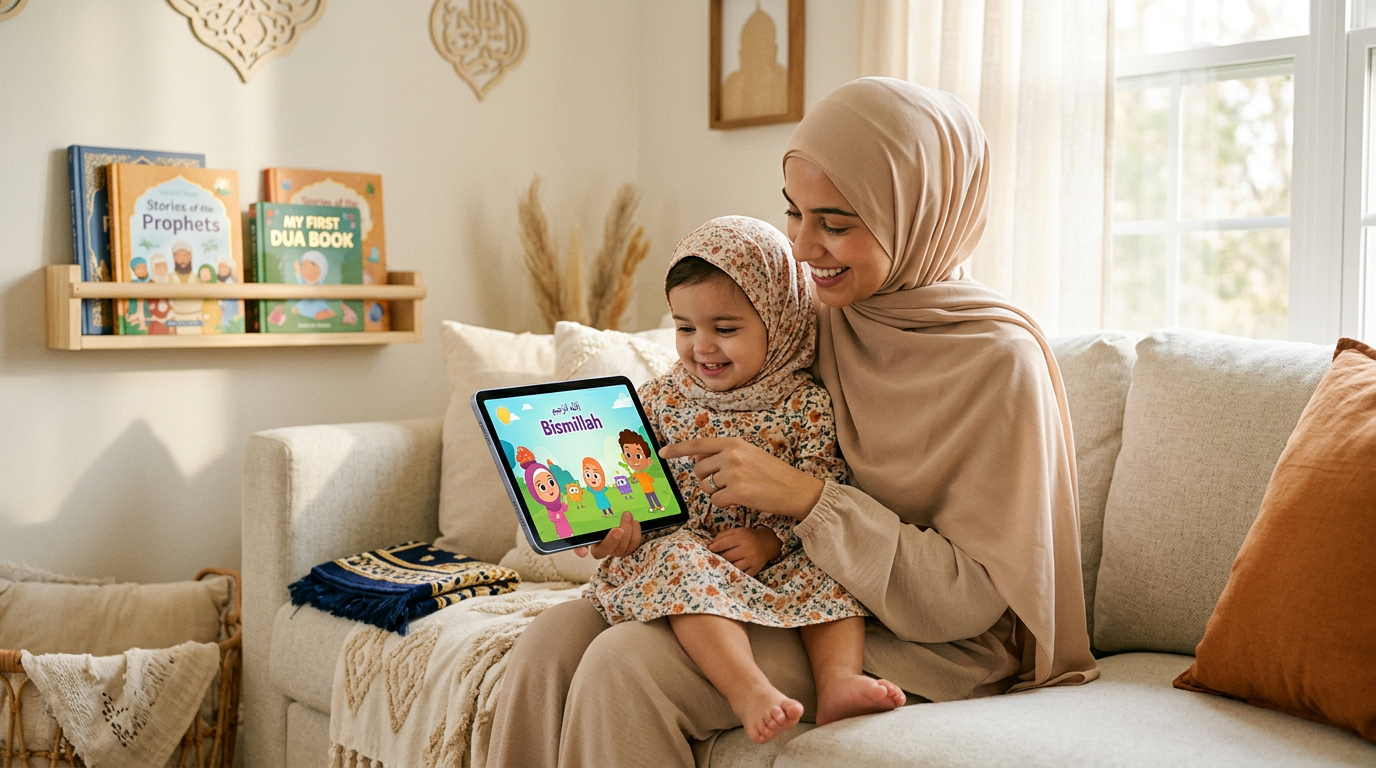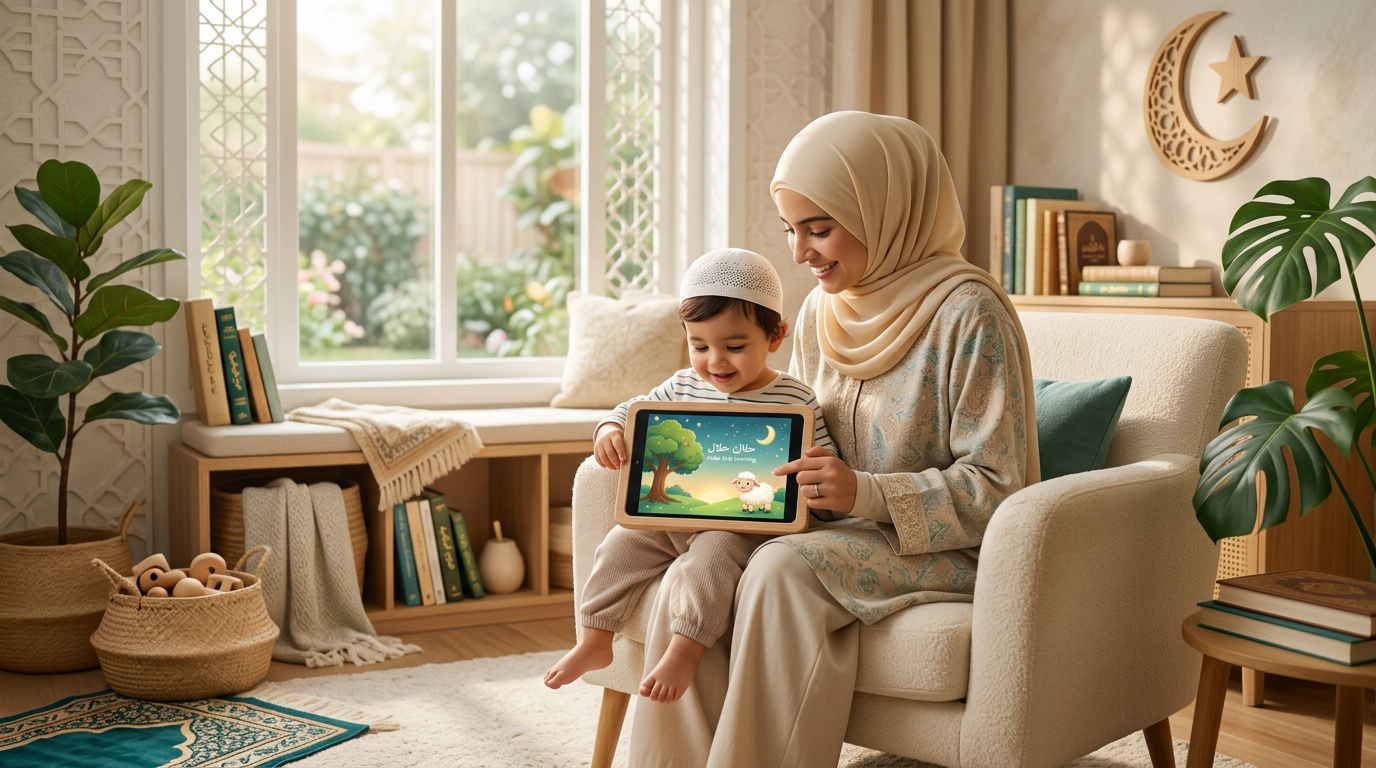
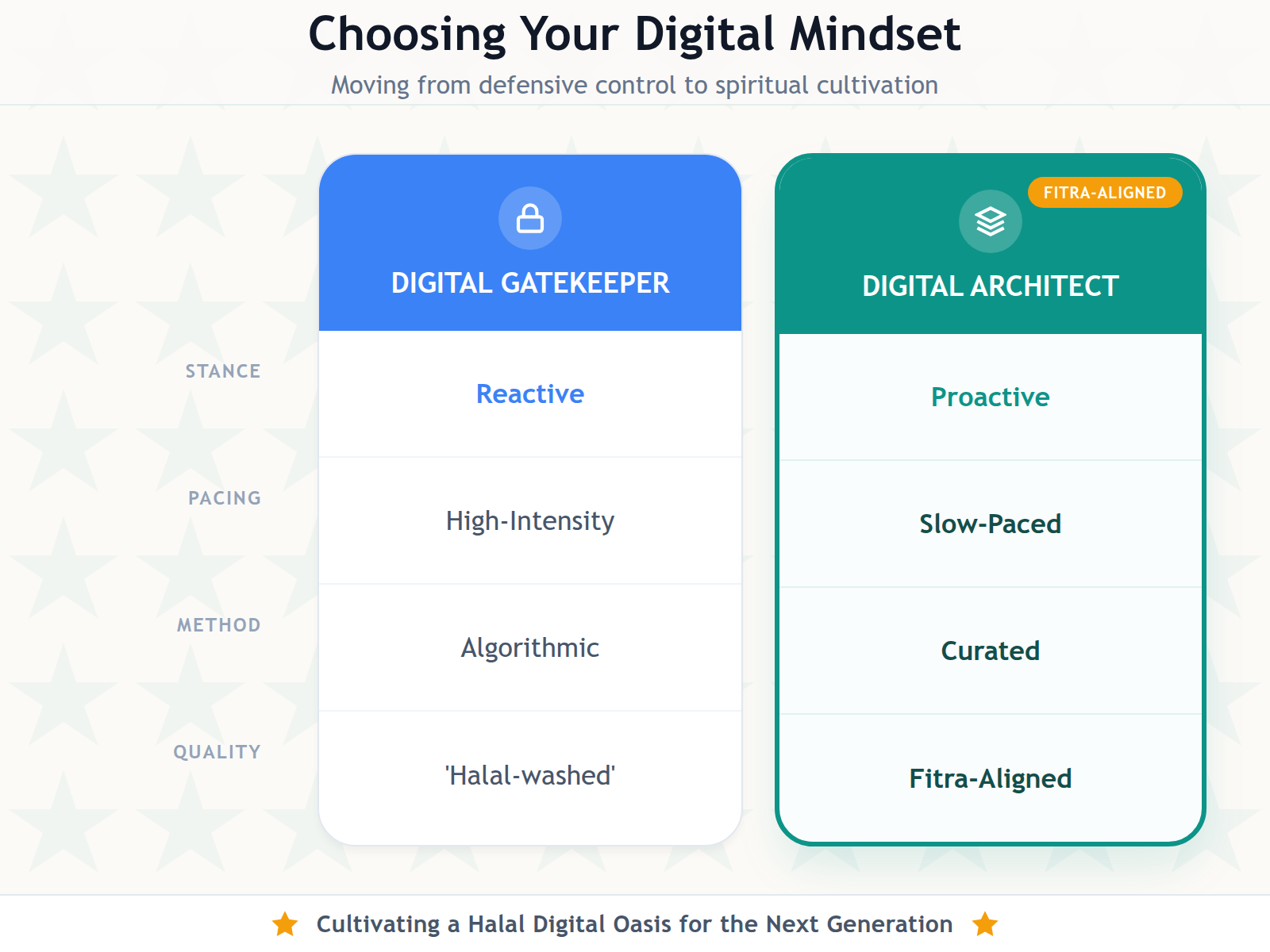
You’ve set the timers and enabled filters, yet that familiar knot of algorithm anxiety remains as you watch your toddler glaze over to overstimulating animations. It’s time to move beyond being a reactive gatekeeper and become a digital architect for your child’s Fitra.
Establishing a healthy routine starts with a clear, intentional boundary that prioritizes your child's natural development and spiritual well-being. This foundational standard ensures that technology remains a gentle tool for enrichment rather than a source of overstimulation for the youngest members of our Ummah.

True safety requires a halal digital oasis—a proactive, serene sanctuary that respects both neurological development and our shared Islamic values. We're here to help you build an ecosystem that prioritizes slow-paced content, intentionally avoiding the frantic dopamine loops that mainstream platforms often exploit.
By moving toward a Fitra-First architecture, you can transform screen time into a calm, bilingual environment that aligns with the Sunnah. Let’s explore how AI-guarded safe spaces can support your daily Tarbiyah, ensuring your child’s heart and mind remain protected and cherished.
Step 1: The Spiritual Foundation — Protecting the Fitra from 'Halal-Washing'
At the heart of your digital sanctuary is Fitra—your child's innate, pure state. During the critical first 1,000 days of life, this natural disposition is highly sensitive to the "sensory hijacking" common in modern digital interfaces. True Islamic digital literacy begins by shielding this purity from the chaos of the mainstream attention economy.
In these formative years, a toddler’s brain creates neural connections at a breathtaking speed. When we introduce screens, we are doing more than sharing a story; we are shaping how they perceive reality. If media is frantic, it disrupts their inner peace, making it harder for them to eventually connect with the calm, rhythmic beauty of the Quran.

Beyond Surface-Level Safety
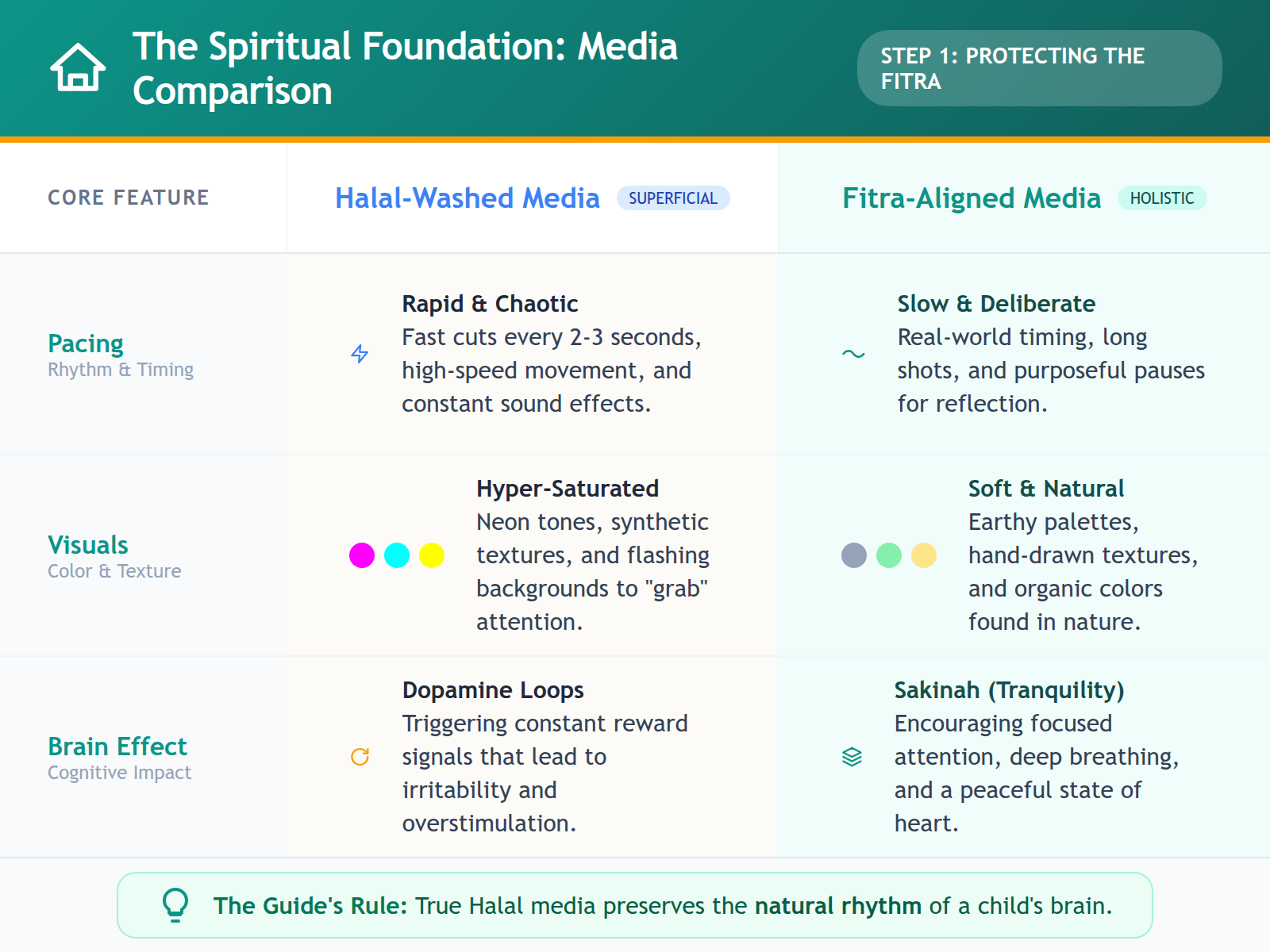
Many well-meaning parents encounter "halal-washing," where media features hijabs or masjids while still utilizing aggressive, high-arousal tactics. This includes rapid scene cuts and hyper-saturated colors designed to trigger dopamine loops rather than spiritual reflection. While the characters might mention Allah, the delivery mimics the "brain-drain" models that exhaust a child's focus.
This overstimulation prevents the development of Sakinah (tranquility), the essential foundation for meaningful Tarbiyah. By choosing slow-paced, ad-free content, you ensure that technology supports their spiritual upbringing without overwhelming their senses. Our AI-guarded safe space filters out these hidden stressors, keeping the Sunnah at the heart of every interaction.
Defining Sacred Boundaries
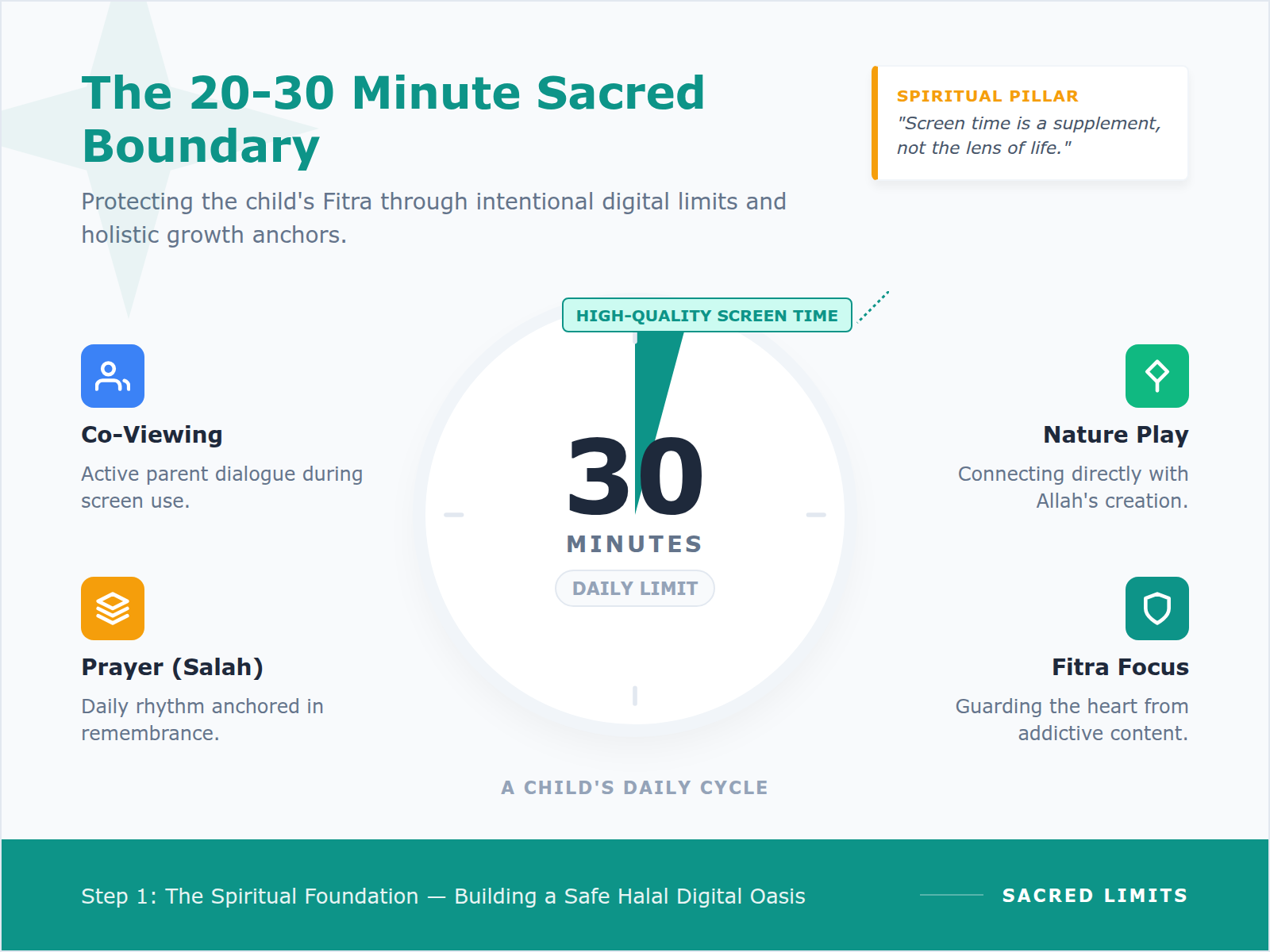
To truly protect your child’s focus, we must shift from passive consumption to an intentional, guarded environment. This is where we establish Sacred Boundaries, recognizing that digital tools should serve as a gentle supplement to your home life. Authentic Islamic digital literacy teaches us that quality and spiritual alignment always outweigh sheer quantity.
Research suggests that for toddlers, these boundaries are best maintained with a limit of 20 to 30 minutes of screen time daily. By honoring this limit, you ensure that digital engagement never replaces the essential human connections and physical play your child needs. As a "Digital Architect," you are building a serene space where your child can grow into a peaceful and focused member of the Ummah.
Step 2: The Infrastructure — Hardware and Router-Level Guardrails
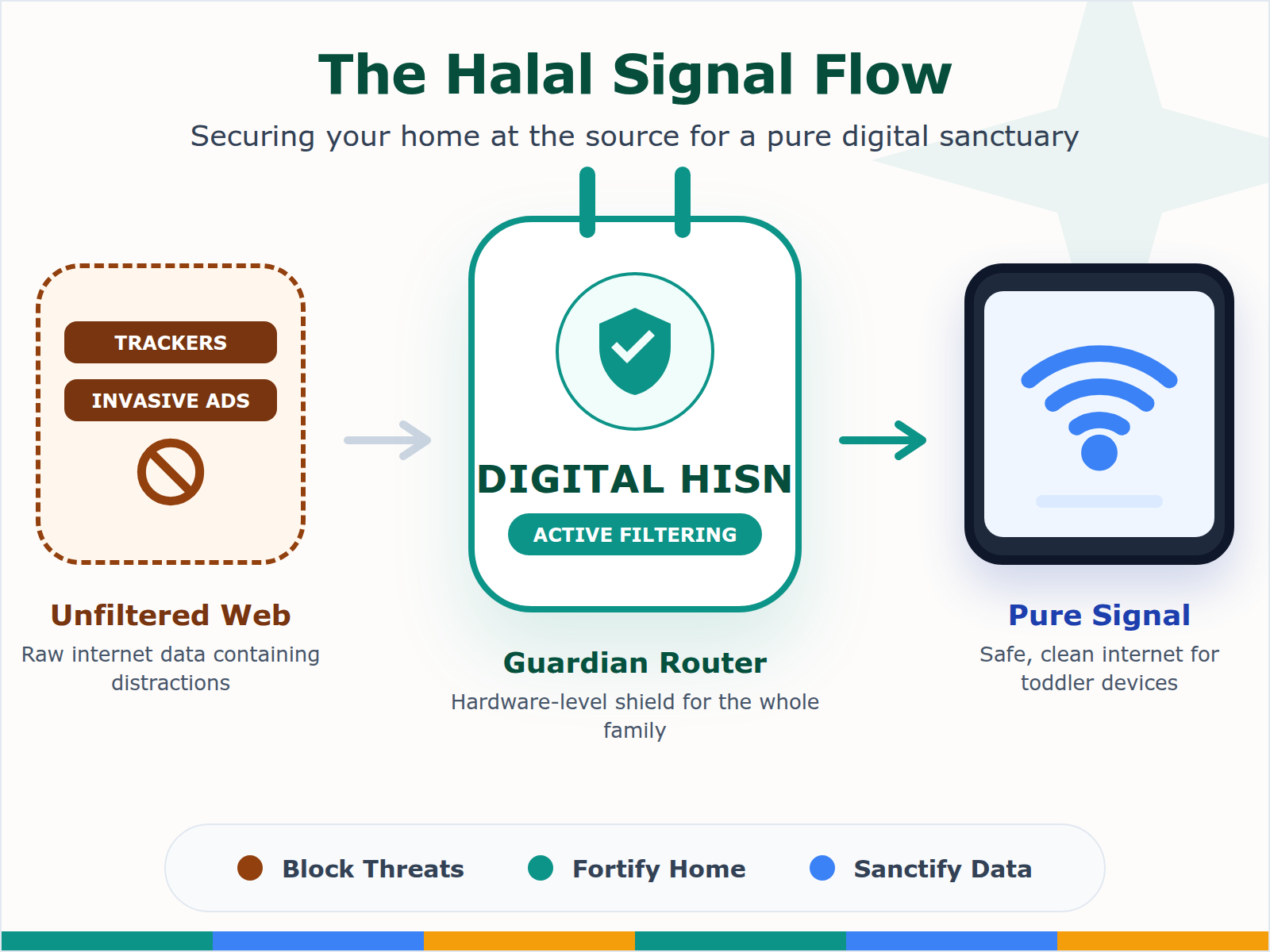
Building a sanctuary for your child's heart requires more than just picking the right video; it demands a physical Hisn (fortress) around your home network. By implementing robust Muslim parental controls at the hardware level, you strip away digital noise before it ever reaches your toddler's eyes. This proactive "Digital Architecture" ensures your home remains a place of Sakinah (tranquility), shielding your family from the intrusive pulls of the mainstream web.
Establishing Your Digital Hisn
The most effective way to guard your child’s Fitra is to stop trackers and ads at the source. Instead of relying on individual app settings, we recommend configuring your home router to use DNS-level filtering services like CleanBrowsing or Cloudflare for Families. These technical gatekeepers automatically scrub out inappropriate content and invasive tracking scripts across every connected device, providing a clean, "ad-free" foundation for your daily Tarbiyah.
Locking the Gate with Guided Access
Mobile devices are designed for endless exploration, which can lead a toddler from a safe Nasheed to an unpredictable "Related Video" in seconds. To prevent this, utilize "Guided Access" on iOS or "App Pinning" on Android to lock the device into a single, trusted app like Babymode. This creates a "Digital Prayer Mat"—a focused, intentional space where your child cannot accidentally exit the safe environment or be distracted by system pings and notifications.
Reclaiming Niyyah by Eliminating Autoplay
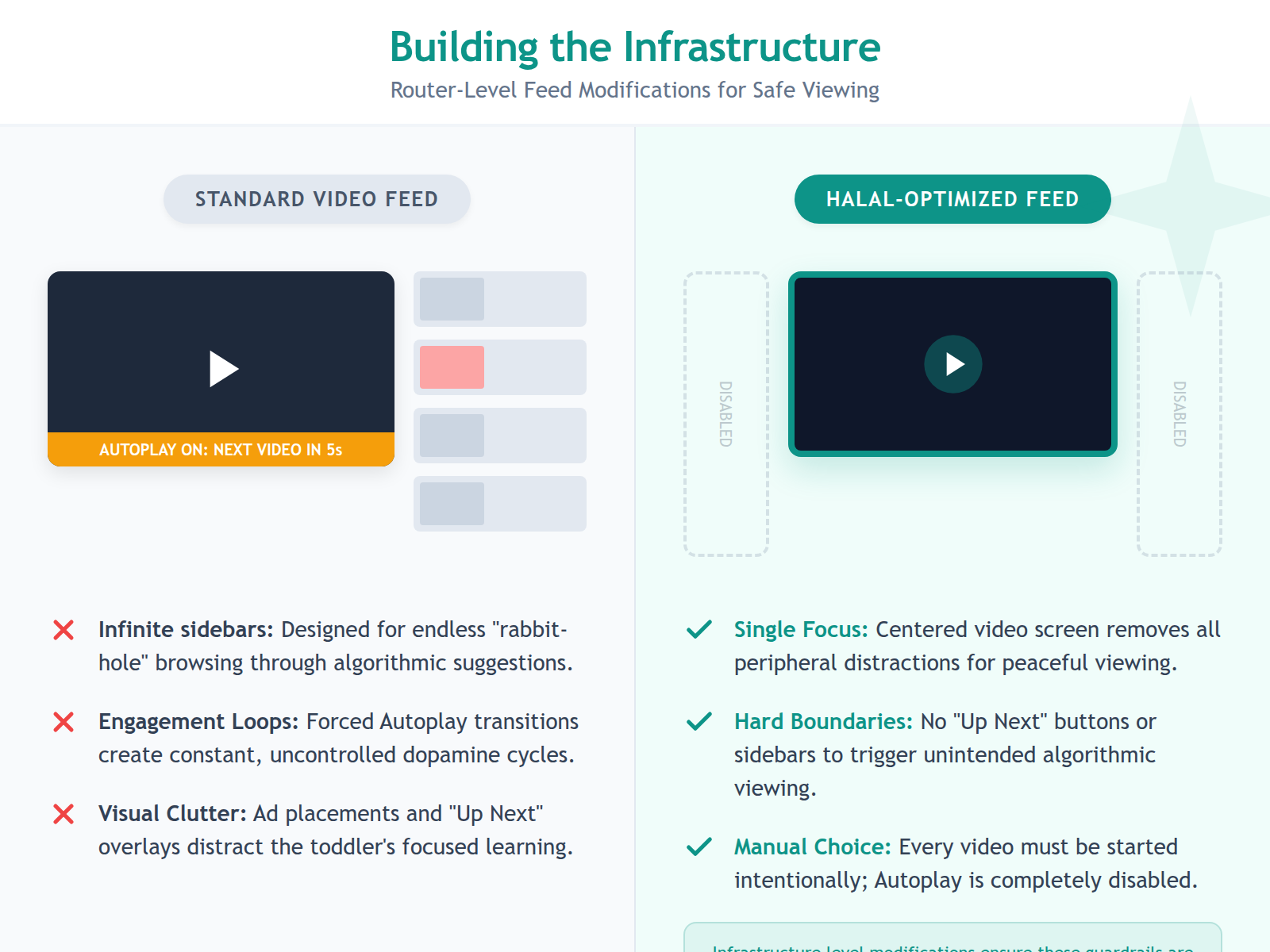
Mainstream platforms use "Autoplay" and "Up Next" sidebars to bypass Niyyah (intention), pulling children into infinite dopamine loops. As a digital architect, you can manually disable these features in every app’s settings to maintain a "clean" signal for your family. By removing the clutter of suggested videos, you help your child stay present with the content they are currently watching, preventing the overstimulation that often leads to screen-time tantrums.
Spiritual Reminder: Designing Digital-Free Zones
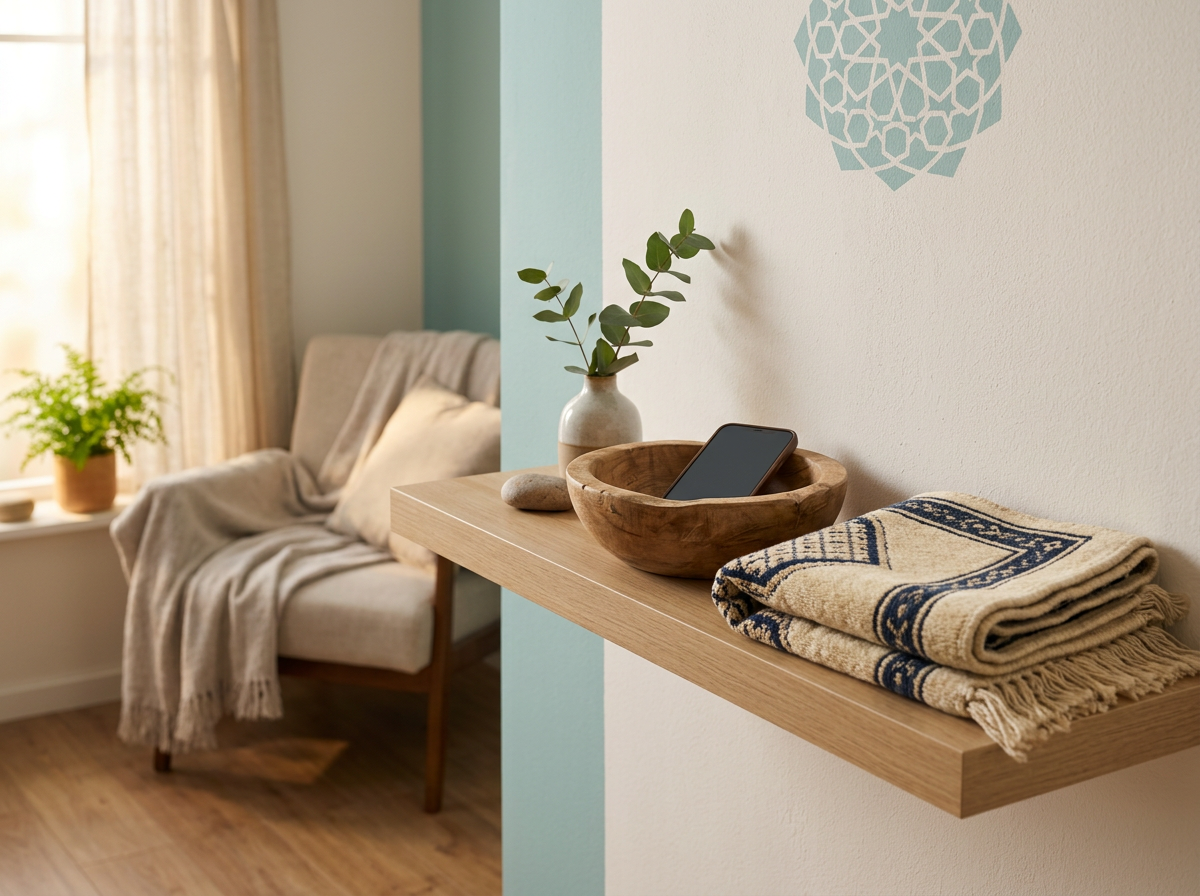
Physical boundaries are just as vital as technical ones for a healthy upbringing. We suggest designating specific areas—such as the dining table, bedrooms, and the space surrounding your prayer rugs—as "Digital-Free Zones." By physically separating technology from these high-connection areas, you reinforce that screen time is a minor, intentional part of your child's day, keeping their heart connected to the home's spiritual rhythm.
Step 3: AI-Curation — Moving Beyond the Unpredictability of Human Uploads
Even with a robust Hisn around your home network, the open web remains a "Wild West" of human unpredictability. Mainstream platforms rely on reactive moderation, which means harmful or inappropriate content is often only removed after a child has already been exposed to it.
We bridge this gap by providing AI-curated halal content that is vetted before the first frame ever plays. This shift to a "trust-list" model ensures that your digital architecture is built on proactive intentionality rather than reactive damage control.
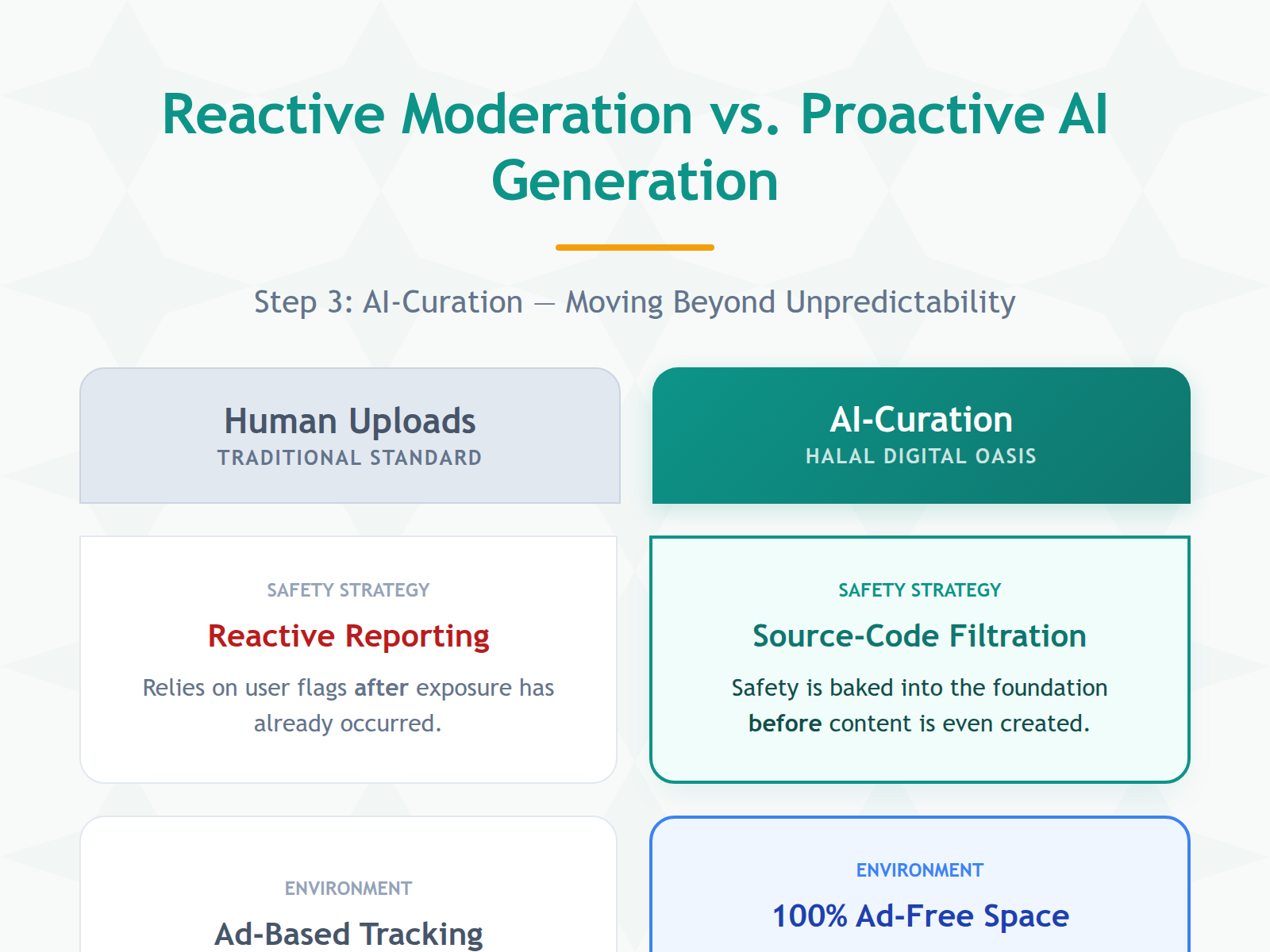
We use benefits-driven technology to ensure every second of footage respects your child’s Fitra. This model treats digital media with the same meticulous care you would use for the Halal food on your family’s table.
By utilizing content-aware filtering, we verify every visual and auditory element to maintain a sanctuary of Sakinah (tranquility) within your home. Our AI-guarded safe space monitors for the subtle cues of high-arousal media, ensuring the environment remains consistently serene for your little one.
The Digital Sharia Audit
This vetting process leverages advanced safety parameters to ensure every frame is spiritually sound and age-appropriate for the youngest members of the Ummah. Our technology acts as a vigilant guardian, identifying and excluding the overstimulating tropes often found in mainstream uploads.
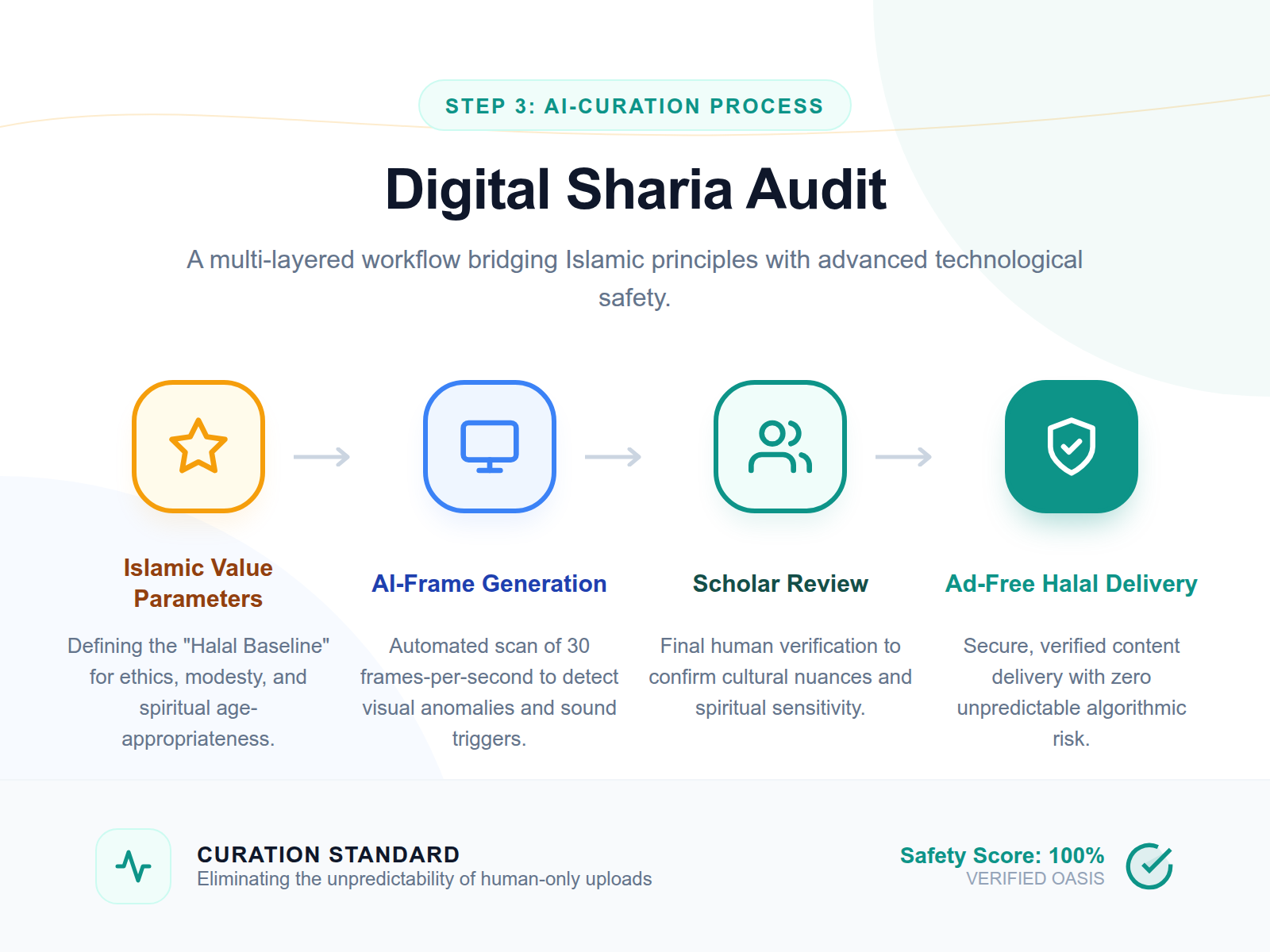
By automating this vetting process, we allow you to focus on the joy of shared learning rather than the anxiety of what might appear next. This supports your toddler’s neurological development by providing a focused, calm stream of content that aligns with your daily Tarbiyah.
Parenting Tip: The 'Quiet Content' Rule
Look for videos with soft color palettes and natural pacing. This mirrors the rhythmic beauty of the Sunnah and prevents the sensory exhaustion caused by rapid scene cuts.
Cultivating Shukr Over Consumerism
Mainstream algorithms often exploit a toddler's natural curiosity through psychological triggers and aggressive advertising. An ad-free, AI-guarded space protects your child’s sense of Shukr (gratitude) by removing these manipulative commercial influences entirely.
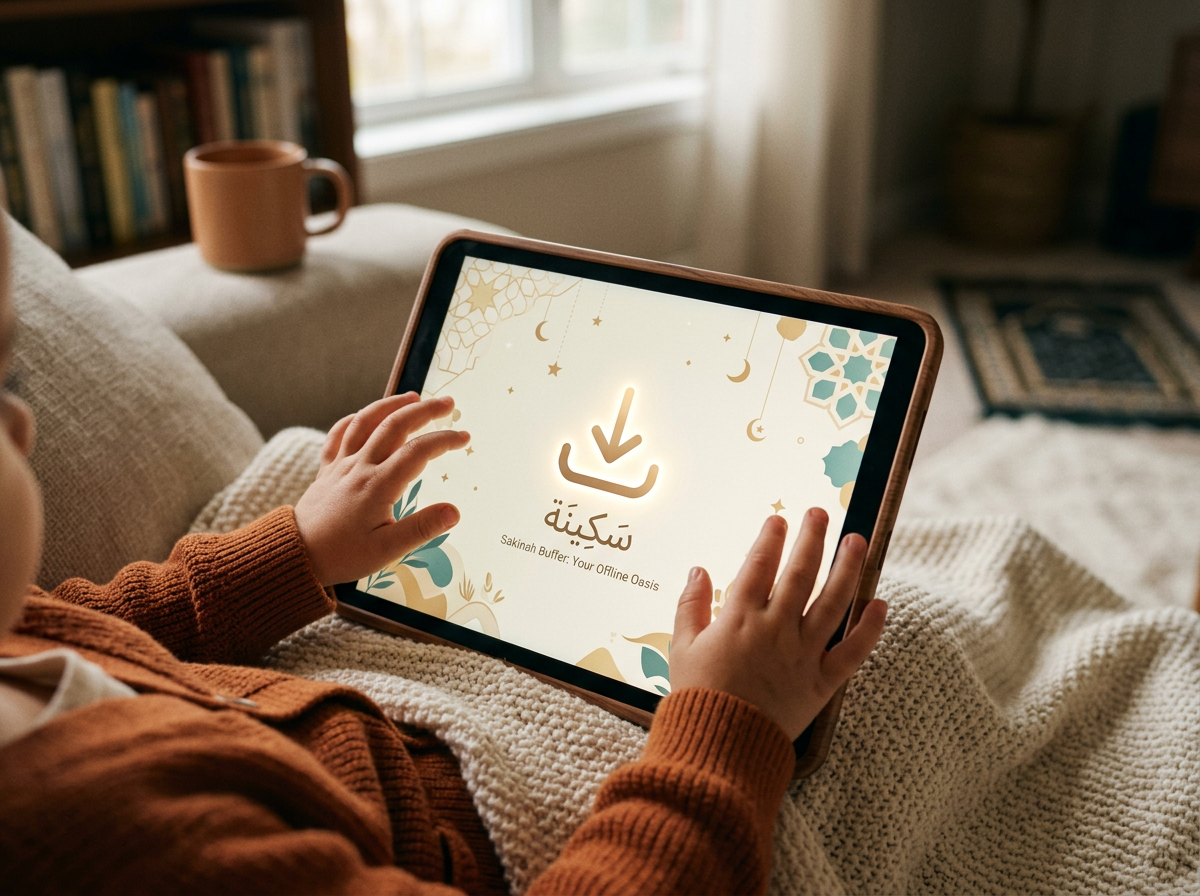
To maintain this oasis during travel, utilize offline downloads as a "Sakinah Buffer" to avoid the pull of the open web. This keeps screen time purposeful and grounded, ensuring your child’s digital experience remains a tool for growth rather than a source of distraction.
Step 4: The Halal Checklist — Prioritizing Pacing and Bilingual Immersion
To transform your digital sanctuary into a daily reality, you need a clear set of criteria for the content you permit. Selecting media for a toddler is a profound act of Tarbiyah that requires looking past the "Islamic" label to examine the sensory impact on their Fitra. By focusing on quality over quantity, you ensure technology remains a tool for growth rather than a source of overstimulation.
The Rhythm of Sakinah
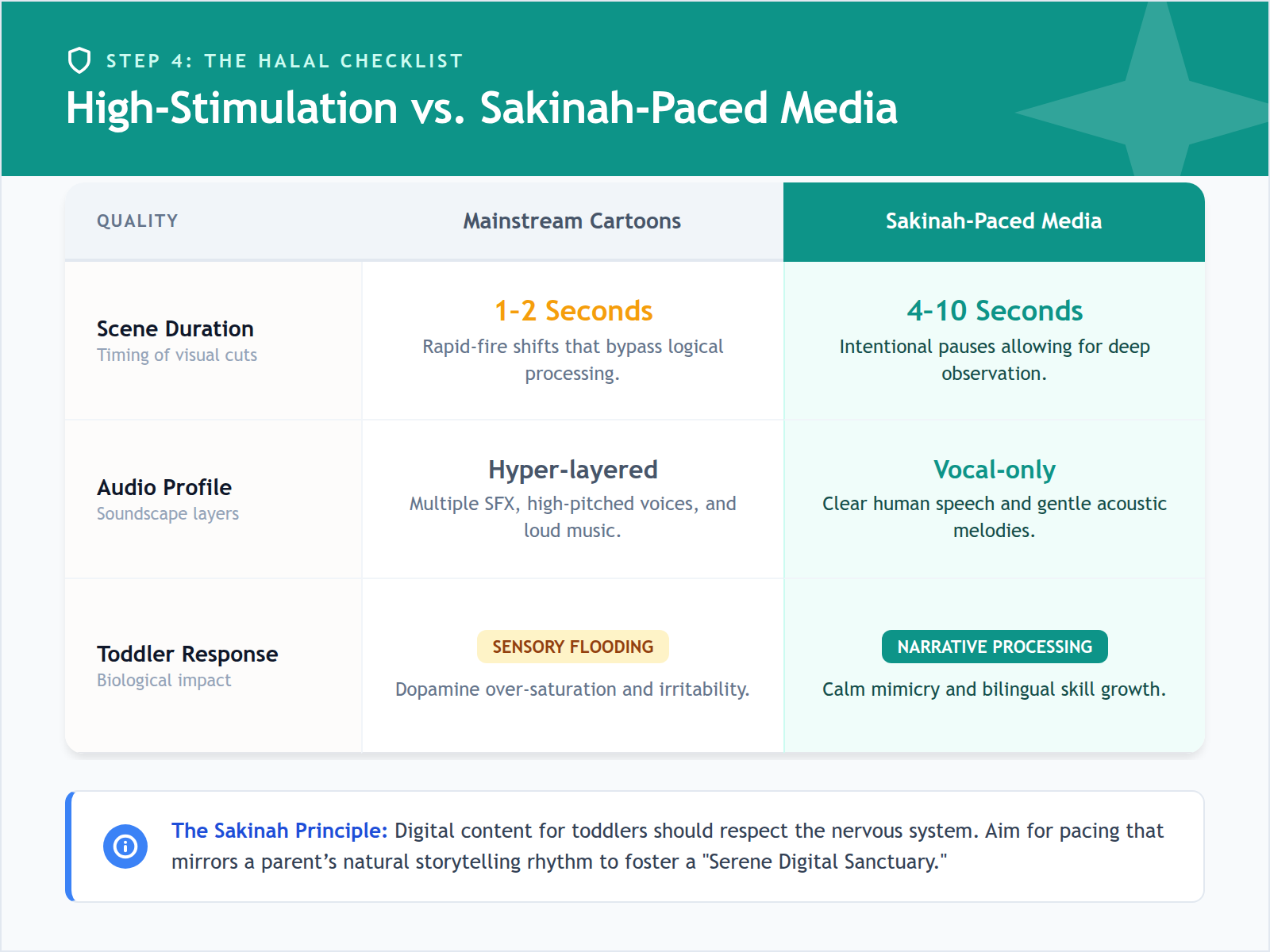
The most critical factor in protecting a developing brain is the pacing of the visuals. While mainstream cartoons use rapid-fire cuts every second, a high-quality slow-paced Islamic animation prioritizes scene durations of 4 to 10 seconds. This intentional pacing prevents sensory flooding, allowing your toddler to process the story with a sense of Sakinah (tranquility).
Building the Bilingual Bridge
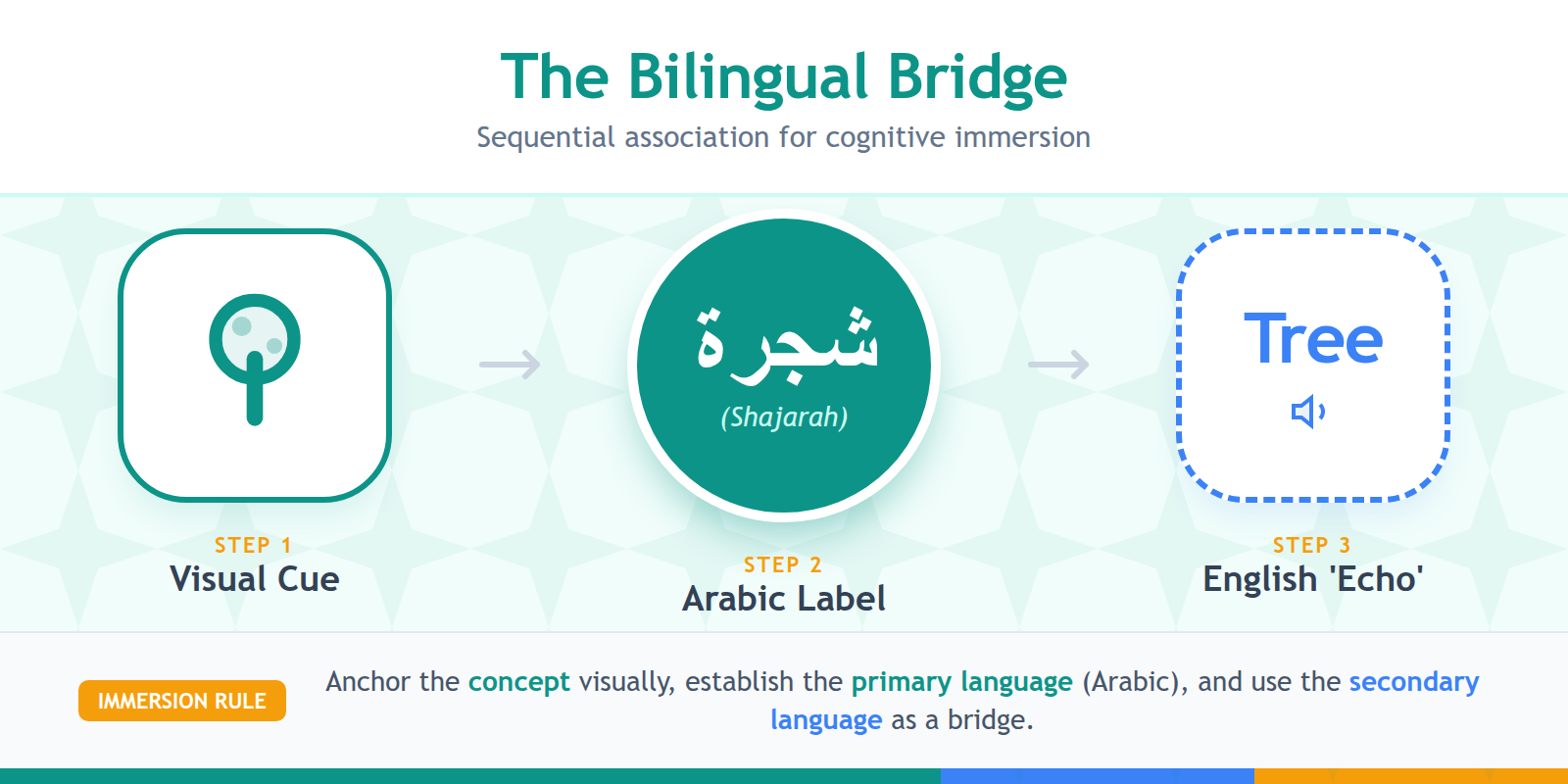
Early childhood is a golden window for language acquisition and connecting with the sounds of the Quran. Look for digital immersion that pairs clear visual cues with the Arabic word first, followed by an English "echo." This method helps your child associate the Arabic term for "tree" (Shajarah) or "water" (Ma') naturally with the object itself, making future Quranic studies feel like a homecoming.
Sensory and Spiritual Standards
When evaluating content for your home, use this high-impact checklist to ensure every video supports your child's spiritual and neurological health:
- Auditory Purity: Prioritize "instrument-free" nasheeds to improve phonetic clarity and focus on the rhythmic beauty of Dhikr.
- Character Modeling: Choose stories that highlight Akhlaq (manners) and Shukr (gratitude) through daily Sunnah actions.
- Visual Softness: Opt for soft color palettes and natural movements that mirror the beauty of Allah's creation without the "brain-drain" of hyper-saturation.
Parenting Tip: The 'Focus' Test
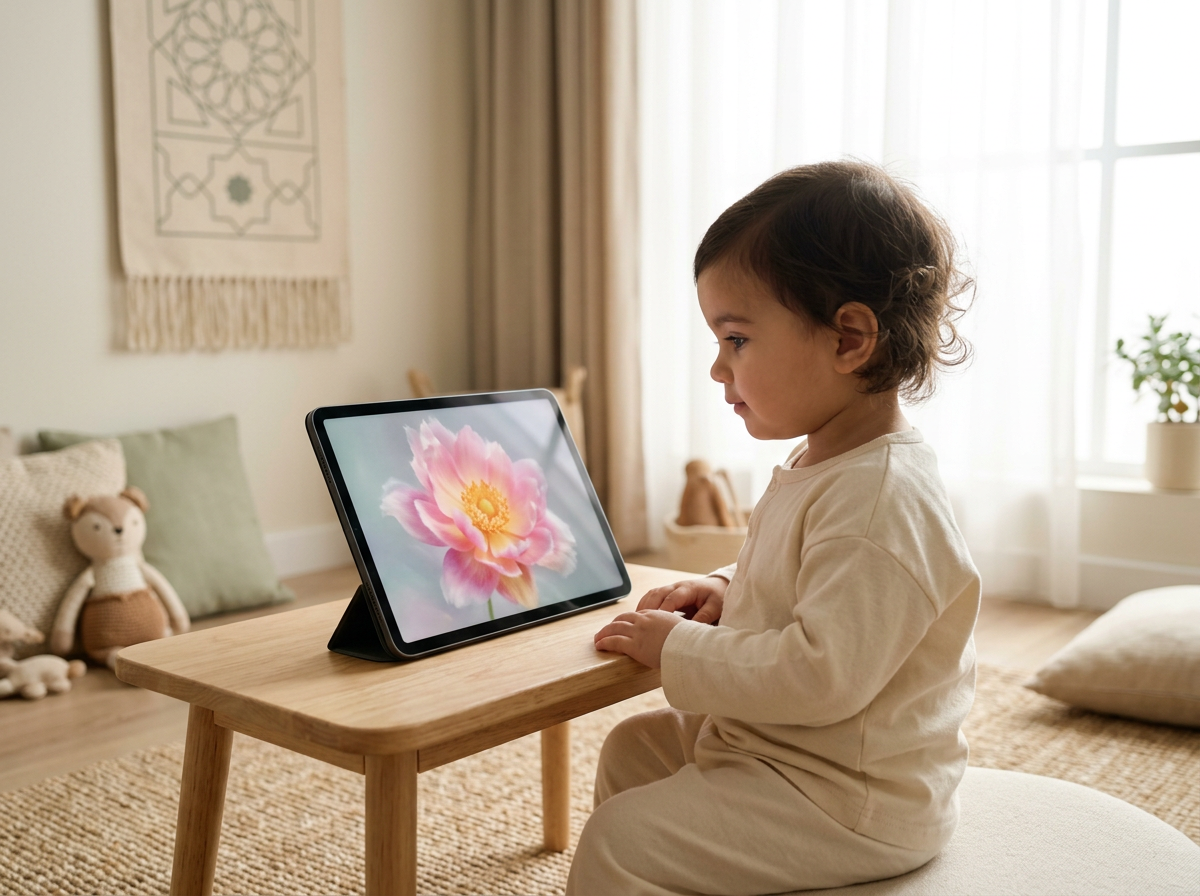
After viewing, observe your child’s behavior. If they are calm and able to transition easily to independent play, the content is "Fitra-friendly." If they seem hyper or irritable, it is a sign to switch to a more slow-paced Islamic animation.
Step 5: The Daily Routine — Integrating Screen Time into Tarbiyah
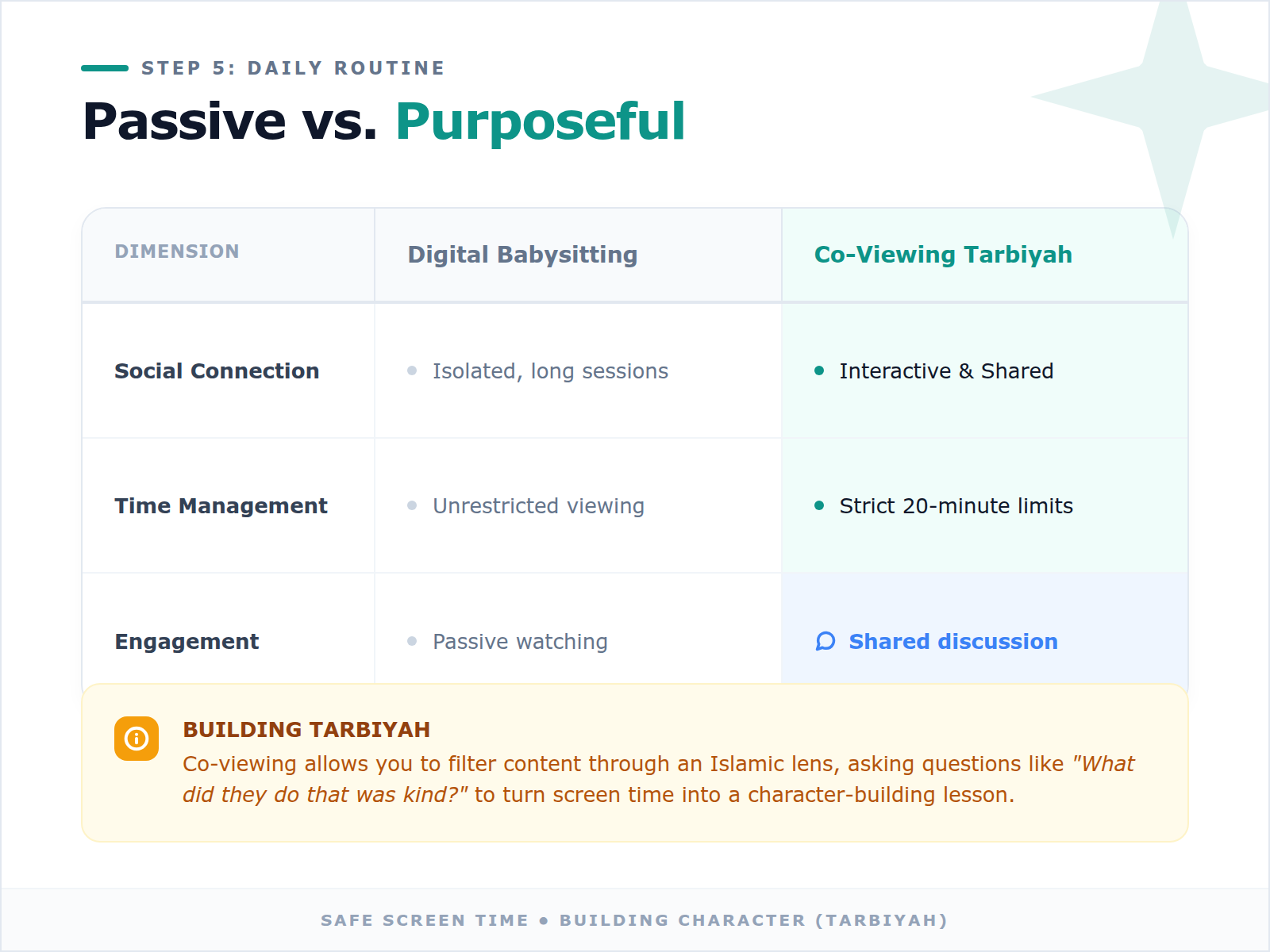
Transforming your digital oasis into a daily part of Tarbiyah requires shifting from a silent gatekeeper to an active participant. A well-structured Muslim toddler media plan ensures technology never becomes a "digital babysitter," but remains a shared bridge toward spiritual growth.
Moving from Passive Watching to Purposeful Co-Viewing
We've found the most effective way to protect your child’s Fitra is through "scaffolded interaction," where you narrate the screen experience together. Instead of letting them glaze over, try pausing the video to ask, "Where is the Arabic letter 'Alif'?" or "Can you say Alhamdulillah like the bird?"
These micro-conversations help your toddler bridge the gap between digital pixels and real-world understanding. This shared time reinforces that media is a tool for Dhikr and connection, rather than a mindless escape from reality.
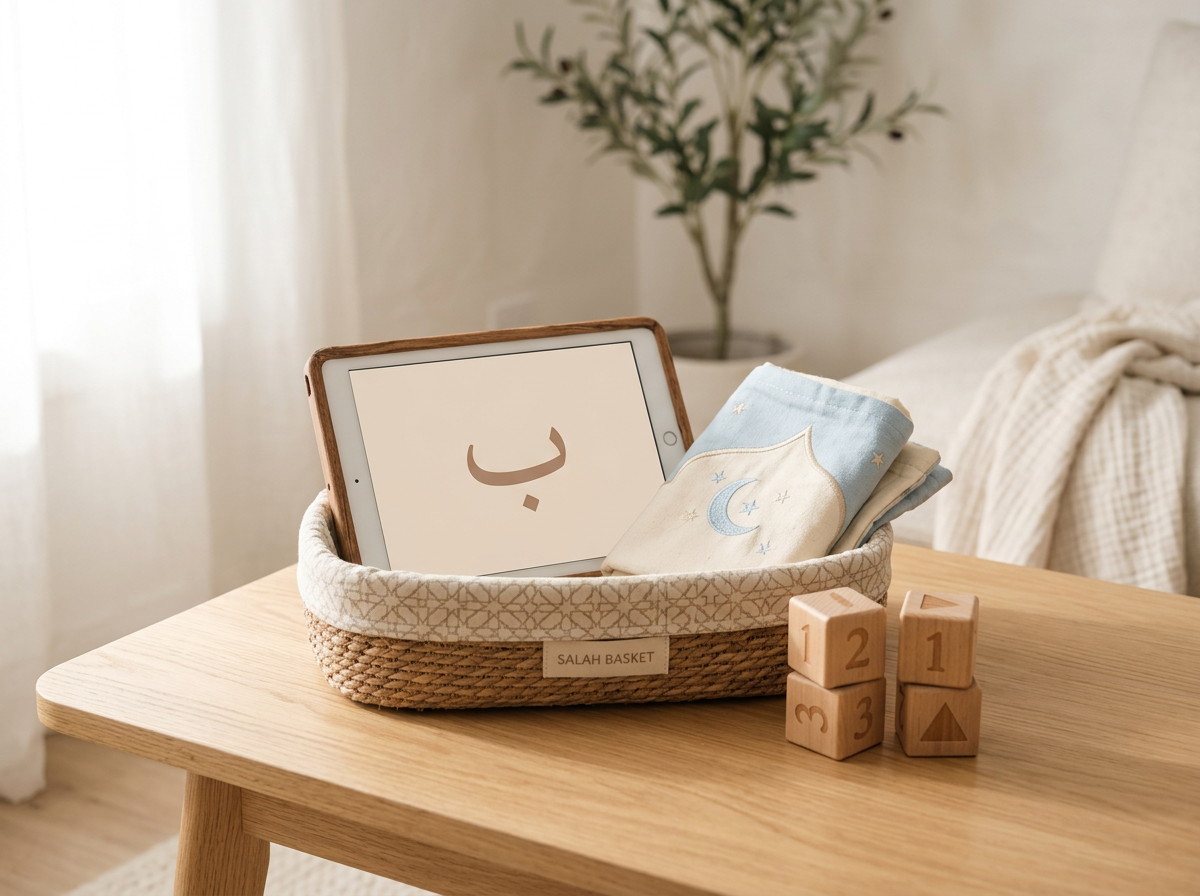
Parenting Tip: The 'Salah Basket'
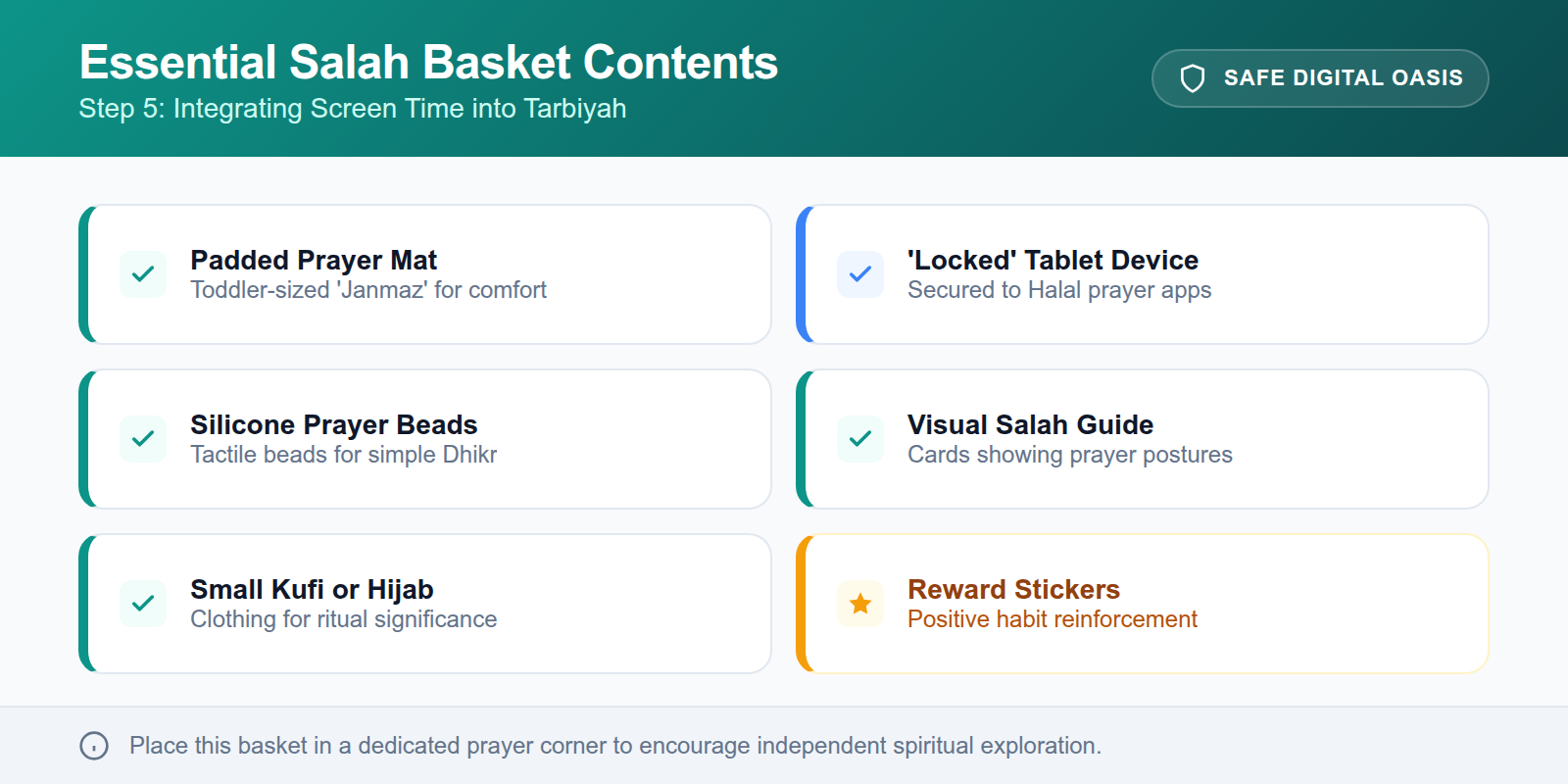
Create a physical kit containing an offline-ready tablet, a small prayer mat, and tactile toys like wooden blocks. Bring this basket out only during specific windows, such as when you are performing your own Salah. This ritualizes screen time as a "Sacred-Use" tool, ensuring the device is perceived as a limited, intentional resource.
Parenting Tip: The 'Digital-to-Dunya' Bridge
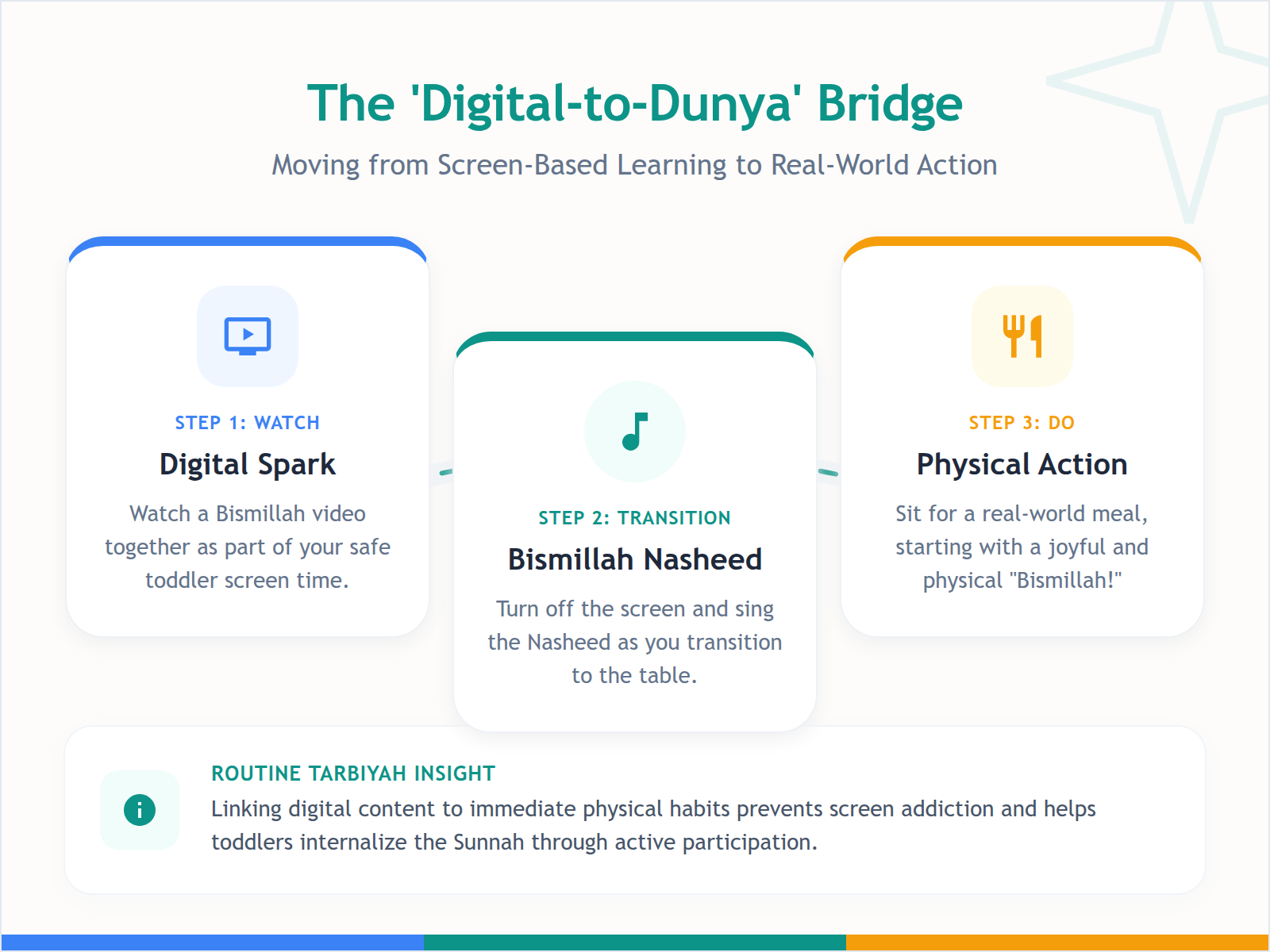
A successful Muslim toddler media plan relies on a seamless hand-off from the screen to the physical world. If your child is watching a video about "Bismillah," use the final minutes to transition into a real-world ritual, like sitting down for a snack. This provides a melodic boundary between digital play and physical activity.
Organizing Your Day for Rhythm and Focus
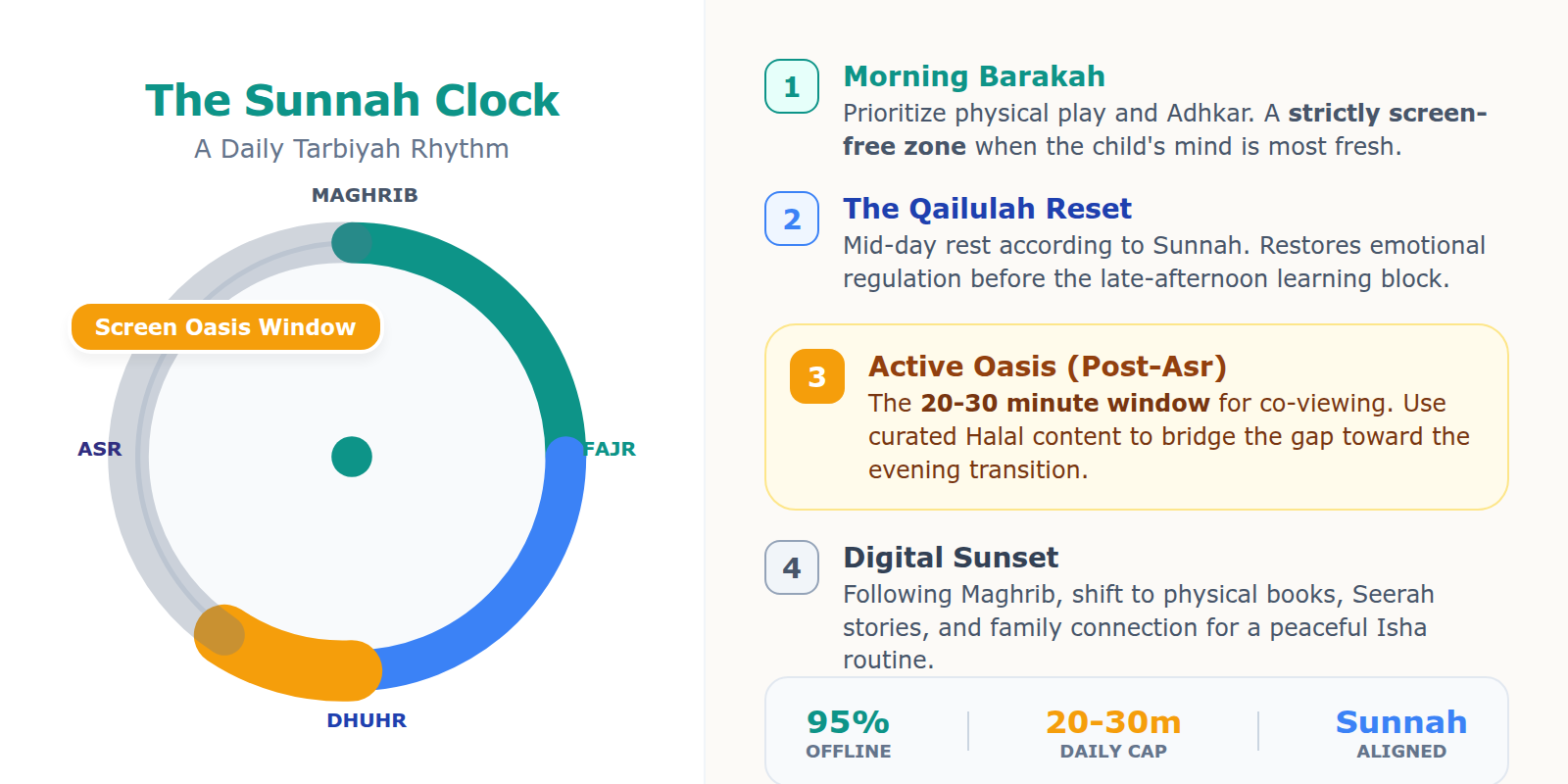
Consistency is the heartbeat of a calm household, and your digital schedule should reflect your family's natural rhythms. Rather than viewing media as a random distraction, honor the Sacred Boundary we established in Step 1 to keep your child's nervous system regulated.
We recommend aligning these sessions with higher-stress periods, such as the Maghrib transition or after a morning nap. By integrating media into your Sunnah routine, you maintain a sense of Sakinah and ensure technology remains a supportive part of their holistic upbringing.
Conclusion
Embracing the role of a Digital Architect means moving beyond fear-based restrictions to a state of tranquil confidence. By viewing technology through the lens of fitra and leveraging AI-guarded curation, you transform screen time into a purposeful tool for Tarbiyah. Your home becomes a true halal digital oasis, where every minute of media is an intentional step toward spiritual and cognitive growth.

Now is the time to audit your family's current devices and remove the noise of "halal-washed" content. We invite you to explore the Babymode platform for a trial run to experience a serene, ad-free environment designed specifically for the youngest members of the Ummah.
Frequently Asked Questions
How do I transition from YouTube Kids?
Use "Substitution, not Subtraction." A Bismillah nasheed serves as a melodic cue, signaling a calm transition from the mainstream chaos into a purposeful Tarbiyah session.
Why is AI-curated content safer?
Mainstream moderation is reactive, but our AI-guarded safe space is proactive. We filter content before it reaches your toddler, ensuring a "Safe by Design" experience that protects the Fitra.
Is solo screen time recommended?
Experts advise limiting toddler screen time to 20–30 minutes daily. We encourage co-viewing during these windows to help your child bridge digital lessons with real-world Sunnah rituals.
How do I spot "halal-washed" media?
Avoid sensory hijacking. Look for "red flags" like frantic pacing or aggressive audio that disrupts a child's Sakinah, even if the content features religious themes.
Does Babymode work offline?
Yes. Our offline service ensures your halal digital oasis remains consistent and portable, protecting the youngest members of the Ummah wherever you travel.