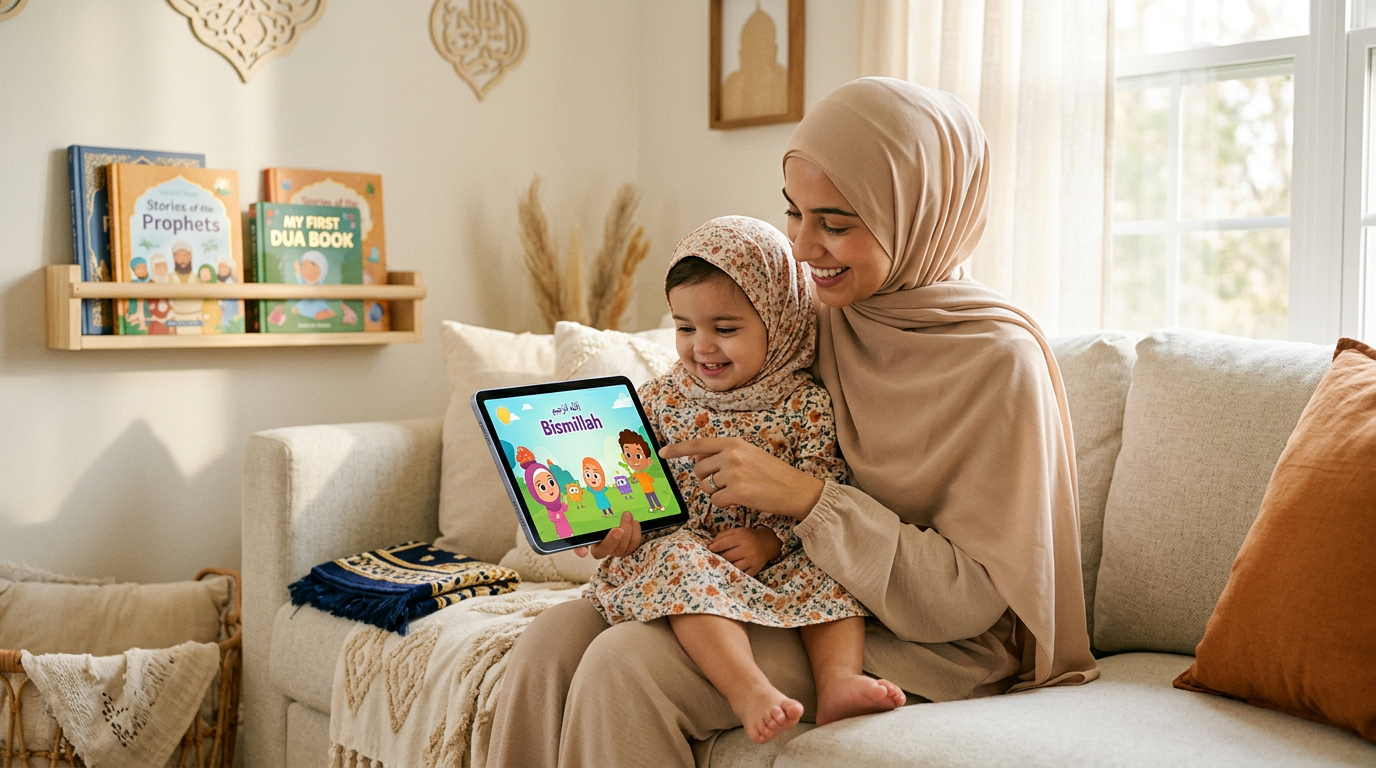
Many of us hope that "Restricted Mode" on mainstream platforms creates a safe digital playground for our little ones. However, beneath those colorful icons, unfiltered algorithms work tirelessly to capture attention at the expense of a child’s Fitrah (innate nature). This mechanical logic isn't just showing videos; it’s an uninvited educator prioritizing dopamine over the intentional process of early Tarbiyah.
For busy "Gen M" parents, screen time is often a practical necessity, yet it frequently comes with a heavy dose of digital guilt. While filters might catch explicit imagery, they cannot protect against hyper-stimulating loops designed to erode Sabr (patience). These engagement-based systems represent significant digital pitfalls, often clashing with the spiritual values we strive to instill at home.

This guide explores why mainstream apps struggle to provide truly safe screen time for Muslim toddlers. We’ll examine how engagement-driven AI can impact Haya (modesty) and identity, helping you move toward a "Pure Screen Time" model. Together, we can reclaim your role as the divine guardian of your child’s heart and digital journey.
1. The 'Restricted Mode' Delusion: Why Filters Aren’t Enough for Tarbiyah
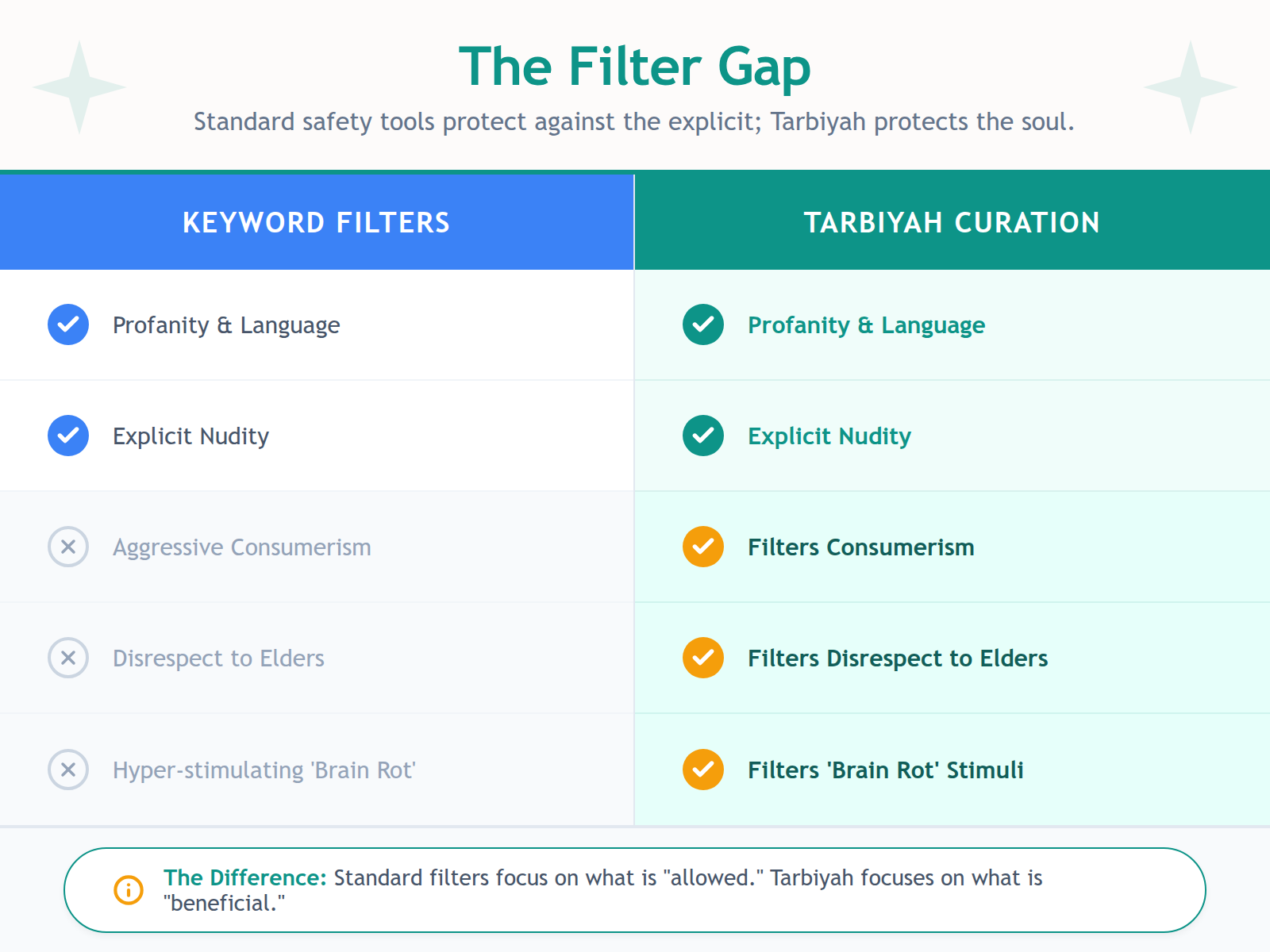
Many parents trust "Restricted Mode" to provide safe screen time for Muslim toddlers, but these filters only scan for obvious harms like profanity. They are often blind to the spiritual erosion that occurs when content lacks Tayyib (wholesomeness). To truly protect your child's Fitra, we must look beyond the mere absence of the haram.
The 'Moral Blind Spot' of Digital Filters
Standard controls catch "bad words" but ignore "bad values." An algorithm doesn't recognize content that promotes consumerism or a lack of Haya (modesty) as long as the viewer stays engaged. This prioritizes engagement over Akhlaq, turning technically "clean" videos into mindless stimulation that bypasses basic security.
The Rabbit Hole and the Erosion of Sabr
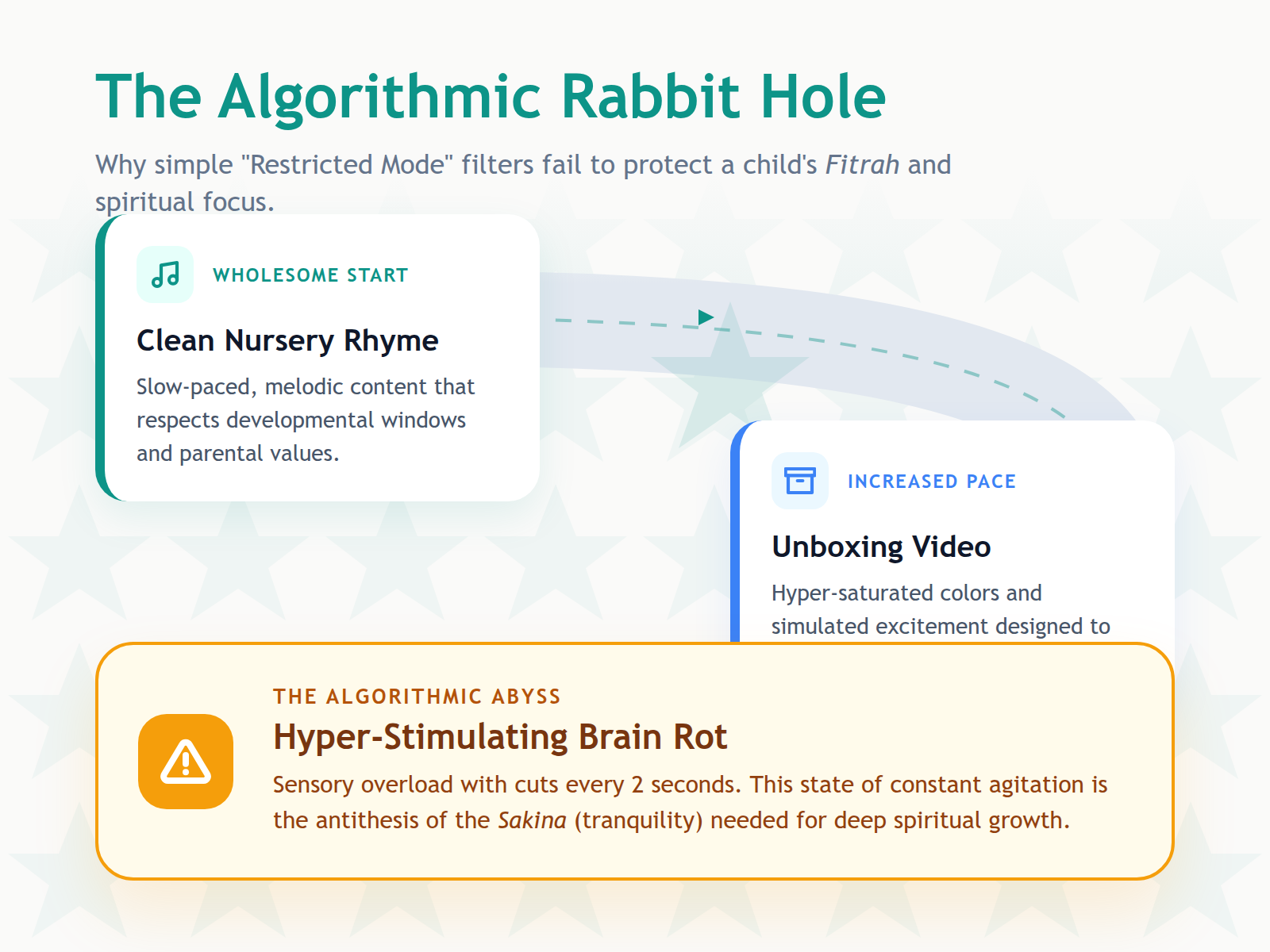
Even an innocent nursery rhyme can lead down a "rabbit hole" of hyper-stimulating content designed to hijack attention. This constant noise erodes Sabr (patience), making it harder for your little one to find the calm and focus needed for prayer.
Protecting your child’s digital path is a divine Amanah (trust) that we shouldn't outsource to engagement-driven machines. Reclaiming this role means shifting toward active, value-led curation that supports their journey of Tarbiyah.
2. The Erosion of Sabr: How Hyper-Stimulation Hijacks the Fitrah
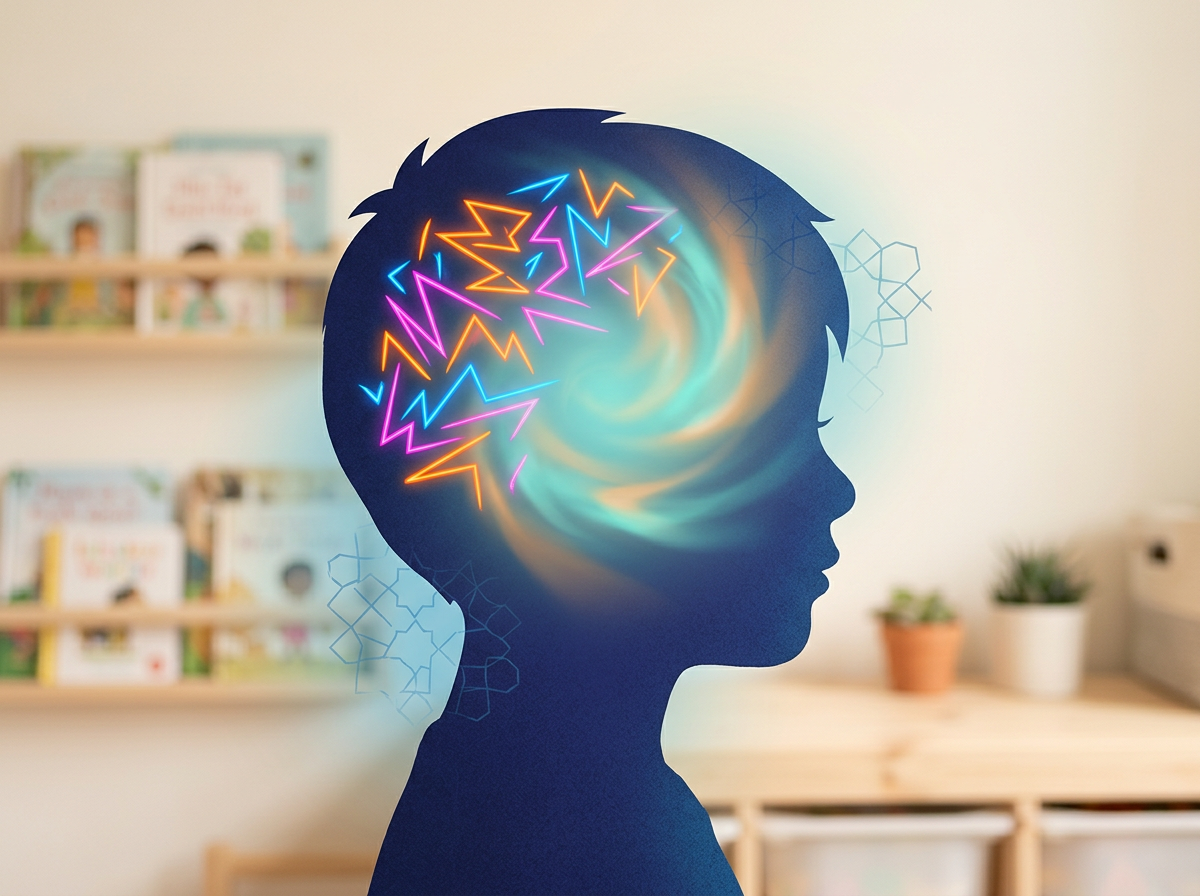
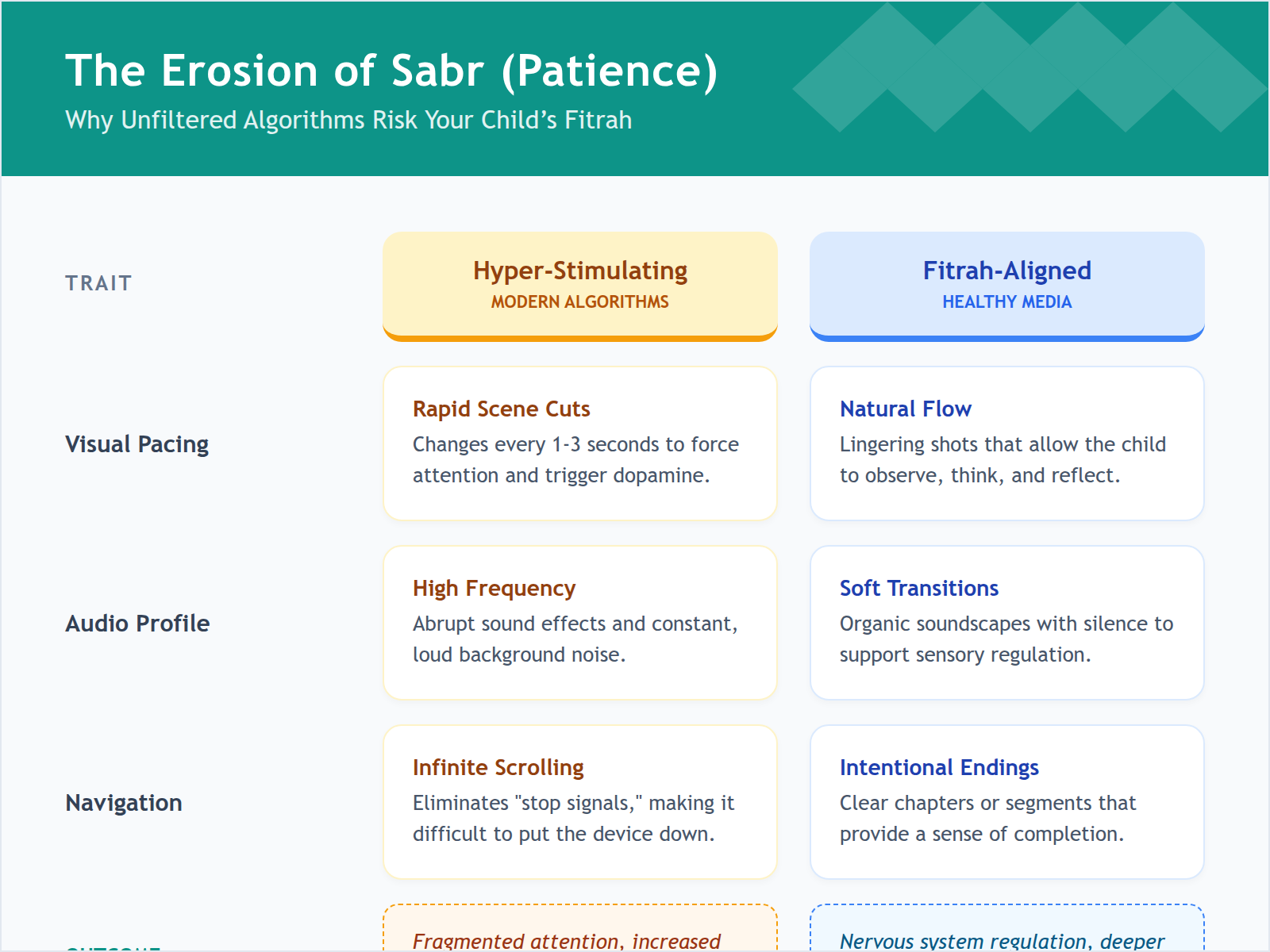
The mechanical logic of mainstream platforms often conflicts with your child’s spiritual growth. Rapid scene cuts and flashing lights create a state of constant arousal that disrupts a toddler’s natural sensory processing. This conditioning makes the brain crave instant feedback, directly undermining the primary goals of child Tarbiyah.
The High-Speed Quest for Instant Gratification
Many popular videos for toddlers feature scene changes every two to three seconds. This hyper-stimulation triggers dopamine pathways, training the soul to prefer immediate rewards over the steady virtue of Sabr (patience). When children are raised on high-energy loops, the meaningful rhythms of the natural world and traditional learning can begin to feel frustratingly dull.
Protecting the Quiet Heart
These digital habits reshape the Fitrah (innate disposition) in ways that extend far beyond screen time. A toddler accustomed to infinite scrolls may struggle to find the Khushu (deep focus) needed for Salah (prayer) or Quranic reflection in later years. We must be careful not to train the Nafs (ego) to demand constant gratification, as this creates a lasting barrier to spiritual mindfulness.
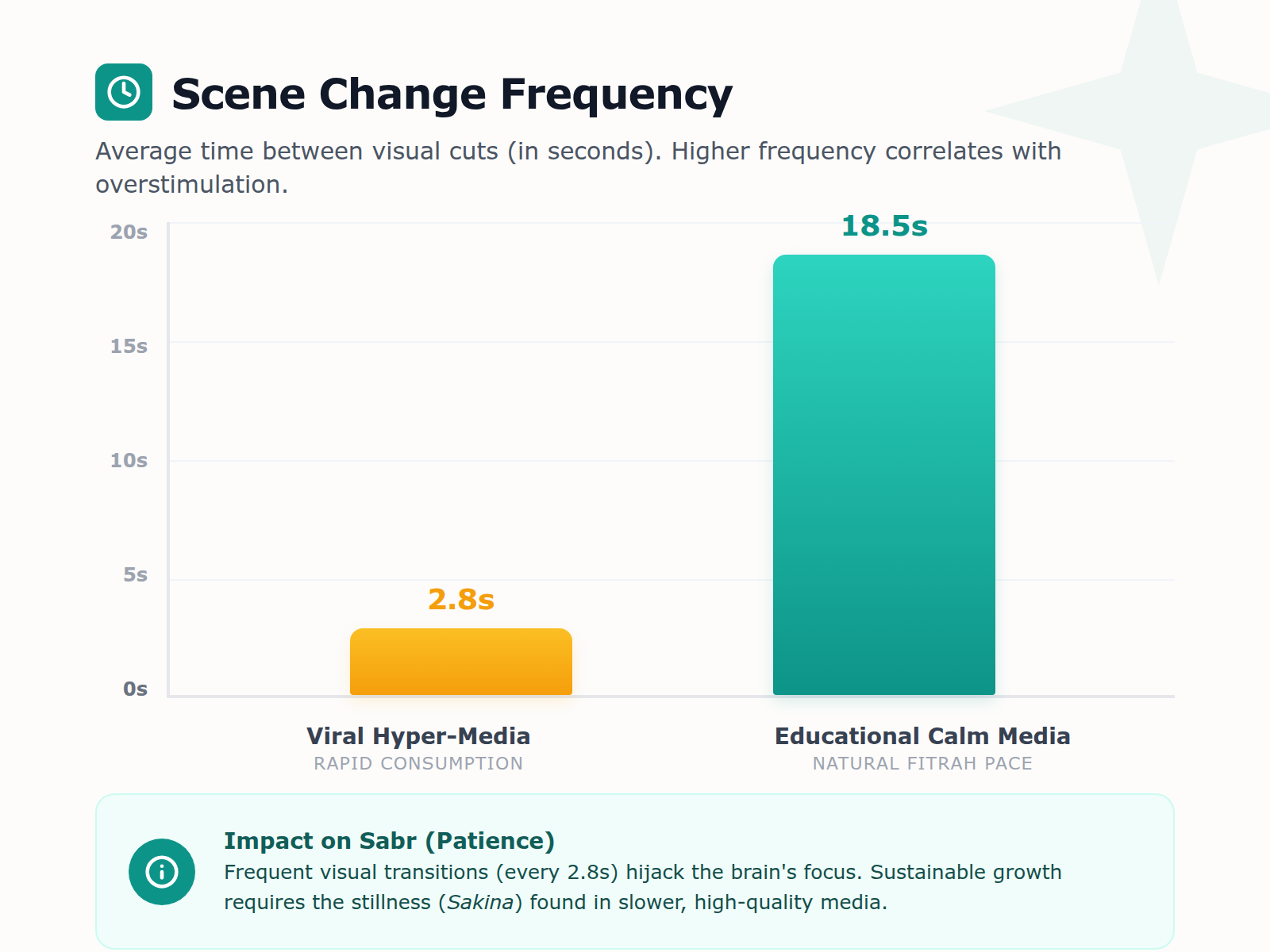
Protecting your child’s attention span is a sacred Amanah (trust) in this digital age. By choosing low-arousal, value-driven content, you support the self-regulation necessary for following the Sunnah. This shift to "faith-first" media is a foundational step in holistic child Tarbiyah.
3. Moral Desensitization: When Unfiltered Algorithms Bypass Haya
While you focus on blocking explicit imagery, the more subtle danger lies in the gradual erosion of your child's character. Unfiltered algorithms are value-blind; they don't distinguish between a lesson in kindness and a high-energy prank video. This mechanical indifference prioritizes raw engagement over the quiet dignity of Haya (modesty) taught in the Sunnah.
The Vanity Trap: Prioritizing Ego Over Humility
Algorithms are programmed to reward attention-seeking behaviors because these traits drive the highest metrics. For a developing toddler, this results in constant exposure to a "look-at-me" culture that prioritizes vanity over humble character. These platforms effectively serve as a digital stage where volume and self-centeredness are celebrated.
When a child repeatedly sees characters rewarded for being loud, their innate Fitra begins to be overwritten by digital "Main Character Syndrome." We believe screen time should support, not subvert, the humble character you are building at home through the Sunnah.

The Normalization Loop: From Alphabet Songs to Disrespect
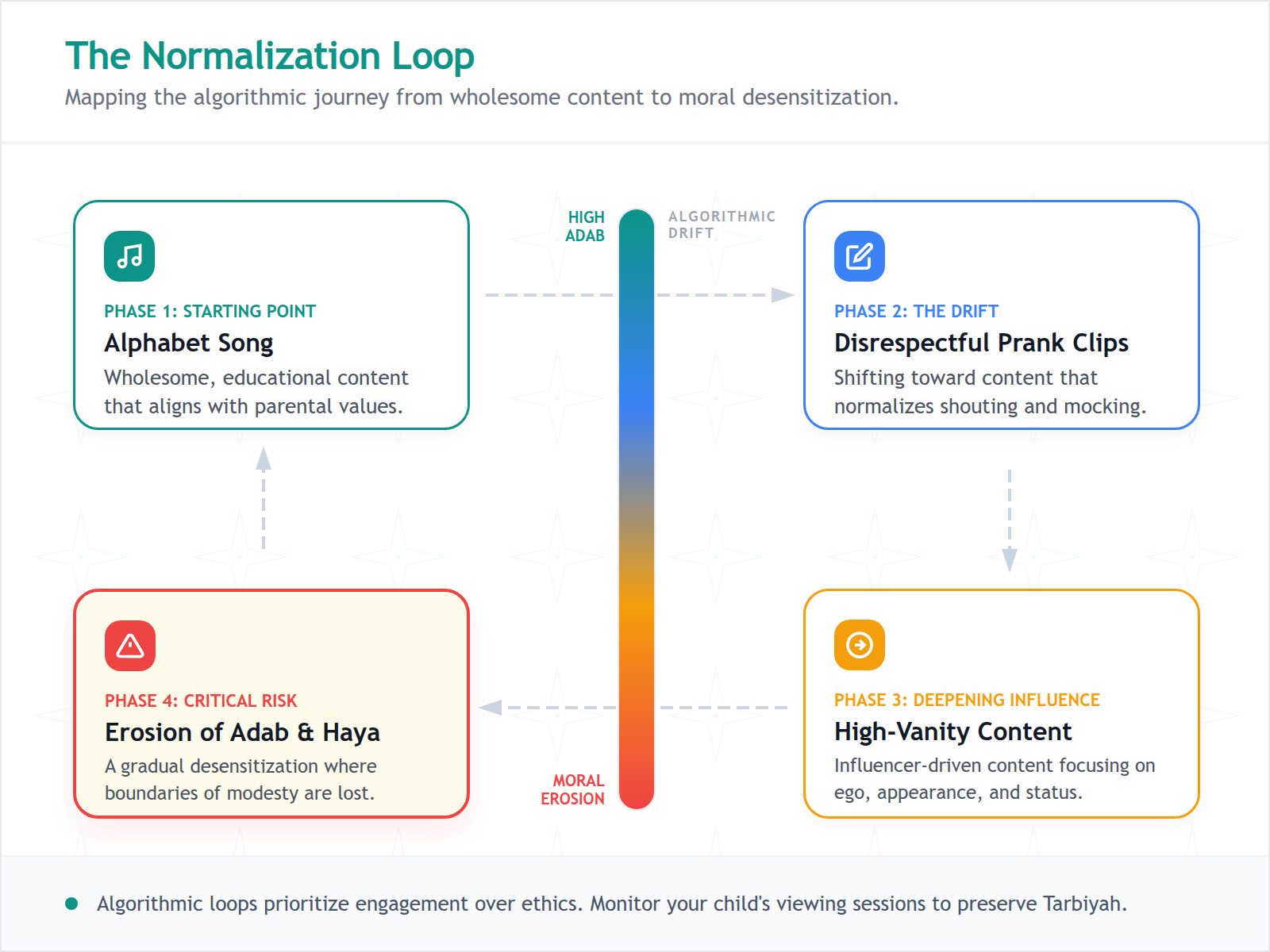
The true risk of unfiltered algorithms is the "Normalization Loop," where secular or hedonistic norms are presented as the universal standard. Your child might start with an innocent Arabic song, but the "Up Next" feature can quickly pivot to "funny" clips of children mocking elders. This process makes disrespect appear harmless or entertaining, eroding the Adab (etiquette) necessary for a healthy Muslim identity.
We've observed a "sneak-in" effect where complex secular ideologies are embedded in otherwise innocent animations. These subtle cues effectively de-school your child's Tarbiyah in real-time. Reclaiming this digital space means choosing curated environments that guard your child's spiritual immune system and nourish their soul.
4. The Ad-Driven Narrative: Commercialism vs. Islamic Contentment
Mainstream platforms aren’t just digital playgrounds; they are marketplaces designed to build lifelong brand loyalty in your toddler. This environment uses constant novelty to capture attention, turning your child’s Fitrah into a target for commercial gain.
Cultivating Shukr Over Constant Consumption
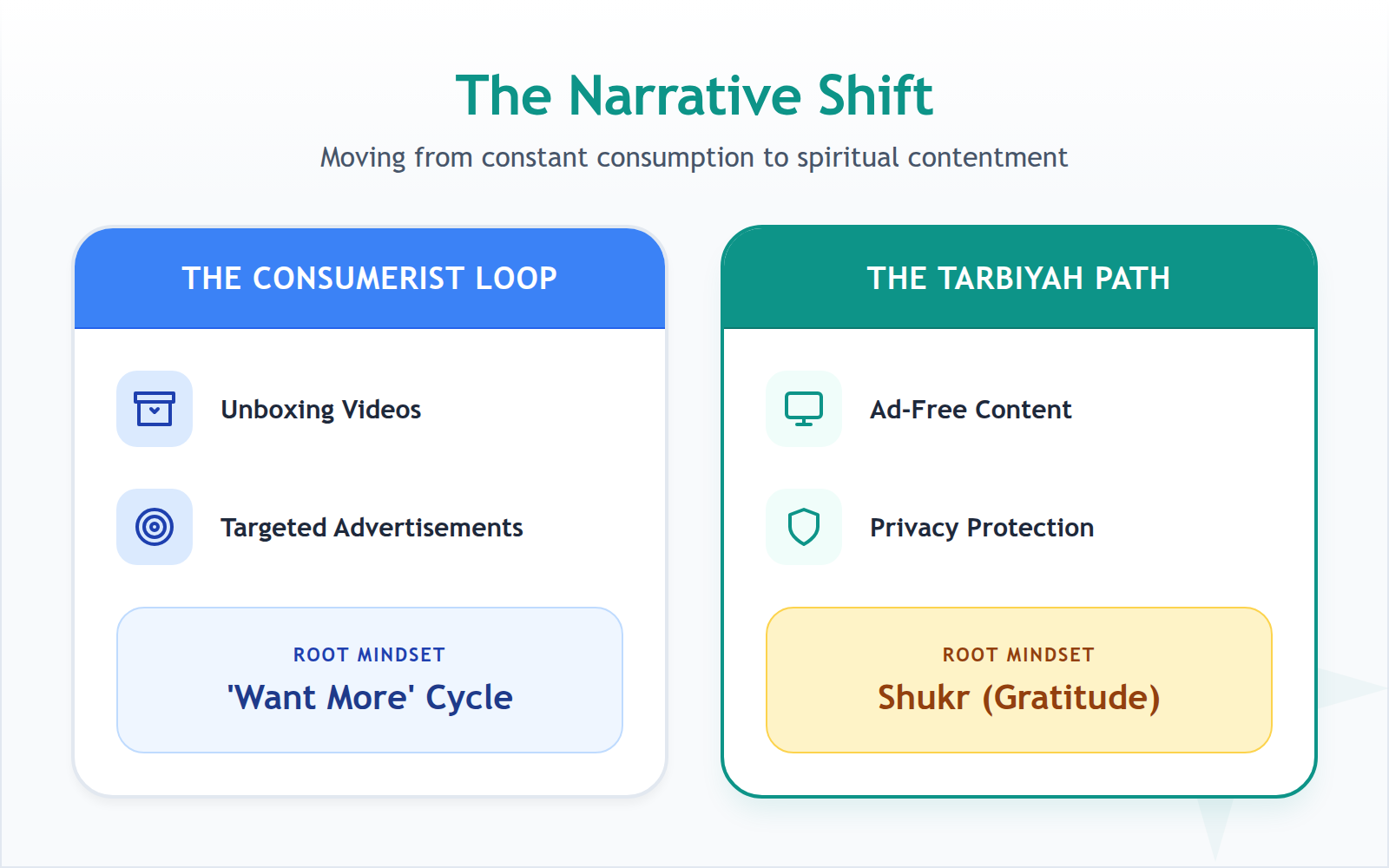
The "want more" mindset of ad-driven content directly conflicts with the Islamic pillar of Shukr (gratitude). Frequent exposure to material desire and "unboxing" videos can replace inner contentment with Israf (extravagance). These YouTube Kids dangers for Muslims trade a child’s natural sense of wonder for a manufactured need for the next consumer product.

Honoring the Amanah of Childhood
Treating a child’s behavior as a data point for commercial algorithms is a violation of the Amanah (trust) we hold as parents. On free, ad-supported platforms, your toddler isn't the customer—they are the product being sold to the highest bidder.
Choosing a curated, ad-free environment is a spiritual necessity to guard the heart from being commodified. By removing the commercial noise, we protect the process of Tarbiyah, allowing your child to focus on meaningful growth rather than a cycle of consumption.
5. Algorithmic Bias & The Erasure of Identity in the Digital Age
Most mainstream algorithms operate on a "secular-by-default" logic. In the journey of Islamic parenting digital age, this often treats our daily Sunnah—like making Wudu or wearing Hijab—as a niche interest rather than a foundational reality. When your child's identity is missing from their feed, they can begin to feel like an outlier in their own digital world.
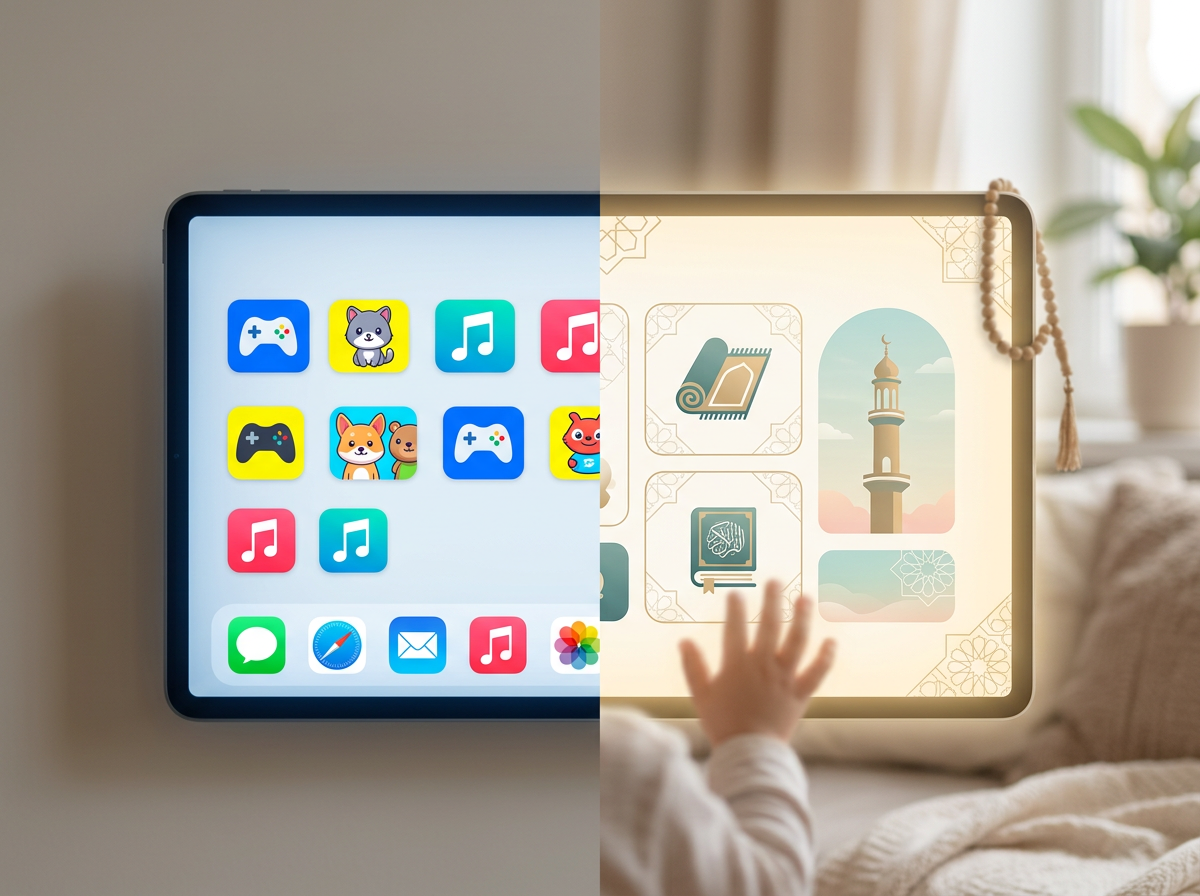
Closing the "Mirror Gap" for the Ummah
This lack of representation creates a "Mirror Gap" that subtly "others" the youngest members of our community. Even with filters active, Islamic routines are rarely recommended alongside secular content, creating a "search tax" for busy parents. We believe our values should be the natural environment your child breathes in, not a hidden category you have to hunt for.
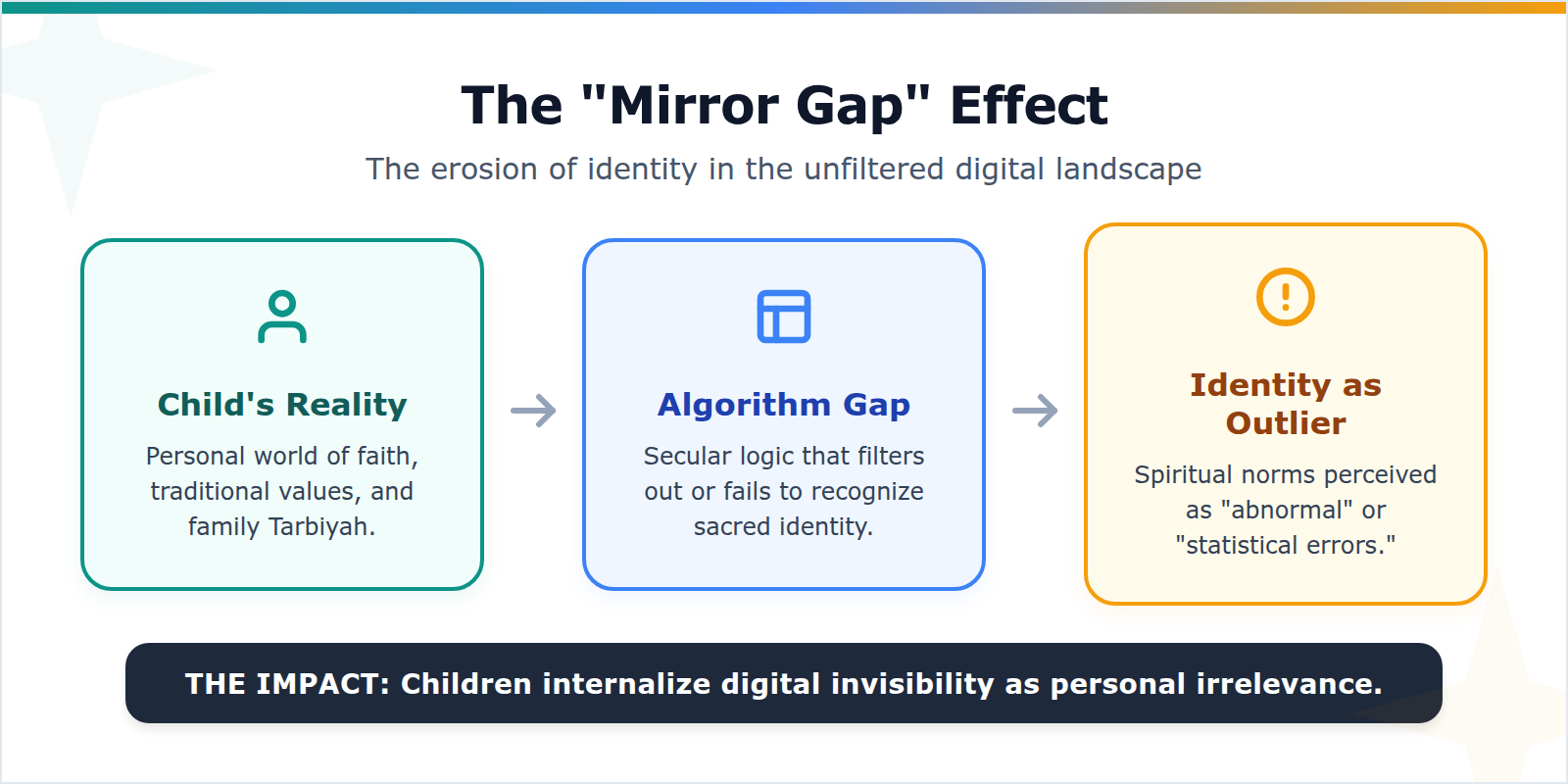
For the "Gen M" parent, representation is a vital part of early Tarbiyah. If the digital world excludes the Adhan or the joy of Eid, it sends a silent message that faith doesn't belong in the modern world. We're reclaiming this narrative by providing a sanctuary where Islamic values are the standard, not just a "tag" in a secular database.
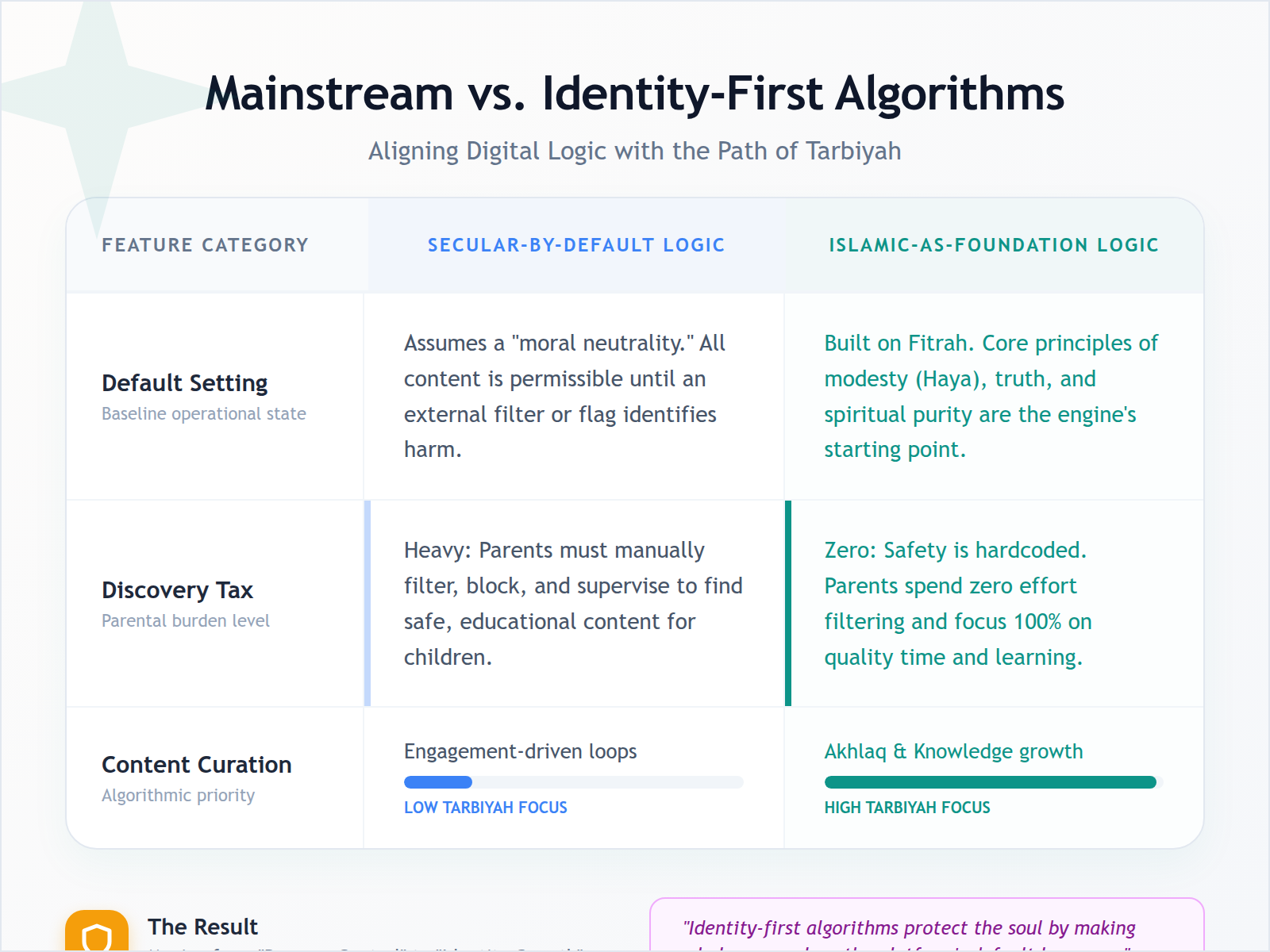
Babymode protects your child’s Fitra by centering the Muslim worldview as the primary "operating system." This intentional curation moves your family from "Safe Filtering" to an "Intentional Presence," where the beauty of Islam is woven into every video.
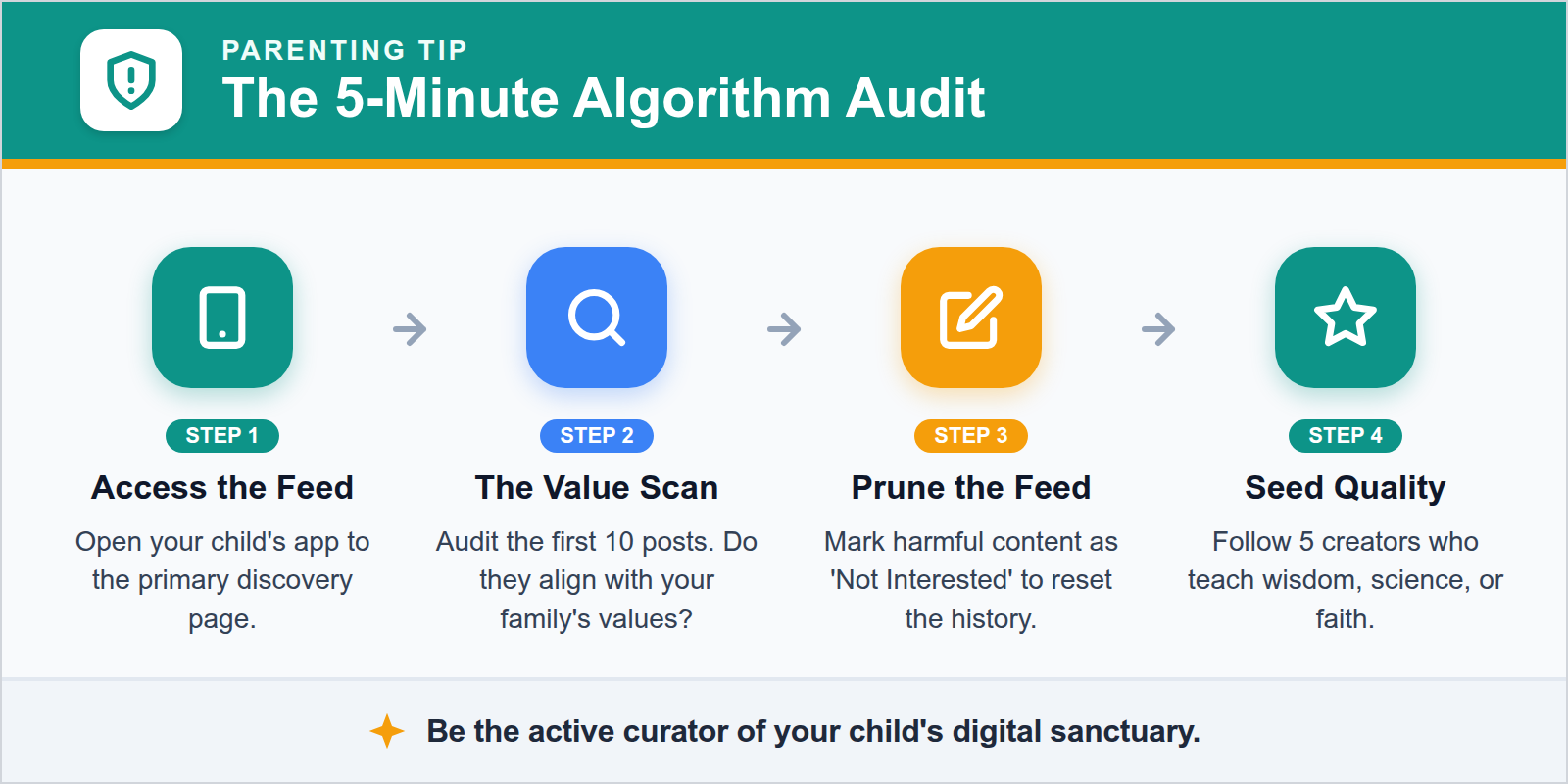
Parenting Tip: Normalize identity by choosing platforms that celebrate Islamic habits. This makes Salah and Adab feel as natural to your toddler as learning their ABCs.
Conclusion
The journey through digital pitfalls for Muslim children can feel overwhelming, but you don’t have to face it alone. By recognizing how unfiltered algorithms challenge your child’s Fitra, you’ve already taken the first step toward reclaiming their Amanah.
Babymode serves as a peaceful sanctuary, aligning modern technology with the timeless goals of child Tarbiyah. Together, we can transform screen time from a source of anxiety into a restorative bridge for faith and learning.

Frequently Asked Questions
How do algorithms specifically undermine Tarbiyah?
They prioritize dopamine over Akhlaq, replacing intentional learning with machine-led loops that bypass a parent’s "Bismillah." This mechanical logic focuses on engagement rather than spiritual development.
What are the red flags for overstimulation?
Look for "sensory glazed eyes" or aggressive behavioral "rebound" when the device is removed. High-pitched, repetitive audio and neon-saturated colors in "educational" videos are major indicators of dopamine-mining.
Is 'Restricted Mode' enough to block un-Islamic ads?
No. It primarily filters keywords but often misses visually-driven commercial ads that compromise safe screen time for Muslim toddlers and their Fitra.
How much screen time is healthy for a 3-year-old?
Use short, co-viewed blocks of slow-paced content to ensure the screen remains a tool for Tarbiyah rather than a replacement for human connection.